Marathons and Running Events
Thailand stages over one thousand mass-participation running competitions every year, ranging from World Athletics Gold Label night races on professional motorsport circuits to UTMB World Series mountain ultramarathons on the country's highest peak. International runners can enter certified road and trail events for between 1,500 THB (£35) and 11,500 THB (£267), paying substantially less than for European major events while benefiting from certified course measurement, closed roads, and extensive trackside support.
The country's competitive running sector operates under the Athletic Association of Thailand alongside international governing bodies including World Athletics and the UTMB Group. Major commercial race organisers, such as Thailand Tri-League and MICE & Communication, coordinate with municipal authorities to stage closed-road capital marathons, coastal half marathons, and protected-park trail races, while centralised booking portals like Runlah manage domestic entry logistics. The destination pairs recognised qualifying standards with accessible registration fees, comprehensive cold-water hydration, and sociable aid stations. It particularly suits road runners targeting certified marathon times and endurance athletes planning warm-weather winter training blocks between November and February.

Amazing Thailand Marathon Bangkok and the Buriram Marathon
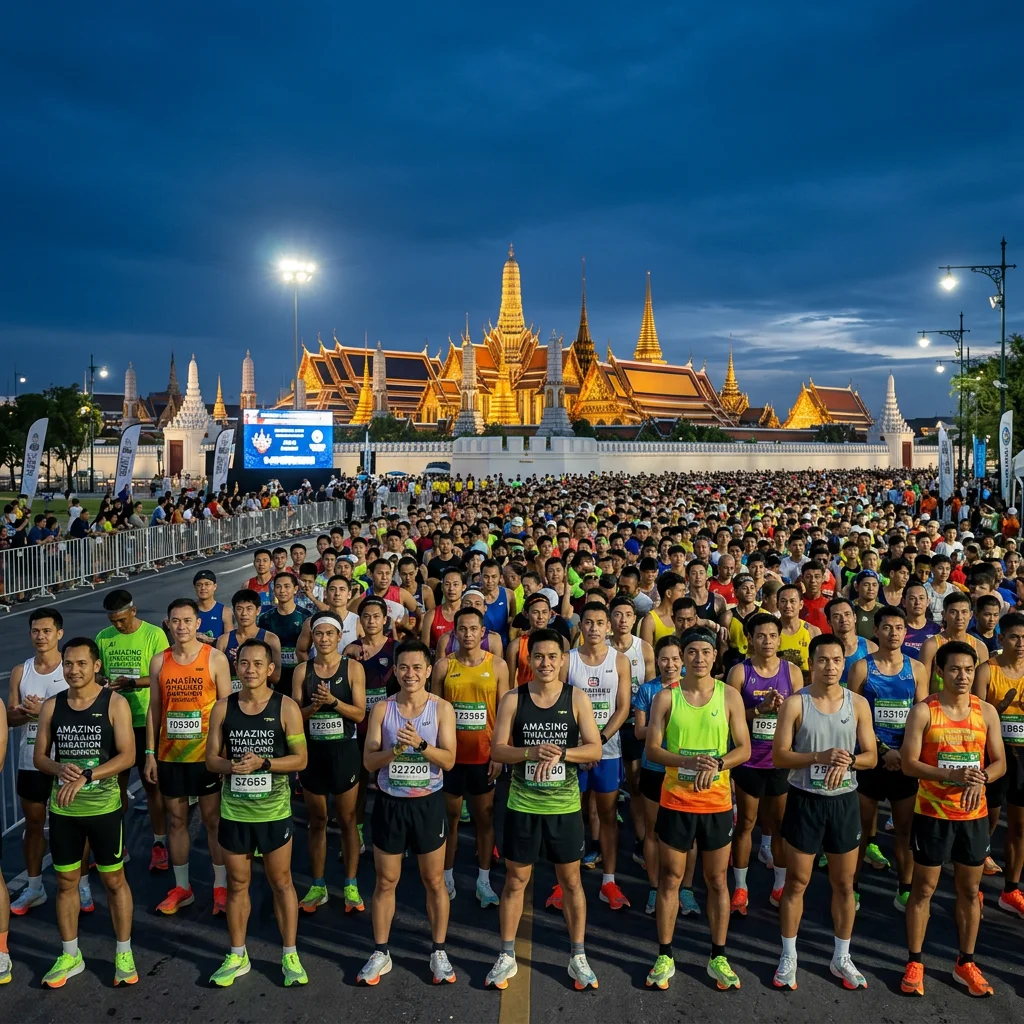
Thailand's mass road-racing calendar is anchored by two contrasting flagship fixtures: an early-morning capital city run through historic Bangkok and an evening race staged around a world championship motorsport complex in Buriram.
Amazing Thailand Marathon Bangkok
The Amazing Thailand Marathon Bangkok stands as the country's central metropolitan road fixture, sending tens of thousands of participants through closed urban thoroughfares under the floodlights of historic monuments. Organised in partnership with the Tourism Authority of Thailand and the Bangkok Metropolitan Administration, the late-November event holds World Athletics Label status and serves as an official Boston Marathon qualifying course. The event operates across two race mornings: the half marathon sets off on Saturday at 04:00 outside MBK Centre in Pathum Wan, while the full marathon starts on Sunday at 02:00 from the Sanam Luang ceremonial grounds beside the Grand Palace. Marathon runners cross the Chao Phraya River over the Rama VIII Bridge, traverse major commercial thoroughfares, and sweep along Ratchadamnoen Avenue before crossing the finish line at Sanam Luang.
Aid stations appear every two to two-and-a-half kilometres along the route, providing cold bottled water, electrolyte drinks, and iced towels to counter tropical humidity. Because city road closures must reopen for regular traffic, the half marathon enforces a three-and-a-half-hour cut-off, while the full marathon allows a seven-hour limit. For competitors racing either distance, reserving accommodation within walking distance of Sanam Luang or near the National Stadium Skytrain station avoids race-morning transit disruptions across central Bangkok.
Buriram Marathon
Staged annually in late January in northeastern Thailand, the Buriram Marathon delivers a nocturnal road-racing experience centred on Chang International Circuit, an FIA Grade 1 motorsport venue that hosts the Thailand MotoGP. Founded as part of a provincial initiative to establish Buriram as a regional sporting capital, the competition holds World Athletics Gold Label status and regularly draws more than 30,000 entrants across marathon, half marathon, 10-kilometre, and fun-run categories. The full marathon starts at 18:30 as dusk settles over the circuit grandstands, allowing runners to complete their opening kilometres across the wide race tarmac before exiting through the circuit gates.
Outside the venue, the course follows flat, fully illuminated provincial roads, winding past the extinct volcanic crater of Khao Kradong, Huai Chorakhe Mak Reservoir, and the King Rama I Monument before entering the floodlit bowl of Chang Arena, the 32,000-seat home stadium of Buriram United Football Club. Traditional Isan drumming troupes and local village cheer squads line the countryside sections, creating an energetic community atmosphere along the route. With a predominantly level profile and a seven-hour cut-off window, the race ranks among the most accessible and rapid road-marathon courses in Southeast Asia.
Bangsaen21 Half Marathon: Chonburi Coastal Speed
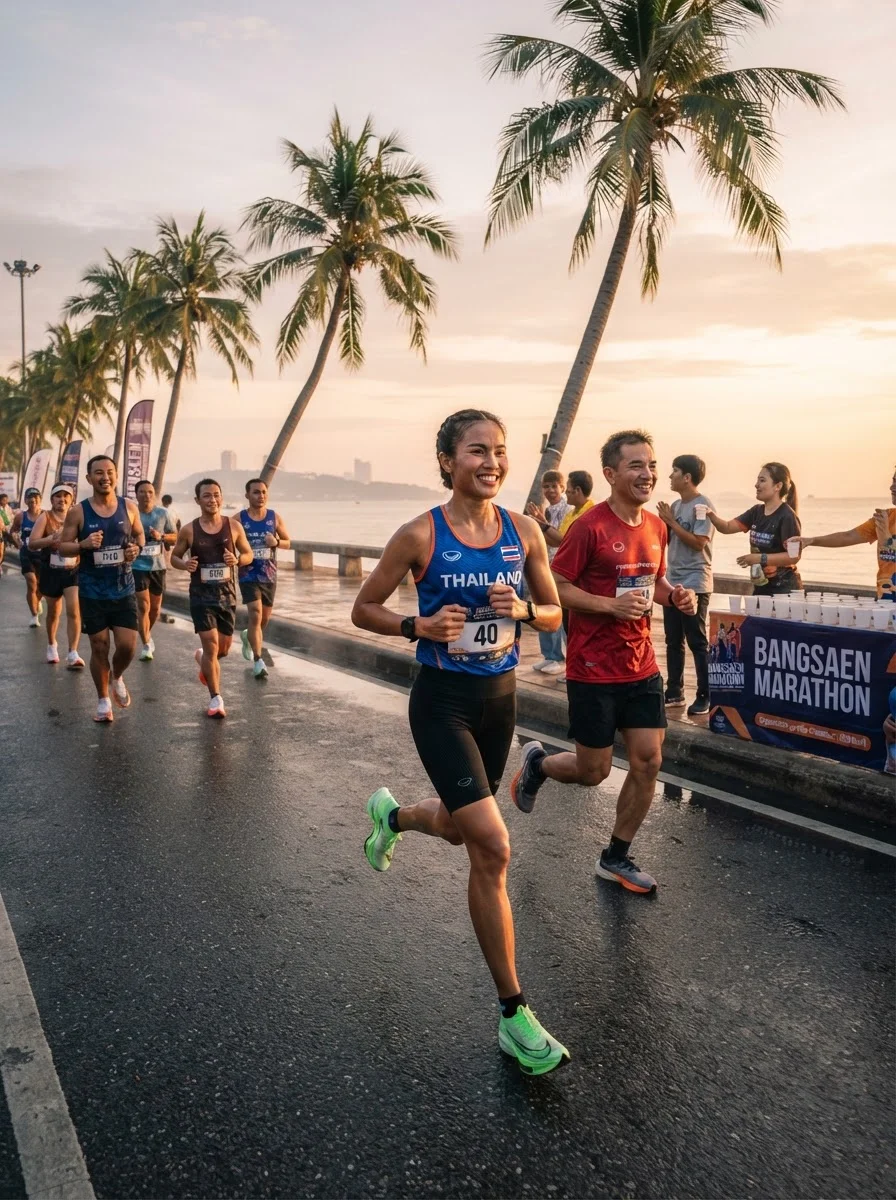
Bangsaen21, staged in Chonburi province, was the first half marathon in the world awarded a World Athletics Platinum Label. Organised by MICE & Communication, the December event focuses solely on the 21.0975-kilometre distance, drawing elite road racers alongside amateur runners targeting fast times on a flat coastal circuit.
Located along the Gulf of Thailand roughly 80 kilometres southeast of Bangkok, the course starts and finishes outside the Bangsaen Heritage Hotel. Wave starts begin from 04:00, allowing competitors to complete the distance before mid-morning coastal heat builds. The first 15 kilometres follow wide, tarmac boulevards running north towards Ang Sila, benefiting from complete road closures and early breezes off the sea. The primary test arrives between kilometres 16 and 18, where runners ascend Khao Sam Muk, a coastal headland known for its wild monkey colony. While the hill rises around 45 metres, the short gradient disrupts rhythm before the descent returns to the beachfront promenade for the final sprint. The course maintains an overall time limit of three hours 30 minutes.
After crossing the line, runners enter an extensive post-race catering village featuring stalls supplying local noodles, grilled seafood, fresh coconut water, and traditional Thai sweets.
Practical takeaway: Overseas runners should register through the dedicated international allocation window to secure a confirmed place without entering the heavily oversubscribed domestic ballot.
Plan a journey along Thailand’s Andaman coast, with practical guidance on island gateways, marine parks, diving, ferries and monsoon travel.
Doi Inthanon Thailand by UTMB: High-Elevation Mountain Ultras

Doi Inthanon Thailand by UTMB anchors trail running in Southeast Asia as the official Asia-Pacific Major on the global UTMB World Series circuit. Staged within Doi Inthanon National Park and surrounding ranges in Chiang Mai province, the multi-day mountain festival features distances ranging from introductory 20-kilometre trail runs up to the flagship 100-mile ultra, reaching the summit ridge of Thailand's highest mountain at 2,565 metres above sea level. Because the event holds UTMB Major status, all finishers collect double Running Stones towards the UTMB Mont-Blanc lottery draw. In addition, the top ten men and women in the 50K, 100K, and 100M categories secure direct qualification for the world series finals in Chamonix.
The routes require substantial mountain endurance, taking runners across steep clay singletrack, rocky ridgelines, terraced rice paddies, and remote settlements inhabited by Hmong and Karen communities. The flagship 100-mile challenge features over 8,000 metres of cumulative elevation gain, demanding technical footing and rigorous pacing. Climatic conditions shift markedly between elevations. Lowland staging areas around Chom Thong sit at roughly 28°C during the afternoon, but temperatures plunge towards single digits and near-freezing levels along exposed high ridgelines after dark. Race organisers enforce strict kit inspections before issuing bib numbers, checking for mandatory gear such as hooded waterproof jackets, survival blankets, and primary and backup headlamps with spare batteries. Trail runners should prepare for sustained vertical climbing and pack adequate thermal clothing for high-altitude overnight sections.
Regional circuit comparison
Thailand's road and trail calendar presents distinct practical advantages when compared with regional alternatives across East and Southeast Asia. Major city events such as the Standard Chartered Singapore Marathon subject competitors to intense tropical humidity that barely relents overnight, alongside significantly higher entry costs for standard public bibs. In Malaysia, the Kuala Lumpur Marathon routes runners onto undulating urban dual-carriageways under high ambient temperatures, with less extensive aid station offerings. The Tokyo Marathon benefits from cool, dry winter weather suitable for fast times, but international ballot success rates sit below ten percent and commercial tour packages cost thousands of pounds.
Thailand instead provides World Athletics certified courses, generous aid stations stocked with ice basins and fresh fruit, and open online registration models with entry fees for flagship road marathons starting around 1,500 THB (approximately £35). Flagship road races feature fully closed roadways, timing mats, and pacers across multiple target brackets. The country's core racing window runs during the dry cool season from November to January. In central and northeastern regions, overnight temperatures reliably settle between 18°C and 22°C, creating viable conditions for pre-dawn road starts. For runners seeking certified long-distance events without restrictive entry lotteries or steep regional price tags, Thailand's winter calendar offers an accessible racing alternative.
| Race Event | Location | Course Type | Distance Options | Typical International Entry Fee (THB / GBP) |
|---|---|---|---|---|
| Amazing Thailand Marathon Bangkok | Bangkok (Sanam Luang) | Paved city streets and bridges | 4.5km, 10km, 21.1km, 42.195km | 1,600 THB (£37) for 42.195km |
| Buriram Marathon | Buriram (Chang Circuit) | FIA Grade 1 circuit and flat tarmac | 4.5km, 10km, 21.1km, 42.195km | 1,500 THB (£35) for 42.195km |
| Bangsaen21 Half Marathon | Chonburi (Bangsaen Beach) | Coastal roads with one hill climb | 21.0975km | 1,800 THB (£42) for 21.1km |
| Doi Inthanon Thailand by UTMB | Chiang Mai (Chom Thong) | Mountain singletrack and jungle trails | 20km, 50km, 100km, 175km | 8,500 THB (£198) for 175km |
Location and Getting There
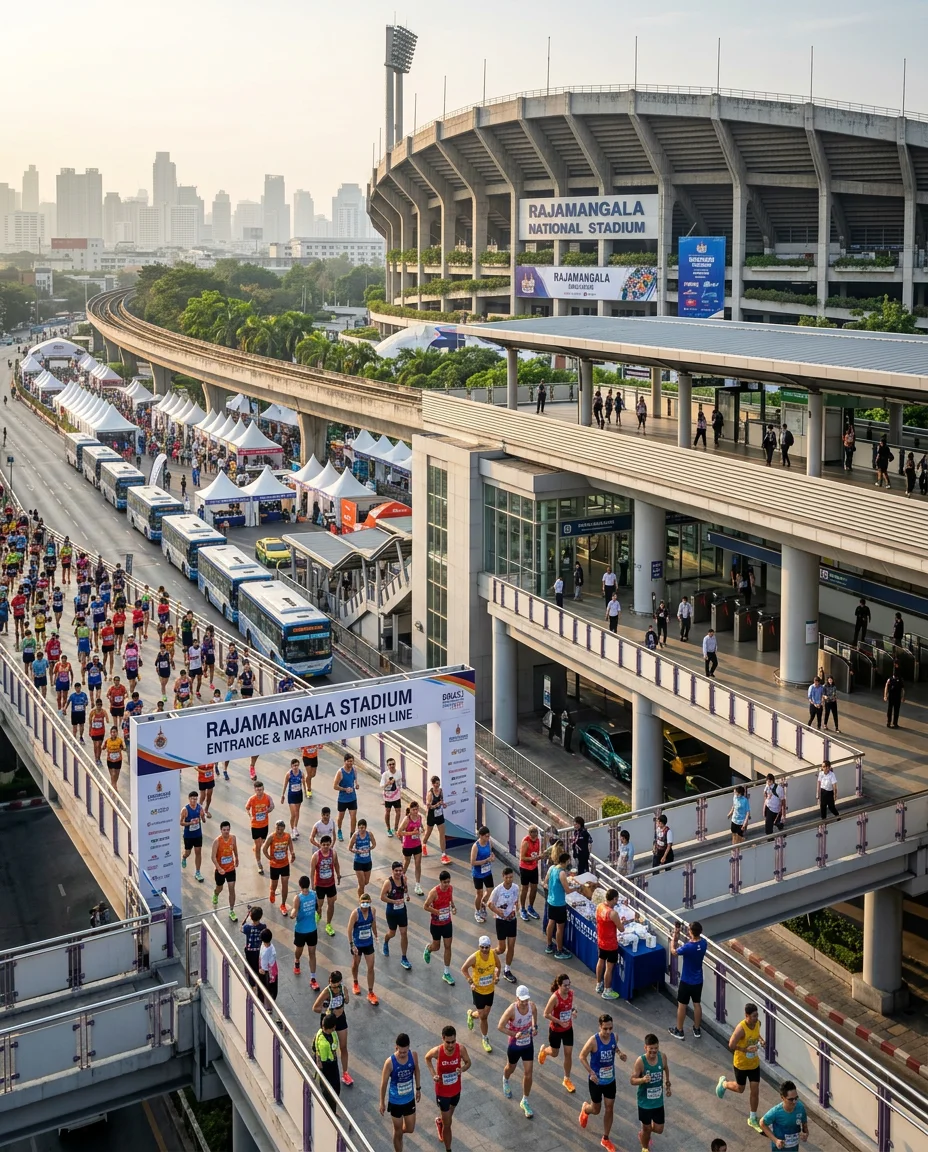
Thailand's premier running events unfold across distinct regions, requiring varied travel arrangements. In the capital, major road races such as the Amazing Thailand Marathon Bangkok concentrate around the historic centre at Sanam Luang. Travellers arriving at Suvarnabhumi Airport can board the Airport Rail Link to Phaya Thai station for 45 THB (£1), continuing by metered taxi to the old quarter for roughly 80 THB to 120 THB (£1.90 to £2.80), or take a direct taxi for approximately 350 THB (£8.20).
For the Buriram Marathon, situated roughly 390 kilometres northeast of Bangkok, Thai AirAsia operates daily 55-minute domestic flights from Don Mueang Airport (DMK) to Buriram Airport (BFV), with one-way fares typically starting around 1,200 THB (£28). Alternatively, regular State Railway of Thailand trains depart Krung Thep Aphiwat Central Terminal, with tickets ranging from 170 THB (£4) for fan-cooled seats to 900 THB (£21) for sleeper berths.
The coastal Bangsaen21 course sits 80 kilometres southeast of Bangkok. Licensed private taxis from Suvarnabhumi Airport take approximately 75 minutes and cost around 1,000 THB (£23), while public passenger minibuses depart regularly from Ekkamai Eastern Bus Terminal for 120 THB (£2.80). Northern trail events around Doi Inthanon operate south of Chiang Mai; the race organisers run official event shuttles from Chiang Mai International Airport (CNX) to Doi Inthanon National Park Headquarters for 400 THB (£9.30), alongside private transfers and local yellow songthaew passenger trucks from Chiang Mai Gate to Chom Thong.
Costs and Booking
Race entry fees across Thailand remain remarkably accessible compared to European and North American equivalents. Major road marathons and half marathons charge standard international registration rates between 1,300 THB and 2,000 THB (approximately £30 to £47). These standard race packages include electronic timing chips, a technical event singlet or running shirt, a finisher medal, basic on-course medical insurance, and post-race hot meals or food village vouchers. High-elevation ultramarathons, including UTMB World Series events in Chiang Mai, scale higher: entry fees start at 2,600 THB (£60) for 20-kilometre trail categories and reach 11,500 THB (£267) for late-tier 100-mile mountain distances.
Most established events operate tiered pricing structures. Early-bird or loyalty windows open roughly five to six months ahead of race day, standard registration opens three to four months out, and late registration concludes approximately four weeks before the event, provided participant caps are not reached earlier. Overseas entrants book through domestic ticketing platforms such as Runlah, ThaiRun, or Thailand Tri-League, submitting passport details during checkout. These systems accept international credit cards, which usually incur payment gateway surcharges between three and six percent.
Accommodation costs demand careful budgeting alongside race entry. While registration fees are low, room rates in provincial host towns escalate sharply over race weekends, and properties within walking distance of start lines frequently sell out months ahead. Budget guesthouses and mid-range hotels in regional hubs charge 800 THB to 1,500 THB (£19 to £35) per night during race weekends, whereas upscale and full-service properties average 2,500 THB to 5,000 THB (£58 to £116) per night.
| Option | Cost (THB per entry) | Cost (GBP approx) | Notes |
|---|---|---|---|
| Standard City Marathon (Bangkok) | 1,600 THB | £37 | Includes timing chip, official race singlet, finisher medal, and food voucher |
| Gold Label Night Marathon (Buriram) | 1,500 THB | £35 | Includes circuit access, timing tag, singlet, finisher medal, and post-race buffet |
| Platinum Label Half Marathon (Bangsaen21) | 1,800 THB | £42 | Dedicated international entry quota; includes event running vest and finisher towel |
| UTMB 50K Mountain Trail (Doi Inthanon) | 4,300 THB | £100 | Includes GPS tracking, national park entry, drop-bag transport, and aid stations |
| UTMB 100-Mile Mountain Ultra (Doi Inthanon) | 8,500 THB | £198 | Early bird tier; includes live tracking, 8 Running Stones, and finisher jacket |
Who the Races Suit
Thailand's race calendar suits amateur road runners, masters competitors, and trail ultramarathoners seeking competitive events during the UK winter without high tour-package markups. It works well for runners able to adjust their sleeping patterns to nocturnal starts—often between 02:00 and 04:00, or in the evening—and manage sustained tropical humidity with disciplined hydration.
Conversely, Thailand is poorly matched to competitors who depend on cold, crisp air for fast finishing times. It is also challenging for casual runners who struggle with early morning wakeups or intermediate checkpoint deadlines, where municipal police enforce rolling cut-offs strictly to reopen elevated expressways and urban thoroughfares for morning traffic.
What to Know Before You Book
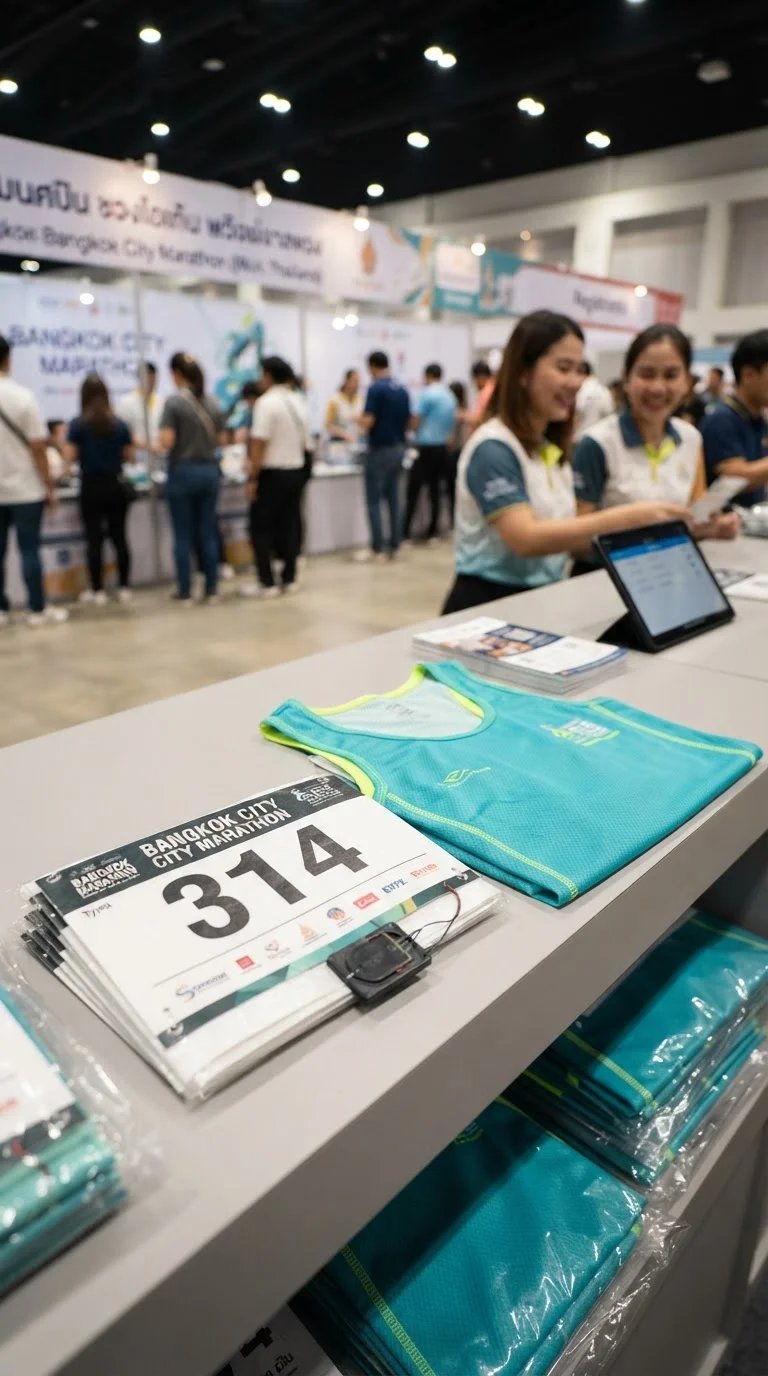
Race packs must usually be collected in person at the official event expo during the two to three days preceding the race. Thai organisers rarely permit race-day kit collection, so arriving in the host city well before the weekend is necessary to secure your entry. International participants must present an original passport alongside their registration QR code or confirmation email. While some events allow collection by proxy with signed authorisation and passport copies, others, including the Bangsaen series, strictly prohibit third-party pickup.
Start times for road marathons and half marathons typically fall between 02:00 and 04:00—or around 18:30 for evening events such as the Buriram Marathon—to avoid daytime tropical heat. This nocturnal schedule requires careful adjustment of sleep routines and pre-race meal timings. For highland trail competitions such as Doi Inthanon by UTMB, runners must pass a physical mandatory gear inspection before collecting their race bib. Missing required kit, such as survival blankets, waterproof hooded jackets, or secondary headlamps, results in refused entry or time penalties.
Practical Race-Day Advice
Travelling from the UK involves a six-to-seven-hour time difference and a jarring transition from cold weather to tropical heat. Arrive in Thailand at least four days before race morning. While full physiological heat acclimatisation requires up to a fortnight, four days allows circadian rhythms to reset and lets your body begin adjusting to ambient temperatures above 25°C and relative humidity often exceeding 80 percent.
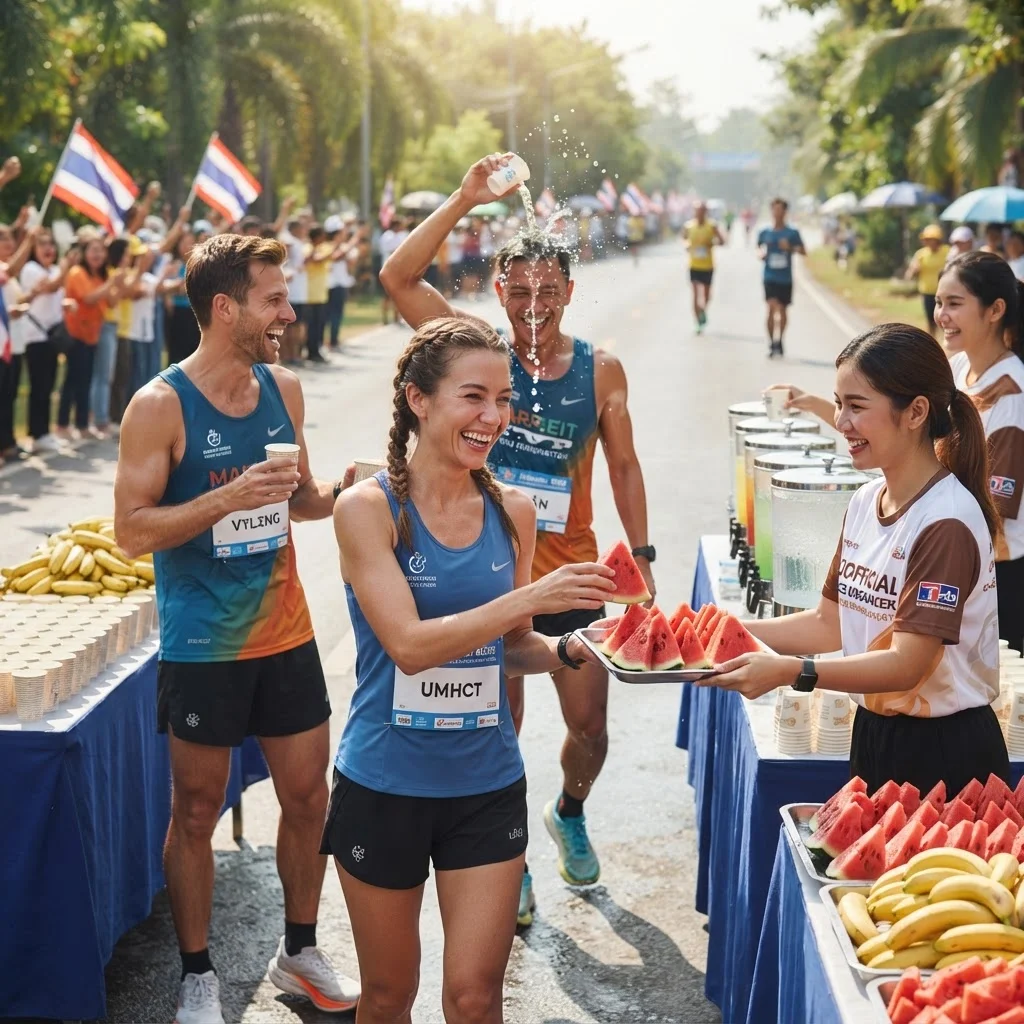
High humidity slows sweat evaporation, leaving running kit saturated within minutes. Pack anti-chafe balms, blister tape, and technical moisture-wicking fabrics rather than cotton. Light-coloured singlets help once the tropical sun rises after 06:00, when temperatures climb quickly. Course aid stations routinely provide ice, cold water sponges, fresh watermelon, and local electrolyte drinks, but commercial energy gels are rarely provided in bulk. Carry your familiar race fuel in a waist pack or vest to avoid gastrointestinal upset.
Do not drink excessive plain water without sodium, which risks exercise-associated hyponatremia. Rehearse an electrolyte strategy during training and sip fluids to thirst rather than forcing rigid volumes at every water stop.
With marathon start times typically set between 02:00 and 03:30, race-morning logistics demand foresight. Major city roads close hours before the gun, making hailing street taxis unreliable. Download ride-hailing apps such as Grab and Bolt in advance, or book accommodation within sensible walking distance of the starting precinct.
For northern trail events like Doi Inthanon by UTMB, pack warm layers in your drop bag. While lowland Thailand remains warm, summits above 2,000 metres frequently drop below 10°C in December, and core temperatures plummet rapidly once physical exertion ends.
Quick Reference Table
| Item | Detail | Notes |
|---|---|---|
| Core racing season | November to February | Dry cool season; central and northeastern overnight temperatures settle between 18°C and 22°C |
| Amazing Thailand Marathon Bangkok | Late November | World Athletics Label; Boston Marathon qualifier; full marathon starts 02:00 at Sanam Luang; 7-hour cut-off |
| Buriram Marathon | Late January | World Athletics Gold Label night race; starts 18:30 at Chang International Circuit; flat tarmac course; 7-hour cut-off |
| Doi Inthanon Thailand by UTMB | December mountain festival | UTMB Asia-Pacific Major; 20km to 175km with 8,000m+ ascent to 2,565m summit; double Running Stones |
| Road marathon entry fees | 1,300 THB to 2,000 THB (£30 to £47) | Standard entry includes timing chip, official shirt, finisher medal, and post-race catering |
| Mountain ultra entry fees | 2,600 THB to 11,500 THB (£60 to £267) | Doi Inthanon 50K at 4,300 THB (£100); 100M at 8,500 THB (£198) early-bird tier |
| Race pack collection | 2 to 3 days prior at event expo | In-person collection mandatory with passport and QR code; race-day pickup is not permitted |
| Acclimatisation advice | Arrive at least 4 days before race day | Allows circadian rhythm adjustment for pre-dawn starts and adaptation to 25°C+ heat and 80%+ humidity |
| Website | amazingthailandmarathon.com | Official Amazing Thailand Marathon Bangkok portal |
| Website | burirammarathon.com | Official Buriram Marathon portal |
| Website | bangsaen21.com | Official Bangsaen21 Half Marathon portal |
| Website | inthanon.utmb.world | Official Doi Inthanon Thailand by UTMB portal |
| Website | runlah.com | Domestic race registration platform |
| Address | Chang International Circuit, 30/2 Moo 4, Isan, Mueang Buriram, Buriram 31000 | Venue and start line for the Buriram Marathon |
| Address | Bangsaen Heritage Hotel, 50 Bangsaen Beach Rd, Saen Suk, Chon Buri 20130 | Start and finish venue for Bangsaen21 Half Marathon |
FAQ: Marathons and Running Events
Who are the running events in Thailand best suited for?
Can I collect my race pack on race day in Thailand?
What time do marathons usually start in Thailand?
What mandatory gear do I need for mountain trail races in Thailand?
How many days before a race should I arrive in Thailand to acclimatize?
What kind of running gear is best for races in Thailand?
Do aid stations in Thailand provide energy gels during races?
What is the recommended hydration strategy for running in Thailand?
How should I plan my transport for early morning race starts in Thai cities?
How much does it cost to enter a road marathon in Thailand?
Reviewed by the Thailand Guide Editorial Team • Last reviewed: 18 November 2026
This page is provided for general information only. While we aim for accuracy, details can change — please verify anything important independently before relying on it.