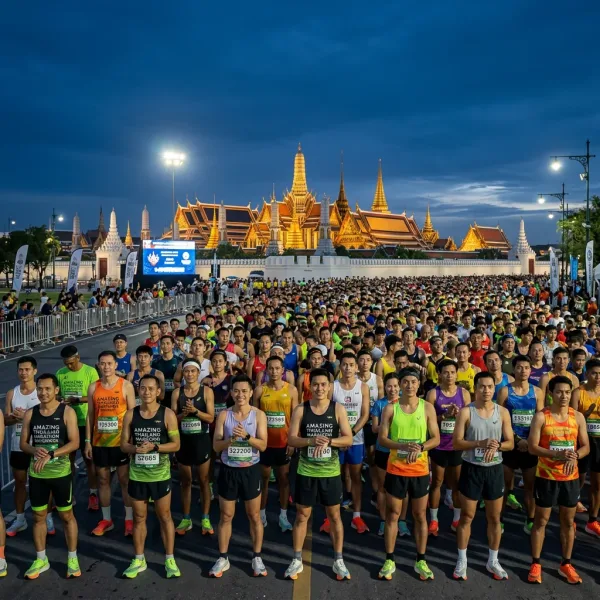
Trail Running
On the forest ridges above Wat Pha Lat in Chiang Mai, morning mist lifts to reveal steep red-clay singletrack cutting through bamboo groves and mature dipterocarp forest. Off-road running in Thailand trades flat city tarmac for technical descents, sustained climbs exceeding 800 vertical metres, and the humid microclimates of northern mountain ranges.
This guide provides UK runners with the practical logistics required to plan independent training trips or enter competitive mountain ultramarathons. We examine route profiles across northern mountain hubs and remote national parks, typical race entry fees, and comparisons with established trail scenes in Hong Kong and Malaysia. You will also find guidance on seasonal running windows, the northern agricultural burning season between February and April, and registration procedures for major events, helping you prepare thoroughly for tropical mountain terrain.

Northern Mountain Hubs: Chiang Mai and Doi Suthep Singletrack

Chiang Mai is the primary hub of Thailand’s mountain trail running community. The city sits directly against the base of Doi Suthep-Pui National Park, giving runners immediate access to roughly 261 square kilometres of protected granite ridges, forested ravines, and runnable singletrack rising straight from the urban fringe. The terrain here differs sharply from flat lowland paths: northern mountain trails require disciplined pacing, uphill power-hiking, and sure-footed balance over slick clay, exposed tree roots, and loose granite scree.
The most frequented routes start immediately behind Chiang Mai University at the end of Suthep Road or near the zoo foothills. The classic ascent follows the Pilgrim’s Trail, commonly known as the Monk’s Trail. This ancient footpath begins with a moderate climb through shaded woodland to the jungle temple of Wat Pha Lat, before tackling a much steeper, rocky second stage up to the mountain shrine of Wat Phra That Doi Suthep. Running the full route gains approximately 650 vertical metres across roughly six kilometres.
Beyond the temple, the trail system pushes higher along the ridge toward the twin granite summits of Doi Suthep at 1,676 metres and Doi Pui at 1,685 metres. Connecting spurs link the upper ridges with the highland Hmong settlement of Khun Chang Khian, situated at roughly 1,350 metres, as well as northern descents leading toward Huay Tung Tao. These high-elevation networks combine wide dirt fire tracks and plantation access paths with steep, overgrown footpaths. Because these mountains also attract off-road cycling, runners frequently encounter cross-country and downhill mountain bikers along the wider ridge lines and shared singletrack descents. Higher elevations also bring noticeable temperature relief, dropping several degrees below the sultry valley floor.
National Park Trail Systems: From Inthanon to Southern Rainforests
Thailand’s national park and wildlife sanctuary network protects diverse trail running environments, spanning high-altitude northern ridgelines down to equatorial rainforests near the Malaysian border.
Doi Inthanon National Park, anchored by the country's highest summit at 2,565 metres, offers cool-climate running where temperatures routinely plunge to single figures between November and February. The park features mossy cloud forests, subalpine meadows, and steep dirt tracks around Doi Hua Suea and the Kew Mae Pan ridge. Further north in Chiang Mai Province, the limestone massif of Doi Luang Chiang Dao provides rocky scrambles and punishing gradients for mountain runners. Access is limited to a brief dry-season window, capped by daily quotas, and requires advance permits alongside mandatory local guides.
In Central Thailand, Khao Yai National Park presents undulating paths through dense evergreen forest. Because wild elephants and other large mammals roam freely, trail runners must remain strictly within designated corridors and heed local ranger instructions. At the southern frontier, Betong in Yala Province has become a prominent jungle running hub through the Amazean Jungle race series. The terrain here delivers thick equatorial humidity, swollen river crossings, and greasy clay tracks flanked by ancient rainforest.
Entry fees for foreign adults across major inland national parks currently range from 200 THB to 400 THB (approx £4.50 to £9)—such as 300 THB (approx £6.80) at Doi Inthanon and 400 THB (approx £9) at Khao Yai—payable in cash at ranger gates or via the official QueQ app. Usually verify trail status with local ranger stations prior to departure, as conservation closures and wet-season trail maintenance frequently alter route availability.
Plan a Gulf of Thailand trip with clear guidance on island groups, ferries, weather, marine parks, accommodation costs and mainland gateways.
Comparing Thailand’s Trail Scene Across Asia
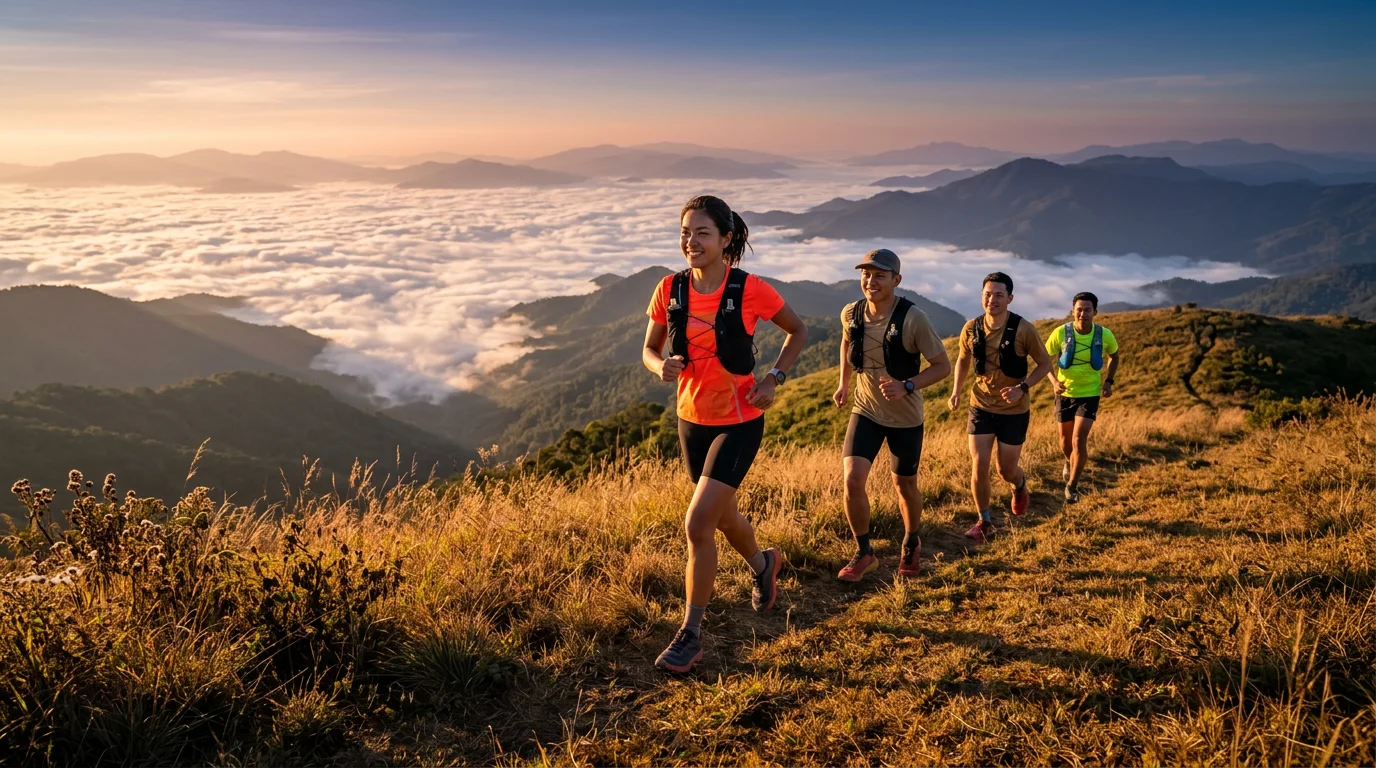
Thailand occupies a distinct position in Asian trail running by combining high runnable mileage with steep, natural singletrack through sub-tropical hill forests. Unlike Hong Kong, where mountain itineraries such as the MacLehose and Wilson Trails feature extensive flights of concrete steps and paved country park access roads, routes in northern Thailand consist largely of natural dirt, exposed tree roots, and clay paths established by hill-tribe communities. These earthen trails give runners a softer surface underfoot that reduces joint fatigue over ultra distances, although the clay turns slick quickly during sudden showers.
Moving further south, Peninsular Malaysia and Borneo present dense equatorial rainforest with deep riverbeds, heavy mud, and high leech concentrations, alongside relentless humidity. Northern Thailand’s trail environment around Chiang Mai, Chiang Rai, and Mae Hong Son runs considerably drier and cooler during the peak winter racing season between November and February, with negligible leech activity on the higher ridges. Further afield in East Asia, Japan and Taiwan provide high-altitude alpine ridges surpassing 3,000 metres with manicured switchbacks, but winter conditions bring sub-zero temperatures and snow. Northern Vietnam around Sapa features terraced agricultural climbs and limestone ascents comparable to northern Thailand, though Thailand maintains an operational edge in event scale, anchored by Chiang Mai Thailand by UTMB, which functions as the Asia-Pacific Major in the UTMB World Series.
| Destination | Predominant Trail Surface | Average Elevation Gain | Technical Difficulty | Logistics & Event Scale |
|---|---|---|---|---|
| Northern Thailand | Natural dirt, clay singletrack, forest double-track | 500m to 1,200m per 10km | Moderate to High; slick clay when wet | High; hosts the UTMB World Series Asia-Pacific Major |
| Hong Kong | Concrete steps, granite slabs, paved paths | 400m to 800m per 10km | Moderate; physically punishing on joints | High; dense transport links, mature race scene |
| Peninsular Malaysia | Deep mud, riverbeds, dense rainforest tangle | 600m to 1,400m per 10km | High to Very High; thick roots and fallen timber | Developing; rugged grassroots ultra scene |
| Vietnam (Sapa) | Clay terraces, limestone paths, farm tracks | 700m to 1,300m per 10km | High; steep drop-offs and sticky mud | Growing; established international mountain ultras |
Aid stations at Thai trail events reflect this balance between formal event management and regional culture. Major races enforce rigorous international medical and timing protocols, while checkpoints routinely supply runners with sliced fresh watermelon, bananas, salty broth, sweet sticky rice, and local electrolyte mixes alongside standard energy gels. For UK runners looking for winter trail competition without freezing alpine temperatures or bone-jarring concrete descents, Thailand provides a practical, dirt-first alternative.
Runner Profiles: Who Tropical Mountain Trails Suit Best
Thailand’s mountain trails reward runners who possess solid aerobic conditioning, dependable heat tolerance, and disciplined pacing. Those with a UK fell-running or cross-country background adapt relatively quickly; navigating tussocks, peat bogs, and rocky descents in Britain builds the ankle stability and proprioception needed for Thailand's rutted red clay, exposed tree roots, and steep jungle cambers. By contrast, road runners accustomed to flat tarmac often find the combination of high humidity and sharp vertical gains unforgiving.
Flat-road pace metrics become meaningless on mountain climbs like Doi Pui in Chiang Mai or Doi Hua Suea in Doi Inthanon National Park. Sustained gradients quickly reduce a six-minute-per-kilometre road pace to twelve or fifteen minutes per kilometre while power-hiking. Runners who insist on maintaining an unbroken rhythm struggle, whereas disciplined athletes who walk climbs early and manage their core temperature conserve energy for runnable ridge sections.
Mid-pack runners and ultra-distance competitors find Thailand's racing scene welcoming. Major events provide generous finishing windows—such as roughly 16 to 17 hours for 50-kilometre mountain routes and 32 hours for 115-kilometre ultra distances—alongside well-provisioned aid stations and local volunteers who celebrate persistent endurance. For solo outings on shared park trails, courtesy dictates yielding to uphill hikers and slower walking groups. Before travelling, focusing pre-trip conditioning on eccentric quad work, stair training, and weighted hill ascents will prepare your legs for the jarring mechanical strain of sustained jungle descents.
Seasons, Air Quality Windows, and Registration Strategy
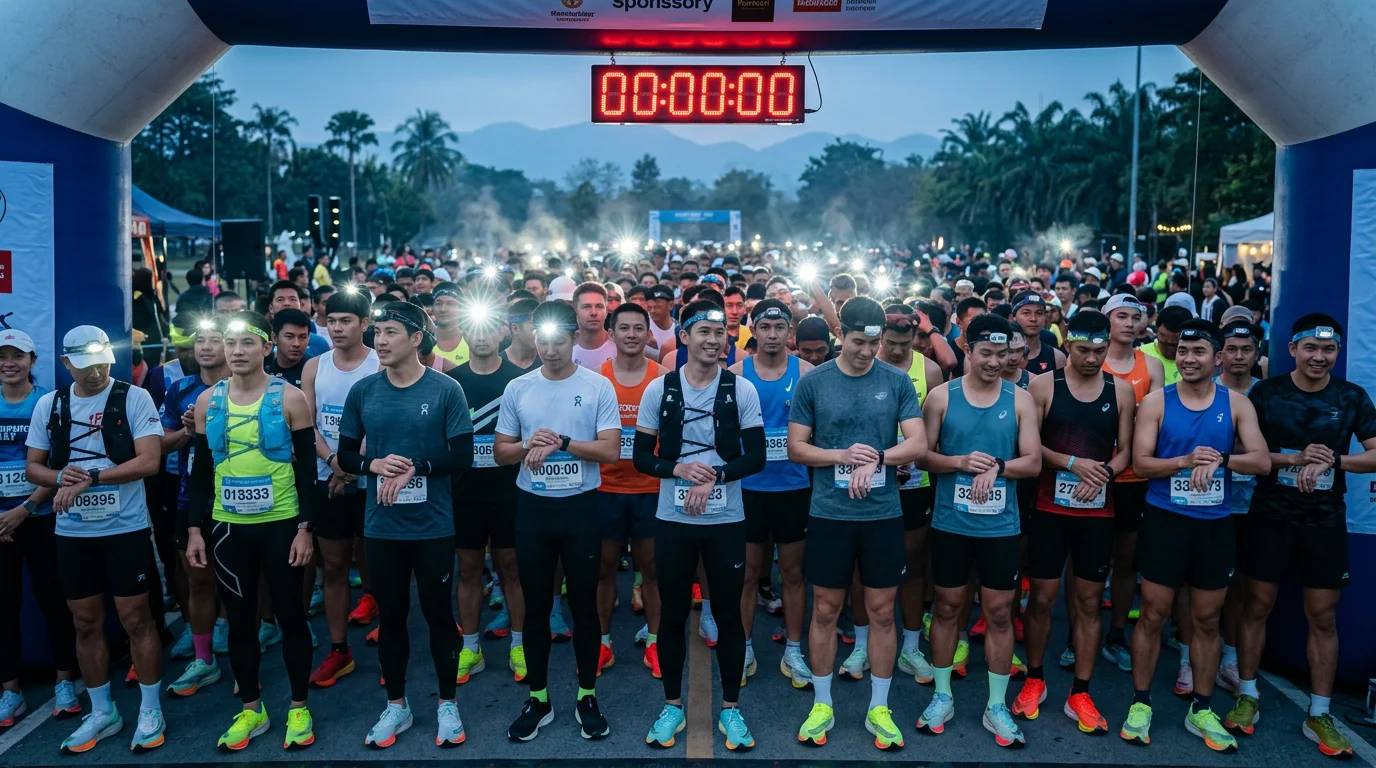
Timing your trip correctly dictates whether you encounter crisp mountain paths or oppressive, hazardous conditions. The most favourable trail running window in northern Thailand spans from November through January, extending into early February. During this cool, dry winter, daytime valley temperatures typically sit around 26°C, while elevated ridges and high-altitude peaks drop to 10°C or below at night and early morning. Trails remain predominantly dry, providing firm dirt and dependable traction on technical forest singletrack.
From mid-February through April, the northern climate shifts into the annual burning season. Agricultural residue clearing and forest fires combine with seasonal atmospheric inversions to trap dense smoke over mountain basins, affecting Chiang Mai, Chiang Rai, and Mae Hong Son. Fine particulate pollution (PM2.5) regularly drives the Air Quality Index (AQI) into unhealthy and hazardous bands exceeding 150 to 300+. Sustained cardiovascular exertion in these conditions poses severe risks to respiratory and cardiovascular health. Trail runners visiting Thailand during late winter and early spring should bypass the northern mountains entirely, shifting their focus to southern coastal paths in Phuket or Krabi where sea breezes maintain cleaner air.
Between June and October, the southwest monsoon brings frequent downpours across the highlands. Rain cleanses the atmosphere, delivering clear air and lush jungle greenery, but the precipitation transforms forest tracks into slick, shoe-sucking red clay. Exposed tree roots become treacherous slip hazards, stream crossings swell rapidly, and land leeches thrive in dense vegetation. Runners training through the rainy months need deep-lug footwear, trekking poles for balance on muddy gradients, and the discipline to check local weather radar before heading out.
Securing a race bib requires advance planning, as Thailand's major trail events operate on structured registration timetables. The flagship competition, HOKA Chiang Mai Thailand by UTMB, takes place across late November and early December, with routes spread between Doi Inthanon National Park and Chiang Mai Provincial Administrative Organisation Park. Registration typically opens on 1 July via the official UTMB portal. Runners holding an active UTMB Index receive a 48-hour priority booking window before general public entry begins. Popular categories, particularly the 20-kilometre and 50-kilometre events, frequently sell out rapidly once open to the public. For domestic and regional trail races hosted across Thailand, registration windows typically open on local platforms like Runlah three to six months ahead of race day.
| Season | Months | Trail Conditions | Air Quality (AQI) | Running Suitability |
|---|---|---|---|---|
| Cool and dry | November to January | Firm dirt, clear singletrack, cool mountain air | Good to moderate (AQI 30–80) | Prime window for training and major races |
| Hot and smoky | February to April | Dry, dusty, high thermal heat stress | Unhealthy to hazardous (AQI 150–300+) | Avoid northern trails; relocate to southern routes |
| Early monsoon | May to July | Mixed dirt, humid air, occasional heavy squalls | Moderate (AQI 40–90) | Early-morning runs viable; check rain radar |
| Peak monsoon | August to October | Thick red mud, slick roots, swollen streams | Good (clean air, washed by rain) | Demanding mud running; carry trekking poles |
Avoid planning mountain trail running itineraries in northern Thailand between mid-February and April, when seasonal smoke haze makes intense physical exertion detrimental to your health.
Where to Run Trails in Thailand
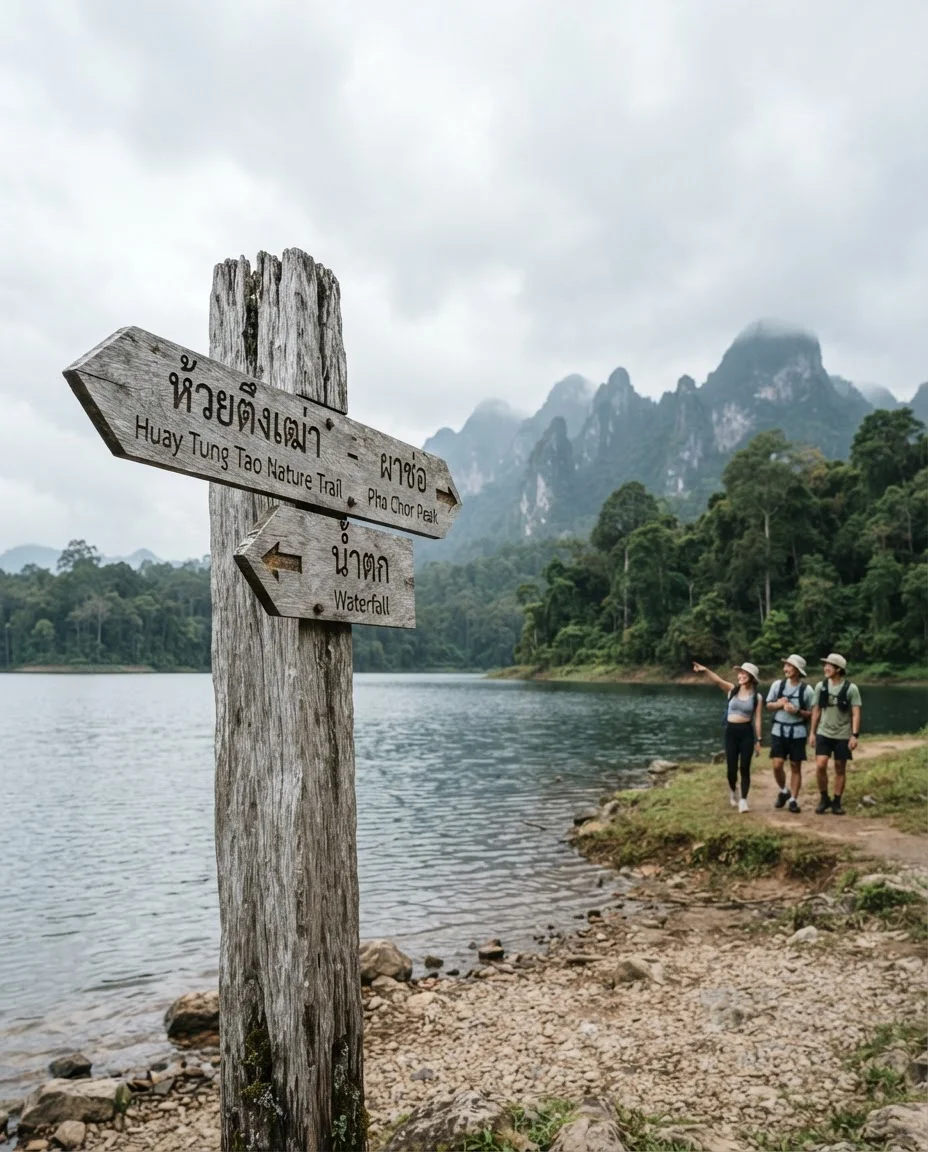
Northern Thailand contains substantial concentrations of mountain trail networks, though established off-road routes run across the country. In Chiang Mai, Huay Tung Tao reservoir sits roughly twenty minutes north of the Old City. The dirt paths around the perimeter link into singletrack climbs such as the King Cobra loop and trails ascending through mixed deciduous forest towards the Doi Pui ridge. Near Chiang Mai University, the Monk’s Trail leads up to Wat Pha Lat under heavy tree cover, ascending approximately 160 metres over 1.4 kilometres before steepening into a demanding 600-metre total climb for runners pushing onward to the summit temple at Doi Suthep.
In southern Thailand, Phuket provides humid rainforest training around the Khao Phra Thaeo Non-Hunting Area in Thalang, where sports resort grounds stage annual trail runs alongside shaded singletrack. Across the Gulf of Thailand, the islands of Koh Samui and Koh Phangan present steep coastal ridgelines, exposed granite boulders, and unpaved farm tracks through coconut groves that test technical footwork in tropical heat. For runners based near Bangkok, the wooded trails of Khao E-To in Prachinburi deliver flowing forest paths along a distinct rocky ridge, staying runnable through much of the year.
For an introductory run in Chiang Mai, Huay Tung Tao delivers an accessible launchpad. Combining a flat perimeter circuit with gradual climbs into the foothills, it allows runners to test hill legs and adjust to humidity before tackling more remote ridgelines. Simple lakeside stalls provide cold drinks and post-run food, making route logistics practical and self-contained.
Costs and Budgeting
Trail running in Thailand remains remarkably economical compared with European or North American standards, although international championship events sit at a higher tier. Domestic community races across distances of 10km to 25km, booked through local registration platforms like Runlah, typically cost between 600 THB and 1,200 THB (approx £13.50 to £27). These entry fees include a timing chip, race shirt, aid-station provisions, and a finisher medal. Independent 50km ultra-marathons generally require 3,500 THB to 4,500 THB (approx £78 to £101), providing drop-bag transport, full medical support, and ITRA ranking points.
Premier global fixtures command higher fees. At the Asia-Pacific Major on Doi Inthanon, entry starts at 2,600 THB (approx £58) for a 20km mountain route, scaling to 8,500 THB (approx £190) for early-bird registration and 9,800 THB (approx £220) for standard entry on the 100-mile ultra. These fees cover live satellite trackers, UTMB Running Stones, and extensive on-course mountain safety cover.
Independent training days carry modest overheads. Foreign adult entry to national parks like Doi Inthanon currently costs 300 THB (approx £6.70) at official checkpoints, while other protected reserves charge 200 THB to 300 THB (approx £4.50 to £6.70). In Chiang Mai, shared red songthaew trucks charge 50 THB to 80 THB (approx £1.10 to £1.80) per seat towards mountain bases, or 150 THB to 400 THB (approx £3.40 to £9.00) for a chartered vehicle. Clean guesthouses cost 500 THB to 900 THB (approx £11 to £20) a night, and deep-tissue sports massages run from 300 THB to 500 THB (approx £6.70 to £11.20) an hour. Because imported running shoes and technical packs face high Thai customs duties, purchasing all gear in the UK before travelling avoids steep retail markups.
| Option | Cost (THB) | Cost (GBP approx) | Notes |
|---|---|---|---|
| Local Short Trail Race (10k–25k) | 600 – 1,200 THB | £13.50 – £27 | Bib, timing chip, aid stations, race shirt |
| Mid-Distance Ultra Race (50k) | 3,500 – 4,500 THB | £78 – £101 | ITRA points, full medical support, drop bags |
| 100-Mile Mountain Ultra | 8,000 – 9,800 THB | £179 – £220 | UTMB Major entry, tracker, qualification points |
| National Park Day Entry | 200 – 300 THB | £4.50 – £6.70 | Standard foreigner fee at official checkpoints |
| Trailhead Songthaew Transfer | 150 – 400 THB | £3.40 – £9.00 | Red shared truck from central Chiang Mai |
| Basic Runner Guesthouse (Night) | 500 – 900 THB | £11 – £20 | Clean fan or AC room near Doi Suthep base |
| Sports Massage (1 Hour) | 300 – 500 THB | £6.70 – £11.20 | Deep tissue recovery available across town |
What To Know Before You Go
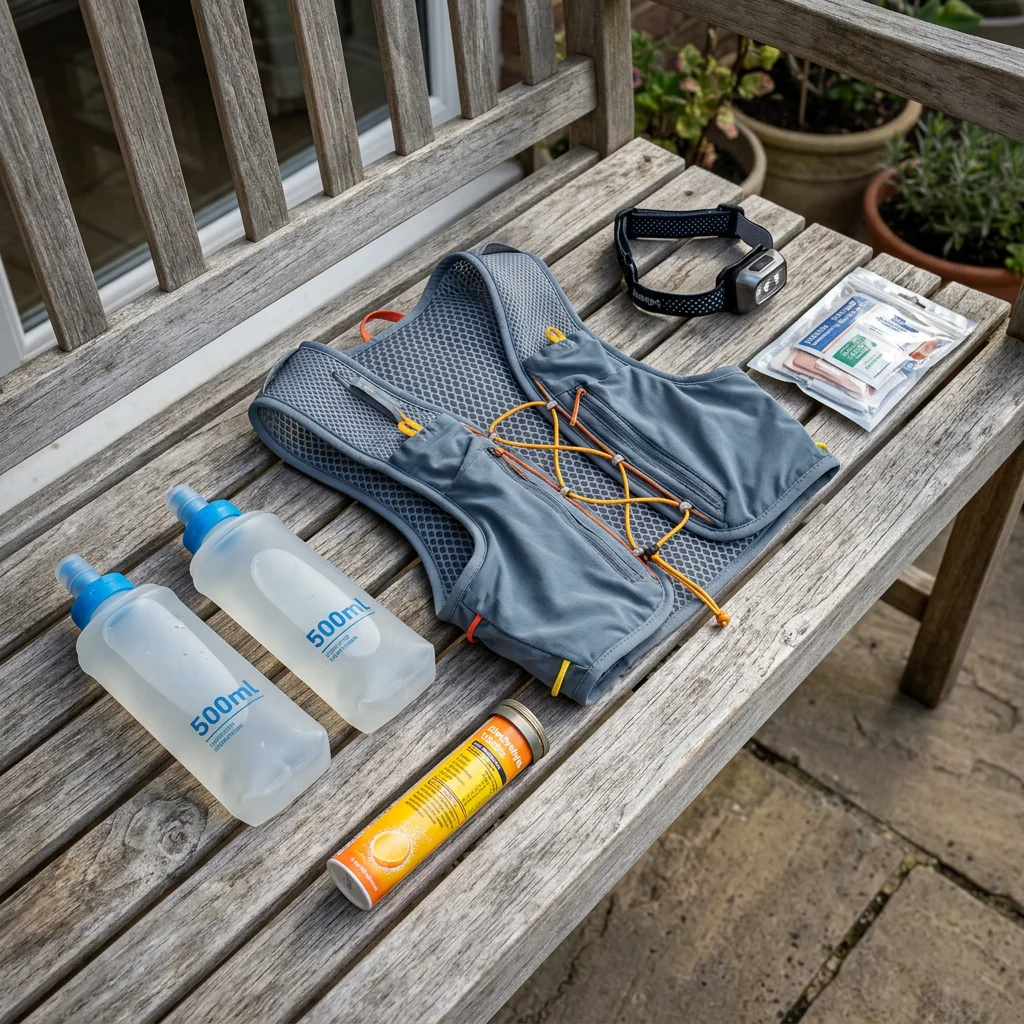
Venturing onto Thai trails requires adapting quickly to dense jungle terrain, tropical humidity, and informal routing. High heat and saturation sap hydration and salt reserves substantially faster than typical UK running conditions. Carrying generous fluids alongside electrolyte tablets is vital to stave off heat exhaustion and cramping once out on remote ridgelines.
Navigation demands preparation before leaving your accommodation. Thai mountain trails rarely feature painted blazes or physical waymarkers. Hand-cut hunting tracks and village paths fork repeatedly through thick bamboo and canopy cover, where mobile signal often vanishes completely. Loading offline GPX tracks onto a dedicated GPS watch or smartphone mapping application prevents severe disorientation at unmarked junctions.
Jungle wildlife also requires alert foot placement. Malayan pit vipers camouflage closely against fallen leaves and decaying logs, staying stationary rather than fleeing when approached. Giant centipedes and scorpions hide beneath loose stones, while loose, territorial farm dogs often challenge runners skirting rural village borders. Keeping your eyes scanned a few strides ahead and carrying running poles gives effective defence against aggressive dogs and sudden ground hazards.
For organised events, race regulations are strictly upheld. Organisers of major fixtures such as Chiang Mai Thailand by UTMB conduct mandatory gear inspections at race pack collection and unannounced checkpoints along the course. Arriving without compulsory equipment—such as an approved hooded waterproof jacket, survival blanket, mobile phone, and whistle—can incur heavy time penalties or outright disqualification.
Practical Tips
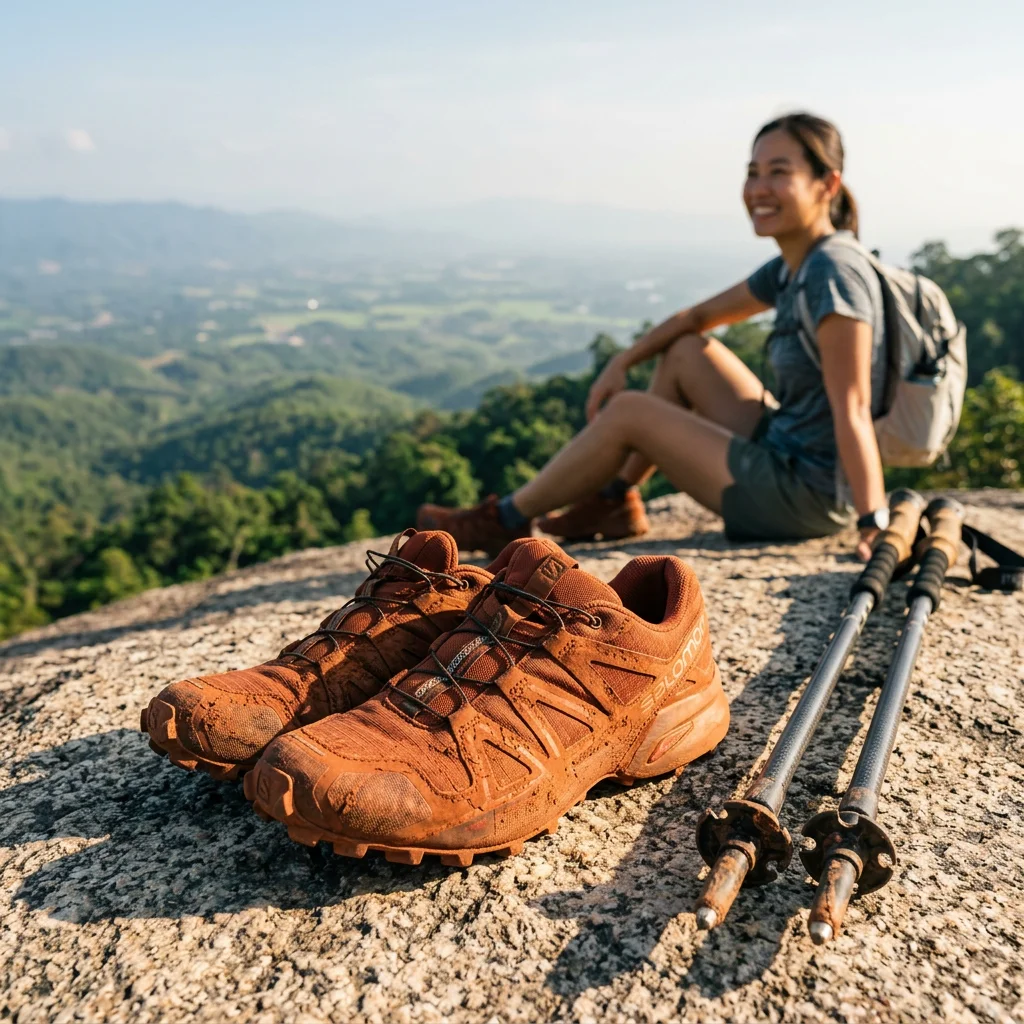
Footwear choice dictates your stability on mountain trails. Pack shoes with aggressive outsole lugs of at least 5mm rather than road-to-trail hybrids with shallow 2mm to 4mm treads. During the monsoon or along shaded valley descents, wet red clay forms a slick surface that clogs shallow soles, while deep, widely spaced rubber studs bite into soft mud and maintain traction on steep gradients.
Pair technical footwear with high trail socks or lightweight compression calf sleeves. Narrow jungle paths and ridgeline singletrack frequently cut through dense brush, low-hanging bamboo briars, and abrasive foliage. Leaving lower shins exposed often results in scratches and insect bites that heal slowly in humid tropical conditions.
Set alarms for first light around 06:00. Because Thailand sits close to the equator and does not observe daylight saving time, dawn arrives consistently across the year. The early window provides the coolest air and lowest direct solar radiation. Conditions become noticeably harsher after 09:30 as the sun crests the ridge, accelerating fluid loss. Pack a hydration vest capable of holding at least 1.5 litres, and carry spare electrolyte sachets or salt tablets in your pockets to replenish minerals lost through heavy sweating.
Stash small-denomination banknotes—specifically 20 THB (approx 45p), 50 THB (approx £1.15), and 100 THB (approx £2.30)—inside a sealed waterproof pouch within your running vest. Remote hill-tribe stalls, roadside fruit vendors, and rural national park checkpoints do not take UK credit cards. Mobile data frequently drops in deep forest ravines, rendering smartphone QR payment apps unusable when you need to purchase drinking water or pay park admission.
If entering marquee mountain events such as the major ultra races around Doi Inthanon, secure lodgings several months ahead. Park chalets and local village homestays near race headquarters fill rapidly, leaving late entrants to base themselves in Chom Thong, roughly 30 kilometres away, or face a two-hour commute from central Chiang Mai. Finally, purchase your technical running kit, poles, and replacement hydration flasks before leaving the UK, where pricing and size ranges are far more favourable than the steep import markups on specialist gear in Thai retail stores.
Quick Reference Table
| Item | Detail | Notes |
|---|---|---|
| Primary mountain hubs | Chiang Mai & Doi Inthanon | Direct access to Doi Suthep-Pui singletrack, Monk's Trail, and subalpine ridgelines |
| Prime running season | November to January | Firm dirt, clear singletrack, valley highs around 26°C, and mountain lows down to 10°C |
| Season to avoid (North) | Mid-February to April | Agricultural burning creates hazardous AQI (150–300+); relocate to southern coastal paths |
| Recommended start time | Around 06:00 (first light) | Coolest conditions and lower solar exposure; heat stress increases markedly after 09:30 |
| National park entry | 200 THB – 400 THB (approx £4.50 – £9) | Foreign adult fee (300 THB at Doi Inthanon, 400 THB at Khao Yai); payable in cash or QueQ app |
| Race entry costs | 600 THB – 9,800 THB (approx £13.50 – £220) | Short trails (10k–25k) cost 600–1,200 THB; 50k ultras 3,500–4,500 THB; UTMB 100-milers up to 9,800 THB |
| Essential footwear | Aggressive outsoles (5mm+ lugs) | Crucial for traction on slick red clay; shallow 2mm–4mm hybrid treads easily clog |
| Navigation & safety kit | Offline GPX tracks & 1.5L hydration | Trails lack waymarkers and phone signal; poles help manage steep gradients and loose farm dogs |
| Official website | Chiang Mai Thailand by UTMB | https://chiangmai.utmb.world |
| Official website | Amazean Jungle Thailand by UTMB | https://amazean.utmb.world |
| Official website | Khao Yai National Park | https://khaoyainationalpark.com |
| Booking platform | Runlah (Domestic Race Registration) | https://www.runlah.com |
FAQ: Trail Running
What is the best time of year for trail running in northern Thailand?
When should I avoid trail running in northern Thailand due to air quality?
What kind of footwear is best for trail running in Thailand?
How should I navigate on Thai mountain trails?
What wildlife should I be aware of on Thai trails?
What mandatory gear is required for major trail running events in Thailand?
What are the hydration requirements for trail running in Thailand?
What is the best time of day to start a trail run in Thailand?
Should I buy running gear in Thailand or before I go?
How much does it cost to enter national parks for trail running in Thailand?
Reviewed by the Thailand Guide Editorial Team • Last reviewed: 18 November 2026
This page is provided for general information only. While we aim for accuracy, details can change — please verify anything important independently before relying on it.