Running in Chiang Mai




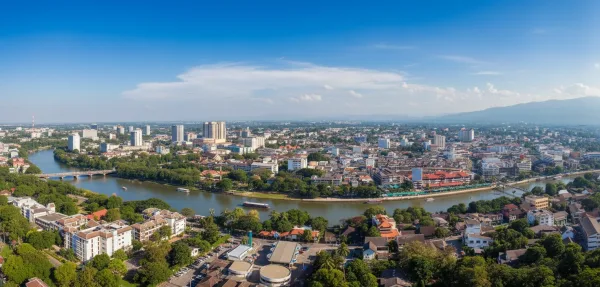
Chiang Mai provides visiting runners with flat municipal circuits, standard 400-metre synthetic athletics tracks, and paved reservoir perimeters within minutes of the historic centre. While northern Thailand is celebrated internationally for steep mountain ultras, the city’s urban basin contains accessible, traffic-free pavement options suitable for structured marathon training, tempo intervals, and easy recovery jogs.
Running in Chiang Mai centres on public municipal parks, higher-education campuses, civic sports complexes, and suburban reservoir paths managed primarily by the Chiang Mai Municipality, Chiang Mai University, and the Sports Authority of Thailand. This urban environment caters to road racers, remote workers, and holidaymakers who need flat, predictable mileage without tackling technical mountain ascents. Unlike Bangkok's expansive park networks, Chiang Mai's running scene is decentralised, requiring runners to match specific sessions to dedicated pockets of green space across the city. It accommodates road runners, 5k to marathon competitors, and social joggers seeking reliable morning routes.

Municipal Parks and Dedicated Green Loops
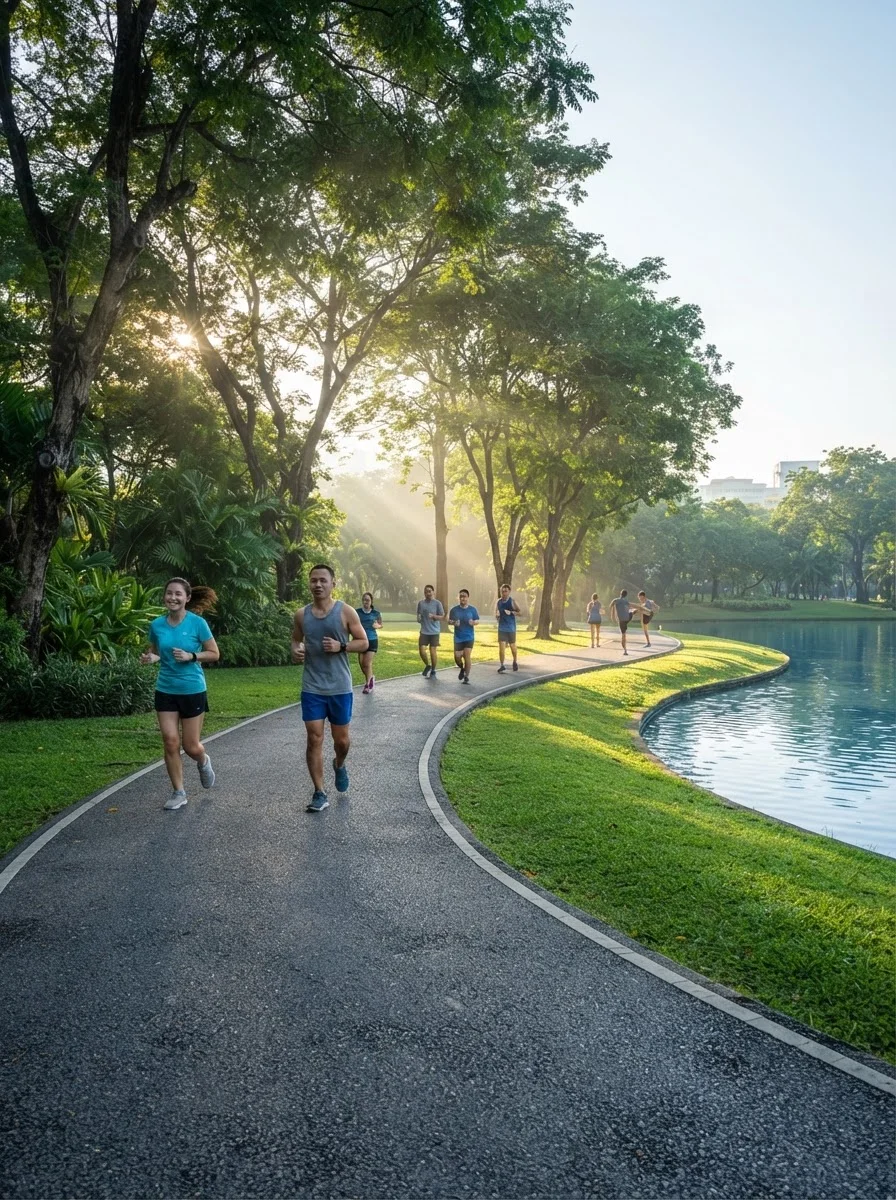

Chiang Mai offers a balanced network of traffic-segregated running surfaces, spanning historic moats, municipal flower gardens, floodlit university athletics tracks, and mountain-reservoir access roads. Selecting the right venue depends on whether your training plan calls for recovery jogging, track intervals, continuous tempo work, or community group mileage.
Central Parks and Shaded Green Circuits
Municipal parks supply Chiang Mai's most accessible, traffic-isolated running paths directly adjacent to central tourist accommodation. Nong Buak Haad Public Park sits in the inner south-western corner of the Old City moat along Arak Road, beside the historic Ku Hueang corner. The park features a paved asphalt and concrete perimeter path measuring roughly 750 metres per lap, circling central ornamental ponds, footbridges, and outdoor calisthenics stations. Gates open daily at 05:00 and close at 21:00, with free admission. Early mornings draw a mix of steady joggers, walking groups, and outdoor yoga practitioners. While the short circumference makes high-volume marathon workouts repetitive, the manicured grounds provide level footing free from motorbikes and road crossings.
North of the Old City along the Chotana Road corridor (Highway 107) in Chang Phueak, King Rama IX Lanna Park offers a considerably broader municipal footprint. The park features wide, paved perimeter routes extending over two kilometres through open arboretum lawns and decorative lakes, giving runners enough continuous distance to complete mid-distance aerobic workouts without crossing city traffic. Near the western hotel districts, Huay Kaew Arboretum sits beside the Chiang Mai Zoo entrance on Huay Kaew Road. It provides a shaded one-kilometre dirt-and-gravel loop beneath mature teak and bamboo canopy, providing cushioned footing and relief from direct sunlight during warmer daylight hours.
University Grounds and Public Athletics Tracks
Higher-education campuses and civic sports complexes supply Chiang Mai's primary facilities for structured tempo blocks and interval speedwork. Chiang Mai University (CMU), situated at the western end of Huay Kaew Road in Suthep, acts as northern Thailand's focal point for resident road runners. The university grounds host the Ang Kaew Reservoir, an open storage basin framed by pine and eucalyptus trees. The reservoir is ringed by an asphalt and stone perimeter path measuring approximately 1.5 kilometres per circuit. The route provides flat footing and open views toward the Doi Suthep ridge, accompanied by morning breezes across the water. The reservoir area opens daily to the public from 05:00 to 22:00. Runners frequently combine the lake circuit with the university's quiet interior avenues and agricultural research roads to assemble continuous five-kilometre road routes.
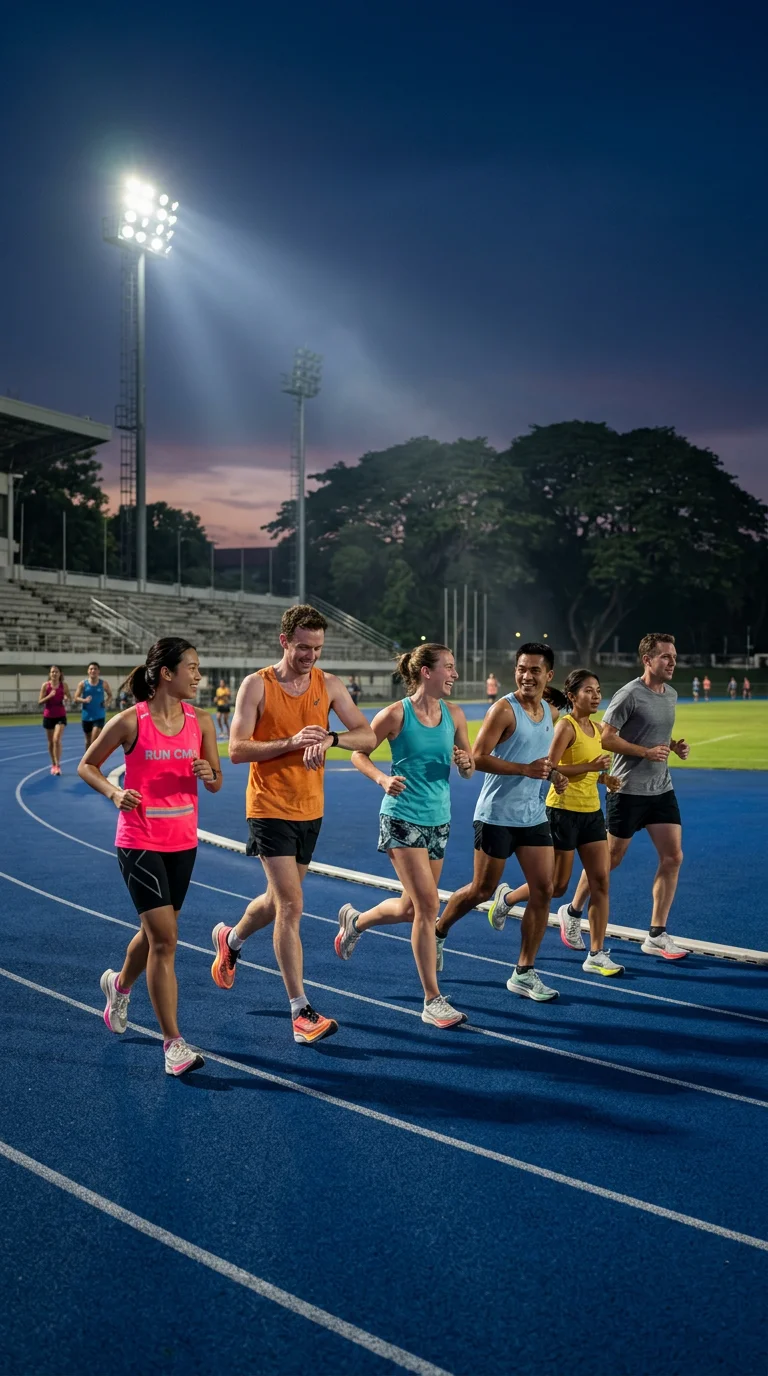
Within the same CMU campus lies the Central Stadium, featuring an eight-lane, 400-metre synthetic tartan running track. The facility is free and open to the public during non-event morning sessions from 06:00 to 08:00 and late afternoons from 16:30 to 20:00, with floodlights illuminating the back straight after dusk. Local track etiquette asks walkers and slow joggers to stick to lanes seven and eight, keeping lanes one and two clear for speedwork.
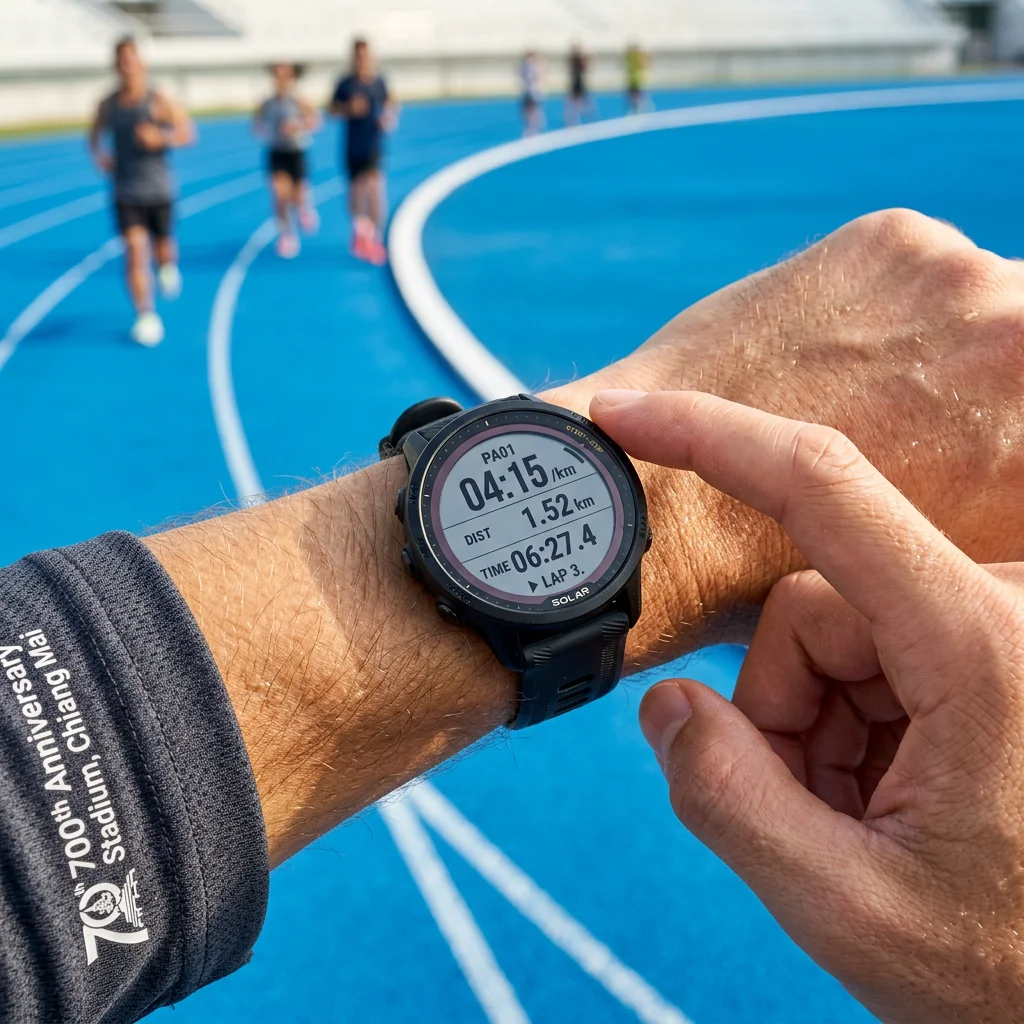
For dedicated track training further north, the 700th Anniversary Stadium—built for the 18th Southeast Asian Games in 1995 off Canal Road (Highway 121) in Don Kaeo—contains an international-standard 400-metre all-weather track alongside a wide two-kilometre perimeter roadway lit by civic floodlights until roughly 21:00. Athletes regularly utilise the outer stadium roadway and track lanes for 800-metre repeats and threshold intervals without paying facility charges.
Road Circuits and Suburban Reservoirs
Urban road circuits and dedicated suburban bypass corridors deliver continuous, unbroken distance options for endurance runners building weekly volume. The classic city circuit follows the square perimeter of the Old City moat, covering precisely 6.4 kilometres across four straight road segments and four corner bastions. Running the moat requires strict dawn discipline; setting off before 06:30 is strongly advised to complete the loop before scooter traffic, songthaews, and kerbside street-food carts crowd the pavements. Paved walkways line the canal edge, though runners must watch for tree roots, uneven kerbs, and frequent vehicle access cuts.
For longer training sessions without vehicle conflict, the Canal Road multi-use path (Highway 121) extends north from the Chiang Mai International Exhibition and Convention Centre toward Mae Rim. This dedicated asphalt cycle and running artery spans 5.5 kilometres one way, entirely segregated from vehicle traffic by crash barriers and irrigation channels. At its northern terminus, runners can branch onto a three-kilometre multi-use connector near Khuang Phra Chao Lanna to reach Huay Tung Tao Lake, located roughly 12 to 15 kilometres north of the Old City. The reservoir access road provides a flat, traffic-controlled asphalt loop of 3.5 kilometres circling tranquil mountain-fed water.
| Route or Circuit | Distance per Lap | Surface Type | Key Features and Best Timing |
|---|---|---|---|
| Nong Buak Haad Park | 0.75 km | Paved asphalt | Flat, car-free; recommended 05:30–07:30 or 17:00–18:30 |
| Ang Kaew Reservoir (CMU) | 1.5 km | Asphalt and stone | Mountain views; recommended 05:30–08:00 |
| CMU Central Stadium Track | 400 m | Synthetic tartan | 8 lanes, floodlit; recommended 06:00–08:00 and 16:30–20:00 |
| 700th Anniversary Stadium | 400 m track / 2 km outer | Synthetic track / asphalt | Open civic complex; suitable for evening speedwork |
| Old City Moat Perimeter | 6.4 km | Paved footways | Historic city loop; dawn start before 06:30 advised |
| Canal Road Segregated Path | 5.5 km one way | Smooth asphalt | Traffic-free multi-use lane; suitable for weekend long runs |
| Huay Tung Tao Reservoir | 3.5 km | Two-lane asphalt | Scenic lake road, entry fee around 50 THB; recommended 06:00–08:30 |
Local Running Clubs and Social Crews
Community running culture in Chiang Mai thrives through informal social clubs, university crews, and established expat organisations that welcome visiting runners without membership prerequisites. The Chiang Mai Hash House Harriers represents the oldest continuous running community in northern Thailand. The original Monday men-only kennel (CH3) was established in 1981, followed by the mixed Saturday kennel (CSH3, established in 1991), and the Thursday Happy Hash (CH4). Runs explore rural road and trail loops outside the city centre, with shared songthaew transport departing from outside the McDonald's at Tha Phae Gate between 15:20 and 15:50.
For contemporary road runners and remote workers, Dude Run Club and Faburunsclub host free weekly mid-distance social outings. Dude Run Club organises weekly city runs of five to six kilometres at steady conversational paces (typically around 6:30 to 7:00 per kilometre) followed by coffee gatherings. Faburunsclub, founded in June 2024 by an experienced trail athlete to offer a non-competitive, accessible space for road runners, hosts Saturday morning city runs and Wednesday evening five-kilometre jogs from local cafés.
The Slowcial Running Club CM gathers every Saturday at 07:30 opposite the Living a Dream café on Huay Kaew Road at Chiang Mai University. The meetup draws international expats, digital nomads, and local residents for a gentle 20- to 25-minute conversational jog around Ang Kaew Reservoir, followed by breakfast together. Informal groups such as Expat Runners Chiang Mai also coordinate evening track interval sessions at the 700th Anniversary Stadium and CMU Central Stadium. These community crews provide reliable pacing partners and current route advice, helping visiting runners navigate city corridors comfortably.
Location and Getting There
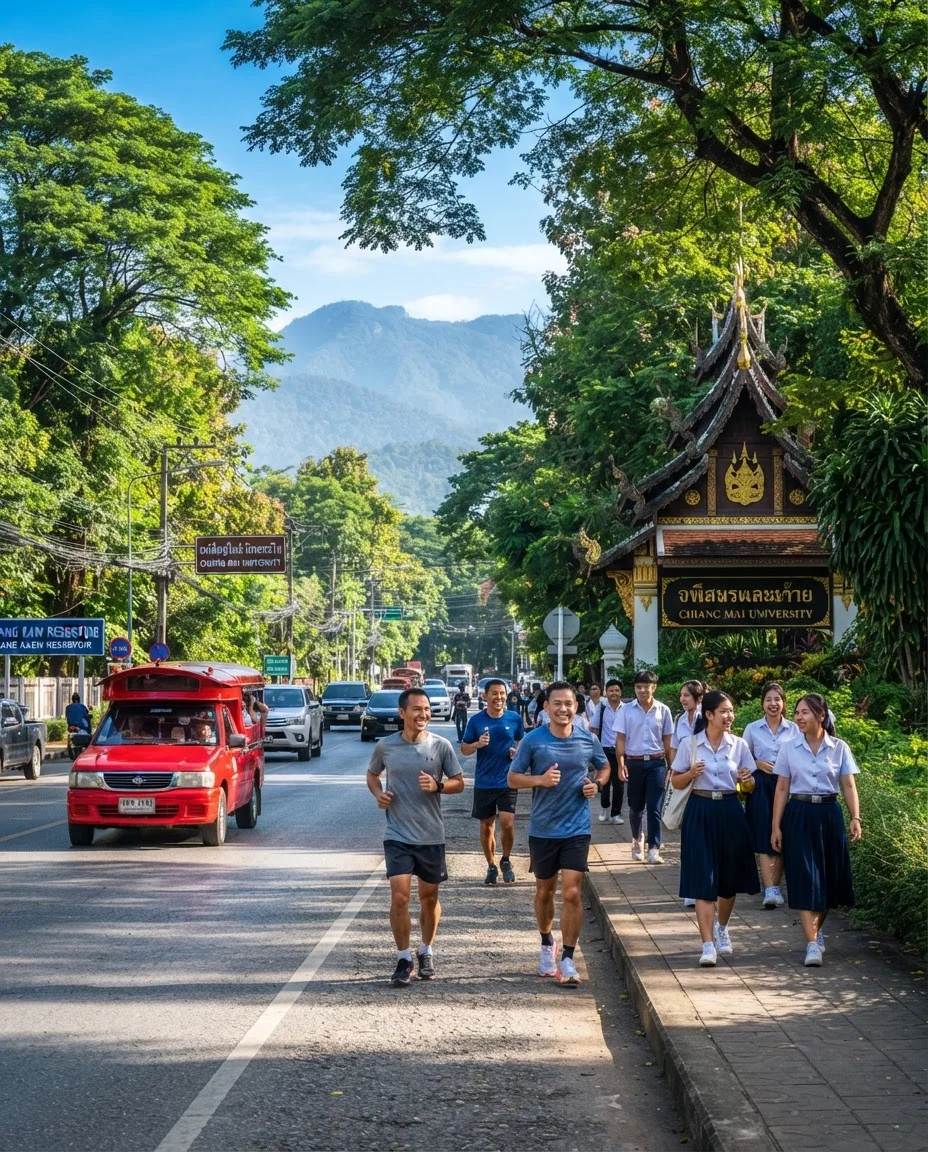
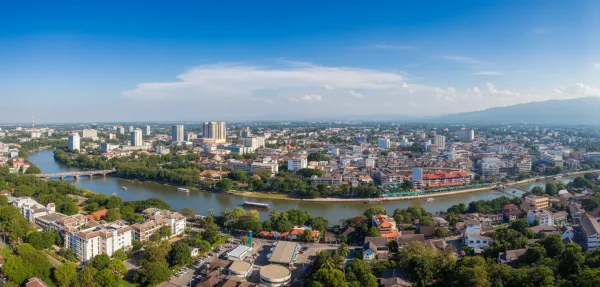
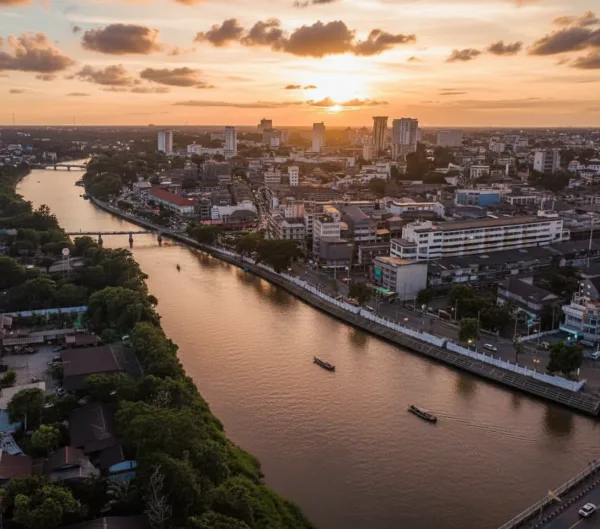
Chiang Mai's running hubs divide across three main zones: the historic Old City, the western university district flanking Nimmanhaemin and Suthep, and the northern sports corridor along the Canal Road (Highway 121) and Chotana Road. Staying within the Old City puts the flat 6.5-kilometre moat perimeter and the landscaped paths of Nong Buak Haad Park within immediate walking distance.
Chiang Mai International Airport (CNX) lies four kilometres south-west of the centre. Staffed taxi counters inside the terminal charge a flat rate of 150 THB (around £3.45) for private transfers into the Old City or Nimmanhaemin, while official airport shuttle buses run into town for 40 THB (£0.90).
Reaching the running circuits at Chiang Mai University and Ang Kaew Reservoir, roughly 4.5 kilometres west of the moat, is straightforward. Shared red songthaews (converted pickup trucks) ply Huay Kaew Road constantly, charging between 30 THB and 40 THB (£0.70 to £0.90) per passenger, while ride-hailing apps like Grab typically quote 90 THB to 120 THB (£2.05 to £2.75) for a private car.
For the outlying northern venues, the 700th Anniversary Stadium sits nine kilometres from the centre, and the four-kilometre lakeside circuit at Huay Tung Tao Lake lies twelve kilometres north. Expect to pay 160 THB to 220 THB (£3.65 to £5.00) each way via Grab. Because summoning an app-based ride for the return journey from Huay Tung Tao can involve long waits, runners often arrange a round-trip waiting fare with a songthaew driver.
Master Chiang Mai with our expert guide. Get local prices for red trucks, 1,200 THB flights from Bangkok, and essential advice for first-time UK visitors.
Costs and Booking
Accessing Chiang Mai's public urban running facilities requires virtually no financial expenditure. Municipal green spaces, university roads, and civic athletics tracks charge no admission fees for general training. Public parks such as Nong Buak Haad and King Rama IX Lanna Park open daily from 05:00 to 21:00 with free access. Chiang Mai University and the 700th Anniversary Stadium also grant free track access during designated morning and evening sessions, requiring no booking or permits.
North of the city, Huay Tung Tao Reservoir charges a conservation fee of 50 THB (£1.15) for foreign visitors (20 THB for Thai nationals), paid in cash at the security checkpoint. Local social groups, including Dude Run Club, operate free of charge on a casual drop-in basis. Weekend trail and road runs with the Chiang Mai Hash House Harriers request 150 to 300 THB (£3.45 to £6.90) to cover shared songthaew transport from Tha Phae Gate and post-run refreshments.
Organised races require online registration in advance. The annual Muang Thai Chiang Mai Marathon in December charges tiered entry fees by distance: overseas runners pay 800 to 1,000 THB (£18.40 to £23) for 10k, 1,500 to 2,000 THB (£34.50 to £46) for the half marathon, and 2,000 to 2,500 THB (£46 to £57.50) for the full marathon, covering a timing chip, running shirt, and medal.
| Option | Cost (THB) | Cost (GBP approx) | Notes |
|---|---|---|---|
| Municipal Parks (Nong Buak Haad, Rama IX) | Free | Free | Public access daily 05:00–21:00; no booking needed |
| CMU & 700th Anniversary Athletics Tracks | Free | Free | Open public sessions morning and evening |
| Huay Tung Tao Reservoir Entry | 50 THB per entry | £1.15 | Foreigner conservation fee paid at checkpoint |
| Social Running Clubs (Dude Run, Slowcial CM) | Free | Free | Casual drop-in; runners buy own drinks |
| Chiang Mai Hash House Harriers | 150–300 THB per run | £3.45–£6.90 | Covers chartered songthaew and refreshments |
| Chiang Mai Marathon Entry (10k / Half / Full) | 800–2,500 THB per entry | £18.40–£57.50 | Foreign runner tiers; includes chip, shirt, medal |
Who Urban Running Suits
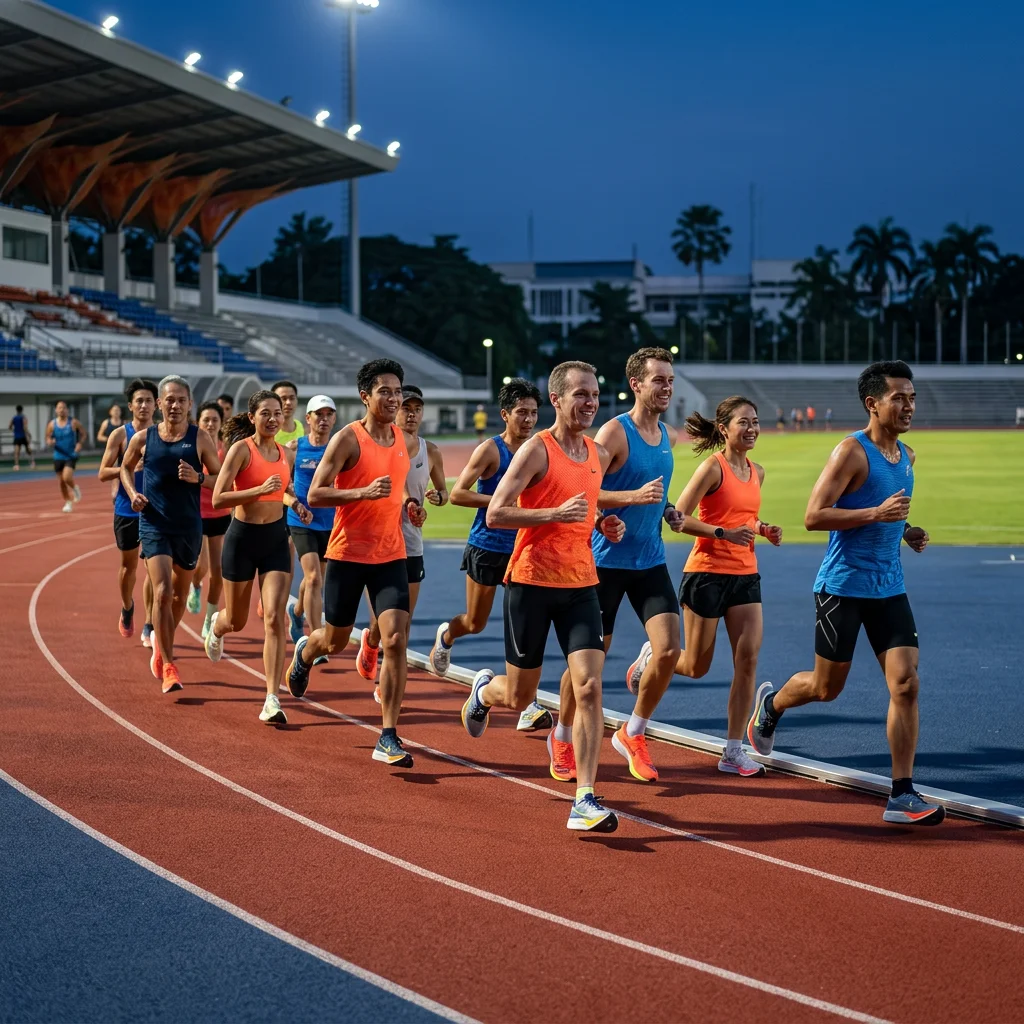
Chiang Mai suits road runners, marathoners, and casual joggers looking for flat terrain to log steady endurance mileage. It works especially well for runners building winter base fitness between November and February, when morning temperatures in northern Thailand drop into the mid-teens Celsius and rainfall is minimal. Digital nomads and holidaymakers based near the Old City or the university district can easily fit in structured morning runs on dedicated park loops, university athletics facilities, and flat canal paths without specialised equipment or mountain transport.
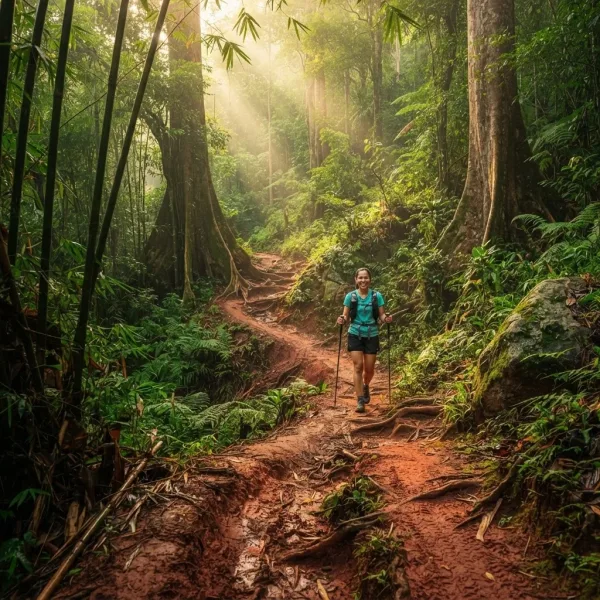
The city is less suited to runners who prefer uninterrupted roadside footways through commercial districts. Outside the moat perimeter and self-contained green spaces, pavements are often broken, obstructed by utility poles and street vendors, or cut by steep kerbs and side alleys. Runners wanting technical singletrack, steep elevation gain, and forest canopy trails should consult our separate Trail Running in Chiang Mai guide instead.
What to Know Before You Book
Seasonal timing strongly dictates running conditions in Chiang Mai. The cool, dry window from November to January provides the clearest skies and lowest dawn temperatures, which often drop to between 14°C and 18°C. By contrast, the annual agricultural burning season between February and April brings heavy particulate pollution (PM2.5) that settles across the valley basin. Air quality during these months frequently reaches hazardous thresholds, making prolonged outdoor aerobic exercise inadvisable and forcing runners into indoor air-conditioned gyms.
Tropical heat builds rapidly outside the cooler months. Daytime temperatures regularly climb past 30°C by mid-morning and can top 37°C in April, making outings between 05:30 and 07:00 far cooler and more practical than daytime sessions.
Road infrastructure requires careful route selection. Pavements along city streets and suburban thoroughfares are often uneven, marked by broken concrete, high kerbs, open drains, and utility poles. Runners who prefer unbroken strides generally stick to traffic-free municipal parks, university paths, or dedicated stadium tracks rather than navigating standard footways.
Public etiquette is another consideration in civic spaces. Across municipal parks and university grounds, public address systems broadcast the Thai National Anthem twice daily at 08:00 and 18:00. Local custom expects runners and walkers to pause in place and stand quietly for the minute until the broadcast finishes.
Practical Tips
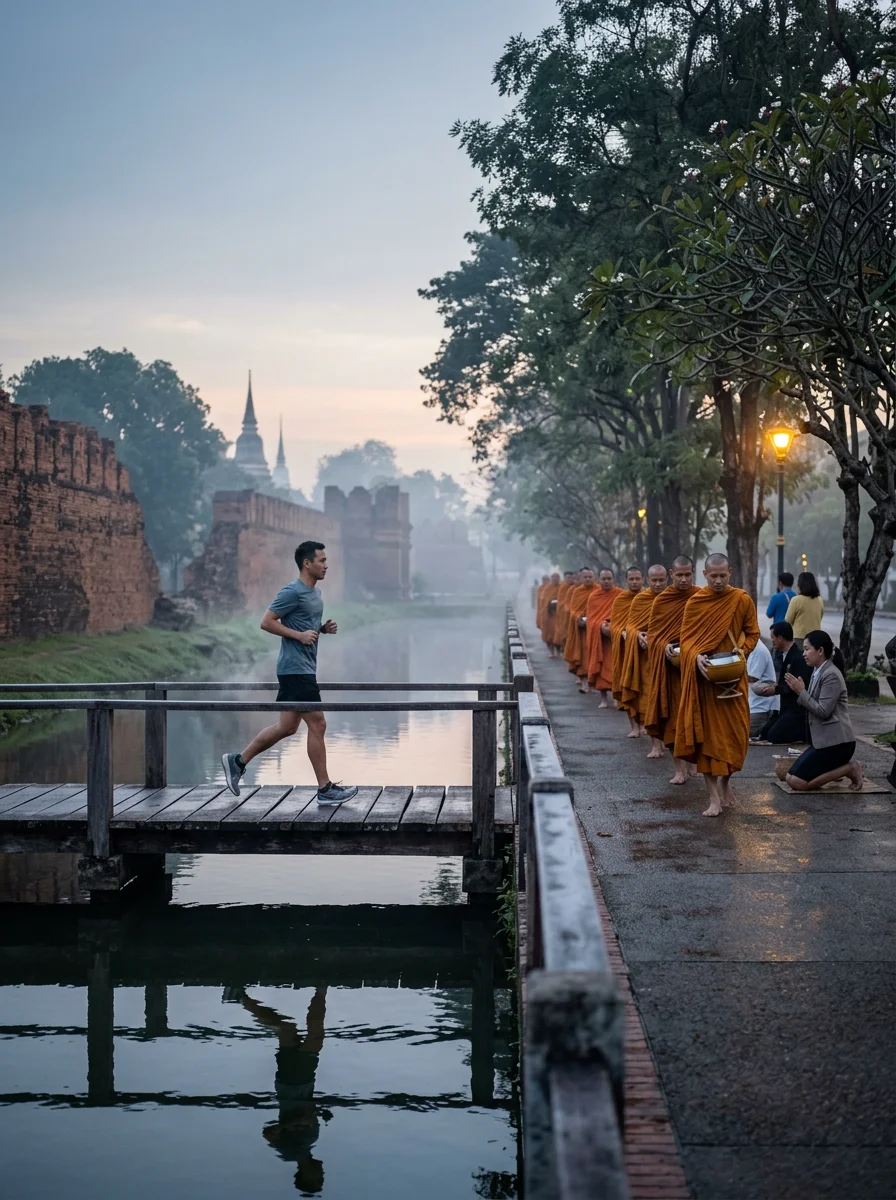
Timing an outdoor run is the single most critical factor for comfort and safety in Chiang Mai. First light arrives around 06:00 throughout the year, bringing the coolest temperatures and cleanest air of the day. By 07:30, school runs and commuting mopeds transform ring roads and canal lanes into congested, exhaust-heavy corridors. Setting off at dawn ensures you finish your session before the tropical sun becomes punishing.
Keep small cash notes tucked into your running belt or pocket. Perimeter running spots like Huay Tung Tao Lake collect entry fees at the barrier, and park stalls rarely accept international contactless cards. Carrying a couple of 20 THB notes and a 50 THB note ensures you can pay entry charges, pick up bottled drinking water, or buy fresh fruit without relying on card machines.
Urban footways across Chiang Mai, particularly along the moat and older side streets, present frequent trip hazards. Broken paving slabs, tree roots, raised kerbs, and missing drain grates are commonplace, whilst street lighting along northern and eastern stretches of the Old City remains dim before sunrise. A lightweight clip-on light or headlamp helps you spot uneven ground and alerts early-morning mopeds to your presence.
Encountering street dogs (soi dogs) is routine during early runs, particularly near temple gates and quiet residential alleys. Most dogs remain sleepy and ignore runners, but sprinting past can provoke a territorial chase. If you approach barking dogs, slow to a steady walk, give them a wide and predictable berth, avoid eye contact, and continue smoothly onward without shouting or panicking.
Tropical humidity accelerates fluid and electrolyte depletion, even on easy recovery runs. Convenience stores and local pharmacies stock Royal-D electrolyte beverage powder, typically priced between 6 and 8 THB (around 15p to 20p) per sachet. Mixing a packet into drinking water post-run replaces lost sodium and potassium, helping to ward off dehydration and heat headaches.
Checking real-time air quality on apps such as Air4Thai or IQAir is sensible before heading out. If fine particulate readings climb into unhealthy categories, moving your workout to an air-filtered gym treadmill avoids heavy particle inhalation. On clearer mornings, you can lengthen shorter runs; the 1.5-kilometre path at Ang Kaew Reservoir links directly onto Chiang Mai University’s traffic-calmed roads to form a shaded six-to-eight-kilometre loop. Choosing running kit and base accommodation near these calmer western districts will keep your training smooth and enjoyable.
Quick Reference Table
| Item | Detail | Notes |
|---|---|---|
| Nong Buak Haad Park Loop | 750 m (0.75 km) | Free; open daily 05:00–21:00; paved flat circuit in Old City |
| Ang Kaew Reservoir Loop | 1.5 km | Free; open daily 05:00–22:00; asphalt and stone path with mountain views |
| CMU Central Stadium Track | 400 m (8 lanes) | Free synthetic tartan track; open 06:00–08:00 and 16:30–20:00 |
| 700th Anniversary Stadium | 400 m track / 2 km outer roadway | Free civic complex; all-weather surface floodlit until ~21:00 |
| Old City Moat Circuit | 6.4 km | Free; paved perimeter footways; dawn start before 06:30 advised |
| Canal Road Segregated Path | 5.5 km (one way) | Free; traffic-separated multi-use asphalt artery along Highway 121 |
| Huay Tung Tao Reservoir Loop | 3.5 km | 50 THB (£1.15) foreign entry fee (20 THB Thai); lakeside asphalt road |
| Social Running Clubs | Free drop-in | Dude Run Club, Slowcial Running Club CM, Faburunsclub |
| Chiang Mai Hash House Harriers | 150–300 THB (£3.45–£6.90) | Covers chartered songthaew from Tha Phae Gate and refreshments |
| Chiang Mai Marathon Entry | 800–2,500 THB (£18.40–£57.50) | Tiered overseas entry for 10k, half marathon, and full marathon |
| Best Training Season | November to January | Cool, dry conditions (14°C–18°C dawn); avoid burning season (Feb–Apr) |
| Airport Private Transfer | 150 THB (£3.45) flat rate | Staffed taxi counters from CNX to Old City or Nimmanhaemin |
| Shared Songthaew to CMU | 30–40 THB (£0.70–£0.90) | Standard red songthaew fare along Huay Kaew Road |
| Website | https://www.chiangmaimarathon.com | Official website for the annual Chiang Mai Marathon |
| Address | 239 Huay Kaew Rd, Suthep, Mueang Chiang Mai District, Chiang Mai 50200 | Chiang Mai University campus (Ang Kaew Reservoir & Central Stadium) |
FAQ: Running in Chiang Mai
What is the best time of year for outdoor running in Chiang Mai?
What are the public access hours and etiquette for the Chiang Mai University running track?
What is the best time to run around the Old City moat in Chiang Mai?
What should runners know about Chiang Mai's road infrastructure?
What is the local etiquette regarding the Thai National Anthem in Chiang Mai's public spaces?
How should runners react if they encounter street dogs in Chiang Mai?
How can runners check air quality in Chiang Mai and what should they do if it's poor?
Who is urban running in Chiang Mai best suited for?
Why should runners carry small cash notes in Chiang Mai?
Why are electrolyte drinks recommended for runners in Chiang Mai?
Reviewed by the Thailand Guide Editorial Team • Last reviewed: 18 November 2026
This page is provided for general information only. While we aim for accuracy, details can change — please verify anything important independently before relying on it.