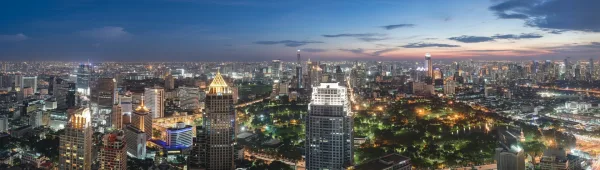
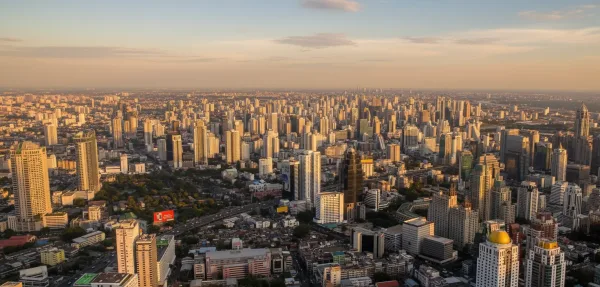
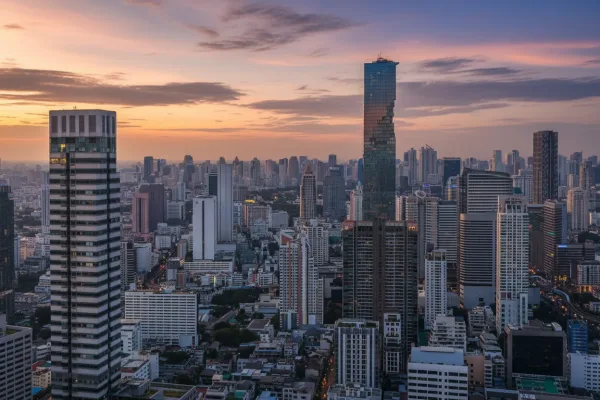
Running in Bangkok


Two interconnected central green spaces—Lumphini Park and Benjakitti Forest Park—linked by an elevated 1.6-kilometre pedestrian walkway, provide runners in Bangkok with continuous car-free routes extending up to ten kilometres. Along with floodlit running tracks, free municipal stadium circuits, and early-morning social clubs, the capital provides practical training conditions for runners who step away from street-level traffic.
Running in Bangkok relies on dedicated municipal parklands and public university facilities, mostly overseen by the Bangkok Metropolitan Administration and local academic institutions. Avoiding fractured roadside pavements and heavy exhaust fumes, runners gather in dedicated spaces that open as early as 04:30 to beat the tropical heat. The setting accommodates casual five-kilometre morning jogs, high-mileage marathon blocks, and floodlit evening track sessions. Positioned alongside central BTS Skytrain and MRT subway stations, Bangkok delivers structured, flat tarmac and synthetic loops across the inner city without charging an entrance fee.

Car-Free Park Loops: Lumphini, Benjakitti, and the Green Mile
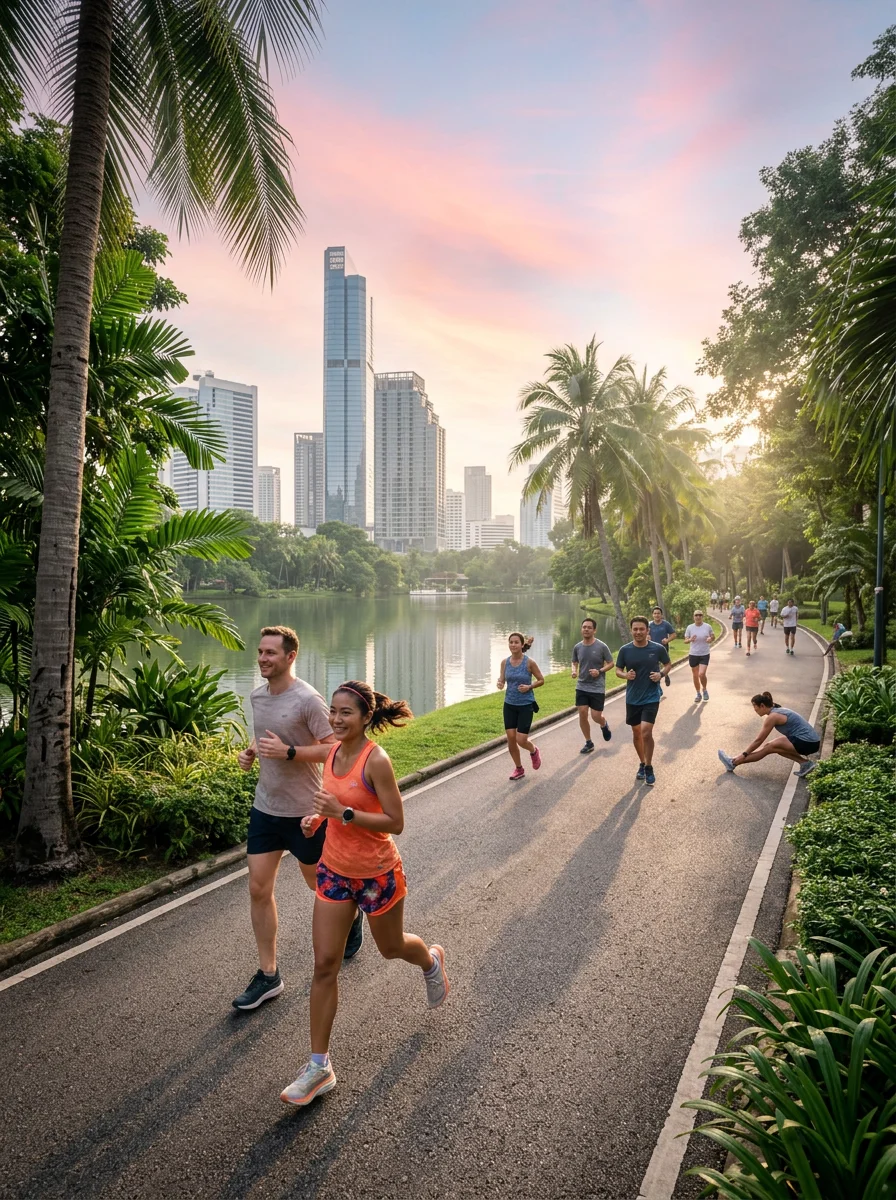
Bangkok’s primary road-running corridor connects historic central parkland with modern urban wetlands via a dedicated elevated greenway. Lumphini Park forms the traditional nucleus: a flat asphalt loop measuring approximately 2.54 kilometres around its perimeter, marked with metric distance indicators every 100 metres and shaded by mature rain trees. At the northeastern corner, runners ascend Saphan Khiao—known locally as the Green Mile—a renovated elevated viaduct spanning between 1.3 and 1.6 kilometres. This overpass carries pedestrians and cyclists directly above Khlong Phai Singto, Witthayu Road, and congested multi-lane junctions, including the Chaloem Maha Nakhon Expressway, before descending directly into Benjakitti Forest Park.
Benjakitti Forest Park occupies more than 450 rai of land on the site of a former tobacco manufacturing facility in Khlong Toei. The complex combines an established 1.8-kilometre circuit encircling a central lake with an expansive ecological redevelopment featuring a dedicated 2.8-kilometre ground-level running track finished with shock-absorbing surfaces. An elevated timber skywalk network spans roughly 1.6 kilometres across the constructed wetlands; this structure is reserved for walkers and nature observers, while runners use the dedicated ground-level lanes. Linking Lumphini Park, Saphan Khiao, and Benjakitti creates a continuous out-and-back or figure-of-eight training route between eight and ten kilometres without a single street-level road crossing or traffic light. Both parks provide drinking fountains, staffed maintenance buildings, basic public restrooms, and vendor stalls selling bottled water, fresh fruit, and electrolytes. Water monitor lizards frequently sunbathe along Lumphini’s canals, while Benjakitti provides open vistas across wetland reedbeds framed by the Sukhumvit and Asok skylines. Bicycles are permitted in Lumphini between 10:00 and 15:00, keeping the paths clear for runners during peak morning and evening training windows.
| Circuit / Route | Distance & Surface | Operating Hours | Key Feature & Transit Access |
|---|---|---|---|
| Lumphini Park Outer Loop | 2.54 km, asphalt and paved stone | 04:30 – 22:00 | Distance markers every 100 m; MRT Silom or Lumphini |
| Benjakitti Forest Track & Lake | 1.8 km lake / 2.8 km forest track, synthetic and asphalt | 05:00 – 21:00 | Dedicated running lanes and wetlands; MRT Queen Sirikit Centre |
| The Green Mile (Saphan Khiao) | 1.3 – 1.6 km, elevated resurfaced concrete | 05:00 – 21:00 | Bridges Lumphini and Benjakitti over traffic; access from both parks |
| Bang Kachao (Sri Nakhon Khuean Khan) | 2.2 km park loop + 15+ km canal paths, concrete | 05:00 – 19:00 | Raised mangrove boardwalks; ferry from Wat Khlong Toei Nok |
| Chatuchak / Rot Fai / Queen Sirikit | 6.0 – 7.5 km combined, mixed paved and crushed gravel | 04:30 – 21:00 | Vast northern parkland network; BTS Mo Chit / MRT Chatuchak Park |
| Chulalongkorn University Stadium | 400 m, 8-lane all-weather synthetic track | 07:00 – 21:00 Mon–Fri, 09:00 – 18:00 Sat–Sun | Floodlit evening speedwork; MRT Sam Yan or BTS National Stadium |
Bang Kachao Jungle Boardwalks and River Loops
Situated inside a deep oxbow bend of the Chao Phraya River directly opposite Khlong Toei port, Bang Kachao provides an off-grid distance-running environment completely removed from metropolitan traffic. Known widely as Bangkok’s Green Lung, this conservation peninsula in Samut Prakan province remains protected from high-rise commercial development. Runners cross the river via a short passenger ferry ride from Wat Khlong Toei Nok pier, arriving onto narrow concrete pathways raised above swampy orchards, nipa palms, and coconut plantations.
Sri Nakhon Khuean Khan Park and Botanical Garden forms the principal staging ground on the peninsula, providing a paved, vehicle-free 2.2-kilometre recreation loop encircling ornamental ponds, botanical exhibits, and a seven-metre timber birdwatching tower. Beyond the park perimeter, elevated concrete canal paths stretch for more than 15 kilometres through quiet residential hamlets, fruit orchards, and Buddhist temples. Running these pathways demands constant attention: the raised slabs measure roughly one metre across without guardrails, suspended one to two metres above tidal marshes and drainage ditches. Runners regularly share these pathways with local commuter mopeds and leisure cyclists, requiring courteous yielding and steady footing.
Plan your Bangkok trip with practical advice for UK travellers, covering top neighbourhoods, BTS and MRT transit, realistic daily costs, and street food.
Northern Parklands and Dedicated Track Venues
Runners seeking varied surfaces and longer distances north of the city centre can utilise the interconnected parklands of Chatuchak. Three contiguous public spaces—Chatuchak Park, Wachirabenchathat Park (commonly called Suan Rot Fai), and Queen Sirikit Park—encompass more than 700 rai of green space. Internal footbridges and linking gates allow runners to construct unbroken circuits of 6.0 to 7.5 kilometres across asphalt, paving bricks, and compacted gravel trails. Suan Rot Fai features broad shared cycling and running routes, whereas Queen Sirikit Park is strictly pedestrianised, with quiet botanical paths bordered by lotus pools and mature timber.
For structured interval training and speedwork, Chulalongkorn University Stadium in Pathum Wan provides open community access to a World Athletics-certified, eight-lane 400-metre synthetic rubber running track. Equipped with full floodlighting, the track surrounds a regulation football pitch and sits within walking distance of both BTS National Stadium and MRT Sam Yan, giving runners a reliable, measured venue for evening tempo workouts.
Regional Capital Comparison: Bangkok, Singapore, Kuala Lumpur, and Tokyo
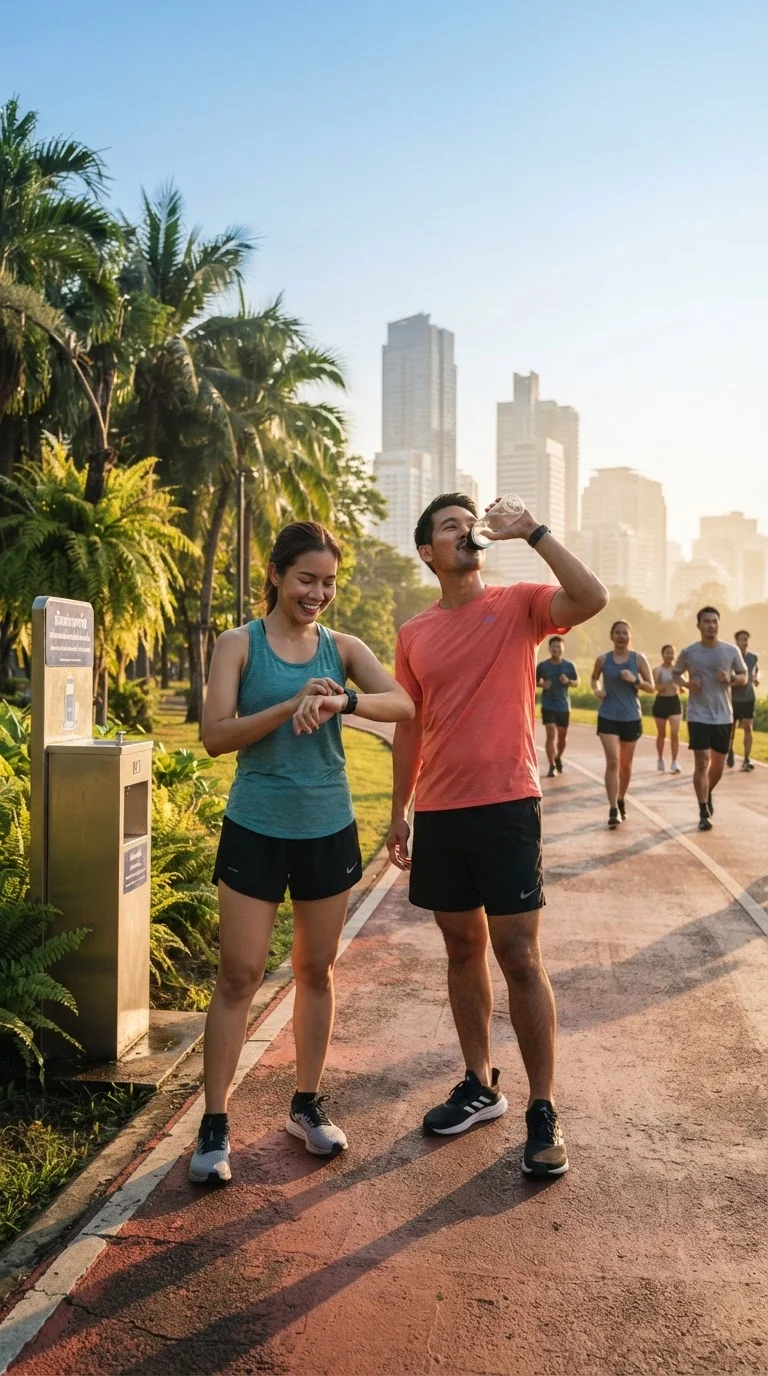
Bangkok's urban running infrastructure operates on an island model of enclosed green spaces, contrasting with the integrated civic connectivity found in other major Asian capitals.
Singapore sets the regional benchmark for connected running, linking housing estates, nature reserves, and coastal bays through a Park Connector Network covering more than 380 kilometres. Bangkok cannot match that degree of door-to-door transit. Attempting to run along central avenues such as Sukhumvit, Rama IV, or Phetchaburi proves frustrating due to street-food stalls, cracked paving slabs, discontinuous kerbs, and delivery motorcycles mounting the footpaths. Runners in Bangkok do not commute on foot; they travel to specific parks.
Kuala Lumpur faces similar pedestrian fragmentation along its major thoroughfares, yet its topography differs markedly. The Malaysian capital features steep, verdant road inclines and trail sections around Bukit Tunku, Bukit Kiara, and Perdana Botanical Gardens, providing immediate cardiovascular elevation. Bangkok is entirely flat, giving hill and trail runners no natural gradients. In exchange, Bangkok provides longer, flat, car-free circuit loops where distance runners can complete high-mileage interval or tempo blocks without negotiating traffic junctions.
Tokyo provides continuous, clean pavements, considerate pedestrian etiquette, and the five-kilometre Imperial Palace loop, underpinned by commercial running stations equipped with lockers and showers. While Bangkok lacks such dedicated runner stations and clean footpaths, its municipal parks open earlier than Tokyo's civic recreation grounds, with gates unlocked by 04:30 daily. This early access allows runners to log significant mileage before morning temperatures and humidity spike. Bangkok compensates for its broken streetscapes by clustering its running community into dedicated park circuits, supported by cheap, accessible street-side water, fresh coconut, and fruit vendors stationed right outside the perimeter gates.
Running Clubs, Social Track Nights, and Community Culture
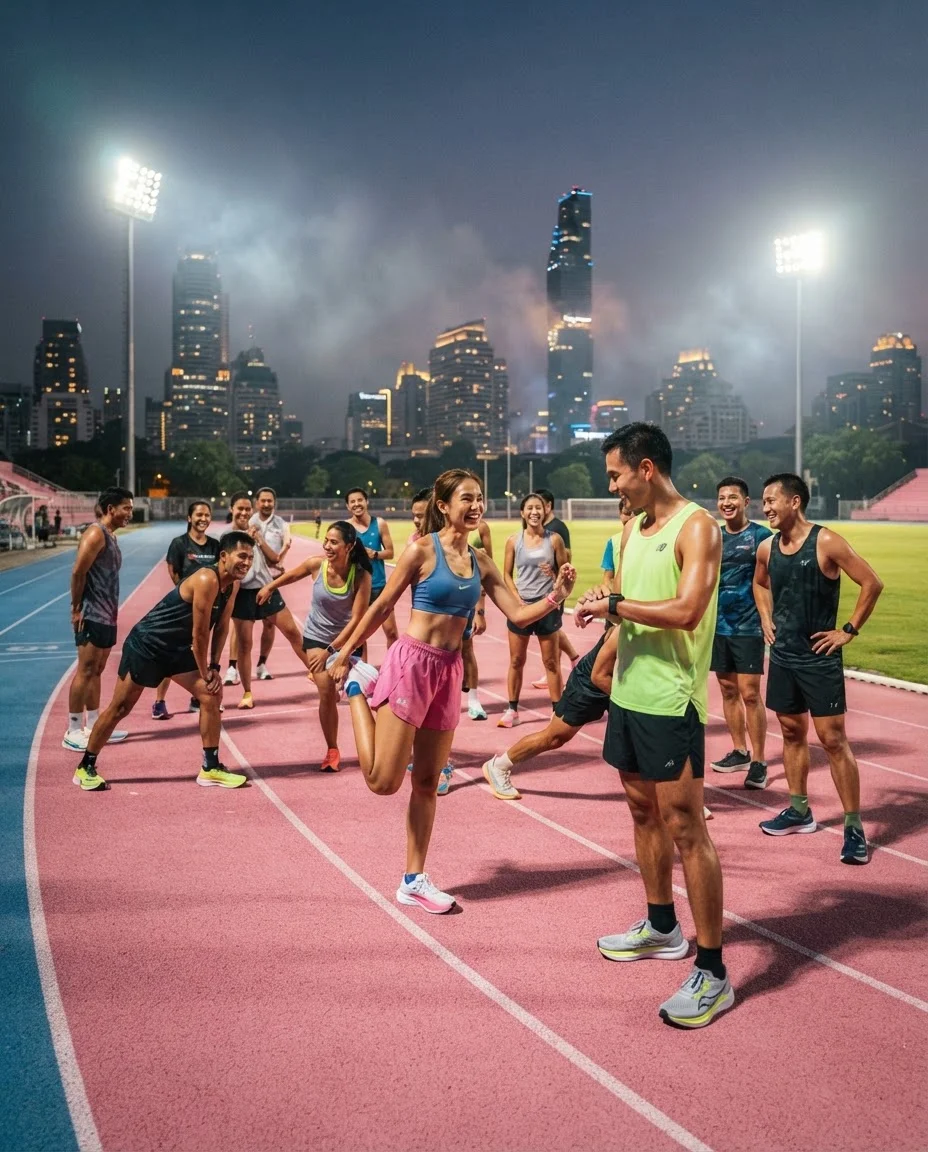
Bangkok's social running scene has expanded from small expatriate groups into an active network of weekly track meets, urban social runs, and inclusive community clubs. Founded in 2012, Bangkok Runners remains one of the city's longest-standing international collectives, organising Tuesday morning shakeout loops at Benjakitti Park alongside weekend distance runs. The wider culture is noticeably welcoming to visitors, with almost all community crews operating on a turn-up-and-run basis without membership fees or advance commitments.
For speed sessions and structured intervals, local crews gravitate towards central athletics facilities on weekday evenings. Runners gather at Thephasadin Stadium beside the National Stadium complex, as well as the synthetic eight-lane pink track at Chulalongkorn University Stadium in Pathum Wan, which allows public access outside varsity training hours. Independent groups such as Seuxphen Running Team host open Tuesday evening track sessions at Thephasadin, splitting runners into paced lanes ranging from 4:30 to 8:00 minutes per kilometre. In addition, brand-backed collectives including Adidas Runners Bangkok coordinate coached interval nights at Rajamangala University of Technology Krungthep (UTK) Stadium in Sathon, combining mobility work, cadence drills, and threshold repetitions.
If you prefer a conversational pace followed by coffee, morning social crews offer an easy entry into the local running scene. Groups like 6am Run Club BKK assemble at Lumphini Park for dawn laps, while outfits such as Meep Meep Run Club organise relaxed weekend runs linking green spaces to community venues like theCOMMONS. Turning up to an open track night or park meetup provides a practical way to find pacing partners, learn about regional race fixtures, and get direct advice on managing Bangkok's humidity.
Location and Getting There
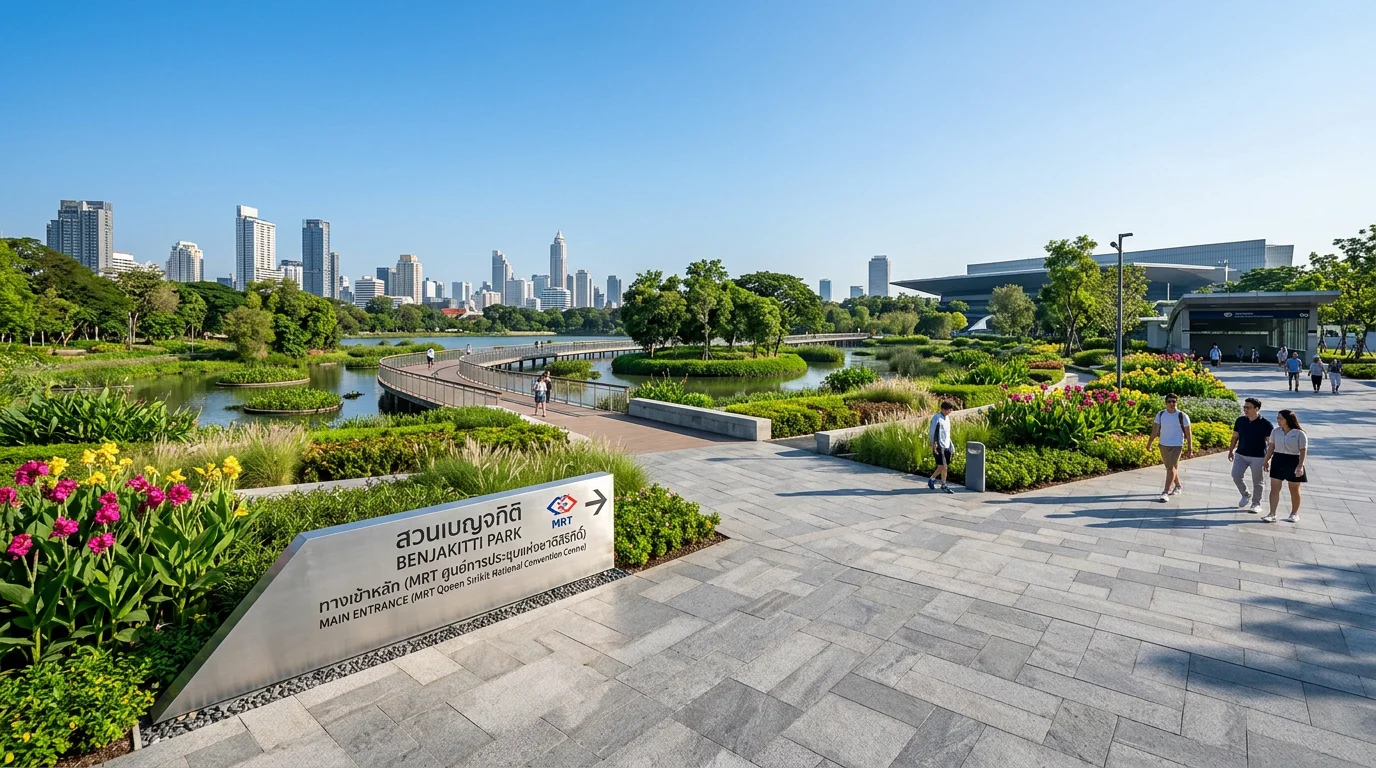
Bangkok's primary running circuits sit clustered in the central Pathum Wan, Sathon, and Khlong Toei districts, alongside the river bend of Bang Kachao.
Lumphini Park has direct underground access via the MRT Blue Line at Silom and Lumphini stations, with elevated walkway connections linking across from BTS Skytrain Sala Daeng on the Silom Line. Benjakitti Forest Park adjoins MRT Queen Sirikit National Convention Centre, where Exit 3 delivers runners directly to the park perimeter within steps of the concourse; BTS Asok sits a ten-minute walk to the north. For the jungle boardwalks of Bang Kachao, take the MRT Blue Line to Khlong Toei, catch a short taxi to Wat Khlong Toei Nok pier, and cross the Chao Phraya River on a local passenger ferry (around 10 to 20 THB).
From Suvarnabhumi Airport, board the Airport Rail Link to Makkasan Station (22 minutes, 35 THB / approx. £0.80). Walk the sheltered skywalk to MRT Phetchaburi, where the MRT Blue Line runs south: two stops to Queen Sirikit National Convention Centre (5 minutes, approx. 21 THB) for Benjakitti, or four stops to Lumphini. From Don Mueang International Airport, take the SRT Red Line to Krung Thep Aphiwat Central Terminal (20 minutes, 33 THB) and interchange to the MRT Blue Line at Bang Sue. Alternatively, an official metered taxi directly into central Silom costs roughly 300 to 450 THB (approx. £7 to £10.50), excluding the 50 THB airport surcharge and motorway tolls.
Costs and Booking
Public running in Bangkok requires virtually no financial outlay [Visitamanta, Roamfit]. Municipal parks across the capital—including Lumphini Park, Benjakitti Forest Park, Chatuchak Park, and Sri Nakhon Khuean Khan in Bang Kachao—are free to enter, with no tickets, permits, or prior reservations required. Runners can simply walk in and use the paved loops and elevated walkways throughout daylight and floodlit hours. Public track facilities also provide accessible synthetic surfaces for interval sessions without a fee. Venues such as Chulalongkorn University Stadium and Thephasadin Stadium grant free walk-in access to the public during non-event recreational hours, typically early in the morning and late in the afternoon. Restroom facilities inside major municipal parks are free to use, though runners exploring street routes should carry small change for commercial facilities.
Commercial costs apply primarily to organised excursions and competitive road events. Travellers looking for guided navigation through historical neighbourhoods or temple quarters can book private running tours. These services typically cost between 1,200 and 2,500 THB (approximately £28 to £58) per runner depending on group size, covering an English-speaking guide, route planning, and hydration. For competitive runners, Bangkok hosts major road races during the cooler dry months from November to January. Flagship events like the Amazing Thailand Marathon Bangkok and the Bangkok Marathon operate tiered pricing structures. At the time of research, standard entry fees for 10-kilometre and half-marathon distances range from 900 to 1,600 THB (£21 to £37), while full 42.195-kilometre marathon entries range between 1,600 and 1,800 THB (£37 to £42) for regular registration tiers. Entry packages include closed-road course access, chip timing, technical running shirts, and finisher medals, with popular categories often filling up months in advance.
| Option | Cost (THB) | Cost (GBP) | Notes |
|---|---|---|---|
| Municipal Park Access (Lumphini and Benjakitti) | 0 THB | Free | Open daily from early morning to late evening; walk-in access with no booking required |
| University and Municipal Athletics Tracks | 0 THB | Free | Chulalongkorn and Thephasadin stadiums; free public walk-in access during recreational hours |
| Guided Private Running Tour (5 km to 10 km) | 1,200 – 2,500 THB per person | £28 – £58 | Guided street or temple route; includes navigation, local commentary, and hydration |
| Major Road Race Entry (10 km to Half Marathon) | 900 – 1,600 THB per runner | £21 – £37 | Standard registration tier; includes official timing, race bib, and technical running shirt |
| Major Road Race Entry (Full Marathon 42.2 km) | 1,600 – 1,800 THB per runner | £37 – £42 | Tiered pricing; includes closed roads, timing chip, finisher medal, and finisher shirt |
Who Bangkok Running Suits
Bangkok’s flat terrain and paved park circuits cater directly to road racers, marathoners building steady-state endurance, and tempo runners who rely on uninterrupted pacing without vehicular traffic. The close proximity of central green spaces like Lumphini and Benjakitti to transit lines and commercial districts makes the city practical for business travellers and short-stay visitors needing a time-efficient dawn run before daily commitments. Expatriates and digital nomads will find an accessible, low-barrier community supported by free park admission and regular floodlit stadium sessions.
Conversely, the capital holds little appeal for trail runners, fell runners, or athletes seeking vertical elevation. Situated on the low-lying Chao Phraya river delta, Bangkok offers no natural hills or technical singletrack, with elevated pedestrian bridges and access ramps providing the few minor inclines available. Runners prioritising steep gradients or off-road wilderness terrain must travel north towards Chiang Mai and Doi Inthanon instead.
What to Know Before You Run
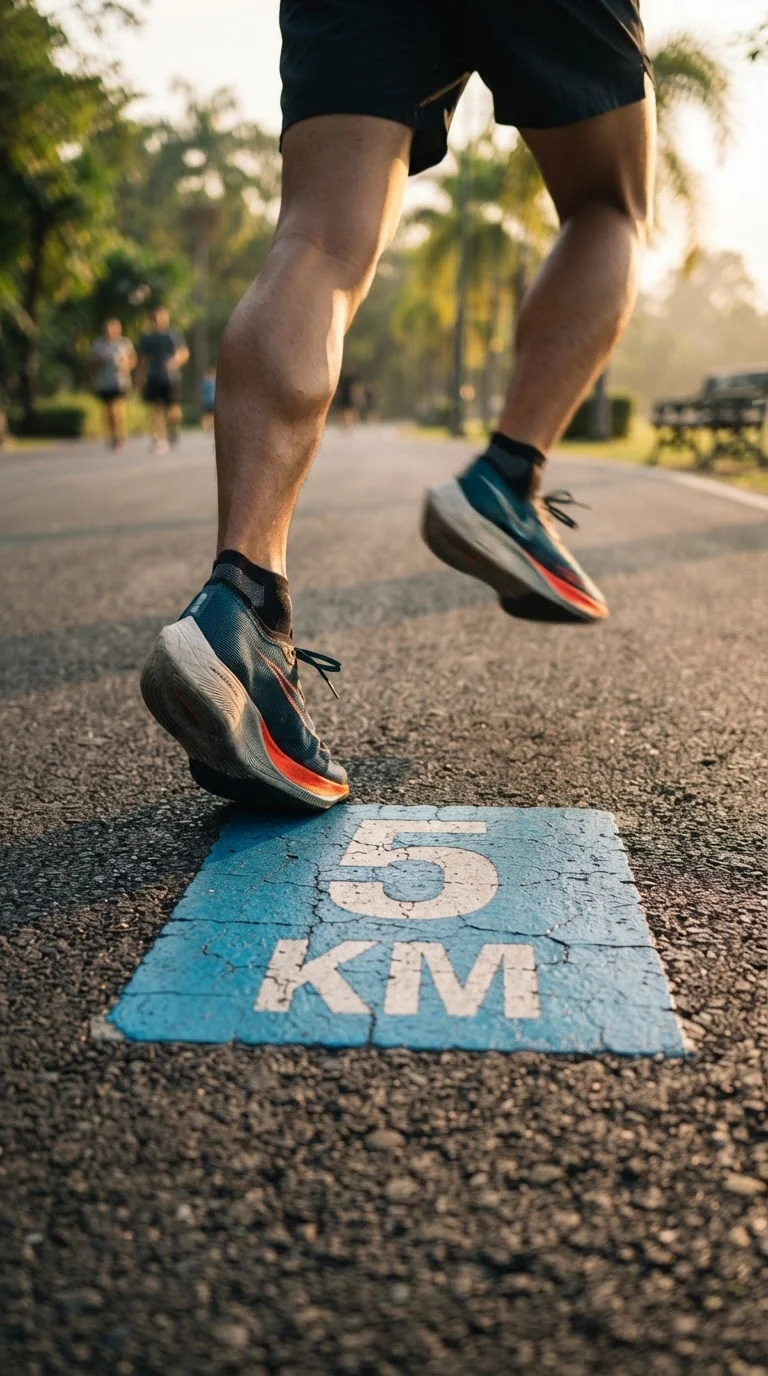
Tropical heat and humidity heavily constrain outdoor running in Bangkok. Plan morning workouts between 05:30 and 07:30, as solar radiation pushes ambient temperatures and humidity up rapidly once the sun clears the skyline after 08:00. Evenings provide an alternative after dusk, though retained heat radiating from tarmac and concrete keeps the air heavy well past dark.
Seasonal fine particulate pollution (PM2.5) is a serious concern from December through to March or April, when stagnant weather traps agricultural haze and vehicle emissions over the central plains. Check local readings on platforms like Air4Thai or IQAir each morning before lacing up. When the Air Quality Index climbs past 100 or 150, shift intense aerobic sessions onto an indoor treadmill.
Park etiquette requires stillness for the Thai National Anthem, broadcast over municipal loudspeakers at precisely 08:00 and 18:00 daily. When the music begins, all activity freezes: you must stop running on the spot, stand quietly, and wait the minute or so until the anthem finishes before resuming your stride.
Cyclists face regulated timetables in central green spaces. Lumphini Park restricts bicycle access to the quiet midday lull between 10:00 and 15:00, ensuring the busy morning and late-afternoon running windows remain completely segregated from cycling traffic.
Practical Tips
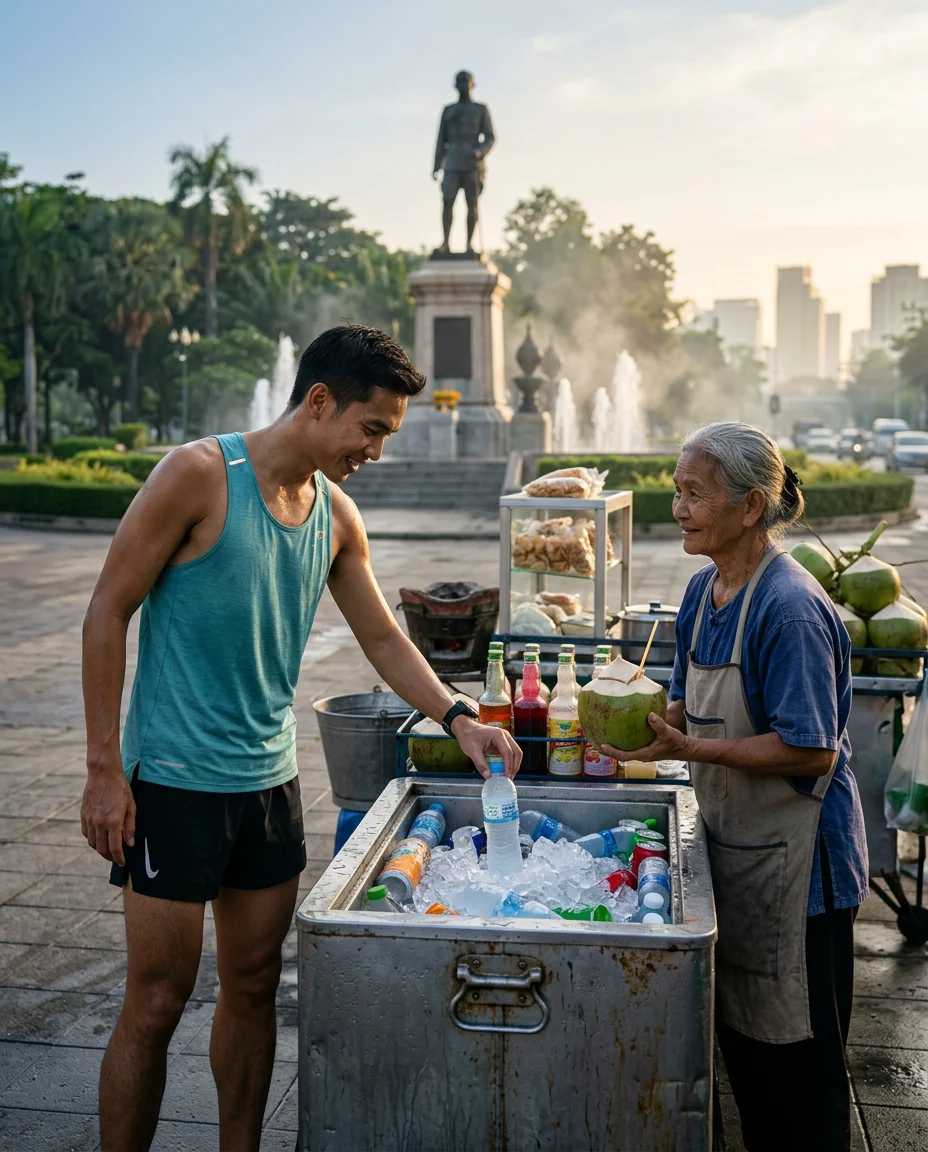
Bangkok’s tropical climate demands structured hydration planning. Even before sunrise, relative humidity regularly hovers above 80 percent, driving rapid fluid and sodium depletion across modest training distances. Carrying a running belt or handheld soft flask filled with an electrolyte blend helps ward off cramping, particularly because municipal drinking fountains can be widely spaced or out of service. Keep small-denomination cash tucked into your waist pack, specifically 20 THB and 50 THB banknotes and small coins. Drink carts and fruit stalls gathered outside park gates do not accept foreign payment cards, making cash necessary for chilled coconut water, sliced watermelon, or shower facilities.
Runners heading to park loops can store dry clothing on site. Lumphini Park provides banks of metal locker compartments inside the public restroom pavilions near Gate 1 and Gate 4. These cubbies are free to use, but you must supply your own sturdy padlock, as keys and combination locks are not provided. While looping the park watercourses, you will frequently encounter Asian water monitor lizards basking beside paths or swimming in lakes. These large reptiles are accustomed to runners and generally remain placid, though they can react defensively if crowded against canal edges. Give them several paces of clearance rather than stopping abruptly.
For track workouts at community sports facilities such as Chulalongkorn University Stadium or Thephasadin Stadium, following lane discipline is standard practice. Athletes move anti-clockwise, keeping inner lanes one and two clear for fast intervals, tempo efforts, and university team drills. Slower recovery jogs, warm-up laps, and walking drills belong in the outer lanes to prevent collisions with sprinting runners.
Across all training runs, technical apparel choices dictate personal comfort. Heavy cotton garments absorb sweat immediately, cling to the skin, and cause painful friction over medium and long runs. Opt for lightweight, moisture-wicking synthetic singlets and split shorts, and apply silicone anti-chafing balm generously to high-rub zones before heading out. Equipping yourself with dependable tropical running accessories helps you maintain consistent training throughout your stay.
Quick Reference Table
| Item | Detail | Notes |
|---|---|---|
| Municipal Park Admission | Free (0 THB) | Lumphini, Benjakitti, and Chatuchak parks require no permits, tickets, or bookings |
| Athletics Track Access | Free (0 THB) | Chulalongkorn University and Thephasadin stadiums offer free walk-in entry during recreational hours |
| Lumphini Park Outer Loop | 2.54 km asphalt loop | Open 04:30 – 22:00; 100 m distance markers; cycling permitted only between 10:00 and 15:00 |
| Benjakitti Forest Park | 1.8 km lake / 2.8 km forest track | Open 05:00 – 21:00; dedicated shock-absorbing running lanes through restored wetlands |
| The Green Mile (Saphan Khiao) | 1.3 – 1.6 km elevated walkway | Open 05:00 – 21:00; bridges Lumphini and Benjakitti directly over expressway and road junctions |
| Chatuchak Park Network | 6.0 – 7.5 km combined | Open 04:30 – 21:00 across Chatuchak, Wachirabenchathat (Suan Rot Fai), and Queen Sirikit parks |
| Bang Kachao Island Paths | 2.2 km park loop / 15+ km canal paths | Open 05:00 – 19:00; vehicle-free concrete paths; reached via 10 – 20 THB river ferry |
| Road Race Entry Fees | 900 – 1,800 THB (£21 – £42) | Standard pricing for 10 km, half marathon, and full marathon events held November to January |
| Guided Running Tours | 1,200 – 2,500 THB (£28 – £58) | Private guided street, neighbourhood, or temple routes per runner |
| Recommended Training Hours | 05:30 – 07:30 and post-dusk | Essential for avoiding peak solar radiation, high humidity, and midday heat |
| National Anthem Etiquette | 08:00 and 18:00 daily | All park runners must stop immediately and stand at attention until the anthem finishes |
| On-Site Storage | Free (bring own padlock) | Metal lockers located at Lumphini Park public restroom pavilions near Gates 1 and 4 |
| Public Transport Links | MRT Blue Line and BTS Skytrain | Direct links via MRT Silom, MRT Lumphini, MRT Queen Sirikit Centre, and BTS Sala Daeng |
| Website | amazingthailandmarathon.com | Official event website for the Amazing Thailand Marathon Bangkok |
| Website | bkkmarathon.com | Official event website for the Bangkok Marathon |
FAQ: Running in Bangkok
What is the etiquette for the National Anthem in Bangkok parks?
What is the best time of day to run in Bangkok?
How much does it cost to run in Bangkok's parks and tracks?
Is it good to run on Bangkok's main streets?
What type of clothing is best for running in Bangkok?
Should runners carry cash in Bangkok parks?
Are there lockers available for runners in Bangkok parks?
What should runners do if they see water monitor lizards in Bangkok parks?
How does air quality affect running in Bangkok?
When are bicycles allowed in Lumphini Park?
Reviewed by the Thailand Guide Editorial Team • Last reviewed: 18 November 2026
This page is provided for general information only. While we aim for accuracy, details can change — please verify anything important independently before relying on it.