Windsurfing in Thailand
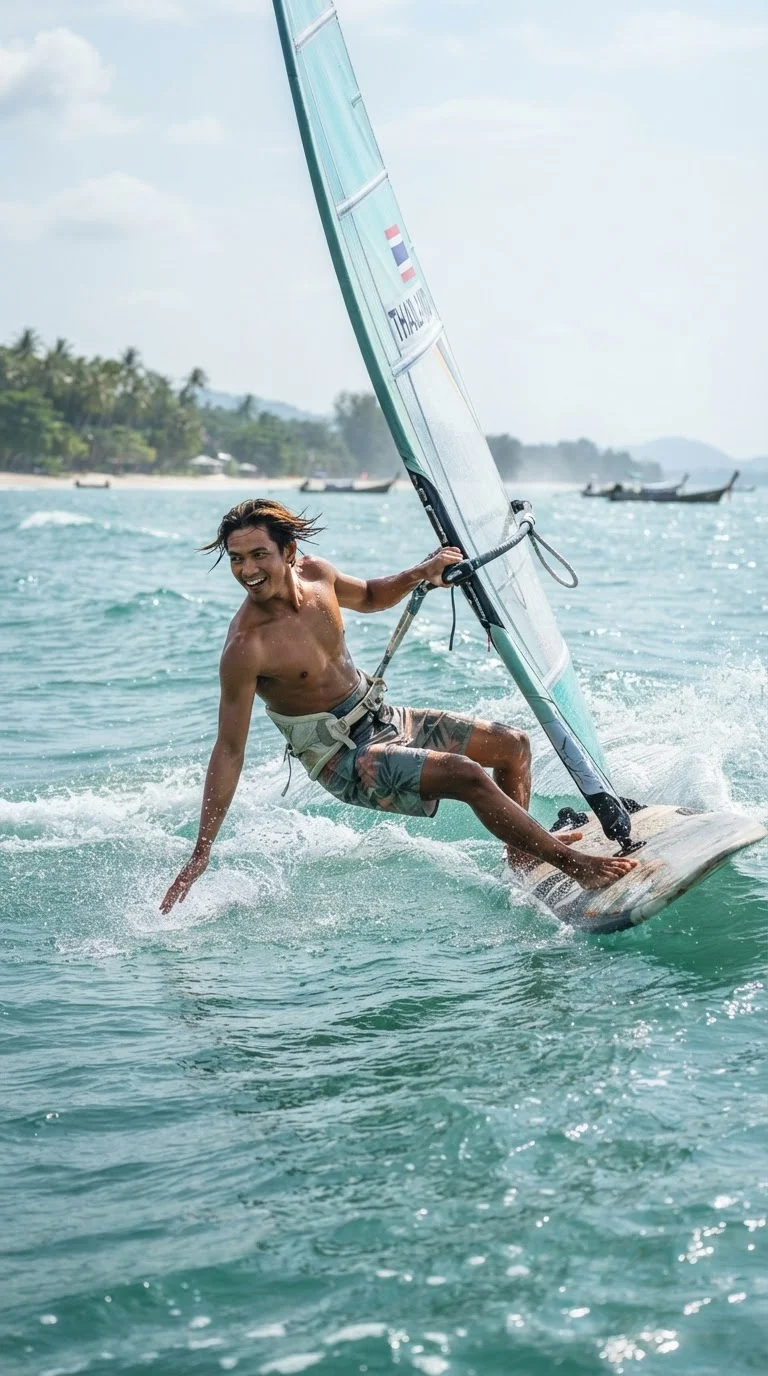
Thailand provides warm-water windsurfing across two distinct coastlines, with sailing conditions dictated by two major monsoon cycles and localised thermal sea breezes.
Planning a successful trip requires aligning your travel dates with the active coastline, because when one coast sits in doldrums or heavy surf, another often enjoys consistent side-shore winds. Tropical water temperatures hover comfortably between 27°C and 30°C throughout the calendar year, eliminating the need for thick winter neoprene. A lightweight rash vest with ultraviolet protection and standard boardshorts are standard kit across all Thai sailing spots.

Seasonal Winds and Coastal Monsoons
From November to February, the north-east monsoon dominates weather systems across mainland Southeast Asia. This system channels cool, dry continental air across the Gulf of Thailand, generating steady winds between 12 and 20 knots. East-facing coastal strips such as Hua Hin, Pran Buri, and Jomtien Beach receive reliable side-onshore and side-shore breezes, accompanied by moderate chop and long rolling swells. Mornings tend to offer lighter breezes suitable for early progression, before the wind fills in steadily through midday and early afternoon.
As continental weather systems shift between mid-February and May, rising inland temperatures trigger consistent afternoon thermal sea breezes. Along the eastern Gulf, particularly around Na Jomtien and Pattaya, and along the western coast at Hua Hin, thermal winds typically build from midday onwards, registering between 10 and 18 knots. Mornings during this thermal window remain glassy and flat, giving way to cross-shore afternoon chop that intermediate and advanced windsurfers use for high-speed blasting and gybe practice.
The south-west monsoon takes control from May to October, drawing warm, moisture-laden air from the Indian Ocean. While the upper Gulf can experience lighter, unpredictable winds interspersed with rain squalls during this phase, dependable conditions shift cleanly across to the Andaman Sea and the southern Gulf. Phuket's west-facing beaches, notably Nai Yang, capture side-onshore winds of 12 to 25 knots, though exposed coastlines also generate powerful surf and rip currents that demand caution. Conversely, the reef-sheltered shallow lagoons of Koh Phangan and Koh Samui provide flat-water sailing in similar wind strengths, protected from outer ocean swells.
Between monsoon shifts—most notably in October and early November—the country experiences variable inter-monsoon calms, with wind speeds frequently dropping below 10 knots. Selecting accommodation and launch spots that correspond directly with the seasonal wind cycle prevents wasted days on becalmed beaches or storm-lashed shores.
| Season | Months | Primary Locations | Average Wind Speed | Water State |
|---|---|---|---|---|
| North-East Monsoon | November to February | Hua Hin, Jomtien, Pran Buri | 12–20 knots | Moderate chop, long rolling swell |
| Thermal Transition | February to May | Na Jomtien, Hua Hin, Pattaya | 10–18 knots | Flat morning water, afternoon chop |
| South-West Monsoon | May to October | Phuket (Nai Yang), Koh Phangan, Koh Samui | 14–25 knots | Coastal surf on west coasts, flat lagoons |
| Inter-Monsoon Calm | October & early November | Variable nationwide | 5–10 knots | Light airs, paddleboard and foil conditions |
To secure equipment and private instruction before prime seasonal slots fill up, book your windsurfing sessions with local coastal centres ahead of travel.
Selecting the Right Board and Rig for Tropical Waters
Tropical sea conditions demand deliberate equipment choices. Warm, humid sea air is measurably less dense than cold maritime air in northern Europe, meaning that a 15-knot breeze in the Gulf of Thailand delivers roughly 8% less aerodynamic drive against a sail than an identical wind reading over the English Channel. Windsurfers arriving from the UK should generally rig half a metre to a full square metre larger than their domestic baseline to plane reliably across local coastal chop.
Complete novices begin on wide-style boards between 180 and 240 litres fitted with retractable daggerboards and full EVA foam deck pads. Because tropical water temperatures allow sailing in boardshorts and rash vests rather than thick neoprene, soft foam decks prevent painful knee scrapes during repeated climbs back onto the board. Lightweight Dacron trainer sails measuring 3.0 to 4.5 square metres minimise water retention and keep uphauling strain off your lower back during introductory sessions.
Progressing intermediates stepping down to planing hulls will encounter modern freeride boards across established coastal centres. Thailand serves as the global headquarters and development hub for Starboard, ensuring clubs frequently stock recent production runs alongside gear from brands such as RRD. Boards between 115 and 140 litres paired with single Powerbox or Tuttle-box fins offer enough volume to recover through rolling shorebreak while staying manageable when afternoon thermal breezes peak.
For Thailand's typical 12-to-18-knot planing range, camless rotational freeride sails between 5.5 and 7.2 square metres deliver the widest wind tolerance without the physical fatigue of camber-induced racing rigs. Strong tropical ultraviolet radiation degrades clear monofilm far quicker than northern European sun, turning panels brittle and cloudy over time. Choosing reinforced X-ply sails or inspecting rental monofilm panels and universal joints ensures you avoid rig failure offshore.
| Sailor Level | Recommended Board Type | Board Volume | Sail Size Range | Target Conditions |
|---|---|---|---|---|
| Complete Beginner | Wide-style soft-top with daggerboard | 180–240 litres | 3.0–4.5 m² Dacron | 6–10 knots, flat lagoon or calm morning bay |
| Early Planer | Stable wide-body freeride board | 140–160 litres | 5.0–6.0 m² rotational | 11–15 knots, gentle coastal chop |
| Confident Intermediate | Modern shortboard freeride | 115–135 litres | 6.0–7.2 m² freeride | 13–18 knots, rolling open-water swell |
| Performance / Slalom | Low-volume freerace / wave board | 90–110 litres | 4.7–5.8 m² reinforced | 18–25 knots, monsoon breakers and heavy chop |
Riders uncertain between two sail sizes on a warm afternoon should choose the larger option to sustain steady planing through lighter thermal lulls.
Plan a Gulf of Thailand trip with clear guidance on island groups, ferries, weather, marine parks, accommodation costs and mainland gateways.
Learning to Windsurf: Schools, Progression, and Instruction
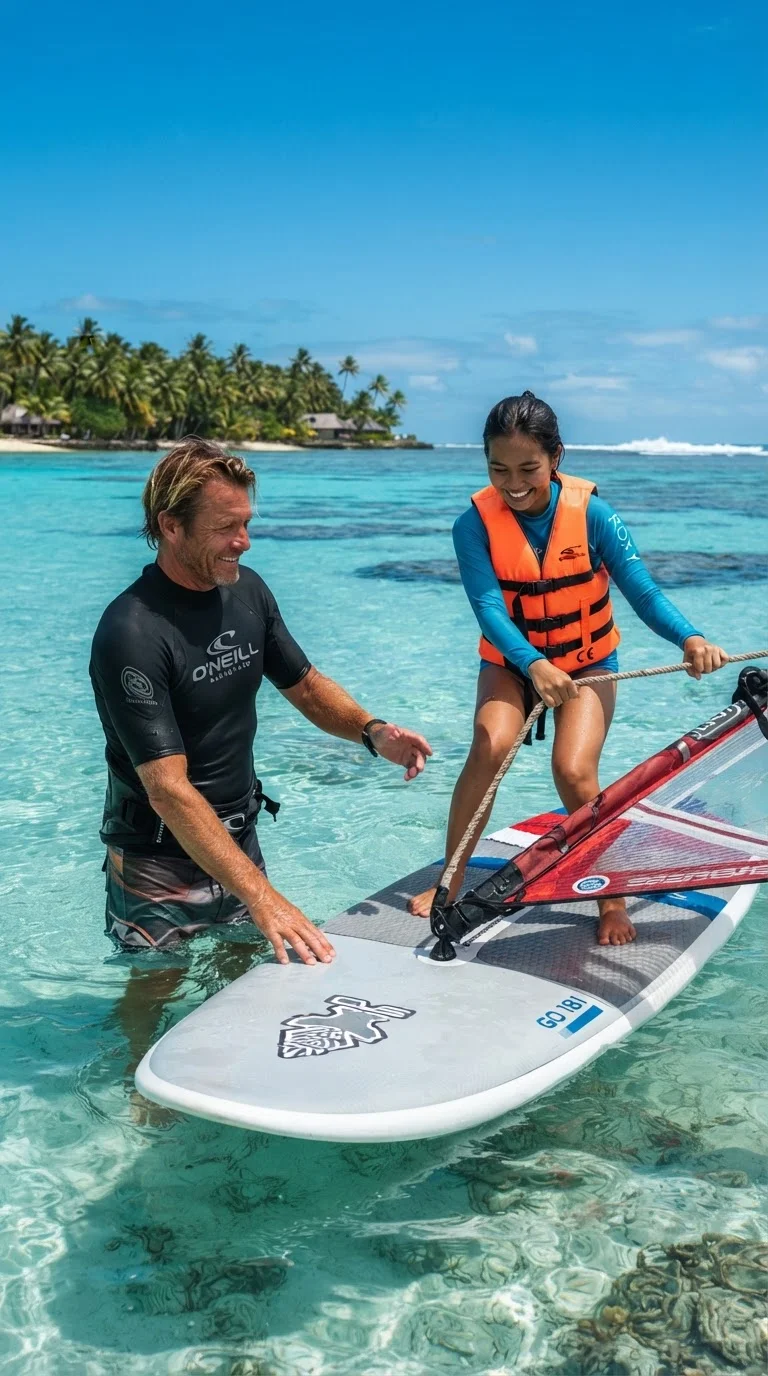
Learning to windsurf in Thailand is physically forgiving. Bathtub-warm sea temperatures of around 28°C eliminate the fatigue of fighting thick wetsuits, while wide, shallow sandbanks provide a gentle safety margin when recovering your balance. Novices start on high-volume beginner boards fitted with soft foam decks and retractable daggerboards, mastering basic sail control in gentle, predictable coastal breezes.
On Na Jomtien Beach near Pattaya, Clubloongchat stands as Thailand's longest-running windsurfing institution. Founded in 1984 by Uncle Chat, a founding figure of the Thai Windsurfing Association, the centre is directed by his son Pop, a former national windsurfing champion with more than 30 years of coaching experience. Private hourly instruction costs 900 THB (approx £21), making it ideal for a quick technical refresher or an initial taste of sail balance. For faster progression, their full one-day starter course costs 2,000 THB (approx £46), combining two hours of one-to-one coaching with equipment access for self-directed practice through the afternoon.
Further south in the Gulf of Thailand, Kite Club Koh Phangan runs windsurfing courses from Thong Sala Beach. The venue centres on a vast, reef-sheltered lagoon where flat water and shallow depths extend well offshore, removing the stress of heavy ocean chop. A private two-hour Discovery session costs 4,000 THB (approx £93), covering simulator drills on the sand, rig assembly, correct uphaul mechanics, and steering across light breezes.
For genuine autonomy, their three-day beginner course provides six hours of private tuition for 11,000 THB (approx £255), developing consistent tacking, wind awareness, and upwind steering. Sailors working toward independent competence can book a ten-hour programme across five days for 18,000 THB (approx £420), introducing harness lines, beach starts, and non-planing gybes. Instructors use two-way radio communication helmets to deliver immediate coaching on stance and sail trim across the water.
| Course Type | Typical Duration | Typical Cost (THB) | Approx Cost (GBP) | Core Skills Mastered |
|---|---|---|---|---|
| Discovery / Taster Lesson | 1–2 hours | 900–4,000 THB | £21–£93 | Rig setup, uphauling, basic stance, sailing across wind |
| Full 1-Day Starter Package | 1 day (2h tuition + free ride) | 2,000–3,500 THB | £46–£81 | Static turns, basic tacking, self-rescue, independent reaching |
| 3-Day Beginner Certification | 6–9 hours | 10,000–12,000 THB | £232–£279 | Upwind sailing, non-planing gybes, reading gusts, deep-water recovery |
| Independent Intermediate Course | 10–12 hours (3–5 days) | 18,000–20,000 THB | £420–£465 | Beach starts, harness technique, planing stance, footstrap entry |
Booking a structured multi-day course rather than isolated hourly sessions ensures core balance techniques solidify before physical fatigue accumulates under the tropical sun.
Equipment Hire, Storage, and Beach Club Facilities
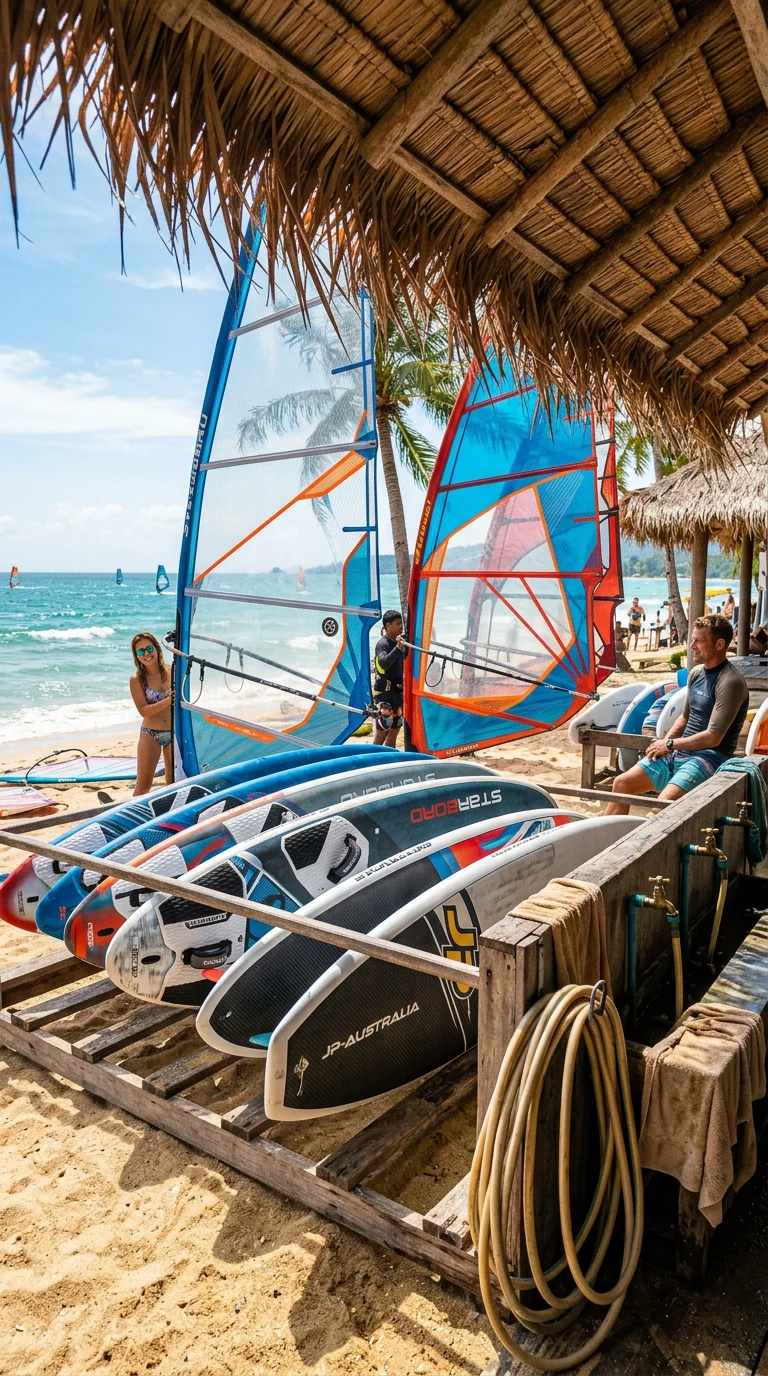
Hiring windsurfing kit in Thailand is concentrated in a handful of coastal pockets, as dedicated windsurf centres are fewer in number than kitesurfing schools. Jomtien Beach in Chonburi remains the primary hub for hire operations. At Dongtan Beach in Jomtien, Easy WindSurf Centre operates a fleet of more than 65 boards and rigs managed by veteran coach Pichit Poolsanguan. Equipment hire costs 500 THB (approx £12) per hour, with wide, stable beginner boards available for walk-in sailors from morning until sunset without mandatory advance booking.
Across the Gulf in Prachuap Khiri Khan, Surf Spot Hua Hin on Soi 75/1 maintains a beachfront station stocking Italian RRD boards and sails. The centre rents both novice rigs and funboards, though sailors must notify the team in advance to arrange equipment hire, and should contact the club directly to confirm current hire rates.
Established beach clubs provide practical shoreside infrastructure. Facilities typically feature fresh-water wash-down bays to rinse corrosive salt from masts, booms, and personal kit, alongside secure locked storage, on-site board repair workshops, shaded rigging lawns, and beachside cafes. For sailors bringing their own equipment to Thailand for an extended stay, monthly beachside board and rig storage generally costs between 1,500 and 2,500 THB (approx £35 to £58).
Rental fees routinely include a standard buoyancy aid, but harness availability in varied waist or seat sizes remains inconsistent across Thai centres. Bringing your own harness, adjustable harness lines, and neoprene booties ensures an accurate fit and prevents painful salt-water chafing during longer sessions. Before carrying hired kit across the sand, inspect the rubber tendon in the universal joint, check the downhaul and outhaul lines for fraying, and verify that the fin screws are tight.
Navigating Shorebreak, Tides, and Local Hazards
Tropical windsurfing in Thailand introduces coastal variables that differ significantly from British coastal beaches or inland reservoirs. Tidal cycles in the Gulf of Thailand are predominantly diurnal, producing one high and one low tide in a twenty-four-hour cycle across most of the month. This cycle exposes broad sandbars, shallow tidal flats, and granite rock clusters at mainland spots including Hua Hin and Khao Kalok. Launching at low water requires carrying kit across wide expanses of exposed sand or soft mud, creating genuine risks of fin strikes against concealed granite outcrops, shallow reefs, or sea urchins. Planning your water sessions within two to three hours either side of high tide provides the depth needed for fin clearance.
Marine life requires careful awareness during the rainy season. Box jellyfish are present seasonally in the Gulf of Thailand, particularly around Koh Samui, Koh Phangan, and Koh Tao between July and October. On the Andaman coast, the south-west monsoon occasionally washes siphonophores such as the Portuguese man-o'-war into exposed bays. Official advice from Thailand's Department of Marine and Coastal Resources and the Foreign, Commonwealth & Development Office highlights that stings can be severe. In response, local authorities and beach centres maintain emergency vinegar stations along popular swimming and launch beaches. A full-length lycra rash guard or stinger suit offers a reliable physical barrier against accidental contact.
Coastal waterways also support busy artisanal fishing and tourism fleets. Long-tail boats and squid craft frequently anchor in sheltered coastal bays, trailing long, submerged mooring lines that sit just beneath the surface. Keeping a clearance of at least 100 metres from anchored boats, wooden fish traps, and designated swim zones prevents fin entanglement and avoids fast-moving jet-ski traffic.
| Hazard | Locations | Conditions | Precautions |
|---|---|---|---|
| Coral heads and shallow reefs | Koh Phangan, Koh Samui, Phuket | Low tides and shallow lagoons | Wear thick-soled reef booties; sail within two to three hours of high tide |
| Box and stinger jellyfish | Gulf islands, Andaman coast | May to October (peaks July to October) | Wear full-length lycra; check beach vinegar stations before launching |
| Submerged mooring lines | Sheltered coastal bays | Year-round | Maintain at least 100m clearance from anchored craft and fishing stakes |
| Heavy shorebreak dump | Phuket west coast (Nai Yang, Kata) | May to October (south-west monsoon) | Time launches between wave sets; keep the board downwind when wading |
On open west-facing beaches along Phuket, powerful shorebreak develops during the south-west monsoon from May to October. Launching through dumped surf demands patience: wait for a lull between wave sets, keep your board positioned downwind of your body while wading out, and waterstart quickly once past the break line.
Where to Windsurf in Thailand: Top Regional Hubs
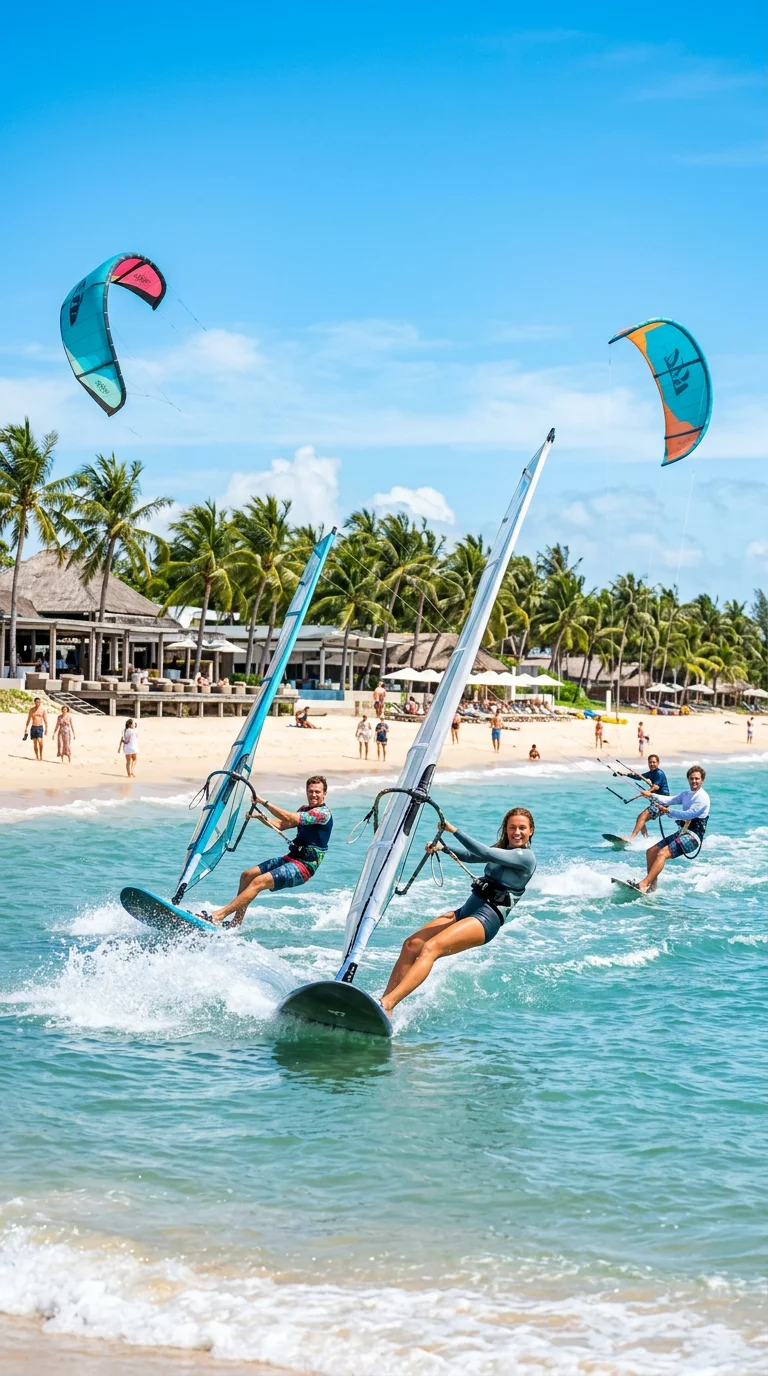
Thailand's windsurfing community is anchored in several established coastal hubs across the Gulf of Thailand and the Andaman Sea. Jomtien Beach and Na Jomtien in Chon Buri form the historic centre of the sport, located roughly two hours south of Bangkok by road. The bay provides gentle coastal chop and reliable thermal winds from February to May. Active hire and teaching operations line the water, including Easy WindSurf Centre at Dongtan Beach and Clubloongchat on Na Jomtien Beach. A wide coastal promenade along Jomtien eases moving kit between hotels and launch points.
Across the Gulf, Hua Hin and nearby Pak Nam Pran provide expansive stretches of sandy, obstruction-free shoreline with consistent north-easterly winds during the dry winter months. Pak Nam Pran, situated south of Hua Hin in Pran Buri, experiences lighter water traffic and longer ocean swell than Hua Hin's central beach. Established centres such as Surf Spot Hua Hin cater to sailors along this coastline.
For island sailing, Koh Phangan's southern coast features a shallow lagoon at Thong Sala. Protected from open sea by an offshore barrier reef, the lagoon provides flat water well suited to sail control, with instruction and equipment available through Kite Club Koh Phangan. Over on the Andaman coast, Phuket shifts according to the monsoons. Windsurfers launch off west-coast beaches such as Nai Yang during the south-west monsoon from May to October, relocating to sheltered southern bays like Rawai during the dry winter north-easterlies. Triangle Sailing Club provides local tuition and boat sailing on the island.
Beginners generally find forgiving conditions at Dongtan Beach in Jomtien and the Thong Sala lagoon on Koh Phangan, where waist-deep shallows and reef protection simplify board recovery. Experienced sailors looking for rolling swell and longer planing runs tend to favour the open shoreline of Hua Hin and Pak Nam Pran.
Costs and Budgeting
Windsurfing expenses in Thailand depend on the destination and whether you hire equipment hourly or book structured coaching. In Jomtien, basic beginner gear hire at local centres such as Easy WindSurf Centre costs 500 THB (approx £12) per hour, while introductory private lessons start around 900 to 1,000 THB (approx £21 to £23) per hour. Full-day starter packages combining two hours of guided instruction with open practice time typically cost 2,000 THB (approx £46) at Na Jomtien clubs.
At Hua Hin and Pak Nam Pran centres, performance funboard gear hire averages 900 THB (approx £21) per hour or 2,000 to 3,000 THB (approx £46 to £70) for a full day. Comprehensive multi-day progression programmes running across three to five days generally range between 11,000 and 18,000 THB (approx £255 to £420) at established schools in Hua Hin and Koh Phangan, with intensive independent certification packages reaching 18,000 to 20,000 THB (approx £420 to £465). For extended stays, centres provide secure board and rig storage with fresh-water wash racks for 1,500 to 2,500 THB (approx £35 to £58) a month. Daily onshore expenses, including local transport and beachfront dining, remain comparatively modest, helping keep overall trip expenditures predictable.
| Service | Cost (THB) | Cost (GBP) | Details |
|---|---|---|---|
| Hourly Beginner Rental | 500–600 THB | £12–£14 | Wide board, trainer rig, buoyancy aid (Jomtien and Hua Hin) |
| Hourly Performance Freeride Hire | 900–1,200 THB | £21–£28 | Shortboard, cambered or rotational monofilm rig |
| Private Hourly Lesson | 900–1,500 THB | £21–£35 | Dedicated 1:1 instructor, complete equipment included |
| Full 1-Day Starter Course | 2,000–3,500 THB | £46–£81 | Two hours of tuition plus solo afternoon practice |
| 3-Day Beginner Course | 11,000–12,000 THB | £255–£279 | Full progression from beach theory to solo sailing |
| Independent Certification Course | 18,000–20,000 THB | £420–£465 | Comprehensive multi-day instruction, upwind sailing, gybing |
| Monthly Board and Rig Beach Storage | 1,500–2,500 THB | £35–£58 | Locked rack space, fresh-water wash-down access |
What to Know Before You Go
Secure comprehensive travel insurance before leaving the UK. Standard British single-trip and annual policies routinely exclude windsurfing and open-water navigation unless you purchase an adventure sports or water-sports extension. Verify that your cover specifically includes offshore search and rescue, emergency medical repatriation, and third-party liability, as Thai beach centres rarely carry policies that protect you against damage caused to third-party equipment or swimmers.
Pack your own harness and neoprene footwear. While Thai centres maintain generous board and sail fleets, rental harnesses are frequently sun-baked, worn, and limited in sizing, leading to painful salt-water chafing when worn over a light rash guard. Dedicated reef booties or thin wetsuit shoes also protect your soles against sharp shells and hidden coral heads during water starts.
Book accommodation within walking distance of your chosen launch site. Moving wet sails, booms, and boards via local songthaews (converted pickup-truck taxis) is awkward, expensive, and frequently refused by drivers navigating congested coastal roads. Staying near the rigging lawn lets you capitalise immediately on daily thermal breezes without coordinating round-trip transport.
Practical Tips
Tropical solar radiation is far more intense than anything encountered at British coastal venues. Sunlight reflects sharply off the sea surface, and high ultraviolet levels can cause severe sunburn even through thin cloud cover. Wear a long-sleeved rash vest rated UPF 50+ alongside lightweight swim leggings or technical boardshorts. Full-coverage lycra shields you from prolonged UV exposure while reducing the painful harness abrasion caused by damp salt crystals rubbing against bare skin. Apply a water-resistant mineral sunblock to exposed skin, paying special attention to your neck, ears, and the tops of your feet.
Thin neoprene reef booties are invaluable across Thailand's launch sites. Coastlines in Koh Phangan, Phuket, and parts of the Gulf feature dead coral rubble, barnacle-encrusted rocks, and occasional sea urchins scattered across shallow tidal flats. A flexible pair of 1mm or 2mm split-toe or round-toe reef shoes protects your soles while launching and recovering through shallows without sacrificing the deck feel and footstrap mobility needed for planing. Bulky, thick-soled cold-water boots are unnecessary in sea temperatures that consistently sit between 28°C and 30°C.
If you plan to hire equipment locally, consider packing your own waist or seat harness. While Thai windsurfing centres maintain modern board fleets and well-tuned rigs, rental harnesses in coastal schools often endure heavy, daily commercial use. These communal harnesses are frequently worn, limited in available sizes, and prone to slipping or causing friction sores on skin softened by warm saltwater. Bringing a properly fitted harness with your preferred spreader bar setup ensures ergonomic back support and prevents painful chafing during long reaches.
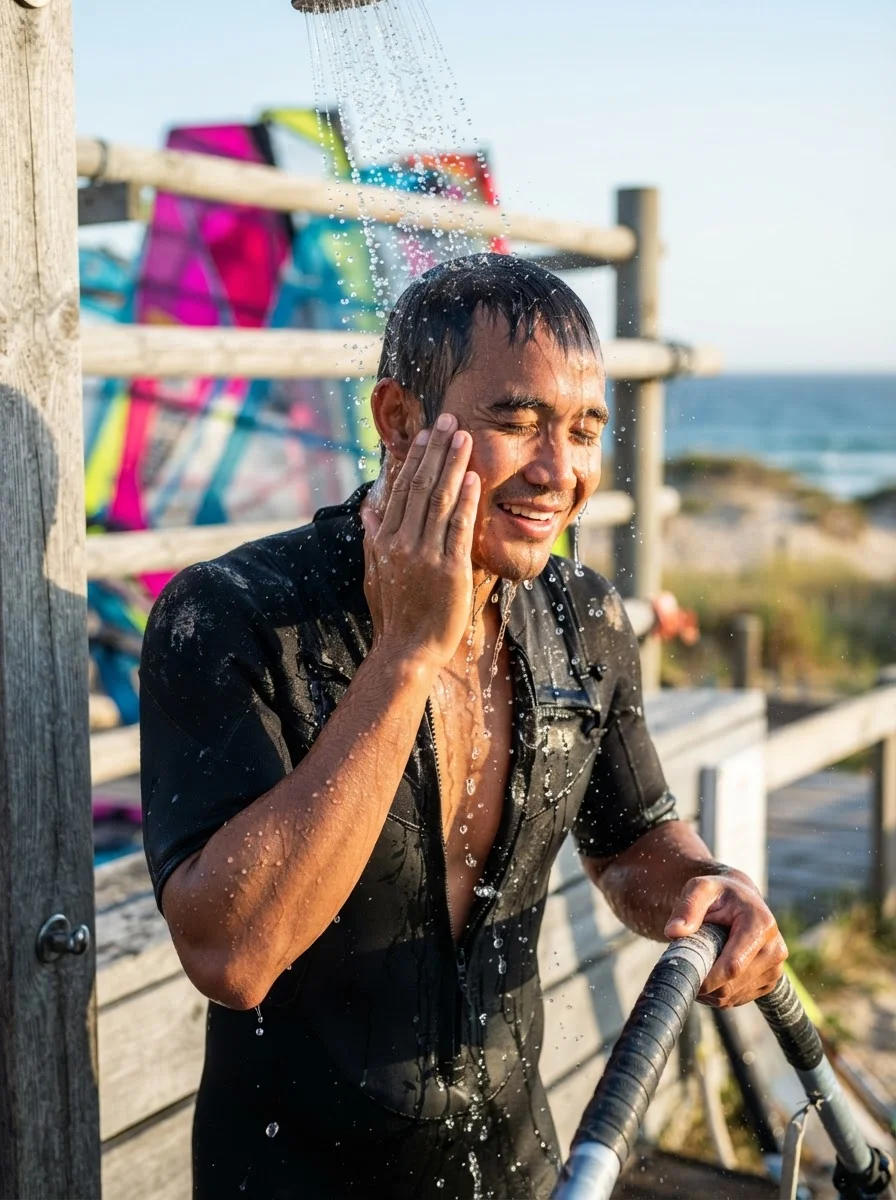
Tropical heat and high sea salinity take a rapid toll on personal equipment. Salt water evaporates quickly in ambient temperatures above 30°C, leaving behind hard mineral deposits that seize metal spreader bar buckles, corrode harness line cleat teeth, and jam aluminium zip sliders. Rinse your harness, footwear, and rigging accessories thoroughly in fresh water at the club wash bay after every session, and allow them to dry in the shade rather than direct sunlight, which degrades stitching and neoprene over time.
Sailors travelling with their own equipment should pack a compact repair kit. Specialist windsurfing retail is scarce outside major centres such as Pattaya and Phuket, making it difficult to buy replacement parts locally. Keep a small roll of clear monofilm sail repair tape, a tube of contact adhesive, spare downhaul line, and a spare universal joint tendon in your kit bag. A minor sail tear or frayed downhaul can easily disrupt a sailing trip if you cannot carry out quick beachside repairs.
Dehydration develops significantly faster in Southeast Asia than during cold-water sailing at home. Sweating heavily in humid tropical air combined with wind exposure and physical exertion depletes your body fluids before you register thirst. Drink bottled mineral water mixed with electrolyte powders before launching, and keep an insulated bottle at the beach base for immediate rehydration after sailing. Avoid sailing through long sessions without fluids, as heat exhaustion and fatigue quickly impair balance and concentration.
Wind patterns along Thailand's coasts often depend on afternoon thermal generation. Standard weather apps frequently fail to capture the localised sea breezes created when inland terrain heats up, typically producing prime sailing conditions between 13:00 and 17:00. Use dedicated marine forecasting platforms such as Windguru or Windy to track local stations, and consult beach club staff before launching. Local instructors can advise on shifting wind angles, tidal currents around headlands in Hua Hin and Phuket, and safe channels through shallow reefs.
Verify that the beach centre has active safety boat cover operational on the water before heading out into deeper offshore channels. Taking sensible precautions with your gear, hydration, and route planning allows you to make the most of every session on Thailand's waters.
Quick Reference Table
| Item | Detail | Notes |
|---|---|---|
| Top Sailing Hubs | Jomtien & Na Jomtien, Hua Hin & Pak Nam Pran, Koh Phangan, Phuket | Jomtien is the primary hire centre; Koh Phangan offers flat, reef-sheltered water |
| North-East Monsoon | November to February (12–20 knots) | Peak season for Hua Hin, Pran Buri, and Jomtien; side-onshore chop and swell |
| Thermal Wind Season | Mid-February to May (10–18 knots) | Reliable afternoon breezes along the Gulf at Na Jomtien, Pattaya, and Hua Hin |
| South-West Monsoon | May to October (14–25 knots) | Active on Andaman coast (Phuket) and southern Gulf islands (Koh Phangan, Koh Samui) |
| Water Temperature & Kit | 27°C to 30°C year-round | No wetsuit required; wear a UPF 50+ rash vest, boardshorts, and 1–2mm reef booties |
| Equipment Hire Rates | 500–600 THB (£12–£14) / hour (beginner); 900–1,200 THB (£21–£28) / hour (freeride) | Available walk-in at Jomtien; advance booking advised in Hua Hin and Koh Phangan |
| Tuition Rates | 900–1,500 THB (£21–£35) / hour; 2,000–3,500 THB (£46–£81) for 1-day starter | Multi-day beginner certification courses cost 10,000–12,000 THB (£232–£279) |
| Monthly Equipment Storage | 1,500–2,500 THB (£35–£58) per month | Includes secure beachside rack space and fresh-water wash-down bays |
| Tidal & Depth Hazards | Diurnal tides create wide low-water sandbars and exposed rock | Sail within 2 to 3 hours of high water to ensure safe fin clearance over reefs |
| Marine Life Precautions | Box jellyfish present May to October (peaks July to October) | Wear full-length lycra and confirm location of beach vinegar stations before launch |
| Travel Insurance | Specialist water-sports or adventure extension required | Ensure policy covers third-party liability, offshore search and rescue, and medical repatriation |
| Operator — Easy WindSurf Centre | Dongtan Beach, Jomtien (pattaya.surf) | Fleet of 65+ boards; walk-in hourly rentals; phone +66 89 966 9555 |
| Operator — Clubloongchat | 23/137 Na Jomtien Soi 14, Chon Buri (clubloongchat.com) | Longest-running windsurf school in Thailand; phone +66 81 340 2180 |
| Operator — Surf Spot Hua Hin | Soi 75/1 Petchakasem Road, Hua Hin (surfspotthailand.com) | RRD board and rig hire; advance notification required for rental kits |
| Operator — Kite Club Koh Phangan | Thong Sala Beach, Koh Phangan (kiteclubkohphangan.com) | Shallow flat-water lagoon tuition with two-way radio helmets; phone +66 96 720 3910 |
FAQ: Windsurfing in Thailand
How do monsoon cycles affect windsurfing in Thailand?
What is the water temperature like for windsurfing in Thailand?
When is the best time to windsurf in Hua Hin or Jomtien?
Where can one windsurf in Thailand during the south-west monsoon season?
Should windsurfers adjust their sail size when windsurfing in Thailand compared to colder climates?
What makes learning to windsurf in Thailand beginner-friendly?
How do tides affect windsurfing in the Gulf of Thailand?
What marine life hazards should windsurfers be aware of in Thailand?
What type of travel insurance is needed for windsurfing in Thailand?
How can windsurfers protect themselves from the sun in Thailand?
Reviewed by the Thailand Guide Editorial Team • Last reviewed: 18 November 2026
This page is provided for general information only. While we aim for accuracy, details can change — please verify anything important independently before relying on it.