Paddleboarding in Thailand
Early morning on Bang Tao Beach in Phuket reveals the Andaman Sea at its calmest, with paddleboards gliding across clear, untroubled water before coastal breezes pick up. Because Thailand spans two distinct marine zones—the Andaman Sea to the west and the Gulf of Thailand to the east—paddlers benefit from alternating monsoon patterns that yield flat sea conditions somewhere in the country throughout most of the year. From towering limestone karsts in Krabi to sheltered mangrove channels and calm inland reservoirs, Thailand provides remarkable variety for stand-up paddleboarding.
This guide covers everything required to plan, hire equipment for, and paddle Thailand's coastal bays, tidal estuaries, and freshwater lakes. You will learn which seasonal windows provide glassy conditions on each coast, what hire fees to expect across the islands, and how board designs differ between all-round and touring shapes. We also outline local launch protocols, daily wind patterns, and maritime hazards, giving you the practical grounding to explore Thai waters with confidence.

Coastal Bays and Island Waters: Open Sea Paddling
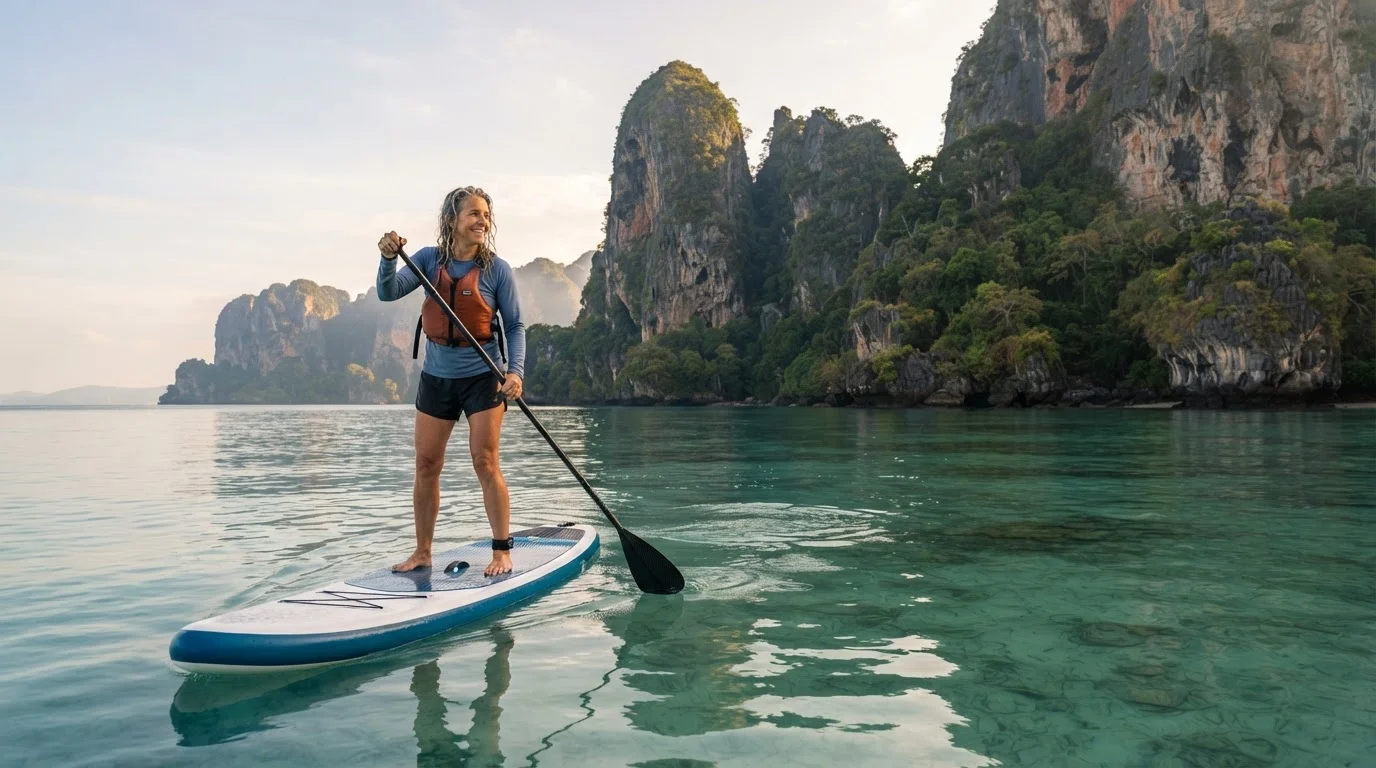
Coastal paddleboarding in Thailand depends on which coastline you choose and how seasonal monsoon cycles interact with local topography. Thailand's maritime geography splits between the Andaman Sea to the west and the Gulf of Thailand to the east, meaning dependable flat-water sea paddling is available somewhere in the country during every month of the year.
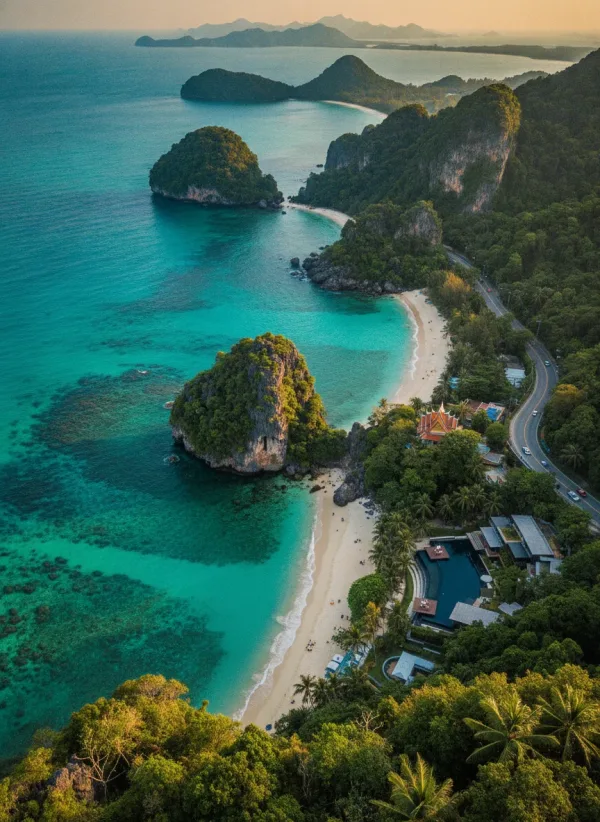
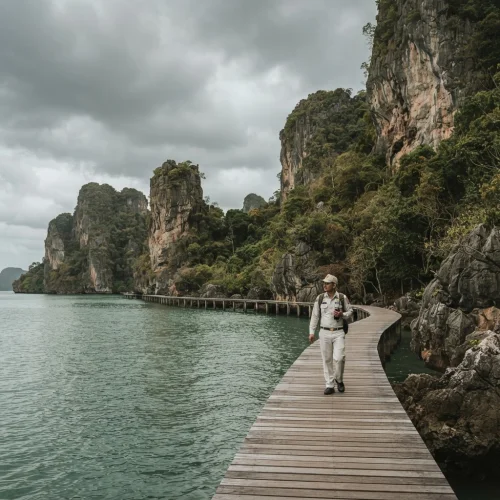
Between November and April, the northeast monsoon brings dry, settled conditions to the Andaman coast. During this window, western bays across Phuket, Krabi, and Phang Nga experience calm seas with minimal swell. In Phuket, sheltered stretches such as Bang Tao and Kata provide flat water inside outer reefs, with underwater visibility often reaching down to coral heads several metres below the surface. Across Phang Nga Bay in Krabi, the limestone karsts enclosing Railay West and Phra Nang create sheltered saltwater corridors where paddlers navigate alongside dramatic vertical rock faces, protected from open-ocean currents.
When the southwest monsoon arrives between May and October, onshore winds generate heavy surf and strong rip currents along the west coast. Coastal paddling shifts across the peninsula to the western Gulf of Thailand. Koh Samui and Koh Phangan sit in the lee of the mainland mountain spine, which intercepts the prevailing monsoon winds. On Koh Phangan, the shallow coastal flat at Thong Sala is protected by an outer barrier reef. The sandy seabed stays waist-deep for more than 100 metres offshore, creating an expansive, sheltered saltwater lagoon where paddlers can cover kilometres parallel to the beach without ocean chop. On Koh Samui, recessed northern bays such as Bophut and Choeng Mon maintain mirror-flat conditions through the summer months.
To keep paddling efficient, launch from recessed sandy coves rather than exposed rocky headlands, where tidal acceleration and broadside chop force you to spend energy correcting course rather than gliding forward.
| Coastal Region | Best Months | Primary Water Conditions | Typical Rental Cost (THB / GBP approx) |
|---|---|---|---|
| Phuket West Coast (Bang Tao & Kata) | November to April | Flat lagoon inside reef; light afternoon breeze | 300–400 THB (£7–£9) per hour |
| Krabi (Ao Nang & Railay) | December to March | Sheltered deep-water channels around karsts | 300–500 THB (£7–£11) per hour |
| Koh Samui (Bophut & Choeng Mon) | February to August | Warm, mirror-like bay water with minimal current | 300–450 THB (£7–£10) per hour |
| Koh Phangan (Thong Sala Lagoon) | January to September | Extensive shallow sandbar; glassy mornings | 400 THB (£9) per hour |
Whether you plan to hire a board directly off the sand for an hour or arrange a guided coastal excursion around the headlands, reserve your paddleboard session in advance during peak periods to secure top-tier equipment.
Inland Waterways: Reservoirs, Lakes, and Jungle Rivers
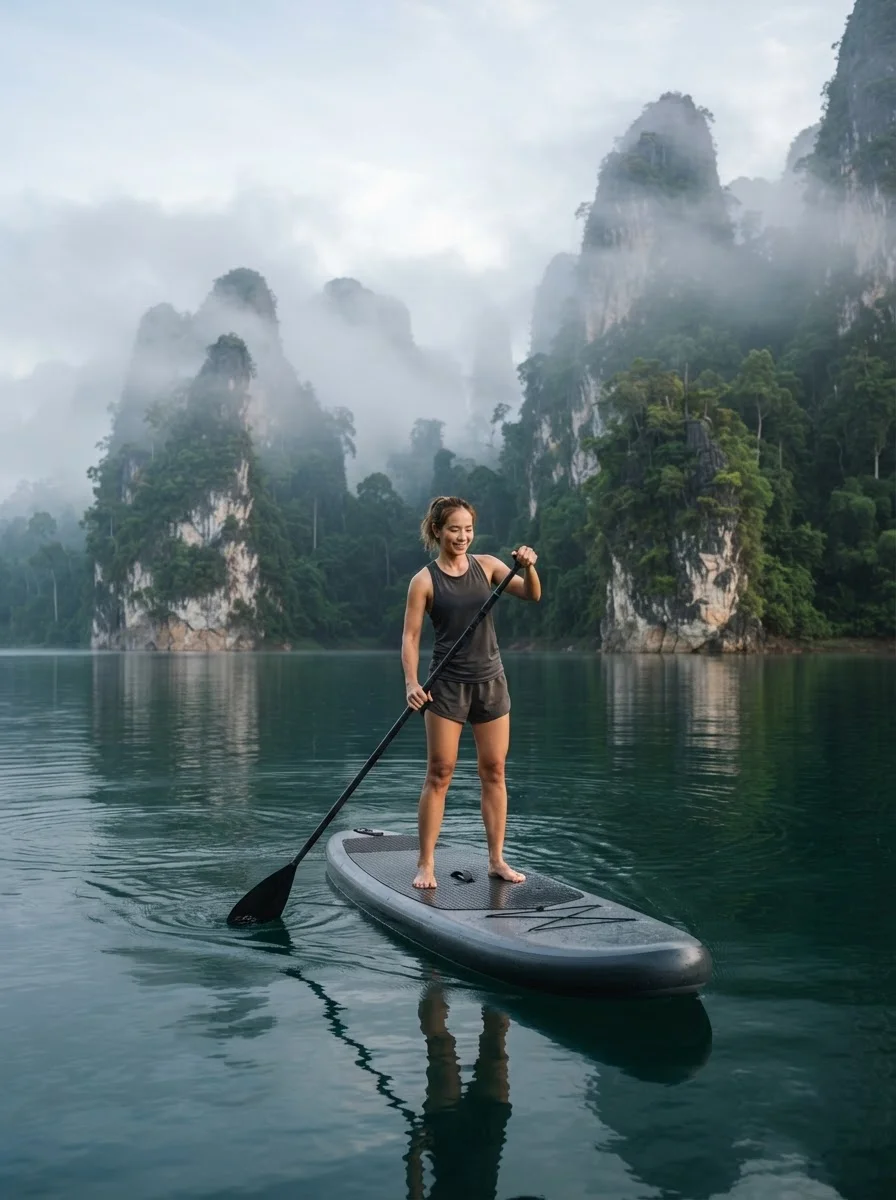
Freshwater inland paddleboarding delivers sheltered environments free from maritime swells and breaking waves.
Cheow Lan Lake inside Khao Sok National Park in Surat Thani provides some of Thailand's most dramatic inland paddling. This 165-square-kilometre reservoir floods deep jungle valleys surrounded by ancient evergreen forest, creating calm green water beneath sheer limestone cliffs. Floating raft resorts, including Panvaree and 500 Rai, maintain boards and kayaks for exploring sheltered side bays and tributary channels where hornbills feed in the rainforest canopy.
In northern Thailand, the Ping River in Chiang Mai gives paddlers a peaceful urban route along calm stretches north of the city weir. Roughly an hour north of the city, the Mae Ngat Somboon Chon Dam reservoir inside Sri Lanna National Park features floating houseboats framed by forested ridges, with flat water suitable for relaxed distance paddling.
In Kanchanaburi, paddleboarders take to the River Kwai on gentle downriver runs, including the popular five-kilometre stretch from Thanum Tuen to the historic railway bridge. Local operators run guided excursions along this route for 750 THB (approx £17), as well as independent board hire for 300 THB (approx £7). A mild downstream flow assists paddlers over longer distances, though steering around bridge pylons and bamboo fishing stakes requires basic board control. During periods of heavy highland rainfall, river currents quicken and carry increased runoff debris, making enclosed national-park reservoirs the more predictable inland option.
Plan a Central Thailand trip through Ayutthaya, Kanchanaburi, Lopburi and Amphawa, with current costs, transport advice and seasonal guidance.
Mangrove Forests and Tidal Estuaries: Technical Paddling
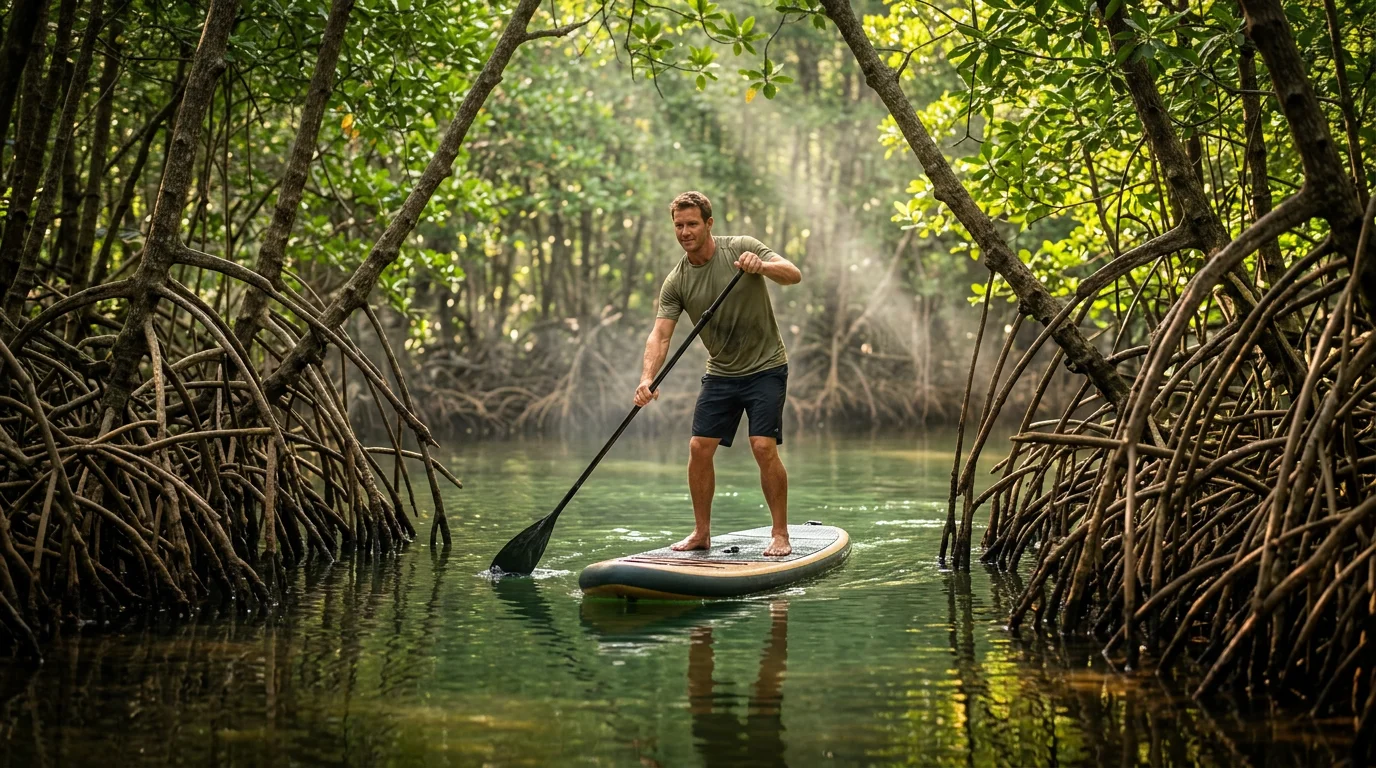
Entering a saltwater estuary demands precise blade control, careful board trim, and close attention to the local tide table. Along Thailand's Andaman coast, tidal estuaries such as Ao Thalane in Krabi and the Bang Rong channels in north-east Phuket feature extensive mangrove networks flanked by towering limestone cliffs and shallow coastal inlets.
Timing your session around the tide dictates whether channels are navigable. Tides along the Andaman Sea follow a semi-diurnal cycle with ranges frequently exceeding two metres. Launching approximately two hours before high tide allows paddlers to ride the incoming flow over shallow sandbars and submerged prop roots into the inner limestone canyons. Attempting to enter these narrow waterways around dead low tide risks grounding on deep, suctioning coastal mud that can trap a board until the water returns. The dense mangrove canopy and steep karst cliffs shelter the interior channels from coastal winds, creating calm, flat water even when open bays are choppy.
Technical manoeuvring in these tight corridors differs from open-water cruising. Red mangrove prop roots spread widely into the water and are often encrusted with sharp barnacles and oysters, which can scrape legs or puncture soft kit. Dropping to a kneeling position lowers your centre of gravity beneath low-hanging branches and gives you greater leverage for quick pivot turns around tight bends. Using an adjustable paddle that you can shorten quickly provides tighter stroke clearance without catching the blade on overhead foliage.
Wildlife throughout these tidal forests is active and visible from board level. Mud crabs and fiddler crabs feed along exposed root systems, mudskippers skip across the banks, and monitor lizards rest on fallen branches. Crab-eating macaques frequently forage near the water's edge, so keep dry bags clipped securely to deck bungees to prevent inquisitive monkeys from snatching loose belongings. For travellers evaluating different water disciplines, our Water Sports overview outlines how quiet paddling compares to motorboat activities across Thai marine parks.
| Estuary / River Route | Technical Difficulty | Wildlife Encounter Potential | Key Hazard to Manage |
|---|---|---|---|
| Ao Thalane Mangroves (Krabi) | Moderate | Very High (macaques, kingfishers, lizards) | Low tide grounding in mangrove mud |
| River Kwai Run (Kanchanaburi) | Easy to Moderate | Moderate (water birds, river otters) | Current velocity around bridge pillars |
| Mae Ngat Reservoir (Chiang Mai) | Easy | Low to Moderate (fish, raptors) | Afternoon heat exposure on open water |
| Bang Rong Estuary (Phuket) | Moderate | High (monkeys, mud crabs, waders) | Submerged branches and barnacles |
Dawn, Dusk, and Night Paddling: Microclimates and Wind Windows
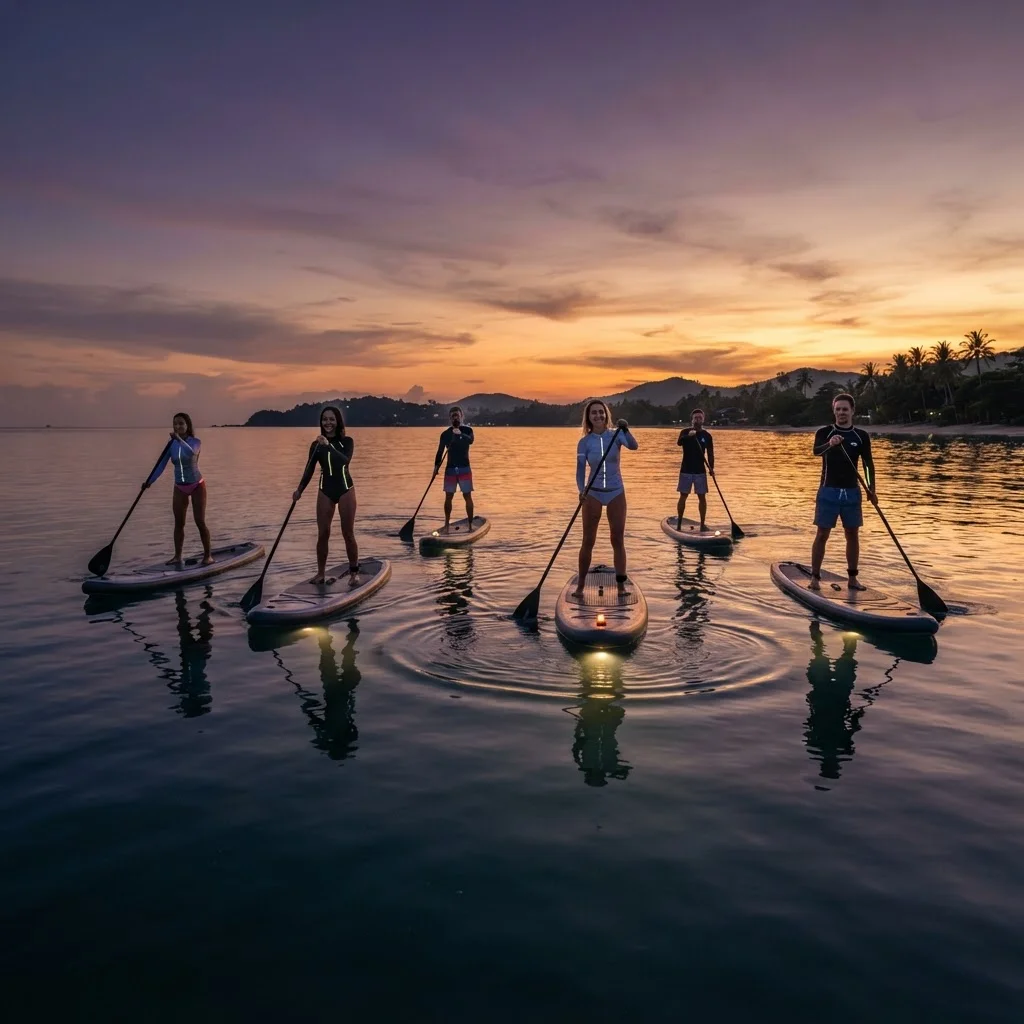
Tropical heat and diurnal wind cycles make early morning and late afternoon the most dependable paddling windows along Thailand's coasts. By mid-morning, solar heating over the mainland draws in onshore sea breezes that churn glassy bays into persistent wind chop by around 10:30. Setting out between 06:00 and 08:30 avoids the bulk of this turbulence. Early morning paddlers encounter flat water, comfortable air temperatures before midday humidity builds, and sea surface temperatures hovering near 28 degrees Celsius.
A second calm window opens in the late afternoon between 17:00 and 18:30, as coastal land cools and sea breezes drop. Sunset outings around Railay in Krabi and north-facing bays on Koh Samui, such as Bophut and Bangrak, capitalise on these slack winds. Several local outfits run twilight sessions that continue after dark, mounting waterproof LED light bars to the undersides of stand-up paddleboards to illuminate coral heads and sea life below.
In unlit, sheltered coves around the Andaman coast, notably off Railay, night sessions also provide opportunities to see bioluminescent plankton. As paddle blades stir the water, these dinoflagellates emit a brief blue glow across the wake. Sightings depend on dark skies and minimal ambient lighting, making moonless nights preferable.
Paddling after sundown requires careful visibility precautions. While guided night excursions furnish all required safety gear, independent paddlers out near dusk should carry a waterproof headtorch and fix a white marine light to the bow. This ensures you remain visible to passing longtail boats and water taxis returning to shore in failing light.
Equipment Rental, Instructors, and Tour Logistics

Inflatable stand-up paddleboards dominate rental fleets across Thailand's coastal and lake hubs, chosen because heavy-duty drop-stitch PVC withstands scrapes against limestone and rocks far better than rigid composite boards. When picking up an inflatable board from a beachfront operator, check the pressure gauge: boards require inflation to at least 15 PSI to prevent mid-deck flexing, which creates drag and undermines standing balance. Examine the fin box to ensure the central fin is secured with its retaining pin, and test the cam-lock clamp on adjustable rental paddles so the shaft does not slip down under load.
Hourly rental rates remain consistent at established centres. On Phuket's Bang Tao Beach, Talay Surf charges 300 THB (approx £7) per hour for paddleboard hire and runs one-hour introductory SUP lessons for 1,000 THB (approx £23). On Koh Phangan, Kite Club Koh Phangan on Thong Sala Beach hires boards at 400 THB (approx £9) an hour or 1,200 THB (approx £27) for a full day, with leashes included and buoyancy aids provided on request. For paddlers seeking organised routes, half-day guided excursions typically cost between 1,200 THB and 1,800 THB (approx £27 to £41). These outings generally include round-trip local transfers, dry bags, drinking water, and an English-speaking guide who monitors currents. Inspect the coiled ankle leash for frayed webbing or degraded Velcro before pushing off from the beach.
Where to Paddleboard Across Thailand
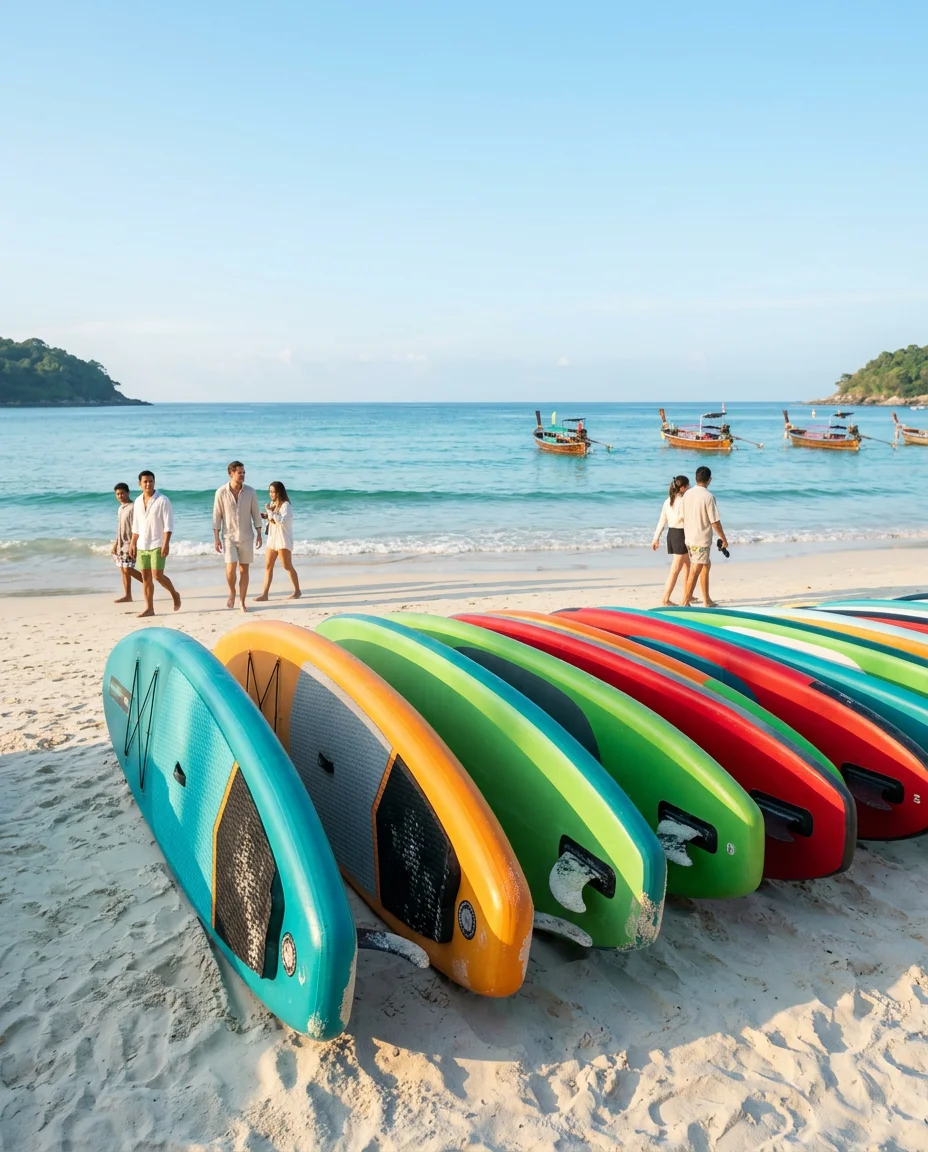
Different coastal and inland regions across Thailand cater to distinct paddling styles, ranging from sheltered bay cruising to organised river drifts.
On the west coast of Phuket, Bang Tao Beach forms a broad, sheltered crescent bay with gentle shore breaks from November to April, where operators such as Talay Surf run coastal lessons and rentals. Further south at Kata Beach, SSS Phuket rents boards from 400 THB (approx £9) for two hours, allowing paddlers to explore out towards Koh Pu directly offshore when sea conditions are calm. Over in Krabi, the dramatic limestone headlands around Ao Nang and Railay provide scenic launch points for open-water coastal routes, while the sheltered channels of Ao Thalane draw paddlers for guided mangrove excursions.
In the Gulf of Thailand, the south-west coast of Koh Phangan around Thong Sala and Hin Kong features a broad, reef-protected lagoon. Here, sandy shallows running from ankle to chest depth stay flat throughout the morning, making it a reliable practice ground for novices to find their balance without dealing with deep water or rough swell. For freshwater touring inland, Ratchaprapha Pier in Khao Sok provides access to Cheow Lan Lake and its floating raft houses, while in Kanchanaburi, Good Times Travel runs a 5-kilometre guided morning drift along the River Kwai down to the historic railway bridge for 750 THB (approx £17) per person.
Costs and Budgeting
Stand-up paddleboarding across Thailand caters to a wide range of budgets, from casual hourly board hire on resort beaches to fully guided multi-day freshwater expeditions.
Standard beachside board hire at popular coastal spots such as Phuket, Koh Samui, Koh Phangan, and Krabi generally costs between 300 THB and 400 THB (approx £7 to £9) per hour. This hourly fee routinely includes the board, an adjustable paddle, an ankle leash, and a buoyancy aid. Paddlers seeking greater flexibility can arrange full-day rentals for around 800 THB to 1,200 THB (approx £18 to £27), allowing an inflatable board to be packed into a hire car to reach uncrowded coves. Rental shops frequently request a refundable cash bond of 1,000 THB to 3,000 THB (approx £23 to £68) alongside photo identification; avoid handing over an original passport as collateral, in line with official UK travel advice.
Guided group tours vary according to duration and location. Downriver paddles along the River Kwai in Kanchanaburi start from 750 THB (approx £17) per person for a 4.5-kilometre to 5-kilometre guided drift with vehicle transfers. Coastal group excursions in Phuket or Krabi, which typically feature bay cruising and snorkelling gear, generally range between 1,200 THB and 1,800 THB (approx £27 to £41) per person. Multi-day inland packages, such as overnight paddling tours on Cheow Lan Lake in Khao Sok National Park, usually cost from 4,500 THB to 6,000 THB (approx £102 to £136) per person. These wilderness packages cover floating raft-house lodging, equipment, and meals, though national park entry fees are payable separately at the gate.
| Option | Cost (THB) | Cost (GBP approx) | Notes |
|---|---|---|---|
| 1-Hour Beach Board Hire | 300–400 THB | £7–£9 | Includes board, paddle, leash, and basic life vest |
| Full-Day Board Hire | 800–1,200 THB | £18–£27 | Cash bond or ID copy usually requested; avoid surrendering passports |
| Private Beginner Lesson | 1,000–1,500 THB | £23–£34 | 60 minutes with instructor; board, paddle, and vest included |
| Guided Half-Day Coastal Tour | 1,200–1,800 THB | £27–£41 | Group trip including guide, dry bag, and light refreshments |
| Half-Day River Kwai Tour | 750 THB | £17 | 4.5km to 5km guided drift with return transport |
| 2-Day Khao Sok / Lake Tour | 4,500–6,000 THB | £102–£136 | Floating bungalow, all meals, and board hire; excludes park entry fees |
What To Know Before You Go
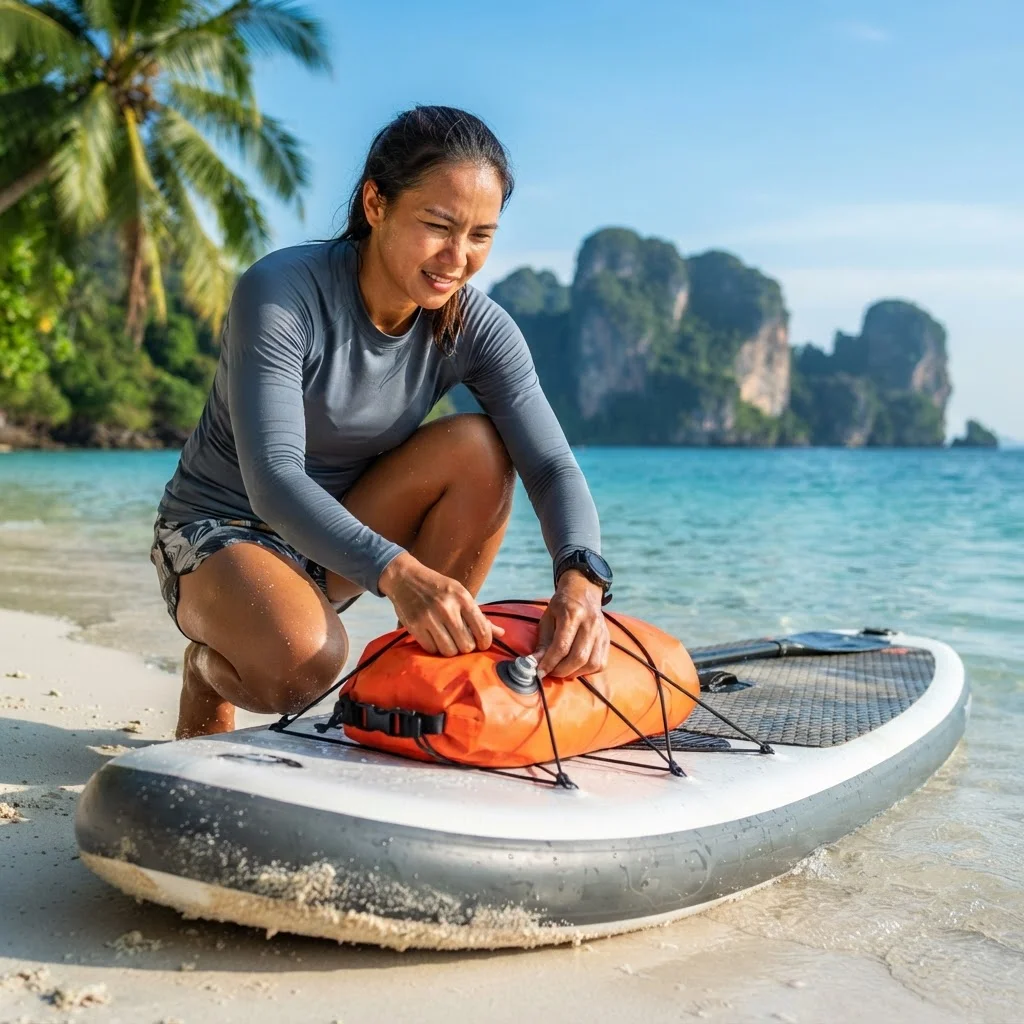
Check local wind forecasts and offshore breeze alerts before launching. Clear, sunny skies can conceal thermal winds reaching 15 knots, and attempting to paddle back against a stiff headwind across an open bay can quickly cause exhaustion.
Ensure you are tethered to your board before entering deep water. A coastal ankle or calf leash prevents your board from drifting away in tidal currents or surface chop, where wind can push a lightweight board faster than you can swim. If you venture onto flowing inland rivers, swap to a quick-release waist belt to avoid snagging hazards.
Give coral reefs a wide berth and avoid paddling across shallow flats at low water. Stepping onto living coral damages fragile marine ecosystems and violates Thai conservation laws, which carry fines of up to 100,000 THB (approx £2,300). Shallow reef beds also harbour black sea urchins and venomous stonefish, making foot contact a severe hazard.
Stow gear inside a double-sealed dry bag clipped firmly to your deck rigging. A sudden capsize can instantly sink loose items, so keep your mobile phone in a buoyant, waterproof pouch attached to your person or buoyancy aid rather than loose on the deck.
Practical Tips
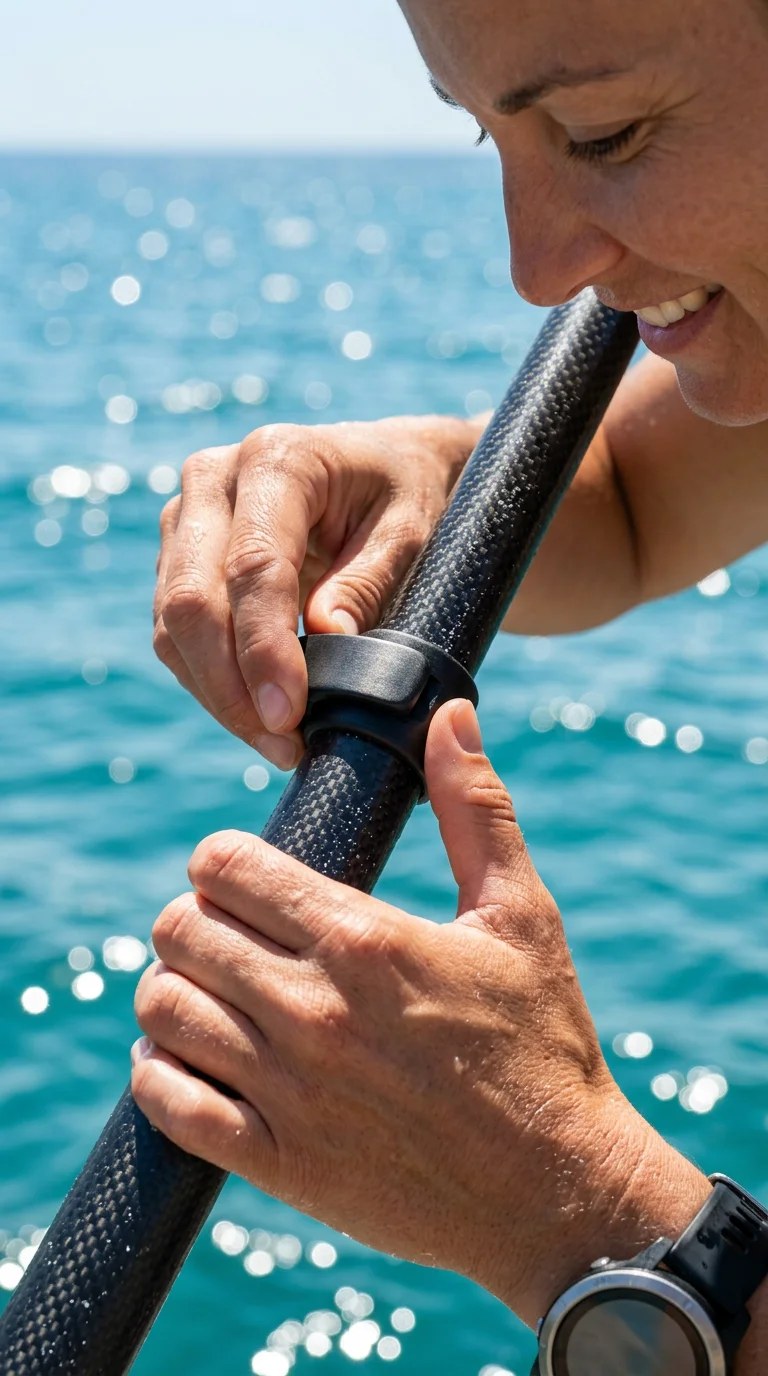
A long-sleeved UPF 50+ rash guard and a secure sun hat provide reliable defence during daylight sessions. Tropical sun reflects heavily off open water, amplifying UV radiation beyond what sun cream alone can block over an hour on the board. Carry a compact roll-top dry bag packed with drinking water and electrolyte tablets. In Thailand's daytime heat, which routinely hovers around 32°C, sustained core exertion against coastal chop rapidly drains hydration levels.
Adjust your paddle shaft height before pushing off from the shore. For general touring and cruising, set the T-grip roughly twenty centimetres (about eight inches) above your head, or at wrist height when your arm is extended upward. A shaft that is too short forces you to hunch over the deck, producing lower-back strain after thirty minutes of paddling, while an overextended paddle strains your shoulders. Once upright, fix your gaze on the distant horizon rather than down at your feet. Looking directly at the board destabilises your inner ear and balance, frequently causing a tumble into the water.
Give motorised traffic, particularly traditional longtail boats, a very wide berth. A longtail craft uses an extended drive shaft with an exposed, high-speed propeller mounted at the stern; it generates substantial lateral wake and cannot brake or turn sharply in narrow or shallow bays. Before heading into the water, check your board's central fin box and tighten the thumbscrew or locking pin securely. A loose fin can slide out in light surf, leaving the board unsteerable and prone to spinning with each forward stroke.
Rinse your swimwear, buoyancy aid, and dry bags with clean fresh water as soon as you finish your session. Salt crystals left to bake in the tropical sun stiffen neoprene, corrode zip sliders, and cloud waterproof camera lenses. Check a reliable tide table or marine app before launching, as shallow coastal bays can empty out over wide flats at low water, forcing an awkward trek across exposed seabed to return to shore.
Booking an organised coastal excursion with experienced local instructors provides structured support when exploring unfamiliar waters and helps you time your paddling to favourable sea conditions.
Quick Reference Table
| Item | Detail | Notes |
|---|---|---|
| Andaman Coast Season | November to April | Dry northeast monsoon brings calm, glassy waters to Phuket, Krabi, and Phang Nga |
| Gulf of Thailand Season | January to September | Mainland mountains block southwest monsoon; best flat-water conditions on Koh Samui and Koh Phangan |
| Best Daily Windows | 06:00–08:30 and 17:00–18:30 | Early mornings avoid 10:30 thermal chop; late afternoons offer calm sunset and twilight paddling |
| 1-Hour Board Hire | 300–400 THB (£7–£9) | Standard beachfront rate across main islands; typically includes paddle, leash, and buoyancy aid |
| Full-Day Board Hire | 800–1,200 THB (£18–£27) | Inflatable SUPs for car transport; cash bond of 1,000–3,000 THB (£23–£68) or ID copy required (never leave passport) |
| Guided Half-Day Tours | 1,200–1,800 THB (£27–£41) | Coastal excursions in Phuket or Krabi including guide, transfers, dry bag, and snorkelling gear |
| River Kwai Drift Tour | 750 THB (£17) | 4.5km to 5km guided morning drift in Kanchanaburi with vehicle transfers |
| Khao Sok Multi-Day Tour | 4,500–6,000 THB (£102–£136) | 2-day Cheow Lan Lake package with floating raft house and meals; park entry fee excluded |
| Mangrove & Estuary Timing | Launch ~2 hours before high tide | Andaman tidal range exceeds 2m; low tides risk grounding in deep mud and scraping oyster-encrusted roots |
| Equipment & Board Pressure | Minimum 15 PSI for inflatables | Prevents mid-deck flexing; ensure fin retaining pin is locked and paddle cam-lock is tight |
| Marine Safety & Law | Leashes essential; avoid shallow coral | Coastal ankle leash prevents board loss; coral damage carries fines up to 100,000 THB (£2,300) |
| River Safety Protocol | Quick-release waist belt | Swap coastal ankle leashes for quick-release belts on flowing inland rivers to avoid snagging hazards |
| Sun & Hydration Essentials | UPF 50+ rash guard, hat, electrolytes | Water reflection magnifies tropical UV; daytime temperatures hover near 32°C |
| Book direct (Phuket) | Talay Surf (talaysurf.com); SSS Phuket (sssphuket.com) | Beachfront rentals and beginner lessons on Bang Tao and Kata beaches |
| Book direct (Koh Phangan) | Kite Club Koh Phangan (kiteclubkohphangan.com) | Hourly and day rentals at Thong Sala reef-protected lagoon |
| Book direct (Kanchanaburi) | Good Times Travel (good-times-travel.com) | Guided 5km morning downriver paddleboard tours on the River Kwai |
FAQ: Paddleboarding
Can you paddleboard in Thailand all year round?
When is the best time to go paddleboarding on Thailand's Andaman coast?
What are the best times of day to go paddleboarding in Thailand?
What should I check when renting an inflatable paddleboard in Thailand?
Why is it important to check wind forecasts before paddleboarding?
What type of leash should I use for paddleboarding in different waters?
Why should paddleboarders avoid coral reefs and shallow flats at low tide?
How should I secure my belongings while paddleboarding?
What clothing and hydration are recommended for paddleboarding in Thailand?
How should I adjust my paddle height for paddleboarding?
Reviewed by the Thailand Guide Editorial Team • Last reviewed: 18 November 2026
This page is provided for general information only. While we aim for accuracy, details can change — please verify anything important independently before relying on it.