Kitesurfing in Thailand
A steady fifteen-knot thermal fills your twelve-metre canopy as warm Gulf salt spray stings your calves, dragging your twin-tip across a shallow sandbar off the Prachuap Khiri Khan coastline. With surface water temperatures holding between 28°C and 30°C throughout the year, you can leave thick five-millimetre British winter neoprene at home in favour of boardshorts, a protective rash vest, and water-resistant sunscreen. Thailand has established itself as Southeast Asia's foremost kiteboarding hub, combining accessible shallow lagoons, reliable seasonal wind cycles, and a well-developed network of professional coastal schools.
This guide maps out everything required to plan a kitesurfing trip to Thailand, whether you want to book your first beginner water start or transport your own board bag across the globe. You will find seasonal wind windows across both the Gulf and Andaman coasts, verified International Kiteboarding Organisation instruction pathways, reliable equipment rental operators, and practical launch conditions from Hua Hin down to Koh Phangan. Use this breakdown to time your travels accurately and secure certified instruction without costly scheduling errors.

Thailand's Dual Wind Seasons and Atmospheric Conditions
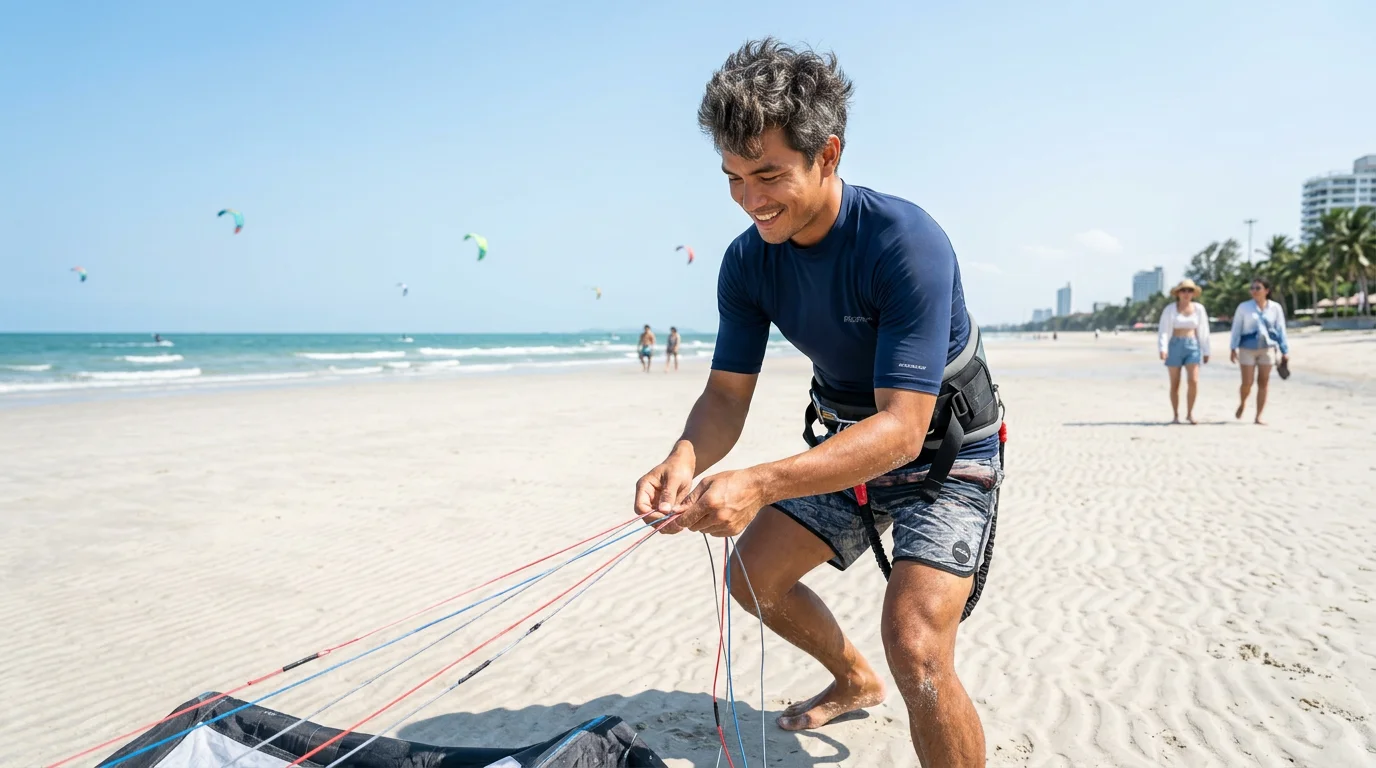
Thailand's kitesurfing calendar is governed by two distinct monsoon systems rather than a single continuous wind cycle. Between November and January, the northeast monsoon sweeps across the Gulf of Thailand, pushing reliable breezes between 12 and 25 knots across wide sandy bays. When continental high-pressure weather systems settle over mainland Asia, coastal strips like Hua Hin, Pak Nam Pran, and Chumphon receive steady onshore or side-onshore airflow that creates dependable riding conditions over moderate chop. As the continental cool air subsides in February, daytime temperatures inland soar, triggering dependable afternoon thermals from the southeast that sustain flat-water sessions through April at speeds of 12 to 20 knots.
Conversely, the southwest monsoon dictates wind patterns across the Andaman coastline and southern Gulf islands from May through October. During these months, oceanic airflows strike Nai Yang Beach in northern Phuket and the sheltered sand spits of Koh Phangan with winds averaging 14 to 22 knots. However, the southwest monsoon brings tropical squalls and periodic heavy rainfall, so riders must monitor local radar forecasts for sudden gusts. Between monsoons—specifically during the transition periods in late April to May and late October into November—wind speeds nationwide frequently collapse below eight knots. Inflatable kites struggle to stay aloft in these calms, making it vital to plan your itinerary around the prevailing seasonal airflow.
Target December to April for mainland Gulf beaches such as Hua Hin and Pak Nam Pran, or July and August for summer riding across the southern Gulf islands, to catch the most dependable wind conditions.
| Wind Season | Months Active | Typical Wind Range | Primary Coastal Locations |
|---|---|---|---|
| Northeast Monsoon | November – January | 12 – 25 knots | Hua Hin, Pak Nam Pran, Chumphon |
| Thermal Southeast | February – April | 12 – 20 knots | Koh Phangan (Thong Sala), Hua Hin |
| Southwest Monsoon | May – October | 14 – 22 knots | Phuket (Nai Yang), Koh Samui (Nathon) |
| Inter-Monsoon Transitions | May & October–November | 5 – 10 knots | Nationwide lull (low wind activity) |
Whether you are looking to book beginner tuition, arrange supervised coaching, or reserve rental equipment ahead of your arrival, choosing a certified school in the right coastal zone ensures you spend your time on the water rather than waiting for the breeze.
Mainland Launch Sites: Hua Hin and Pak Nam Pran
The mainland coastline two and a half to three hours south of Bangkok represents the historical centre and primary commercial hub of Thai kitesurfing. Hua Hin Beach provides an expansive run of pale sand with a gentle gradient, allowing novices to walk dozens of metres out into waist-deep water. Established schools cluster along the central town strip; Kiteboarding Asia operates from Soi 75/1, while the Duotone Kiteboarding Club sits slightly north along Phetkasem Road near Soi 67. Both launch riders into reliable side-onshore breezes averaging fifteen to twenty knots between November and April. Daily tidal movements dictate the routine: morning high tides submerge much of the beach, whereas afternoon low tides reveal broad, firm sand flats with plenty of room to lay out lines.
Roughly twenty kilometres further south lies Pak Nam Pran, a tranquil coastal stretch flanking the Pranburi river mouth. Without the high-rise hotels that line central Hua Hin, the shoreline here receives cleaner, less turbulent airflow and significantly lighter beach traffic. The river mouth itself creates a sheltered, shallow basin where freestyle kiters practise unhooked tricks over glass-flat water, while the open bay towards the limestone bluff of Khao Kalok delivers gentle chop. Accommodations and local seafood restaurants flank the coastal road, giving riders direct morning launches onto wide sand without commercial congestion. Hua Hin delivers dense school amenities and easy regional transit, while Pak Nam Pran provides calmer waters, stable wind, and uninterrupted space.
Plan a journey along Thailand’s Andaman coast, with practical guidance on island gateways, marine parks, diving, ferries and monsoon travel.
The Deep Gulf Coast: Chumphon's Cabana Beach
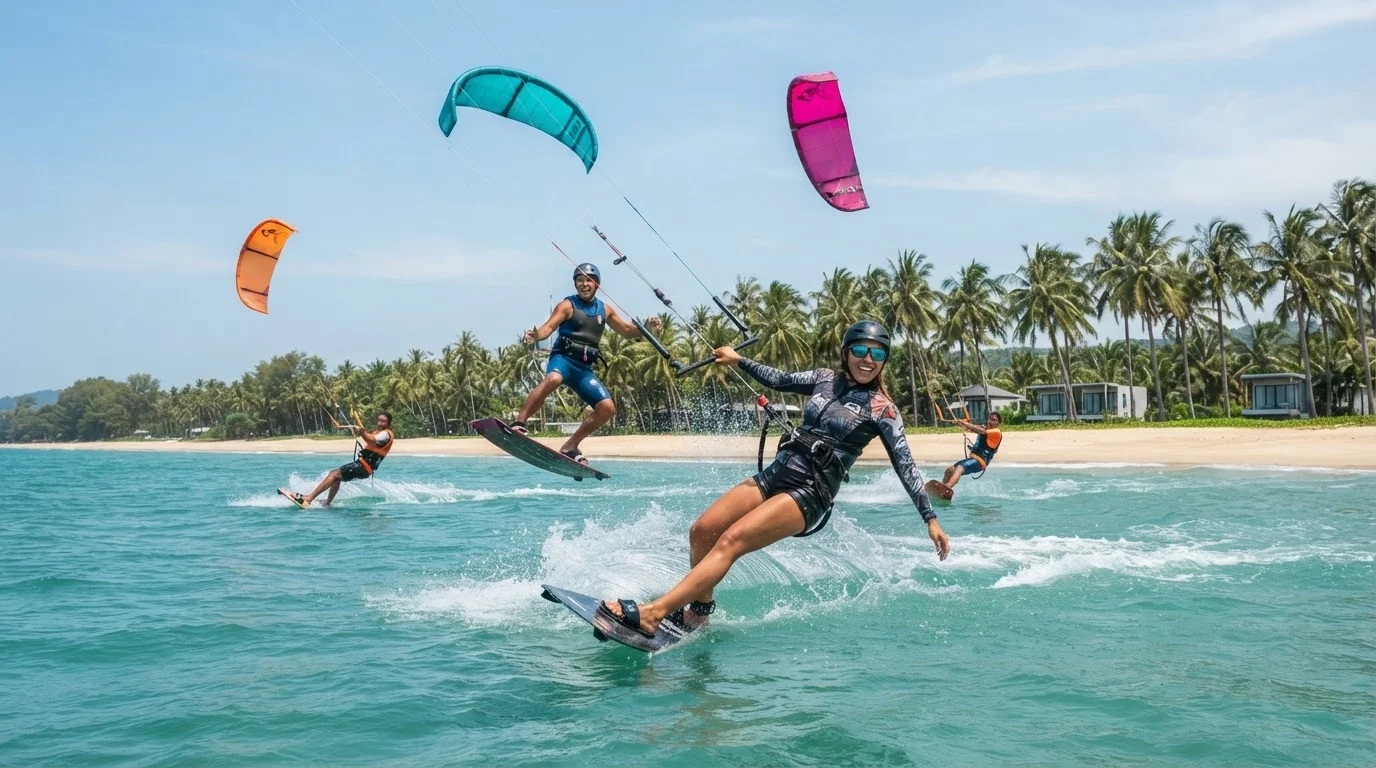
Chumphon's mainland coastline provides some of the Gulf of Thailand's steadiest winter wind corridors. Thung Wua Laen Beach, situated roughly twenty minutes north of Chumphon town and widely known to kiteboarders as Cabana Beach, stretches along three kilometres of open golden sand. Between November and January, the northeast monsoon sweeps across the open water, funnelling past coastal headlands to generate reliable winds between fifteen and twenty-five knots. This natural landform shapes clean, side-onshore airflow from the left, producing small rolling kickers that suit twin-tip riders working on boosted airs and directional surfboarders carving small waves.
Because most travellers treat Chumphon as an interchange for ferries out to Koh Tao and Koh Samui, the shoreline remains quiet, leaving the launch zones open without the kite traffic found at northern mainland hubs. Qualified centres such as DKB Club Chumphon operate along the beach, providing complete kitesurfing equipment hire at 2,000 THB (approx £45) for one- to two-hour sessions.
Tidal swings dictate your launching space. During low tide, an extensive, firm sandbank opens up, creating shallow, waist-deep flat sections behind the swell. At high tide, particularly when winter chop pushes in, the water line encroaches close to the tree line, narrowing the available rigging ground. Once off the water, riders gather at informal wooden shacks along the coastal road for grilled squid and cold drinks, soaking up an unhurried, authentic fishing community setting.
Gulf Island Arenas: Koh Phangan and Koh Samui
The southern Gulf islands of Koh Phangan and Koh Samui feature shallow coastal lagoons protected by offshore reefs, creating expansive areas of flat water well suited to beginners. Along Koh Phangan's southern shoreline between Thong Sala and Ban Tai, an offshore coral barrier sits several hundred metres out. This reef blocks open-sea swell, leaving a wide basin that rarely rises above chest height across vast expanses. From mid-January through April, steady south-easterly winds blow across this coastline at twelve to twenty knots. The flat, calm surface allows novice riders to stand up and recover dropped boards easily without fighting waves. Established local centres including Kiteflip, Accrokite, and Kite Club Koh Phangan teach along these shallows, while experienced kitesurfers head north to Chaloklum when north-easterly winds pick up in November and December.
Koh Samui operates on a similar seasonal split across two coasts. Between December and April, schools base themselves at Nahai Beach on the sheltered south coast, making the most of steady easterly and south-easterly winds over a shallow, two-kilometre sandy flat. When the south-west monsoon arrives from May to September, operations shift across to Nathon Beach on the western shore. Here, onshore winds provide reliable afternoon conditions over a sandy, low-gradient bay. For beginners, the waist-deep standing water at both island locations cuts out the exhausting deep-water board recoveries that often drain energy on exposed mainland beaches.
Plan your sessions on Koh Phangan's southern lagoons between February and April, when the south-easterly breeze delivers the most reliable flat-water training window of the year.
Andaman Sea Cruising: Phuket's Split-Coast Spots
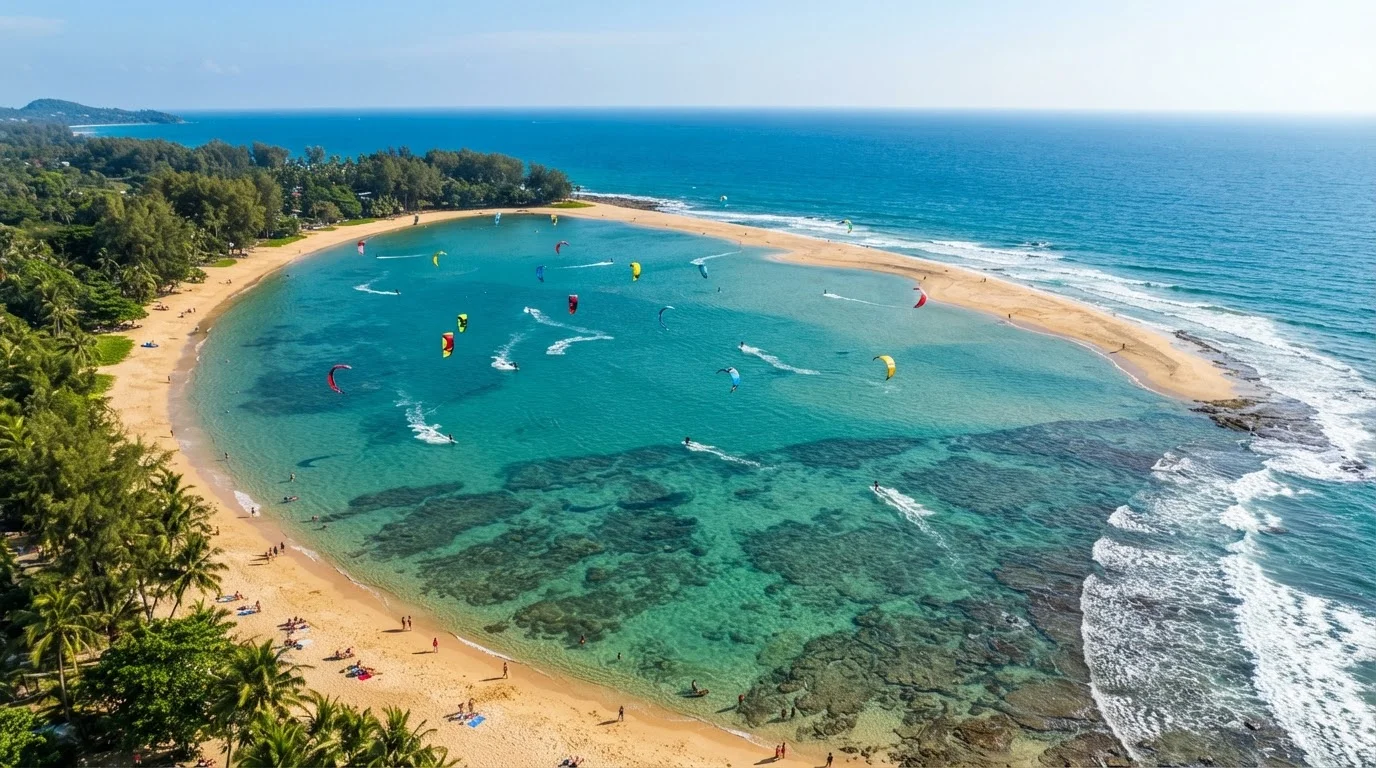
Phuket delivers reliable kitesurfing by alternating between northern Andaman bays and sheltered southern inlets as the monsoons shift. Unlike destinations along the Gulf of Thailand that rely on a single coastal orientation, Phuket’s kite spots sit on opposing shores. From May to October, the southwest monsoon sends steady side-onshore breezes of 12 to 20 knots onto the northwest coast, activating Nai Yang Beach. Tucked beside Sirinat National Park, this three-kilometre sandy bay is sheltered by a natural coral reef roughly 800 metres offshore. The outer reef absorbs ocean swells, leaving a shallow, flat-water lagoon inside where beginners practice water starts without battling breaking chop. Further out, advanced riders can launch over the reef break, which kicks up clean waves of one to two metres during stronger gusts. Because Nai Yang sits five minutes south of Phuket International Airport, visiting kiters can reach the launch within an hour of touchdown.
When the weather pattern flips between December and March, the northeast monsoon sets in, shifting the primary kite activity to the southeast coast around Chalong Bay and Friendship Beach in Rawai. Here, side-onshore winds averaging 10 to 18 knots blow across expansive tidal flats. The water remains flat to gently rippled, creating forgiving conditions for novices learning board control and intermediate riders dialling in freestyle tricks. High-tide cycles provide reliable water depth across the bay; during extreme low tides, the water retreats significantly, exposing shallow mudflats and rocky patches that make launching impractical. Established kite schools, including Kite Zone Thailand and Kiteboarding Asia (KBA), operate along this southern stretch through the winter season, maintaining marked launch corridors, rescue boats, and certified instructors.
Tuition across Phuket typically runs on standardised rates. Private two-hour coaching sessions generally cost around 4,000 THB (approx £92) to 4,500 THB (approx £103), while comprehensive three-day beginner courses spanning six to ten hours of instruction average between 11,000 THB and 12,000 THB (approx £250 to £275). While main public beach areas at Nai Yang are free to access, vehicles entering via official Sirinat National Park checkpoints pay a daily entry fee of 200 THB (approx £4.50) per foreign adult. Selecting your base according to the prevailing monsoon ensures you stay within easy reach of active schools and avoid long cross-island road transfers between the north and south coasts.
| Spot Name | Island / Region | Best Season | Water Conditions | Rider Level |
|---|---|---|---|---|
| Hua Hin Main Beach | Gulf Mainland | Nov – Apr | Moderate chop, tidal sandbars | Beginner to Advanced |
| Pak Nam Pran | Gulf Mainland | Nov – May | Flat lagoon & slight chop | All skill levels |
| Thung Wua Laen | Chumphon | Nov – Jan | Small waves & shore break | Intermediate to Advanced |
| Ban Tai Lagoon | Koh Phangan | Jan – Apr, Jul – Aug | Flat shallow reef lagoon | Ideal for Beginners |
| Nai Yang Beach | Phuket (North) | May – Oct | Outer reef swell, inner flat | Beginner to Advanced |
| Chalong Bay | Phuket (South) | Dec – Mar | Shallow tidal flat | Beginner to Intermediate |
Learning the Sport: IKO Certification and Safety Protocol
Enrolling in an accredited International Kiteboarding Organisation (IKO) programme provides structured training in flight dynamics, wind assessment, and emergency self-rescue techniques. Because kitesurfing harnesses substantial power, professional instruction remains vital for personal safety and anyone sharing the coastal waters. Accredited schools maintain strict instructor-to-student ratios, typically capped at two pupils per teacher during practical water sessions to ensure close supervision. Reputable centres equip students with impact vests, flotation aids, and two-way radio-fitted helmets, allowing instructors to deliver immediate guidance from the shore or a safety boat while learners practise in shallow lagoons.
The standard training progression moves through recognised stages designed to take complete novices to self-sufficient kiters. A two-hour discovery taster introduces wind-window theory, safety quick-release mechanisms, and trainer kite control on the sand, typically costing 3,500 to 4,000 THB (approx £80 to £90). Progressing through the full three-day beginner syllabus covers four-line inflatable kite rigging, downwind and upwind body dragging, board recovery, and initial water starts for 11,000 to 12,000 THB (approx £245 to £270). Riders aiming for independent status progress further to master edging to ride upwind, changing direction through controlled transitions, and executing deep-water self-rescue pack-downs.
Upon course completion, your instructor logs your verified competence level on the global IKO database, issuing a digital member card. Licensed equipment rental centres across Thailand and internationally require this digital credential before hiring out boards and kites without staff supervision. Bypassing accredited tuition with unlicensed beach vendors introduces serious hazards, including sudden equipment failure, runaway kites, and severe injuries from submerged coral heads or unexpected offshore gusts.
Booking a structured beginner certification course provides the international credentials needed to hire equipment and ride without supervision worldwide.
| Course Level | Typical Duration | Focus Skills Covered | Average Price (THB) | Approx Price (GBP) |
|---|---|---|---|---|
| Discovery / Taster | 2 Hours | Kite setup, safety quick release, trainer kite flight | 3,500 – 4,000 THB | £80 – £90 |
| IKO Level 1 (Groundwork) | 1 Day (3–4 Hours) | Rigging 4-line kites, launching, body dragging downwind | 6,500 – 8,000 THB | £145 – £180 |
| Full Beginner (Level 1–2) | 3 Days (6–9 Hours) | Upwind body dragging, board starts, continuous riding | 11,000 – 12,000 THB | £245 – £270 |
| Independent Rider (Level 3) | 5 Days (10–12 Hours) | Riding upwind, transitions, self-rescue pack-down | 18,000 – 19,000 THB | £400 – £425 |
Where to Kitesurf in Thailand: Top Spots and Schools
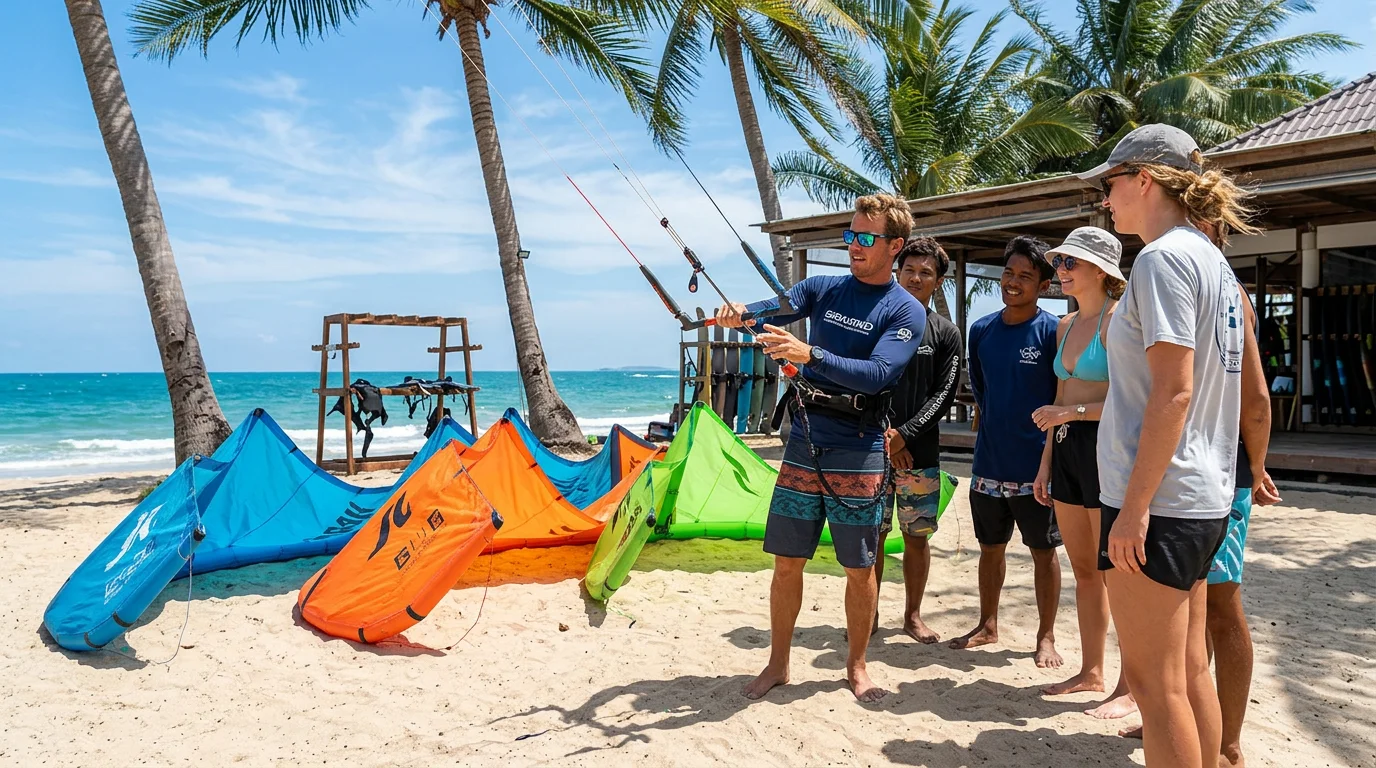
Thailand features diverse launch venues tailored to distinct rider profiles, ranging from full-facility school beaches to quieter coastal bays. In Hua Hin, Kiteboarding Asia operates from Soi 75/1, providing International Kiteboarding Organisation instruction, equipment storage, and repairs alongside Duotone Kiteboarding Club. Moving south into Pranburi, Jollykite sets up on the sand near Khao Kalok, featuring a fresh-water pool and beachfront equipment lockers, while GoKite Asia commands the wide stretch of Pak Nam Pran. Both locations provide a relaxed environment with steady breezes and manageable tidal flats.
Riders seeking stronger winter winds can travel south to Thung Wua Laen Beach in Chumphon, where DKB Club runs Duotone rentals and coaching along an uncrowded fishing coastline. Island travellers have reliable flat-water options on Koh Phangan: schools including Kiteclub Koh Phangan and Kiteflip base themselves along Ban Tai beach, where reef-protected shallow lagoons create forgiving water-start territory. On Phuket, seasonal wind shifts dictate school bases across the island. Kite Zone Thailand conducts lessons from Friendship Beach in Chalong Bay during the dry winter northeast monsoon, whereas centres such as KBA Phuket operate from Nai Yang Beach during the summer southwest monsoon. Beginners typically benefit from starting in Hua Hin or Ban Tai, where waist-deep sandbars and established schools allow students to practise board starts and kite control without having to combat heavy open-water swell.
Costs and Budgeting
Kitesurfing in Thailand spans distinct budget levels, whether learning from scratch or travelling with personal equipment. Independent riders bringing their own quiver can stay in fan-cooled beach bungalows for 600 to 1,000 THB (approx £13 to £22) per night, spend under 500 THB (approx £11) daily on local food, and pay zero spot access fees on public beaches.
Mid-range travellers taking a standard three-day beginner course spend roughly 11,000 to 12,000 THB (approx £245 to £270) on instruction, alongside air-conditioned seaside accommodation at 1,800 to 3,000 THB (approx £40 to £67) per night. Those seeking private coaching, dedicated hydrofoil sessions, and daily full-quiver rentals should budget roughly 5,000 to 8,000 THB (approx £110 to £180) per active day on the water.
To hire equipment independently, centres require proof of independent riding ability, such as an IKO Level 3 certificate or recognised national equivalent. Riders without credentials must book a short checkout assessment or refresher lesson before gear is released. Rental setups cover the kite, bar, board, and harness, though damage liability rests with the rider unless the school provides an optional equipment waiver. Card payments at beachside kite centres typically attract a 3% surcharge, making cash in Thai Baht the most practical payment method for daily rental and storage fees.
| Option | Cost (THB) | Cost (GBP approx) | Notes |
|---|---|---|---|
| 2-Hour Discovery Lesson | 3,500 – 4,000 THB | £80 – £90 | Includes instructor, kite, harness, helmet |
| 3-Day Full Beginner Course | 11,000 – 12,000 THB | £245 – £270 | Covers 6–9 hours, gear hire, IKO licence |
| Daily Full Gear Hire | 3,000 – 3,500 THB | £67 – £80 | Complete setup: kite, bar, board, harness |
| Hourly Equipment Hire | 1,500 – 2,000 THB | £33 – £45 | Suitable for short afternoon thermal sessions |
| Private Hourly Coaching | 2,500 – 4,000 THB | £55 – £90 | Advanced tricks, jumping, or hydrofoil training |
| Weekly Kite Storage & Beach Assist | 2,000 – 3,000 THB | £45 – £67 | Includes compressor, washdown, launch support |
What To Know Before You Go
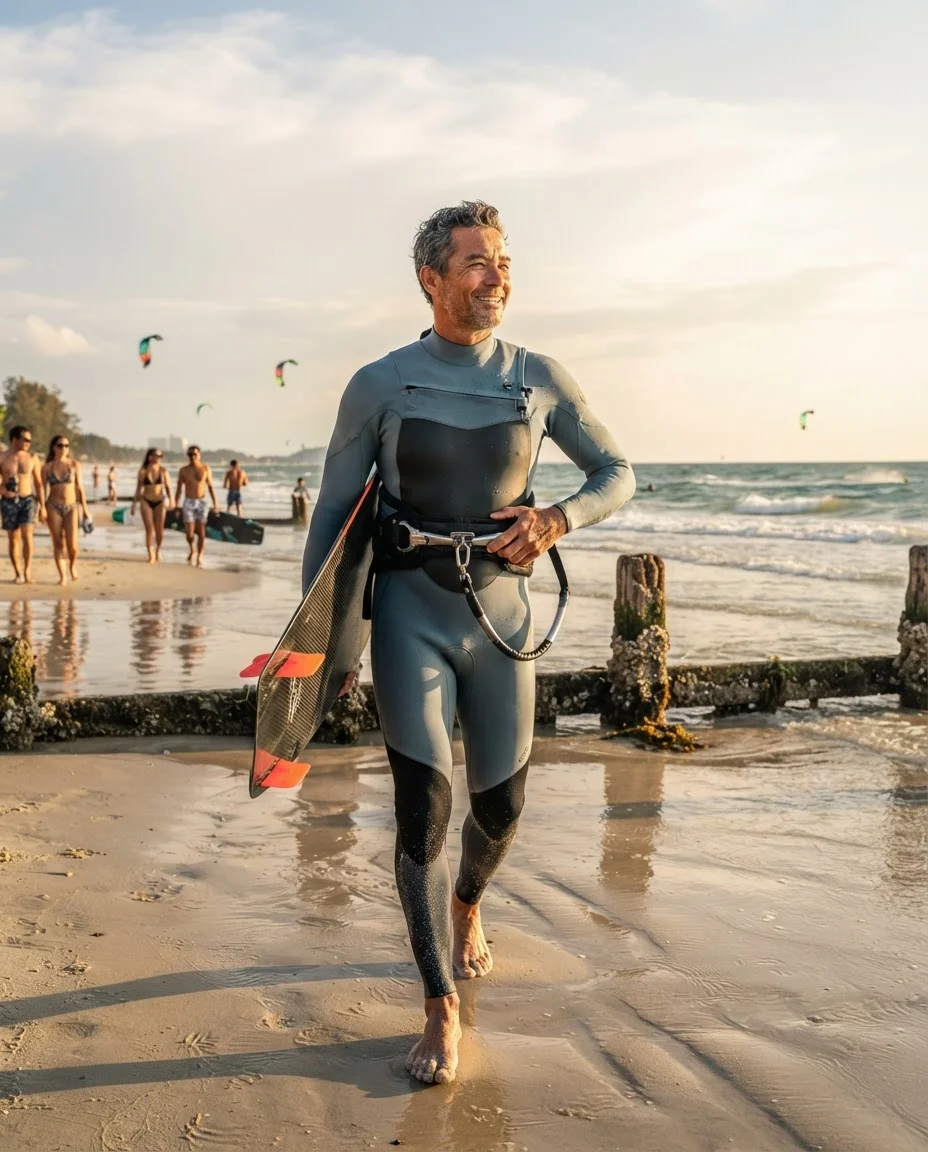
Jellyfish represent a genuine seasonal consideration across both the Gulf of Thailand and the Andaman Sea. Tourism Authority of Thailand safety guidance advises water users to wear full-length lycra leggings and a long-sleeved rash guard on every session. This lightweight layer provides an effective physical barrier against drifting tentacles and sea lice, while simultaneously preventing severe sun exposure and harness chafing. Keep a small bottle of household white vinegar in your beach bag. If you encounter a box jellyfish, official protocols call for dousing the sting site continuously with vinegar for at least thirty seconds to neutralise unfired stinging cells before attempting to remove any tentacle fragments. Do not rinse the wound with fresh water or rub it with sand, as pressure and osmotic change cause further venom discharge. In the event of extensive stings, chest discomfort, or breathing difficulties, summon emergency medical assistance immediately on 1669.
Tidal movements heavily dictate launch safety and rideable water depth across Thai coastlines. In barrier-reef lagoons, spring low tides regularly drain the shallows, leaving exposed coral heads, sharp limestone shelves, and stonefish habitats beneath only a few inches of water. Conversely, spring high tides can swallow the sand right up to the seawalls, leaving insufficient beach space to lay out twenty-metre lines or execute a controlled launch. Consult local tide tables before rigging, and speak with resident instructors to identify submerged hazards and seasonal current channels.
Packing the right equipment quiver requires an honest assessment of regional wind strengths. Thailand’s coastal breezes are predominantly moderate, driven by northeast or southwest monsoon flows and coastal thermal heating that typically delivers twelve to eighteen knots. Small storm kites rarely leave your board bag. Twin-tip riders weighing seventy to eighty kilograms should bring larger canopies between twelve and seventeen metres, or consider hydrofoil equipment to capitalise on lighter afternoon thermals. Dedicated weather applications such as Windy and Windfinder are useful for tracking these local thermal cycles, which frequently build after midday rather than blowing at sunrise.
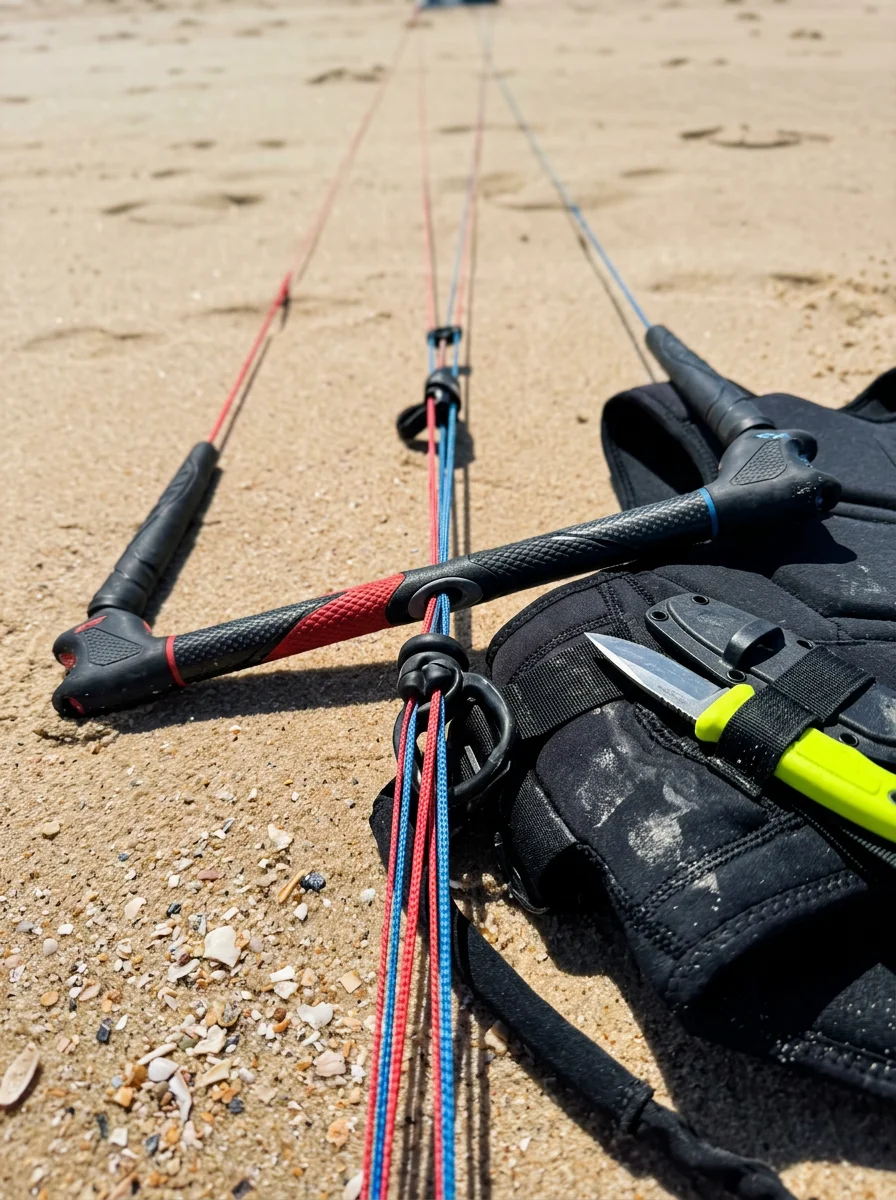
A few small safety additions to your harness setup make a substantial difference on the water. Thai coastal waters support active artisanal fishing communities, and shallow channels often contain stray monofilament line, submerged bamboo poles, and crab trap ropes. Secure a sharp hook knife or compact line cutter to your harness where you can draw it quickly with either hand if you ever become entangled downwind of a fishing run. Selecting accommodation within easy walking distance of the primary launch beach is equally sensible, saving you from hauling damp twenty-kilogram board bags through humid thirty-degree heat after an exhausting session.
Standard UK travel insurance policies routinely exclude kitesurfing from their basic medical and personal liability cover, categorising it as an extreme or hazardous sport. Facing emergency private hospital care, surgical treatment, or medical evacuation in Thailand without adequate cover can lead to devastating personal financial loss. Inspect your policy schedule carefully before departure to ensure it features a dedicated extreme water sports rider covering kitesurfing on open sea waters, complete with comprehensive third-party liability protection.
Protect your trip with specialist travel cover designed specifically for kitesurfing and adventure water sports.
Quick Reference Table
| Item | Detail | Notes |
|---|---|---|
| Gulf Mainland Season | November – April | 12–25 knot northeast monsoon transitions to 12–20 knot afternoon thermals in February |
| Gulf Islands Season | January – April & July – August | Shallow reef lagoons at Koh Phangan and Koh Samui; best flat water February to April |
| Andaman Coast Season | May – October | 14–22 knot southwest monsoon at Nai Yang (Phuket); shifts to Chalong (Dec–Mar) |
| Inter-Monsoon Lulls | May & October – November | Nationwide wind drops below 8 knots; unsuited for inflatable kites |
| Water Temperature & Gear | 28°C – 30°C year-round | No thick neoprene needed; wear rash vest, lycra leggings, and sunscreen |
| Discovery Taster Lesson | 3,500 – 4,000 THB (approx £80 – £90) | 2 hours covering safety quick release, wind window theory, and trainer kite setup |
| Full Beginner IKO Course | 11,000 – 12,000 THB (approx £245 – £270) | 3 days (6–9 hours) covering body dragging, water starts, and digital IKO licence |
| Independent Rider Course | 18,000 – 19,000 THB (approx £400 – £425) | 5 days (10–12 hours) covering upwind edging, transitions, and self-rescue pack-down |
| Full Equipment Hire | 3,000 – 3,500 THB (approx £67 – £80) daily | Includes kite, bar, board, and harness; requires IKO Level 3 or checkout assessment |
| Hourly Equipment Hire | 1,500 – 2,000 THB (approx £33 – £45) | Ideal for short thermal sessions; DKB Chumphon charges 2,000 THB for 1–2 hours |
| Storage & Beach Assistance | 2,000 – 3,000 THB (approx £45 – £67) weekly | Includes compressor, gear washdown facilities, and supervised launch assistance |
| National Park Access | 200 THB (approx £4.50) per foreign adult | Applies when accessing Nai Yang Beach via Sirinat National Park checkpoints |
| Marine Safety Protocol | White vinegar rinse for 30+ seconds | Essential for box jellyfish; call 1669 for emergencies; carry a harness line cutter |
| Travel Insurance Requirement | Specialist extreme sports policy | Standard UK travel policies exclude open-sea kitesurfing and third-party liability |
| Payment Practicalities | Cash (THB) recommended | Beachside centres typically add a 3% surcharge on credit and debit card payments |
| Website: Kiteboarding Asia (KBA) | kiteboardingasia.com | Mainland and island centres including Hua Hin (Soi 75/1) and Phuket |
| Website: Duotone Kiteboarding Club | dkb-club.com | Centres in Hua Hin (Phetkasem Soi 67) and Chumphon (Thung Wua Laen) |
| Website: Jollykite | jollykite.com | Beachfront school and equipment lockers at Pak Nam Pran (Khao Kalok) |
| Website: Kiteflip Koh Phangan | kiteflip.com | Instruction and shallow lagoon riding on Ban Tai Beach |
| Website: Kite Club Koh Phangan | kiteclubkohphangan.com | Beginner tuition and rentals based on Koh Phangan |
| Website: Kite Club Koh Samui | kiteclubkohsamui.com | Seasonal operations between Nahai Beach (south) and Nathon Beach (west) |
| Website: Kite Zone Thailand | kitesurfthailand.com | Winter operations based at Friendship Beach, Chalong Bay, Phuket |
FAQ: Kitesurfing in Thailand
What is the water temperature like for kitesurfing in Thailand, and what should I wear?
When is the best time to kitesurf in Thailand?
Are there times of the year when kitesurfing conditions in Thailand are not ideal?
What makes Chumphon a good kitesurfing spot in Thailand?
Why are Koh Phangan and Koh Samui good for beginner kitesurfers?
What are the typical costs for kitesurfing lessons in Phuket?
Why is it important to get IKO certified for kitesurfing in Thailand?
What are the requirements for independently renting kitesurfing equipment in Thailand?
What is the best way to pay for kitesurfing services at beachside centres in Thailand?
What should I do if I get stung by a box jellyfish while kitesurfing in Thailand?
Reviewed by the Thailand Guide Editorial Team • Last reviewed: 18 November 2026
This page is provided for general information only. While we aim for accuracy, details can change — please verify anything important independently before relying on it.