Wakeboarding in Thailand
The overhead tow rope snaps taut, pulling you off the starting dock and across a mirror-calm freshwater lake at thirty kilometres per hour. Within seconds, your edge finds purchase against the water, converting the sudden mechanical pull into a stable, controlled carve under the tropical sun.
Thailand has established itself as one of the world's most accessible destinations for wakeboarding, combining purpose-built cable facilities with boat-riding spots in both coastal bays and inland reservoirs. Across the country, modern parks run full-circuit overhead cables and straight-line training lines, alongside private boat charters on open water.
This guide sets out everything you need to plan a riding trip in Thailand. You will find practical comparisons between cable circuits and boat sessions, detailed breakdowns of the main hubs around Greater Bangkok, Phuket, Pattaya, and the islands, realistic costs for rentals and coaching, and seasonal weather patterns to help you catch the calmest water.

Cable Parks versus Boat Wakeboarding
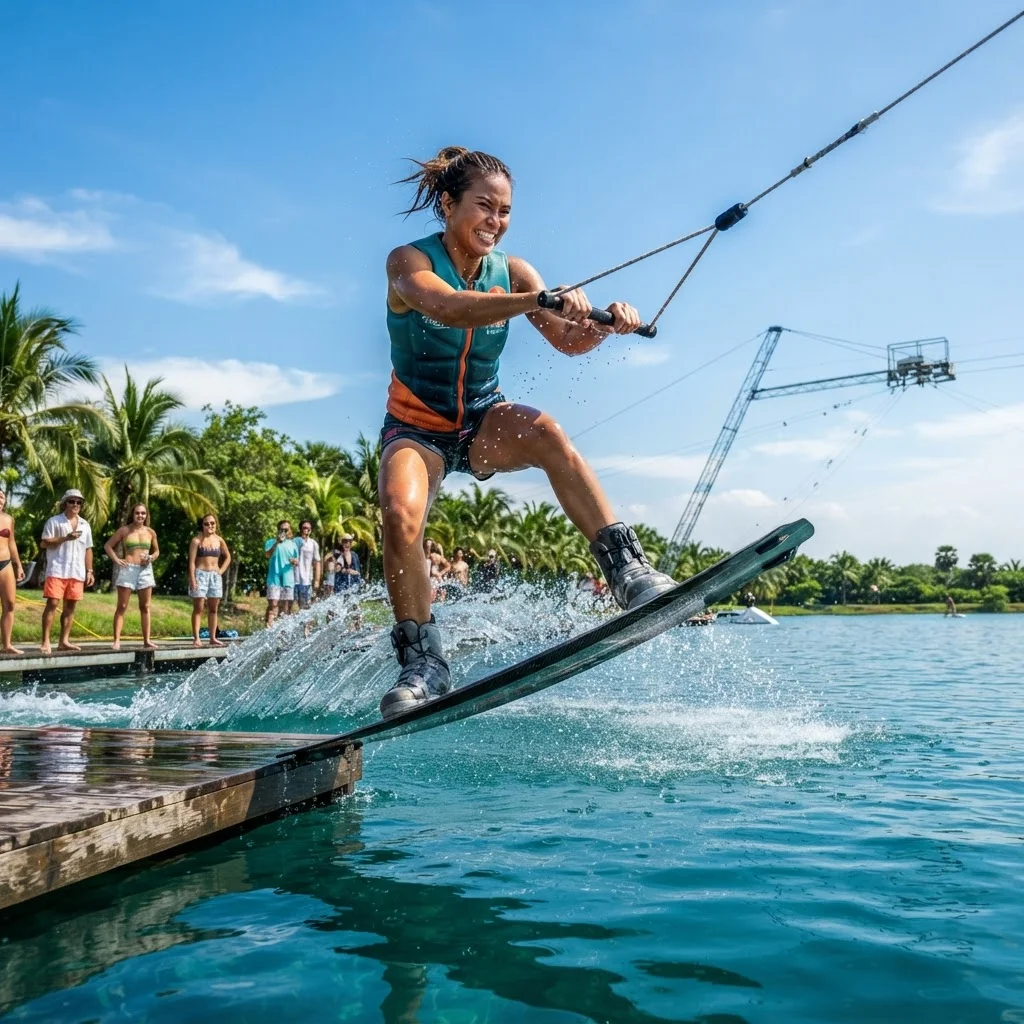
Cable parks and wake boats offer fundamentally distinct disciplines in Thailand, separated by tow mechanics, physical demands, water conditions, and hourly expense. Full-size cable parks operate continuous overhead steel cables carried by five or six perimeter towers roughly eight to ten metres above the surface. A circulating loop tows between six and eight riders simultaneously at steady speeds around 28 to 30 kilometres per hour. Because the pull angle originates high overhead, it produces sustained vertical lift. This mechanical advantage assists dock starts, eases surface carving, and relieves pressure on the lower back and quadriceps. It also delivers unmatched riding volume for your money: a standard two-hour cable session in Greater Bangkok currently costs around 850 THB (approx £19.00), allowing dozens of continuous laps when queue lines remain short. Water conditions on purpose-built cable lakes also stay remarkably uniform, as perimeter wave breakers and shallow shorelines absorb wake wash before it can bounce back into the riding line.
Boat wakeboarding requires an entirely different technical approach. Riders are towed behind specialised inboard tournament craft—such as Super Air Nautique or Malibu vessels—fitted with hull-shaping wedges and factory ballast tanks holding hundreds of litres of water to sculpt dense, knee-to-waist-high displacement wakes. The tow line attaches to a stern tower approximately two metres above the water, creating a low horizontal pull rather than an upward hoist. Getting up demands a submerged deep-water start with knees tucked tight, while maintaining board control requires active hip drive, deeper rail engagement, and strong core stability through the trough. Boat riding is inherently social, but operating costs run substantially higher. Inland lake and island charters typically cost between 3,900 THB and 4,500 THB (approx £87.00 to £100.50) per engine hour, which small groups usually divide into fifteen-minute riding sets. Unlike closed cable circuits, boat sessions require expansive, calm open water, as repeated passes quickly churn up displacement chop.
| Riding Format | Typical Cost (THB / GBP) | Pull Characteristic | Best Suited For | Key Limitation |
|---|---|---|---|---|
| Full-Size Cable (5-Tower) | 800–950 THB (£17.90–£21.20) / 2 hrs | High overhead angle, continuous circular pull at 28–30 km/h | Feature progression, endurance laps, budget riding | Queue times on weekends; long swim back after edge catches |
| Straight-Line Cable (System 2.0) | 500–1,000 THB (£11.20–£22.30) / hour | Overhead angle, forward-and-reverse single rider | Beginners learning starts, dialed rail practice | Only one rider on the water at any single time |
| Dedicated Inboard Boat | 3,900–4,500 THB (£87.00–£100.50) / hour | Low-to-medium horizontal pull behind displacement wake | Wake-to-wake aerials, wakesurfing, custom speed | High fuel and charter expense; water chops up quickly |
| Outboard Coastal Speedboat | 1,500–2,500 THB (£33.50–£55.80) / 15-min set | Variable low pull angle, lighter wash, choppy wakes | Casual island day trips, coastal holidaymakers | Small, mushy wake shape; irregular sea swell |
Choosing between cable and boat riding depends on your technical goals and travel budget. Cable parks provide maximum water time per pound alongside purpose-built kickers and rails, making them ideal for stamina, rapid repetition, and obstacle progression. Chartered wake boats deliver genuine wake-to-wake jumping and wakesurfing on open water, though at a significantly higher charter rate.
Regional Wakeboarding Hubs Across Thailand
Thailand's wakeboarding infrastructure clusters into distinct regional hubs, each matching different travel plans and riding preferences. The Greater Bangkok metropolitan area is the central heavyweight of the country's cable scene, supporting eight independent cable facilities within a ninety-minute drive of the capital. Suburban Pathum Thani province to the north contains the main competition-grade circuits, including Thai Wake Park (TWP) Lumlukka and ESC Thai Wake Park, both running full-size five-tower loops loaded with rails, kickers, and sliders. Southeast of the city in Samut Prakan, Taco Lake near Suvarnabhumi Airport runs an established freshwater circuit with a stripped-back community atmosphere. Across to the west in Bang Bon, Zanook Wake Park provides a clockwise cable layout within easy reach of central districts.
Beyond Bangkok, riders congregate in purpose-built facilities or coastal bays across four key regions. Phuket anchors the southern riding scene, where Phuket Wake Park operates an international-standard five-corner cable and two-tower coaching lines in the Kathu valley, positioned inland between Phuket Town and the west-coast resort strips. On the Eastern Seaboard, Chonburi province provides both lake and coastal options, anchored by Thai Wake Park Pattaya roughly twenty minutes inland from Pattaya city centre. In northern Thailand, Chiang Mai's wake scene centres on the Hang Dong district, roughly twenty minutes south of Chiang Mai International Airport. Here, facilities including Lakehouse CNX run straight-line System 2.0 cables over freshwater lakes and flooded quarry basins, where high limestone rock walls provide natural shelter from surface chop. Further south, the Gulf of Thailand islands of Koh Phangan and Koh Samui support boat-towing setups rather than cable lakes. In northern Koh Phangan, Chaloklum Bay provides deep sheltered water for boat-towed sets, while Samui operators run pulls from calm coastal bays.
| Wakeboarding Hub | Primary Facilities | Dominant Discipline | Water Setting | Accessibility from Major Hub |
|---|---|---|---|---|
| Greater Bangkok | TWP Lumlukka, ESC Rangsit, Taco Lake, Zanook | 5-tower cable parks & System 2.0 | Purpose-built suburban freshwater lakes | 35–60 minutes by Grab taxi from Sukhumvit or airports |
| Phuket (Kathu) | Phuket Wake Park | 5-tower cable park & System 2.0 | Natural inland freshwater basin | 15–20 minutes by taxi from Patong Beach |
| Pattaya & Chonburi | TWP Pattaya, local boat clubs | Full cable & coastal boat pulls | Coastal flatwater reservoirs and sea bays | 20 minutes from central Pattaya; 90 min from Bangkok |
| Chiang Mai (Hang Dong) | Canyon Wake Park, Lakehouse CNX | Straight-line System 2.0 cables | Flooded limestone quarry and private lakes | 25–35 minutes by car or scooter from Old City |
| Gulf of Thailand Islands | Wake Up! Koh Phangan, Samui boat clubs | Dedicated inboard & outboard boat towing | Sheltered marine bays and island coves | 15–30 minutes from island ferry piers or resort strips |
Riders prioritising daily progression, obstacle variety, and high-volume laps typically base themselves around Greater Bangkok, whereas Phuket, Pattaya, Chiang Mai, and the Gulf islands allow travellers to combine wakeboarding sets with wider regional sightseeing.
Plan a Gulf of Thailand trip with clear guidance on island groups, ferries, weather, marine parks, accommodation costs and mainland gateways.
Riding Progression, Obstacles, and Coaching
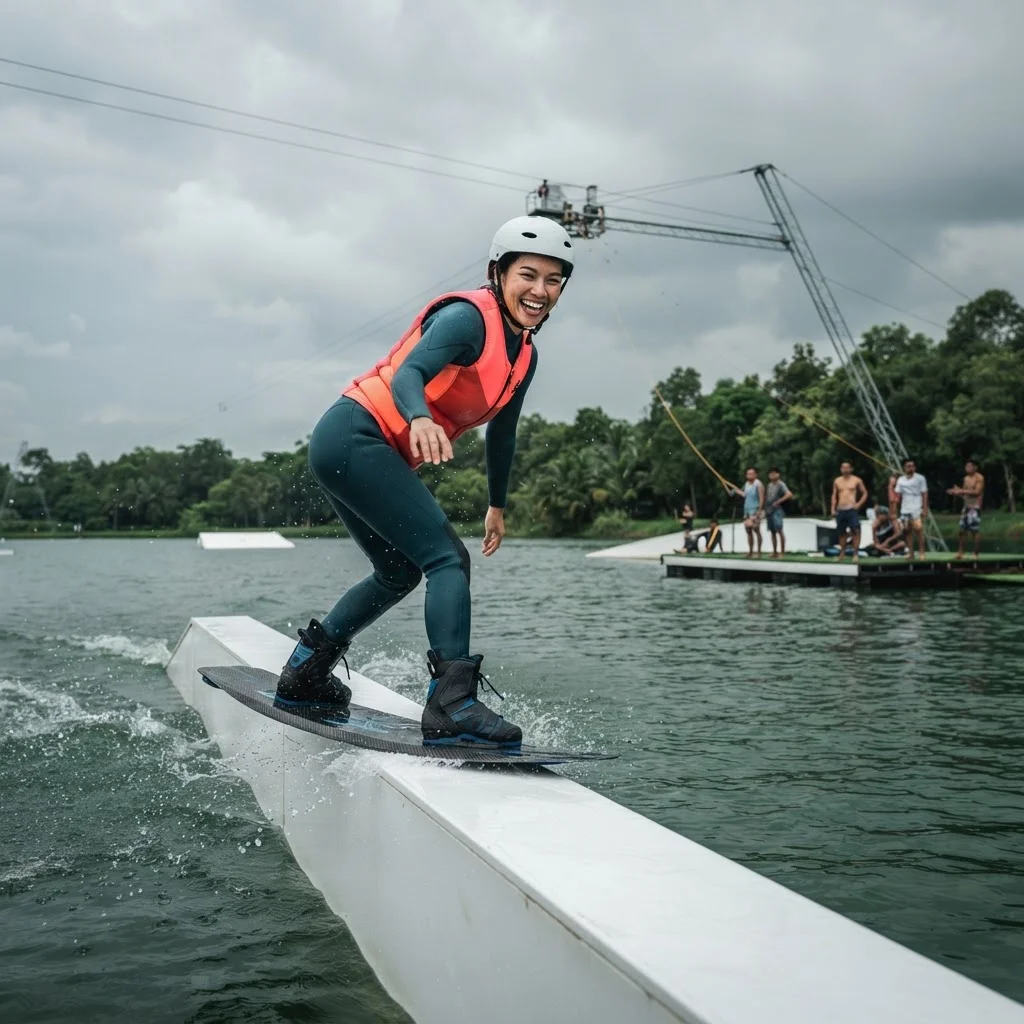
Progression across Thailand's wake parks follows a structured route, guiding beginners from straight-line cables to full-size circuits before tackling synthetic obstacles. Novices should start on a two-tower straight-line cable, known as a System 2.0. These back-and-forth systems tow a single rider at a time. The operator adjusts the line speed to your weight and halts or reverses the cable instantly when you fall. This removes the tiring swim back to the dock, letting you focus on balance, deep-water starts, and keeping your arms relaxed.
Structured beginner tuition is widely available at premier venues. At Thai Wake Park Lumlukka and ESC Rangsit, a dedicated beginner lesson costs 995 THB (approx £22) for a two-and-a-half-hour group session. This package provides an instructor who enters the water beside you to steady your board, correct hip alignment, and cue proper handle positioning. Both venues also run regular two-hour low-speed sessions for 595 THB (approx £13), where the main cable operates at reduced velocity with coaches stationed along the dock to assist novices with starts and cornering.
After mastering reliable waterstarts and edge control, riders step up to the main five-tower circular cable. The defining milestone on the full circuit is negotiating corners. As the tow rope rounds each pulley tower, line tension slackens briefly before whipping tight at higher speed. Riders must edge slightly outside the cable line before swinging into the turn, keeping knees deeply bent to absorb the sudden pull. Once full laps feel comfortable, riders practise switch riding, surface 180s, and flat-water ollies on open stretches to build board control under constant tension.
Progression onto floating obstacles marks the next stage. Thailand's premier cable parks feature modular high-density polyethylene (HDPE) features built by specialists such as UNIT Parktech, including wide butter boxes, rooftop rails, and kickers. Cable parks enforce a strict rule: rarely hit obstacles on entry-level rental boards fitted with bottom tracking fins. Rigid fins catch on plastic edges, throwing riders violently and damaging the obstacles. Advancing to features requires an obstacle board with a slick, finless base. Starting on wide, ride-on butter boxes allows you to master a flat-based slide before tackling narrower rails.
| Stage | Core Skills | Cable Setup | Typical Cost | Common Mistakes |
|---|---|---|---|---|
| Stage 1: The Waterstart | Deep-water starts, relaxed arms, knee bend | System 2.0 straight-line or low-speed cable | 500–995 THB (approx £11–£22) per session | Pulling arms tight; standing up prematurely; fighting cable pull |
| Stage 2: Cable Navigation | Edge carves, switch riding, corner management | Main full-size cable during low-speed hours | 400–600 THB (approx £9–£13.50) per hour | Cutting inside corners early; locking knees on cable acceleration |
| Stage 3: Surface Tricks | Surface 180s, flat-water ollies, tail presses | Open lake flats between cable towers | 400–600 THB (approx £9–£13.50) per hour | Looking down at the water; dropping handle tension mid-rotation |
| Stage 4: Park Obstacles | Flat boxes, straight pipe rails, small kickers | Full-size circuit with dedicated obstacle board | 650–900 THB (approx £14.50–£20) per hour | Edging on plastic features; hitting obstacles with finned boards |
Equipment Hire, Board Setups, and Pro Shops
Commercial cable parks across Thailand provide basic riding equipment within standard ticket rates, allowing beginners to get on the water without purchasing specialist kit. Standard tickets typically include an impact buoyancy vest, a basic beginner wakeboard fitted with open-toe velcro foot straps, or a kneeboard. These beginner boards allow first-timers to master their initial waterstarts and complete steady flatwater laps. However, they lack the torsional stiffness and ankle support needed for precise edge control. Standard rental boards also carry fixed glass-fibre fins underneath, which means park marshals strictly prohibit riding them over kickers, boxes, or sliders, as rigid fins damage plastic obstacle surfaces and present a severe tripping hazard for the rider.
Riders aiming to progress onto park obstacles must hire a dedicated obstacle board or bring their own equipment. Obstacle boards feature durable sintered grind bases, flexible wood or composite cores, and secure closed-toe boots that lock the feet and ankles firmly over the rails without fins. At flagship venues like Thai Wake Park Lumlukka and ESC Rangsit, intermediate obstacle board hire costs 500 THB (approx £11.20) for two hours, 700 THB (approx £15.70) for four hours, or 1,000 THB (approx £22.40) for a full day, while Thai Wake Park Pattaya charges 400 THB to 600 THB (approx £9 to £13.50). Wakeskates—flat grip-taped decks ridden without bindings—are available for 300 THB to 700 THB (approx £6.70 to £15.70) across the group. Pro shops at leading sites, including Thai Wake Park and Phuket Wake Park, carry premium gear and replacement hardware from major brands such as Liquid Force, Slingshot, Hyperlite, and Ronix.
Watersports helmets with ear protection are mandatory across Thai cable lakes. Where not bundled with regular tickets, rental helmets cost around 60 THB (approx £1.35) per day at Thai Wake Park venues, though beginner packages include them.
| Board Type | Core and Base Features | Bindings Setup | Standard Ticket Inclusion | Primary Use |
|---|---|---|---|---|
| Standard Rental Board | Stiff foam core with fixed tracking fins | Open-toe adjustable velcro straps | Yes (included in standard entry) | First-timers learning balance and steady flatwater laps |
| Performance Park Board | Flexible wood or composite core, sintered grind base, finless | Closed-toe supportive boots | No (from 400–500 THB / approx £9–£11.20 upgrade) | Hitting kickers, pressing sliders, and technical edge carving |
| Wakeskate | Concave wooden or composite deck with griptape | Barefoot or flat skate shoes (no bindings) | Optional hire (from 300 THB / approx £6.70) | Skate-style flatwater tricks, surface spins, and shuvits |
| Boat Wakeboard | Continuous or three-stage rocker with deep fins | Stiff high-support closed boots | Included in private boat charters | Launching off boat wakes and landing aerials in the flats |
Before stepping onto the starting dock, check your rental setup thoroughly. Ensure the binding chassis bolts are tightened securely to the deck and confirm that the base is free from structural delamination or deep core gouges.
Weather, Water Conditions, and Peak Seasons
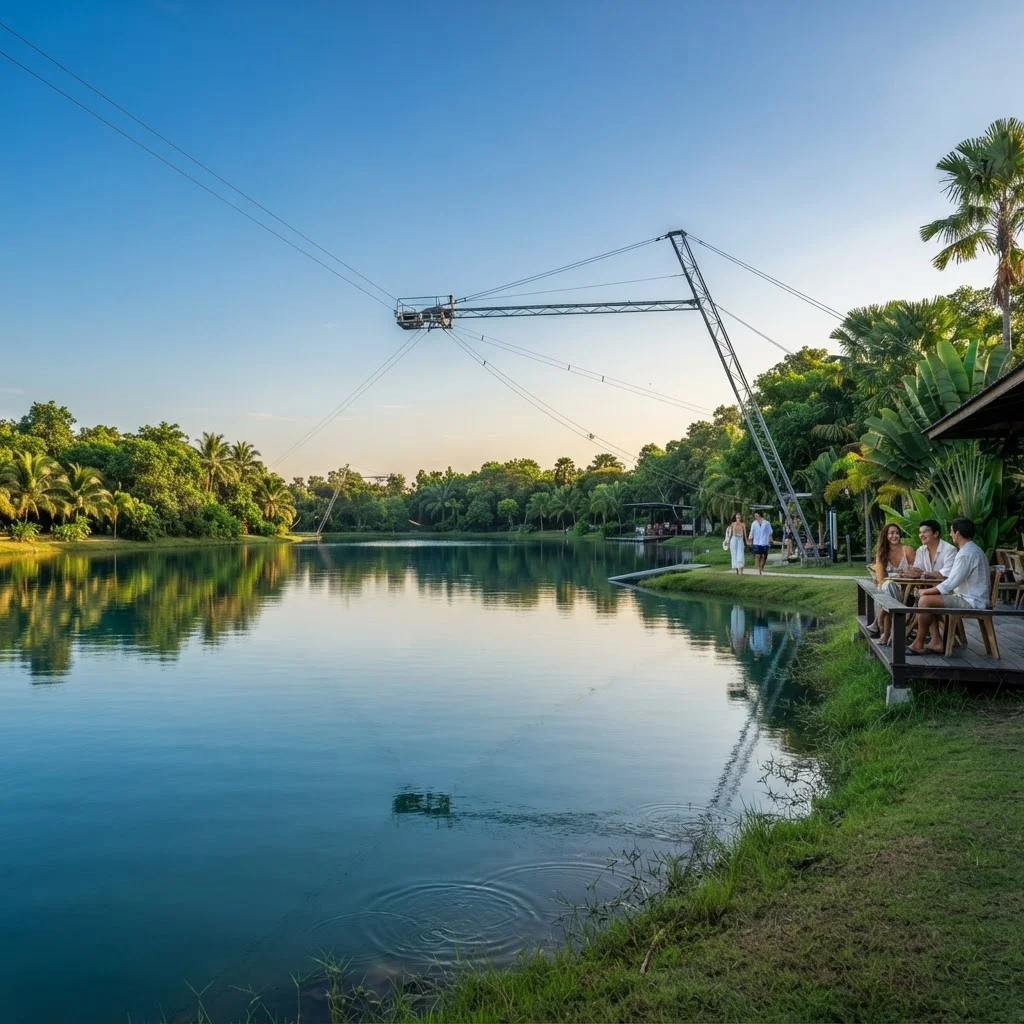
Thailand supports wakeboarding throughout the year because lake water temperatures hover reliably between 27°C and 32°C. At these temperatures, riders need neither neoprene wetsuits nor thermal layers; a standard rash vest and boardshorts or swim tights are sufficient at any cable park or behind a towboat. The riding year divides into three distinct meteorological cycles, each shaping water conditions, queue times, and daylight comfort.
The cool, dry period from November through February represents the peak window for visiting riders. Across Greater Bangkok, Pattaya, and Phuket, daytime air temperatures typically settle between 28°C and 31°C with lower humidity and minimal rainfall. Lake surfaces remain calm through the morning, though afternoon thermal breezes can generate slight chop on exposed circuits. Because this coincides with high tourist season, weekends at flagship parks draw heavy footfall, producing longer queue waits at the starting dock. Weekday morning sessions during these months provide the steadiest riding pace.
From March to May, the hot season pushes midday ambient temperatures between 34°C and 38°C, while lake water warms to around 30°C. Intense midday sun accelerates dehydration and fatigue, making long continuous sets strenuous. Experienced riders adapt by timing their water time around the heat. Early morning sessions from opening until 11:00 deliver calm, uncrowded water before temperatures peak. Several cable parks near Bangkok operate powerful floodlights until 22:00, allowing visitors to ride comfortably in cooler evening air.
The southwest monsoon runs from June to October across Bangkok, Chiang Mai, and the Andaman coast. While offshore boat sessions in open coastal waters become unpredictable, cable wakeboarding on sheltered inland lakes continues through normal tropical rain. Heavy downpours often flatten surface chop, producing fast, glassy riding conditions. Electrical activity is the primary weather disruption. When thunder is heard or lightning detected nearby, park operators immediately halt overhead cables and clear riders from the lake, resuming pulls roughly thirty minutes after the storm clears.
A notable exception to mainland weather patterns occurs in the Gulf of Thailand around Koh Phangan and Koh Tao. Between May and September, northern bays like Chaloklum Bay sit protected from monsoon winds by central hills, providing flat marine water for wake boat sessions. Lake water quality also varies across the country. Flooded limestone quarries around Chiang Mai feature clear, deep water, whereas man-made clay basin lakes around Bangkok carry an opaque, earthy brown tone, kept clean through continuous mechanical aeration and biological filtration.
| Season | Months | Water & Air Temps | Riding Surface Conditions | Visitor Crowd Levels |
|---|---|---|---|---|
| Cool Dry Season | November to February | Water 27°C / Air 29°C | Glassy, calm mornings with gentle midday breeze | Peak season; busy weekend queues at Bangkok & Phuket |
| Hot Season | March to May | Water 30°C / Air 36°C | Mirror-flat water; extreme midday solar radiation | Moderate; local riders shift to early morning and night sessions |
| Southwest Monsoon | June to October | Water 28°C / Air 32°C | Glassy rain conditions; periodic lightning shut-downs | Low season; empty docks and zero queue waits between showers |
| Gulf Island Calm Window | May to September | Water 29°C / Air 33°C | Flat marine conditions in Koh Phangan & Koh Tao bays | Island holiday season; ideal for coastal wake boat sets |
Planning sessions around daily temperature patterns ensures comfortable riding in every season. Book early morning runs or floodlit evening slots to bypass midday heat and maximise time on the water.
Where to Ride in Thailand
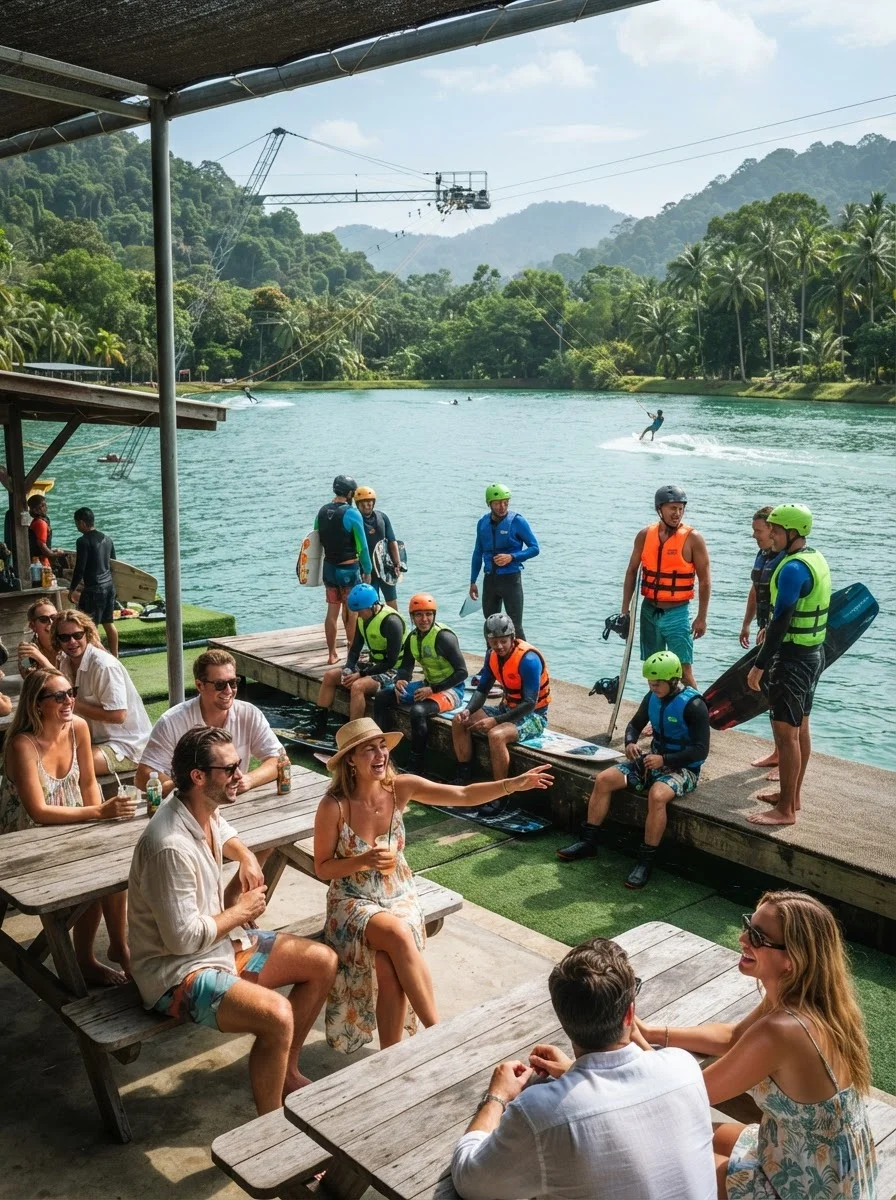
Thailand divides its wakeboarding across several established hubs, ranging from purpose-built cable parks around Bangkok to island boat towing.
In Greater Bangkok, Thai Wake Park Lumlukka in Pathum Thani operates a five-tower Rixen cable running counter-clockwise. The layout features over twenty rotating UNIT obstacles, an on-site hotel named RIDEnLazy, and floodlit night riding daily until 22:00. In nearby Rangsit, ESC Thai Wake Park runs a competition lake that staged the 2022 IWWF World Cable Wakeboard and Wakeskate Championships, sharing the same pricing structure and membership tiers as Lumlukka. Further south in Bang Na, Taco Lake provides a rustic alternative near Suvarnabhumi Airport. Its daytime cable pass costs 400 THB (approx £9) until 18:00, with equipment included and riding extending until 22:00 for an additional fee.
In the south, Phuket Wake Park in Kathu sits on a freshwater lake seven kilometres east of Patong. The facility incorporates a 700-metre counter-clockwise main cable, a separate System 2.0 straight-line training cable, an open-air restaurant, and on-site guest rooms.
Riders seeking boat-towed sessions rather than overhead cables head to the Gulf islands. Wake Up! Wakeboarding operates out of Chaloklum Bay on Koh Phangan, using dedicated wake boats equipped with ballast tanks and wake towers. The surrounding headlands shelter the bay, keeping surface chop down across a three-kilometre run.
Beginners who want structured instruction should look for venues with dedicated two-tower training cables, such as Thai Wake Park or Phuket Wake Park. These straight-line systems run at variable speeds under direct coach supervision, allowing riders to master deep-water starts and board control before stepping up to full-circuit cables.
Costs and Budgeting
Wakeboarding in Thailand is substantially less expensive than in the UK, where a two-hour cable session frequently tops £40 before equipment hire. Thai cable parks bundle basic gear—a flotation vest, helmet, and beginner strap board or kneeboard—into standard entry fees. Upgrading to a dedicated obstacle board with stiff boots costs an additional 300 THB to 500 THB (£6.70 to £11.20).
Suburban cable lakes provide the most economical riding. Taco Lake in Samut Prakan charges 400 THB (£8.90) for daytime riding, with an optional 100 THB (£2.20) supplement extending access under floodlights until 22:00. Purpose-built multi-cable venues charge higher rates: Thai Wake Park (TWP) Lumlukka and ESC Rangsit set standard two-hour passes at 850 THB (£19.00) and full-day passes at 1,350 THB (£30.15). In resort areas, Phuket Wake Park charges 1,250 THB (£27.90) for two hours and 2,150 THB (£48.00) for a full day.
Private boat sessions carry higher costs due to fuel. Dedicated ski centres in Pathum Thani and boat schools on Koh Phangan charge between 1,100 THB and 1,500 THB (£24.50 to £33.50) per 15-minute pull, or 3,900 THB to 4,500 THB (£87.00 to £100.50) per hour for private boat charter with driver and coach.
| Option | Cost (THB) | Cost (GBP approx) | Notes |
|---|---|---|---|
| Budget Day Pass (Taco Lake) | 400–500 THB | £8.90–£11.20 | Daytime riding from 400 THB; 100 THB top-up for night riding under floodlights |
| Standard 2-Hour Cable Pass | 850–1,250 THB | £19.00–£27.90 | Two hours on main circuit (850 THB at TWP; 1,250 THB at Phuket Wake Park) |
| Full-Day Unlimited Cable Pass | 1,350–2,150 THB | £30.15–£48.00 | Unlimited riding all day (1,350 THB at TWP Lumlukka; 2,150 THB in Phuket) |
| Beginner Coaching Package | 595–2,500 THB | £13.30–£55.80 | From group cable lessons (TWP) to System 2.0 packages with gear (Phuket) |
| Obstacle Board Hire Upgrade | 300–500 THB | £6.70–£11.20 | Board with sintered grind base and closed-toe bindings (basic board is free) |
| Private Wake Boat Charter | 3,900–4,500 THB | £87.00–£100.50 | Hourly rate for dedicated wake boat with driver, fuel, and coaching |
| Overnight Stay & Ride | 1,800–2,500 THB | £40.20–£55.80 | On-site hotel room paired with day cable access at TWP Lumlukka or Phuket |
What to Know Before You Go
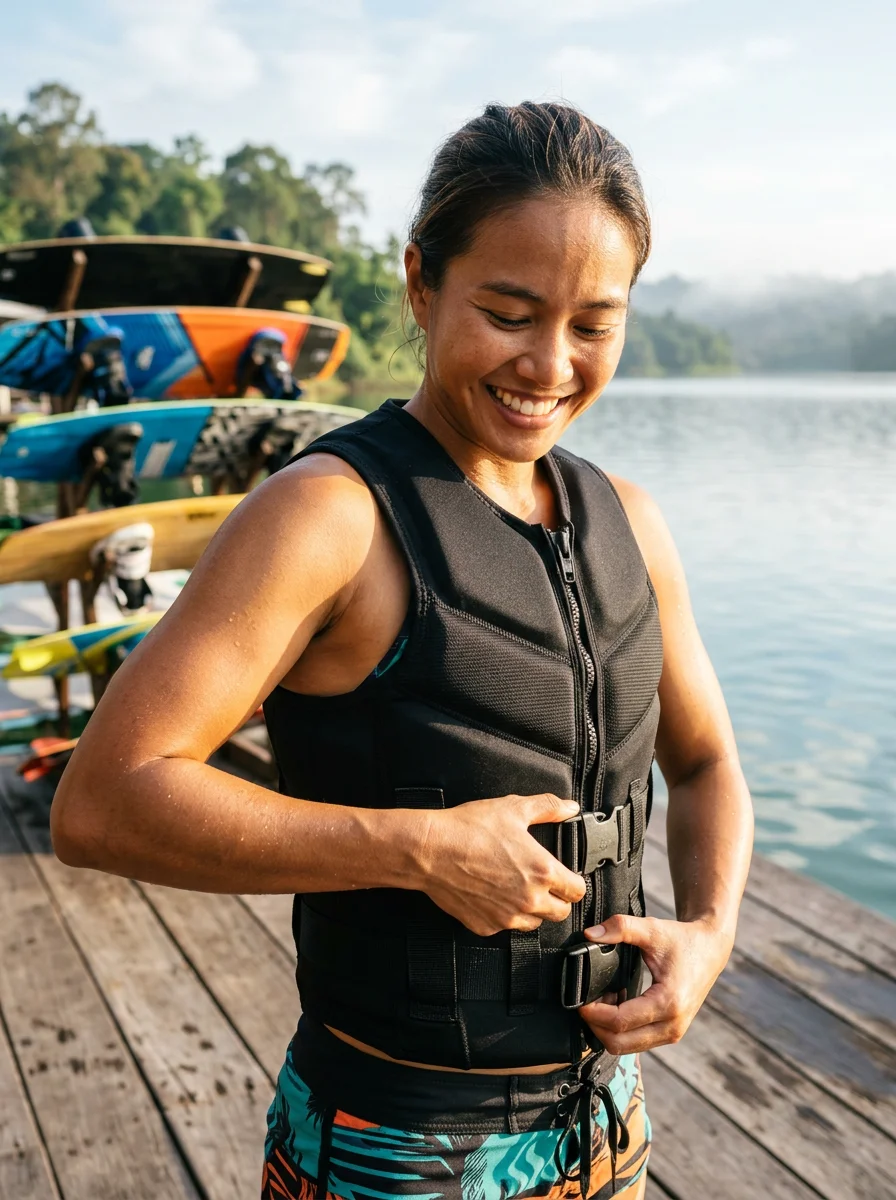
Navigating a full-size cable circuit requires anticipating sharp shifts in line tension. As the overhead carrier rounds a corner pulley, the tow rope momentarily slacks before whipping tight. If you take the turn with rigid legs or fail to edge wide towards the corner buoys, this tension spike can abruptly wrench the handle from your grip and pitch you forward into the lake. Keep your knees flexed to absorb the pull.
Park regulations strictly prohibit beginner rental boards on obstacles. Standard learner boards come fitted with tracking fins, which bite into plastic sliders and kickers, violently catching an edge and gouging the surface. Hitting ramps or rails requires an obstacle-specific board with a flat, finless base.
Sudden electrical storms trigger immediate cable shutdowns. While cable lakes operate normally through light rainfall, operators stop the motors whenever lightning threatens the water, a frequent reality during wet-season afternoons. Factor potential weather delays into your daily schedule.
Prepare for intense grip fatigue. Novice riders almost invariably exhaust their forearms and hands well before their legs tire, as fighting constant mechanical pull strains unconditioned tendons. Limiting your first outing to a two-hour session prevents debilitating muscle fatigue and wrist strain.
Practical Tips
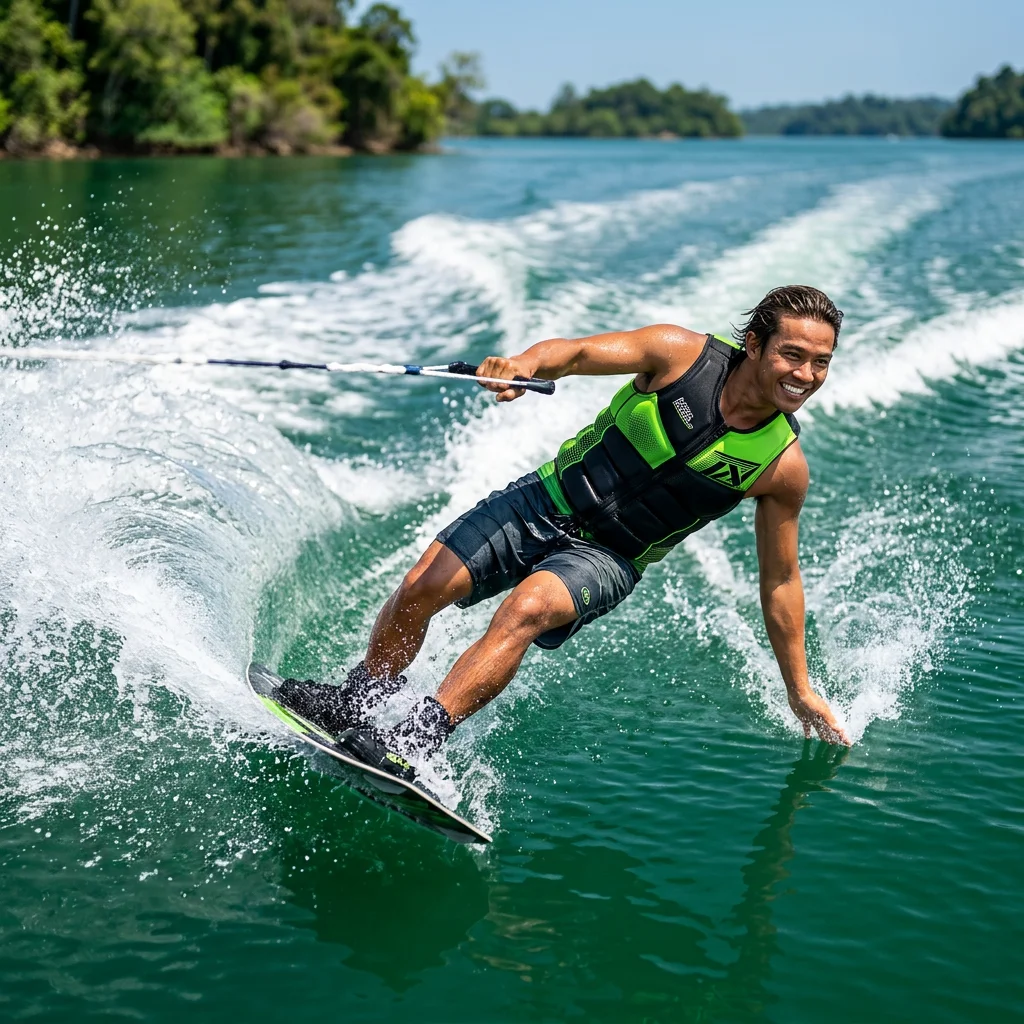
Riding between 09:00 and 11:00 on weekends delivers the calmest water before midday heat and larger crowds churn the lake surface into heavy chop. Morning slots also cut down dock queues, letting you run continuous laps before beginner queues build up.
Wear a snug rash vest underneath your buoyancy aid. Wet foam panels and coarse webbing on rental life jackets cause intense friction against bare skin during repeated deep-water starts, leading to painful underarm chafing. Apply broad-spectrum, water-resistant sunscreen before heading out. Tropical sun reflects heavily off freshwater lakes, causing severe sunburn even under overcast monsoon skies.
Bring your own watersports helmet if you have one. Helmets are mandatory across Thai cable parks. While venues supply basic rental lids—often for around 60 THB (approx £1.40) a day—these shared units frequently lack snug sizing pads and ear flaps, leaving your eardrums exposed to painful pressure strikes during high-speed wipeouts.
When you fall, look back immediately to check for trailing tow ropes or approaching riders, then swim directly to the lake edge. Avoid swimming across the centre of the lake or cutting through active cable lanes. Stick to the lakeside retrieval paths and floating walkways when walking back to the starting dock.
Warm up your forearms, shoulders, and hamstrings before strapping into your bindings. The sudden jerk of the cable pulling from a dead stop to around thirty kilometres per hour places heavy stress on cold tendons. Limit your first session to two hours to prevent grip failure, and pack electrolyte sachets to stay hydrated in the humid tropical air.
Carry Thai baht cash for equipment rental deposits and lakeside cafes, as small park counters frequently decline foreign credit cards or add processing surcharges. Make sure your UK travel insurance policy explicitly includes cable wakeboarding under its adventure sports provisions before tackling obstacles.
Quick Reference Table
| Item | Detail | Notes |
|---|---|---|
| Primary Riding Hubs | Greater Bangkok, Phuket (Kathu), Pattaya, Chiang Mai (Hang Dong), Koh Phangan | Bangkok hosts the highest concentration of full-size 5-tower cable parks |
| Standard Cable Passes | 850–1,250 THB (approx £19.00–£27.90) for 2 hours; 1,350–2,150 THB (£30.15–£48.00) full day | Suburban lakes like Taco Lake offer budget daytime passes from 400 THB (£8.90) |
| Boat Wakeboarding Rates | 3,900–4,500 THB (approx £87.00–£100.50) per engine hour | Island and coastal sets typically cost 1,100–1,500 THB per 15-minute pull |
| Equipment Hire & Upgrades | Basic board, life vest, and helmet included in standard entry | Obstacle board upgrades cost 300–500 THB (£6.70–£11.20) for sintered base and closed boots |
| Best Season | November to February (cool, dry season); May to September for Gulf islands | Water stays warm year-round (27°C–32°C); monsoon rain flattens chop but lightning halts cables |
| Best Time of Day | 09:00–11:00 or floodlit evening slots (until 22:00) | Morning sessions avoid peak midday heat (up to 38°C) and busy weekend dock queues |
| Required Gear & Dress | Snug rash vest, boardshorts, impact vest, and watersports helmet | Helmets are mandatory across Thai cable parks; rash vests prevent underarm friction burns |
| Obstacle Regulations | Obstacles strictly restricted to finless obstacle boards | Hitting kickers or rails on finned rental boards catches edges and causes park bans |
| Practical Essentials | Cash for equipment deposits; UK travel insurance covering watersports | Many park counters do not accept foreign credit cards for hire deposits |
| Official Website: Thai Wake Park | thaiwakepark.com | Covers Lumlukka, ESC Rangsit, and Pattaya facilities |
| Official Website: Phuket Wake Park | phuketwakepark.com | Kathu basin facility; phone +66 89 873 0187 |
| Official Website: Lakehouse CNX | lakehouse-cnx.com | Chiang Mai straight-line cable; phone +66 62 248 0505 |
| Official Website: Wake Up! Wakeboarding | wakeupwakeboarding.com | Boat wakeboarding and wakesurfing in Chaloklum Bay, Koh Phangan |
| Official Website: TE Wake 'n' Ski | tewake-ski.com | Dedicated boat-towing lake in Pathum Thani |
FAQ: Wakeboarding
What is the difference between cable park wakeboarding and boat wakeboarding in Thailand?
Where are the main wakeboarding hubs in Thailand?
What is the recommended progression for learning wakeboarding in Thailand?
Can I use a rental wakeboard on obstacles at cable parks in Thailand?
What equipment is typically included with a standard wakeboarding ticket in Thailand?
What is the best time of year to go wakeboarding in Thailand?
How much does it cost to go wakeboarding at a cable park in Thailand?
What should riders be aware of when navigating corners on a full-size cable wakeboarding circuit?
What is a common challenge for new wakeboarders in Thailand?
What is the best time of day to wakeboard for calm water and fewer crowds in Thailand?
Reviewed by the Thailand Guide Editorial Team • Last reviewed: 18 November 2026
This page is provided for general information only. While we aim for accuracy, details can change — please verify anything important independently before relying on it.