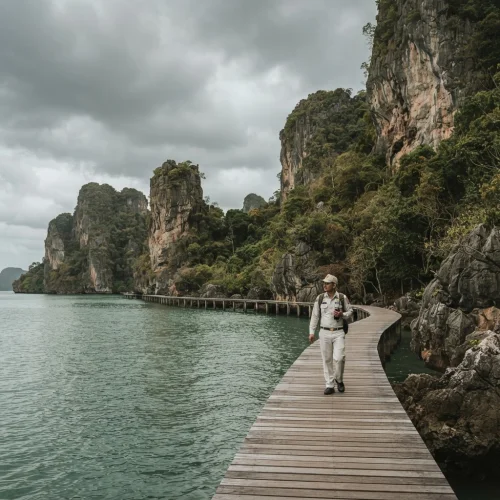
Surfing in Thailand
Between May and October, the southwest monsoon sends steady, warm-water swell across the Andaman Sea into Thailand’s western coastlines. Rather than the heavy, shallow reef breaks associated with Indonesia, Thai shores deliver forgiving, sand-bottom beach breaks and gentle longboard peelers with waves typically running between one and two metres. These conditions make the country one of Southeast Asia's most accessible destinations for beginners and intermediate riders looking to progress without intimidation.
This guide sets out the practical logistics needed to plan a surf trip across both the Andaman coast and the Gulf of Thailand. It details regional swell windows, key beach and point breaks, equipment hire, and accredited tuition. You will also find realistic daily budgets, safety advice on monsoon rip currents and seasonal marine hazards, and travel guidance to help match your skill level with the right coastal base.

Understanding Thailand's Dual Surf Seasons and Swell Windows

Thailand's surf calendar is governed by two separate monsoon regimes that deliver contrasting swell dynamics to opposite sides of the peninsula. The primary window opens along the Andaman Sea coastline from May to October, driven by the southwest monsoon. As low-pressure systems track across the Indian Ocean and the Bay of Bengal, they funnel open-ocean groundswells through the deep-water passage between northern Sumatra and the Nicobar Islands. These swells, combined with regional monsoon winds, generate consistent surf across Phuket, Phang Nga, and Ranong. Breakers along this western coast typically measure between one and two metres, occasionally reaching three metres during peak storm cycles in July and August. Swell periods range from eight to twelve seconds on standard windswell days, while long-distance groundswells can push wave intervals out to fourteen seconds. Water temperatures along the Andaman coast hover comfortably between 28 and 30 degrees Celsius throughout the season, rendering wetsuits unnecessary and leaving a rash vest the standard layer for sun protection and board rub.
Between November and February, the weather pattern flips as the northeast monsoon establishes itself over Southeast Asia. While this cycle flattens the Andaman Sea, it energises the Gulf of Thailand, sending short-period windswells against east-facing coasts including Rayong and Hua Hin. Wave heights in the Gulf rarely exceed 1.2 metres, with intervals averaging between four and seven seconds. These waves can turn choppy once onshore breezes accelerate, yet the Gulf delivers rideable conditions for beginners and longboarders when western beaches are flat. Daily session timing on both coasts depends on local wind cycles. Mornings regularly produce the cleanest conditions, as early offshore or light coastal drafts groom the water before onshore breezes build in the afternoon.
Tidal movements dictate wave shape across most Thai breaks. High water often drowns shallow sandbars and generates heavy shorebreak backwash, while low water causes beach breaks to close out aggressively or leaves shallow reefs exposed. Mid-tide pushing cycles consistently provide workable wave faces. Checking daily tide tables alongside swell forecasts is standard practice before heading into the lineup.
| Region | Active Season | Swell Source | Wave Type | Typical Wave Height |
|---|---|---|---|---|
| Andaman Coast (Phuket) | May to October | Southwest Monsoon | Beach and reef breaks | 1.0 m – 2.0 m |
| Andaman Coast (Khao Lak) | May to October | Southwest Monsoon | Sandy beach break | 0.8 m – 1.8 m |
| Northern Andaman (Koh Phayam) | May to October | Southwest Monsoon | Wide sandbar beach break | 1.0 m – 2.0 m |
| Eastern Gulf (Rayong) | November to February | Northeast Monsoon | Shallow beach break | 0.5 m – 1.2 m |
Aligning your itinerary with seasonal monsoon windows helps you catch active surf across Thailand's coasts.
Phuket's Primary Breaks: Kata Beach to Kalim Reef
Kata Beach forms the focal point of Thai surfing, with consistent sandbars that hold shape across varying swell angles. At the southern headland near the Boathouse, waves peel smoothly across soft sand. This inside section gives novices room to practise take-offs, while experienced riders work the outside shoulder for longer rides on mid to high tides.
Just two kilometres north of Patong, Kalim Reef delivers a distinctly different challenge. Kalim is a fast, shallow right-hand reef break that operates over rock and coral. The wave holds solid shape when open beach breaks close out in heavy weather, but it requires careful positioning. Dropping in requires a mid to high tide, as low water exposes sharp coral heads just beneath the surface.
Further up the coast, Bang Tao Beach stretches for six kilometres along an open bay. The southern headland shelters this stretch from strong southwest monsoon gusts, producing long, mellow rollers over sand. These gentle peelers suit minimal boards, longboards, and beginners building paddling confidence. At the far northern end near Layan and Koh Kala, the wave shifts to an exposed reef break that demands higher skill on rising tides.
In the south, Nai Harn Beach sits between steep headlands and caters to shortboarders looking for steeper, faster water. A permanent sandbar in front of the freshwater lagoon creates punchy peaks with occasional hollow sections, while a mixed sand and reef break sits near the northern headland. Powerful shorebreak and strong rip currents develop here during heavy swells, demanding solid paddling fitness and ocean awareness.
| Surf Spot | Wave Character | Bottom Type | Best Tide | Skill Level |
|---|---|---|---|---|
| Kata Beach (South End) | Mellow peeler, long lines | Sand | Mid to High | Beginner to Intermediate |
| Kalim Beach | Fast right-hander, hollow | Coral and rock reef | Mid to High | Intermediate to Advanced |
| Bang Tao (South End) | Gentle rolling whitewater | Sand | All tides | Beginner |
| Nai Harn Beach | Punchy beach break, hollow peaks | Sand and rock reef | All tides | Intermediate |
Plan a Gulf of Thailand trip with clear guidance on island groups, ferries, weather, marine parks, accommodation costs and mainland gateways.
Khao Lak and Phang Nga: Thailand's Longboard Hub
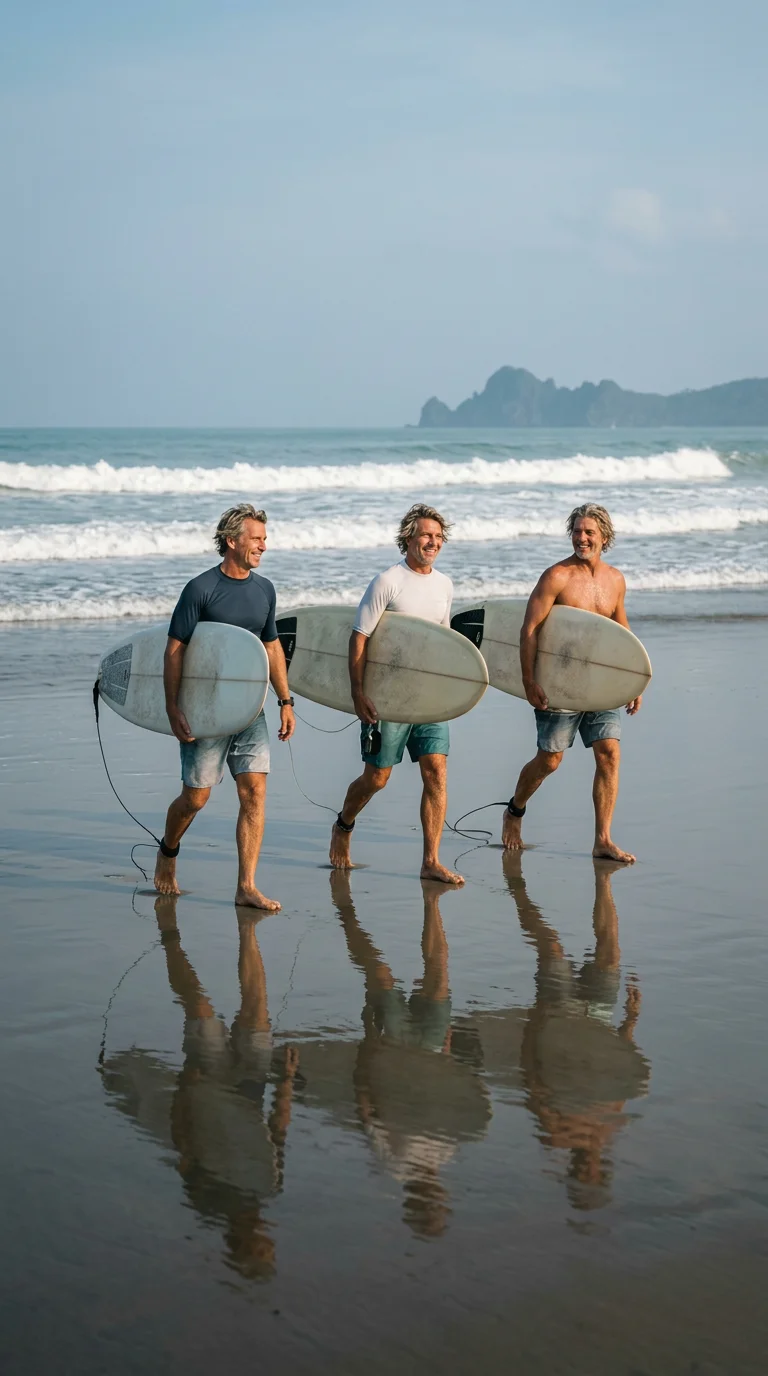
Located ninety minutes north of Phuket Airport in Phang Nga Province, Khao Lak has developed into Thailand's primary focal point for classic logging and single-fin surfing. The community centres on Memories Beach, situated along the broad curve of Khuk Khak Bay just south of Pakarang Cape. An expansive, gently sloping sandbank faces directly into the Andaman Sea, catching southwest swell pulses between May and October. Because the seabed shelves so gradually, swells trip into slow-rolling, soft green faces that peel for fifty to eighty metres before reforming over the shallow inside sand. Beginners can wade comfortably in waist-deep water to catch unbroken swells, avoiding the exhausting paddle battles against deep-water currents found at steeper breaks.
The coastal atmosphere remains thoroughly relaxed. Reached via a three-kilometre dirt track off Highway 4 passing local elephant lands, Memories Beach sits well clear of dense resort development. The sand is anchored by timber beach shacks, open-air board racks, and surf schools rather than concrete hotels. A short paddle or walk north leads towards Pakarang Cape, where a shallow coral and rock shelf sets up faster, peeling right-hand point waves. These longer rides provide clean, working walls for competent longboarders and shortboarders seeking more speed than the gentle beach break allows.
Further south along the coast, shifting sandbars and river mouths create alternate wave profiles. Bang Niang Beach features a river mouth peak that works best around mid-tide, suiting mid-lengths and fish shapes. Down at Nang Thong Beach, a steeper sand gradient produces a hollow, dumping shorebreak that favours shortboards and bodyboards. Across all these spots, southwest monsoon winds pick up after midday, leaving dawn patrols between 06:00 and 09:30 as the window for clean, glassy conditions.
| Spot Name | Break Type | Atmosphere | Access | Recommended Board |
|---|---|---|---|---|
| Memories Beach | Soft sandy beach break | Laid-back surf community | Dirt track off main road | 9ft+ Single Fin Log |
| Pakarang Cape | Rocky point break | Quiet, experienced line-up | Beach walk around cape | Performance Longboard |
| Bang Niang | Shifting sandbar peak | Low-key resort front | Paved road access | Mid-length or Fish |
| Nang Thong Beach | Steep shore dump | Sparse crowds | Direct hotel frontage | Shortboard or Bodyboard |
Alternative Breaks: Koh Phayam, Koh Lanta, and Rayong
Surfers willing to travel beyond Phuket and Phang Nga will find quieter coastal breaks that reward flexible planning. Koh Phayam, tucked into Ranong province near the maritime border with Myanmar, delivers an unhurried island setting where cars are absent and transport relies on scooters, bicycles, or walking. Along the island's west-facing coast, Aow Yai produces mellow left and right sand-bottom peaks across a two-kilometre bay. Low-power lines rolling in from June to October suit mid-length boards, longboards, and novices who appreciate uncrowded lineups alongside basic beachfront bungalows.
Further south in Krabi province, Koh Lanta provides a similarly quiet alternative during the southwest monsoon. At the northern end of the island near Saladan, Klong Dao Beach curves across roughly two kilometres of shallow, flat sand. While less consistent than open Andaman coastlines, the bay catches occasional swell pulses between June and September, yielding clean waist-high rollers. The forgiving beach break suits beginners on soft-top boards, longboarders, and stand-up paddleboarders.
On the Gulf of Thailand, wave seasons reverse. Mae Ramphueng Beach in Rayong extends for roughly ten kilometres along the mainland shore, situated two to three hours by road from Bangkok. Between November and February, northeast winds push windswell across the Gulf, generating knee-to-waist-high runners suited to wider fish shapes and twin fins. Further south in the Gulf, Chaweng Beach on Koh Samui catches similar winter windswell from December to February, producing rideable sand-bottom waves and an occasional outer reef wave when Andaman beaches go flat.
| Location | Province | Best Window | Dominant Board Type | Travel Factor |
|---|---|---|---|---|
| Aow Yai, Koh Phayam | Ranong | June to September | Mid-length / Longboard | Ferry from Ranong Pier |
| Klong Dao, Koh Lanta | Krabi | July to September | Foamie / Longboard | Car ferry from mainland |
| Mae Ramphueng | Rayong | November to January | Fish / Twin Fin | 2 hours drive from Bangkok |
| Chaweng Beach | Koh Samui | December to February | Longboard / SUP | Direct flight or ferry |
Surf Schools, Private Coaching, and Equipment Hire
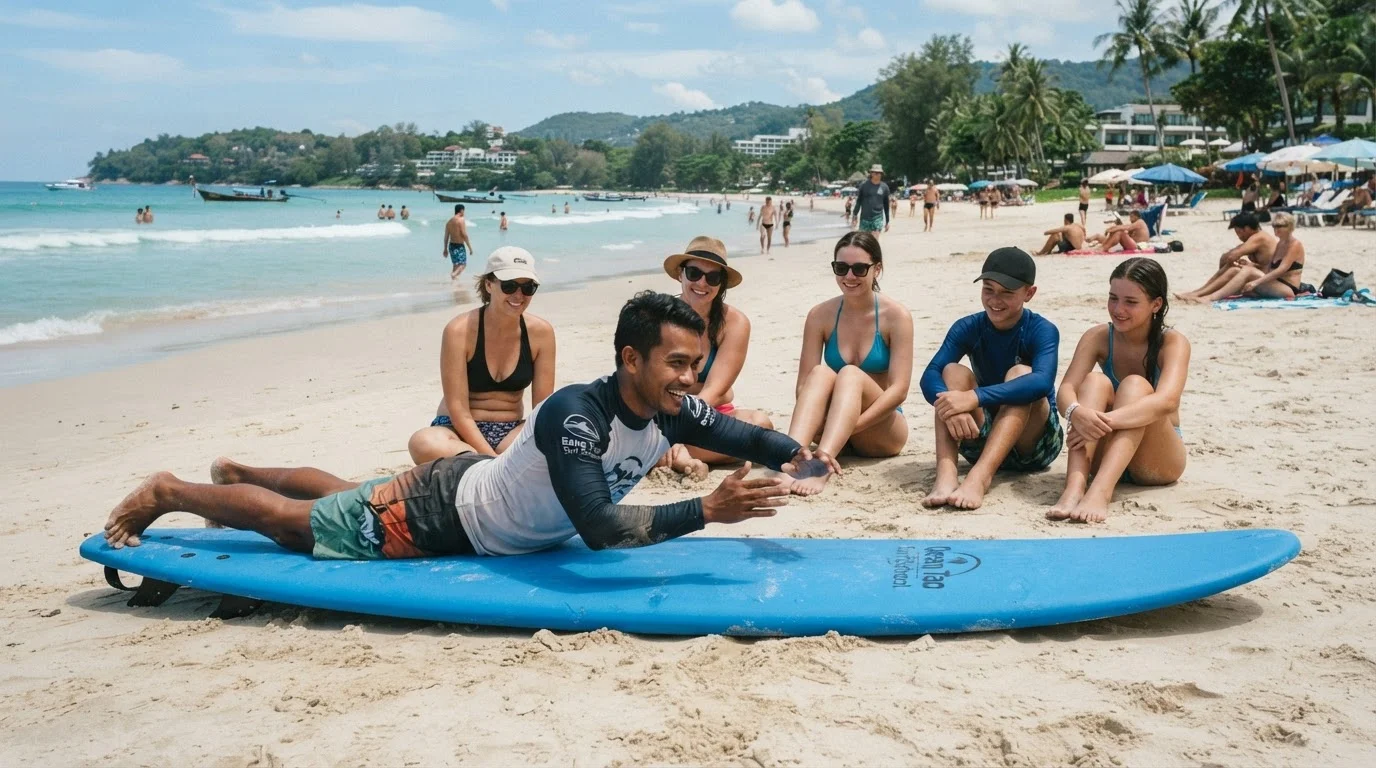
Thailand's surf coaching scene maintains solid standards, with several local and foreign instructors holding International Surfing Association (ISA) accreditations. At Kata Beach, SSS Phuket runs beginner surf lessons from 1,000 THB (approx £22), covering basic board handling and ocean etiquette. Further north at Bang Tao Beach, Talay Surf delivers structured coaching, with 90-minute private lessons costing 1,500 THB (approx £33) and group sessions starting at 1,000 THB (approx £22) per person. Lessons typically begin with 20 to 30 minutes of beachside instruction focusing on paddling technique and pop-up mechanics, followed by supervised water time where coaches assist with wave timing. In Phang Nga province, Better Surf Thailand operates out of Memories Beach near Khao Lak, providing small-group and one-to-one coaching tailored to the gentle beach break; visitors should contact the school directly for current seasonal rates and packages.
Independent board rental stands line the sand along active surf breaks throughout Phuket and Khao Lak. Hourly board hire typically ranges between 150 THB and 300 THB (approx £3.30 to £6.60), while full-day rentals generally run from 500 THB to 1,000 THB (approx £11 to £22). The majority of rental fleets consist of durable soft-top foam boards measuring between 7'0" and 9'0", which provide the buoyancy and stability needed for Thailand's softer monsoon swells. Several established outlets also allow surfers to swap board lengths without extra charges during a day rental as tides shift. More experienced surfers can track down performance epoxy shapes, fibreglass shortboards, and local balsa-composite boards from makers like Sunova at dedicated surf centres across Kata, Bang Tao, and Khao Lak.
Ocean Safety: Rip Currents, Reef Hazards, and Water Quality
Andaman coastal waters present distinct hazards during the southwest monsoon from May to October. Strong rip currents develop rapidly along steep beach breaks such as Nai Harn, Karon, and Kata, where breaking swell funnels seaward through deep sand channels. If caught in a rip, do not paddle against the flow; stay with your board for flotation and paddle parallel to the shore to exit the current.
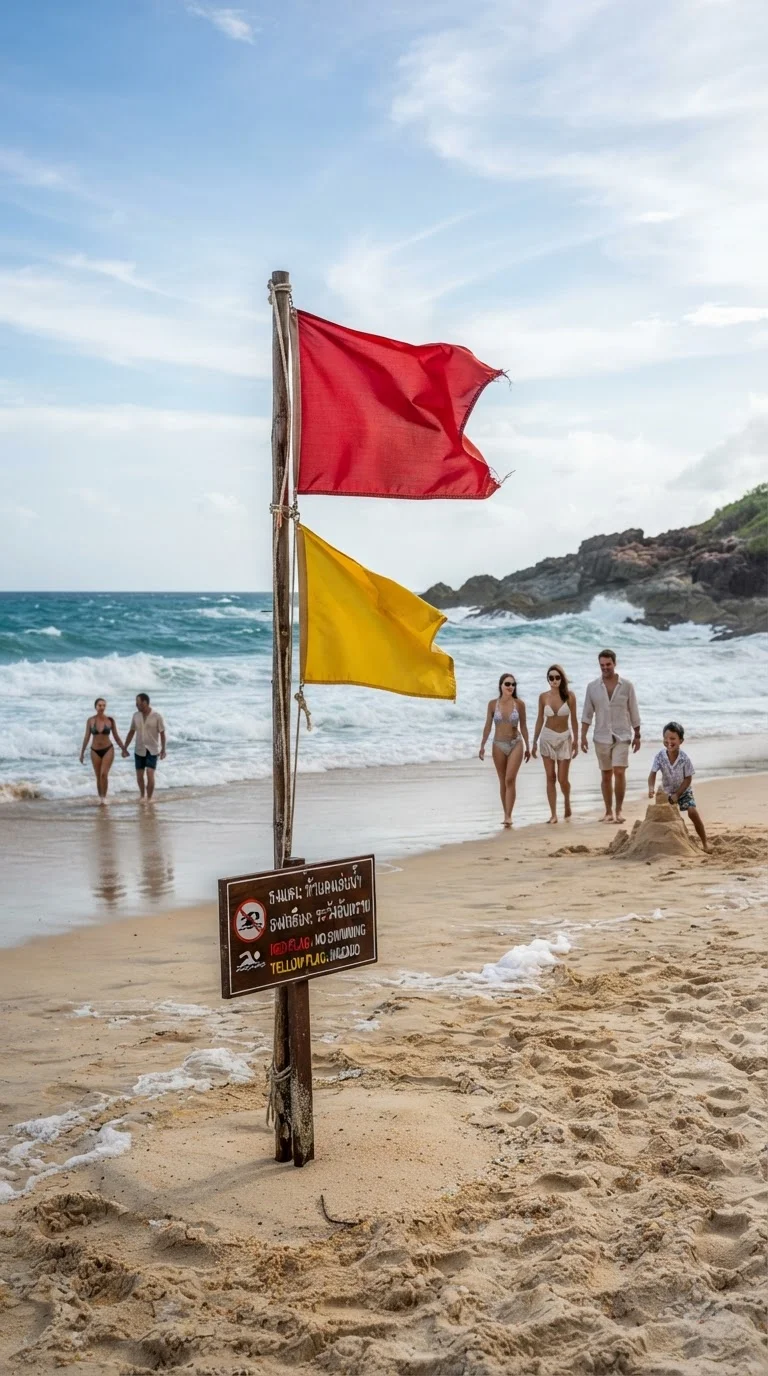
Usually observe Thai lifeguard flags. Red-and-yellow flags designate supervised bathing zones where surf craft are prohibited to protect swimmers. Surfers must operate outside these areas. Red flags prohibit swimming due to hazardous conditions, while double red flags indicate the water is closed entirely.
Reef breaks like Kalim and Pakarang Cape feature shallow coral shelves and sea urchins. Surfers should wear puncture-resistant reef booties and plan sessions around mid to high tide, avoiding low-water windows when exposed rock and coral cause cuts prone to rapid tropical infection.
Monsoon winds push marine stingers shoreward, predominantly bluebottles (Portuguese man-of-war). Do not use vinegar on bluebottle stings: acetic acid causes their cells to discharge further venom. Instead, rinse tentacles with sea water—rarely fresh water—and soak the skin in hot water. Vinegar is reserved strictly for suspected box jellyfish, doused continuously for 30 seconds. For severe reactions, call 1669 immediately.
Torrential rain flushes contaminated urban runoff through concrete drainage culverts and rivermouths. Paddling near outflows exposes surfers to elevated bacterial levels; wait 48 to 72 hours after heavy downpours before surfing near urban drains, or head to open breaks with active water exchange.
| Hazard | Risk Level | High-Risk Locations | Prevention / Action |
|---|---|---|---|
| Rip Currents | High | Nai Harn, Karon, Kata | Paddle parallel to shore; use board for flotation |
| Coral and Rocks | Moderate to High | Kalim Reef, Pakarang Cape | Wear reef booties; surf mid to high tide |
| Marine Stings | Low to Moderate | Andaman coast, Khao Lak | Rinse bluebottles with sea water; use vinegar for box jellyfish |
| Monsoon Runoff | Moderate | Rivermouths, storm culverts | Avoid outflows; allow 48 to 72 hours after heavy rain |
Where to Surf in Thailand: Key Coastal Hubs
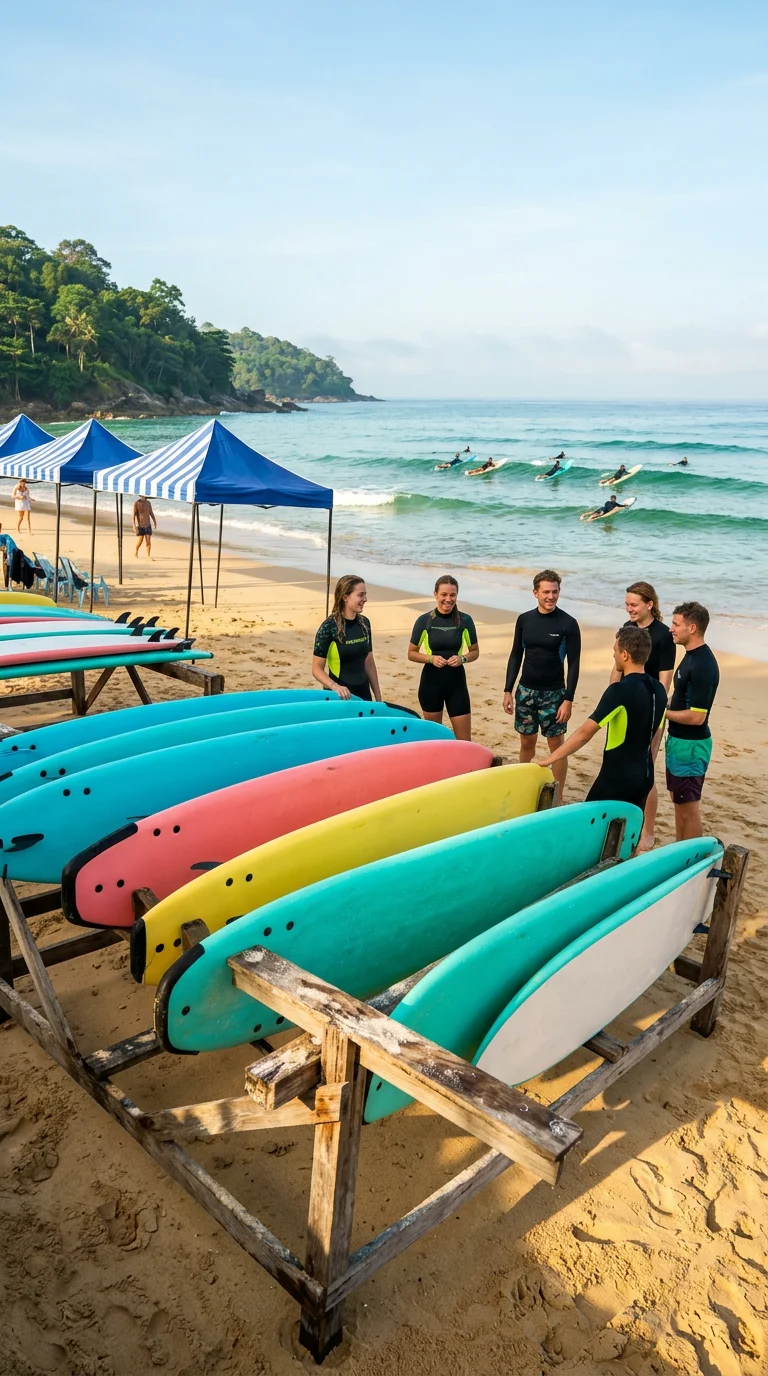
Phuket is the primary gateway for Andaman surf trips, connected by direct international flights and equipped with extensive tourism infrastructure. Kata Beach concentrates the island's surf schools, rental board racks, and beachfront kiosks, making it a practical base for visitors travelling without personal transport. With trained lifeguards patrolling during the May to October southwest monsoon and gentle inside whitewash over shallow sand, Kata suits beginners booking their first lessons.
Roughly 80 kilometres north of Phuket Airport in Phang Nga province, Khao Lak provides a less commercial alternative centred on Khuk Khak Beach and Cape Pakarang. Here, Memories Beach Bar and Pakarang Surf Shop form the focal point of Thailand's longboard scene, where mellow sandbar peelers draw a steady community of resident loggers and visiting wave riders.
Further north in Ranong province, Koh Phayam appeals to travellers seeking uncrowded surf and basic living. Reached via a 45-minute speedboat from Ranong pier, this car-free island centres its wave activity on Aow Yai. The wide two-kilometre bay delivers shifting sandbank peaks backed by rustic bamboo bungalows set just above the tide line, operating largely off-grid with limited generator hours.
For travellers based near Bangkok during the European winter, Rayong on the eastern Gulf coast provides a closer option. Sitting under three hours' drive from the capital, Mae Ramphueng Beach picks up seasonal windswells from November to February during the northeast monsoon, accompanied by quiet beachfront guesthouses and local open-air seafood restaurants.
Costs and Budgeting
Surfing in Thailand is remarkably economical compared to established breaks across Europe or North America. Because the primary Andaman surf window aligns with the southwest monsoon low season, travel expenses fall sharply. Private one-to-one lessons with local instructors generally cost between 1,000 THB and 1,800 THB (£22 to £40) for 60 to 90 minutes, which routinely includes board use, rash guard hire, and basic shower or locker access. Small-group or pair sessions reduce the expense further, typically charging 800 THB to 1,200 THB (£18 to £27) per person.
| Option | Cost (THB) | Cost (GBP approx) | Notes |
|---|---|---|---|
| 1-Hour Board Hire | 150 – 250 THB | £3.30 – £5.60 | Standard foamie or epoxy funboard |
| Full-Day Board Hire | 500 – 700 THB | £11 – £16 | Negotiable for multi-day hires |
| Private Surf Lesson (90 mins) | 1,000 – 1,800 THB | £22 – £40 | Includes gear, coach, and safety brief |
| Group Lesson (2-3 people) | 800 – 1,200 THB | £18 – £27 | Per person rate, 1.5 to 2 hours |
| Weekly Board Rental | 2,500 – 3,500 THB | £56 – £78 | Includes board swapping flexibility |
| Beachfront Bungalow (Low Season) | 800 – 1,500 THB | £18 – £34 | Per night, walking distance to break |
Board hire directly on the beach is equally accessible. Hourly rates for soft-tops and epoxy funboards range from 150 THB to 250 THB (£3.30 to £5.60), while full-day rentals sit between 500 THB and 700 THB (£11 to £16). Surfers planning longer stays can arrange weekly hire for 2,500 THB to 3,500 THB (£56 to £78), which often permits swapping board lengths as wave sizes fluctuate. Beachside shops generally ask for an ID card or a cash security deposit rather than holding your passport.
Off-water daily living expenses remain modest. Low-season accommodation rates along surf beaches in Phuket and Phang Nga fall forty to sixty percent below peak winter pricing, with clean bungalows near the sand averaging 800 THB to 1,500 THB (£18 to £34) per night. Street food stalls and casual cafes keep daily food and drinking water costs around 400 THB to 600 THB (£9 to £13.50). Scooter hire at 200 THB to 300 THB (£4.50 to £6.70) per day provides flexible transport between breaks.
What To Know Before You Go
Thailand’s primary surf window coincides with the southwest monsoon, bringing frequent tropical showers and fluctuating coastal winds. Early mornings generally deliver the cleanest conditions, with lighter offshore or glassy winds before onshore breezes and mid-afternoon squalls chop up the surf. Overcast monsoon skies can be deceptive: tropical ultraviolet levels remain high even under cloud cover. A high-factor, reef-safe mineral zinc and a long-sleeved rash vest protect skin from severe sunburn during extended water sessions.
Wave energy across Thai breaks is typically mellow and forgiving rather than hollow or powerful. Narrow, sub-six-foot performance shortboards with low volume struggle in these rolling beach breaks. Surfers maximise wave count by packing or renting high-volume equipment: retro or modern fish shapes, mid-lengths between seven and eight feet, or traditional nine-foot longboards that paddle easily into softer waves.
Usually observe posted shoreline flags before paddling out. Lifeguards hoist red warning flags when strong onshore swells generate hazardous rip currents. While entering the water under a red flag carries no statutory fine under Thai law, ignoring these warnings endangers both yourself and responding lifeguards in severe seaward currents.
Practical Tips
Base yourself within walking distance of the break. Booking accommodation along the immediate beach road lets you check wave quality at first light on foot. Hiring a scooter fitted with a surfboard rack introduces significant risk for inexperienced riders, particularly when sudden monsoon squalls leave coastal roads greasy. The UK Foreign, Commonwealth & Development Office (FCDO) warns of severe road accident rates across Thailand. Crucially, riding without a valid UK motorcycle entitlement and a 1968 International Driving Permit (IDP), or failing to wear a helmet, breaches Thai law and invalidates medical claims on most UK travel insurance policies.
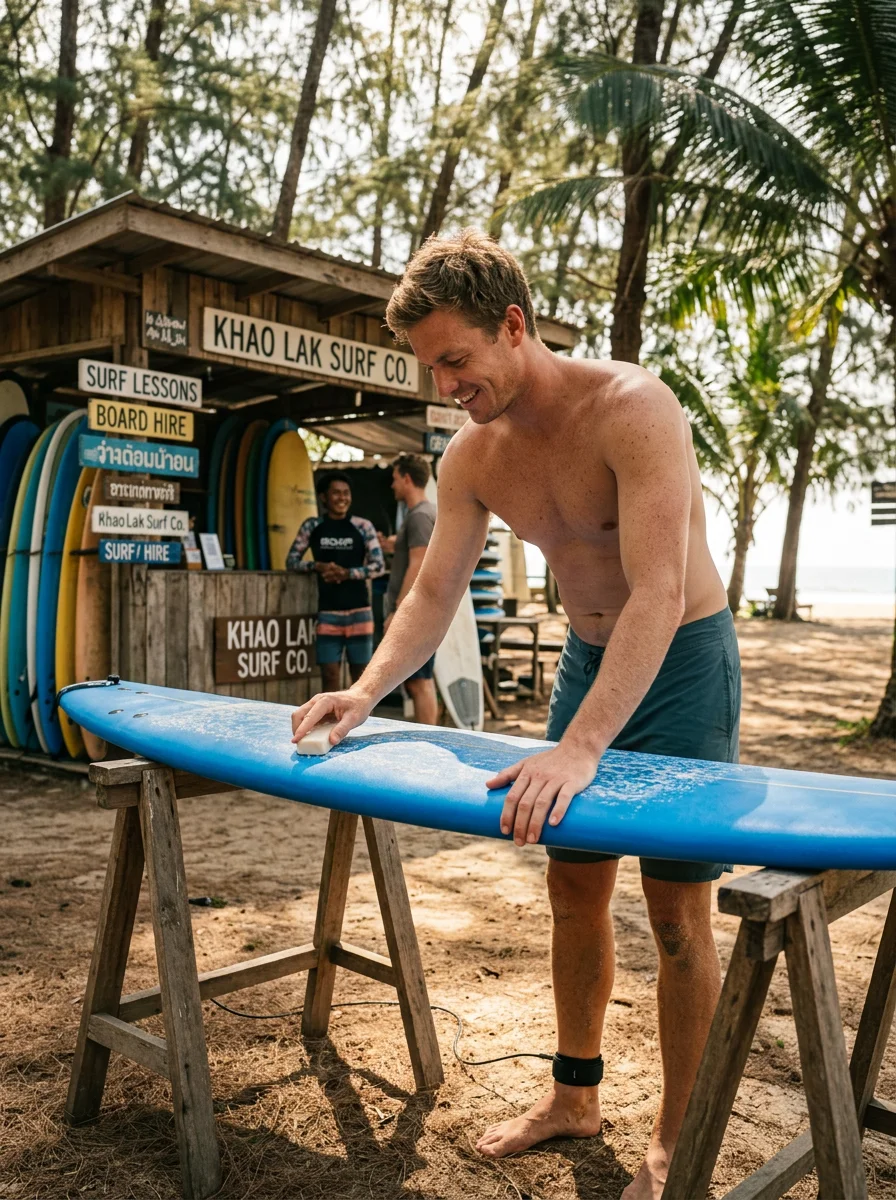
Pack your own tropical-water surf wax before departing the UK. Seawater along the Andaman coast and Gulf of Thailand regularly measures between 28°C and 30°C during surf season. Standard European cold-water or cool-water waxes melt into a greasy slick almost immediately in these temperatures. While surf shops in developed hubs like Kata or Bang Tao sell tropical bars, imported blocks carry retail markups. Bringing several bars formulated for water temperatures above 26°C provides dependable traction from your very first session.
Consult local tide charts and aim to surf within a window of two hours either side of mid-tide. Dead low water often exposes shallow rock shelves, coral heads, and submerged debris, whereas peak high tide can create a dumping shorebreak and backwash off headlands. Carry cash in small Thai Baht notes—such as 20 THB (approx 50p), 50 THB (approx £1.20), and 100 THB (approx £2.40) bills—when travelling to remote breaks like Memories Beach or Koh Phayam. Payment terminals at rustic beach shacks frequently lose mobile data connection during heavy downpours.
Confirm that your travel insurance policy explicitly covers surfing and emergency repatriation. Many standard UK policies treat board sports as hazardous activities, requiring a specific sports extension. Arrange your cover carefully, prepare your equipment, and head into the lineup with confidence.
Quick Reference Table
| Item | Detail | Notes |
|---|---|---|
| Gulf of Thailand Season | November to February (Northeast Monsoon) | 0.5 m – 1.2 m short-period windswell; Rayong (Mae Ramphueng) and Koh Samui (Chaweng) |
| Best Time of Day | Early morning (06:00 – 09:30) | Cleanest glassy or light offshore conditions before afternoon onshore winds pick up |
| Working Tide Window | Two hours either side of mid-tide | Low water exposes shallow reefs and closes out; high tide brings heavy shorebreak backwash |
| Board Hire Costs | 150 – 250 THB (£3.30 – £5.60) per hour | Full day: 500 – 700 THB (£11 – £16); weekly: 2,500 – 3,500 THB (£56 – £78) with swapping |
| Surf Coaching Rates | 1,000 – 1,800 THB (£22 – £40) for 60–90 min private lesson | Small group: 800 – 1,200 THB (£18 – £27) per person; includes equipment and rash vest |
| Recommended Boards | 9ft+ single-fin logs, 7ft–8ft mid-lengths, and fish shapes | High buoyancy suited to mellow rollers; performance shortboards struggle in softer waves |
| What to Bring | Tropical surf wax (>26°C), reef booties, rash vest, mineral zinc | European cold wax melts immediately; booties protect against shallow coral and sea urchins |
| Ocean Safety & Hazards | Rip currents, bluebottle stingers, monsoon runoff | Paddle parallel to escape rips; rinse bluebottles with sea water; wait 48–72h after heavy rain |
| Emergency Medical Services | Dial 1669 | National emergency number for severe marine stings or surf trauma |
| Beachfront Accommodation | 800 – 1,500 THB (£18 – £34) per night | Low-season monsoon rates for bungalows within walking distance of breaks |
| Scooter Transport Rules | Walking preferred; avoid board racks on wet roads | Requires full UK motorcycle entitlement, 1968 IDP, and helmet for valid insurance cover |
| Website (Memories Beach) | memoriesbar-khaolak.com | Khao Lak longboard community hub and surf school, Khuk Khak Bay |
| Website (SSS Phuket) | https://www.sssphuket.com/ | ISA-accredited surf school, 184/1 Koktanod Road, Kata Beach |
| Website (Talay Surf) | https://www.talaysurf.com/ | Coaching and hire centre, 72/9 Moo 3, Bang Tao Beach |
FAQ: Surfing in Thailand
What are the typical costs for surf lessons in Thailand?
What kind of waves can surfers expect in Thailand?
When is the main surf season on Thailand's Andaman Sea coast?
When is the surf season in the Gulf of Thailand?
What is the best tide for surfing in Thailand?
How much does it cost to rent a surfboard in Thailand?
What should I do if caught in a rip current while surfing in Thailand?
How should bluebottle stings be treated in Thailand?
What is the best time of day to surf in Thailand?
What type of surfboard is best suited for surfing in Thailand?
Reviewed by the Thailand Guide Editorial Team • Last reviewed: 18 November 2026
This page is provided for general information only. While we aim for accuracy, details can change — please verify anything important independently before relying on it.