Best Sailing Routes in Thailand
Sailing the Andaman Sea at dawn reveals sheer limestone karsts rising two hundred metres out of calm green waters, far from coastal road traffic. At the helm, gentle morning offshore breezes carry the scent of dense rainforest and woodsmoke drifting from island fishing settlements.
This guide details cruising routes and multi-day sailing itineraries across Thailand’s two distinct maritime basins: the Andaman Sea to the west and the Gulf of Thailand to the east. Whether you plan to charter a bareboat catamaran from Phuket, hire a skippered monohull through the Koh Samui archipelago, or explore the quiet eastern reaches of Koh Chang, this walkthrough sets out seasonal cruising windows, navigational challenges, sheltered anchorages, and realistic passage plans to help you prepare.

Phuket and Phang Nga Bay: The Classic Andaman Loop
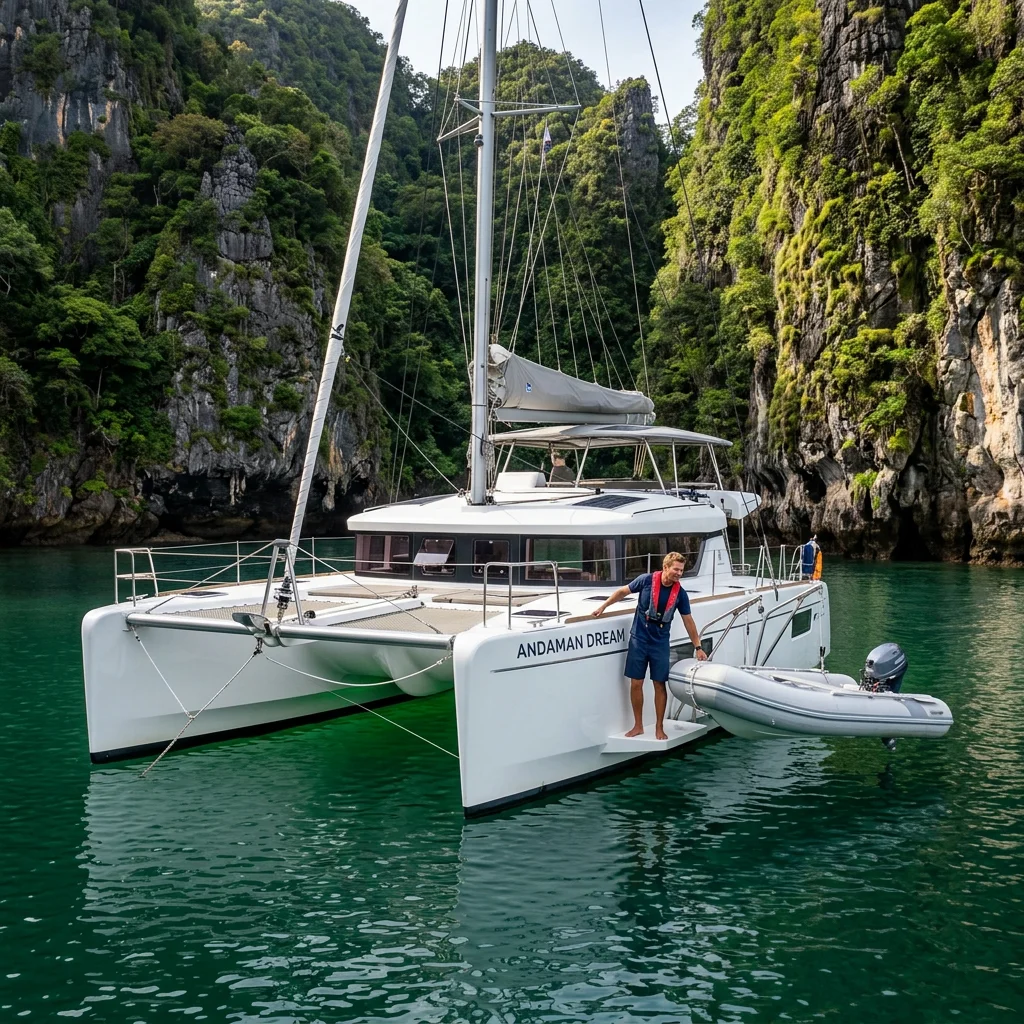
Phang Nga Bay provides sheltered, flat-water cruising framed by towering limestone islands, making it well suited for family crews and sailors embarking on their first charter in Thai waters. Departures typically start from Phuket Yacht Haven Marina or Ao Po Grand Marina on Phuket’s north-east coast, placing yachts immediately at the northern entrance to the bay. Within two to three hours under sail, you can anchor off Koh Phanak, where tenders can navigate into collapsed limestone caves and hidden tidal lagoons. Continuing through the bay leads past the dramatic cliffs around Koh Hong and the stilt community of Koh Panyee, before opening into wider passages south towards Railay Beach and Koh Phi Phi Don.
Tides in Phang Nga Bay vary by up to three metres during spring tides, which strongly influences daily passage timing and tender access. Visiting the island sea caves and interior lagoons requires careful scheduling around mid-tide: low water exposes shallow mudbanks and reef flats, while high water submerges cave ceilings. Marine park officials collect the Ao Phang Nga National Park fee of 300 THB (approx £6.70) per foreign adult and 150 THB (approx £3.35) per child directly from visiting yachts at anchor. During the north-east monsoon from November to April, prevailing winds stay between 10 and 15 knots from the north-east, providing steady sailing across calm, protected waters.
| Day | Route | Distance (nm) | Anchorage and Pilotage Notes |
|---|---|---|---|
| Day 1 | Ao Po Grand Marina to Koh Phanak | 8 | Sheltered mud bottom holding in 4–6 metres; tender access to tidal caves |
| Day 2 | Koh Phanak to Koh Hong (Phang Nga) | 6 | Enclosed anchorage; dramatic karst towers and kayak access to interior lagoon |
| Day 3 | Koh Hong to Koh Panyee and Koh Roi | 11 | Visit stilt fishing community; overnight anchor off Koh Roi's quiet north cove |
| Day 4 | Koh Roi to Railay Beach (Krabi) | 18 | Open-water reach south; dramatic cliff anchorage with 5–8 metres sand-and-mud holding |
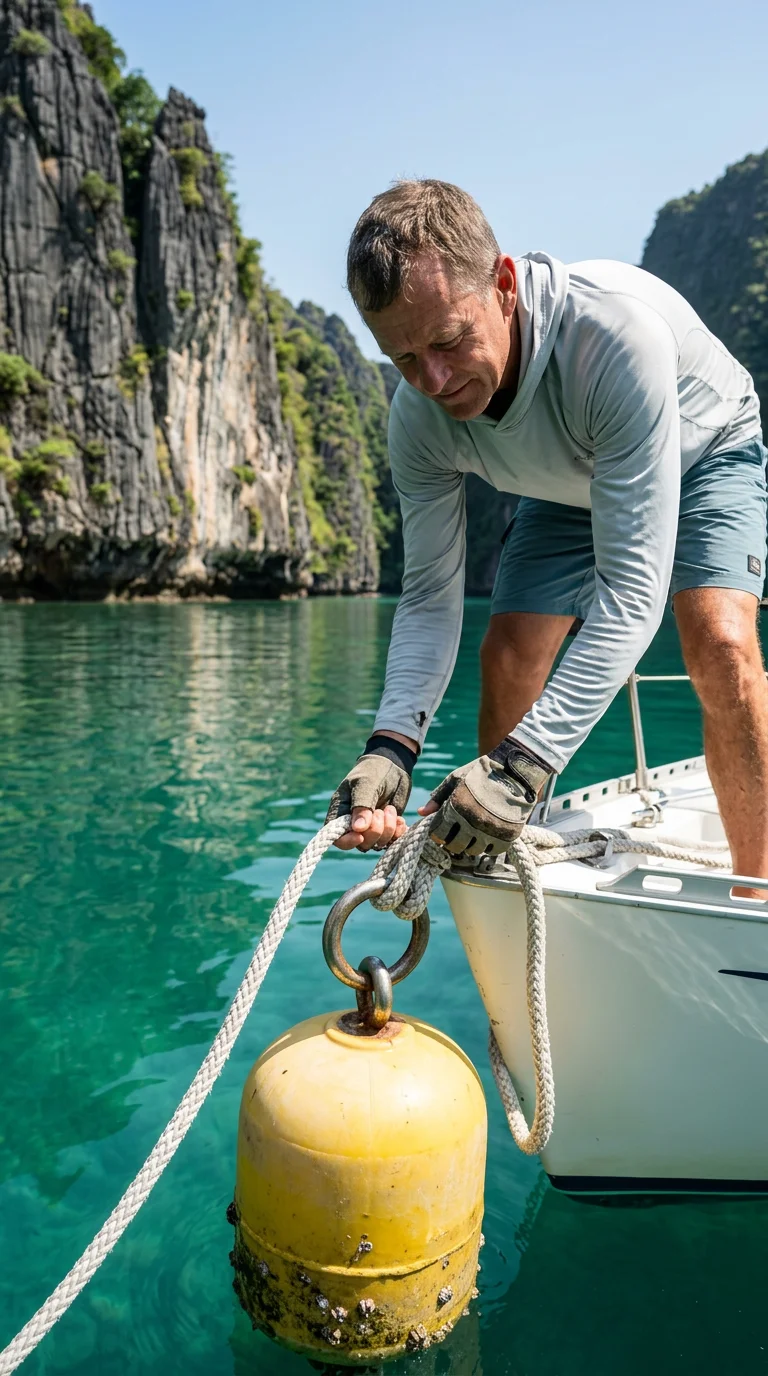
| Day 5 | Railay Beach to Koh Phi Phi Don | 16 | Deep-water passage; pick up authorised mooring buoys in Ton Sai or Loh Dalum |
| Day 6 | Koh Phi Phi Don to Koh Kai (Chicken Island) | 14 | Snorkelling along fringing reefs; secure sand anchorage behind limestone spit |
| Day 7 | Koh Kai return to Ao Po Grand Marina | 21 | Long scenic sail north past Koh Yao Yai back to the northern marina basin |
Securing a charter yacht out of Phuket gives you complete flexibility to tailor your daily stops through Phang Nga Bay, whether you choose a self-skippered bareboat or a crewed vessel.
The Southern Andaman Route: Phi Phi, Koh Lanta, and Koh Lipe
Venturing south from Phuket towards the Malaysian border exposes yachts to open-sea passages, clear water, and remote outer island groups. Leaving Koh Phi Phi behind, courses run south-east across 22 nautical miles of open water towards Koh Lanta, where Kantiang Bay provides dependable holding in sand at depths of 5 to 8 metres alongside casual beachside restaurants. Further south lie the Trang islands, including Koh Muk, home to the Emerald Cave (Tham Morakot). Here, swimmers navigate an 80-metre dark sea tunnel at mid-tide to reach a secluded sunlit beach enclosed by sheer limestone walls. Beyond Koh Muk, the passage reaches Koh Rok Nok and Koh Rok Nai within Mu Koh Lanta National Park, which charges an entry fee of 400 THB (approx £9) per foreign adult. The twin islands form a sheltered, crystal-clear channel lined with thriving coral gardens, equipped with park-maintained mooring buoys. The southern climax of this route is Koh Lipe and the rugged wilderness of Tarutao National Marine Park, which charges 200 THB (approx £4.50) entry. Deep-water swells can build quickly during seasonal shifts in November and late April, making this route suited to crews comfortable with open-water navigation and unassisted anchoring.
Skippers must drop anchor strictly in designated sand patches or secure a park-approved mooring buoy. Anchoring on living coral is prohibited under Thai marine conservation laws and carries heavy fines.
| Island / Stop | Mooring Type | Prevailing Protection | Standout Feature |
|---|---|---|---|
| Koh Phi Phi Don | Mooring buoys / Sand anchor | Good in NE monsoon (Nov–Apr) | Dramatic sheer cliffs, busy nightlife, provisioning shops |
| Koh Lanta (Kantiang) | Anchor in sand (5–8m depth) | Protected from NE winds | Wide sand beach, laid-back beach restaurants, fuel top-up |
| Koh Muk | Anchor off western headland | Moderate NE shelter; open to W | Swimming access to the 80m Emerald Cave sea tunnel |
| Koh Rok (Nok & Nai) | Park-maintained mooring buoys | Excellent inside the narrow strait | Clear coral visibility, giant monitor lizards, zero commercial development |
| Koh Lipe | Mooring buoys / South beach anchor | Sheltered on north or south lee | Lively walking street, clear waters, customs clearance point for Malaysia |
Plan a Northern Thailand trip covering Chiang Mai, Chiang Rai, Sukhothai, mountain routes, Lanna food, transport, seasons and air quality.
Northern Andaman Route: Similan and Surin Islands
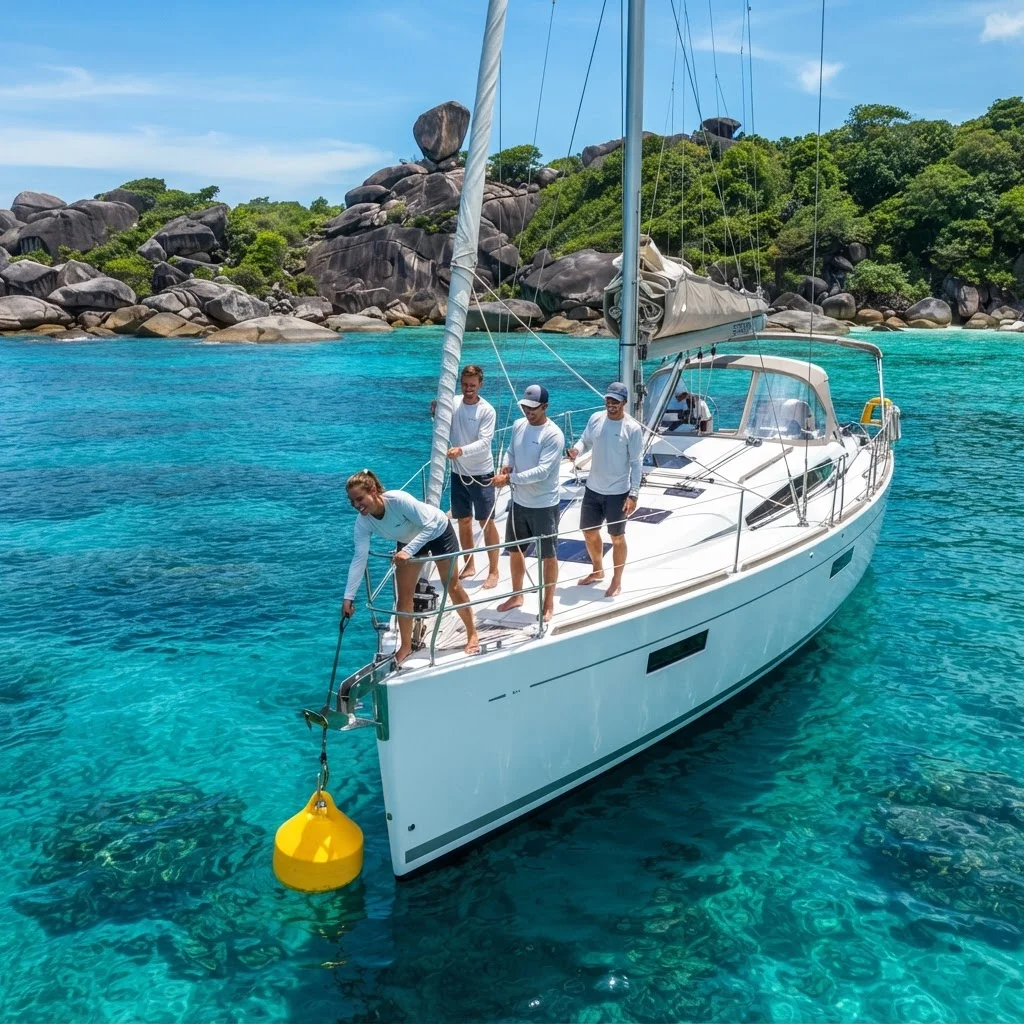
Sailing to Thailand’s northern Andaman archipelagos demands genuine offshore seamanship, disciplined passage planning, and careful attention to seasonal park regulations. Sitting between 55 and 65 nautical miles north-west of Phuket across open water, the Similan and Surin island chains leave the sheltered shallows of the coast behind, exposing vessels to long Indian Ocean swells. Both archipelagos belong to protected national marine parks open exclusively from 15 October to 15 May each year. During the southwest monsoon, heavy seas and conservation mandates prompt the Department of National Parks to close both parks to all marine traffic. Foreign visitors currently pay a 500 THB (approx £11) admission fee per adult, alongside an additional 200 THB (approx £4.50) daily conservation charge for divers.
The Similan chain consists of eleven granitic islands distinguished by gigantic, smooth boulders that tumble deep into clear water, creating underwater swim-throughs with visibility regularly exceeding 30 metres. Dropping anchor onto coral is strictly forbidden throughout the park; crews must secure to official mooring buoys or lay ground tackle exclusively in clean sand within designated shelters such as Donald Duck Bay on Koh Similan (Island 8) and Ao Miang off Koh Miang (Island 4). Overnight stays are confined entirely to vessel cabins, as all onshore accommodation across the Similans remains prohibited.
Cruising roughly 45 to 50 nautical miles further north brings yachts to the Surin Islands, comprising Koh Surin Nuea and Koh Surin Tai. Here, expansive shallow fringing reefs surround dense evergreen jungle, alongside a traditional coastal settlement inhabited by indigenous Moken sea nomads. Approximately 10 nautical miles east of the Surin chain lies Richelieu Rock, an isolated submerged pinnacle that stands among the premier sites in Southeast Asia for pelagic encounters, including regular sightings of manta rays and whale sharks between February and April.
Because these northern reserves lack fuel docks, shoreside provisioning, and freshwater replenishment, skippers must ensure full self-sufficiency in power, water, and food before departure. Inspect multi-day swell charts, monitor wind shifts along the exposed passage, and obtain all national park electronic entry permits prior to slipping your marina berth.
Lower Gulf Archipelago: Koh Samui, Koh Phangan and Koh Tao
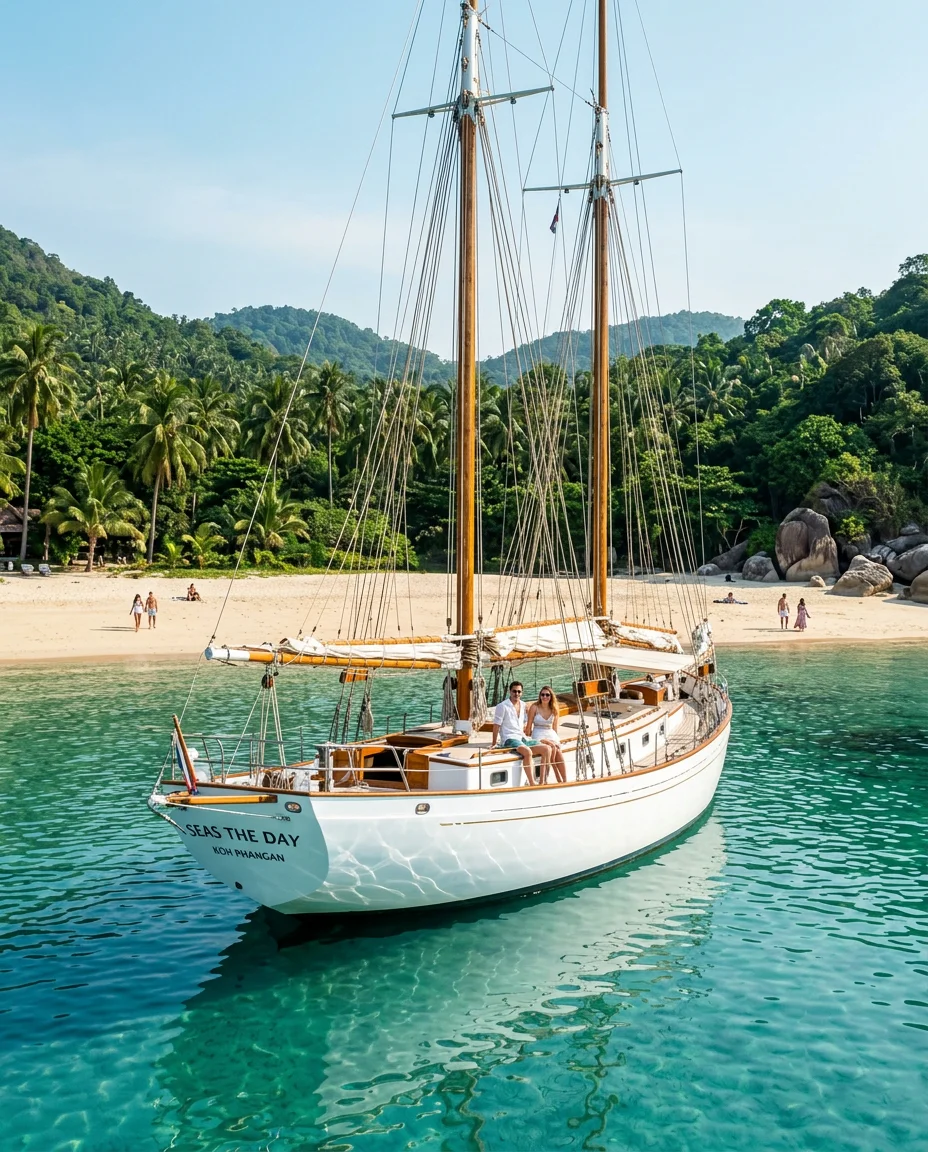
Cruising the lower Gulf of Thailand delivers consistent sailing breezes from January through August, pairing sheltered island anchorages with open-water reaches. While the Andaman coast contends with heavy southwest monsoon downpours between May and October, the lower Gulf rests in the rain shadow of the peninsular mainland, experiencing far drier weather and steady 10 to 18-knot winds. This distinct microclimate makes the Samui archipelago Thailand's primary destination for summer sailing holidays.
Charters typically start from the north coast of Koh Samui, where yachts pick up sheltered anchorages over sand and mud off Bo Phut Beach or Bangrak Pier. From Koh Samui, an open-water passage of 20 to 22 nautical miles north-west leads into Mu Koh Ang Thong National Marine Park, an archipelago of 42 limestone islands. Foreign adult admission is 300 THB (approx £6.70), and foreign children aged 3 to 14 pay 150 THB (approx £3.35). Park rangers collect these dues in cash on arrival, as no card terminals or cash machines exist on the islands. Department of National Parks regulations strictly prohibit anchoring on coral; crews must take up designated park mooring buoys or drop anchor strictly on sand off Koh Wua Talap. Ashore, a steep 500-metre path climbs to the island summit, while a short tender hop to Koh Mae Koh reaches the viewing platform over Talay Nai, an emerald saltwater lake where swimming is prohibited. The marine park closes completely from 1 November to 15 December each year for ecological recovery during the rough north-east monsoon.
Leaving Ang Thong, an easterly passage of roughly 25 to 30 nautical miles brings yachts across to Koh Phangan. During the southwest monsoon, the island's northern and north-eastern anchorages provide dependable shelter. Chaloklum Bay on the north coast and the deep double inlet of Thong Nai Pan on the north-east offer firm holding in sand, shielded from southerly ocean swells.
Heading north from Koh Phangan for another 20 to 25 nautical miles leads past the diving landmark of Sail Rock to Koh Tao. Steep granite headlands and coral gardens ring the island, creating celebrated snorkelling grounds. Because dropped anchors fracture coral, local environmental rules require boats to pick up pre-set mooring balls in bays such as Mango Bay, Hin Wong, and Shark Bay, or anchor in deep sand off the main harbour at Mae Haad.
A balanced one-week charter covers roughly 100 to 120 nautical miles across Koh Samui, Ang Thong, Koh Phangan, and Koh Tao, keeping most daily passages to three or four hours. The direct return leg from Koh Tao south to northern Koh Samui is the longest crossing at 35 to 40 nautical miles, requiring an early departure to negotiate coastal shallows before darkness.
Eastern Gulf Passage: Koh Chang, Koh Mak and Koh Kood
Near the Cambodian maritime border, the Koh Chang archipelago contains more than 50 islands set across eastern Trat province. This cruising ground remains far less trafficked than Phuket or Samui, with high rainforest ridges, traditional stilted fishing hamlets, and manageable line-of-sight day sails of 10 to 25 nautical miles. Charters typically depart from mainland Trat piers or local island bases at Salak Phet and Klong Son, while vessels delivering from Ocean Marina Jomtien near Pattaya undertake an offshore passage of 100 to 130 nautical miles.
Koh Chang itself rises steeply to Khao Salak Phet at 744 metres. From November to March, the northeast monsoon brings steady breezes of 10 to 20 knots, leaving the island's western bays in flat, sheltered water. Skippers drop anchor at Kai Bae Beach or tuck into Bang Bao, a traditional wooden fishing community built over water where yachts can take on fresh provisions and seafood. Heading south brings you into the waters of Mu Koh Chang National Park, where foreign adult entry is 200 THB (approx £4.50), covering offshore coral reefs around Koh Rang and Koh Wai.
Further south, low-lying Koh Mak provides quiet coves bordered by shallow reefs that require careful bow-watch navigation in overhead sunlight. Beyond lies Koh Kood, a sizable outer island dominated by untouched rain-forested interior hills. Yachts anchor along its western coast in clear turquoise water over clean sand, including the scenic river mouth at Klong Chao and the horseshoe cove of Bang Bao Bay.
Stock fuel, spare parts, and surplus cash on Koh Chang before sailing to Koh Kood. Marine chandleries are absent across the outer islands, card machines can be erratic, and cash dispensers become rare south of Koh Mak.
| Anchorage | Island | Holding & Depth | Wind Protection |
|---|---|---|---|
| Bang Bao Bay | Koh Chang | Sand and mud, 5–8m | Sheltered from N and NE; open to southerly swells |
| Salak Phet Bay | Koh Chang | Soft mud, 3–5m | Landlocked natural harbour; sheltered from all wind directions |
| Ao Nid / Ao Kao | Koh Mak | Sand over rock, 4–6m | Fair shelter in NE winds; watch for isolated coral heads on approach |
| Klong Chao | Koh Kood | Fine sand, 3–6m | Sheltered from NE; dinghy passage into fresh-water river |
| Bang Bao Bay | Koh Kood | Hard sand, 4–7m | Sheltered turquoise cove; clear water for observing anchor set |
Monsoons, Marine Parks and Charter Logistics
Matching your sailing schedule to Thailand’s opposing monsoon cycles is the foundation of a well-planned charter. The country does not have a uniform marine climate. On the west coast, the Andaman Sea operates under the Northeast Monsoon from November to April, bringing dry weather, clear skies, and steady 10 to 18-knot north-easterly breezes. Conversely, the Southwest Monsoon dominates from May to October, creating heavy Indian Ocean swells, frequent squalls, and seasonal closures across exposed national marine parks, including the Similan and Surin archipelagos (which the Department of National Parks closes from mid-May to mid-October). The Gulf of Thailand follows an alternate rhythm: its primary cruising season runs from February to August, whereas late October through December brings torrential rain and rough seas.
For bareboat charters, statutory Thai maritime law does not mandate a specific recreational boat licence. However, charter companies and their marine insurers enforce strict requirements. Operators generally require the designated skipper to hold an International Certificate of Competence (ICC), an RYA Day Skipper practical certificate, or an equivalent national qualification, supported by a logged sailing résumé showing command of a similar-sized vessel. If your crew lacks certified credentials or experience with tropical tidal ranges—which can exceed three metres on spring tides—hiring a professional local skipper typically costs between 5,000 THB and 7,000 THB (approx. £112 to £156) per day, plus provisions. A local skipper also brings practical familiarity with unmarked fishing gear, tidal race channels, and shallow fringing reefs.
| Cruising Region | Cruising Window | Experience Level | Departure Base | Key Highlights |
|---|---|---|---|---|
| Phang Nga Bay | Nov – Apr (year-round sheltered) | Beginner (sheltered, flat water) | Phuket Yacht Haven / Ao Po | Towering limestone karsts, sea caves, and short hops |
| Southern Andaman | Nov – Apr | Intermediate (open water reaches) | Chalong Bay (Phuket) | Diverse islands, clear water, and cave exploration |
| Northern Andaman | Dec – Apr (closed mid-May – mid-Oct) | Advanced (offshore, deep mooring) | Phuket Yacht Haven / Thap Lamu | Granite boulder reefs, pelagic marine life, and open-ocean passages |
| Lower Gulf | Feb – Aug | Beginner to Intermediate | Bo Phut / Bangrak (Koh Samui) | Dependable summer breezes and Ang Thong marine park |
| Eastern Gulf | Nov – Apr | Intermediate (limited infrastructure) | Ocean Marina (Pattaya) / Trat | Quiet anchorages, line-of-sight sailing, and rainforest bays |
Key Departure Marinas and Anchorages
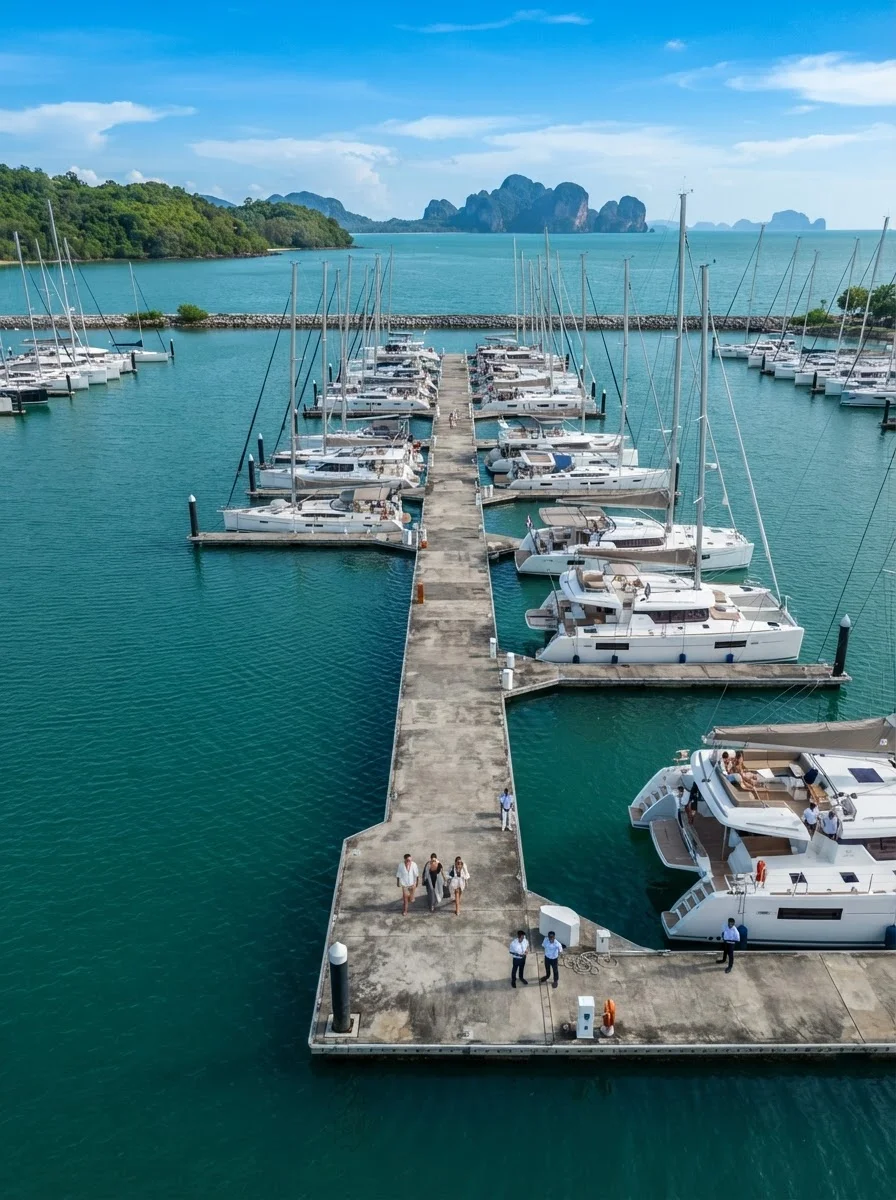
Thailand’s purpose-built marina infrastructure is concentrated on Phuket’s sheltered eastern coastline and along the northern Gulf coast near Pattaya. In north-east Phuket, Yacht Haven Marina accommodates over 320 vessels along a deep, naturally protected channel. Situated roughly fifteen minutes by road from Phuket International Airport, it allows round-the-clock navigation into Phang Nga Bay across all tidal states. A short distance south, Ao Po Grand Marina provides 230 pontoon berths with minimum depths of three metres in the inner basin and seven metres at the outer breakwater docks. Its open-water approach eliminates tidal restrictions, making both locations the principal bases for commercial bareboat and crewed charter fleets.
Further south in Koh Kaew, Royal Phuket Marina and Phuket Boat Lagoon supply extensive shore-side marine services, including dry docks, travel lifts, and chandleries. Both marinas sit along Tha Rua creek, a winding mangrove channel marked by concrete pilings. Because water depth varies significantly along the creek, deeper-draft monohulls and catamarans must time their arrival and departure within a window either side of high tide.
In the eastern Gulf, Ocean Marina Jomtien near Pattaya accommodates more than 450 vessels across its floating pontoons, sheltered behind an extensive sea wall breakwater. It acts as the primary mainland provisioning and refuelling base for passages heading south-east towards Koh Chang, Koh Mak, and Koh Kood. Conversely, the Lower Gulf islands have no purpose-built marina facilities. Cruising yachts exploring Koh Samui, Koh Phangan, and Koh Tao pick up private mooring buoys or drop anchor over clean sand in sheltered bays, with Bo Phut and Bangrak on Samui's northern coast providing the primary yacht anchorages.
Costs and Budgeting
Chartering a sailing yacht in Thailand suits a broad range of budgets, from friends splitting a bareboat monohull to fully crewed catamaran voyages. During the dry high season from November to April, standard 38-to-45-foot bareboat monohulls typically run from 120,000 THB to 200,000 THB (approx. £2,680 to £4,460) per week. Cruising catamarans measuring 42 to 46 feet range from 200,000 THB to 380,000 THB (approx. £4,460 to £8,480) per week. Off-peak charter rates drop by roughly 25% between May and October, whereas the peak Christmas and New Year period commands surcharges of around 30%.
Bareboat charterers should factor in several operational extras. Uncertified groups can hire a professional skipper for 5,000 THB to 7,000 THB (approx. £112 to £156) per day, adding 35,000 THB to 49,000 THB (approx. £780 to £1,090) across a seven-day charter, plus crew meals. Fleets require a refundable security deposit of 100,000 THB to 250,000 THB (approx. £2,230 to £5,580) authorised at check-in, alongside mandatory end-cleaning fees of 7,000 THB to 12,000 THB (approx. £156 to £268).
Fuel for the auxiliary engine, generator, and tender outboard typically totals 10,000 THB to 22,000 THB (approx. £223 to £491) for a standard week. Overnight marina berths outside your home base run between 2,500 THB and 5,000 THB (approx. £56 to £112) per night. Mainland self-catering provisioning at Makro or Villa Market averages 5,000 THB to 8,000 THB (approx. £112 to £178) per person weekly. Cruising into marine national parks requires physical cash, as rangers collect fees at anchor where card terminals do not exist; allow 1,500 THB to 3,000 THB (approx. £33.50 to £67) per person for a seven-day itinerary.
| Expense Category | Typical Range (THB) | Approx. Cost (GBP) | Budgeting Practicalities |
|---|---|---|---|
| Bareboat Monohull (40ft, 7 nights) | 120,000 – 190,000 | £2,680 – £4,240 | Off-peak rates drop by 25%; includes standard yacht equipment and tender |
| Bareboat Catamaran (42–46ft, 7 nights) | 210,000 – 380,000 | £4,690 – £8,480 | Peak holiday weeks (Christmas/New Year) carry a 30% surcharge |
| Professional Skipper Fee (per day) | 5,000 – 7,000 | £112 – £156 | Required if uncertified; crew food must be provided by charterer |
| National Park Fees (per person, per week) | 1,500 – 3,000 | £33.50 – £67.00 | Must be paid in physical Thai Baht cash to rangers at anchor |
| Supermarket Provisioning (per person, 7 days) | 5,000 – 8,000 | £112 – £178 | Self-catering with local produce, fresh seafood, snacks, and beer |
| Transient Marina Berthing (per night) | 2,500 – 5,000 | £56 – £112 | Rates depend on overall length and electrical hook-up consumption |
What To Know Before You Go
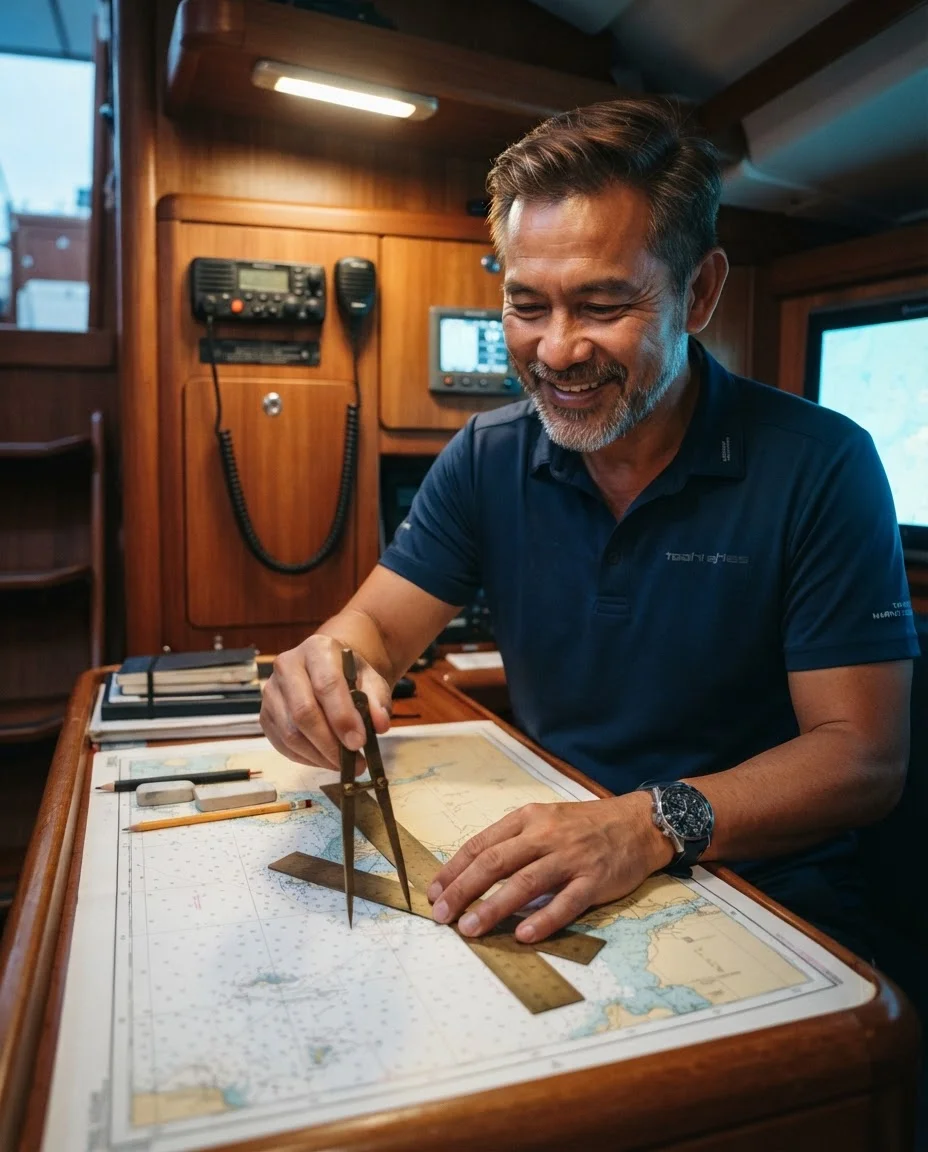
Coastal Thai waters support busy artisanal fishing fleets. Bareboat charter contracts routinely prohibit night sailing across Thailand, partly because local longtail craft and wooden fishing vessels frequently navigate without running lights. By daylight, skippers must maintain a sharp lookout for floating squid nets, drift lines, and submerged bamboo fish traps marked only by faded plastic flags or empty oil drums. Fouling a synthetic net can wrap the propeller and lock the shaft in seconds, turning a routine passage into an emergency tow.
Andaman tides fluctuate by up to 3 metres during spring cycles, which dictates when you can enter limestone caves and enclosed sea lagoons, known as hongs. Karst cave tunnels can only be negotiated by tender or kayak within specific mid-tide windows. High water drowns the cavern entrances with zero overhead headroom, while dead low tide exposes shallow limestone ledges and drying mud flats that easily ground small craft.
Under Department of National Parks regulations, dropping anchor on living coral is illegal and incurs severe penalties, including statutory fines up to 100,000 THB (approx £2,300). Skippers must tie off to official park mooring buoys or drop anchor strictly into clean sand, verifying the set by mask and snorkel.
Stow sufficient physical Thai Baht cash in a dry bag for marine park dues. Uniformed rangers routinely pull alongside visiting yachts in patrol ribs to inspect paperwork and collect entry fees—typically 200 THB to 500 THB (approx £5 to £11) per foreign adult, alongside separate vessel charges. Cash is the only accepted payment method at sea, and vessels without physical currency will be instructed to weigh anchor and depart protected waters immediately.
Practical Tips
Download offline electronic charts using Navionics or Savvy Navvy onto a tablet before casting off from the marina. While 4G and 5G cellular coverage is reliable along Thailand's mainland coastline and developed resort islands, signals can weaken or drop out around remote southern Andaman anchorages such as Koh Rok and the outer Tarutao archipelago.
Take time during your marina handover briefing to inspect the windlass, verify the anchor chain depth markings, and test-run the dinghy's outboard motor in gear. Charter companies have limited capacity to dispatch mechanics to remote island groups like Koh Kood or the Trang islands, meaning auxiliary gear failures mid-passage can disrupt your cruising schedule.
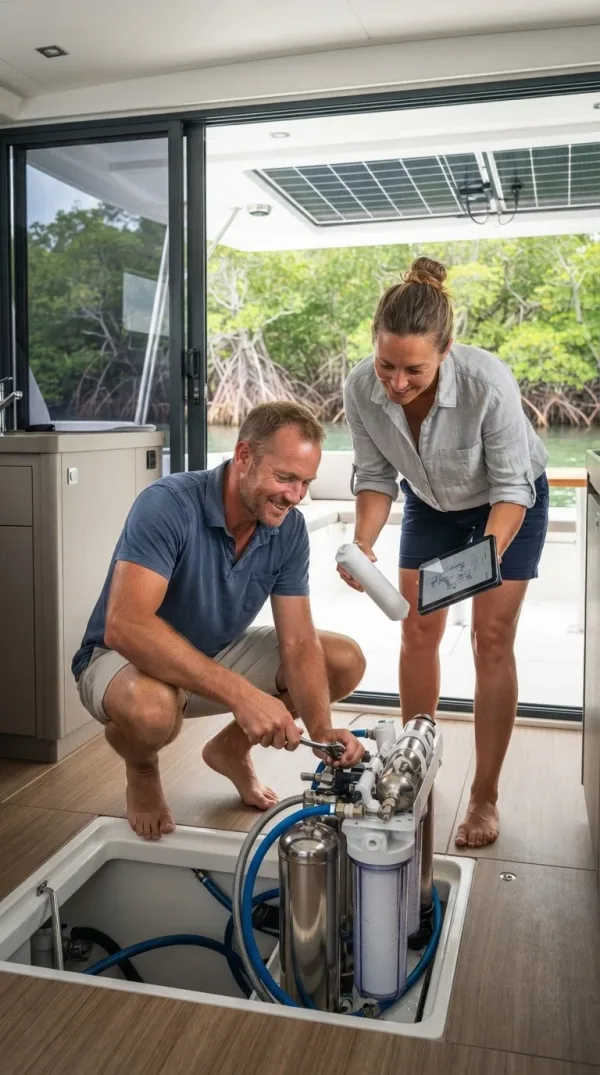
Manage fresh water consumption carefully, especially if your yacht is fitted with a watermaker. Northern Phang Nga Bay carries heavy suspended silt and runoff from mangrove estuaries, which quickly clogs reverse-osmosis filtration membranes. Reserve desalinator use for when cruising in clear, deep offshore waters well away from sediment-heavy shallows.
Complete major boat provisioning at mainland supermarkets such as Villa Market or Makro in Phuket, Pattaya, or Koh Samui prior to embarkation. Island minimarts on Koh Phi Phi, Koh Tao, and Koh Lipe charge steep mark-ups and carry limited fresh produce and dairy. Keep your ship’s registration papers, certified crew list, charter contract, and passports in a waterproof grab-bag, as Department of National Parks rangers and marine police periodically inspect vessels at popular anchorages.
During spring tides, tidal ranges across the Andaman Sea generate currents exceeding two knots through narrow island cuts, such as the channel between Koh Rok Nok and Koh Rok Nai. Stream a trailing safety line with a buoy off the transom so swimmers can hold station against the flow. For those planning a charter, comparing vetted fleets and securing a professional skipper provides reassurance while navigating local tidal currents and secluded anchorages.
Quick Reference Table
| Item | Detail | Notes |
|---|---|---|
| Andaman Cruising Season | November to April | Northeast monsoon brings calm seas, dry skies, and 10–18 knot north-easterly breezes |
| Lower Gulf Cruising Season | February to August | Rain shadow provides dry weather and 10–18 knot winds while Andaman sees southwest monsoon downpours |
| Eastern Gulf Cruising Season | November to April | Northeast monsoon delivers 10–20 knot breezes and flat water along western island bays |
| Bareboat Skipper Requirements | ICC, RYA Day Skipper, or equivalent | Practical certificate plus logged résumé on similar-sized vessel required by charterers and insurers |
| Hired Local Skipper Cost | 5,000–7,000 THB (£112–£156) per day | Crucial for crews without tidal credentials; charterer provides skipper meals |
| 40ft Monohull Charter (7 nights) | 120,000–190,000 THB (£2,680–£4,240) | Standard high-season rate; off-peak drops roughly 25%, Christmas/New Year rises 30% |
| 42–46ft Catamaran Charter (7 nights) | 210,000–380,000 THB (£4,690–£8,480) | Peak holiday periods carry 30% surcharge; fuel, end-cleaning, and deposit extra |
| Marine Park Entry Fees | 200–500 THB (£4.50–£11) per foreign adult | Cash only; collected by rangers at anchor; card terminals and ATMs unavailable |
| Similan & Surin Park Season | 15 October to 15 May | Closed mid-May to mid-October; requires full vessel self-sufficiency and entry permits |
| Ang Thong Marine Park Closure | 1 November to 15 December | Closed annually for ecological recovery during rough early northeast monsoon |
| Anchoring Regulations | Sand bottom or approved moorings only | Anchoring on living coral is illegal under Thai law, carrying fines up to 100,000 THB |
| Night Sailing Policy | Strictly prohibited by charter contracts | Unlit artisanal fishing craft, longtails, drift lines, and floating nets present severe hazards |
| Tidal Cave Pilotage | Mid-tide entry only | Andaman spring tides reach 3 metres; high water submerges cave ceilings, low water dries reefs |
| Major Departure Bases | Phuket Yacht Haven, Ao Po Grand Marina, Ocean Marina Jomtien | Lower Gulf (Koh Samui/Koh Tao) lacks full-service marinas; yachts use moorings or anchor |
| Official source | Department of National Parks | protectedarea.dnp.go.th |
| Website | Ao Po Grand Marina | aopograndmarina.com |
| Website | Mu Koh Chang National Park | mukochangnationalpark.com |
FAQ: Best Sailing Routes in Thailand
What kind of sailing experience is Phang Nga Bay suitable for?
How do tides affect sailing and access in Phang Nga Bay?
What are the rules for anchoring in Thailand's marine parks?
When are the Similan and Surin Islands marine parks open for visitors?
What should skippers know about provisioning and supplies when sailing to the Similan and Surin Islands?
When is the best time for summer sailing holidays in the Koh Samui archipelago?
What are the skipper requirements for bareboat charters in Thailand?
How should national park fees be paid when sailing in Thailand?
Why is night sailing prohibited for bareboat charters in Thailand?
Where is the best place to do major boat provisioning for a sailing trip in Thailand?
Reviewed by the Thailand Guide Editorial Team • Last reviewed: 8 November 2026
This page is provided for general information only. While we aim for accuracy, details can change — please verify anything important independently before relying on it.