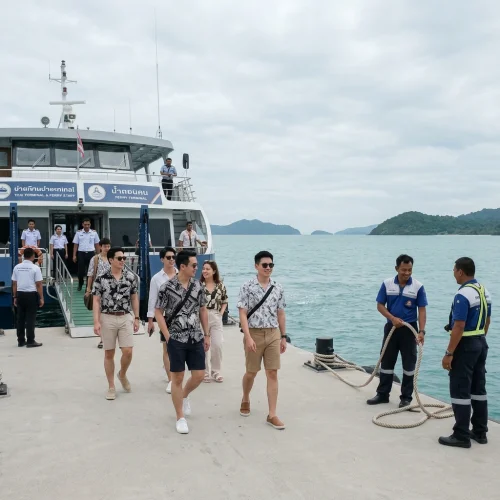
Boating Safety in Thailand
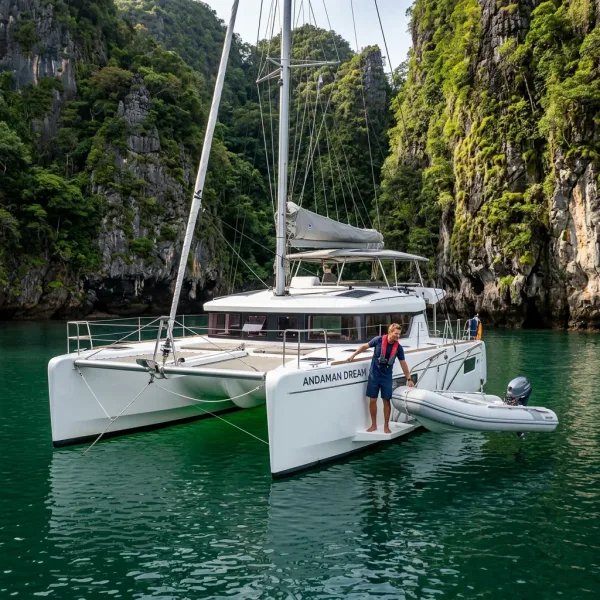
Tropical squalls across the Andaman Sea and the Gulf of Thailand can transform calm waters into fierce gale-force conditions within minutes. Navigating Thai coastal waters requires thorough preparation, whether you are skippering a bareboat catamaran out of Phuket, cruising the limestone karsts of Phang Nga Bay, or boarding a traditional wooden longtail boat for an island crossing. Variable monsoon swells, isolated coral heads, and crowded shipping lanes create a marine environment where self-reliance remains critical.
This guide outlines core maritime safety standards for UK sailors, charter clients, motor yacht skippers, and holidaymakers exploring Thai shores. You will discover statutory Thai Marine Department rules alongside international offshore seamanship practices, emergency VHF and satellite communication procedures, and direct protocols for Thai maritime rescue authorities. Practical guidance covers crisis management for hull groundings, onboard fires, and person-overboard recovery, helping you brief your crew and navigate coastal waters responsibly.

Safety Equipment: Legal Standards versus Best Practice
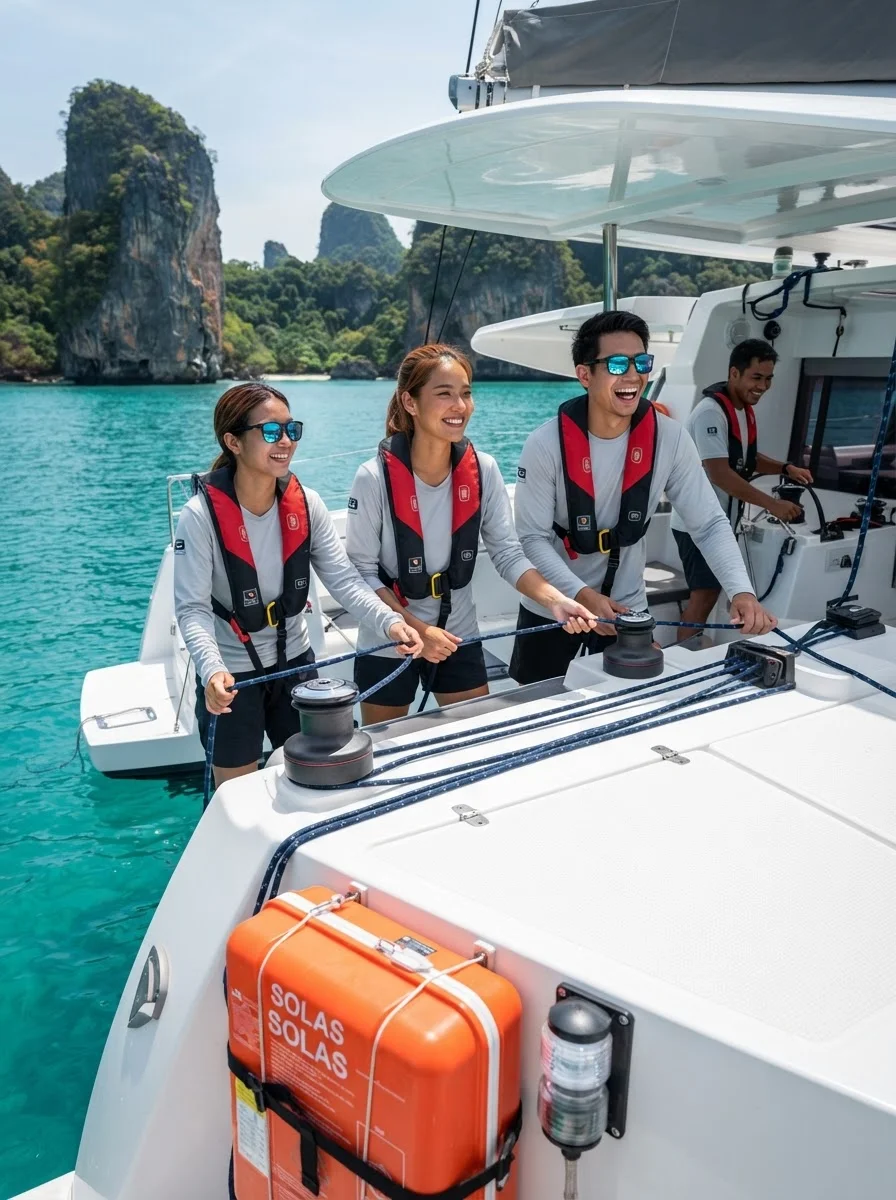
Thailand's Marine Department enforces statutory equipment rules for commercial passenger craft, yet recreational skippers must hold their vessels to higher offshore standards. By law, every commercial passenger craft—from Rassada Pier catamarans to Railay Beach longtails—must provide an approved lifejacket for every passenger, and wearing them is mandatory during transit. Operators must also carry functional dry-powder fire extinguishers, flares, and emergency buoyant apparatus. However, standard commercial lifejackets are bulky 100-Newton foam vests designed for coastal survival rather than active deck work.
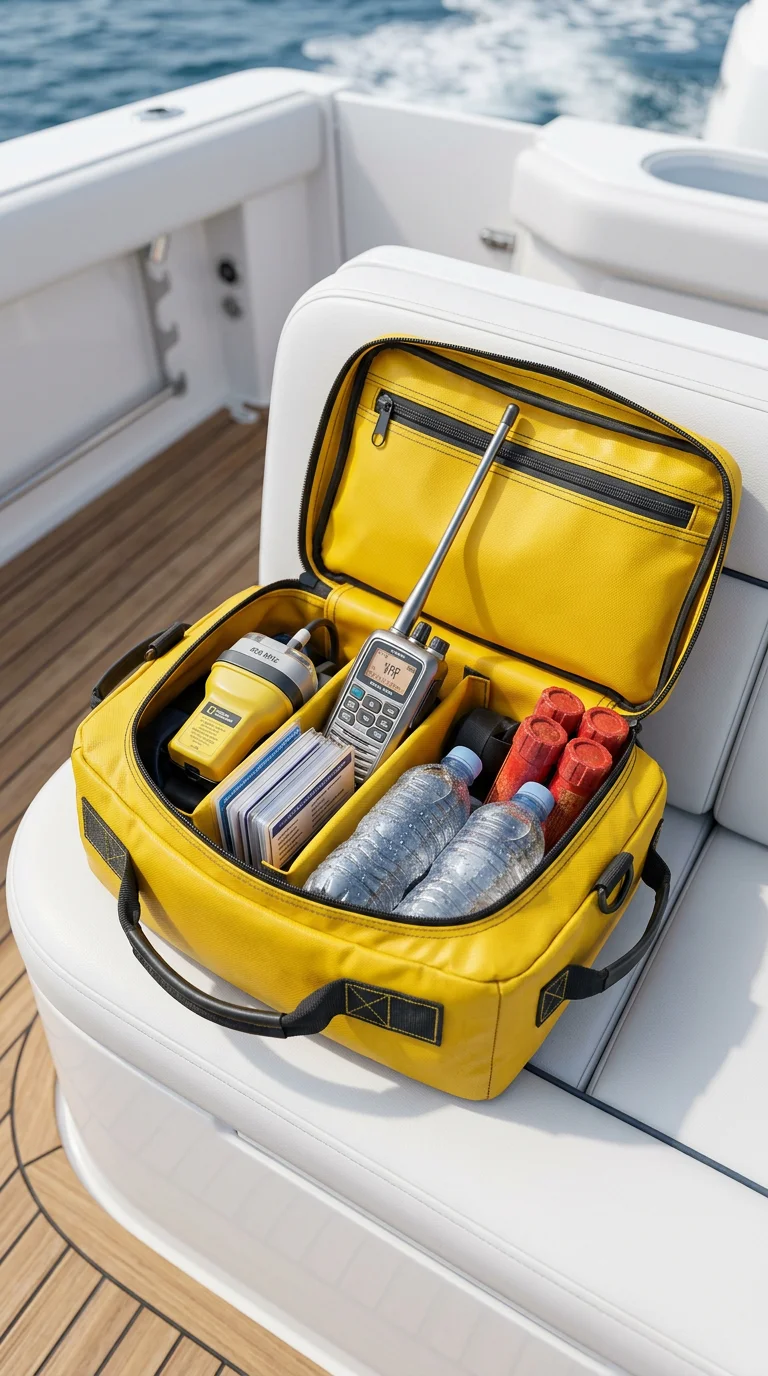
For private yachts and bareboat charters, Thai maritime authorities require valid vessel registration, functioning navigation lights, and third-party liability insurance, which marinas across Phuket and the Gulf of Thailand enforce for berthing. Offshore cruising demands higher specifications. Recreational crews should carry CE- or ISO-certified 150N or 275N automatic inflatable lifejackets fitted with crotch straps, spray hoods, and personal locator beacons. A dedicated grab bag should contain a 406 MHz EPIRB or Personal Locator Beacon registered with Cospas-Sarsat, red parachute rockets, handheld flares, buoyant smoke, an offshore first-aid kit, and softwood bungs for through-hull fittings. Inspect each inflatable lifejacket's CO2 cylinder for corrosion and correct seating before casting off.
Before booking a charter or boarding a private yacht in Thai waters, verify that onboard safety gear meets international offshore standards rather than baseline statutory minimums.
| Equipment Category | Commercial Vessel Legal Mandate (Thai Marine Dept) | Recreational / Charter Offshore Best Practice | Practical Inspection Check |
|---|---|---|---|
| Personal Flotation | 100N foam lifejacket per registered passenger seat | 150N or 275N inflatable lifejacket with crotch strap and light | Check CO2 cylinder seating, fabric tears, and whistle attachment |
| Distress Signalling | Red handheld flares and buoyant smoke on coastal craft | 4 red handheld flares, 4 parachute rockets, 2 orange smoke markers | Verify manufacture dates stamped on casing; discard if expired |
| Life Raft / Buoyancy | Fixed buoyant apparatus or SOLAS float pads for passenger quota | ISO 9650-1 offshore canister life raft with hydrostatic release | Check service certificate date, painter line security, and cradle pins |
| Fire Fighting | Handheld dry powder extinguishers in engine space and saloon | Automatic engine-bay extinguisher plus multiple 2kg dry powder units | Inspect pressure gauges in green arc; invert to prevent powder caking |
| Location Beacons | AIS mandatory on passenger vessels carrying over 12 people | Float-free 406 MHz EPIRB and personal AIS MOB beacons on lifejackets | Run battery self-test; confirm MMSI and national registry validity |
Emergency Communications: VHF Protocols, Satellites, and Thai Rescue Lines
Thailand's search-and-rescue network links international maritime conventions with domestic command centres. Operational authority across Thai waters rests with the Thai Maritime Enforcement Command Centre, which coordinates naval patrol craft, search helicopters, and surface vessels alongside the Royal Thai Navy, the Marine Police, and the Marine Department.
Maintain a continuous listening watch on VHF Channel 16 (156.8 MHz) whenever underway. If your vessel is equipped with Digital Selective Calling, ensure the unit is connected to an active GPS feed on Channel 70 (156.525 MHz). In a life-threatening crisis, hold the red distress button for five seconds to broadcast your Maritime Mobile Service Identity and coordinates, then transmit a spoken MAYDAY on Channel 16. State the distress call three times, your vessel name, call sign, coordinates or distance from a charted landmark, nature of the emergency, and the number of persons on board. For non-life-threatening situations, such as an engine failure drifting clear of hazards, use the PAN PAN urgency prefix instead.
Marine VHF signals depend on line-of-sight propagation, generally restricting communication to 15 to 25 nautical miles. High limestone karsts around Phang Nga and Krabi cast severe radio shadows, while longer crossings in the Gulf of Thailand or passages to the Similan Islands venture far beyond shore stations. Vessels heading offshore should carry a registered 406 MHz Emergency Position Indicating Radio Beacon or Personal Locator Beacon, which transmits distress alerts via satellite to the Bangkok Rescue Coordination Centre. Two-way satellite messengers provide reliable tracking and non-emergency messaging when operating outside mobile coverage.
When within cellular range near the coast or inhabited islands, keep key emergency numbers saved in mobile devices. Dial 1465 to reach the Thai Maritime Enforcement Command Centre national operations room for search-and-rescue dispatch. Contact the Marine Department on 1199 for navigation obstructions, collisions, or harbour emergencies. If transferring an injured crew member ashore, dial 1669 to arrange an ambulance and paramedic team at the destination pier. For English-language translation or liaison during a coastal incident, call the Tourist Police on 1155.
Plan a Central Thailand trip through Ayutthaya, Kanchanaburi, Lopburi and Amphawa, with current costs, transport advice and seasonal guidance.
Thailand Maritime Hazards: Squalls, Monsoons, Reefs, and Unlit Vessels
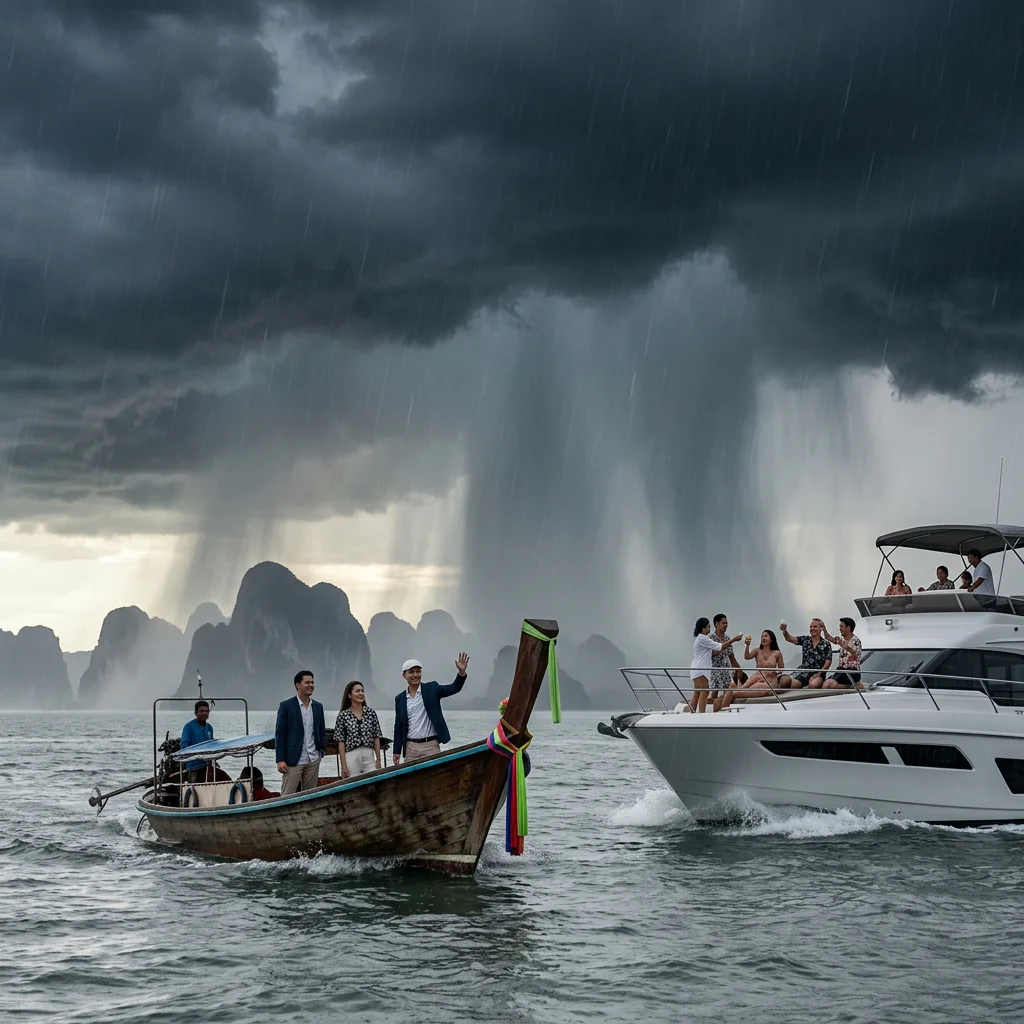
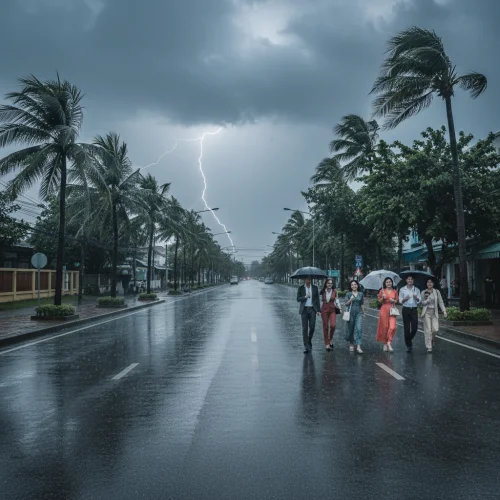
Cruising Thai waters exposes skippers to sudden tropical weather phenomena, shifting monsoonal currents, and dense, unlit maritime traffic. The southwest monsoon dominates from May to October, driving large ocean swells and torrential rain onto western exposures in Phuket, Krabi, and Trang. Conversely, the northeast monsoon runs from November to April, creating generally benign sailing across the Andaman Sea while occasionally kicking up rough seas across the western Gulf of Thailand around Koh Samui and Koh Tao between November and January. Convective squall lines represent Thailand's most immediate weather danger. A dark line of cumulonimbus clouds approaching from windward can cause ambient wind speeds to jump from 6 knots to over 40 knots within minutes, accompanied by blinding tropical downpours that reduce visibility to less than thirty metres. Beyond weather, navigation requires constant vigilance against uncharted coral bommies and extensive networks of bamboo fish traps marked only by faded plastic bags or wooden stakes. Night navigation demands extreme caution. Local squid boats frequently display blinding green and white light arrays that destroy night vision, while smaller wooden longtails and coastal trawlers regularly transit open channels without navigation lights or AIS transponders. Maintain an active radar watch, post dedicated lookouts, and adjust passage planning so that shallow reef anchorages are entered only under high overhead sunlight.
| Navigational Hazard | Peak Risk Season / Location | Operational Impact on Vessel | Mitigation Strategy |
|---|---|---|---|
| Tropical Convective Squall | May to October (monsoon transitions) | Wind shift to 40+ knots, zero visibility, violent chop | Drop sail area early; batten down hatches; start engine before squall hits |
| Submerged Coral Bommies | Year-round; shallow bays in Krabi and Trang | Severe hull penetration, keel shearing, rudder loss | Enter reef lagoons only with high sun overhead; post a forward bow lookout |
| Unmarked Fishing Gear | Coastal waters, Phang Nga Bay, Gulf of Thailand | Propeller fouling, engine stall, damaged shaft seals | Keep line cutters on shafts; navigate with standoff distance from wooden stakes |
| Unlit Night Traffic | Year-round; inter-island passages | High-speed collision risk from local wooden craft | Stand off popular fishing grounds after sunset; run radar and lookouts |
| Extreme Tidal Currents | Full and new moon springs in Phang Nga and Koh Lanta | Up to 4 knots current through narrow island cuts | Consult local tide tables; avoid anchoring in high-velocity channels |
Emergency Checklists: Managing Critical Incidents at Sea
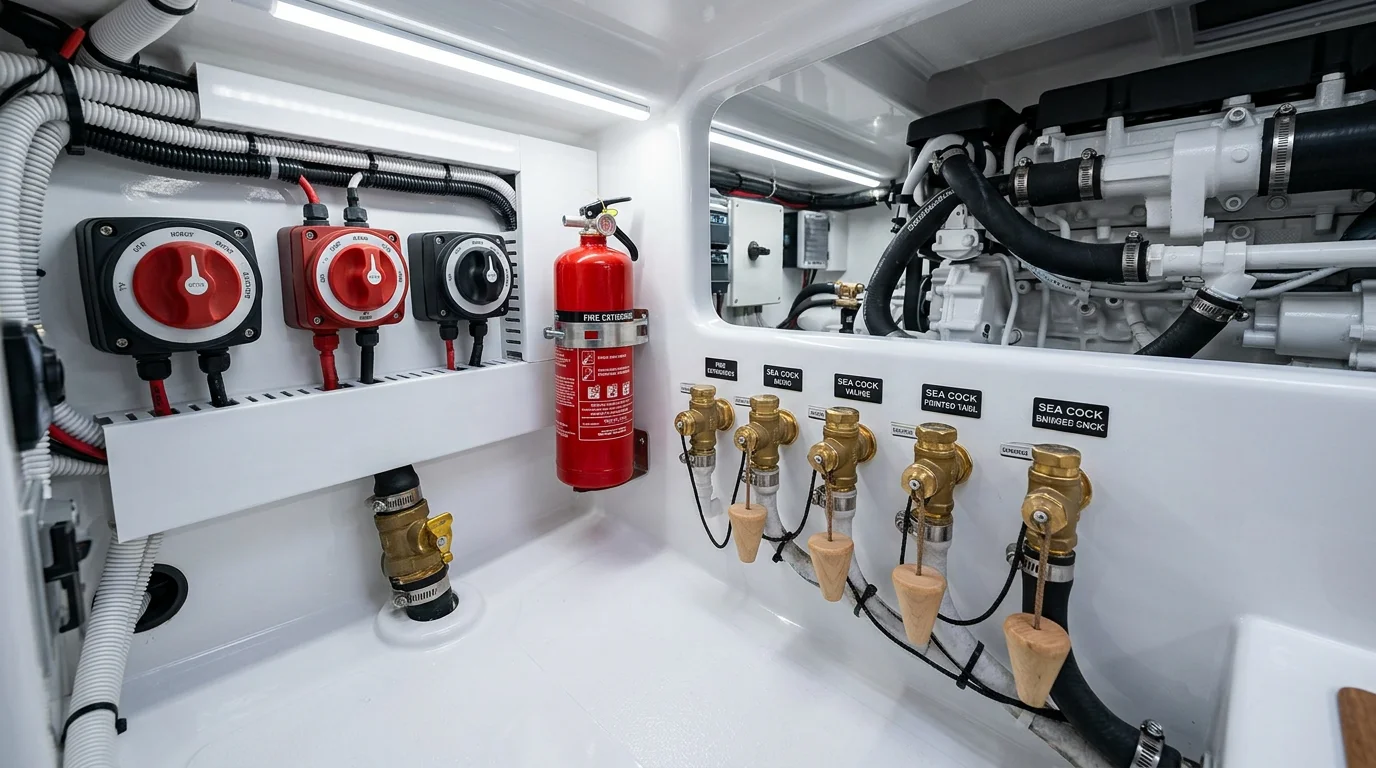
Clear, immediate action preserves life and prevents the loss of a vessel when an emergency develops in tropical waters. Panic poses the greatest danger during critical incidents at sea. Rehearsing emergency procedures before leaving the dock ensures every crew member understands their role and knows where safety gear is stowed. Inspecting your vessel's safety equipment and communications gear before departure provides the foundation for managing crises at sea.
Grounding response
1. Shift engine throttle to neutral immediately to protect running gear and prevent sucking sand or coral debris into cooling intakes.
2. Check crew and passengers for impact injuries, then have everyone don lifejackets.
3. Inspect bilges, skin fittings, keel bolts, and rudder stocks for structural damage or water ingress.
4. If water enters the hull, start bilge pumps and broadcast a Mayday on VHF Channel 16.
5. If the hull remains intact, check tidal conditions before powering off; a receding tide can leave a vessel stranded on coral heads.
Flooding and hull ingress
1. Engage electric bilge pumps and man the manual bilge pump immediately.
2. Trace the leak by inspecting seacocks, raw-water hoses, transducer housings, and through-hull valves.
3. Hammer tapered softwood bungs into failed through-hull apertures to stem water flow.
4. Broadcast an urgent Pan-Pan or Mayday on VHF Channel 16, or alert the Thai Maritime Enforcement Command Centre on 1465.
5. Muster the crew, bring the emergency grab bag on deck, and prepare the life raft if flooding exceeds pumping capacity.
Man overboard recovery
1. Shout the alarm and immediately throw a horseshoe lifebuoy and floating dan buoy towards the casualty.
2. Press the chartplotter man-overboard button to record coordinates.
3. Designate one crew member to point continuously at the person in the water.
4. Turn back towards the casualty using an engine turnaround, such as a Williamson turn in poor visibility, keeping lines clear of the propeller.
5. Approach from downwind, shift the engine into neutral before reaching the casualty, and recover them using a boarding ladder or sling.
Fire response
1. Raise the alarm and steer the vessel to place the fire downwind, keeping smoke and flames away from crew and living spaces.
2. Shut down engines, generators, and master battery switches, and turn off the gas supply at the cylinder.
3. Tackle the blaze with dry-powder or carbon dioxide extinguishers, discharging into the engine compartment through its fire port without lifting the hatch.
4. Broadcast a Mayday on VHF Channel 16 with your position.
5. Muster all crew on deck wearing lifejackets, staying upwind with the life raft ready for rapid launch.
Skipper Responsibilities, Crew Briefings, and Choosing Charter Operators
Thorough vessel handovers and passenger briefings prevent avoidable maritime mishaps before leaving the pontoon. Whether taking the helm of a bareboat charter yacht in Phuket or boarding a commercial day-tour boat in Krabi, confirm that the vessel displays valid Marine Department registration and carries up-to-date passenger liability insurance. Commercial speedboats and longtails frequently stock standard adult foam vests rather than paediatric sizes, so families travelling with young children should verify that properly fitted child lifejackets are physically present aboard before departure.
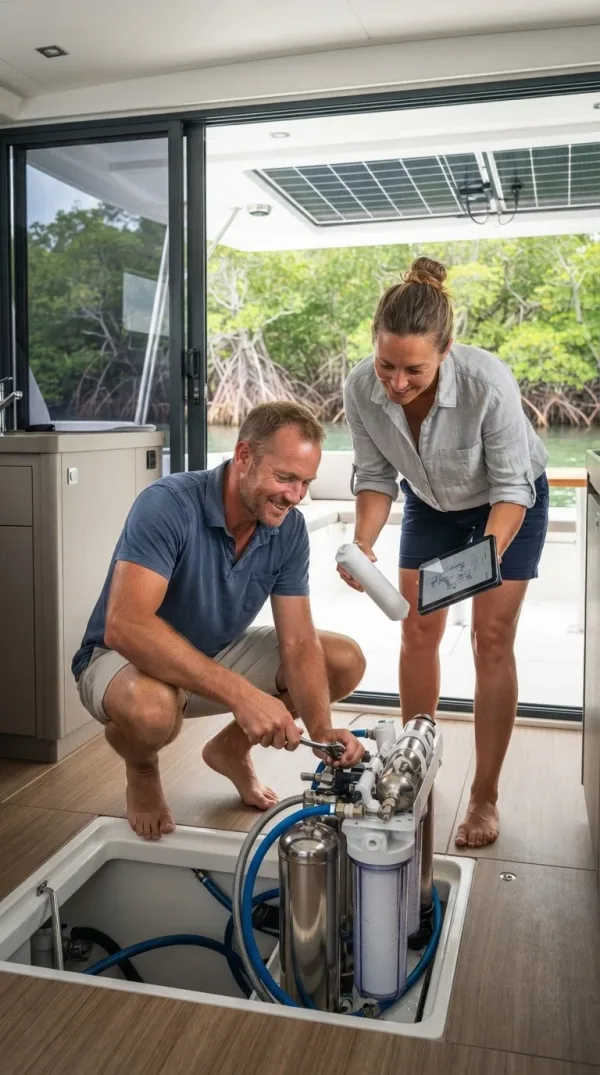
For bareboat charterers, take time during the technical handover to inspect critical machinery alongside the base technician. Verify the location and operation of raw-water seacocks, fuel shut-off valves, bilge pump float switches, windlass circuit breakers, and spare engine belts. Do not accept a vessel until the charter company rectifies missing emergency gear or non-functioning bilge alarms.
Before slipping your lines, deliver a structured crew briefing. Show every passenger how to secure their lifejacket, point out fire extinguisher mountings, explain the distress procedure on VHF Channel 16, and assign defined roles for mooring and anchoring. At sea, the skipper holds full legal and operational responsibility: monitor daily coastal bulletins from the Thai Meteorological Department, enforce strict sobriety at the helm, and adjust passages early whenever conditions deteriorate.
Where to Find Reliable Anchorages and Rescue Infrastructure in Thailand
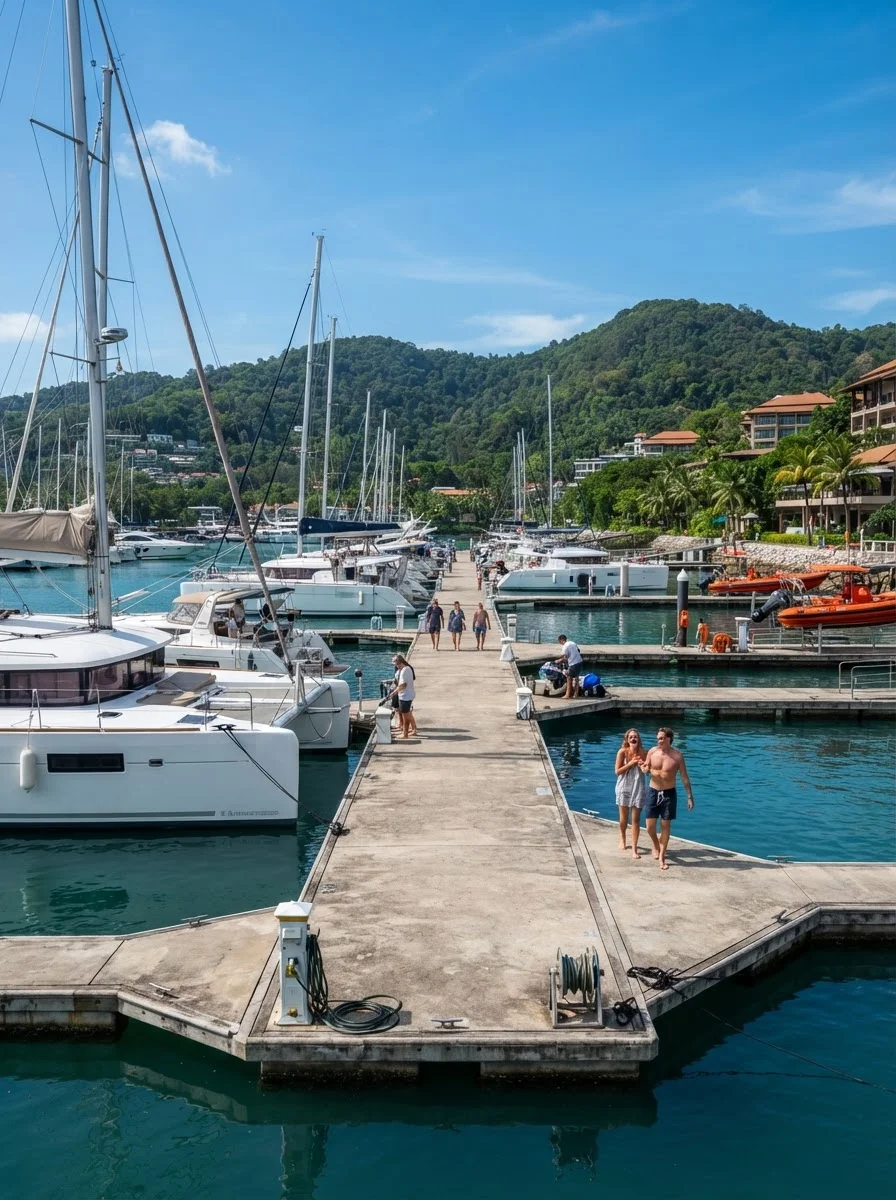
Thailand's coastal waters provide well-equipped marina hubs with vessel haul-out facilities, repair yards, and direct links to coastal emergency services. In the Andaman Sea, Phuket acts as the principal marine base. Facilities along its sheltered eastern coastline—including Yacht Haven Marina in the north, Ao Po Grand Marina, and Phuket Boat Lagoon—supply fuel docks, engineering support, and serviced berths. These marinas monitor VHF channels and liaise directly with the Royal Thai Navy Third Naval Area Command at Cape Panwa and the Marine Police detachment at Phuket Port.
Across the Gulf of Thailand, Ocean Marina Jomtien near Pattaya operates as the primary full-service base for northern waters. In the lower Gulf, Koh Samui, Koh Phangan, and Koh Tao lack purpose-built recreational marinas; vessels rely on designated mooring buoys or anchorages, steering clear of busy commercial ferry piers such as Nathon and Thong Sala.
Cruising grounds in Phang Nga Bay, such as the karst-sheltered waters around Koh Hong and Koh Phanak, supply dependable shelter from south-westerly monsoonal swells year-round. Conversely, open-sea anchorages around Koh Phi Phi Don and the Similan Islands become dangerously exposed when westerly winds freshen, requiring skippers to retreat to protected leeward bays or mainland-facing anchorages. Starting an Andaman charter from eastern Phuket ensures immediate access to sheltered cruising and reliable rescue support.
Costs and Budgeting
Managing safety on board involves realistic budgeting for gear purchases, equipment rentals, communications, and charter insurance. Personal safety equipment is readily available from marine chandleries in Phuket and Pattaya, while regional charter fleets provide optional offshore safety packs for extended passages. Qualified bareboat charterers typically face refundable security deposits between 100,000 THB (approx £2,325) and 250,000 THB (approx £5,815), held as a card pre-authorisation at check-in. Purchasing a daily damage waiver significantly reduces this liability and protects against incidental losses such as fouled ground tackle. For passages beyond coastal cellular coverage or into remote marine parks like the Surin Islands, factoring in satellite communication hardware and rolling airtime is a sensible operational outlay.
| Option | Cost (THB) | Cost (GBP approx) | Notes |
|---|---|---|---|
| Automatic Inflatable Lifejacket (150N) | 3,800–6,500 THB | £88–£151 | Re-arming kit with 33g CO2 cylinder costs 900 THB (£21) |
| Handheld Waterproof Marine VHF Radio | 4,200–8,500 THB | £98–£198 | Standard 5W/6W floating transceiver with Channel 16 scanning |
| Satellite Tracker / SOS Device | 14,000–18,500 THB | £325–£430 | Plus monthly rolling satellite subscription approx 850 THB (£20) |
| Bareboat Charter Safety Excess Waiver | 1,500–2,800 THB / day | £35–£65 / day | Reduces charter damage liability and covers emergency anchor loss |
| Coastal Marine Medical First-Aid Kit | 2,200–4,500 THB | £51–£105 | Waterproof container with ocean trauma dressings and burn care |
| Emergency Coastal Towing Assistance | 12,000–35,000 THB | £279–£814 | Commercial fee if non-government rescue boat is dispatched |
What To Know Before You Go
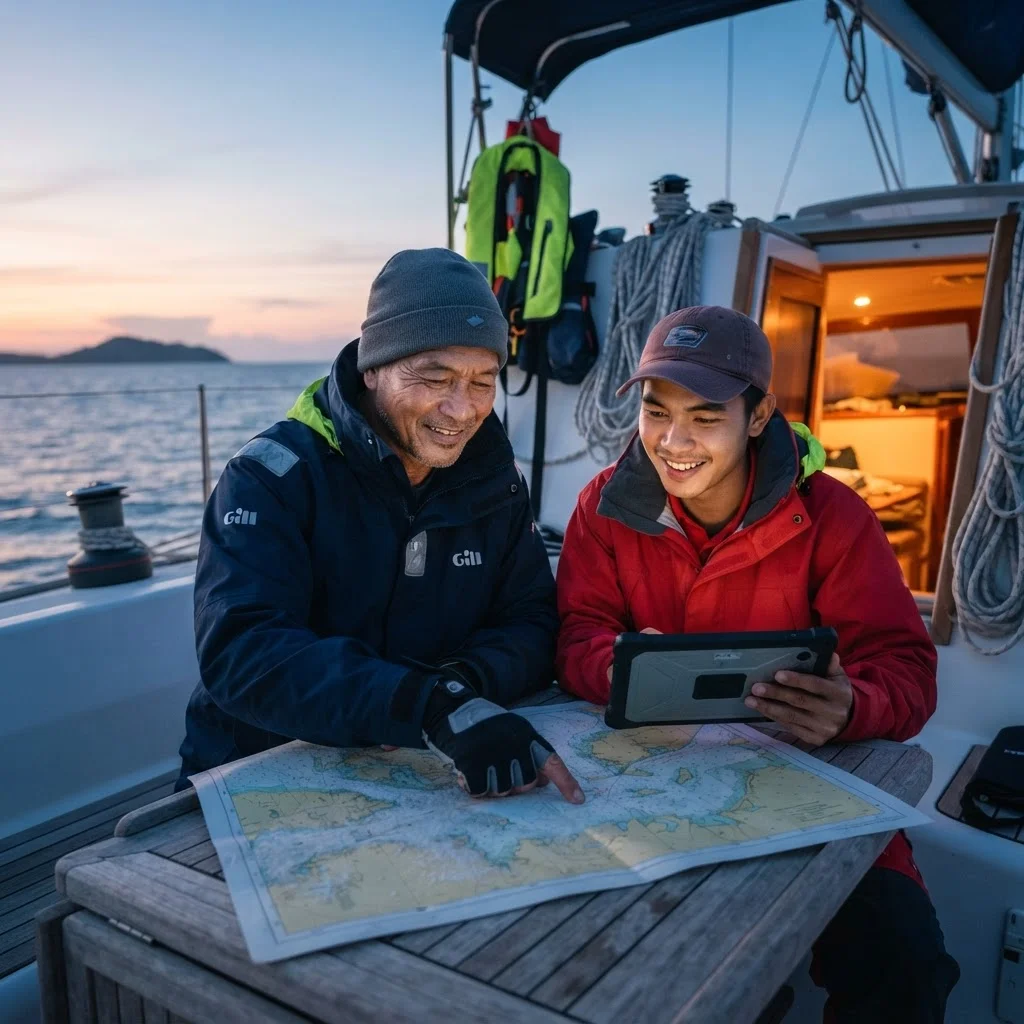
While Thai regulations require commercial ferries and speedboats to carry lifejackets, operators routinely supply adult-sized foam vests. These lack crotch straps and collar floatation, offering minimal protection for small children and toddlers. If travelling with young children, pack your own certified lifejackets rather than relying on onboard stock.
Mobile phone coverage drops rapidly once you leave coastal waters. Cellular reception fades within a few nautical miles of the mainland or major islands, making smartphone navigation apps unreliable in open passages across the Andaman Sea or Gulf of Thailand. Keep dedicated nautical chartplotters and satellite messengers active.
Public mooring buoys maintained across marine national parks protect vulnerable reefs, but their condition varies considerably. Submerged ropes, shackles, and anchoring blocks suffer heavy seasonal wear. Before securing your vessel overnight or in freshening winds, inspect buoy lines in the water to prevent parting lines and accidental grounding on coral reefs, where anchoring damage carries steep legal penalties.
Skippers must also remember that operating any vessel under the influence of alcohol or narcotics is prohibited under Thai maritime law. While routine at-sea breath testing is uncommon, navigating while intoxicated invalidates marine insurance coverage and exposes the skipper to criminal prosecution in the event of an incident.
Practical Tips
Inspect your vessel's anchor windlass and ground tackle before casting off. Many Thai anchorages feature loose sand interspersed with isolated coral heads, known as bommies. Laying a chain scope of at least 5:1 or 7:1 keeps the pull horizontal and prevents dragging during squalls, while dropping hook strictly in clear sand protects coral and avoids jammed rodes.
Download offline marine navigation charts onto two separate mobile devices to back up your primary chartplotter. Tropical electrical storms strike quickly, and lightning strikes or electrical spikes can disable on-board instruments without warning. Having independent, battery-powered charts ensures you maintain navigation in remote island passages.
Brief passengers to step onto a dock or tender only when lines are secured and engines are idling in neutral. Uncontrolled swells and boat wash at concrete island piers cause severe crush injuries and fractures when people jump prematurely. Keep a sharp rigging knife and deck gloves accessible in the cockpit; stray monofilament lines and netting often float near Thai fishing harbours, and cutting a fouled line swiftly prevents a stalled propeller.
Check the Thai Meteorological Department's marine shipping forecasts and radar twice daily. Postponing an open-water crossing by a few hours often avoids navigating through dangerous squall lines. Pack several bottles of white vinegar in your first-aid kit. Box jellyfish inhabit coastal waters in both the Andaman Sea and the Gulf of Thailand, especially during rainy months. Official Thai health guidance advises pouring vinegar over stings continuously for at least 30 seconds to neutralise unfired stinging cells before seeking hospital care, and refraining from rinsing with fresh water.
Routine seamanship precautions turn tropical coastal cruising into a relaxed journey rather than a crisis. If you are organising a bareboat charter or skippered sailing trip in Thai waters, booking through vetted operators ensures your vessel meets proper safety and equipment standards before you leave port.
Quick Reference Table
| Item | Detail | Notes |
|---|---|---|
| Maritime Rescue Hotline | Dial 1465 (Thai-MECC) | National operations room for maritime search-and-rescue dispatch |
| Harbour & Marine Emergencies | Dial 1199 (Marine Department) | Report navigational hazards, collisions, or harbour incidents |
| Medical & Shore Ambulance | Dial 1669 | Arranges paramedics and an ambulance at destination piers |
| Tourist Police Assistance | Dial 1155 | English-speaking liaison and translation support for coastal incidents |
| Distress Radio Frequencies | VHF Channel 16 (156.8 MHz) / DSC Channel 70 (156.525 MHz) | Continuous listening watch required; use Channel 16 for Mayday and Pan-Pan |
| Inflatable Lifejackets (150N) | 3,800–6,500 THB (£88–£151) | Recommended offshore standard; 33g CO2 re-arming kits cost approx 900 THB (£21) |
| Handheld Waterproof Marine VHF | 4,200–8,500 THB (£98–£198) | Floating 5W/6W transceiver with Channel 16 scanning capability |
| Satellite Tracker / SOS Device | 14,000–18,500 THB (£325–£430) | Hardware cost; rolling monthly satellite airtime costs approx 850 THB (£20) |
| Bareboat Charter Security Deposit | 100,000–250,000 THB (£2,325–£5,815) | Held on credit card; daily damage waivers cost 1,500–2,800 THB (£35–£65) |
| Emergency Coastal Towing | 12,000–35,000 THB (£279–£814) | Commercial fee payable if private rescue vessel is dispatched |
| Primary Weather Seasons | Southwest Monsoon (May–Oct); Northeast Monsoon (Nov–Apr) | Heavy swells hit Andaman shores May–Oct; rough seas in western Gulf Nov–Jan |
| Anchoring & Scope | 5:1 to 7:1 chain scope in clear sand | Drop hook clear of coral bommies; inspect public mooring buoys before trusting lines |
| Marine First Aid Essential | White vinegar bottles | Pour continuously for 30+ seconds over box jellyfish stings; never use fresh water |
| Official source | md.go.th | Marine Department Thailand regulations, vessel licensing, and safety notices |
| Official source | tmd.go.th | Thai Meteorological Department marine shipping forecasts and coastal weather radar |
| Website | pyhmarina.com | Yacht Haven Marina, Phuket (serviced berths, fuel dock, and repair facilities) |
| Website | aopograndmarina.com | Ao Po Grand Marina, Phuket (sheltered berths and engineering support) |
| Website | oceanmarinajomtien.com | Ocean Marina Jomtien, Pattaya (primary full-service marina in the Gulf of Thailand) |
FAQ: Boating Safety in Thailand
What is the emergency number for maritime rescue in Thailand?
What are the important emergency contact numbers for boating incidents in Thailand?
What type of lifejackets are recommended for recreational crews in Thailand?
What should families with young children check regarding lifejackets on commercial boats in Thailand?
What is the most immediate weather danger for boaters in Thailand?
What are the risks of night navigation in Thai waters?
What is the recommended first aid for box jellyfish stings in Thailand?
What is the recommended anchoring practice in Thai waters?
Is it legal to operate a boat under the influence of alcohol in Thailand?
Why should boaters carry backup navigation charts in Thailand?
Reviewed by the Thailand Guide Editorial Team • Last reviewed: 8 November 2026
This page is provided for general information only. While we aim for accuracy, details can change — please verify anything important independently before relying on it.