Yacht Maintenance in Thailand
Year-round seawater temperatures approaching 30°C in the Andaman Sea and the Gulf of Thailand trigger aggressive biofouling, allowing slime, barnacles, and tube-worms to take hold on an idle hull in just a few weeks. Combined with ambient humidity often exceeding 80 per cent, intense tropical UV exposure, and torrential monsoon downpours, the local climate subjects gelcoat, standing rigging, and shipboard systems to relentless wear.
Maintaining a cruising monohull, catamaran, or motor yacht in Thailand provides notable cost advantages, with skilled shipwright and marine engineering labour generally running 30 to 50 per cent lower than in UK or European boatyards. Realising those savings, however, requires a disciplined maintenance routine and sound local oversight. This national guide details haul-out yards, antifouling schedules, mechanical servicing, and beam-width logistics across Phuket, Krabi, and the Eastern Seaboard, helping British owners manage refits, budgets, and monsoon storage with confidence.

Tropical Climates and Vessel Degradation
Marine hulls in Southeast Asia face intense biological growth rarely encountered in European waters. With sea temperatures consistently hovering between 28°C and 31°C alongside rich coastal runoff, tropical waters accelerate the adhesion of hard calcareous fouling, tubeworms, and micro-algae. An unprotected hull accumulates heavy barnacle growth within thirty days, obstructing intakes and choking raw-water strainers. Above deck, relentless ultraviolet radiation breaks down canvas, sail stitching, running rigging, and exterior teak. Fibreglass gelcoats oxidise rapidly, turning chalky without a cut and polish using high-grade polymer sealant every six months. Below deck, relative humidity routinely exceeds 80 percent, feeding black mould across headliners, upholstery, and joinery whenever ventilation stalls. Warm salt crystals trapped beneath washers also cause crevice corrosion in 316-grade stainless steel by starving fittings of oxygen. Monsoon downpours pool against coamings, finding micro-fissures and rotting balsa or foam deck cores, whilst unattended bilges risk flooding if float switches fail.
| Environmental Factor | Direct Marine Risk | Preventative Protocol | Inspection Frequency |
|---|---|---|---|
| Warm Seawater (28°C–31°C) | Calcareous shell adhesion, clogged intakes | High-copper antifouling, in-water diver scrubs | Monthly in-water scrubs; annual haul-out |
| Intense Ultraviolet Radiation | Gelcoat oxidisation, sail thread breakdown | Polymer marine sealant, UV sail covers | Polishing every six months; weekly washdowns |
| High Ambient Humidity (75%–90%) | Mildew, joinery rot, electrical corrosion | Marine dehumidifiers, solar extraction vents | Continuous airflow; weekly cabin checks |
| Tropical Monsoon Rain | Deck core delamination, flooded bilges | Hatch seal re-bedding, cleared scuppers | Pre-monsoon resealing; fortnightly checks |
Tailoring maintenance routines to equatorial humidity and intense rainfall protects against accelerated vessel depreciation in Thai waters.
Routine Servicing and Critical Shipboard Systems
Marine propulsion diesels and auxiliary generators in Thai waters operate under punishing thermal loads, drawing seawater that frequently exceeds 30°C. Raw-water pump impellers soften and shed vanes rapidly, while heat exchangers accumulate calcium carbonate scale that degrades cooling efficiency. Wet-exhaust mixing elbows corrode at accelerated rates from hot brine, and anti-siphon loop valves must be cleaned regularly to prevent catastrophic back-siphoning into engine cylinders after shutdown.
Diesel fuel management is equally critical. Tropical humidity drives relentless condensation on fuel tank walls, creating an ideal breeding layer for microbial diesel bug that clogs primary fuel lines. Fitting switchable twin fuel-water separators with vacuum gauges allows you to isolate and swap filter elements underway without bleeding the injection pump. Regular biocide dosing and frequent water draining at the separator bowl are sensible precautions.
Air-conditioning raw-water strainers require weekly inspection. Marine growth, silt, and jellyfish rapidly choke intake baskets, triggering high-pressure compressor cut-outs and risking burnt-out circulation pumps. For electrical systems, house battery banks—whether AGM or lithium—must sit in well-ventilated spaces, as engine-room heat severely shortens their operating lifespan. Solar arrays also need unimpeded airflow behind panels and around charge controllers to prevent thermal throttling under the equatorial sun.
Plan a Central Thailand trip through Ayutthaya, Kanchanaburi, Lopburi and Amphawa, with current costs, transport advice and seasonal guidance.
Haul-Outs, Antifouling and Below-Waterline Works
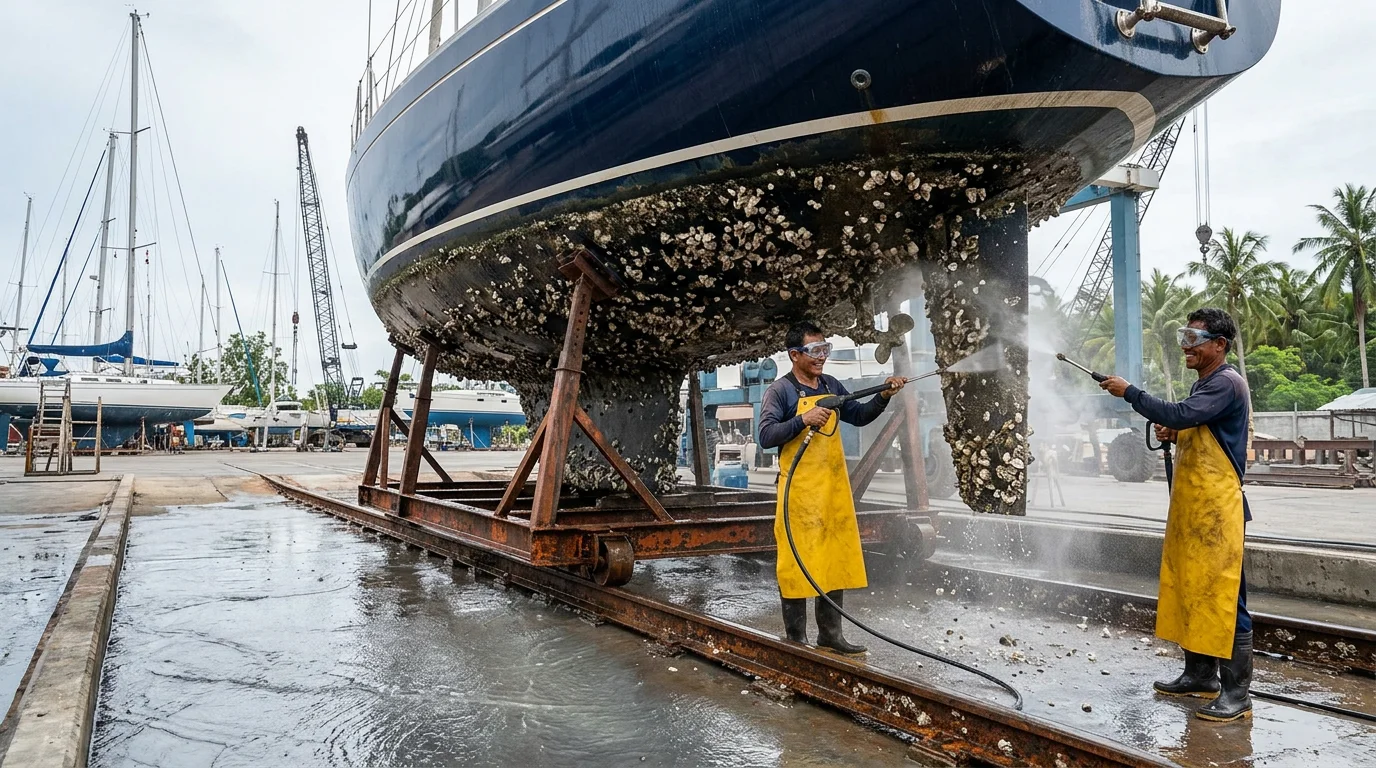
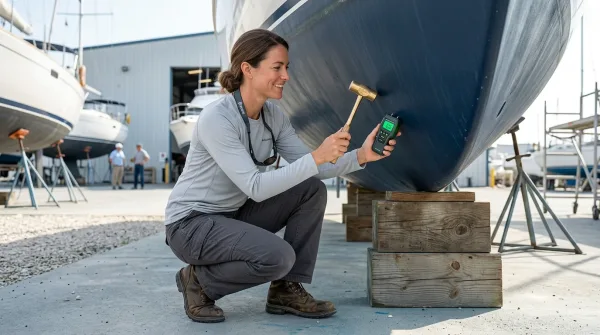
Lifting your vessel in Thailand exposes the severe toll tropical seawater takes on running gear and hull coatings. Yard teams immediately apply high-pressure water blasting at 250 to 300 bar to strip weed, barnacles, and tube worms before marine growth bakes hard in the tropical heat. Once the hull dries, check thoroughly for osmotic blistering, rudder stock play, and cutless bearing wear, which accelerates rapidly here due to abrasive silt and suspended sand in river-mouth yards.
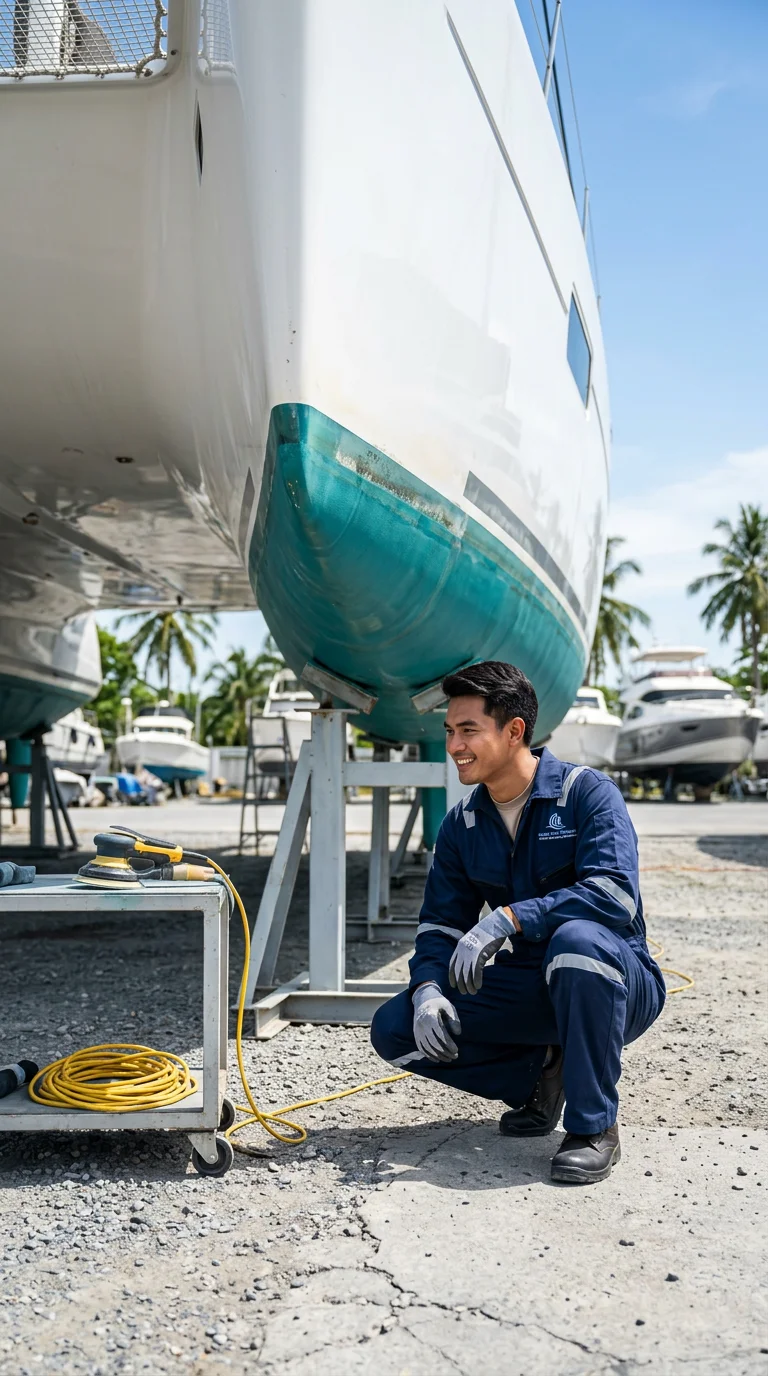
Copper-based self-polishing copolymer antifouling remains the standard choice for cruising yachts, applied in two full coats with an extra pass around the waterline, rudder leading edges, and keel bulbs. Sacrificial anodes deplete quickly in warm, high-salinity Thai waters; zinc anodes often dissolve within eight to ten months, making replacement at every annual lift sensible practice. Aluminium saildrive legs require strict isolation, coated only with dedicated copper-free, aluminium-compatible barrier primers and paints to prevent destructive galvanic pitting. Treating propellers, shaft brackets, and thruster blades with silicone foul-release systems such as Propspeed limits cavitation erosion and maintains motoring efficiency. Scheduled hardstand days also provide the only window to dismantle skin fittings, servicing or replacing deteriorating through-hull valves before launching.
| Antifouling / Coating Type | Typical Durability in Thai Waters | Ideal Hull Material & Application | Cost Indication for 45ft Yacht |
|---|---|---|---|
| High-Copper Self-Polishing Copolymer | 12 to 18 months | Fibreglass & lead/steel keels; active cruisers | 45,000 THB – 75,000 THB (£1,000 – £1,670) |
| Hard Matrix Antifouling | 8 to 12 months | Fast motorboats, aluminium legs (copper-free only) | 40,000 THB – 65,000 THB (£890 – £1,445) |
| Silicone Foul-Release (Propellers/Gear) | 18 to 24 months | Running gear, bronze propellers, saildrive hubs | 15,000 THB – 25,000 THB (£335 – £555) |
| Epoxy Moisture Barrier Primer | 5 to 7 years | Osmosis prevention on peeled or sanded GRP hulls | 60,000 THB – 110,000 THB (£1,335 – £2,445) |
Thorough hull preparation, adequate coating thickness, and fresh anodes help safeguard underwater running gear through another demanding Andaman or Gulf cruising season.
Rigging, Sails and Deck Hardware
Equatorial solar radiation and airborne salt degrade yacht canvas, cordage, and standing rigging far faster than in European waters. Conventional 1x19 stainless-steel standing rigging is particularly vulnerable at swaged terminal barrels, where trapped saltwater and oxygen depletion drive hidden crevice corrosion and stress-corrosion cracking. Tropical riggers typically recommend professional aloft inspections every two years, employing magnification or dye-penetrant testing on swage shoulders and turnbuckles to catch hairline fissures before a monsoon squall induces catastrophic failure.
Running rigging also suffers from UV exposure and crystallised salt, which stiffens polyester halyards and grinds through sheave boxes; soaking lines periodically in freshwater with a touch of fabric softener flushes out abrasive grit. For sails, roller-furling headsails require sacrificial UV strips stitched with solar-resistant PTFE thread (such as Gore Tenara); standard polyester thread rots within two seasons under Thailand's relentless sun. Deck gear needs methodical freshwater rinsing and corrosion management. Furler drum bearings seize quickly if salt crusts inside the race, while stainless fasteners in aluminium mast tracks demand isolating paste to arrest galvanic reactions. Winches should be stripped and solvent-cleaned annually, applying light grease to gear teeth and light machine oil to pawls—heavy grease bakes into sticky sludge under 35°C deck temperatures, causing pawls to jam.
Monohulls, Catamarans and Wide-Beam Vessels
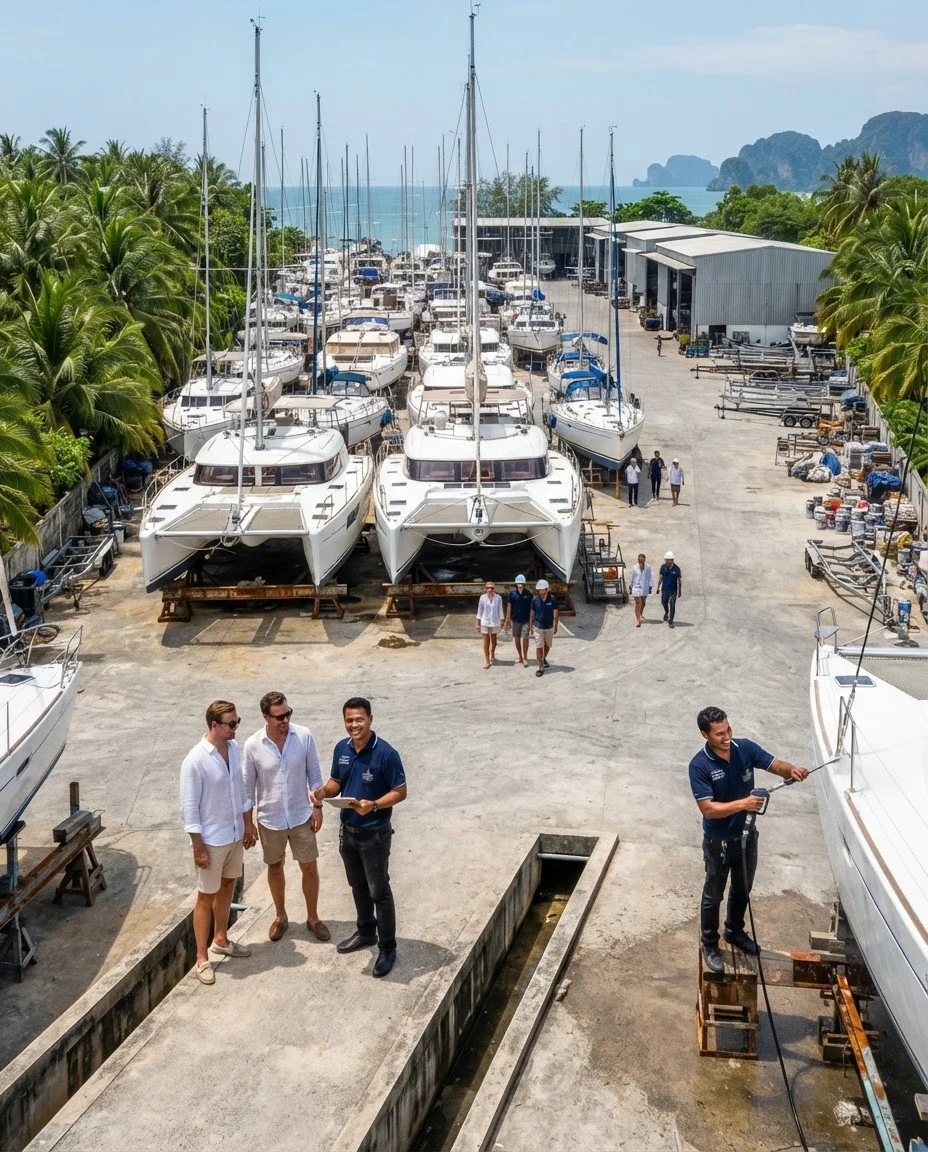
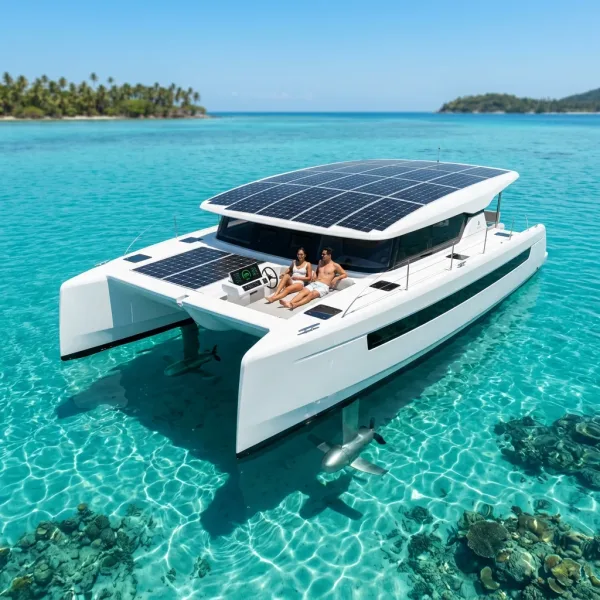
Vessel beam width is the single most restrictive logistical variable when planning yacht maintenance across Thailand. Monohulls easily slip into conventional 50-tonne to 80-tonne marine travel hoists with well widths under 6 metres. Modern cruising catamarans—often carrying beam measurements between 7 and 10 metres—cannot access standard hoist bays and require specialist lifting solutions. Catamarans also double your maintenance equation: twin marine diesels, dual saildrives, duplicate steering links, two rudders, and expansive hull surface areas. Yards charge hardstand storage by total footprint; catamarans incur surcharges of 50 to 100 percent over monohull rates to account for the yard space they occupy. Wide multihulls require specialised hydraulic trailer systems like the 60-tonne Roodberg trailer at Phuket Premier Boatyard or the 38-tonne submersible trailer at Port Takola in Krabi, which eliminate hoist strap compression against fragile composite bridgedecks. Motor yachts, conversely, introduce complex hydraulic tender lifts, high-output electronic diesel systems, trim tabs, and larger generators that require marine electricians familiar with digital CAN bus networks. Understanding your vessel’s displacement, beam, and underwater profile ensures you select a yard with matching technical gear.
| Vessel Type | Primary Maintenance Priorities | Haul-Out Considerations | Space / Labour Cost Factor |
|---|---|---|---|
| Monohull Sailing Yacht | Keel bolt checks, single shaft or saildrive, mast step | Handled by standard travel hoists across all major yards | Baseline standard rate (1.0x) |
| Cruising Catamaran | Twin saildrives, bridgedeck stress points, escape hatches | Requires wide-beam hydraulic trailers or railway slipways | 1.5x to 2.0x standard rate |
| Flybridge Motor Yacht | High-output twin diesels, hydraulic steering, trim systems | Heavy displacement travel lifts (60 to 120 tonnes required) | 1.4x to 1.8x standard rate |
| Wooden / Classic Yacht | Seam caulking, worm shoe protection, timber hull rot | Requires specialist shipwrights and soft-sling cradles | Custom quotation basis |
Factoring your beam width and mechanical footprint into boatyard selection prevents costly transit diversions when service dates arrive.
Preventative Maintenance, Layups and Remote Project Management
Managing yacht refits or seasonal layups from the UK demands structured oversight and reliable local assistance. Preparing a vessel for the southwest monsoon, which runs from May to October, requires taking down all sails, running rigging, and deck canvas for thorough fresh-water washing and indoor storage. Lubricate and exercise every seacock, service the engine with fresh oil, flush raw-water circuits with fresh water, and treat fuel tanks with biocide additives to prevent microbial contamination. On the hardstand, secure hulls to dedicated ground anchors using heavy-duty ratchet straps against monsoon squalls.
For afloat layups, arrange regular guardianage visits to test bilge pumps, verify battery float charging, inspect shore-power connections, and run dehumidifiers or air conditioning to control interior mould. When commissioning refits from overseas, do not rely on open verbal estimates. Insist on itemised bilingual scopes of work that separate marine-grade material costs from labour hours, structured around verified milestones. Request dated video footage and high-resolution photographs before authorising stage payments for hull respraying, teak recaulking, or mechanical rebuilds. Retaining an independent marine surveyor in Phuket or Pattaya to inspect structural laminating and verify that surface preparation meets coating manufacturer specifications ensures yard contractors meet contracted standards.
Where to Haul Out and Service in Thailand
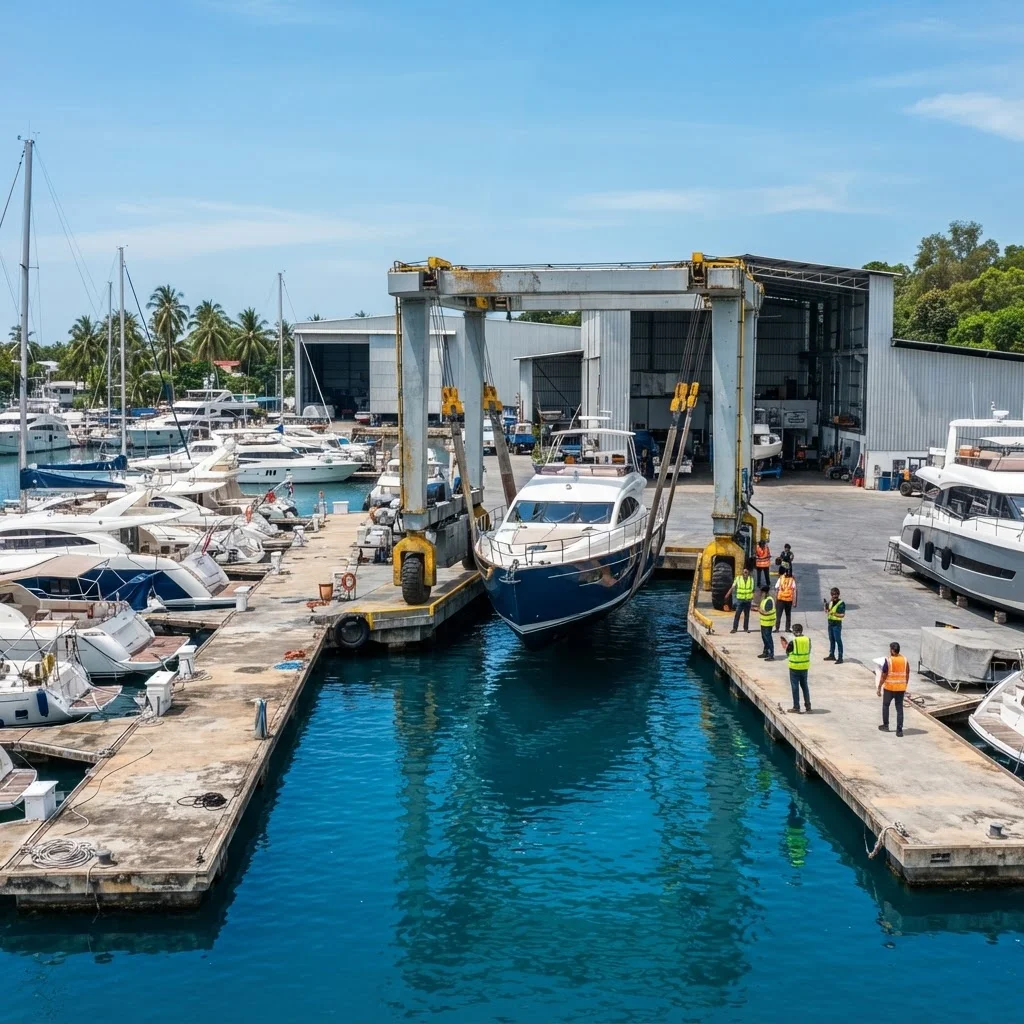
Thailand provides three principal boat servicing and repair clusters, each catering to different drafts, budgets, and refit requirements.
On Phuket’s central east coast, Phuket Boat Lagoon operates 180 wet berths and hardstand space for up to 160 craft. Haul-outs run via travel lifts handling up to 120 tonnes, supported by an established cluster of marine mechanics, riggers, stainless fabricators, and chandleries. Further north in Mai Khao, Phuket Premier Boatyard operates a 60-tonne Roodberg hydraulic submersible trailer capable of lifting wide-beam multihulls and monohulls up to 24 metres. Unlike many commercial yards, it allows skippers to live aboard while undertaking their own maintenance. For deep-draft displacement vessels and heavy structural refits, Ratanachai Shipyard on the Ratsada tidal channel in Phuket Town hauls hulls measuring up to 45 metres and 280 tonnes on dual slipway rail cradles.
Across Phang Nga Bay in Krabi, Port Takola provides sheltered hardstand storage and an inland basin along the Isara Estuary. Lifting operations use a 38-tonne Roodberg trailer running down a 12-metre-wide slipway, well suited to wide-beam cruising catamarans.
In the Gulf of Thailand, Ocean Marina Jomtien south of Pattaya anchors Eastern Seaboard refit activity. The site features 450 wet berths, hardstand bays, and mobile travel hoists lifting up to 75 tonnes, alongside workshops for carpentry, electrical repairs, and composite work. For initial haul-outs, Phuket Boat Lagoon and Ocean Marina Jomtien provide the most comprehensive networks of on-site, English-speaking contractors.
Costs and Budgeting
Marine maintenance in Thailand provides notable value compared to European boatyards, driven by competitive hardstand storage fees and local technician labour rates typically ranging from 900 THB to 1,500 THB (approx £20 to £33) per hour. However, imported OEM spares and specialised marine components attract customs import duties and freight surcharges, which can balance out some of those savings. Independent skippers can complete basic antifouling and topside maintenance economically by sourcing materials locally, whereas comprehensive refits at full-service marinas fall into a mid-tier international budget. For major yard periods, experienced owners maintain a contingency fund of at least 20 percent above initial shipyard quotations to cover unforeseen discoveries once the vessel sits on the hardstand, such as corroded skin fittings, seized seacocks, or shaft alignment issues.
| Option / Service | Cost (THB) | Cost (GBP approx) | Notes |
|---|---|---|---|
| Travel Lift Haul-Out & Launch (45ft) | 18,000 THB – 30,000 THB | £400 – £670 | Based on LOA; includes pressure hull wash |
| Multihull Haul-Out Lift (45ft Catamaran) | 35,000 THB – 55,000 THB | £780 – £1,225 | Wide-beam trailer or cradle surcharge applied |
| Monthly Hardstand Rent (45ft Monohull) | 18,000 THB – 28,000 THB | £400 – £625 | Metered electricity and water billed separately |
| Full Bottom Sanding & 2-Coat Antifoul | 45,000 THB – 85,000 THB | £1,000 – £1,890 | Includes marine-grade ablative paint and yard labour |
| Routine Single Diesel Service (Fluids/Filters) | 8,000 THB – 14,000 THB | £180 – £310 | Oil, fuel filters, impeller, zinc anodes included |
| Twin Engine Full Overhaul & Heat Exchangers | 45,000 THB – 80,000 THB | £1,000 – £1,780 | Ultrasonic cleaning, gaskets, seals, and labour |
| Weekly Yacht Guardianage Service | 6,000 THB – 12,000 THB/month | £135 – £270/month | Bilge checks, battery charging, airing, visual log |
| Certified Rigger Rig Inspection | 7,000 THB – 15,000 THB | £155 – £335 | Visual check, dye-penetrant swage tests, aloft report |
What to Know Before You Go
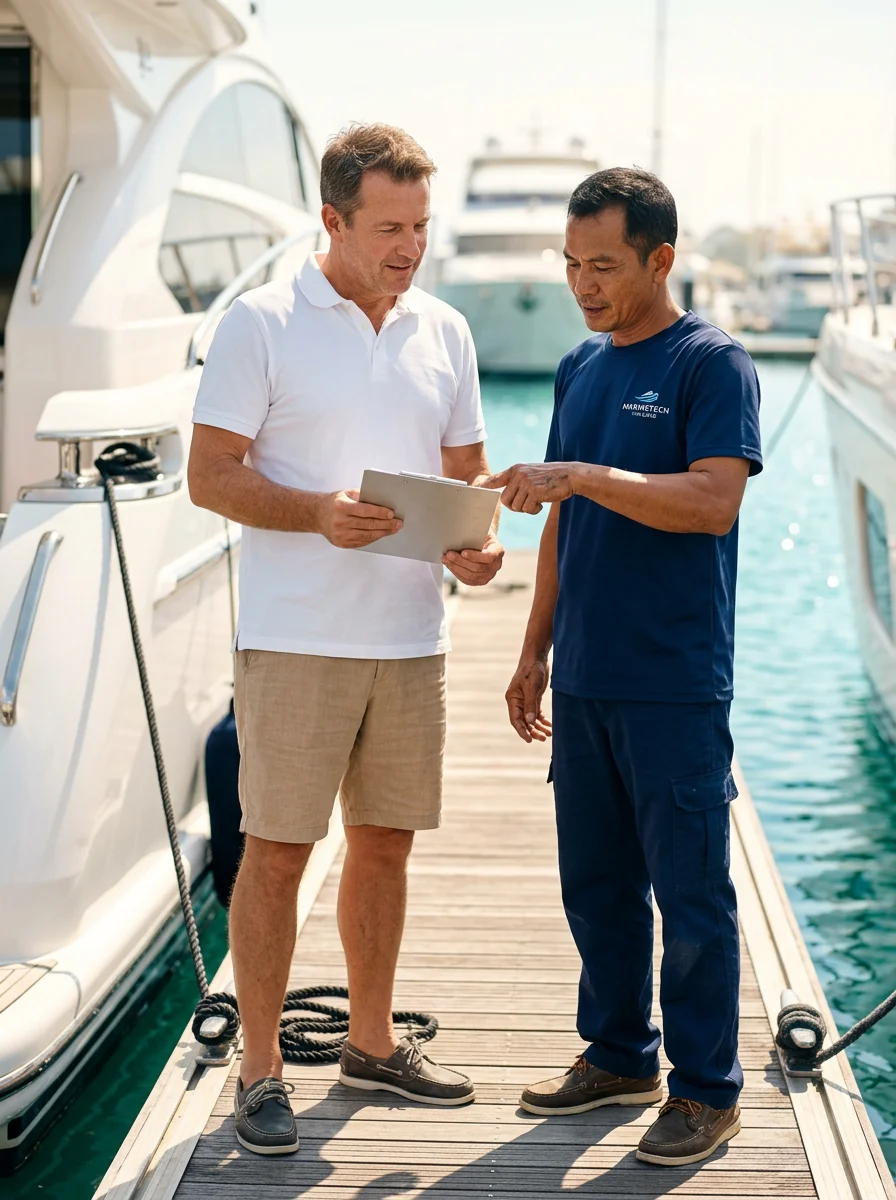
Importing overseas spare parts into Thailand requires realistic budgeting and planning. Thailand does not grant a blanket duty-free exemption for foreign vessels in transit. Marine equipment and replacement components shipped from abroad attract standard import duties ranging from 10 to 30 per cent, alongside 7 per cent VAT assessed on the combined freight, insurance, and duty value. Consigning shipments through a licensed Thai marine customs broker is standard practice; unaccompanied courier parcels regularly languish in clearance bonded warehouses for weeks awaiting valuation.
Boatyards and marinas enforce strict policies regarding outside labour. While in-house technicians or resident tenants work freely, third-party specialists usually face daily yard-access charges. At facilities such as Phuket Boat Lagoon, unregistered contractors pay 800 THB (approx. £18) per day or 10,000 THB (approx. £225) monthly plus VAT, an expense typically added straight to your account. Confirm yard access rules before commissioning independent tradespeople.
Accommodation policies during dry-dock periods also vary. Certain facilities prohibit owners from staying aboard vessels on the hardstand for safety and insurance reasons, requiring you to arrange nearby shore lodging. Other venues, including Phuket Premier Boatyard, welcome liveaboard cruisers carrying out self-directed work. Lift slots fill rapidly during the northeast monsoon between November and March. Booking your haul-out two to three months in advance prevents unplanned weeks waiting in wet berths.
Practical Tips
Tropical monsoon downpours can overwhelm blocked cockpit scuppers within minutes, dumping torrential rainwater below deck. Fit two independent bilge pumps with separate float switches and a dedicated high-water alarm wired to isolated battery circuits. Redundant pumping capacity is the only reliable defence against catastrophic flooding when tropical squalls strike while you are away from the vessel.
Shore power connections in tropical marinas present an immediate corrosion risk. Plugging directly into a dockside pedestal links your underwater metals to neighbouring boats through the common earth wire. Fit a fail-safe galvanic isolator or an isolation transformer to block stray direct-current flow. Unprotected vessels in warm, highly conductive seawater can lose saildrive legs and propeller blades to galvanic pitting in weeks.
Airborne salinity and ambient humidity exceeding 80% accelerate corrosion even inside dry cabin lockers. Seal critical mechanical spares, such as starter motors, freshwater pumps, spare impellers, and alternator belts, inside airtight containers with rechargeable silica gel packs. When fastening stainless steel bolts into aluminium spars, mast tracks, or boom goosenecks, coat every thread thoroughly with an isolating barrier paste like Tef-Gel or Lanocote to prevent galvanic binding and snapped fasteners.
Warm tropical waters encourage rapid biofouling inside raw-water cooling circuits. Flush your marine air-conditioning seawater loop with fresh water and a descaling solution every three months to clear calcareous tube worms and barnacles before restricted thermal transfer triggers high-pressure compressor shut-downs. Whenever testing auxiliary diesel engines and generators at the dock, apply at least 60% load to prevent cylinder bore glazing and carbon build-up in water-injection exhaust elbows.
Annual Yacht Maintenance Checklist
A disciplined maintenance timetable prevents high humidity, warm seawater, and rapid biofouling from turning minor wear into costly failures. Dividing upkeep into annual yard work, six-monthly mechanical passes, and quarterly domestic inspections protects critical systems across Thailand's wet and dry seasons.
Annual haul-out and underwater gear
- High-pressure wash the hull immediately upon lifting before algae and barnacles bake hard on the gelcoat.
- Inspect cutless bearings, rudder stock play, keel joints, and through-hull skin fittings for mechanical movement or de-zincing.
- Examine composite hulls for gelcoat blistering or deep abrasion, allowing any damp patches to dry thoroughly.
- Sand the underwater profile, apply a compatible tie-coat, and roll on two full coats of high-copper antifouling paint.
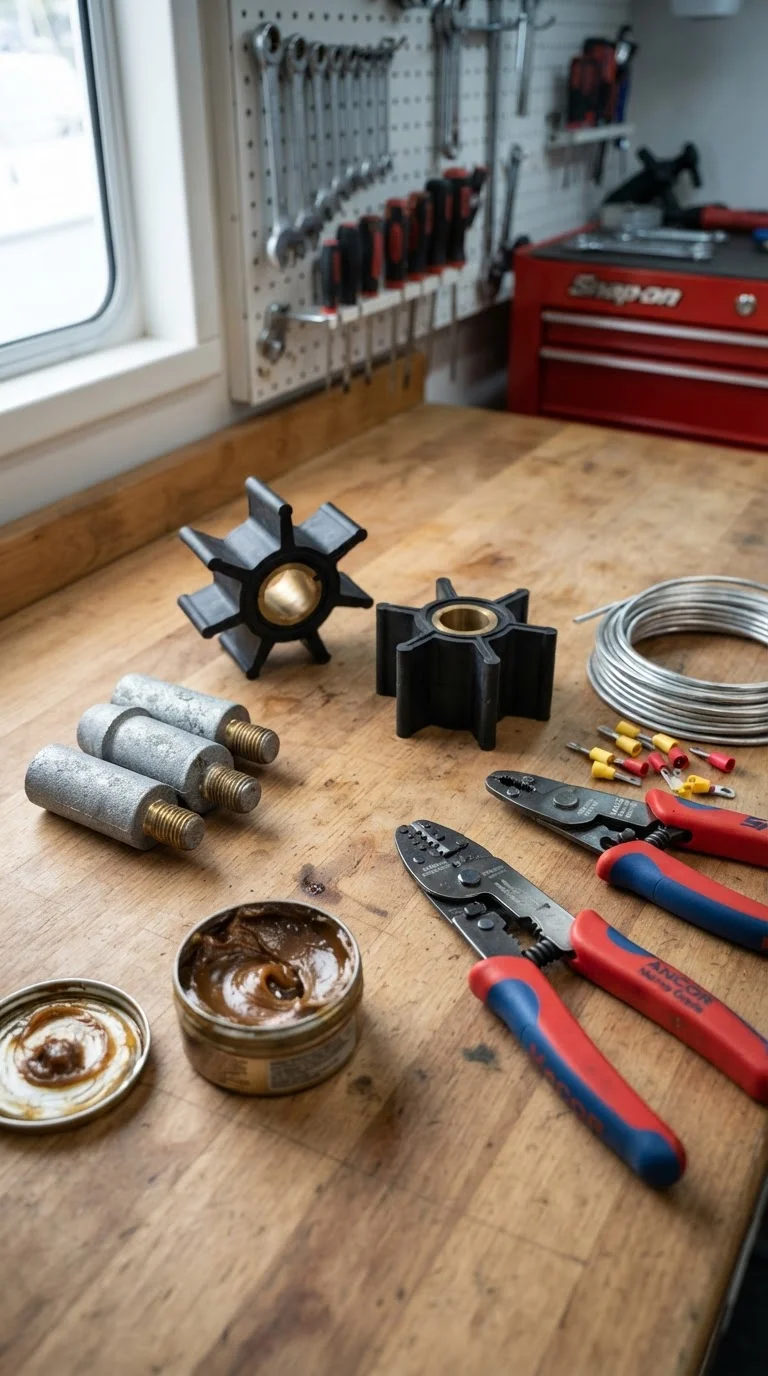
- Renew all sacrificial zinc or aluminium anodes on shafts, saildrive housings, trim tabs, and thruster tunnels.
- Strip, clean, and lubricate bronze and composite seacocks, confirming full travel on every ball valve.
- Coat propellers and shaft brackets with a foul-release barrier or specialised metal primer.
Six-monthly mechanical servicing
- Drain engine and generator crankcases, replace oil filters, and record running hours in the ship log.
- Replace primary and secondary fuel filters, draining water and biological sludge from water-separator bowls.
- Extract raw-water pump impellers, check rubber vanes for cracking or heat deformation, and install replacements lubricated with glycerin.
- Inspect engine heat exchangers for salt crystallisation, descaling tube bundles if operating temperatures climb.
- Inspect internal engine pencil anodes, replacing any unit worn past half its original size.
- Check alternator belt tension, inspect rubber damper plates, and verify propeller shaft alignment.
Quarterly electrical, deck, and domestic checks
- Clean battery posts, tighten terminals, and coat connections with dielectric grease to stop oxidation.
- Test primary and secondary bilge pumps, clear debris from intake strainers, and test float switches manually.
- Inspect wire swages, turnbuckles, and spreader ends for hairline stress fractures or crevice corrosion.
- Strip deck winches, wash away salt grit, and renew pawl springs and light pawl oil.
- Check sail stitching and UV sacrificial strips on roller-furled sails for thread degradation from the sun.
- Descale air-conditioning seawater condenser coils with a recirculating acid flush, and clean raw-water intake strainers.
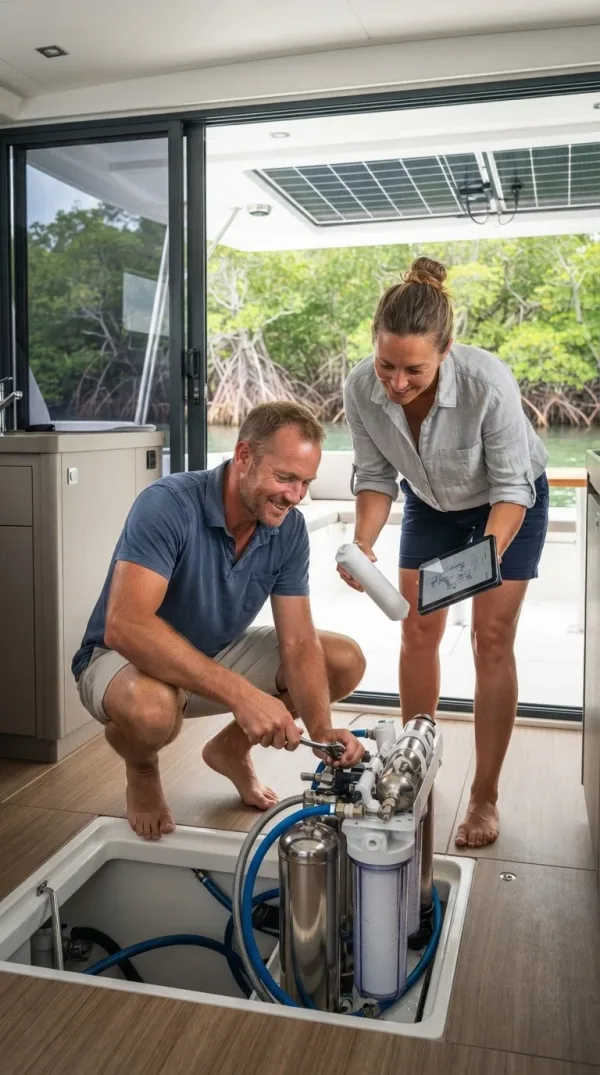
- Inspect freshwater pressure pumps for cycling leaks, flush storage tanks, and replace drinking-water filter cartridges.
Quick Reference Table
| Item | Detail | Notes |
|---|---|---|
| Technician Labour Rates | 900 THB – 1,500 THB (£20 – £33) per hour | Typically 30% to 50% lower than UK and European boatyards |
| 45ft Monohull Haul & Launch | 18,000 THB – 30,000 THB (£400 – £670) | Based on LOA; includes immediate 250–300 bar high-pressure hull wash |
| 45ft Multihull Haul & Launch | 35,000 THB – 55,000 THB (£780 – £1,225) | Requires wide-beam hydraulic trailer (e.g. Roodberg) or railway slipway |
| Monthly Hardstand Rent (45ft) | 18,000 THB – 28,000 THB (£400 – £625) | Metered water and power extra; catamarans face 50% to 100% space surcharges |
| Antifouling Application (45ft) | 45,000 THB – 85,000 THB (£1,000 – £1,890) | Includes bottom sanding, yard labour, and 2 full coats of copolymer paint |
| Routine Single Diesel Service | 8,000 THB – 14,000 THB (£180 – £310) | Standard fluid change, primary/secondary fuel filters, impeller, and zincs |
| Weekly Guardianage Service | 6,000 THB – 12,000 THB (£135 – £270) per month | Covers bilge tests, battery float charging, dehumidifier checks, and logs |
| Peak Haul-Out Booking Window | 2 to 3 months advance booking required | Lift bays fill rapidly during the northeast monsoon (November to March) |
| Outside Contractor Access Fees | 800 THB (£18) per day / 10,000 THB (£225) per month | Levied by yards like Phuket Boat Lagoon if using third-party specialists |
| Imported Marine Spares Duty | 10% to 30% duty + 7% VAT on CIF value | No blanket yacht-in-transit exemption; clear via a licensed customs broker |
| Primary Refit Hubs | Phuket, Krabi, Pattaya (Eastern Seaboard) | Phuket Boat Lagoon, Phuket Premier, Ratanachai, Port Takola, Ocean Marina |
| Official Source: Ratanachai Shipyard | ratanachai.co | Deep-draft slipway handling vessels up to 45m and 280 tonnes |
FAQ: Yacht Maintenance in Thailand
How much do yacht maintenance services cost per hour in Thailand?
Are yacht maintenance costs in Thailand cheaper than in Europe?
What are the main environmental challenges for yacht maintenance in Thailand?
How can yacht owners prevent diesel bug in Thailand?
How often should sacrificial anodes be replaced on a yacht in Thailand?
What are the main considerations for hauling out a catamaran in Thailand?
What should yacht owners do when commissioning refits from overseas in Thailand?
Are there import duties on yacht spare parts shipped into Thailand?
How can galvanic corrosion be prevented when using shore power in Thailand?
When is the best time to book a yacht haul-out in Thailand?
Reviewed by the Thailand Guide Editorial Team • Last reviewed: 8 November 2026
This page is provided for general information only. While we aim for accuracy, details can change — please verify anything important independently before relying on it.