Sea Snakes in Thailand
Thai coastal waters support an impressive diversity of marine serpents, with approximately thirty distinct species recorded across the Andaman Sea and the Gulf of Thailand. While these reptiles possess exceptionally potent venom—the beaked sea snake (Hydrophis schistosus), for example, has an estimated human lethal dose of roughly 1.5 milligrams—unprovoked bites to swimmers, snorkellers, and scuba divers are practically unknown. Marine snakes are docile, inquisitive animals that display no territorial aggression toward humans in open water. Recorded envenomations in Thailand occur almost exclusively among commercial fishers handling trawl nets or sorting catch by hand on boat decks.
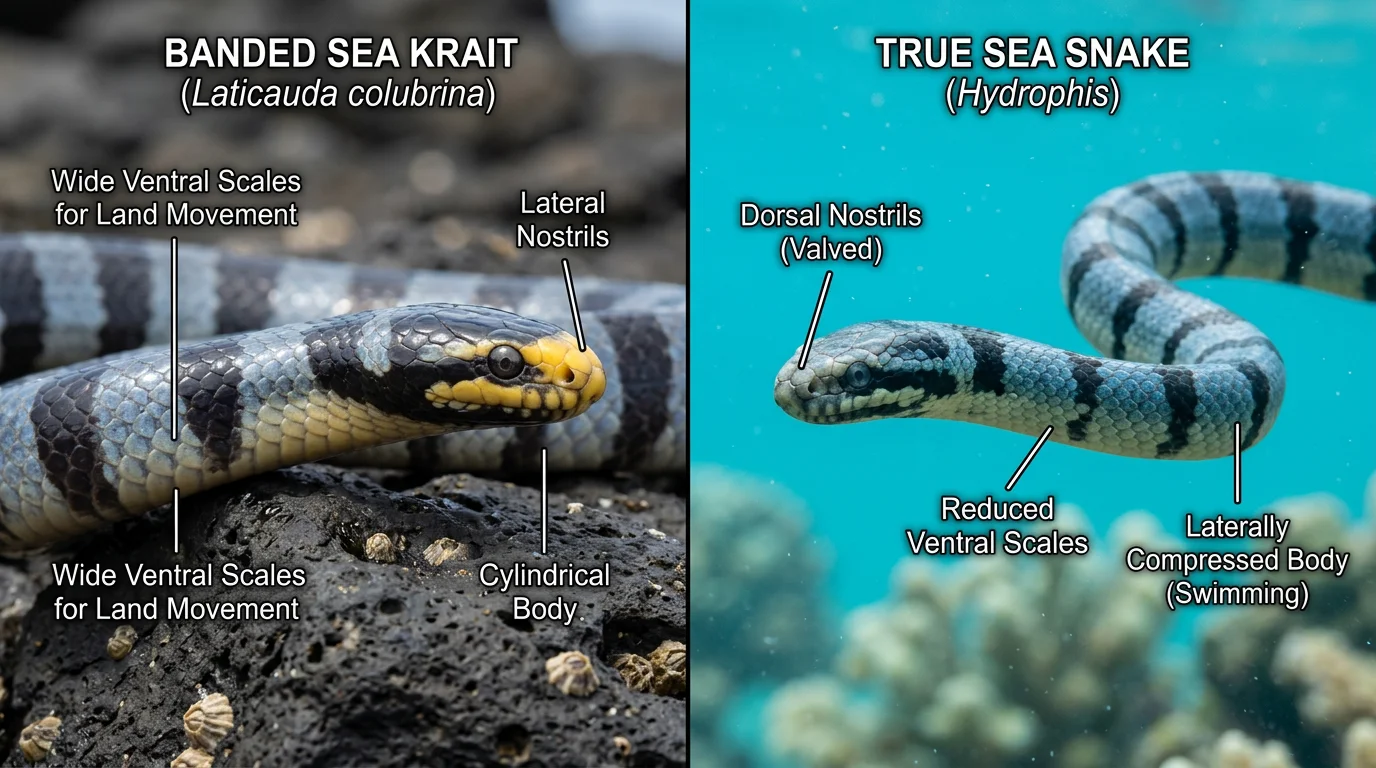
Marine snakes in Thailand represent two independent evolutionary transitions from terrestrial ancestors into the sea. Both groups belong to the front-fanged family Elapidae, yet they solved the challenges of marine existence through fundamentally different anatomical and reproductive pathways. True sea snakes, grouped within the subfamily Hydrophiinae, descend from Australasian land elapids and have severed all connection to dry land. In contrast, sea kraits belong to the genus Laticauda within the subfamily Laticaudinae. They maintain an amphibious life cycle reminiscent of sea turtles, alternating between foraging in shallow coral reefs and sheltering on rocky shores.
True sea snakes have adapted their entire anatomy for a life spent permanently suspended in seawater. Their bodies are laterally compressed into a deep, ribbon-like cross-section terminating in a flattened, paddle-shaped tail that generates powerful swimming thrust. Because they rarely crawl on land, their broad belly scutes have vanished or degenerated into narrow, keeled scales indistinguishable from those on their flanks. If washed ashore by storms or stranded on sandbanks, a true sea snake is entirely helpless. Without the lateral resistance of water, it cannot generate effective forward movement. Reproduction in Hydrophiinae is strictly viviparous: females gestate internally and give birth to fully formed, free-swimming young in open water, eliminating any need for solid ground.
Sea kraits follow a markedly different evolutionary path. While their tails are laterally flattened into effective swimming rudders, their trunks retain the cylindrical cross-section of land snakes. Crucially, sea kraits retain the broad, overlapping ventral plates characteristic of terrestrial serpents. These belly plates allow them to climb rocky cliffs, cross sandy beaches, and seek shelter inside limestone crevices with remarkable agility. Furthermore, sea kraits remain oviparous. Females must leave the sea to lay clutches of leathery eggs in dark, humid caves or under beach debris above the high-tide mark.
Freshwater balance further highlights this evolutionary divergence. Although both lineages possess sublingual salt glands to excrete excess salt, neither can survive indefinitely without fresh water. Amphibious sea kraits go ashore regularly to drink from freshwater seeps, rain pools, and cave drippings. By contrast, pelagic true sea snakes depend on oceanic freshwater lenses—temporary surface films of dilute brackish water or rainwater that form during heavy tropical downpours.
| Feature | True Sea Snakes (Hydrophiinae) | Sea Kraits (Laticaudinae) |
|---|---|---|
| Primary Marine Habitats | Pelagic drift lines, muddy estuaries, offshore bays | Shallow coral reefs, limestone shorelines, rocky islets |
| Terrestrial Mobility | Absent; entirely helpless and immobile on land | High; broad ventral scutes enable proficient crawling |
| Body Cross-Section | Distinctly laterally compressed; tall, ribbon-like form | Cylindrical or subcylindrical; rounded trunk |
| Tail Morphology | Strongly paddle-shaped with flattened vertical fin | Paddle-shaped at terminus; rounded near body base |
| Reproductive Strategy | Obligate viviparity; live birth at sea | Oviparity; must deposit eggs on dry land |
| Freshwater Access | Obligate surface-film skimming during rain showers | Regular trips ashore to drink from freshwater seeps |
| Ventral Scales | Severely reduced, keeled, or entirely absent | Broad, overlapping plates spanning belly width |
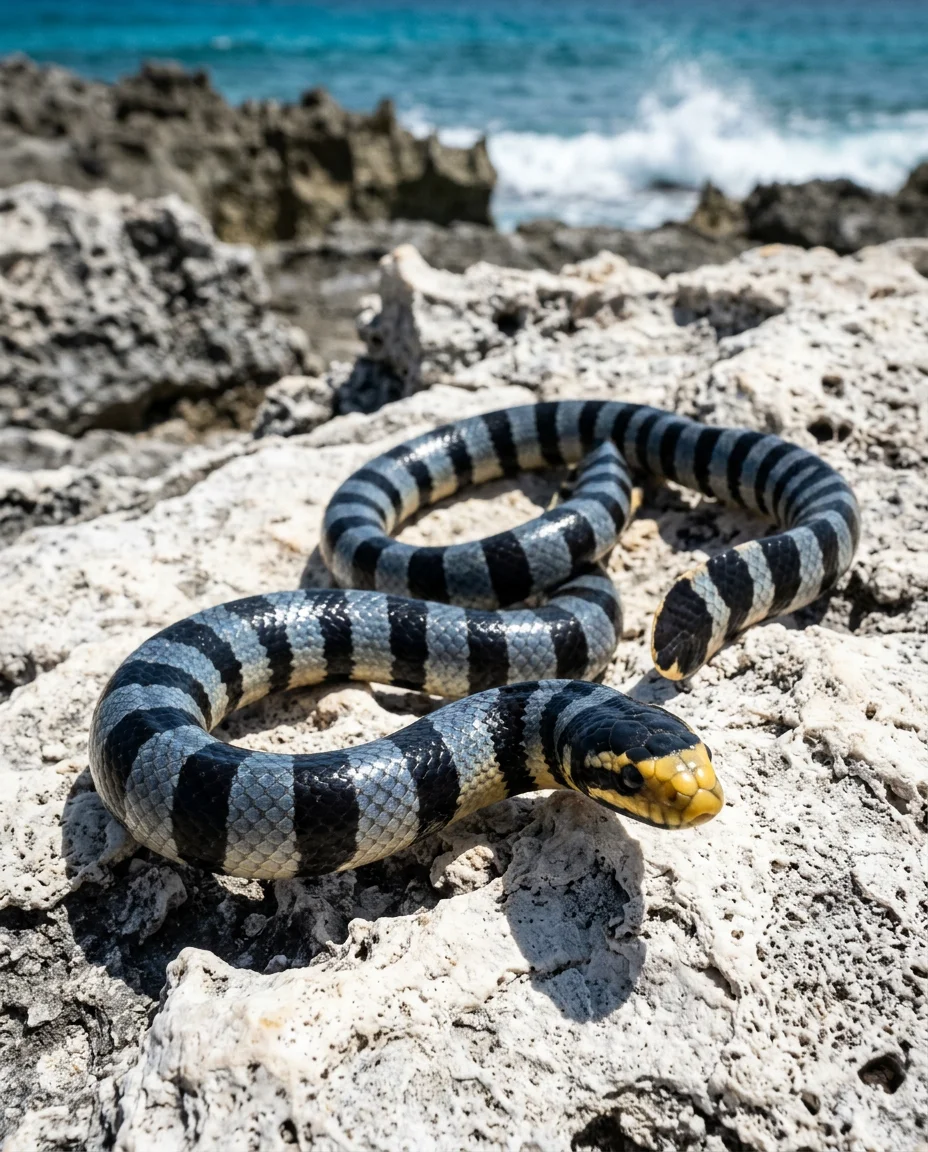
The dual nature of sea kraits dictates their daily behavioural ecology. Two species occur in Thai waters: the banded sea krait (Laticauda colubrina) and the blue-lipped sea krait (Laticauda laticaudata), with the former frequently encountered across Andaman dive sites around Phuket, Koh Phi Phi, and Koh Lanta. While foraging, they hunt among reef crevices, preying almost exclusively on moray and conger eels. Because seawater steadily leaches away body heat, kraits regularly haul out onto uninhabited rocky islets to digest their catch. Basking on warm rock raises their internal temperature, accelerating digestion. On land, they aggregate inside limestone fissures to conserve moisture and warmth. They should not be confused with terrestrial kraits (Bungarus), which inhabit mainland forests and pose serious nocturnal bite risks.
True sea snakes occupy a purely aquatic realm spanning offshore currents, muddy seabeds, and estuarine shallows across the Andaman Sea and the Gulf of Thailand. Species such as the yellow-bellied sea snake (Hydrophis platurus) and the blue-banded sea snake (Hydrophis cyanocinctus) spend their entire lives afloat. Their internal morphology reflects this complete marine commitment: the left lung is vestigial or absent, while an elongated right lung runs through the body cavity to provide hydrostatic buoyancy. Because their musculoskeletal system is configured solely for aquatic lateral undulation, their internal organs can be compressed under their own unsupported weight if removed from the buoyant sea.

Physiological Adaptations to the Marine Environment
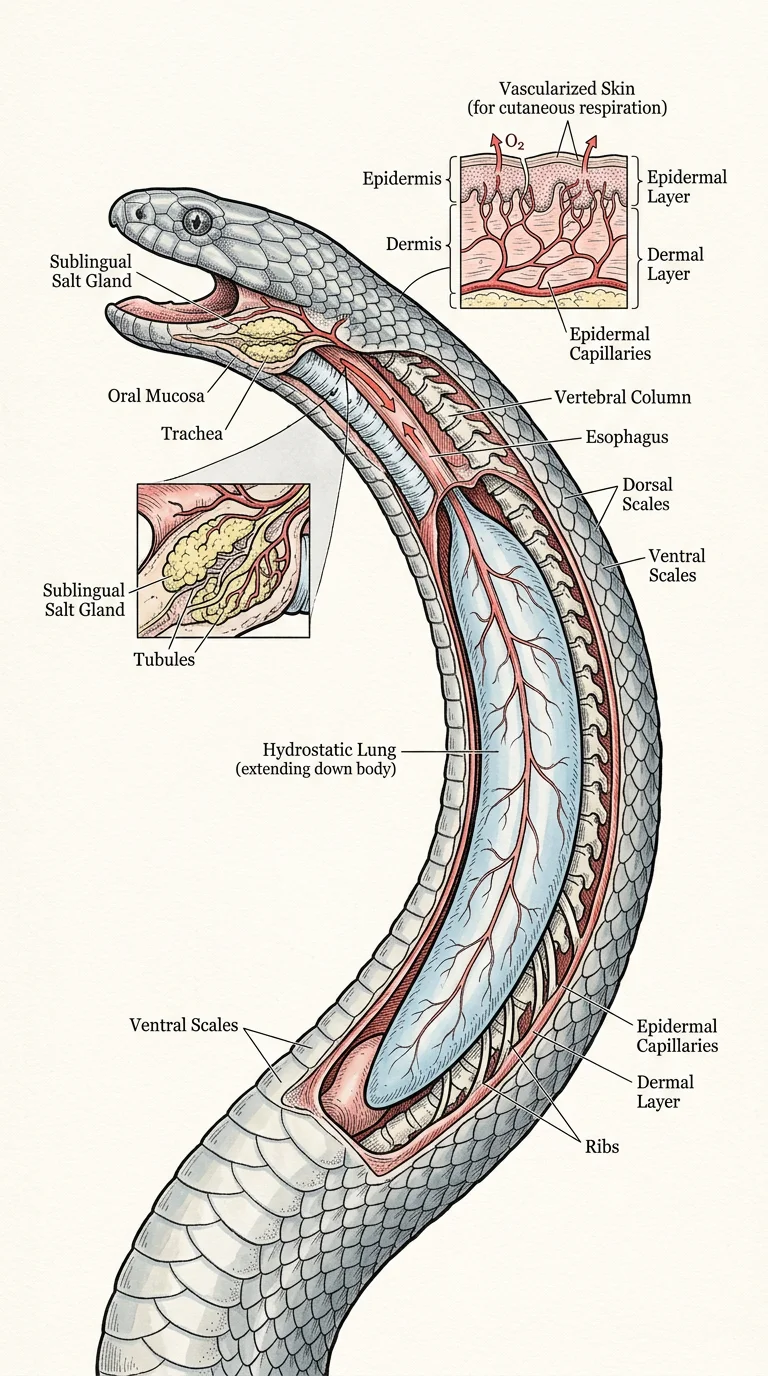
Surviving in tropical oceans presents air-breathing reptiles with acute physical challenges: avoiding asphyxiation during deep dives, regulating buoyancy, maintaining internal water balance against salty seawater, and sealing airways against hydrostatic pressure. Unlike fish, marine snakes lack gills and rely on atmospheric air inhaled at the ocean surface. Yet several species can remain submerged for one to two hours during active foraging, with resting individuals staying underwater for up to eight hours without suffocating. This diving capacity rests on an integrated network of respiratory, vascular, and osmotic adaptations.
Cutaneous Respiration and Gas Exchange
The skin of marine snakes functions as an active secondary respiratory surface rather than an impermeable barrier. Terrestrial snakes possess heavily keratinised scales to limit moisture loss, but marine species have evolved a dense capillary network directly beneath their epidermal layers. This permits direct gas exchange between the snake's bloodstream and seawater. True sea snakes can absorb twenty to thirty percent of their oxygen requirements through their skin. More significantly, cutaneous respiration vents metabolic carbon dioxide. Carbon dioxide is roughly thirty times more soluble in water than oxygen, allowing up to ninety percent of internal carbon dioxide to diffuse directly into the sea. Discharging waste gases across the skin delays the blood-acidification reflex that compels vertebrates to surface, extending submergence times considerably. Certain species, such as the blue-banded sea snake (Hydrophis cyanocinctus), possess a cephalic vascular plexus on the snout and crown, supplying oxygenated blood directly from ambient seawater to the brain.
Hydrostatic Lung Structure and Buoyancy Control
In marine snakes, the left lung is vestigial or absent, while the right lung extends through almost the entire visceral cavity. This pulmonary tract is divided into two distinct zones: an anterior vascular portion (often including a vascular tracheal lung) that conducts gas exchange, and an elongated posterior saccular chamber with little or no vascularisation. The saccular section functions as both an internal air reservoir and a hydrostatic ballast tank. By adjusting the volume of air compressed within this chamber, the snake regulates its specific gravity. At the surface, the snake maintains positive buoyancy with minimal effort. As it descends, hydrostatic pressure compresses the gas, shifting the snake towards neutral buoyancy so it can forage across coral reefs without fighting upward lift.
Cardiac Shunts and Nitrogen Management
Diving under pressure exposes air-breathing vertebrates to decompression sickness, caused by nitrogen dissolving into the bloodstream under elevated hydrostatic loads. Marine snakes counter this hazard through cardiovascular regulation. By adjusting muscular intracardiac shunts within their three-chambered hearts, they can bypass pulmonary circulation and route blood through peripheral cutaneous capillary beds instead. Diverting blood away from the lungs at depth prevents high-pressure pulmonary gas from forcing excess nitrogen into the circulation. Any excess nitrogen already present in tissues can diffuse harmlessly across the skin into the surrounding sea, suppressing bubble formation as the snake returns to the surface.
Osmoregulation and Surface Freshwater Lenses
Living in an ocean roughly three times saltier than internal body fluids causes constant osmotic water loss. Reptilian kidneys cannot concentrate urine beyond the osmolarity of blood plasma, preventing marine snakes from excreting excess salt through urine alone. True sea snakes and sea kraits instead rely on a posterior sublingual salt gland beneath the tongue sheath. This cephalic gland extracts sodium and potassium ions from the bloodstream, discharging a concentrated brine into the sea whenever the snake extends its tongue. Research by Harvey Lillywhite has overturned the traditional assumption that marine snakes drink seawater freely. In reality, most species dehydrate in full-strength seawater and refuse to drink it. They depend on temporary freshwater lenses—thin pools of buoyant rainwater that gather on the sea surface during tropical downpours—or estuarine plumes, drinking rapidly before wind and waves mix the freshwater into the sea.
Valvular Nostrils and Cephalic Seals
Preventing water ingress under hydrostatic pressure requires specialised cephalic closures. The external nares of true sea snakes sit dorsally on the snout rather than laterally, letting the snake break the surface film to inhale while keeping almost its entire head submerged. Each nostril contains an erectile pad of spongy tissue that engorges with blood during dives, pressing tightly against adjacent cartilage to seal the nasal passage. Internally, mucosal flaps protect the choanae from water ingress. A tight rostral notch on the upper lip allows the tongue to flick out and sample aquatic chemical cues without breaking the watertight oral seal.
Key Marine Snake Species in Thai Waters
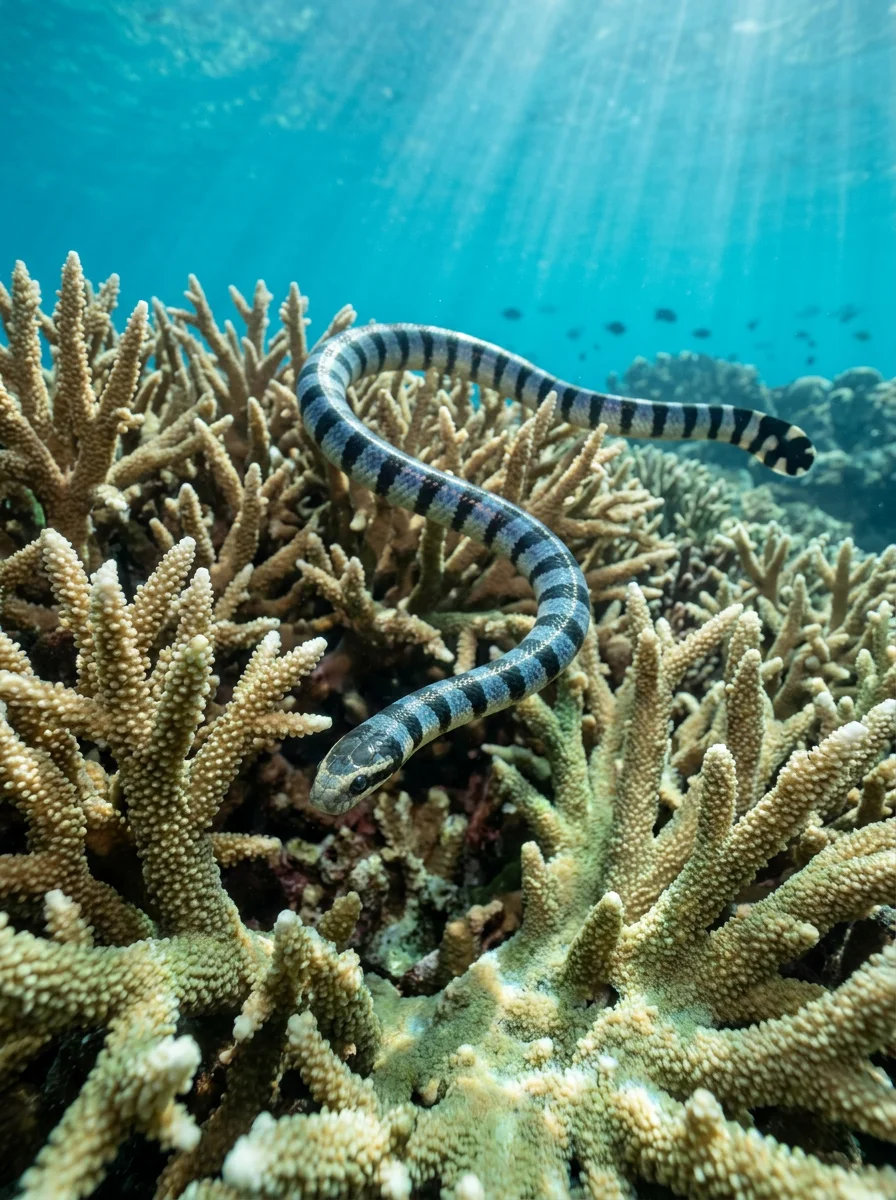
Thailand's coastal and offshore waters support more than thirty species of front-fanged marine snakes, representing both amphibious sea kraits and fully marine true sea snakes. Distinguishing these serpents in the wild can prove challenging because multiple species share alternating dark-and-light banding or subdued colour schemes. However, structural traits such as head markings, snout profile, scale texture, and relative girth provide reliable points of identification. Seven species account for the vast majority of diver encounters, coastal sightings, and commercial fishing interactions across the Andaman Sea and the Gulf of Thailand.
Banded Sea Krait
The banded sea krait (Laticauda colubrina), also known as the yellow-lipped sea krait, is the most frequently observed marine reptile across coral reefs in southern Thailand, particularly around offshore islands such as the Similan archipelago, Koh Phi Phi, and Koh Tao. It displays a pale blue-grey ground colour marked with twenty to sixty-five dark brown or black bands that fully encircle its cylindrical trunk. The definitive field mark is its bright yellow snout and upper lip, which contrast against a dark head band.
This species exhibits pronounced sexual dimorphism in body size and feeding ecology. Adult females reach lengths between 1.2 and 1.5 metres, with occasional specimens measuring up to 1.8 metres, and possess significantly thicker bodies and broader heads than males. Adult males rarely exceed 1.0 metre in total length. This size disparity directly reflects their hunting niches: larger females forage in deeper water primarily for large conger eels, while smaller males hunt through shallow reef flats for moray eels. Semiaquatic by nature, banded sea kraits retain wide ventral plates that permit deliberate crawling on land, where they regularly haul out on rocky ledges and isolated beaches to rest and digest prey. In the water, they are placid, methodical swimmers that probe coral crevices and rarely show agitation toward humans.
Blue-lipped Sea Krait
The blue-lipped sea krait (Laticauda laticaudata) shares the amphibious habits and general banded appearance of its yellow-lipped congener, but it lacks any yellow facial pigment. Its snout and upper lip are dark brown or black, occasionally displaying faint bluish or cream margins. It features a slender cylindrical body encircled by alternating bands of black and pale blue or blue-grey, with nineteen longitudinal rows of scales around the midbody.
Laticauda laticaudata is considerably more slender than Laticauda colubrina and possesses narrower ventral scales, reflecting a life history that is more heavily committed to the marine environment. Adult females typically measure between 1.0 and 1.2 metres, whereas adult males generally reach 0.8 to 0.9 metres. While it does venture ashore onto rocky island margins to slough its skin and lay clutches of eggs, it spends a higher proportion of its time submerged along reef walls, steep drop-offs, and submerged pinnacles. Its diet consists almost entirely of small reef eels and benthic gobies, which it hunts along deeper reef contours, primarily in the Andaman Sea.
Yellow-bellied Sea Snake
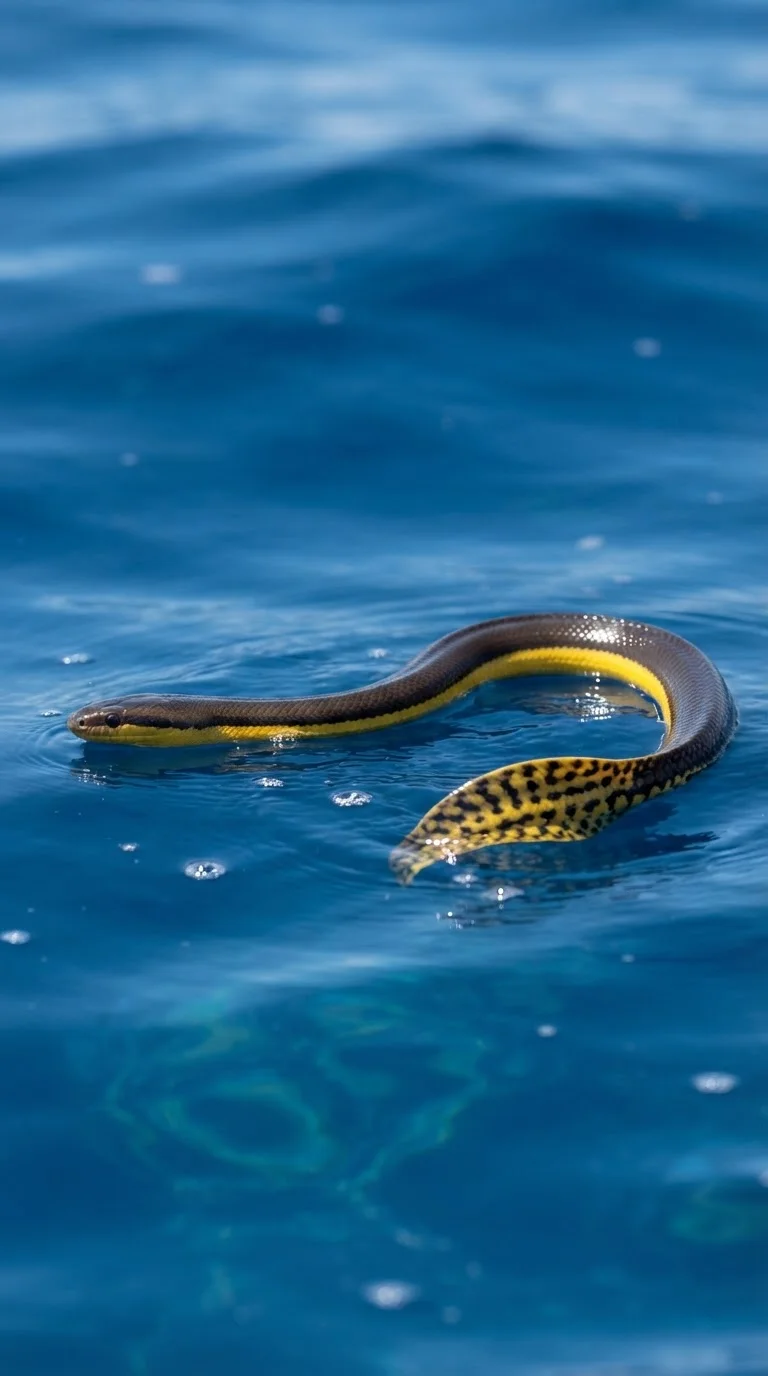
The yellow-bellied sea snake (Hydrophis platurus) is an obligate pelagic serpent with a distinctive two-tone pattern that functions as oceanic countershading. The upper half of its laterally compressed trunk is uniform deep black or dark brown, while the ventral half is canary yellow or pale cream, separated by a crisp horizontal dividing line. Its oar-shaped tail is patterned with bold black spots and irregular vertical bars against a pale yellow background.
Unlike the reef-dwelling kraits, Hydrophis platurus is an open-ocean wanderer that rarely visits the seabed or approaches the shoreline unless injured or driven ashore by storms. Adult specimens typically measure between 60 and 90 centimetres in total length, with an average around 70 centimetres. The species drifts passively along surface convergence lines, current slicks, and floating flotsam across both the Andaman Sea and offshore waters of the Gulf of Thailand. From this floating posture, it functions as an ambush predator, floating motionless at the surface to resemble driftwood before striking sideways at small juvenile pelagic fishes seeking shelter beneath it.
Shaw's Sea Snake
Shaw's sea snake (Hydrophis curtus), historically categorised under the genus Lapemis as Lapemis curtus or Lapemis hardwickii, is one of the most common true sea snakes found over soft sediment in the Gulf of Thailand and the Andaman Sea. It possesses a heavy, robust body with an unusually wide head that is poorly differentiated from the thick neck. Its colouration varies from olive-grey to yellowish-tan, marked along the back with broad dark olive or greyish-brown crossbands that taper into points along the lateral flanks.
Adults usually measure between 60 and 100 centimetres in total length, occasionally reaching 1.1 metres. A notable morphological trait of Hydrophis curtus is the presence of small spinous projections and keeled tubercles on the scales of adult males, which create a distinctly rough texture along the flanks and lower body. The species prefers shallow, turbid continental shelf waters between five and fifty metres deep, hunting demersally over soft sand and mud bottoms for benthic teleosts, gobies, and small crustaceans. Because of its abundance on shallow muddy feeding grounds, it constitutes the largest share of sea snake bycatch landed by commercial trawl and squid fisheries in the Gulf.
Blue-banded Sea Snake
The blue-banded sea snake (Hydrophis cyanocinctus), also known as the annulated sea snake, is one of the heaviest and longest true sea snakes inhabiting Southeast Asian seas. It has an elongated build with a relatively slender anterior neck region that transitions into a thick, laterally compressed posterior trunk. The dorsal base colour ranges from dull yellowish-green to greyish-olive, encircled by fifty to seventy dark olive, blue-black, or black rings that are widest across the spine and sometimes connected by a faint dark ventral line.
Adult blue-banded sea snakes frequently reach lengths of 1.5 to 1.8 metres, with large individuals recorded up to 2.0 metres. They occupy a wide ecological range, hunting in murky mangrove estuaries, coastal bays, and deeper coral reefs at depths down to fifty metres across both Thai coasts. This species feeds opportunistically on a broad selection of benthic marine organisms, with a strong dietary preference for marine eels, gobies, and other bottom-dwelling fish. It produces a substantial yield of potent venom, making it an animal of acute medical concern when accidentally netted by commercial fishing operations.
Beaked Sea Snake
The beaked sea snake (Hydrophis schistosus), formerly classified as Enhydrina schistosa, is the species implicated in the majority of serious sea snake envenomations and fatalities across the tropical Indo-Pacific. It is easily distinguished by the morphology of its snout: the rostral scale on the upper jaw extends into a downward-pointing, beak-like hook that fits into a deep matching notch in the lower jaw. This anatomical adaptation enables the snake to expand its gape widely to ingest spiny benthic prey, particularly marine catfishes and pufferfishes.
Adults average between 1.1 and 1.3 metres in length, occasionally attaining 1.4 to 1.5 metres. The body is relatively heavy, with an upper surface coloured in dull leaden grey, uniform olive, or brownish-grey, fading to off-white or yellowish on the lower flanks and belly. Dark grey crossbands are conspicuous on juveniles, but these markings typically blur and disappear as the snake reaches maturity. Hydrophis schistosus avoids clean offshore coral reefs, concentrating instead in turbid coastal shallows, muddy mangrove channels, and river mouths. When hauled aboard fishing vessels or caught in gill nets, it tends to be highly defensive and will strike readily when restrained.
Yellow Sea Snake
The yellow sea snake (Hydrophis spiralis) holds the distinction of being the longest recorded marine snake species, with exceptional specimens documented up to 2.75 metres in length, although typical adults measure between 1.6 and 2.0 metres. Its build is remarkably elongate and slender, with a head that is barely wider than the neck. The dorsal ground colour is bright golden-yellow or yellowish-green, circled along the entire body by forty-one to forty-six narrow black bands that are much thinner than the yellow spaces between them.
Juveniles possess a jet-black head adorned with a distinct horseshoe-shaped yellow marking on the crown, which gradually fades to a uniform yellow head in adults. Hydrophis spiralis is an offshore benthic specialist found over deep sandy and muddy seabeds of the continental shelf, regularly operating at depths of ten to fifty metres in the Andaman Sea and the Gulf of Thailand. It preys primarily on elongate benthic eels and small bottom fishes, searching crevices and burrows using its slender body. Despite its substantial length and potent venom, the species rarely encounters recreational swimmers due to its preference for deep offshore waters.
| Common Name | Scientific Name | Maximum Length | Physical Identification Markers | Habitat & Distribution | Primary Diet |
|---|---|---|---|---|---|
| Banded Sea Krait | *Laticauda colubrina* | 1.8 m | Bright yellow lip and snout; 20–65 black rings on blue-grey body; wide ventral scales | Shallow coral reefs, rocky shorelines; Andaman & Gulf | Moray and conger eels |
| Blue-lipped Sea Krait | *Laticauda laticaudata* | 1.2 m | Dark brown or bluish lips; black and blue bands; slender cylindrical trunk | Coral reef slopes, drop-offs; predominantly Andaman | Small reef eels, gobies |
| Yellow-bellied Sea Snake | *Hydrophis platurus* | 0.9 m | Sharp black dorsal and canary-yellow ventral half; paddle tail spotted | Open pelagic waters, surface slick lines; offshore Andaman & Gulf | Surface-dwelling pelagic fish |
| Shaw's Sea Snake | *Hydrophis curtus* | 1.1 m | Stout body, large head, spiny scales on males; dull olive with broad bands | Muddy bays, shallow trawling grounds; heavy Gulf concentration | Benthic fish, crustaceans |
| Blue-banded Sea Snake | *Hydrophis cyanocinctus* | 2.0 m | Slender neck, heavy trunk; yellow-green with 50–70 blue-black rings | Coastal bays, deeper reefs to 50 m; Andaman & Gulf | Marine eels, bottom-dwelling fish |
| Beaked Sea Snake | *Hydrophis schistosus* | 1.4 m | Downward-pointing hook on rostral scale; uniform grey or olive; drab belly | Estuaries, turbid muddy coastlines, mangrove flats | Spiny catfishes, puffers, gobies |
| Yellow Sea Snake | *Hydrophis spiralis* | 2.75 m | Narrow yellow body with narrow black rings; exceptionally long, slender build | Offshore benthic waters; deep continental shelf | Deep-water eels, benthic fish |
Plan a journey along Thailand’s Andaman coast, with practical guidance on island gateways, marine parks, diving, ferries and monsoon travel.
Marine Habitats and Distribution Across Thai Waters
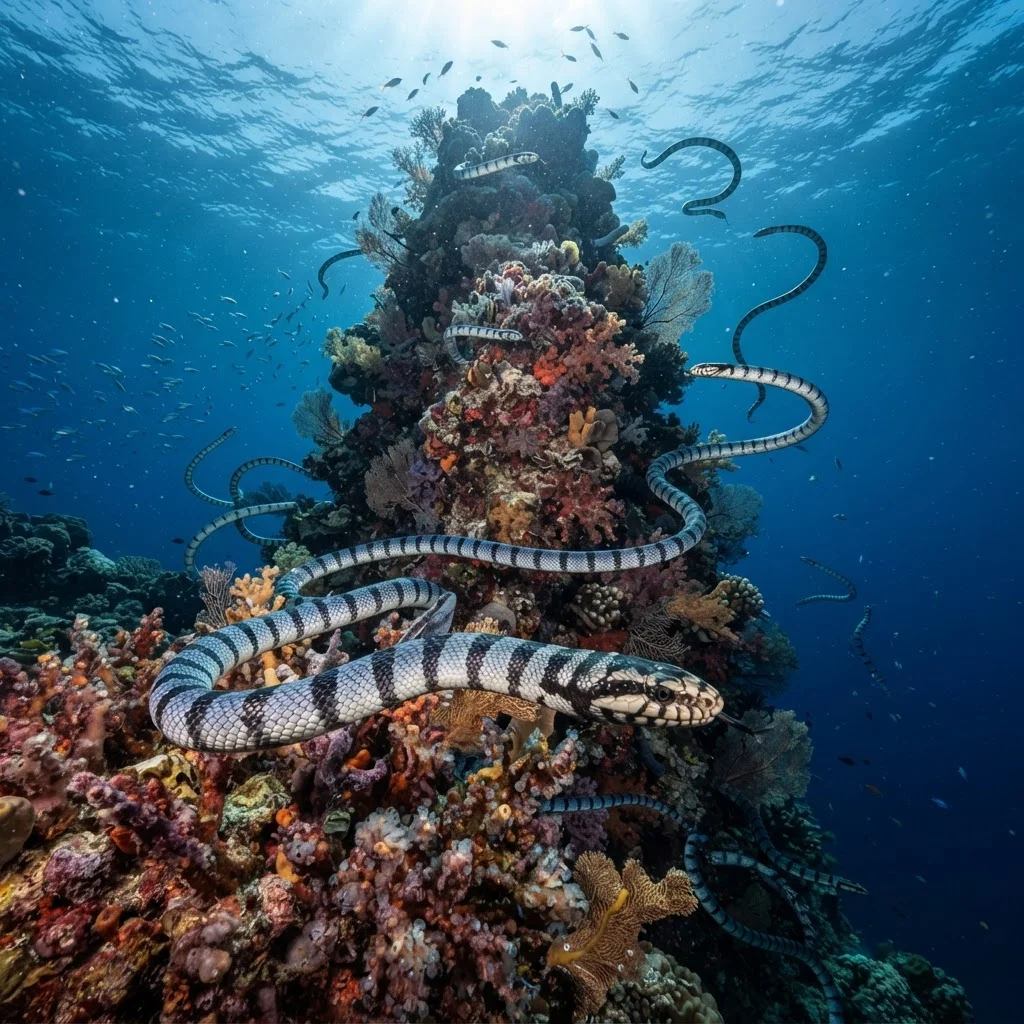
Marine snakes in Thailand display distinct geographical and ecological partitioning between the Andaman Sea to the west and the Gulf of Thailand to the east. The physical oceanography of these two bodies of water differs fundamentally. The Andaman Sea forms a deep oceanic basin that plunges rapidly beyond the continental slope into depths exceeding 3,000 metres. In contrast, the Gulf of Thailand is a shallow, semi-enclosed arm of the South China Sea, where depths average roughly 45 metres and reach no more than 85 metres in the central basin. These contrasting topographies create divergent marine habitats, shaping the distribution of Thailand's native snake lineages.
The Andaman Coast and Offshore Archipelagos
Along Thailand's western seaboard, marine snakes inhabit fringing coral reefs, steep drop-offs, and granite pinnacles surrounding Phuket, the Phi Phi Islands, Koh Lanta, and the Similan and Surin archipelagos. The dominant reptiles in these clear waters are amphibious sea kraits, particularly the banded sea krait (Laticauda colubrina) and the blue-lipped sea krait (Laticauda laticaudata). These snakes exploit the three-dimensional architecture of living reefs, working their way into fissures, coral heads, and rubble fields where moray eels and gobies shelter during the day. Because sea kraits are oviparous reptiles that lay eggs on land, their lifecycle depends on accessible shorelines. Uninhabited limestone karsts and granite boulders across marine national parks supply secure haul-out sites where kraits rest, digest meals, and deposit egg clutches away from terrestrial predators.
Farther offshore in the open Andaman, the marine environment transitions into a pelagic realm governed by deep currents. Convergence lines and surface slicks concentrate drifting flotsam and small fish, attracting the yellow-bellied sea snake (Hydrophis platurus). Unlike reef kraits, this serpent is completely pelagic and spends its entire life cycle in the open sea, floating at the surface to ambush small fish. Divers on offshore liveaboard expeditions and night blackwater dives occasionally encounter these snakes drifting over hundreds of metres of open water.
The Gulf of Thailand and Estuarine Inlets
The Gulf of Thailand presents an entirely different marine habitat dominated by soft muddy sediments, shallow sandy bays, and mangrove deltas fed by mainland river systems. Fully marine true sea snakes of the subfamily Hydrophiinae form the vast majority of serpent biomass across this basin. Species such as Shaw's sea snake (Hydrophis curtus), the blue-banded sea snake (Hydrophis cyanocinctus), and the beaked sea snake (Hydrophis schistosus) thrive in these shallow waters. To hunt effectively in turbid conditions where visibility is poor, species like Hydrophis curtus rely on specialised tactile mechanoreceptors, or scale sensillae, to detect the vibrations of benthic fish resting on the silty seafloor.
Several true sea snake species also enter brackish estuaries and coastal lagoons. In southern Thailand, sea snakes regularly penetrate Songkhla Lake, a massive coastal lagoon system that transitions from saline water at its seaward mouth to near-freshwater in its inner basins. Certain Hydrophis populations forage kilometres inland along tidally influenced river channels, bridging Thailand's marine and coastal wetland ecosystems.
Venom Biochemistry and Clinical Pathology
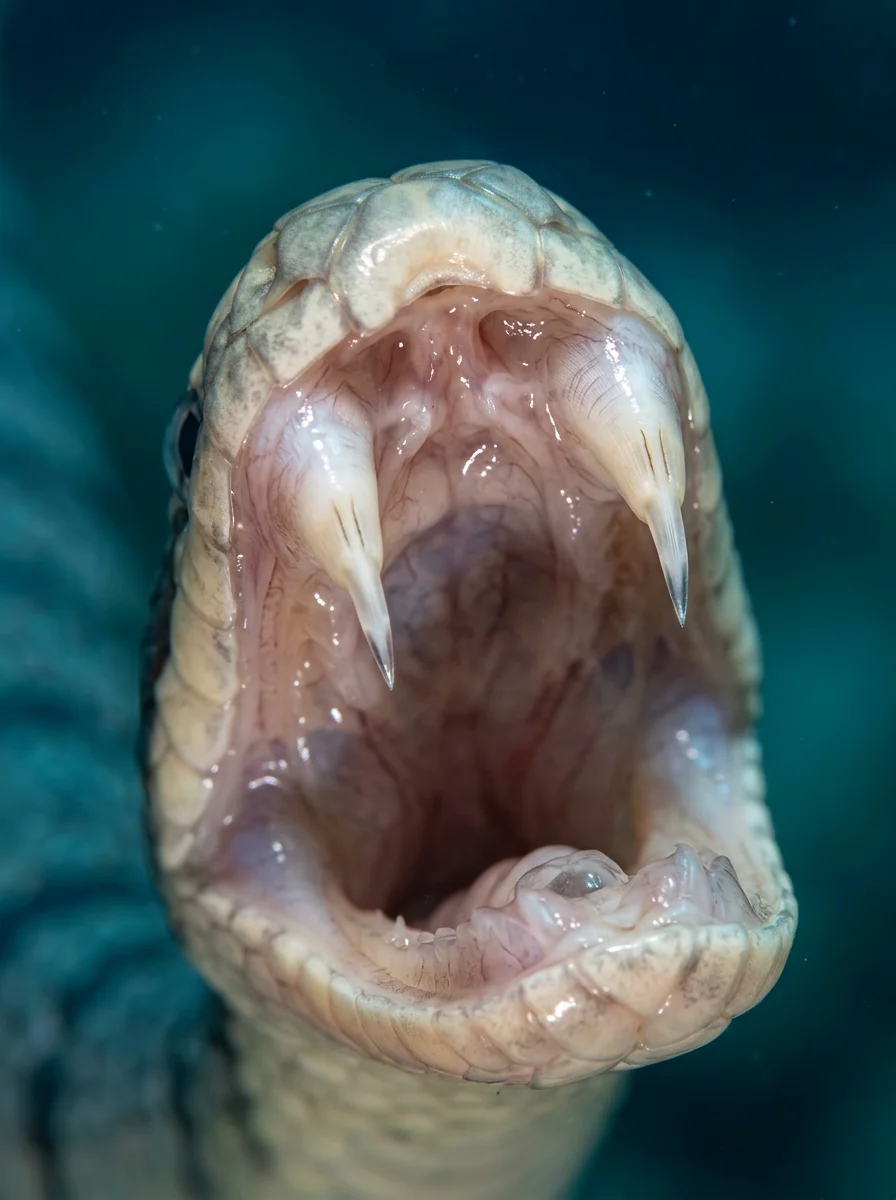
Marine snake venom ranks among the most potent biological toxins documented in reptiles. Evolved to subdue agile fish and marine eels within turbulent aquatic habitats where wounded prey could otherwise escape, the venom cocktail is functionally refined and chemically concentrated. Unlike terrestrial viper venoms that rely on complex tissue-destroying proteases and coagulopathic enzymes, marine elapid venom acts primarily through two pathological vectors: postsynaptic neuromuscular blockade and extensive skeletal muscle necrosis.
Postsynaptic Neurotoxicity and Respiratory Paralysis
The neurotoxic fraction in marine snake venom consists predominantly of low-molecular-weight basic proteins belonging to the three-finger toxin (3FTx) superfamily. These small peptides, comprising short-chain and long-chain alpha-neurotoxins, diffuse rapidly across capillary walls and travel through the systemic circulation. Their primary targets are the postsynaptic nicotinic acetylcholine receptors positioned across the motor endplates of skeletal muscle tissue. By binding competitively to these receptor sites with remarkable affinity, the toxins prevent the endogenous neurotransmitter acetylcholine from activating the muscle membrane, halting nerve signal transmission.
Clinically, this receptor blockade precipitates a progressive, descending flaccid paralysis. Early signs typically manifest in the cranial nerves, presenting as bilateral ptosis (drooping eyelids), diplopia (double vision), and external ophthalmoplegia (inability to coordinate eye movements). Weakness subsequently spreads to the facial muscles, tongue, and pharynx, causing dysarthria and severe difficulty swallowing. In severe cases devoid of medical support, the paralysis advances down through the cervical region into the torso, immobilising the intercostal muscles and the diaphragm. The terminal event in untreated neurotoxicity is acute asphyxiation caused by complete respiratory failure.
Phospholipase A2 Myotoxicity and Renal Complications
Systemic myotoxicity forms the second clinical pillar of true sea snake envenomation. This widespread muscular damage is driven by toxic isoforms of secretory phospholipase A2 enzymes, which directly hydrolyse the structural phospholipids of skeletal muscle cell membranes. The resulting breakdown of the sarcolemma triggers rhabdomyolysis, during which thousands of skeletal muscle fibres disintegrate and release their intracellular components into the bloodstream.
This rapid cellular leakage creates severe metabolic and biochemical disturbances:
- Creatine kinase enters the circulation in massive concentrations, serving as the standard clinical indicator of muscle breakdown; levels routinely escalate from normal baselines below 200 units per litre to values surpassing 100,000 units per litre within twenty-four hours.
- Myoglobin, an oxygen-carrying haem protein, filters through the kidneys into the urine, producing characteristic myoglobinuria where the urine turns reddish-brown, dark tea-coloured, or cola-black.
- Potassium ions flood the plasma, inducing acute hyperkalaemia that disrupts myocardial membrane potentials and triggers dangerous cardiac dysrhythmias, conduction blocks, and sudden ventricular arrest.
Secondary acute kidney injury develops frequently as filtered myoglobin precipitates within acidic renal tubules, forming obstructive intratubular casts that compound ischaemic injury and direct cellular toxicity.
The Deceptive Clinical Presentation
An encounter with a venomous marine snake often begins with very little warning. Sea snakes and sea kraits possess short, fixed front fangs measuring only 2.5 to 4 millimetres in length. Bites frequently produce minimal puncture marks that resemble minor scratches or sea urchin abrasions, accompanied by little to no initial pain, localised swelling, or tissue erythema. A swimmer or fisherman may dismiss the injury as harmless and continue normal activities.
Between 50 and 80 per cent of defensive sea snake strikes are dry bites in which no venom is expelled. When venom is injected, however, systemic symptoms rarely appear at once. A symptom-free latency period of thirty minutes to several hours typically precedes the onset of illness. The earliest systemic signs include generalised muscle stiffness, pervasive aching, acute tenderness on palpation, and trismus (painful involuntary contraction of the masticatory muscles, or lockjaw). As muscle breakdown and nerve inhibition take hold, motor weakness advances steadily alongside darkening urine.
Antivenom Realities and Supportive Care in Thai Hospitals
Definitive immunotherapy requires intravenous antivenom. The global benchmark is CSL Sea Snake Antivenom, manufactured in Australia from equine plasma hyperimmunised against the venoms of the beaked sea snake (Hydrophis schistosus) and the terrestrial tiger snake (Notechis scutatus). This product provides reliable cross-neutralisation across diverse Indo-Pacific Hydrophiinae. Because marine envenomations are exceptionally rare in Thailand, local hospitals rarely maintain supplies of imported Australian serum due to procurement costs and finite shelf life.
Thailand's Queen Saovabha Memorial Institute does not manufacture a dedicated marine antivenom, concentrating production on the country's prevalent terrestrial species. Laboratory studies on regional sea snake venoms have revealed that Queen Saovabha Memorial Institute's Thai Neuro Polyvalent Antivenom and monovalent monocled cobra antivenom confer paraspecific cross-neutralising protection against lethal venom fractions of regional species such as Hydrophis schistosus and Hydrophis curtus.
Where specific antivenom is unavailable, clinical management in Thai provincial medical centres centres on aggressive supportive therapy. Endotracheal intubation and mechanical ventilation maintain pulmonary gas exchange through the duration of neurotoxic paralysis. Concurrently, clinicians administer high-volume intravenous crystalloids paired with sodium bicarbonate to alkalinise urine above pH 6.5, keeping filtered myoglobin in solution and preventing obstructive cast nephropathy. Continuous electrocardiography and aggressive correction of hyperkalaemia protect cardiac stability until muscle necrosis subsides.
Encounters and Risk: Divers, Swimmers, and Fishing Hazards
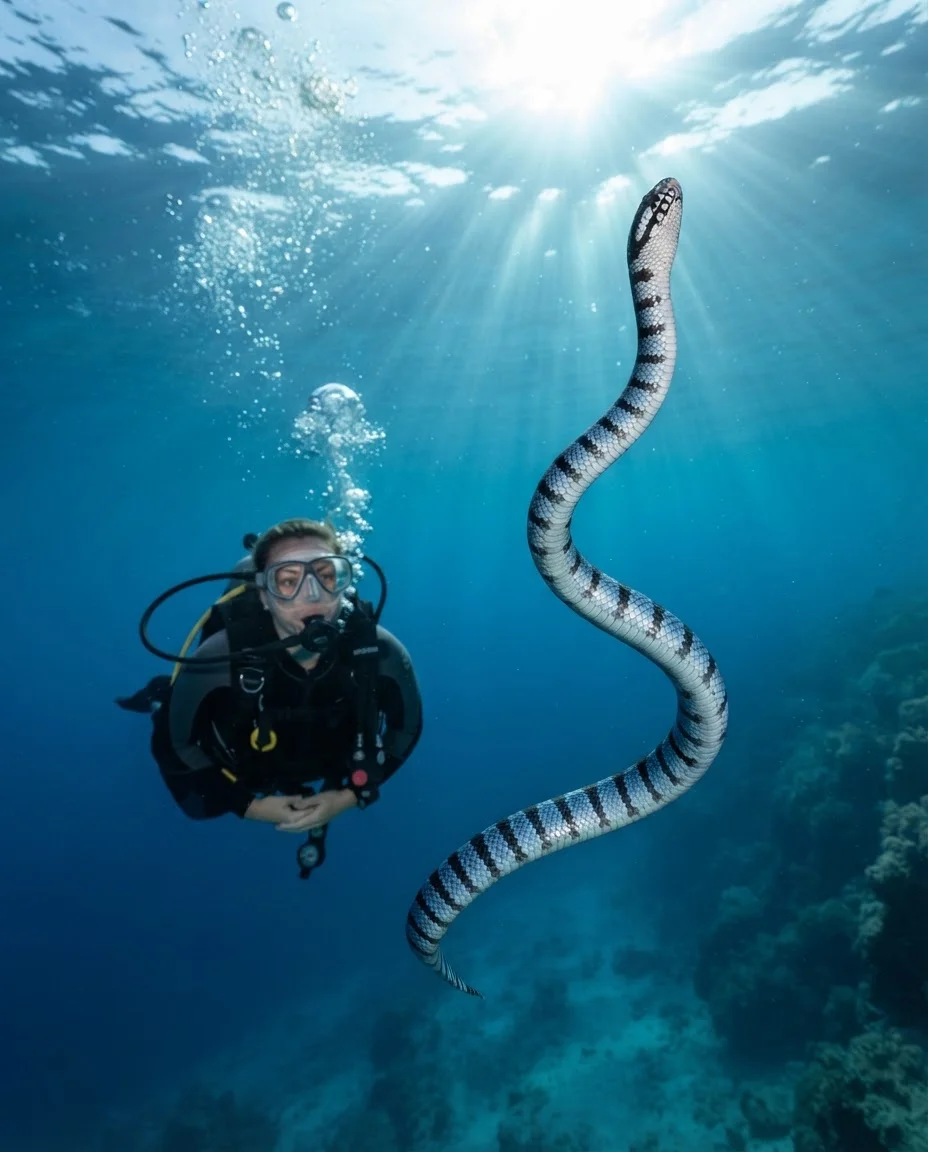
Encounters with marine snakes evoke intense apprehension among swimmers, snorkellers, and scuba divers, yet documented envenomations among recreational ocean users in Thailand are exceptionally rare. Marine snakes are placid reptiles that possess no innate territorial hostility toward humans. Bites occur almost exclusively when an animal is trapped, compressed, or handled directly. Data from toxicology registries and coastal health facilities indicate that over eighty per cent of all recorded marine snake envenomations in Thai waters involve commercial or artisanal fishermen working offshore.
Understanding the underlying drivers of snake behaviour transforms what appears to be menacing curiosity into predictable, benign biology. Clear field protocols, sensible exposure protection, and an accurate grasp of pressure-immobilisation first aid ensure that divers and swimmers can share Thai coastal waters with these reptiles in confidence.
Occupational Hazards in Commercial Fisheries
The primary focal point for marine snake bites in Southeast Asia is the commercial fishing sector rather than the open coral reef. Trawlers and small inshore drift-net vessels drag gear across shallow, muddy coastal shelves, which form the primary benthic hunting grounds for true sea snakes of the genus Hydrophis. When nets are hauled from the seabed, dozens of snakes can become trapped within the tangled mass of fish, prawns, and squid.
Envenomations occur almost entirely during catch sorting. Fishermen working on open decks, frequently under poor lighting during night operations, reach bare-handed into dense bundles of wet netting to extract entangled catch. In doing so, a deckhand may accidentally grip, squeeze, or kneel upon an agitated snake. Because marine snakes possess short fangs designed for subduing prey, defensive strikes into bare fingers, hands, or ankles inject venom rapidly. Retrospective data from poison centres in Thailand confirm that the vast majority of admitted patients are fishermen who sustained bites to the upper extremities while clearing nets.
Understanding Why Marine Snakes Approach Divers
Scuba divers exploring offshore pinnacles and fringing reefs throughout the Andaman Sea and the Gulf of Thailand regularly observe sea kraits and true sea snakes swimming directly toward them. Inexperienced divers often mistake this deliberate approach for hunting behaviour or an impending attack. In reality, these close encounters stem from specific physiological imperatives and sensory characteristics:
Obligate atmospheric respiration: Marine snakes are lung-breathing reptiles that spend prolonged periods foraging on the seabed or hunting inside reef crevices. When their oxygen reserves run low, they must ascend vertically through the water column to inhale air at the surface. A snake swimming swiftly toward a dive group is generally taking the most direct route to the surface; divers hovering overhead simply occupy that vertical transit corridor. Obstructing the reptile creates distress for an animal operating on limited oxygen.
Sensory investigation: Marine snakes possess limited visual acuity in open water and rely extensively on chemoreception and vibrational sensing. As a snake swims, it flicks its bifid tongue to gather microscopic chemical cues from the water, transferring them to its internal Jacobson's organ. To a foraging snake, a scuba diver clad in dark neoprene, trailing hoses, and emitting rising exhaust bubbles resembles an inert underwater structure, such as a fallen log, drift debris, or a coral outcrop. Snakes frequently approach divers to investigate fins, buoyancy jackets, or camera housings, taste the surrounding water with their tongues, and promptly swim away once satisfied that the diver is neither prey nor shelter.
Mating season confusion: During regional breeding windows, sexually active male sea kraits actively patrol the reef for receptive females. In low visibility or when guided by broad visual silhouettes, males can mistake elongated dark shapes—such as a diver's black rubber fins or trailing limbs—for potential mates, following them persistently before recognising the error.
Field Protocols for Divers and Swimmers
Observing a sea snake underwater is a memorable encounter that carries negligible risk if basic aquatic etiquette is maintained:
Maintain neutral buoyancy and give way: Divers should maintain stable trim and avoid blocking an ascending snake. If an animal is rising from the seabed, swim gently backward or drift aside to give it a direct, unimpeded route to the surface.
Remain completely motionless during inspections: If a curious snake swims toward you, passes between your legs, or inspects your equipment, avoid panic and refrain from sudden movements. Swatting at the snake or thrashing generates abrupt water displacement and pressure waves that can startle the animal into a defensive strike. Relax, breathe slowly, and let the snake finish its brief chemical survey; it will depart on its own within moments.
Wear protective exposure gear: A standard 3 mm or 5 mm neoprene wetsuit, accompanied by dive boots and gloves, provides an effective mechanical shield. True sea snakes and sea kraits possess proteroglyphous dentition with relatively short fangs, rarely exceeding 2.5 to 4.5 millimetres. While these short fangs can penetrate thin Lycra or bare skin, compressing and puncturing dense closed-cell neoprene requires far greater force than a defensive marine snake bite can generate.

Exercise caution in silty shallows: When entering murky estuaries, mangrove channels, or shallow river mouths, avoid wading bare-legged. True sea snakes resting partially concealed within the sediment cannot clearly see an approaching foot and may bite defensively if trodden upon. Sturdy footwear and slow, shuffling steps reduce the likelihood of accidental contact.
Shoreline Encounters and Stranded Snakes
Distinguishing between amphibious sea kraits and fully marine true sea snakes is crucial along the coastline. Sea kraits of the genus Laticauda are semi-terrestrial; they regularly crawl onto dry land to rest, digest meals of moray eels, shed their skin, and lay eggs. They are commonly spotted basking on rocky limestone ledges, inside tidal karst caverns, or on secluded island beaches around Koh Phi Phi, Koh Tao, and the Similan Islands. These resting kraits are exceptionally placid but must be left entirely undisturbed. Touching them, attempting to lift them, or cornering them against rock walls can provoke a defensive bite.
By contrast, true sea snakes of the genus Hydrophis are fully aquatic and lack the enlarged belly scales needed to move on land. If a true sea snake is found lying exposed on a sandy beach, it is almost certainly exhausted, injured, or dying after being tossed ashore by strong surf. Beachgoers should keep people away and refrain from attempting to push the animal back into the sea with bare hands, as an injured snake remains fully venomous.
First Aid and Pressure Immobilisation
A sea snake bite differs markedly from a terrestrial viper bite. Because marine snake fangs are tiny, puncture marks may resemble minute pinpricks, scratches, or small abrasions, frequently accompanied by little or no initial pain, swelling, or local tissue damage. A victim may barely realise they have been bitten. Systemic envenomation develops gradually over thirty minutes to several hours, beginning with muscle stiffness, ptosis, and difficulty speaking, followed by progressive flaccid paralysis and rhabdomyolysis that turns urine dark reddish-brown. Immediate first aid must slow venom absorption:
Immediate assisted exit from the water: The bitten individual must be brought onto dry land or aboard a boat at once. If respiratory paralysis or muscle weakness develops while the victim is still in deep water, drowning will occur long before the venom's systemic toxicity causes death.
Absolute physical rest: Keep the casualty completely still, calm, and resting in a horizontal position. Any physical exertion, walking, or panic elevates heart rate and accelerates lymphatic flow, distributing low-molecular-weight toxins into the bloodstream within minutes.
Pressure Immobilisation Technique: Endorsed by the World Health Organisation for neurotoxic elapid bites, the Pressure Immobilisation Technique slows the transport of venom through lymphatic channels. Apply a broad elasticised compression bandage, ideally 10 to 15 centimetres wide, directly over the bite site at approximately the tension used for a sprained ankle. Then, bind the entire limb smoothly, wrapping from the fingers or toes upward toward the trunk. The pressure must compress subcutaneous lymphatic vessels without cutting off arterial circulation; peripheral pulses in the foot or wrist must remain palpable.
Limb splinting: Secure a rigid splint—such as a wooden slat, dive slate, or folded cardboard—alongside the bandaged limb to immobilise the joints completely. The victim must not bend or flex the arm or leg.
Avoid harmful traditional practices: Outdated methods must not be used. Do not cut the wound, avoid mechanical suction devices, do not apply arterial tourniquets that cut off deep blood flow, and avoid placing ice packs or herbal poultices on the skin. These actions cause severe localised tissue trauma and accelerate clinical deterioration.
Hospital Transport and Clinical Management
The casualty requires urgent evacuation to a comprehensive provincial hospital or tertiary medical facility equipped with an intensive care unit and mechanical ventilators. In Thailand, emergency medical response can be initiated by dialling 1669, the national emergency medical dispatch service, which coordinates ambulance dispatch and hospital reception across coastal provinces.
UK travellers should understand that specific monovalent sea snake antivenom is not manufactured in Thailand. The Queen Saovabha Memorial Institute in Bangkok, operated by the Thai Red Cross Society, produces antivenoms for terrestrial venomous snakes, but sea snake antivenom is not part of routine domestic hospital inventory. Consequently, hospital treatment relies on supportive medical care. Doctors maintain artificial ventilation if neurotoxic respiratory failure occurs, alongside intensive intravenous hydration and urinary alkalinisation to protect the kidneys from damage caused by severe muscle breakdown. In selected severe cases, clinical teams may administer neuro polyvalent antivenom under specialist toxicological guidance from national poison centres. With early respiratory support and intensive hospital management, the prognosis following sea snake envenomation is remarkably favourable.
Quick Reference Table
| Item | Detail | Notes |
|---|---|---|
| Marine Snake Diversity | Approximately 30 recorded species | Distributed across both the Andaman Sea and the Gulf of Thailand |
| Evolutionary Lineages | True sea snakes (Hydrophiinae) and sea kraits (Laticaudinae) | True sea snakes are obligate live-bearers; kraits lay eggs and drink water on land |
| Most Common Reef Species | Banded sea krait (*Laticauda colubrina*) | Placid reef dweller, frequently seen around Phuket, Koh Phi Phi, Koh Lanta, and Koh Tao |
| Longest Marine Snake | Yellow sea snake (*Hydrophis spiralis*) | Reaches up to 2.75 metres; inhabits deep offshore continental shelf seabeds |
| Most Medically Significant | Beaked sea snake (*Hydrophis schistosus*) | Lethal dose roughly 1.5 mg; responsible for most regional bites in turbid estuaries |
| Pelagic Specialist | Yellow-bellied sea snake (*Hydrophis platurus*) | Open-ocean surface dweller featuring black and yellow countershading |
| Primary Venom Actions | Postsynaptic neurotoxicity and systemic myotoxicity | Induces descending flaccid paralysis, rhabdomyolysis, and acute kidney injury |
| Fang Morphology | Short, fixed proteroglyphous fangs (2.5–4.5 mm) | Easily stopped by standard 3 mm to 5 mm closed-cell neoprene diving suits |
| Dry Bite Frequency | 50% to 80% of defensive strikes | Puncture marks can resemble painless scratches with no immediate swelling |
| Primary At-Risk Group | Commercial and artisanal fishermen (>80% of recorded bites) | Occurs almost exclusively while handling nets or sorting catch on boat decks |
| Diver & Swimmer Risk | Exceptionally low; unprovoked attacks virtually unknown | Inquisitive approaches stem from surfacing to breathe, mate confusion, or weak vision |
| Recommended First Aid | Pressure Immobilisation Technique (PIT) and splinting | Wrap limb firmly with broad elastic bandage; keep victim still; never cut or use tourniquets |
| Clinical Management | Mechanical ventilation, IV hydration, and urine alkalinisation | Specific marine antivenom is rarely stocked; neuro polyvalent antivenom may be used |
| Emergency Medical Dispatch | 1669 | Thailand national emergency response coordinating ambulance dispatch |
| National Antivenom Producer | Queen Saovabha Memorial Institute | Thai Red Cross facility in Bangkok producing domestic terrestrial antivenoms |
FAQ: Sea Snakes in Thailand
How dangerous are sea snakes to swimmers and divers in Thailand?
What is the main difference between true sea snakes and sea kraits in Thailand?
Which sea snake species is most commonly seen on coral reefs in Southern Thailand?
Which sea snake in Thailand is considered the most dangerous?
What are the immediate signs of a sea snake bite?
Why do sea snakes sometimes approach divers?
What should divers do if a sea snake approaches them underwater?
What should I do if a sea snake investigates my dive gear or swims close to me?
Should I wade barefoot in shallow, murky waters in Thailand?
What is the first step if someone is bitten by a sea snake while in the water?
Reviewed by the Thailand Guide Editorial Team • Last reviewed: 20 November 2026
This page is provided for general information only. While we aim for accuracy, details can change — please verify anything important independently before relying on it.