Kraits in Thailand
A bite from the Malayan krait often causes little to no initial swelling or local pain, yet its venom delivers potent neurotoxins that can induce respiratory paralysis within hours. Envenomed victims frequently remain conscious while suffering progressive motor shutdown, a clinical picture documented by the Queen Saovabha Memorial Institute and provincial hospitals across Thailand. This deceptive lack of immediate trauma makes terrestrial kraits among the most medically significant venomous snakes in the country, requiring serious precautions in rural and agricultural settings.
Kraits belong to the elapid genus Bungarus, a group of front-fanged, venomous snakes native to southern and southeastern Asia. This guide examines the species indigenous to Thailand, focusing on the banded krait (Bungarus fasciatus), the Malayan krait (Bungarus candidus), and the red-headed krait (Bungarus flaviceps). The following sections detail their diagnostic anatomy, colouration patterns, distributions across the country, nocturnal hunting habits, neurotoxic venom activity, and distinctions from harmless mimics, alongside medical protocols and preventative safety measures.
Within the elapid family, Bungarus forms a specialised lineage of ground-dwelling snakes adapted for subterranean shelter and preying upon other reptiles. Kraits possess a proteroglyphous dentition system, where relatively short, hollow fangs sit fixed at the anterior end of shortened maxillary bones. These fangs typically measure between two and three millimetres in mature adults. Unlike the long, hinged fangs of solenoglyphous vipers, krait fangs deliver venom into subcutaneous tissue without deep intramuscular penetration. Behind a toothless gap known as a diastema, each maxilla carries three or four small, solid teeth that assist in securing prey.
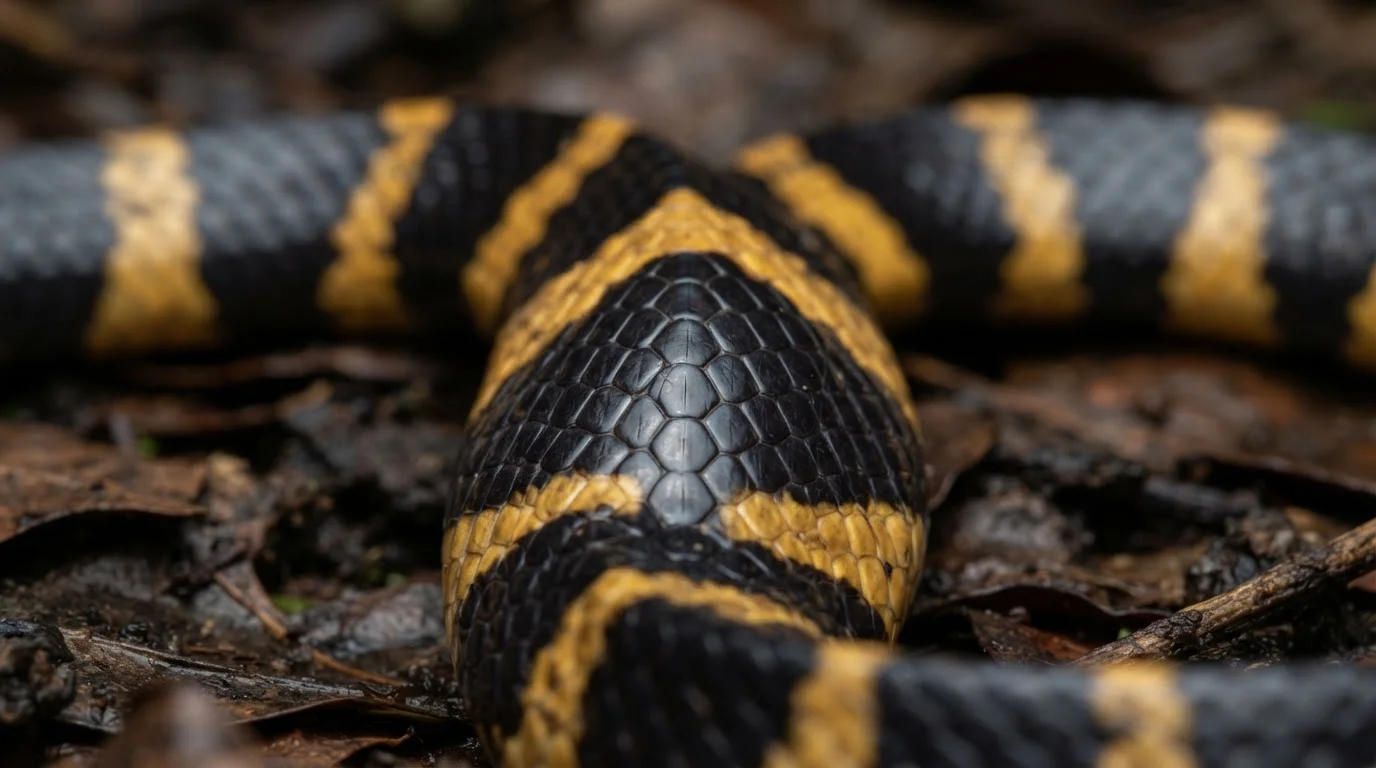
The body structure of a krait displays distinct anatomical adaptations. In species such as the banded krait, the body is noticeably triangular in cross-section, peaked along the spine by an elevated vertebral ridge. This keel features a prominent central row of enlarged, hexagonal vertebral scales that are wider than they are long, providing a key diagnostic trait separating true kraits from non-venomous colubrid mimics. Smooth dorsal scales flank this ridge, arranged in 15 rows at midbody in most species, though the red-headed krait possesses 13 rows. Ventral scales number from 193 to 237, enabling movement through leaf litter and water margins. Beneath the tail, the subcaudal scales are undivided along all or most of their length. The head is flattened, blunt, and merges smoothly into the neck, facilitating entry into burrows and termite mounds.
| Characteristic | Banded Krait (*Bungarus fasciatus*) | Malayan Krait (*Bungarus candidus*) | Red-headed Krait (*Bungarus flaviceps*) |
|---|---|---|---|
| Body Cross-Section | Distinctly triangular with high vertebral keel | Rounded to sub-triangular | Moderately triangular to cylindrical |
| Midbody Scale Rows | 15 rows | 15 rows | 13 rows |
| Vertebral Scales | Greatly enlarged, hexagonal | Moderately to distinctly enlarged, hexagonal | Enlarged, hexagonal along dorsal midline |
| Subcaudal Scale Structure | Entire (single row throughout) | Entire (single row throughout) | Divided near tail tip; single anteriorly |
| Tail Morphology | Abruptly blunt, rounded tip | Slender, tapering to point | Slender, tapering tip |
| Typical Adult Length | 140 to 180 cm (can exceed 200 cm) | 90 to 120 cm (rarely up to 140 cm) | 120 to 160 cm (rarely up to 210 cm) |
| Maxillary Teeth Behind Fang | 3 to 4 small teeth | 3 to 4 small teeth | 3 to 4 small teeth |

Key Native Species: Profiles and Distinguishing Marks
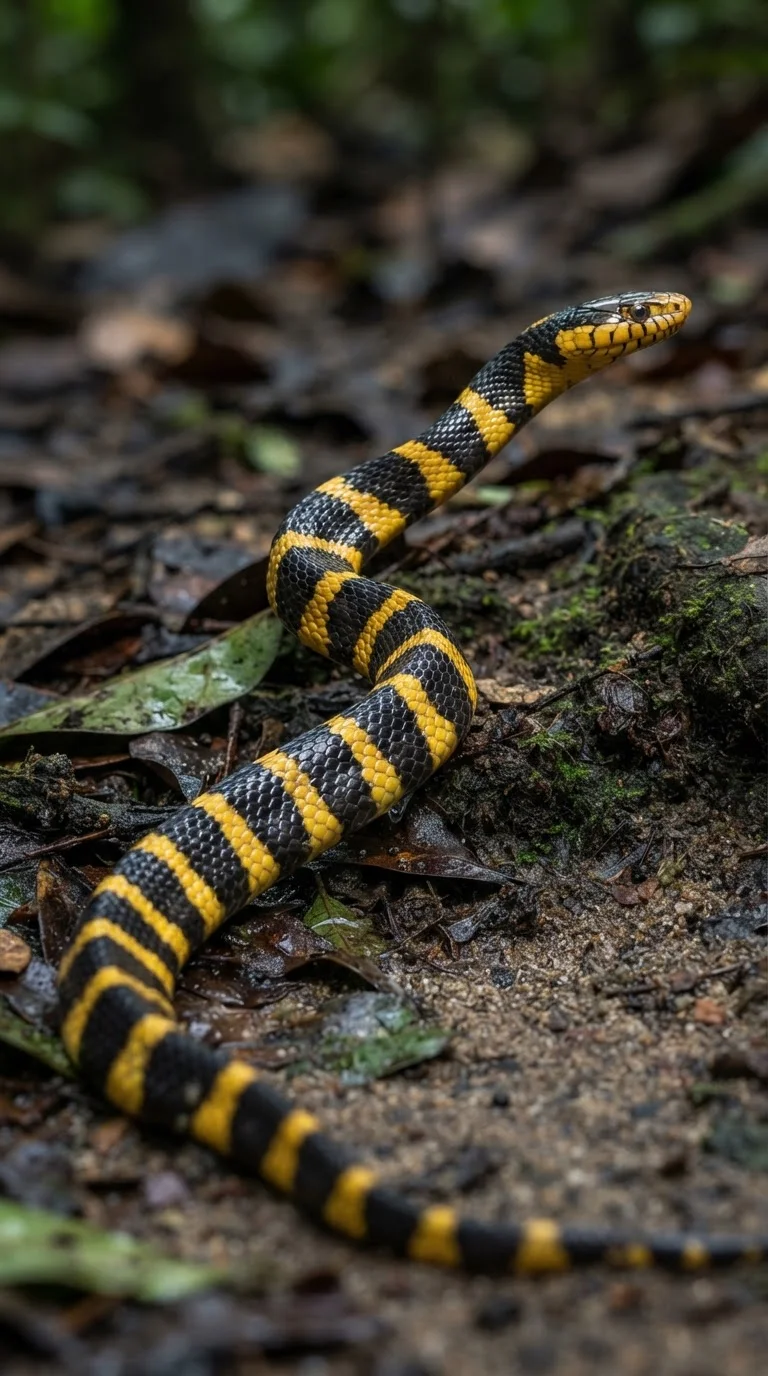
Thailand provides habitat for several terrestrial kraits of the genus Bungarus, three of which account for the vast majority of sightings across lowlands, agricultural valleys, and southern evergreen forests. While all kraits share the characteristic triangular body cross-section and enlarged vertebral scales, each species displays distinct colour patterns, head markings, and tail structures that allow reliable field identification.
Banded Krait
The banded krait (Bungarus fasciatus) is the largest and most widespread member of the genus in Thailand. Adults typically measure 1.4 to 1.8 metres, with rare specimens reaching 2.1 metres. In rural areas, it is often described simply as the triangular snake, highlighting the prominent, knife-like vertebral ridge running along its spine.
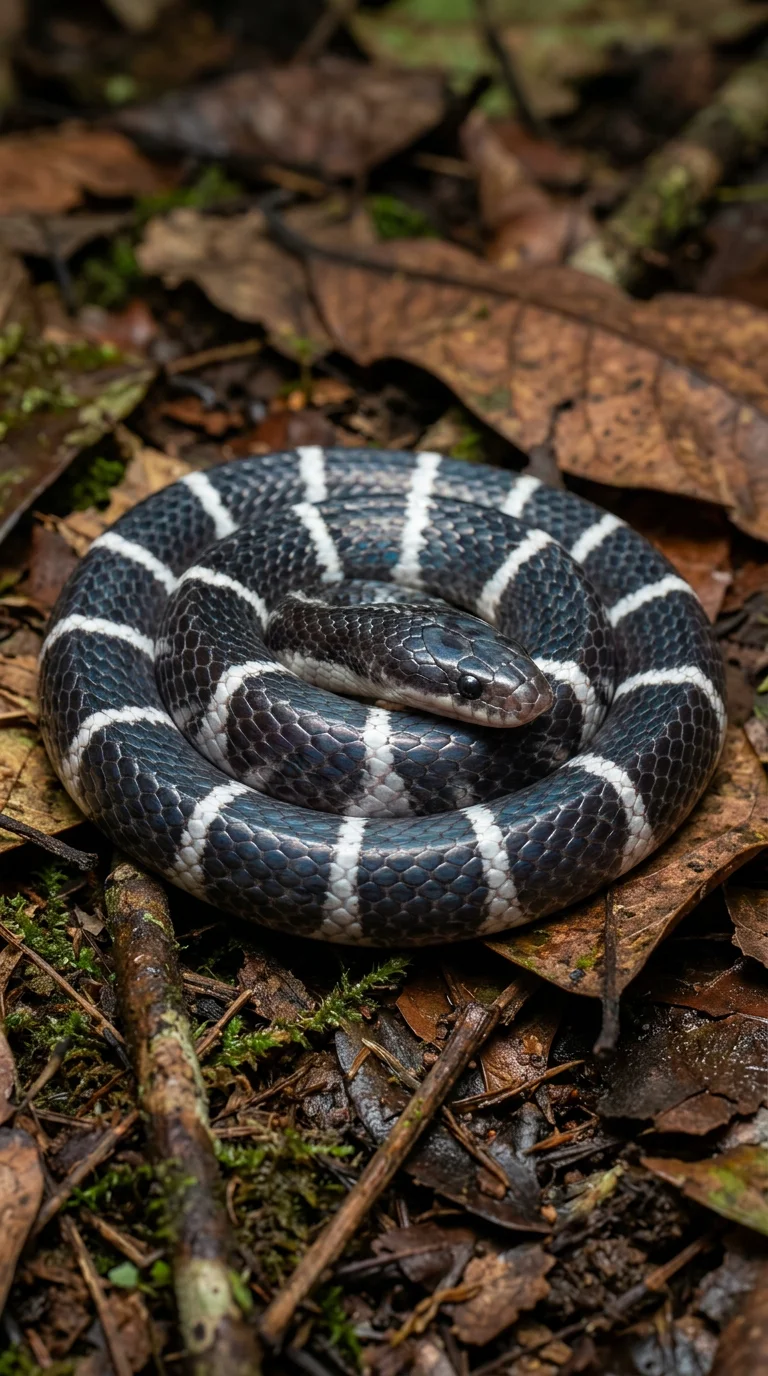
Its colour pattern consists of alternating, broad crossbands of glossy black and bright sulphur-yellow or creamy gold. These bands are roughly equal in width and completely encircle the body, continuing unbroken across the belly. A typical adult carries 20 to 28 black bands along the body, with 3 to 5 banding the tail. The tail structure provides an immediate diagnostic indicator: rather than tapering to a sharp point, it terminates in an abruptly blunt, rounded tip that appears cleanly severed. The broad head features a dark crown broken by an open yellow chevron pointing towards the snout, while the lips, chin, and throat are pale yellow.
Malayan Krait
The Malayan krait (Bungarus candidus), also called the blue krait, is a medium-sized serpent typically measuring 90 to 110 centimetres, though large individuals can attain 135 centimetres. Despite its smaller build, it presents the primary clinical bite risk among Thai kraits due to its potent venom and habit of frequenting agricultural land.
Its dorsal pattern features 27 to 34 glossy black or bluish-black crossbands separated by narrower white or pale cream interspaces. A vital diagnostic mark separates this species from the banded krait: the dark crossbands are widest along the spine and taper down the flanks, ending before the venter. The belly is pristine white, sometimes showing dark spotting along the outer edges of the belly scales in older adults. The solid black colour of the head and nape connects directly to the first dark body band, while the upper lips are white. The tail tapers smoothly to an acute point.
Cryptic Relatives and Regional Taxa
Herpetologists in Thailand recognise several cryptic lineages within the black-and-white banded complex. In the northern highlands, populations traditionally treated under the many-banded krait (Bungarus multicinctus) or Wanghaoting's krait (Bungarus wanghaotingi) display narrower, more numerous white crossbands—often numbering 31 to 50 rings—and subtle cranial distinctions. Doi Phu Kha National Park in northern Nan Province has also yielded records of Slowinski's krait (Bungarus slowinskii), recognisable by dark-edged scales inside its white bands and a blunt tail tip.
In 2024, researchers described the arrow-vented krait (Bungarus sagittatus) from hill evergreen forest in the Tenasserim Mountain Range of western Ratchaburi Province. While superficially resembling the Malayan krait with its 25 to 31 narrow white crossbars and immaculate white belly, it carries a unique diagnostic mark: a row of dark brown, arrow-shaped triangular spots running along the midline of the subcaudals beneath the tail.
Red-Headed Krait
The red-headed krait (Bungarus flaviceps) is among the most visually striking elapids in Southeast Asia. Adults generally measure 1.2 to 1.6 metres, with exceptional specimens in southern forests reaching 2.1 metres.
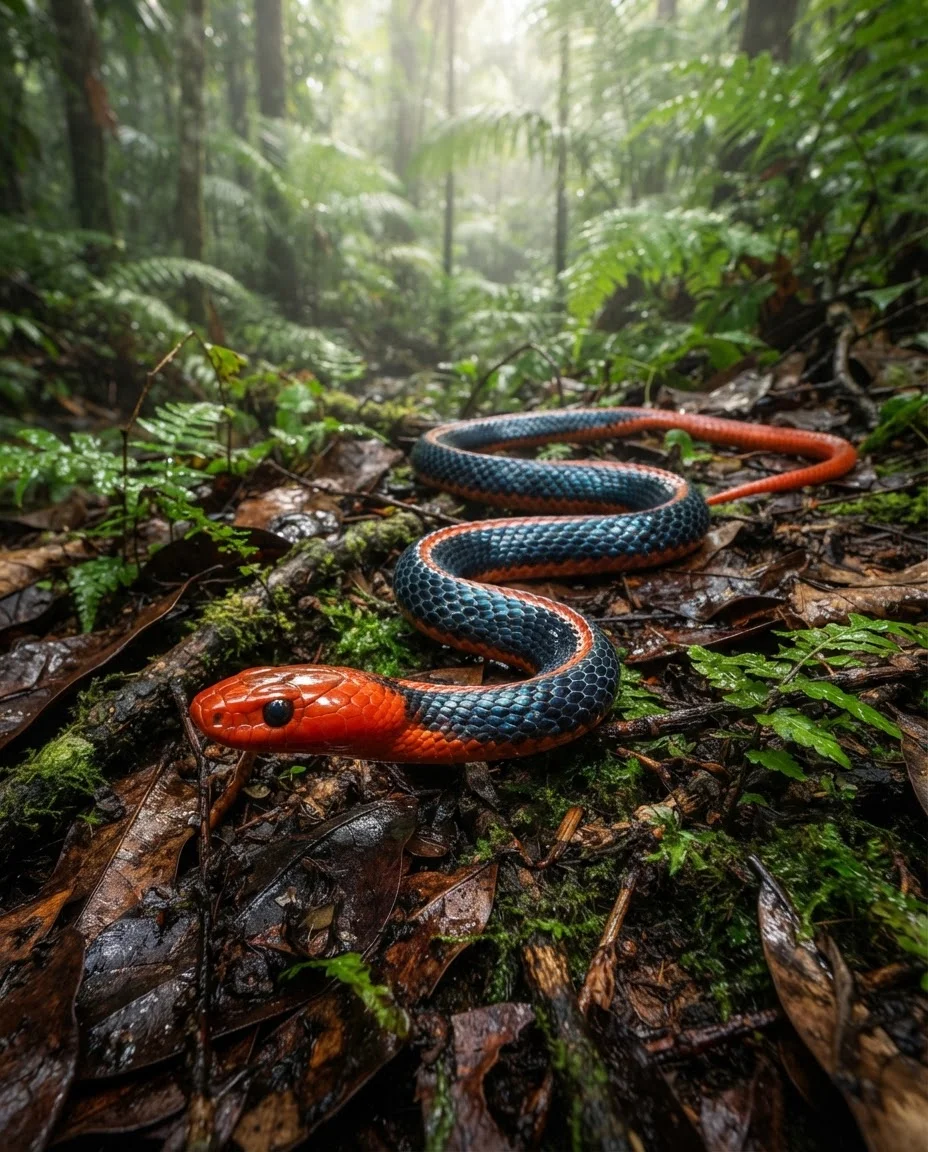
The head, jaws, and nape are uniform scarlet, crimson, or deep orange, ending cleanly where the torso begins. The body is an iridescent slate, charcoal, or bluish-black, occasionally displaying a faint, narrow red or pale line along the spine and narrow whitish stripes along the lower flanks. The tail repeats the scarlet hue of the head, creating vivid warning colouration at both ends. Anatomically, while most kraits possess undivided subcaudal scales throughout, the red-headed krait features single subcaudals near the vent that transition into divided, paired plates towards the tapered tail tip. Confined to undisturbed southern evergreen rainforest, encounters in Thailand are rare.
| Feature | Banded Krait | Malayan Krait | Red-Headed Krait |
|---|---|---|---|
| Primary Colour Scheme | Alternating black and bright sulphur-yellow bands | Alternating black or bluish-black and white bands | Iridescent dark blue-black body with scarlet head and tail |
| Band Encircling | Bands fully encircle torso and belly | Dark bands narrow at flanks; belly is plain white | Torso unbanded; may show thin vertebral or flank lines |
| Head Markings | Black cap broken by open yellow chevron | Solid black crown and nape; pale white lips | Uniform bright crimson, scarlet, or deep orange |
| Tail Termination | Abruptly blunt and rounded | Slender, tapered point | Slender, tapered point |
| Relative Abundance | Widespread across lowlands and agricultural land | Common in lowlands, plains, and settled valleys | Rare; restricted to mature southern evergreen forest |
| Primary Threat Level | Highly neurotoxic; calm nature makes bites rare | Accounts for the majority of severe krait bites in Thailand | Potent neurotoxin; clinical bite records are exceptionally rare |
Comparative Morphology: Kraits Versus Mimics and Other Thai Serpents
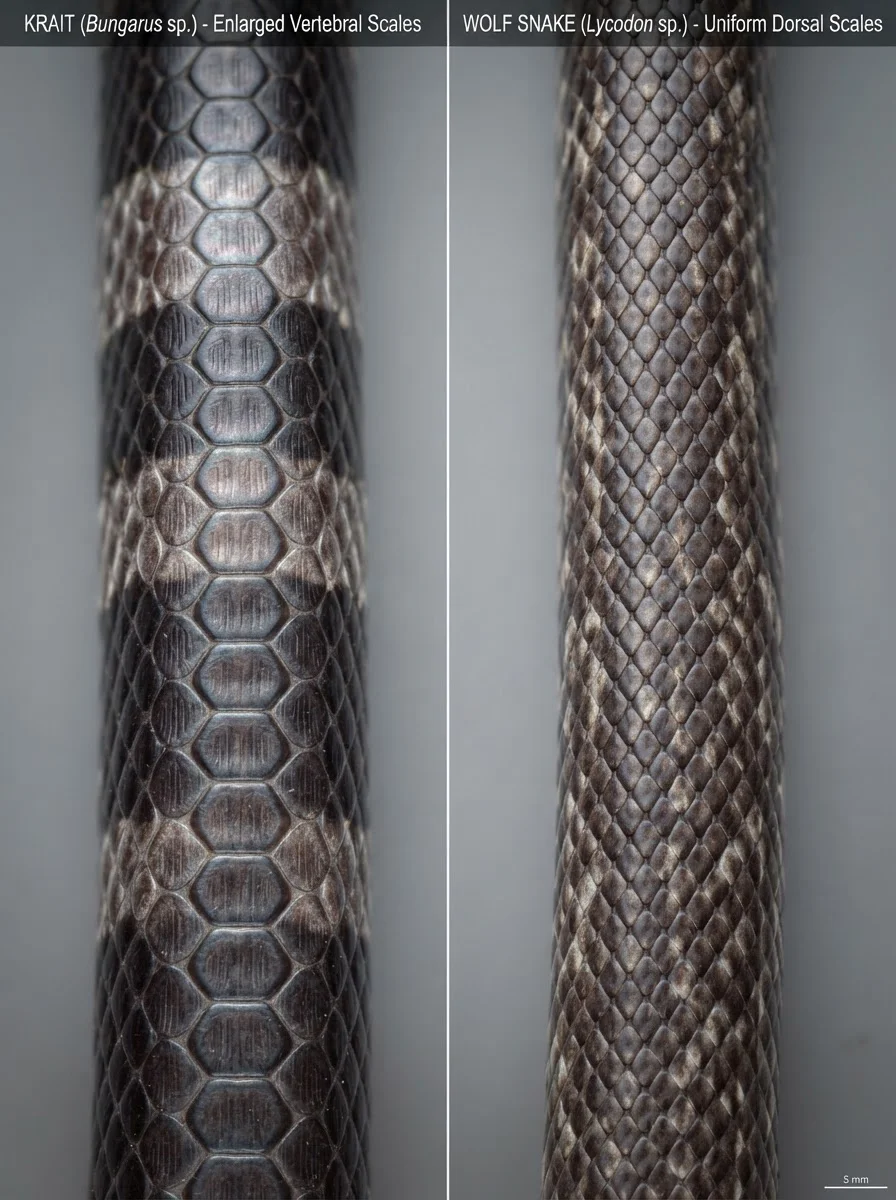
The contrasting banded markings of kraits (Bungarus) are mirrored by several harmless Thai serpents through Batesian mimicry. Because mistaking a lethally venomous krait for an innocuous lookalike carries grave consequences, distinguishing these species using scalation, cranial shape, and body structure is vital in the field.
The wolf snake mimicry complex
Non-venomous wolf snakes of the genus Lycodon cause the most frequent identification errors in Thailand. Common species such as the Malayan banded wolf snake (Lycodon subcinctus), the common wolf snake (Lycodon capucinus), and the Laotian wolf snake (Lycodon laoensis) display alternating dark and pale bands resembling the Malayan krait (Bungarus candidus) and banded krait (Bungarus fasciatus). Juvenile specimens appear especially similar to the untrained eye.
Vertebral scalation offers the most reliable visual distinction. A krait features an enlarged row of hexagonal scales along the centre of its back, giving its body a noticeable triangular or roof-shaped cross-section. Wolf snakes have dorsal scales of uniform size across the entire back, with no enlarged vertebral ridge. Head scalation also differs fundamentally: wolf snakes possess a loreal scale situated between the nasal and preocular scales. In Bungarus, the loreal scale is entirely absent, placing the nasal or prefrontal scales in direct contact with adjacent plates.
Head shape, eyes, and subcaudal scales provide further confirmation. Wolf snakes have flattened, duckbill-shaped heads clearly wider than their slender necks, alongside large eyes with vertical pupils. Kraits have blunt, rounded snouts that merge smoothly into the neck, paired with small, bead-like eyes containing round pupils. Under the tail, Lycodon species feature paired subcaudals arranged in two divided rows, whereas most kraits possess single, undivided subcaudal scales throughout their length. The fatal bite suffered by herpetologist Dr Joseph Slowinski in Myanmar in 2001 occurred when a juvenile krait—then identified as Bungarus multicinctus and later described as Bungarus suzhenae—was mistaken for a harmless Lycodon.
Differentiating terrestrial kraits from amphibious sea kraits
Superficial similarities also occur between terrestrial kraits and amphibious sea kraits (Laticauda colubrina and Laticauda laticaudata). While both genera belong to the Elapidae family and share banded patterns, their physical adaptations reflect separate habitats. Sea kraits possess a laterally flattened, oar-like paddle tail for swimming, valvular nostrils positioned to exclude seawater, and divided subcaudal scales. Terrestrial kraits feature cylindrical tails that taper to a point or end bluntly, lateral nostrils adapted for dry ground, and predominantly undivided subcaudals. Sea kraits are restricted to marine margins, rocky islets, and reefs, whereas terrestrial kraits inhabit inland forests, rice paddies, and rural gardens.
Distinction from cobras and pit vipers
Kraits also differ sharply from other venomous Thai reptiles. Cobras (Naja) possess elongated cervical ribs and loose neck skin that flare into an upright hood when threatened. Terrestrial kraits lack expandable cervical ribs, cannot hood, and typically hide their heads beneath tight body coils during daylight encounters. Pit vipers (Viperidae) feature rough, heavily keeled scales, broad triangular heads, and heat-sensing loreal pits between the eye and nostril. Kraits have smooth, glossy scales, rounded heads, and no facial pits.
| Family | Elapidae | Colubridae | Elapidae | Elapidae |
|---|---|---|---|---|
| Vertebral Scales | Greatly enlarged, hexagonal | Normal size; not enlarged | Normal size; not enlarged | Normal size; not enlarged |
| Loreal Scale | Absent | Present | Absent | Absent |
| Tail Morphology | Cylindrical (blunt or pointed) | Cylindrical, long, tapering | Laterally flattened paddle | Cylindrical, long, tapering |
| Subcaudal Scales | Predominantly single (undivided) | Divided (paired) | Divided (paired) | Divided (paired) |
| Hooding Ability | None | None | None | Extensive cervical spread |
| Eye and Pupil | Small; round pupil | Moderate; vertical pupil | Small; round pupil | Moderate; round pupil |
Plan a Northern Thailand trip covering Chiang Mai, Chiang Rai, Sukhothai, mountain routes, Lanna food, transport, seasons and air quality.
Geographical Distribution and Habitat Niches Across Thailand

Terrestrial kraits occupy almost every major land biome in Thailand, from coastal mangrove margins and low-lying estuaries up to montane hill evergreen forests exceeding 1,200 metres above sea level. Across the kingdom, their geographical range and local density are governed by environmental moisture, ambient humidity, and the distribution of their preferred serpent and amphibian prey.
The banded krait (Bungarus fasciatus) is the most widespread member of the genus in Thailand. It occurs across all administrative territories, including the Central Plains, the Khorat Plateau of the north-east, northern river valleys, western border ranges, and peninsular provinces extending to the Malaysian border. Exceptionally adaptable to human-modified landscapes, it thrives across the lowlands of the Chao Phraya river basin, where extensive canal networks, irrigation ditches, and wet-rice cultivation provide plentiful food and perpetual ground moisture.
The Malayan krait (Bungarus candidus) is similarly widespread across central, eastern, north-eastern, and southern Thailand, flourishing around agricultural borders, orchard drainage systems, and rural settlements. In the north-east, hospital records identify it as responsible for the vast majority of krait envenomations. It becomes uncommon in northern mountainous terrain, where black-and-white banded kraits are represented by cryptic relatives within the Bungarus wanghaotingi complex. In western Thailand, the newly described Bungarus sagittatus is currently documented only from hill evergreen and mixed deciduous forest between 600 and 1,050 metres on Khao Krachom in Ratchaburi Province, within the Tenasserim mountain range. Montane forest in northern Thailand also supports the rare Red River krait (Bungarus slowinskii), confirmed in Nan Province.
By contrast, the red-headed krait (Bungarus flaviceps) is an ecological specialist restricted to Sundaic evergreen rainforests in the southern peninsula, typically below 900 metres elevation. Confirmed records come from Surat Thani, Phang Nga, Krabi, Nakhon Si Thammarat, Trang, and the Hala-Bala forest complex along the southern border. The species depends upon undisturbed canopy cover and clean forest streams, avoiding open agricultural plains, dry deciduous woodlands, and suburban development.
Across all species, micro-habitat selection reflects a critical physiological need to prevent dehydration during daylight hours. Lowland species such as B. fasciatus and B. candidus spend the day concealed within earth dykes dividing rice paddies, disused crab holes, rodent burrows, and termite mounds. In primary rainforest, B. flaviceps retreats beneath deep leaf litter, buttress root networks, and rotting fallen logs in shaded ravines. Both banded and Malayan kraits frequently move into village compounds and gardens, attracted by rodents and smaller snakes around woodpiles, poultry pens, and discarded building supplies. During seasonal monsoon rains, flooded burrows force these snakes above ground, where they frequently seek dry refuge inside stilted dwellings, outbuildings, and ground-level living areas.
The Nocturnal Paradox: Diel Behaviour and Hunting Ecology
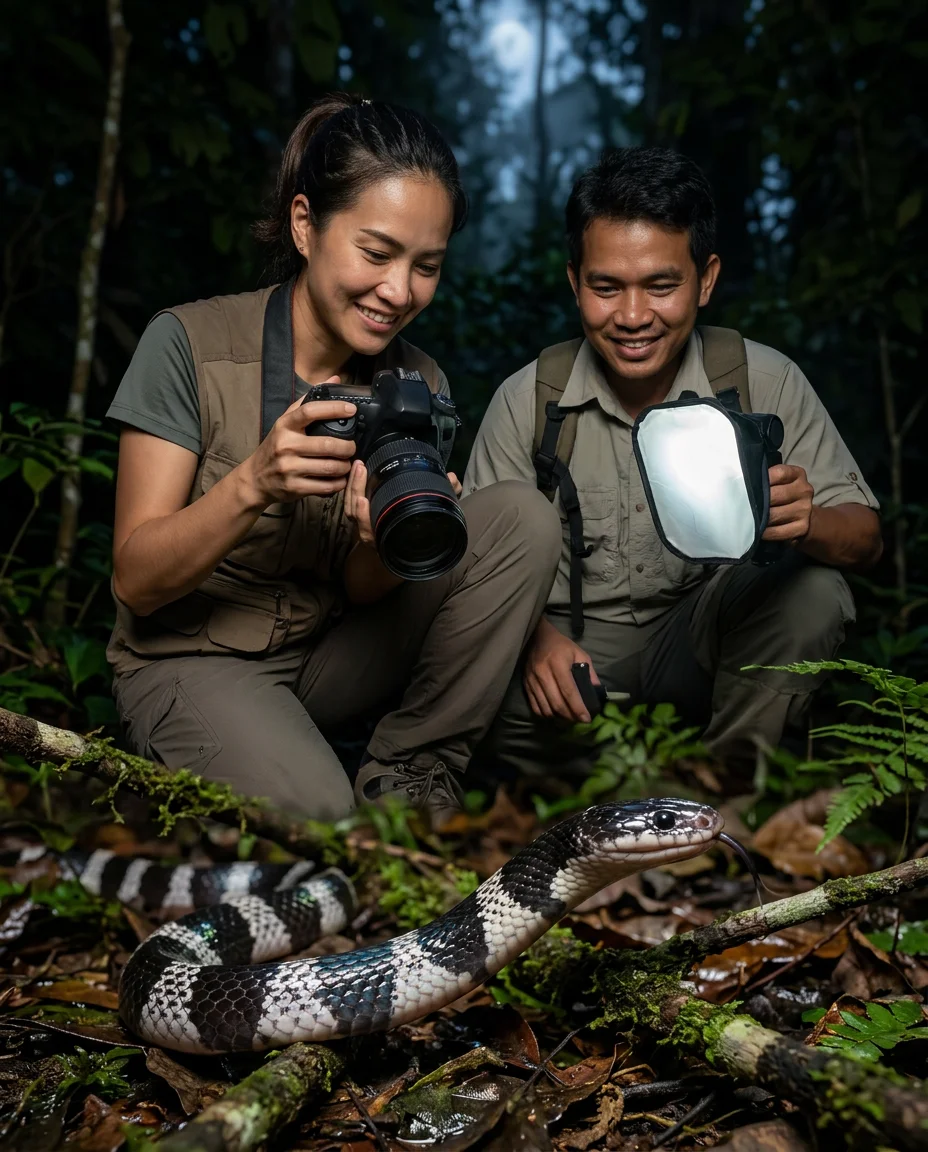
The diel behaviour of the genus Bungarus presents one of the most striking dichotomies in herpetology. By daylight, kraits appear lethargic, uncoordinated, and remarkably disinclined to strike, often prompting casual observers to dismiss them as placid, slow-moving serpents. Once night falls, however, this diurnal sluggishness vanishes. The snakes emerge as agile, keenly alert, and formidable nocturnal hunters whose activity patterns govern both their foraging success and the severe hazard they present across rural Thailand.
During daylight hours, kraits exhibit intense photophobia. When uncovered from cool retreats such as leaf litter, rat burrows, decaying logs, and termite mounds, their primary instinct is concealment. Rather than assuming an elevated, aggressive posture, a disturbed krait typically flattens its body into compact coils and buries its head beneath the protective musculature of its midbody. If persistently provoked or pushed into open ground, a banded krait (Bungarus fasciatus) or Malayan krait (Bungarus candidus) seldom opens its mouth to bite. Instead, it engages in erratic, spasmodic thrashing movements—a defensive kinesis where the body flings sideways in jerky spasms while the head remains shielded. Certain individuals elevate and curl the tail tip, twitching it as a decoy to divert potential predators away from the vulnerable skull. This daylight passivity frequently leads agricultural workers and amateur handlers into the dangerous error of handling them barehanded, a mistake that can trigger a sudden reflexive bite if the snake is pinched or compressed.
Under cover of darkness, kraits become active prowlers. Leaving their subterranean shelters, they navigate low-lying ground, routinely following linear borders such as paddy bunds, irrigation ditch banks, forest pathways, and the concrete footings of buildings. Foraging kraits hold their snouts slightly raised, flicking their dark, forked tongues in rapid succession to gather chemical scent particles from the air and substrate. Retracting the tongue brings these molecules into contact with the vomeronasal (Jacobson's) organ on the palate, enabling the snake to follow minute scent trails left by cold-blooded prey. While roaming through village gardens, open barns, and home thresholds, the snake's daytime reluctance disappears. A krait startled, restrained, or accidentally stepped upon in the dark reacts instantaneously, delivering multiple rapid defensive strikes without an audible warning hiss or preliminary rearing display.
The nocturnal hunting ecology of kraits revolves around ophiophagy, the specialised predation of other snakes. Field dissections and dietary analyses reveal that serpents constitute the overwhelming majority of their wild diet. Kraits actively hunt common non-venomous colubrids and related taxa, including sunbeam snakes (Xenopeltis unicolour), Asian kukri snakes (Oligodon), checkered keelbacks (Fowlea piscator), red-necked keelbacks (Rhabdophis subminiatus), and Indo-Chinese rat snakes (Ptyas korros). They also overpower fellow venomous species, including juvenile monocled cobras, pit vipers, and conspecific kraits. This ophidian diet is supplemented opportunistically by skinks, such as the common sun skink (Eutropis multifasciata), geckos, frogs, swamp eels (Monopterus albus), and occasional rodents. When subduing dangerous prey, kraits deliver potent neurotoxins through their short front fangs, incapacitating the victim's nervous system before swallowing the meal headfirst. Recurved teeth along the palate and jaw bones then ratchet the carcass smoothly down the digestive tract.
Venom Pharmacology: Presynaptic and Postsynaptic Neurotoxicity
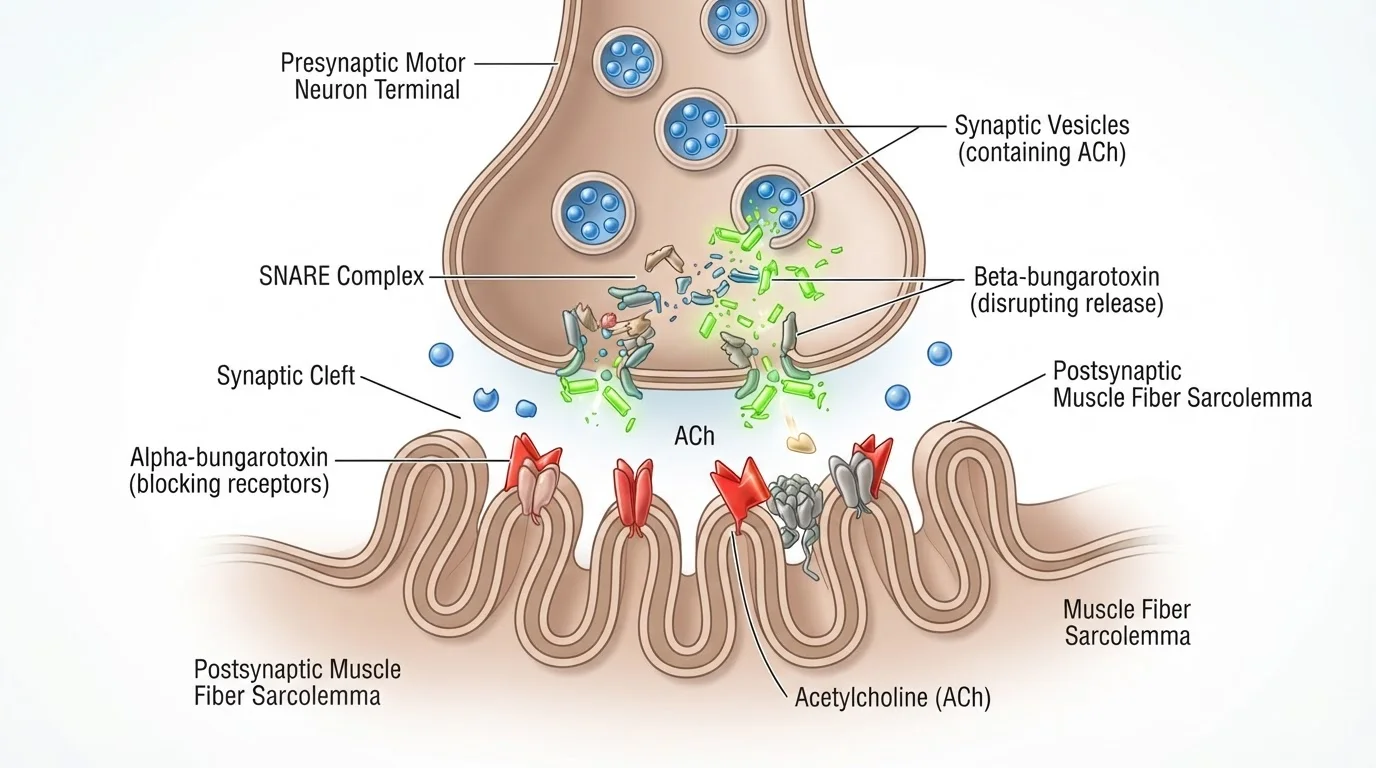
Krait venom ranks among the most lethal biological toxins documented in terrestrial reptiles. In standard murine bioassays, the intravenous median lethal dose (LD50) of Malayan krait (Bungarus candidus) venom measures approximately 0.1 milligram per kilogram, demonstrating a lethal potency considerably higher than that of most Asiatic cobras and pit vipers. This formidable toxicity arises from a sophisticated dual-action neurotoxic framework designed to disrupt the vertebrate neuromuscular junction simultaneously from both sides of the synaptic cleft. By pairing presynaptic destruction with postsynaptic receptor blockade, the venom ensures a rapid and exceptionally persistent cessation of skeletal muscle contraction.
Presynaptic neurotoxins and terminal destruction
The primary lethal drivers in krait venom are presynaptic neurotoxins known as beta-bungarotoxins. These molecules are heterodimeric protein complexes comprising a secretory phospholipase A2 (PLA2) subunit linked by a disulphide bond to a targeting subunit related to the Kunitz-type protease inhibitor superfamily. Upon entering systemic circulation, the Kunitz-like subunit selectively identifies and binds to voltage-gated potassium channels on the presynaptic motor nerve terminal. This precise binding anchors the enzymatic PLA2 subunit directly against the cell membrane.
Once docked, the PLA2 enzyme hydrolyses membrane phospholipids, setting off an immediate influx of extracellular calcium that triggers a massive, uncontrolled discharge of acetylcholine. This rapid burst quickly exhausts the terminal's stored synaptic vesicles. Following transmitter depletion, the sustained enzymatic activity physically dismantles the motor axon terminal, destroying internal organelles and causing complete structural collapse. This pathological outcome represents acute chemical denervation. Because the physical architecture of the nerve terminal is destroyed, antivenom cannot promptly restore motor transmission even when given in substantial volumes. Full functional recovery requires the biological regeneration of motor axon terminals and the sprouting of new neuromuscular junctions, a process that frequently demands prolonged mechanical ventilatory support lasting days or weeks.
Postsynaptic blockade at the motor endplate
Operating concurrently on the opposite side of the synaptic cleft are postsynaptic neurotoxins known as alpha-bungarotoxins. These smaller, non-enzymatic polypeptides belong to the three-finger toxin protein family. Alpha-bungarotoxins diffuse across the synaptic space to act as potent, high-affinity competitive antagonists at muscle-type nicotinic acetylcholine receptors situated on the postsynaptic motor endplate.
By binding directly to the receptor's alpha subunits, alpha-bungarotoxin physically prevents acetylcholine from attaching to its recognition site. This antagonism halts the conformational opening of ligand-gated ion channels, preventing the inward rush of sodium ions required to generate endplate potentials. Without depolarisation, the adjoining muscle fibres cannot contract, inducing flaccid paralysis. Unlike presynaptic axonal damage, postsynaptic receptor inhibition is not structurally destructive and remains theoretically reversible if specific antivenom neutralises circulating toxins before terminal degradation establishes irreversible paralysis.
Enzymatic depletion within the synaptic cleft
Several krait species, including the Malayan krait and banded krait (Bungarus fasciatus), secrete abundant soluble acetylcholinesterase into their venom. This enzyme exhibits extraordinary catalytic efficiency within the synaptic gap. By rapidly hydrolysing free acetylcholine into acetate and choline, the venom-derived enzyme reduces neurotransmitter concentrations, preventing endogenous acetylcholine from competing against postsynaptic alpha-neurotoxins and further accelerating muscle failure.
Absence of local pain and tissue necrosis
Unlike monocled cobras, which deploy cytotoxic proteins that cause widespread dermonecrosis, or pit vipers, whose metalloproteinases induce extensive haemorrhage and local swelling, krait venom contains negligible or trace levels of necrotic cytotoxins, cardiotoxins, and procoagulant enzymes. Consequently, a krait bite produces virtually no local oedema, redness, blistering, or tissue death.
Because the short, fixed fangs produce tiny puncture wounds that trigger little to no immediate pain, victims frequently mistake the strike for a mosquito bite, ant sting, or splinter. This lack of local tissue disturbance is notoriously deceptive: individuals regularly dismiss the encounter as harmless, retire to sleep, and unknowingly progress into fatal respiratory arrest during the night.
| Venom Component | Molecular Class | Physiological Target | Mechanism of Action | Clinical Reversibility by Antivenom |
|---|---|---|---|---|
| Beta-Bungarotoxin | Phospholipase A2 (PLA2) complex | Presynaptic motor nerve terminal | Depletes synaptic vesicles; physically destroys axon terminal membrane | Irreversible once terminal is destroyed; requires nerve regeneration |
| Alpha-Bungarotoxin | Three-Finger Toxin (3FTx) | Postsynaptic nicotinic ACh receptor | Competitively binds nAChR; prevents muscular endplate depolarisation | Reversible if antivenom administered early |
| Acetylcholinesterase | Enzymatic protein | Synaptic cleft | Accelerates hydrolysis of acetylcholine, depleting transmitter | Neutralised by standard antivenom |
| Local Cytotoxins / Haemorrhagins | Absent / Trace | Subcutaneous tissues and vascular beds | Negligible; causes no significant local necrosis or coagulopathy | N/A (no significant local necrosis produced) |
Clinical Envenomation, Bite Dynamics, and Hospital Care
Krait envenomation is among the most dangerous snakebite emergencies in Southeast Asia. The medical profile features delayed symptom onset, a deceptive lack of local tissue damage at the bite site, and rapid, descending motor paralysis that can culminate in respiratory failure. Recognising these clinical milestones is critical for clinicians, emergency teams, and residents throughout Thailand, where bites from the genus Bungarus carry substantial mortality if respiratory support and antivenom are delayed.
Nocturnal Bite Dynamics and the Sleeping Victim
A striking proportion of severe and fatal krait envenomations in Thailand occur indoors while victims sleep on mats, thin mattresses, or bare floors. Both the Malayan krait (Bungarus candidus) and the banded krait (Bungarus fasciatus) are active nocturnal foragers that enter rural houses, agricultural huts, and tents while hunting rodents, lizards, or other snakes. Defensive bites occur when an unwitting sleeper shifts position or rolls a limb against the foraging snake.
Because kraits possess short, fixed proteroglyphous fangs, the bite produces minimal mechanical trauma and virtually no immediate local pain, swelling, or necrosis. A sleeping person often registers only a faint prick or insect-like sting, brushes the area unconsciously, and falls back asleep. Over the subsequent hours, venom enters the lymphatic and circulatory systems. A classic clinical presentation in Thai hospitals involves a patient found at dawn unconscious, gasping for breath, or exhibiting flaccid paralysis, with relatives unaware that a snake encounter ever took place.
The Descending Paralytic Cascade
Systemic neurotoxicity typically begins between thirty minutes and six hours after envenomation, though delays of up to twelve hours have been documented. The paralysis follows a strict descending cranio-caudal sequence affecting motor pathways.
The earliest physical sign is bilateral ptosis—drooping of the upper eyelids—often followed swiftly by external ophthalmoplegia, double vision, and difficulty focusing. As paralysis descends to lower cranial nerves, patients develop severe bulbar palsy manifested by dysarthria (slurred speech), dysphonia, and dysphagia (inability to swallow saliva). Secretions pooling in the pharynx create a severe risk of airway obstruction and pulmonary aspiration.
Unlike cobra envenomation, krait bites frequently provoke severe, cramping abdominal pain accompanied by nausea and vomiting. This symptom stems from venom-induced autonomic stimulation and mesenteric smooth-muscle spasm. Descending flaccid paralysis subsequently affects cervical muscles—causing the head to fall backward when attempting to sit upright, termed the broken-neck sign—before progressing to the intercostal muscles and limbs.
The terminal phase occurs when the diaphragm is paralysed. Without ventilatory assistance, hypoxia and hypercapnia trigger cardiac arrhythmias, coma, and cardiac arrest. Crucially, unless cerebral hypoxia causes secondary damage, the patient remains conscious and alert throughout this paralysis, fully aware of their inability to breathe.
Emergency Field First Aid
Field management for suspected krait bites focuses on retarding lymphatic spread and preserving respiratory function during transit.
For limb bites, medical guidelines recommend the Pressure Immobilisation Bandage technique. A broad elastic bandage (10 to 15 centimetres wide) is bound firmly over the bite site and extended up the entire length of the limb at the tension used for a sprained ankle. The limb is then immobilised with a rigid splint to prevent joint articulation, which pumps venom through the lymphatic vessels. The bandage must remain in place until the patient reaches a hospital equipped with resuscitation facilities.
Harmful traditional snakebite practices must be avoided. Do not incise the bite wound, apply arterial tourniquets, use mechanical or oral suction, or apply ice, chemicals, or herbal remedies. The patient should remain immobile, calm, and supine while emergency transport to an intensive-care facility is arranged immediately.
Hospital Management and Antivenom Therapy
Definitive treatment relies on aggressive airway management and specific antivenom. Because presynaptic beta-bungarotoxins cause structural degradation of motor nerve terminals, antivenom neutralises circulating toxins but cannot immediately reverse established paralysis. Mechanical ventilation with endotracheal intubation is the definitive life-saving intervention. Provided the patient is ventilated to prevent hypoxia, spontaneous breathing returns as motor endplates regenerate, though assisted ventilation may be required for days or even weeks.
In Thailand, the Queen Saovabha Memorial Institute of the Thai Red Cross Society manufactures purified equine immunoglobulin fragments [F(ab')2] targeting native species. Available formulations include monovalent banded krait antivenom (Bungarus fasciatus), monovalent Malayan krait antivenom (Bungarus candidus), and a neuro polyvalent snake antivenom covering Bungarus candidus, Bungarus fasciatus, Naja kaouthia, and Ophiophagus hannah. Antivenom is administered by slow intravenous infusion upon signs of systemic neurotoxicity. Thai nationals receive treatment under universal healthcare, but uninsured foreign visitors require comprehensive medical insurance to cover the substantial costs of prolonged intensive care, mechanical ventilation, and antivenom vials.
Encounter Prevention, Home Safety, and Ecological Role
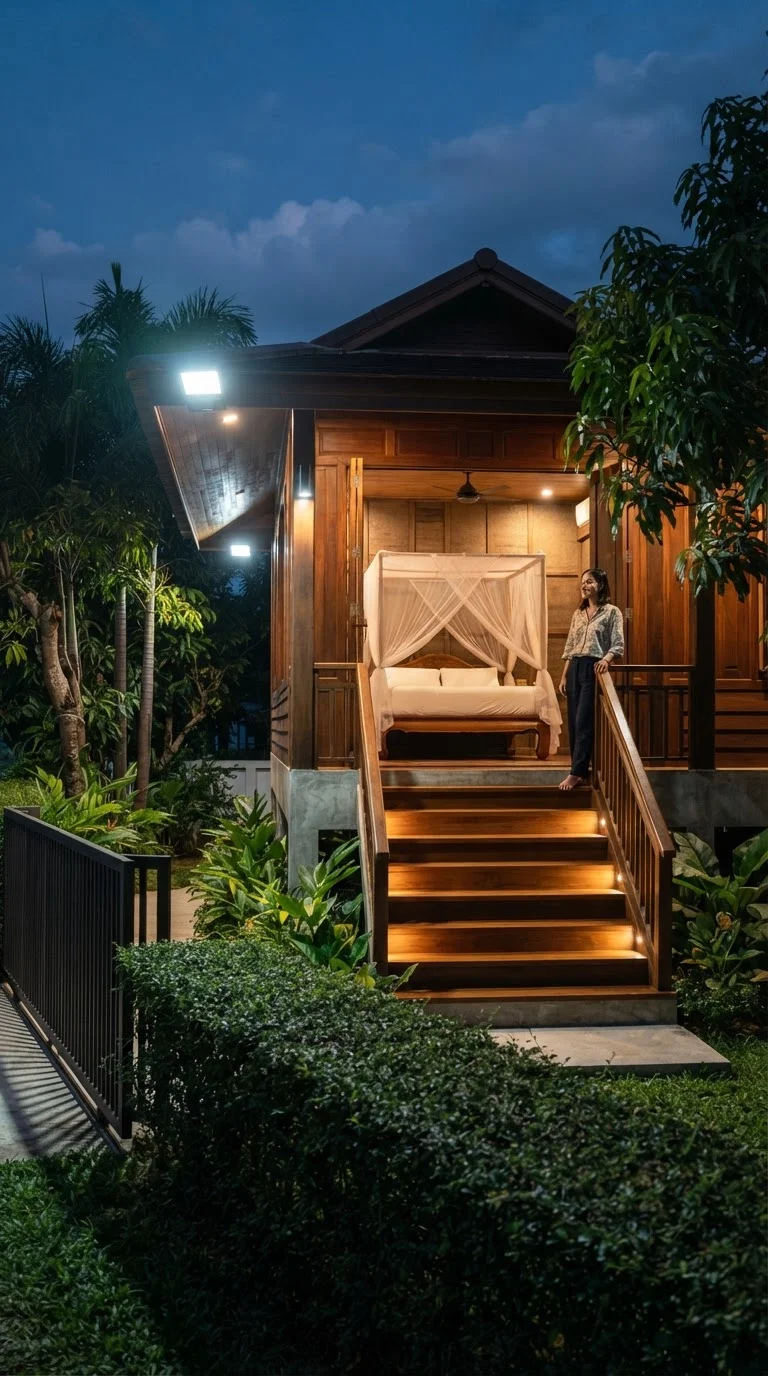
Living alongside kraits in rural and suburban Thailand requires understanding their nocturnal activity patterns and taking sensible precautions around residential properties. These reclusive snakes rarely seek confrontation, and routine environmental adjustments significantly reduce the likelihood of accidental encounters.
Residential protection and elevated sleeping
In rural parts of Thailand and agricultural settlements, sleeping directly on the floor represents one of the greatest exposure factors for severe krait envenomation. Foraging kraits hunting at ground level during the night can inadvertently enter open rooms and strike defensively when a sleeping person rolls against them. Raising bed frames onto cots or platforms elevated at least 40 centimetres off the floor significantly lowers this risk. Suspending a finely woven mosquito net and tucking its margins firmly under the mattress on all sides establishes a dependable barrier against wandering reptiles while simultaneously deterring biting insects. Keeping beds positioned slightly away from walls prevents snakes from climbing across adjacent masonry or shelving directly onto bedding.
Building perimeter barriers and grounds maintenance
Kraits possess slender, flexible profiles that permit entry through remarkably narrow gaps beneath doorways and around utility fixtures. Property owners can limit access by fitting external doors with durable weather-stripping or dense brush sweeps, leaving no openings wider than a pencil. Ground-level ventilation louvres, floor drains, and drainage outlet pipes should be secured using five-millimetre wire mesh or rigid steel grilles. Outdoors, maintaining a clean compound deprives snakes of diurnal hiding spots. Regularly cutting grass short, clearing brush piles, and discarding accumulated stacks of timber, roof sheeting, and coconut husks removes the damp, sheltered microhabitats kraits seek during daytime heat. Eliminating accessible domestic food waste keeps rodent activity minimal, suppressing a primary food source that draws kraits towards human dwellings.
Outdoor precautions and nighttime lighting
Navigating paths, gardens, or unpaved rural tracks in darkness without adequate illumination accounts for a high proportion of outdoor bites. Carrying a reliable torch or wearing a headlamp allows walkers to see snakes moving across open ground before stepping into striking distance. Sturdy enclosed shoes, such as trainers or boots, paired with loose-fitting long trousers, provide valuable physical protection against accidental contact.
Ecological function and conservation status
Despite their dangerous venom, kraits carry out an integral balancing role across Thailand's rural and forested landscapes. As specialised ophiophagous predators, they consume substantial numbers of other snakes, helping moderate populations of common colubrids and agricultural pit vipers. They also take small rodents and amphibians, supporting natural pest regulation around agricultural fields. Kraits themselves serve as an important prey source for larger predators, including king cobras (Ophiophagus hannah), monitor lizards (Varanus salvator), and birds of prey like serpent eagles. On the International Union for Conservation of Nature (IUCN) Red List, widespread species such as the banded krait (Bungarus fasciatus), Malayan krait (Bungarus candidus), and red-headed krait (Bungarus flaviceps) are categorised as Least Concern. Conversely, specialised forest taxa, including the Red River krait (Bungarus slowinskii) in the northern mountains, are assessed as Vulnerable due to deforestation and habitat fragmentation.
Key Facts at a Glance
| Item | Detail | Notes |
|---|---|---|
| Scientific Classification | Genus *Bungarus* (Family Elapidae) | Front-fanged (proteroglyphous) terrestrial venomous snakes |
| Key Native Species | Banded krait (*B. fasciatus*), Malayan krait (*B. candidus*), Red-headed krait (*B. flaviceps*) | Regional cryptic taxa include *B. wanghaotingi*, *B. slowinskii*, and *B. sagittatus* |
| Key Diagnostic Features | Distinctly triangular body, enlarged hexagonal vertebral scales, no loreal scale | Alternating dark and light bands or vivid red head/tail; small eyes with round pupils |
| Primary Mimics | Harmless wolf snakes (*Lycodon* spp.) | Wolf snakes lack enlarged vertebral scales and possess loreal scales and divided subcaudals |
| Primary Diet | Specialised ophiophagy (predominantly other snakes) | Also consumes skinks, geckos, frogs, swamp eels, and occasional rodents |
| Diel Behaviour | Photophobic and docile by day; active and defensive at night | Bites are exceptionally rare during daylight; night-time strikes occur without warning |
| Venom Toxicity | Dual-action neurotoxin (presynaptic beta-bungarotoxins and postsynaptic alpha-bungarotoxins) | *B. candidus* IV LD50 is ~0.1 mg/kg; produces chemical denervation of motor terminals |
| Local Bite Symptoms | Minimal to no local swelling, redness, necrosis, or initial pain | Short fangs leave small punctures often mistaken for insect stings or splinters |
| Systemic Clinical Effects | Descending flaccid paralysis: bilateral ptosis, bulbar palsy, severe abdominal cramps, respiratory arrest | Patients typically remain fully conscious during motor failure |
| Recommended First Aid | Pressure Immobilisation Bandage (PIB) and rigid splinting | Keep patient calm and supine; never cut, suck, apply tourniquets, or apply ice |
| Definitive Medical Treatment | Endotracheal intubation and mechanical ventilation; specific antivenom | Purified equine F(ab')2 antivenoms produced by the Queen Saovabha Memorial Institute |
| Home & Camp Safety | Elevate sleeping platforms at least 40 cm; tuck in mosquito nets; seal door gaps | Carry torches at night; wear enclosed footwear and clear brush from around dwellings |
| Emergency & Enquiry Phone | Queen Saovabha Memorial Institute | +66 2 252 0161 |
| Official Source | Queen Saovabha Memorial Institute (Thai Red Cross Society) | https://www.saovabha.org |
FAQ: Kraits in Thailand
What makes a Malayan krait bite particularly dangerous?
How can one distinguish a krait from a non-venomous wolf snake in Thailand?
What is a key difference between terrestrial kraits and sea kraits?
Why might kraits enter human dwellings during monsoon season?
Is it safe to handle a krait during the day if it appears docile?
What is the primary diet of kraits?
What are the typical local symptoms of a krait bite?
What is the first noticeable symptom of systemic neurotoxicity after a krait bite?
What is the recommended first aid for a krait bite on a limb?
What should NOT be done as first aid for a krait bite?
Reviewed by the Thailand Guide Editorial Team • Last reviewed: 20 November 2026
This page is provided for general information only. While we aim for accuracy, details can change — please verify anything important independently before relying on it.