Queen Saovabha Memorial Institute



Established in 1923 under the patronage of King Rama VI and operated by the Thai Red Cross Society, the snake farm at Queen Saovabha Memorial Institute is recognised as the second oldest facility of its kind in the world. Located in Bangkok's central Pathum Wan district, the compound functions primarily as a working biomedical research laboratory and public serpentarium. Here, indigenous venomous snakes are cared for and venom is extracted to manufacture lifesaving antivenom sera distributed to medical centres across Thailand.
The institute occupies a clear niche between pharmaceutical production and biological education. Alongside its active clinical research facilities and travel clinic, the grounds house an extensive collection of living native snakes in indoor vivariums and open-air enclosures, alongside a dedicated museum detailing reptile anatomy, toxicology, and snakebite first aid. Operating with a strict scientific focus rather than theatrical spectacle, the institute provides an educational environment where visitors can observe working herpetologists, study regional wildlife, and understand how therapeutic antivenom is developed.

Serpentarium Architecture and Historical Red Cross Grounds
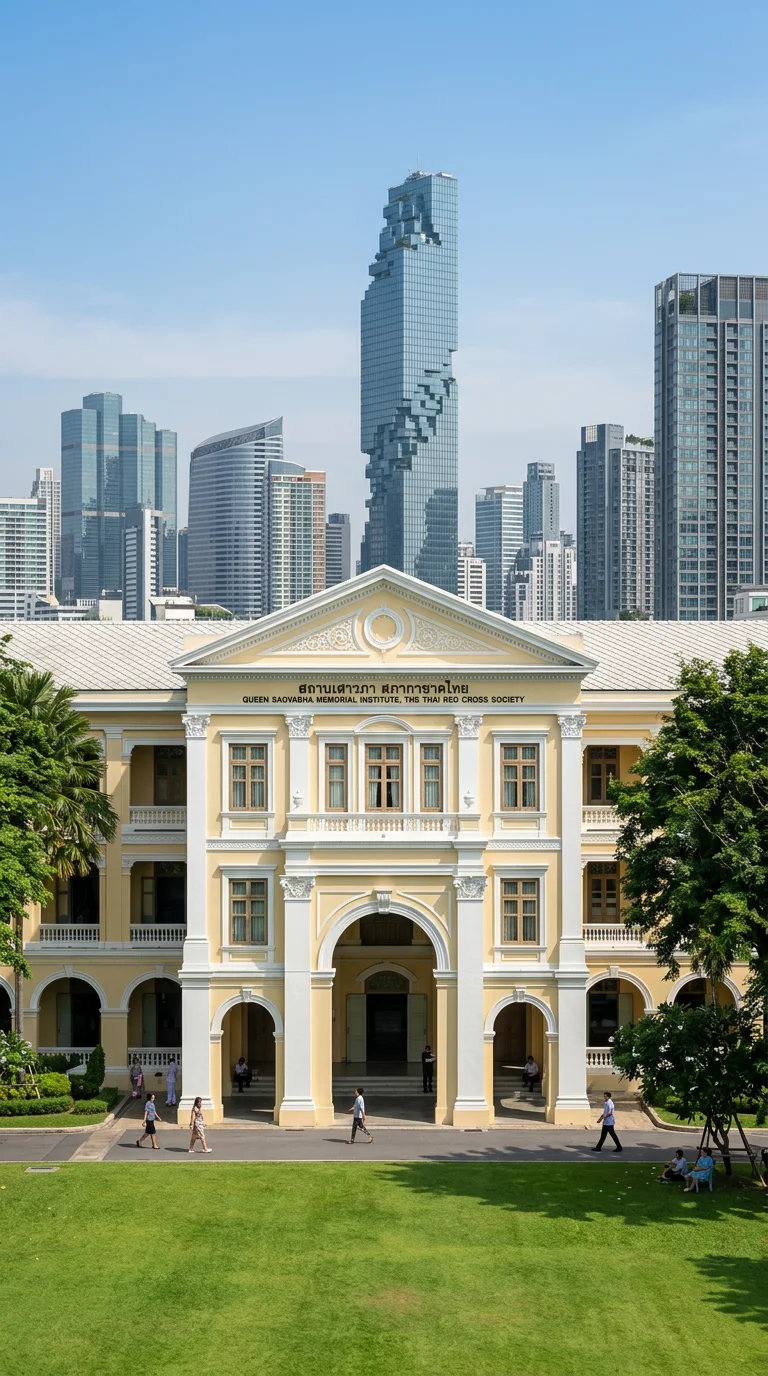
The Queen Saovabha Memorial Institute pairs early twentieth-century neoclassical architecture with functional scientific laboratories and shaded outdoor reptile pens. Its medical heritage began after Princess Banlusirisarn Diskul died of rabies in 1911. At that time, no domestic rabies vaccine existed in Siam. Her father, Prince Damrong Rajanubhab, petitioned King Vajiravudh (Rama VI) to create a dedicated production facility, which opened on Bamrung Muang Road in 1913 under the name Pastura Sabha. Administration transferred to the Thai Red Cross Society in 1917. To provide permanent quarters, King Vajiravudh donated royal land at the junction of Rama IV Road and Henri Dunant Road, alongside personal funds of 258,000 baht to erect the central headquarters in memory of his late mother, Queen Saovabha Phongsri. The dedicated facility opened on 7 December 1922. The institute expanded into herpetology when its first director, Dr Leopold Robert, established the serpentarium in 1923 to harvest venom for domestic antivenom manufacture, creating what was then the second facility of its kind in the world.
Today, visitors explore a quiet campus where heritage administrative pavilions sit amongst manicured greenery, mature rain trees, and purpose-built reptile enclosures. Sunken outdoor pits dominate the central courtyard, bounded by waist-high concrete walls fitted with smooth, inward-curving metal barriers that prevent terrestrial snakes from scaling the perimeter while giving viewers unobstructed overhead sightlines. Bilingual interpretive panels mounted along the walkways outline landmark achievements in tropical medicine, charting how royal patronage supported the establishment of national vaccine and antivenom programmes. The setting maintains a formal scientific atmosphere distinct from commercial tourist venues, functioning daily as an active centre of clinical research.
The living collection presents dozens of native venomous and non-venomous snake species housed within dedicated environmental vivariums. Indoor displays occupy the Simaseng Building, an educational facility that traces its heritage to a 1929 charitable fund established by four royal siblings born in the Year of the Snake. The ground floor of this building features climate-controlled, glass-fronted terrariums for medically significant elapids and vipers. Exhibits showcase Thailand's prominent cobras, including the monocled cobra (Naja kaouthia), the venom-spraying Indochinese spitting cobra (Naja siamensis), and substantial king cobras (Ophiophagus hannah) held in large reinforced enclosures. Specialised low-light terrariums accommodate nocturnal species such as the banded krait (Bungarus fasciatus) and the Malayan krait (Bungarus candidus), allowing viewers to inspect their distinctive body banding while maintaining the darkened environment these shy reptiles require.
Outside the main hall, open-air vivariums replicate varied Thai ecosystems. Arboreal displays planted with dense vegetation shelter native green pit vipers, particularly the white-lipped pit viper (Trimeresurus albolabris), testing observer patience as the bright green reptiles rest motionless amongst the branches. Terrestrial pens house cryptic Malayan pit vipers (Calloselasma rhodostoma) camouflaged beneath leaf litter, as well as Russell's vipers (Daboia siamensis) on dry soil substrate. Heavy non-venomous constrictors occupy spacious outdoor enclosures, where reticulated pythons (Malayopython reticulatus) and Burmese pythons (Python bivittatus) demonstrate the scale of species common across urban waterways and agricultural lowlands. Every display provides rigorous biological data, detailing scientific nomenclature, geographic distribution, venom composition, and clinical hazard profiles.
| Species Group | Representative Species | Primary Venom Classification | Medical Significance | Facility Housing |
|---|---|---|---|---|
| True Cobras (*Naja*) | Monocled Cobra (*Naja kaouthia*) | Postsynaptic neurotoxic and cytotoxic | Causes respiratory failure and severe tissue necrosis | Indoor climate-controlled glass terrariums |
| King Cobra (*Ophiophagus*) | King Cobra (*Ophiophagus hannah*) | Rapid neurotoxic and cardiotoxic | Massive venom volume capable of rapid lethality | Dedicated large-scale secure display tanks |
| Kraits (*Bungarus*) | Banded Krait (*Bungarus fasciatus*) | Presynaptic and postsynaptic neurotoxic | Neuromuscular blockade with minimal bite site pain | Low-light indoor enclosures |
| Pit Vipers (*Trimeresurus* & *Calloselasma*) | White-lipped Pit Viper (*Trimeresurus albolabris*) | Procoagulant and haemorrhagic | Systemic coagulopathy, severe swelling, and blistering | Landscaped outdoor arboreal vivariums |
| True Vipers (*Daboia*) | Russell's Viper (*Daboia siamensis*) | Haemotoxic, vasculotoxic, and nephrotoxic | Renal failure, internal haemorrhage, and shock | Ventilated specialised soil-substrate tanks |
| Constrictors (*Pythonidae*) | Reticulated Python (*Malayopython reticulatus*) | Non-venomous (mechanical constriction) | Powerful mechanical strike; no venom toxicity | Large outdoor reinforced garden pens |
Live Venom Extraction Demonstrations and Timetables
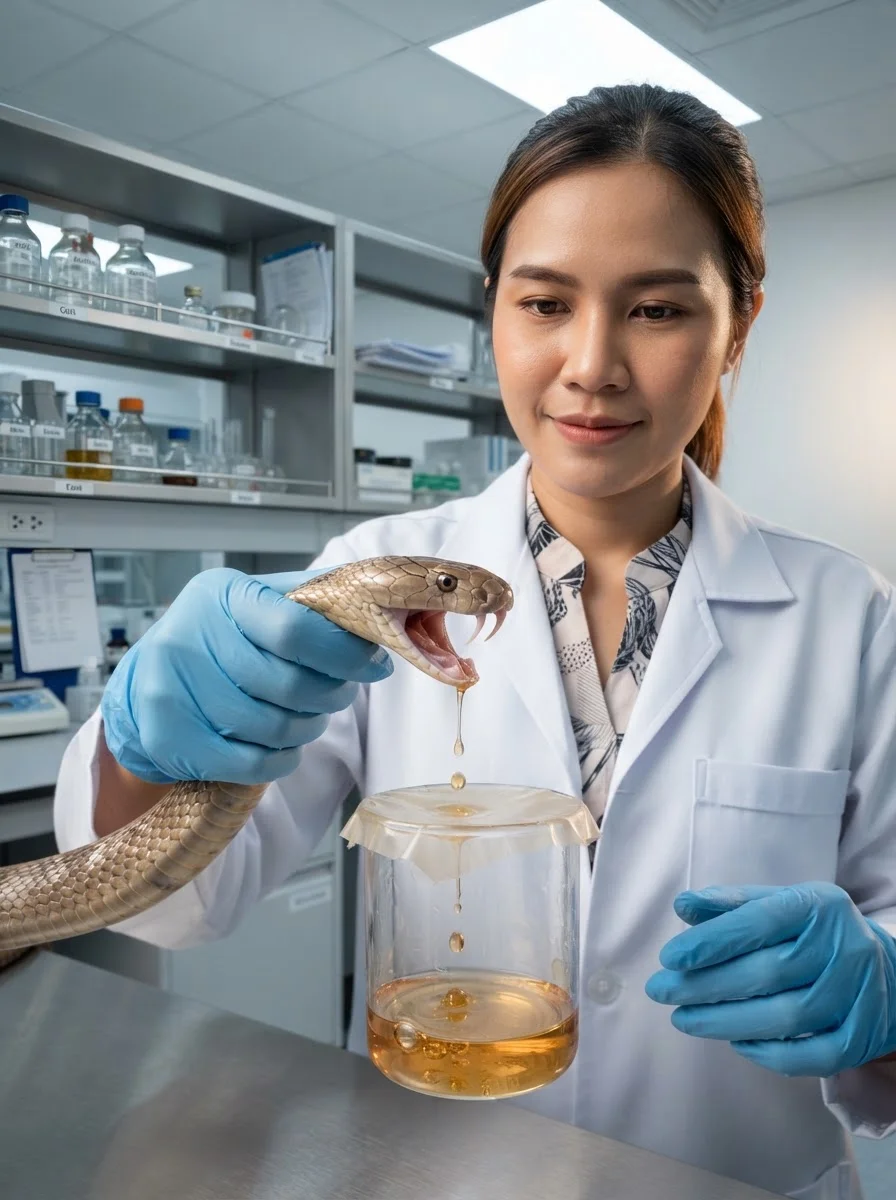
Venom extraction demonstrations take place inside an air-conditioned auditorium on the ground floor of the Simaseng Building, also known as the Four Snakes Building. This extraction session runs at 11:00 on weekdays; venom milking does not take place at weekends or on public holidays. The demonstration begins with an introductory briefing in English outlining snake biology, venom properties, and the role of harvested toxins in medical antivenom manufacture.
Following the introduction, trained herpetologists work with live venomous species, typically including native elapids such as cobras or kraits alongside indigenous pit vipers. Positioned behind protective glass viewing screens, a technician grips the reptile securely behind the jaws and guides its head toward a sterile beaker sealed with a taut paraffin membrane. As the fangs puncture the film, the technician gently palpates the venom glands, expressing droplets of amber or pale fluid against the glass. Throughout the process, an expert narrates over a microphone in English, detailing the yield, the distinctions between neurotoxic and haemotoxic venoms, and how the biological material is stabilised for laboratory processing.
A separate snake-handling demonstration takes place outdoors in the institute's open amphitheatre at 14:30 on weekdays, as well as at 11:00 on weekends and public holidays. During this presentation, staff display a variety of Thai reptiles, illustrating territorial behaviour, defensive posturing, and hood-flaring while advising audience members on how to react if encountering a snake unexpectedly. At the close of the outdoor talk, visitors may step forward for an optional photo while holding a captive-bred python.
To secure a clear view of the bench-top milking in the Simaseng Building, plan to arrive at least 15 minutes before the 11:00 weekday start time.
Master Bangkok transport with our guide. Learn why the 12 THB canal boat beats a taxi and how to avoid the 220 THB ATM fee while exploring the city.
Antivenom Production, Laboratory Research, and Public Health
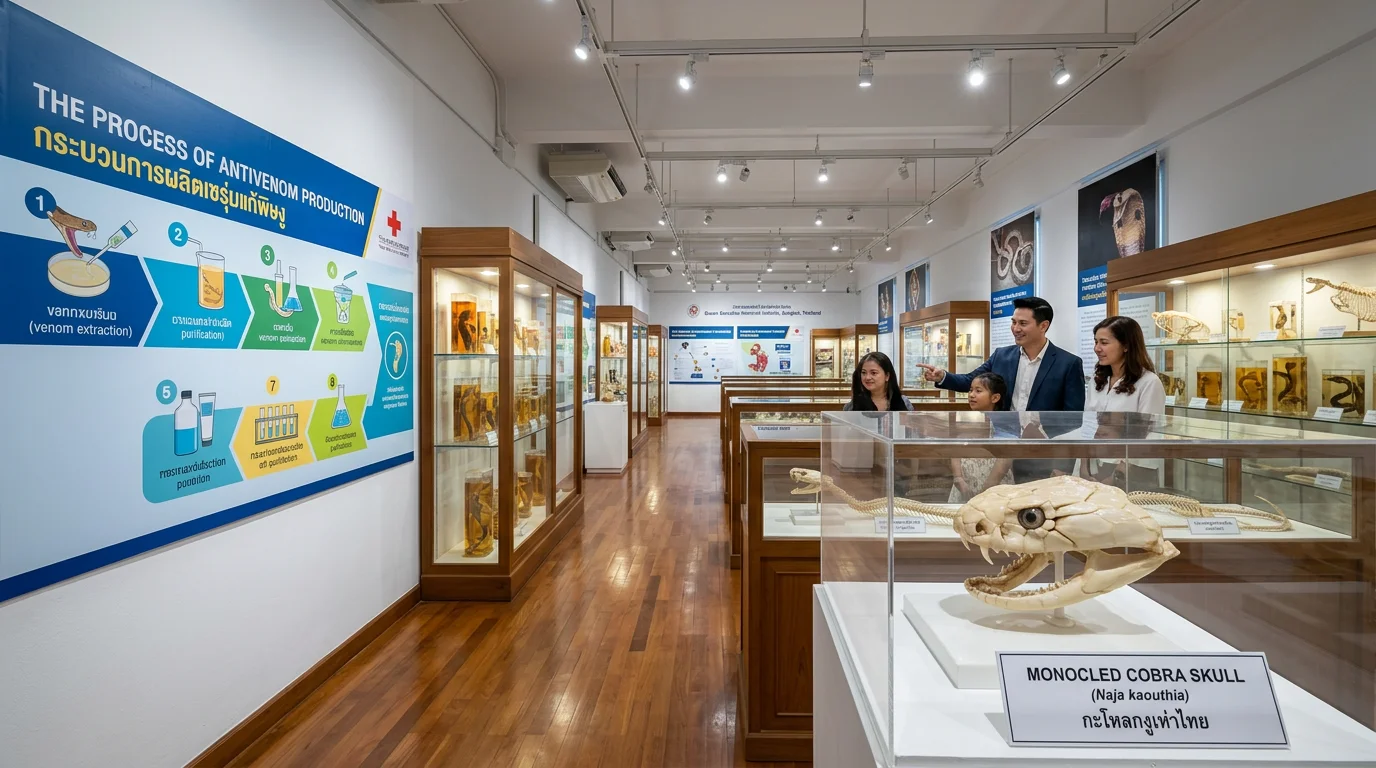
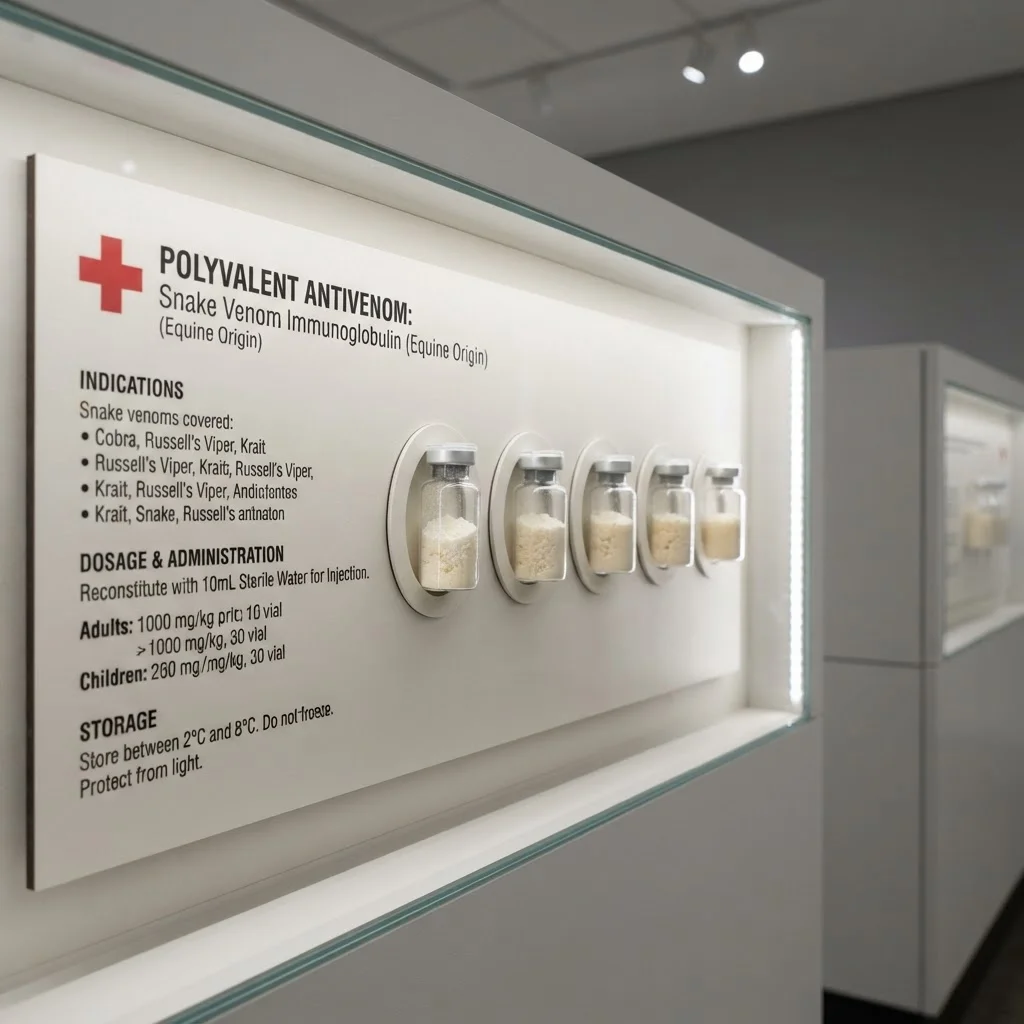
Venom collected during the institute's daily extraction sessions forms the foundation of Thailand's national snakebite treatment network. Following extraction, laboratory staff centrifuge, purify, and freeze-dry the liquid venom into a shelf-stable powder within on-site pharmaceutical facilities. Small, sub-lethal doses of this refined venom are injected into donor horses maintained at the Thai Red Cross equine station in Prachuap Khiri Khan province. Over several months, the horses build up high concentrations of neutralising antibodies without suffering systemic harm. Technicians then collect blood plasma from the animals, separate out the therapeutic immunoglobulin fragments, and refine them into clinical-grade antivenom serums. Prompt intravenous administration of these serums remains the primary definitive therapy for systemic envenomation. Queen Saovabha Memorial Institute manufactures seven distinct monovalent antivenoms tailored to individual high-risk species—including the king cobra, monocled cobra, banded krait, Malayan krait, Malayan pit viper, white-lipped pit viper, and Russell's viper—alongside two syndromic polyvalent formulations developed to treat broad neurotoxic or haemotoxic envenomation when the biting species cannot be confirmed.
Beyond serum production, the institute translates its toxicological research into public education across the upper floors of the Simasathien Building. Museum exhibits detail ophidian evolutionary biology, skeletal structure, fang mechanics, and the biochemistry of venoms. A dedicated exhibition space focuses on emergency bite management, explicitly dismantling dangerous folk remedies that persist in regional folklore. Interactive panels explain why traditional practices such as cutting wound sites, attempting oral suction, or applying arterial tourniquets cause severe tissue damage, and instead outline standard clinical first aid based on limb immobilisation, calm transfer, and medical monitoring.
This scientific grounding separates the Queen Saovabha Memorial Institute from the commercial reptile venues found in tourist hubs across Pattaya, Phuket, and suburban Bangkok. Commercial operations frequently depend on dramatic stunts where handlers provoke defensive strikes, slap agitated reptiles, or stage aggressive confrontations for tips. In unregulated settings, venomous snakes are sometimes defanged, have their venom ducts severed, or endure mouth stitching to reduce risk to performers. By contrast, every snake at Queen Saovabha Memorial Institute retains intact venom glands, functioning fangs, and full defensive capabilities.
Trained herpetologists manage the resident reptiles with specialised hooks and supportive handling techniques that prevent skeletal stress. Handlers observe structured rotation schedules, giving individual snakes weeks of rest between venom extractions to preserve their body weight and health. Between demonstrations, specimens live in secure, climate-managed enclosures equipped with fresh water, hides, and regular care from the on-site veterinary clinic. The presentations avoid sensationalism, focusing instead on species recognition, bite prevention, and wildlife conservation. Visitor entry fees fund non-profit clinical research and antivenom manufacturing, making a visit an ethical alternative to exploitative wildlife attractions.
Location and Getting There
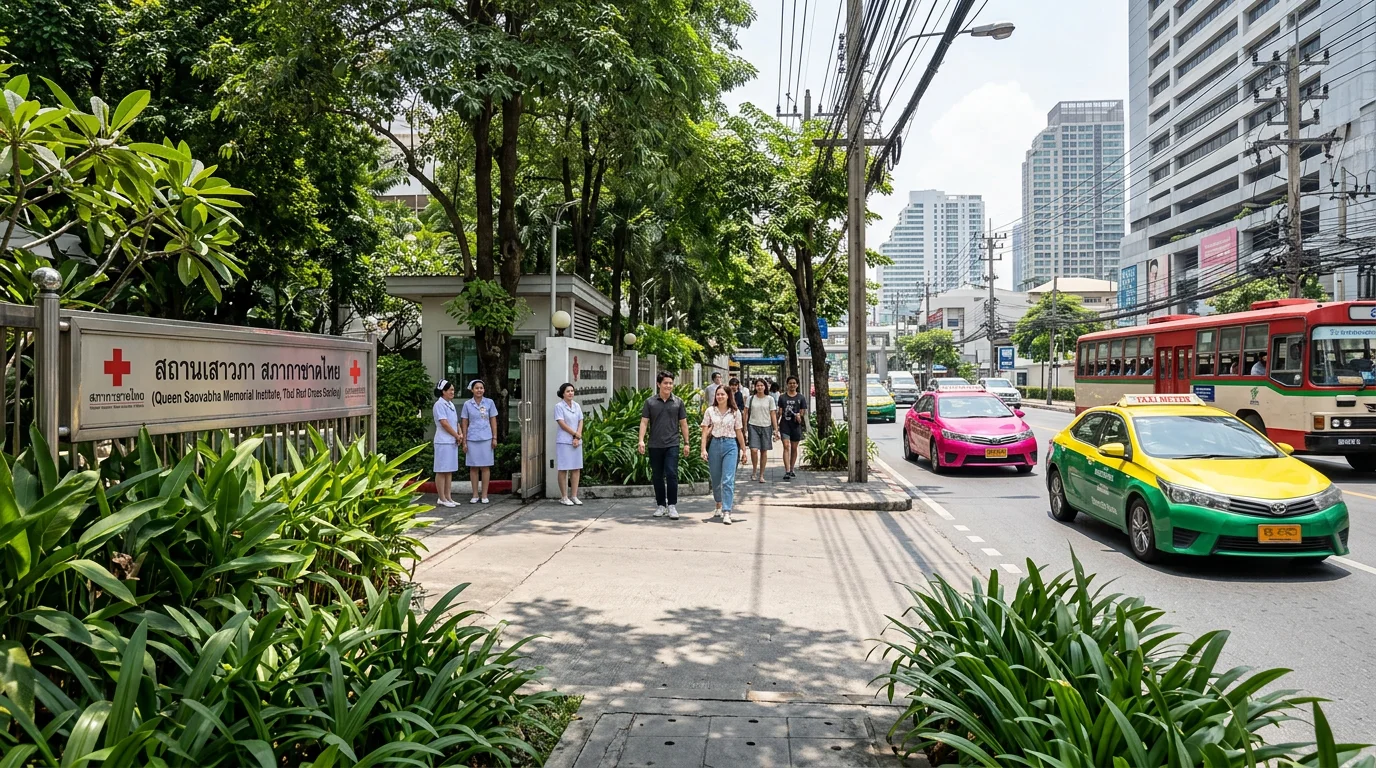
Queen Saovabha Memorial Institute stands at 1871 Rama IV Road at the junction with Henri Dunant Road in Pathum Wan district, flanked by King Chulalongkorn Memorial Hospital and Lumphini Park. Although the postal address fronts Rama IV Road, the visitor entrance to the snake farm is situated roughly 100 metres north along Henri Dunant Road.
Reaching the institute by rapid transit is simple. On the MRT Blue Line, alight at Sam Yan Station and take Exit 2, which emerges inside Chamchuri Square; from here, it is a flat 300-metre walk east along Rama IV Road.
Alternatively, take the MRT Blue Line to Si Lom Station (Exit 2) or the BTS Silom Line to Sala Daeng Station (Exit 3 or 4). From either station, walk roughly 500 to 600 metres north-west past the hospital perimeter along Rama IV Road to Henri Dunant Road. Standard single-journey train fares range from THB 17 to THB 45 (£0.40–£1.05) on the MRT and up to THB 62 (£1.45) on the BTS. Metered taxis or ride-hailing cars from Sukhumvit or the riverside typically take 15 to 35 minutes depending on traffic, costing around THB 80 to THB 180 (£1.85–£4.20).
Costs and Booking
Admission to the Queen Saovabha Memorial Institute snake farm is arranged entirely on site at the ticketing booth located beside the entrance gate on Henri Dunant Road. No advance booking system or online reservation platform exists for independent visitors, meaning entry must be purchased upon arrival. At the time of research, standard admission for foreign adult visitors is THB 200 (approximately £4.70), while tickets for foreign children cost THB 50 (around £1.20). Thai nationals and foreign residents holding official documentation, such as a valid Thai government work permit or domestic identity card, enter at subsidised rates of THB 40 (approximately £0.95) for adults and THB 10 (around £0.25) for children.
A single admission ticket provides full access to all public areas across the grounds. This covers the outdoor serpentarium pits and garden enclosures, the indoor multi-level museum exhibits focused on snake biology and toxicology, and entry to both scheduled educational presentations: the weekday morning venom extraction and the live snake handling demonstration. Ticket sales conclude thirty minutes before daily closing. Paying in cash with Thai Baht is strongly recommended, as the ticket window does not reliably process UK debit or credit cards, though domestic PromptPay QR payments are accepted for those with a Thai bank account.
| Category | Cost (THB) | Cost (GBP) | Notes |
|---|---|---|---|
| Foreign Adult Admission | 200 per person | £4.70 per person | Includes museum galleries, serpentarium, and daily demonstrations |
| Foreign Child Admission | 50 per person | £1.20 per person | Discounted child admission; verify qualifying height rules at the kiosk |
| Thai Citizen / Resident Adult | 40 per person | £0.95 per person | Valid Thai national ID card or official work permit required |
| Thai Citizen / Resident Child | 10 per person | £0.25 per person | Valid for domestic school-age children with eligible credentials |
Who It Suits Best
The institute appeals primarily to independent travellers, biology students, wildlife photographers, and naturalists seeking a calm, scientifically grounded reptile facility in central Bangkok. Families with school-age children who are curious about nature and medicine will find plenty of educational value in the museum exhibits and outdoor enclosures.
Conversely, the venue is unsuited to visitors seeking theatrical animal shows or circus-style stunt spectacles. Demonstrations focus on clinical venom extraction and handling safety rather than dramatic performances. Travellers with severe ophidiophobia may also wish to reconsider visiting; while sturdy glass terrariums and sunken outdoor pits maintain strict separation from venomous species like king cobras and kraits, live snakes remain visible at very close quarters throughout the grounds.
What to Know Before You Visit
Timing determines what you see at Queen Saovabha Memorial Institute. Venom extraction demonstrations take place on weekday mornings at 11:00. On weekends and public holidays, visitors see the outdoor snake-handling presentation at 11:00, but the venom extraction laboratory remains closed to the public. Operating hours are also compressed on weekends and public holidays, closing at 13:00 rather than the standard 15:30 weekday time.
Admission tickets remain valid throughout the day of issue, making it straightforward to catch both daily demonstrations. Weekday visitors attending the 11:00 extraction session can leave the grounds during the midday break for lunch at nearby centres such as Chamchuri Square or Samyan Mitrtown, then return on the same ticket for the afternoon handling presentation.
Beyond its reptile enclosures, the institute houses an accredited Thai Red Cross travel and immunisation clinic. Travellers can attend consultations and receive certified vaccinations—including yellow fever jabs with international certificates, pre- and post-exposure rabies regimens, and Japanese encephalitis vaccines—at regulated public rates. Walk-in registration is standard practice, though patients must present their passport and settle fees in cash.
Practical Tips
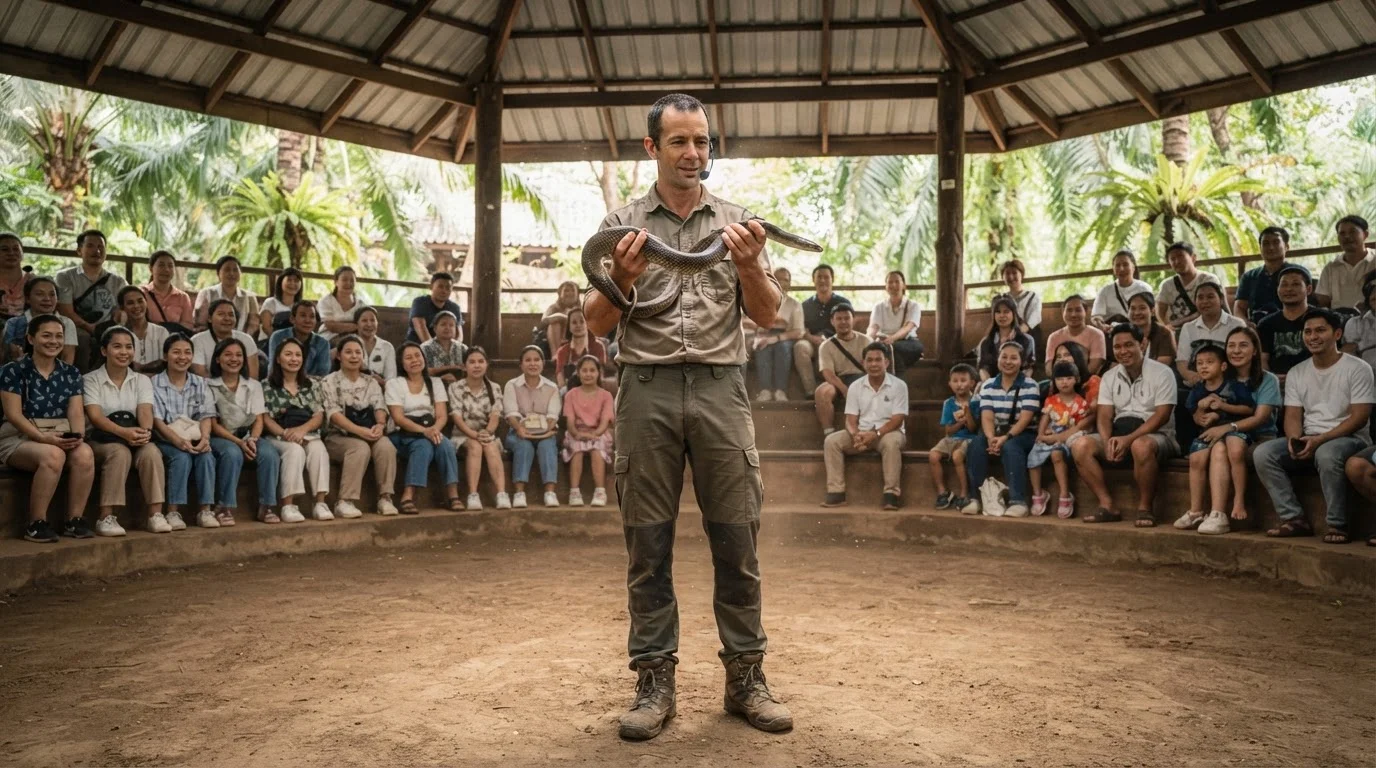
Arriving around 10:00 on a weekday allows ample time to inspect the outdoor pit enclosures before spectator groups gather. The daily venom extraction begins at 11:00 inside the Simasathien Building. The demonstration takes place in a ground-floor auditorium behind a glass partition, where rows can fill quickly. Taking a seat fifteen minutes early ensures an unobstructed view of the extraction bench and places you within earshot of the English-language commentary.
When the morning demonstration finishes, the upper floor of the Simasathien Building provides a welcome retreat during the hottest part of the day. This air-conditioned museum space displays skeletal specimens, preserved reptiles, and informative exhibits detailing venom toxicology and snakebite first aid.
Because on-site concessions are limited to cold drinks and light snacks, leaving the grounds for lunch is standard practice. Staff allow same-day re-entry, provided you keep your physical paper ticket stub. Crossing Rama IV Road to Samyan Mitrtown or Chamchuri Square opens up air-conditioned food courts, casual eateries, and cafes before you return for the afternoon handling presentation.
Throughout the outdoor grounds, exercise care around open-topped pit enclosures. Several enclosures house venomous native species, and sudden overhead motions can trigger defensive strikes. Keep hands, cameras, and mobile phones strictly behind the perimeter barriers rather than leaning over the low stone walls.
For travellers organising a central Bangkok itinerary, pairing a morning at this scientific serpentarium with nearby cultural sights delivers an engaging balance of wildlife education and city heritage. Pre-booked excursions and organised city day tours provide convenient transit options between disparate attractions across the capital.
Quick Reference Table
| Item | Detail | Notes |
|---|---|---|
| Foreign Adult Admission | THB 200 (approx. £4.70) | Purchased on site; covers museum, serpentarium, and demonstrations |
| Foreign Child Admission | THB 50 (approx. £1.20) | Discounted rate; height rules apply at the ticket window |
| Thai Citizen / Resident Rate | THB 40 adult (£0.95), THB 10 child (£0.25) | Valid Thai national ID card or official work permit required |
| Payment Method | Cash (Thai Baht) or Thai PromptPay QR | UK debit/credit cards not reliably accepted at ticket kiosk |
| Weekday Closing Time | 15:30 | Ticket booth closes 30 minutes before general closing |
| Weekend & Holiday Hours | Closes at 13:00 | Compressed hours on weekends and official public holidays |
| Venom Extraction Demonstration | 11:00 on weekdays only | Ground floor auditorium of Simaseng Building; no weekend extractions |
| Snake-Handling Demonstration | 14:30 weekdays; 11:00 weekends & holidays | Held at the outdoor amphitheatre; includes python photo opportunity |
| Nearest MRT Station | Sam Yan Station (Exit 2) | 300-metre walk east along Rama IV Road via Chamchuri Square |
| Alternative Rail Access | Si Lom MRT (Exit 2) / Sala Daeng BTS (Exit 3/4) | 500 to 600-metre walk north-west past Chulalongkorn Hospital |
| Same-Day Re-Entry | Permitted | Retain physical paper ticket stub to return for afternoon demonstration |
| On-Site Medical Clinic | Travel & Immunisation Clinic | Regulated public vaccinations (rabies, yellow fever) with valid passport |
| Website | https://saovabha.redcross.or.th | Official Thai Red Cross Society portal |
| Phone | +66 2 252 0161 | Institute administrative line |
| Address | 1871 Rama IV Road, Pathum Wan, Bangkok 10330 | Visitor entrance located 100 m north on Henri Dunant Road |
FAQ: Queen Saovabha Memorial Institute
What is the Queen Saovabha Memorial Institute?
When are the venom extraction demonstrations held at Queen Saovabha Memorial Institute?
When are the snake-handling demonstrations at Queen Saovabha Memorial Institute?
How can visitors get a good view of the venom extraction demonstration?
How does Queen Saovabha Memorial Institute differ from commercial snake shows?
What educational exhibits are available at Queen Saovabha Memorial Institute?
How do visitors get to Queen Saovabha Memorial Institute by public transport?
How much does it cost to enter Queen Saovabha Memorial Institute?
What payment methods are accepted for admission at Queen Saovabha Memorial Institute?
Who is Queen Saovabha Memorial Institute best suited for?
Reviewed by the Thailand Guide Editorial Team • Last reviewed: 20 November 2026
This page is provided for general information only. While we aim for accuracy, details can change — please verify anything important independently before relying on it.