Cobras in Thailand
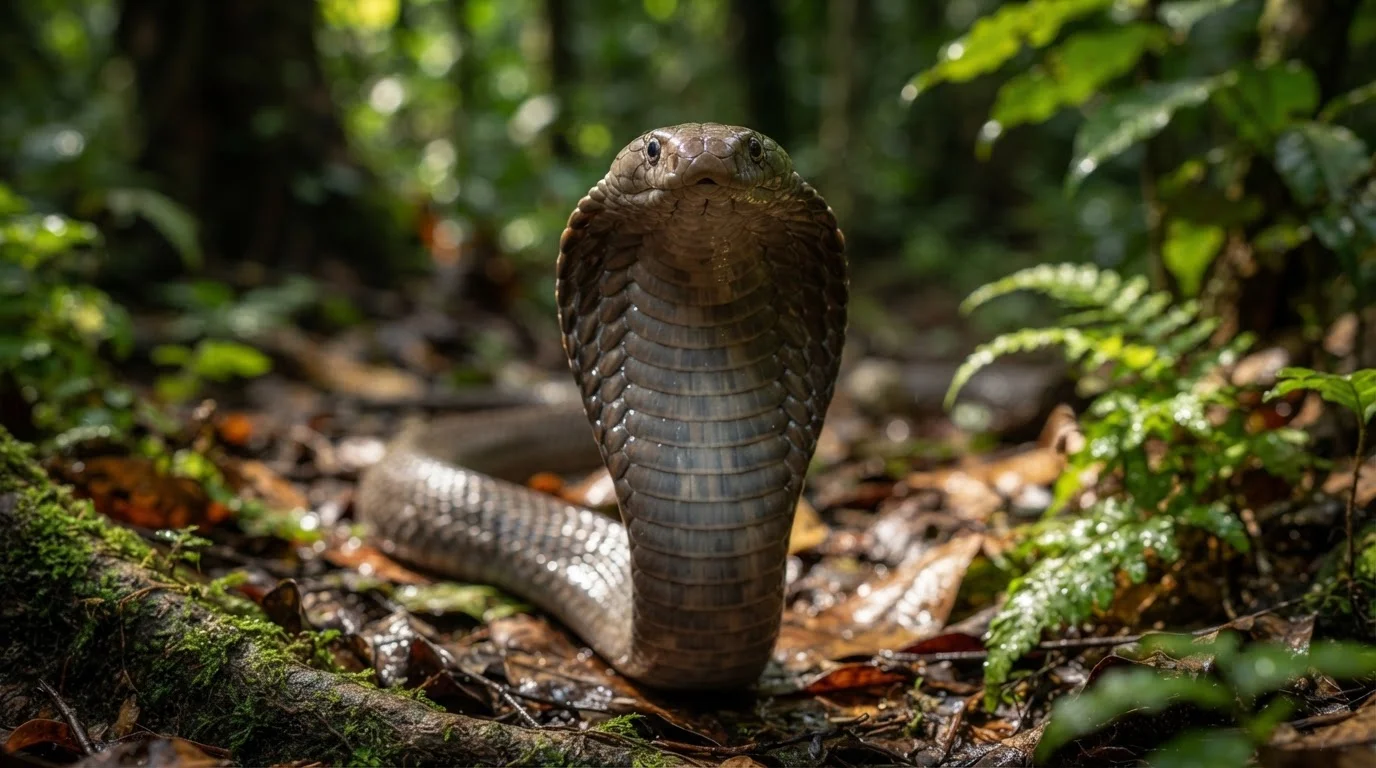
Although the king cobra can yield up to seven millilitres of liquid venom in a single bite—an immense payload evolved to overpower other snakes rapidly—this apex predator is not a true cobra. It forms an independent evolutionary branch set apart from the genus Naja by its exceptional size, reproductive habits, and distinctive anatomy. Cobras rank among the most ecologically vital and medically consequential serpents across Thailand. This guide examines the taxonomy, morphology, distribution, and behaviour of all native cobra species found across the kingdom, encompassing both lineages of the king cobra and the four recognised species of true cobras. Understanding their biological foundations requires unravelling the divergence between two distinct branches of the front-fanged family Elapidae: the king cobras of the genus Ophiophagus and the true cobras of the genus Naja.
All elapids possess proteroglyphous dentition, featuring short, permanently erect, hollow fangs fixed to the anterior end of the maxilla that deliver venom through a hypodermic injection mechanism. In Thailand, these front-fanged serpents diverge fundamentally in their evolutionary history. Although both genera rear their forequarters off the ground and spread their neck tissue when threatened, skeletal anatomy and molecular phylogenetics confirm that the king cobra is not an enlarged true cobra. Genetic sequencing indicates that Ophiophagus shares a closer evolutionary affinity with African mambas (Dendroaspis) than with Asian species of Naja. Morphologically, adult true cobras in Thailand rarely exceed 1.5 to 1.8 metres in length and display broad, spoon-shaped hoods supported by cervical ribs. King cobras regularly surpass three metres, display a narrower chevron hood, and possess a diagnostic pair of enlarged occipital scales situated behind the parietals on top of the crown—a feature absent in all species of Naja.
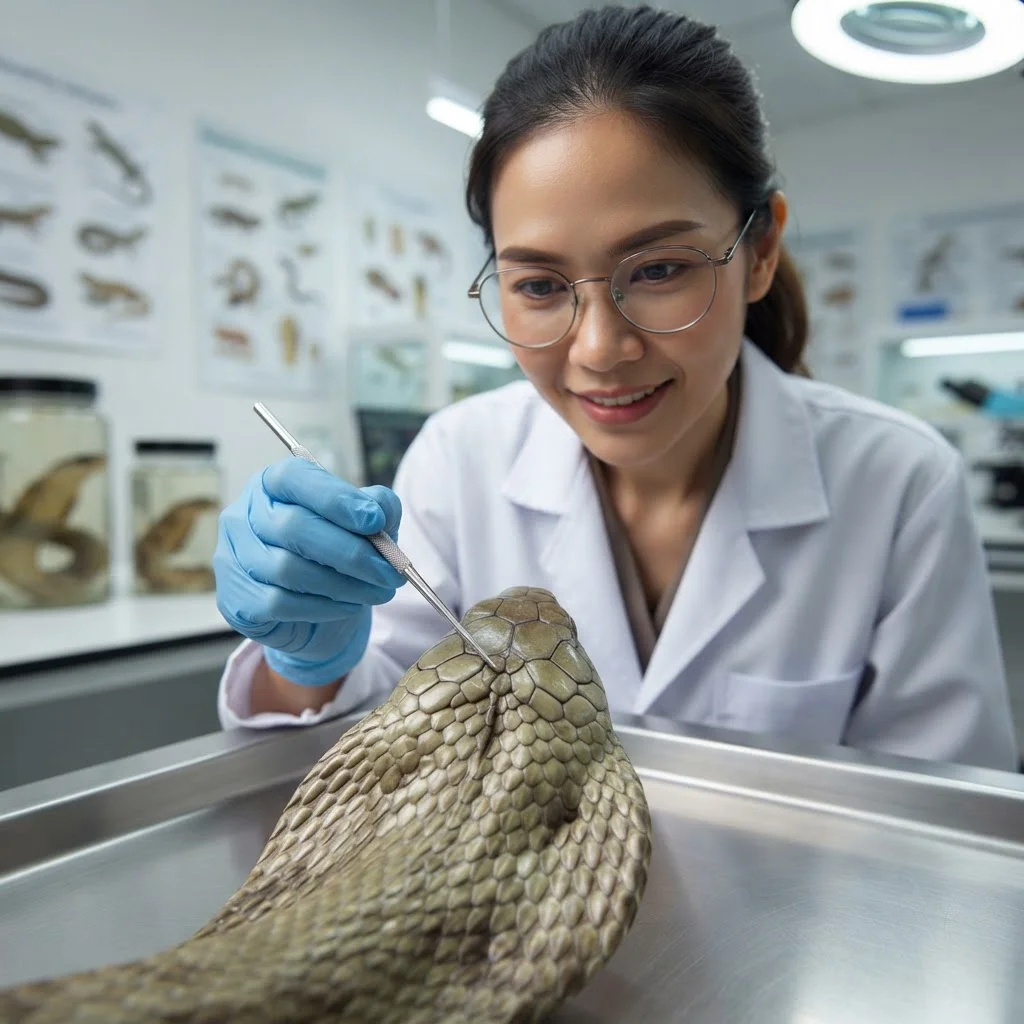
The iconic cobra hood is not a static anatomical fixture, but an active visual display driven by specialised rib movements and axial musculature. Along the neck, between ten and thirty pairs of elongated, mobile cervical ribs can rotate upwards and outwards. When the snake senses danger, contraction of prime erector muscles—most notably the levator costae and supracostalis lateralis superior—pulls these ribs cranially and dorsally. This biomechanical motion stretches the overlying folded skin taut, quadrupling the serpent's apparent lateral width in less than a second. Frontally, the erect hood creates an intimidating billboard that exaggerates body size and exposes warning colouration, such as the circular dorsal marking of the Monocled Cobra (Naja kaouthia). Once the threat recedes, intercostal muscles and elastic recoil within the costovertebral ligaments draw the ribs back against the spine, allowing the snake to navigate leaf litter and burrows unhindered.
Scientific understanding of Thailand's cobra lineages has advanced markedly through recent morphological and genomic investigations. For nearly two centuries, the king cobra was classified globally as a single taxon, Ophiophagus hannah. In late 2024, a landmark study published in the European Journal of Taxonomy evaluated 148 whole specimens and five skeletons alongside molecular markers, establishing that the king cobra is a species complex containing four distinct lineages. Thailand occupies a critical position across this biogeographical boundary. Populations in northern, central, western, and northeastern Thailand remain classified as the Northern King Cobra (Ophiophagus hannah sensu stricto), whereas peninsular populations south of the Isthmus of Kra represent the Sunda King Cobra (Ophiophagus bungarus).
A parallel taxonomic revision has refined the classification of Thailand's true cobras within the genus Naja. Biologists previously catalogued three native true cobras: the widespread Monocled Cobra (Naja kaouthia), the Indochinese Spitting Cobra (Naja siamensis), and the southern Equatorial Spitting Cobra (Naja sumatrana). In 2022, morphological and phylogenetic analyses confirmed a fourth species: the Brown-Banded Mountain Cobra (Naja fuxi). Previously misidentified as high-elevation variants of Naja kaouthia, this upland specialist inhabits rugged terrain across northern and western border regions. Distinguishing these distinct lineages is vital for wildlife conservation and antivenom formulation, as regional venom profiles vary significantly across species boundaries.

King Cobras in Thailand: Northern and Sunda Lineages
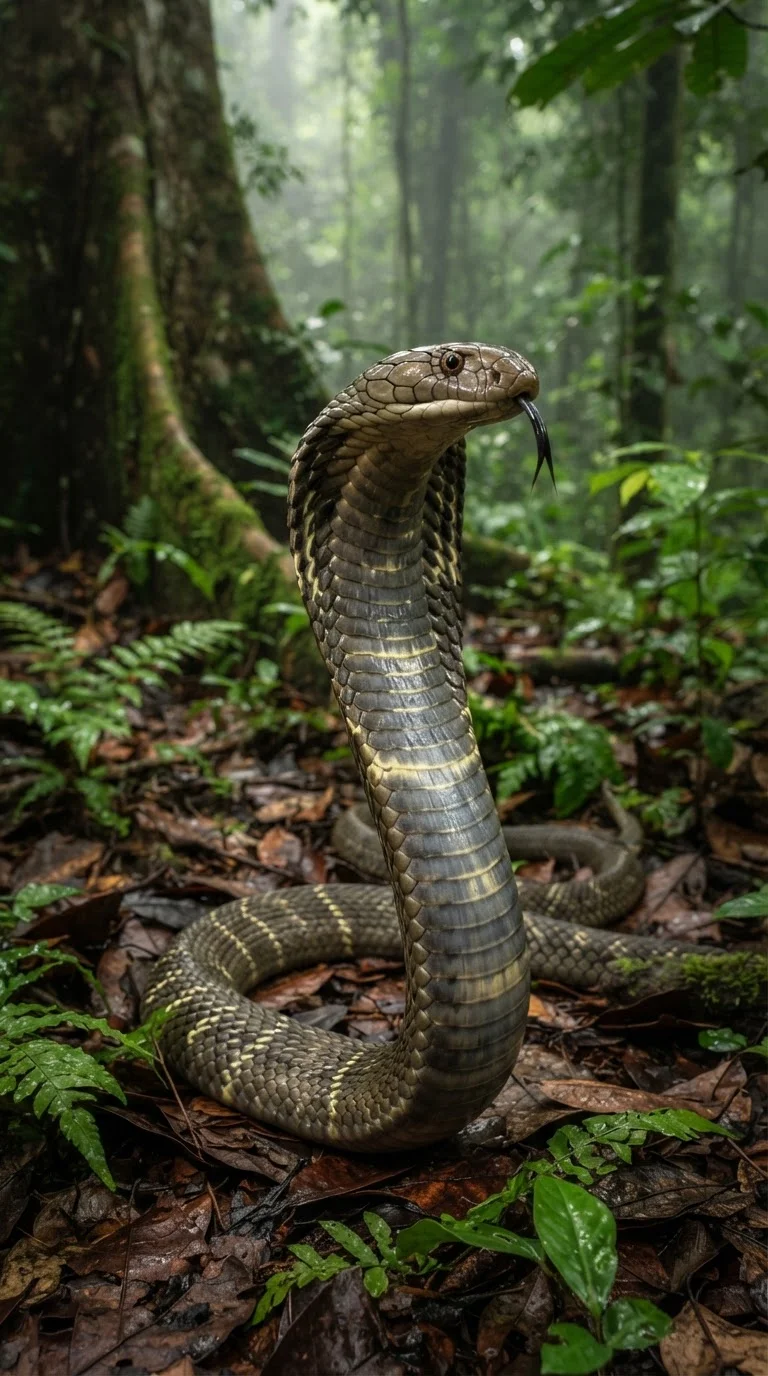
The king cobra ranks as the apex reptilian predator in Thailand's forest ecosystems, commanding vast territories through acute vision and specialised hunting strategies. Long treated as a single widespread species, extensive research published in late 2024 has formally divided the serpent into four distinct taxa, placing Thailand at the evolutionary boundary between two separate king cobra lineages.
Taxonomic split and regional distribution
For almost two centuries, herpetologists classified all king cobras under the single binomial Ophiophagus hannah. In October 2024, a taxonomic revision published in the European Journal of Taxonomy analysed morphological and genomic data from nearly 150 specimens, establishing that the taxon represents a species complex. Thailand marks the contact zone between two of these lineages. Populations across northern, western, central, and northeastern Thailand remain classified as the Northern King Cobra (Ophiophagus hannah sensu stricto). South of the Isthmus of Kra, peninsular populations belong to the Sunda King Cobra (Ophiophagus bungarus), a lineage extending south through Peninsular Malaysia, Singapore, and the Greater Sunda Islands.
Morphological markers and juvenile markings
Both species attain exceptional sizes, frequently exceeding three metres and occasionally reaching over four metres. They possess muscular bodies clad in smooth, glossy scales arranged obliquely in 15 dorsal rows at midbody. A key diagnostic feature distinguishing king cobras from true cobras (genus Naja) is a pair of large occipital scales set directly behind the parietal shields on the crown. Dorsal colouration varies regionally: Northern King Cobras typically exhibit olive-green, bronze, or yellowish-brown tones with pale, dark-edged chevrons, whereas Sunda King Cobras in peninsular Thailand often display darker soot-brown to black ground colours accented by narrow yellow transverse bands. Both species display vivid throat colour, ranging from cream to salmon-orange, which flares during defensive rearing displays.
Juvenile king cobras differ dramatically from adults. Measuring 45 to 55 centimetres at hatching, they display glossy black bodies encircled by 40 to 70 yellow or whitish bands, alongside four distinct yellow bars across the snout and crown. This disruptive pattern camouflages young snakes in sun-dappled forest litter. It frequently leads casual observers to mistake them for harmless banded colubrids or banded kraits, yet hatchlings possess fully functional fangs and venom glands from birth.
Spatial ecology in northeastern Thailand
Long-term field telemetry conducted at the Sakaerat Biosphere Reserve in Nakhon Ratchasima Province has clarified the spatial requirements of this far-ranging predator. Radio-tracking investigations revealed that adult king cobras maintain home ranges averaging roughly 493 hectares—approximately five square kilometres—with individual territories spanning between 0.5 and over 10 square kilometres. Cobras patrol dry evergreen and dipterocarp forests, but also move through agricultural mosaic borders and plantation edges, averaging movements of roughly 180 metres per day. During the dry-season breeding period, adult males expand their ranges significantly in search of mates, frequently crossing rural highways and navigating farmland along irrigation canals.
Dietary specialisation and ophiophagy
The generic name Ophiophagus translates as "snake eater", defining an almost strictly ophiophagous diet. In Thailand, king cobras prey primarily on medium-to-large snakes, including non-venomous colubrids such as Oriental rat snakes (Ptyas mucosa), Indo-Chinese rat snakes (Ptyas korros), and radiated ratsnakes (Coelognathus radiatus). They also take dangerous venomous species, hunting monocled cobras, spitting cobras, and banded kraits (Bungarus fasciatus). When snake prey is scarce, large adults take monitor lizards (Varanus nebulosus and Varanus salvator). Using keen eyesight and chemoreceptive tongue flicking, the snake tracks its prey and strikes, maintaining a firm clamping bite to pump large volumes of neurotoxic venom into the victim. Endogenous serum factors protect the predator from the venoms of sympatric snakes during these struggles.
Mound nest construction and maternal care
King cobras possess a reproductive behaviour found in no other snake species: the female constructs an above-ground mound nest for her clutch. Between March and May, the female loops her body to scrape fallen leaves, humus, and forest debris into a mound measuring up to one metre wide and 80 centimetres high. Inside this mound, she deposits 20 to 40 leathery eggs before heaping further vegetation over the chamber. Microbial decomposition within the organic heap generates heat, sustaining internal incubation temperatures between 26 and 29 degrees Celsius. The female coils on or beside the mound for the 60-to-90-day incubation period, vigorously deterring predators such as civets and wild boars. Shortly before the eggs pip, she abandons the site entirely—an adaptation preventing a starved parent from consuming her own emerging young.
The True Cobras: Monocled and Mountain Cobras
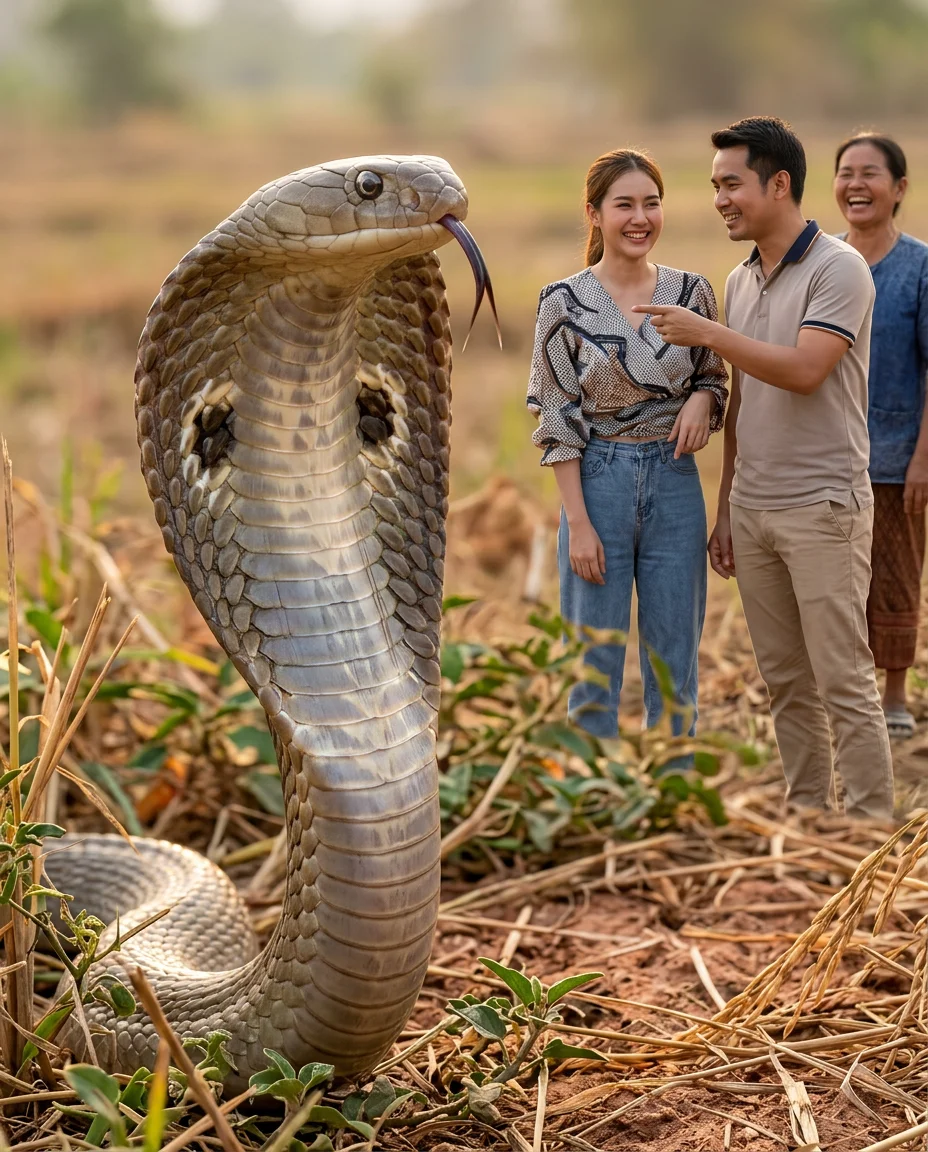
True cobras of the genus Naja are the most frequently encountered dangerous elapids in Thailand. Within the country, two non-spitting species represent this group: the widespread monocled cobra (Naja kaouthia), which dominates the lowlands, and the brown-banded mountain cobra (Naja fuxi), an upland specialist recognised by taxonomists in 2022. Unlike king cobras, which generally require expansive forest tracts, Thailand's non-spitting true cobras exploit human-modified landscapes, thriving across inundated river plains, agricultural holdings, and montane forest edges.
Monocled Cobra Identification and Ecology
The monocled cobra (Naja kaouthia) is Thailand's most abundant true cobra. Adults average between 1.2 and 1.5 metres in total length, though well-fed agricultural specimens can reach 1.8 metres. Its body is heavy and cylindrical, often matching the thickness of an adult human forearm. Dorsal colouration varies across river basins, ranging from pale fawn, yellowish-tan, and grey-brown to glossy charcoal-black. The belly is pale grey, whitish, or clouded yellow, with two dark lateral blotches beneath the hood. The defining feature of Naja kaouthia is the ocular marking on the rear of its expanded hood: a single circular ring resembling a monocle, outlined in creamy white with a dark centre. This marking can be imperfect, forming a horseshoe or open U, and occasionally fades in older or melanistic individuals.
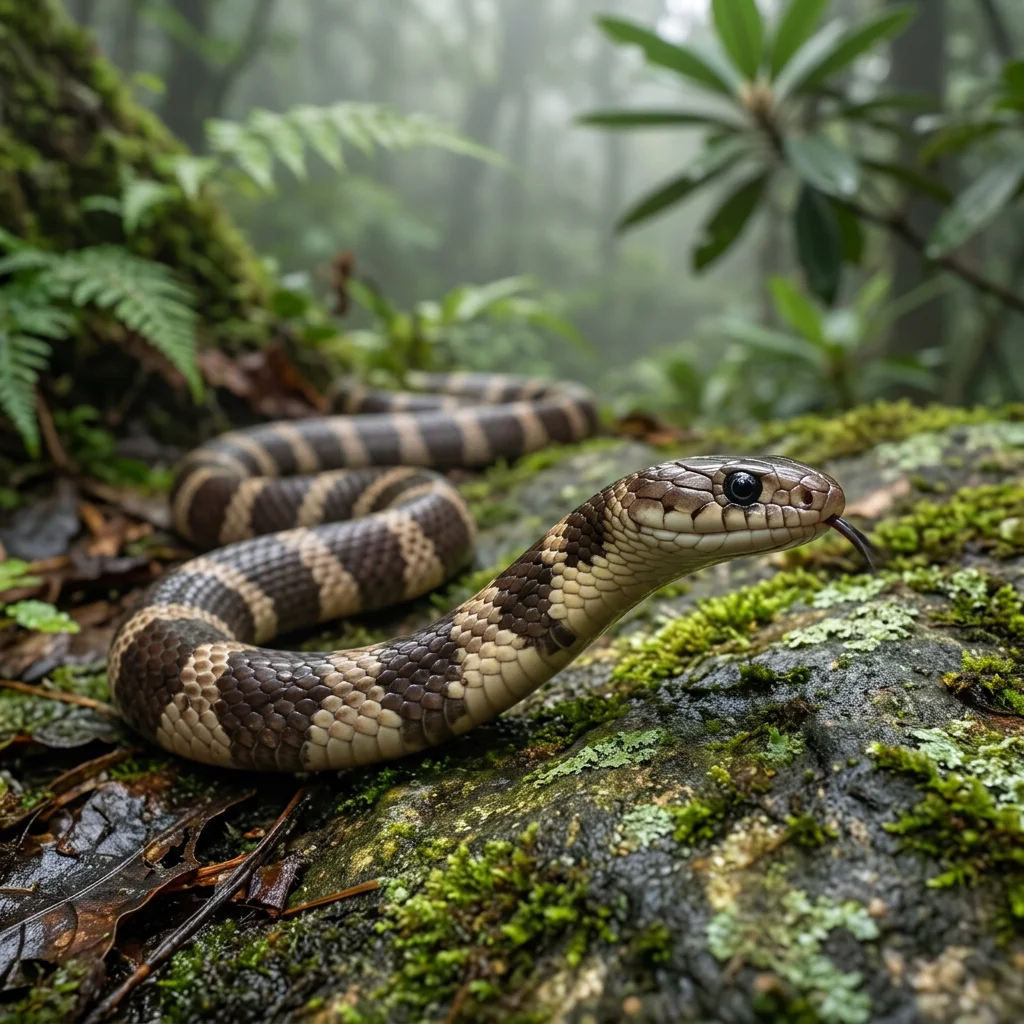
The ecological success of the monocled cobra stems from its dietary adaptability and affinity for water. It thrives in flooded rice paddies, canal banks, coconut plantations, and suburban gardens across central, eastern, and southern Thailand, including Greater Bangkok. As a dietary generalist, it hunts toads, bullfrogs, swamp eels, rodents, birds, and other snakes. Rice cultivation supports dense populations of field rats (Rattus argentiventer and Bandicota indica), drawing cobras into paddy dykes and village storehouses. Although primarily crepuscular and nocturnal, monocled cobras regularly bask near drainage culverts during early morning hours. When confronted, Naja kaouthia raises the front third of its body, spreads a wide hood, and produces a deep hiss through its glottis. It cannot spray venom; it defends itself with bluffing lunges and rapid downward strikes.
Brown-Banded Mountain Cobra
Described as a distinct species in 2022 and documented across Thailand in 2023, the brown-banded mountain cobra (Naja fuxi) resolved longstanding taxonomic confusion surrounding upland cobras previously misidentified as Naja kaouthia. Named after Fuxi, the mythological serpent-bodied creator of Chinese lore, the species occupies montane and sub-montane habitats between 800 and 1,500 metres above sea level. In Thailand, populations occur in forested highlands across Chiang Mai, Chiang Rai, Mae Hong Son, Nan, Lampang, and Phetchabun provinces, extending along the Tenasserim mountain chain bordering Myanmar and into upland pockets of the north-east.
Adults measure between 1.0 and 1.4 metres and are distinguished by a light brown, russet, or dull khaki-grey dorsum. Along the middle and rear portions of the body and tail, Naja fuxi displays narrow, pale crossbands edged with darker borders, though these bands can fade in mature adults. Its hood pattern is variable, appearing as a monocellate ring, an open U, or an irregular double bar. The species inhabits rocky pine-oak forests, hill-tribe agricultural clearings, and upland tea plantations, hunting rodents, amphibians, and reptiles. Like the monocled cobra, it possesses fixed front fangs and cannot spit venom. Proteomic analyses show its venom is enriched in snake venom metalloproteinases alongside neurotoxic three-finger toxins, producing significant local swelling and tissue necrosis alongside systemic neurotoxicity.
Plan a Northern Thailand trip covering Chiang Mai, Chiang Rai, Sukhothai, mountain routes, Lanna food, transport, seasons and air quality.
Asian Spitting Cobras: Indochinese and Equatorial Species
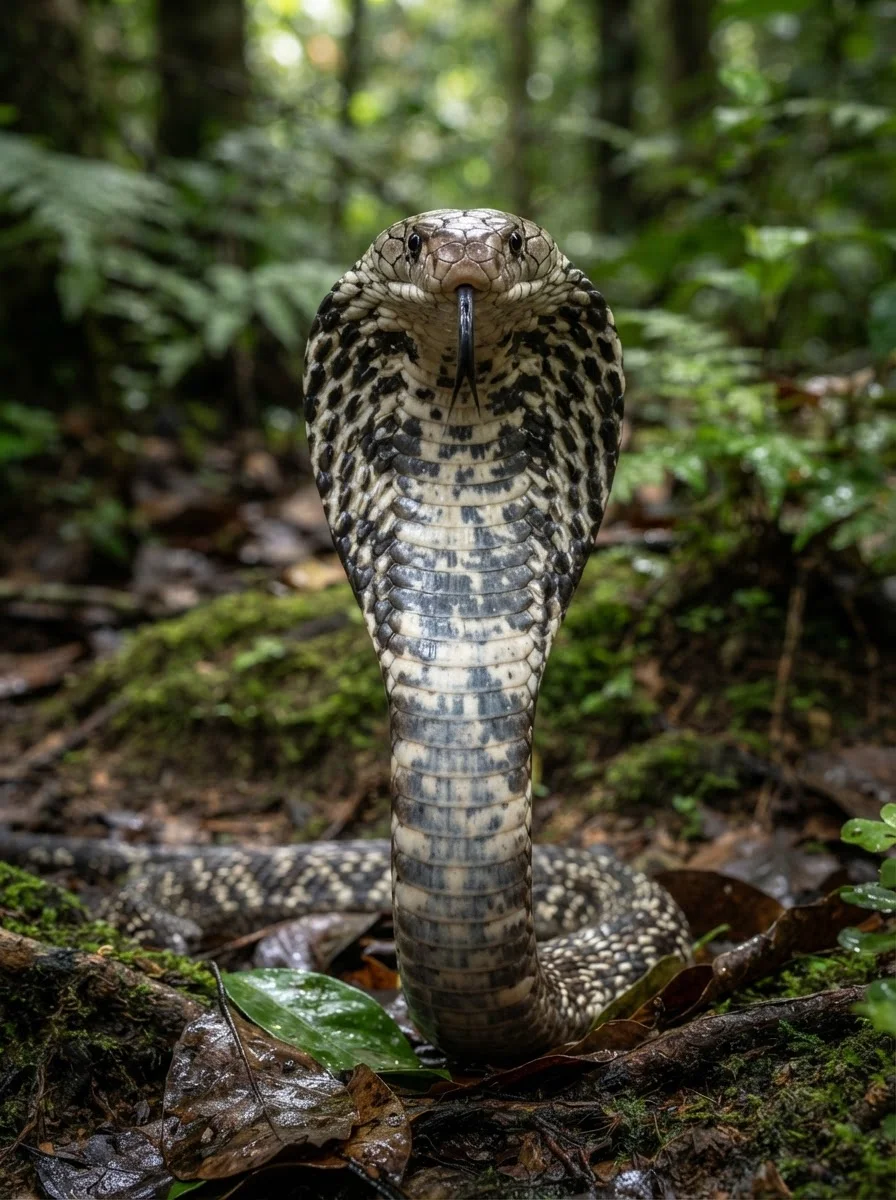
Spitting cobras possess one of the most specialised defensive adaptations among venomous snakes. Rather than waiting for a predator to close within biting distance, they project liquid venom forward towards the face and eyes of an aggressor. Thailand is home to two true spitting cobras in the genus Naja: the Indochinese spitting cobra (Naja siamensis) across the northern and central mainland, and the Equatorial spitting cobra (Naja sumatrana) in the southern peninsula. Their geographic distributions divide cleanly around the Isthmus of Kra, mirroring the broader zoogeographical transition between Indochinese and Sundaic fauna.
Indochinese Spitting Cobra
The Indochinese spitting cobra (Naja siamensis)—also called the Siamese spitting cobra or black-and-white spitting cobra—ranges across northern, central, western, and northeastern Thailand. Its southern distribution terminates in the upper peninsula around Prachuap Khiri Khan province. Adults typically measure between 0.9 and 1.2 metres, though rare specimens reach 1.6 metres.
Colouration varies markedly by region. In the central plains around Lopburi, Saraburi, and Ayutthaya, specimens frequently display an irregular piebald pattern of jet-black and bright white blotches. In western provinces, individuals are more commonly dark slate or solid black, whereas northern and northeastern populations tend to be uniform grey-brown or olive. Risen specimens show variable hood markings: some exhibit an irregular spectacle or pale U-shape, while many northern adults have unmarked hoods.
Highly adaptable, Naja siamensis inhabits dry scrub, agricultural fields, lowlands, and rural settlements where rodents and toads gather. Unlike non-spitting cobras that often attempt a quiet retreat, Naja siamensis is quick to assume a defensive posture. When threatened, it raises the anterior third of its body, spreads a rounded hood, tracks the antagonist's movements, and readily discharges venom.
Equatorial Spitting Cobra
South of the Isthmus of Kra, the Indochinese species is replaced by the Equatorial spitting cobra (Naja sumatrana), also known as the golden spitting cobra or Malayan spitting cobra. Inhabiting southern evergreen forests, plantations, and rural gardens, this elapid averages 0.9 to 1.2 metres in length, rarely exceeding 1.5 metres.
In southern Thailand, Naja sumatrana manifests predominantly in a golden-yellow or bronze-olive phase, often with dark scale edges. A glossy black morph occurs further south towards the Malaysian border. Unlike the sympatric monocled cobra, Naja sumatrana has a plain hood without dorsal markings. It is primarily diurnal, hunting rodents, frogs, and other snakes along forest streams and oil palm estates. Field biologists consider it the least commonly encountered true cobra in Thailand, though its defensive strike and spray response are rapid when cornered.
Biomechanics and Ballistics of Venom Spraying
Venom spraying is entirely hydraulic rather than pneumatic; the snake does not blow venom using air from its lungs. Contraction of the musculus adductor mandibulae externus superficialis compresses the venom gland against the skull bones, generating the pressure required to propel venom through the duct. Simultaneously, the musculus protractor pterygoideus displaces the palato-maxillary arch, clearing tissue folds around the fang sheath to permit unobstructed flow.
Fang structure provides the hydraulic nozzle. In non-spitting cobras such as Naja kaouthia, the venom channel exits through an elongated, downward-pointing slit near the tip, suited for tissue injection during a bite. In spitting cobras (N. siamensis and N. sumatrana), the internal lumen takes an abrupt ninety-degree forward turn above the orifice. The external discharge hole is small, rounded, and located on the front surface of the fang, accelerating fluid velocity.
Because fangs cannot rotate independently, aiming relies on rapid cephalic movement. During discharge—which lasts only 40 to 50 milliseconds—cervical axial muscles execute fast vertical and horizontal head oscillations. This motion atomises the ejected streams into an expanding mist, distributing droplets across 20 to 30 centimetres at distances of one to two and a half metres. The snake tracks the aggressor's eyes, maximising the chance of corneal contact to deter attackers.
| Species | Common Name | Maximum Length | Hood Marking | Primary Range in Thailand | Spitting Capability |
|---|---|---|---|---|---|
| *Ophiophagus hannah* | Northern King Cobra | Up to 5.5 m | Chevron bands, no dorsal mark | North, Central, West, Isan | No (bite injection only) |
| *Ophiophagus bungarus* | Sunda King Cobra | Up to 4.5 m | Transverse bars, no dorsal mark | Southern Peninsula | No (bite injection only) |
| *Naja kaouthia* | Monocled Cobra | Up to 1.8 m | Single distinct circular monocle | Nationwide (widespread) | No (lunging bite only) |
| *Naja fuxi* | Brown-Banded Mountain Cobra | Up to 1.5 m | Irregular U-shape or absent | Northern & Western Highlands | No (bite injection only) |
| *Naja siamensis* | Indochinese Spitting Cobra | Up to 1.6 m | Variable spectacles, U, or absent | North, Central, West, Isan | Yes (up to 2.5 m range) |
| *Naja sumatrana* | Equatorial Spitting Cobra | Up to 1.5 m | Completely plain, no markings | Southern Peninsula | Yes (up to 2.5 m range) |
Cobra Lookalikes and False Hooding Snakes
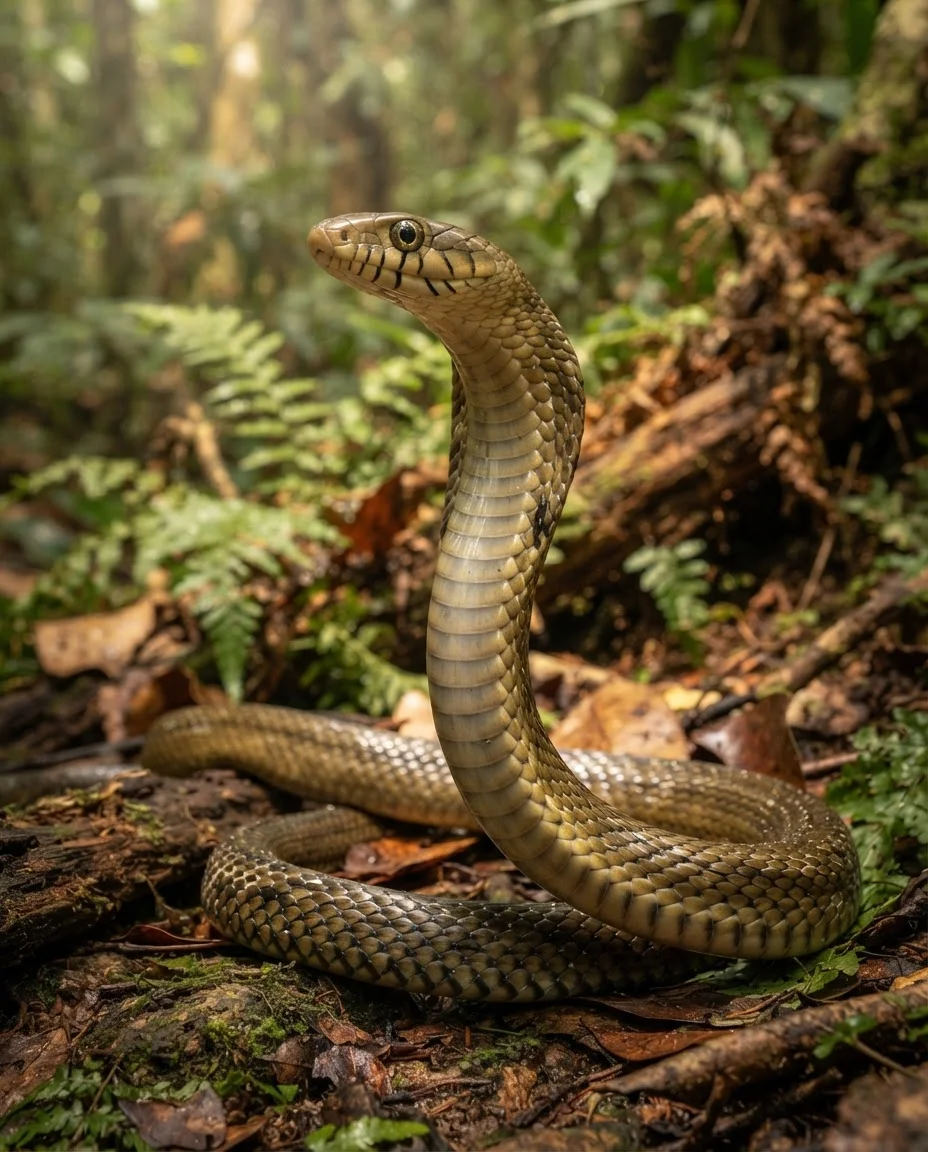
The fearsome reputation of cobras leads many people in Thailand to mistake harmless or mildly venomous species for lethal elapids. Across agricultural provinces, suburban gardens, and forest trails, non-venomous snakes are regularly killed by residents who misinterpret bluff displays as venomous aggression. Distinguishing genuine cobras from their colubrid mimics relies on several reliable anatomical and behavioural markers, from pupil shape and scale texture to the specific mechanical way each serpent expands its neck.
Non-Venomous Rat Snakes
Oriental rat snakes (Ptyas mucosa) and Indo-Chinese rat snakes (Ptyas korros) generate more mistaken cobra reports across Thailand than any other serpents. Both species grow to impressive dimensions; Ptyas mucosa can reach lengths exceeding 2.5 metres, easily matching the body size of a sub-adult king cobra. When cornered, these rat snakes stage a dramatic defensive bluff. They compress their necks, inflate their throat sacs with air, hiss loudly, and strike repeatedly to drive away perceived threats.
Crucial anatomical distinctions separate rat snakes from true cobras. Rat snakes possess exceptionally large, prominent eyes with round pupils, giving the face an alert, wide-eyed profile. Their dorsal scales are large, and on the rear portion of the body and tail, Ptyas mucosa displays dark-edged scales forming a distinctive fish-net pattern or bold black crossbars. Crucially, the rat snake defensive posture involves vertical compression of the neck by inflating the trachea and cervical air sacs, making the neck look tall and narrow. True cobras, by contrast, spread their hoods horizontally by flaring elongated cervical ribs outward. A snake whose neck expands vertically rather than horizontally is a non-venomous rat snake.
False Cobras and Keelbacks
In montane forests, the large-eyed false cobra (Pseudoxenodon macrops), sometimes called the mock viper, presents an astonishingly convincing impersonation of a juvenile monocled cobra. Rarely exceeding one metre in length, this rear-fanged colubrid flattens its anterior ribs outward into a small, genuine horizontal hood when threatened, often revealing a dark chevron marking on the nape. It can be distinguished from genuine elapids by its heavily keeled, rough-textured dorsal scales, blunt head shape, and noticeably oversized eyes.
Another source of confusion is the red-necked keelback (Rhabdophis subminiatus). This common semi-aquatic snake flattens its forebody slightly to display vivid red, yellow, and black skin patches behind its head. Once regarded as harmless, Rhabdophis subminiatus is a rear-fanged species equipped with a potent haemorrhagic venom that can cause severe coagulopathy and internal bleeding. It also secretes cardiotoxic bufadienolides from specialised nuchal glands after consuming toxic toads, meaning it should rarely be handled, though it remains anatomically distinct from true elapid cobras.
Juvenile King Cobra Mimics
Juvenile king cobras have striking yellow-and-black bands that cause reciprocal confusion with two other species: the mangrove cat snake (Boiga dendrophila) and the banded krait (Bungarus fasciatus). The mangrove cat snake displays a glossy blue-black body ringed with narrow yellow bands, closely matching the colour pattern of a young king cobra. However, Boiga dendrophila features a distinct broad, triangular head, a laterally compressed body adapted for arboreal movement, and vertical cat-like pupils for nocturnal hunting. King cobras possess round pupils, smooth dorsal scales without an elevated vertebral keel, and an extra pair of large occipital scales behind their parietal plates.
| Feature | True Cobras (*Naja*) | King Cobras (*Ophiophagus*) | Rat Snakes (*Ptyas*) | False Cobras (*Pseudoxenodon*) |
|---|---|---|---|---|
| Hood Action | Horizontal rib expansion | Narrow downward-tapering hood | Vertical throat puffing | Slight horizontal flattening |
| Neck Ribs | Actively mobile and flared | Mobile and elongated | Standard, non-flaring | Modified, short flare |
| Head Scales | Typical 9 large crown plates | Extra pair of large occipital scales | Standard crown plates, large eyes | Broad plates, massive eyes |
| Dorsal Scales | Smooth, highly polished | Smooth, glossy, oblique rows | Keeled at midbody; net-like tail | Strongly keeled, rough texture |
| Pupil Shape | Round | Round | Round (very large) | Round (very large) |
| Dentition | Proteroglyphous (front fangs) | Proteroglyphous (large front fangs) | Aglyphous (solid teeth only) | Opisthoglyphous (enlarged rear teeth) |
Venom Biochemistry, Pathophysiology, and Clinical Envenomation
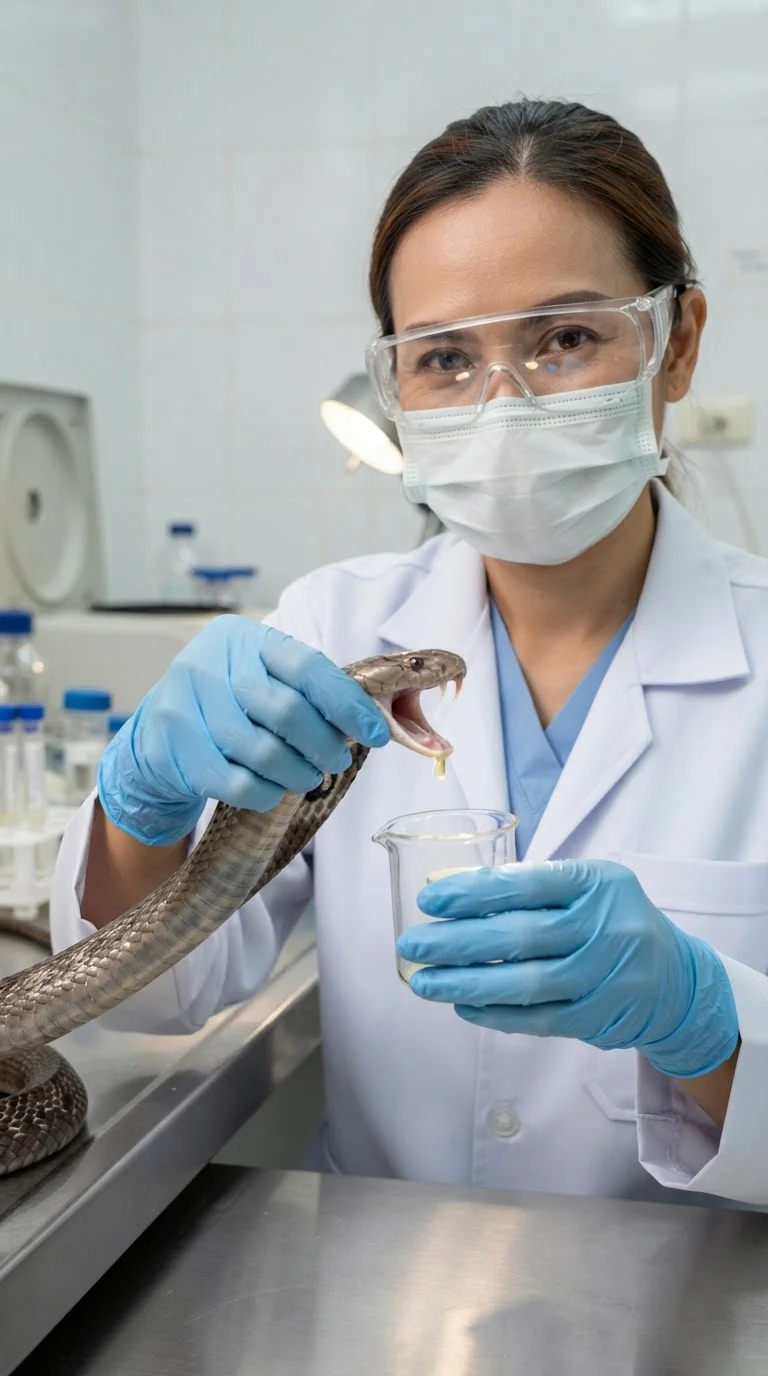
Cobra venoms in Thailand represent intricate biochemical mixtures of enzymatic and non-enzymatic proteins evolved to immobilise prey rapidly and initiate digestion. In human medicine, bites from Thai elapids manifest through two primary clinical syndromes: progressive descending neuroparalysis and severe, destructive local cytotoxicity.
Neurotoxicity and Respiratory Paralysis
The primary lethal drivers in Thai cobra venom belong to the three-finger toxin superfamily, particularly post-synaptic alpha-neurotoxins. These low-molecular-weight polypeptides target the neuromuscular junctions of voluntary skeletal muscle, binding with high affinity to the alpha subunits of post-synaptic nicotinic acetylcholine receptors. By preventing acetylcholine from docking at motor endplates, these toxins halt the transmission of electrical nerve impulses to muscle fibres.
The resulting clinical presentation is descending flaccid paralysis. Symptoms can emerge between fifteen minutes and two hours after envenomation. Early cranial nerve impairment appears as bilateral ptosis (drooping eyelids), diplopia (double vision), and external ophthalmoplegia. As the neurotoxins saturate further motor endplates, muscle weakness descends to the lower cranial nerves, producing dysarthria (slurred speech) and dysphagia (difficulty swallowing secretions). Without timely intervention, paralysis extends to the intercostal muscles and the diaphragm, precipitating fatal hypoxic respiratory failure and secondary cardiac arrest.
Toxicity profiles vary between species. Drop for drop, the monocled cobra (Naja kaouthia) delivers venom with a lower murine subcutaneous median lethal dose (LD50 of roughly 0.2 to 0.4 mg/kg) than the king cobra (Ophiophagus hannah, roughly 1.6 to 1.8 mg/kg). The king cobra compensates through massive venom reserves, capable of injecting between 300 and 500 milligrams of dry venom in a single discharge, with rare maximums nearing 1,000 milligrams. When striking directly into vascular tissue, this volume can trigger systemic collapse within thirty to sixty minutes.
Cytotoxicity and Tissue Necrosis
Unlike kraits (Bungarus), which produce almost purely neurotoxic venoms, true cobras of the genus Naja possess venoms packed with cytotoxic three-finger proteins (cardiotoxins), basic polypeptides, and hydrolytic enzymes including phospholipase A2 and hyaluronidase. These compounds act synergistically to disrupt cell membrane phospholipid bilayers, initiate cell lysis, and degrade the extracellular ground substance.
Bites from Naja kaouthia, Naja siamensis, and Naja fuxi trigger immediate, excruciating pain, severe local oedema, and dark haemorrhagic blistering. Over the subsequent 24 to 72 hours, this damage evolves into extensive liquefactive necrosis. The destruction can penetrate skin, subcutaneous adipose layers, and skeletal muscle down to deep fascial planes. Secondary bacterial contamination presents a constant danger of systemic sepsis. Even when antivenom successfully reverses neuroparalysis, surgical wound debridement, skin grafts, or partial amputations are often necessary to manage necrotic tissue loss.
Venom Ophthalmia and Corneal Trauma
Spitting cobras (Naja siamensis and Naja sumatrana) deploy venom defensively by spraying pressurised droplets towards the faces of perceived threats. Upon contact with the ocular surface, cardiotoxins and phospholipases rapidly erode the corneal epithelium. This condition, termed venom ophthalmia, provokes immediate blepharospasm, conjunctival chemosis, intense stinging pain, and profuse tearing.
Neglected ocular exposures risk stromal ulceration, anterior uveitis, permanent corneal scarring, and secondary blindness. Systemic neuroparalysis does not develop through an intact corneal or conjunctival surface, as the ocular epithelial barrier prevents systemic vascular absorption. Systemic envenomation only occurs if the snake pierces the skin with its fangs during the encounter.
Antivenom Neutralisation and Thai Clinical Standards
Specialised antivenom therapy in Thailand is anchored by the Queen Saovabha Memorial Institute, run under the auspices of the Thai Red Cross Society in Bangkok. The institute fractionates and purifies immunoglobulins harvested from hyperimmunised donor horses, producing lyophilised, enzyme-refined F(ab')2 monovalent antivenoms for the Monocled Cobra (Naja kaouthia) and the King Cobra (Ophiophagus hannah).
Because Naja kaouthia monovalent antivenom displays strong paraspecific cross-neutralisation against the venom of the Indochinese Spitting Cobra (Naja siamensis), Thai clinicians routinely administer it in hospital emergency departments to neutralise spitting cobra bites. The institute also manufactures a Neuro Polyvalent Snake Antivenom that provides concurrent therapeutic coverage against the king cobra, true cobras, and medically significant kraits.
| Dominant Pathology | Flaccid neuroparalysis | Neuroparalysis and severe necrosis | Severe necrosis and chemical ophthalmia |
|---|---|---|---|
| Average Dry Yield | 300 to 500 mg (Max ~1,000 mg) | 150 to 250 mg | 70 to 120 mg |
| Onset of Paralysis | 15 to 45 minutes | 30 to 120 minutes | 1 to 4 hours (variable) |
| Local Tissue Damage | Moderate local oedema, mild necrosis | Extreme liquefactive necrosis | Severe local necrosis and blistering |
| Ocular Danger | None (cannot spit) | Minimal (rare dry flicking) | Severe chemical burning and corneal ulceration |
| Specific Antivenom | Thai Red Cross King Cobra Monovalent | Thai Red Cross Cobra Monovalent | Thai Red Cross Cobra Monovalent |
Encounter Protocols, First Aid, and Coexistence
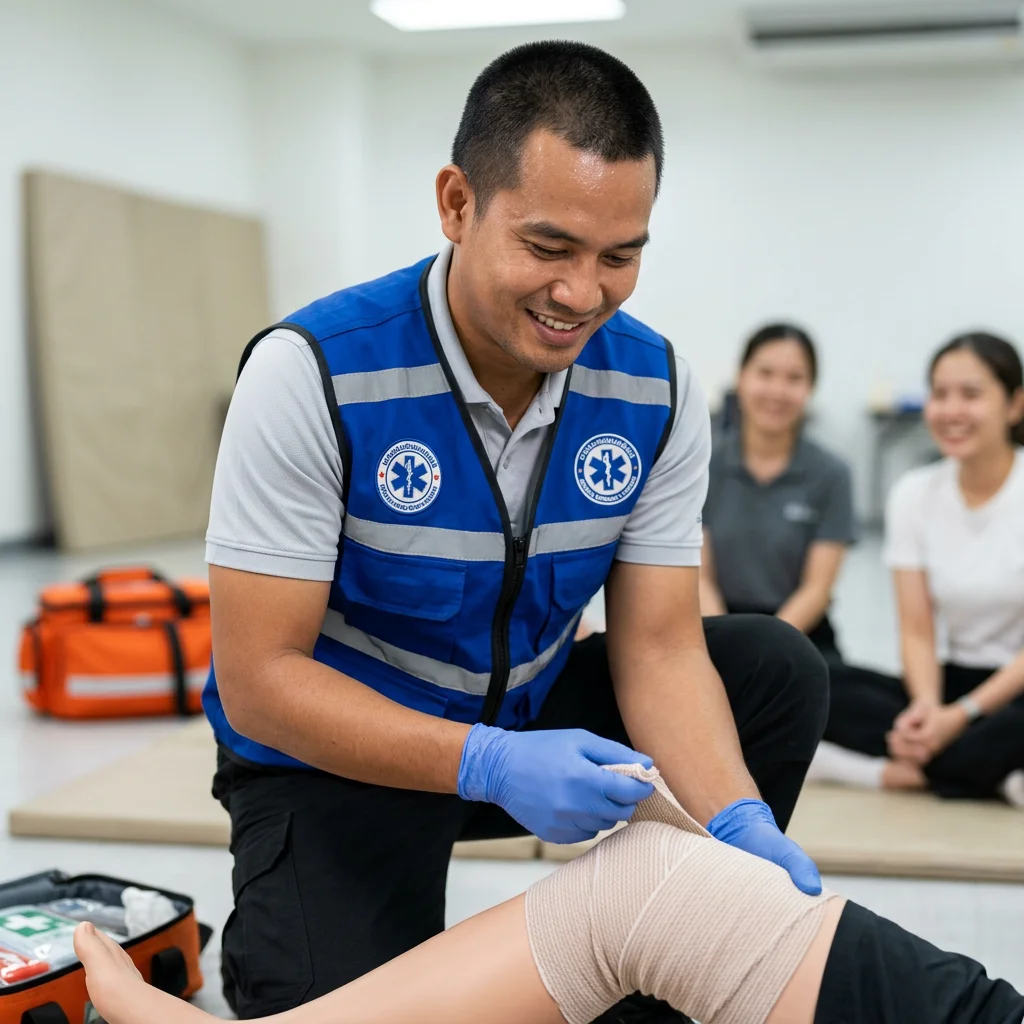
Encountering a cobra in Thailand can be alarming, but these reptiles are defensive creatures that favour escape over confrontation. A cobra typically spreads its hood, hisses, and lunges when startled, cornered, or physically threatened. Recognising defensive thresholds, adhering to established medical first-aid protocols, and applying physical exclusion measures around properties significantly reduce the likelihood of severe envenomation.
Field Encounters and Defensive Behaviour
When meeting a hooded cobra along a trail, in agricultural land, or within a garden, stop walking immediately. Cobras possess acute visual tracking for moving objects, whereas their ability to resolve stationary forms is comparatively weak. Remaining motionless interrupts the visual trigger that prompts a defensive strike.
Back away slowly and steadily, increasing the distance to at least four or five metres. Avoid sudden arm gestures, running, or prodding the snake with sticks or footwear. When facing spitting cobras, such as the Indochinese spitting cobra (Naja siamensis) or Equatorial spitting cobra (Naja sumatrana), protect the face immediately. Shield the eyes using a rucksack, clothing, or a hat, and turn the head away whilst retreating. Ordinary prescription spectacles, sunglasses, or safety goggles provide a physical barrier against airborne venom droplets. Provided the snake has an unobstructed retreat route, it will normally drop its hood and seek a nearby refuge.
Emergency First Aid for Cobra Bites
Historic snakebite interventions—such as arterial tourniquets, cutting the wound, oral venom suction, electric shock, chemical cauterisation, and herbal poultices—cause extensive tissue damage and hasten infection without removing venom.
If a cobra bite occurs, follow modern clinical guidelines:
- Reassure the casualty and keep them physically quiet; bodily exertion accelerates venom spread through the lymphatic system.
- Immobilise the bitten limb with a rigid splint and sling, resting it at or slightly below heart level.
- Remove rings, watches, and tight footwear before swelling develops.
- Wipe surface venom gently from around the punctures with clean water or saline, avoiding rubbing or massaging.
- Arrange immediate transport to a hospital equipped for emergency care, or dial 1669 for an ambulance. Inform the hospital in advance so medical teams can prepare respiratory support and antivenom.
Compression bandaging requires caution. While Pressure Immobilisation Bandaging (PIB) using elastic bandages at 40 to 70 mmHg is standard for neurotoxic Australian elapids, its application in Thai cobra bites is contraindicated by Thai clinical consensus and World Health Organisation guidelines. Because the venom of monocled cobras (Naja kaouthia) and spitting cobras contains potent cytotoxins, trapping venom in the limb dramatically worsens local blistering and deep tissue necrosis. Splinting without tight elastic wrapping is the standard approach. For confirmed king cobra (Ophiophagus) bites, where severe neurotoxicity outstrips local necrosis, pressure bandaging may be considered if trained medical responders are present, though avoiding transport delays remains the overriding priority.
Treating Ocular Venom Exposure
Venom sprayed into the eyes from a spitting cobra causes venom ophthalmia, with intense pain, eyelid spasms, inflammation, and profuse tearing. Left untreated, enzymatic toxins erode the corneal surface, risking secondary bacterial keratitis and sight impairment.
- Flush the eyes immediately with copious clean tap water, bottled drinking water, or saline for at least twenty minutes.
- Hold the eyelids wide open during irrigation to cleanse the entire conjunctival sac.
- Avoid rubbing the eyes, which abrades the cornea and drives toxins deeper.
- Do not apply milk, herbal mixtures, or chemical neutralisers into the eye.
- Seek immediate medical evaluation for slit-lamp examination, fluorescein staining, and prophylactic antibiotic and cycloplegic drops. Systemic antivenom is not indicated for ocular exposure alone.
Property Exclusion and Domestic Safety
Cobras enter residential properties searching for food, water, or cool shelter during hot weather. Rubble, stacked timber, dense ground foliage, and unsealed perimeter walls provide daytime retreats. Organic household waste also attracts rodents, which cobras track by scent.
Residents can deter snakes by keeping lawns short, trimming low shrubs, storing materials on raised racks, and securing refuse in sealed bins. Sealing door thresholds with weatherstripping and fixing wire mesh over drain outlets prevents snakes entering indoor spaces.
If a cobra enters a living area, avoid trying to kill or capture it with household implements; most bites occur during amateur capture attempts. Confine the reptile by closing interior doors, seal floor gaps with damp towels, keep watch from several metres away, and call the fire and rescue department on 199 or police emergency dispatch on 191. Local municipal teams and charitable rescue foundations deploy trained handlers with specialised tongs to relocate snakes unharmed into protected habitats.
Cultural Status and Ecological Role
In Thai society, cobras hold a distinctive status shaped by Buddhist and Hindu traditions. Serpents are connected with mythical water spirits and protective serpent deities, notably the multi-headed serpent that sheltered Gautama Buddha during meditation. Rural communities frequently consider the deliberate killing of a large cobra, particularly a king cobra, an act that brings severe spiritual misfortune.
Ecologically, cobras are valuable biological regulators. A single monocled cobra consumes hundreds of rodents over its lifespan, limiting crop damage across agricultural plains and checking rodent-borne diseases such as leptospirosis. In forest habitats, king cobras regulate other venomous snake populations. Supporting professional rescue and relocation rather than killing maintains this ecological balance across Thailand.
Quick Reference Table
| Item | Detail | Notes |
|---|---|---|
| Native cobra genera | *Naja* (true cobras, 4 species) and *Ophiophagus* (king cobras, 2 species) | Front-fanged elapids; king cobras are phylogenetically distinct and not true cobras |
| Northern King Cobra (*Ophiophagus hannah*) | Up to 5.5 m; olive, bronze, or yellowish-brown with pale, dark-edged chevrons | Found across northern, western, central, and northeastern Thailand |
| Sunda King Cobra (*Ophiophagus bungarus*) | Up to 4.5 m; soot-brown to black with narrow yellow transverse bands | Native to peninsular Thailand south of the Isthmus of Kra |
| Monocled Cobra (*Naja kaouthia*) | Up to 1.8 m; distinctive circular monocellate ring on rear of expanded hood | Most common true cobra nationwide; non-spitting; common in agricultural and lowland habitats |
| Brown-Banded Mountain Cobra (*Naja fuxi*) | Up to 1.5 m; light brown to russet dorsum with faint, dark-edged rear crossbands | Montane specialist at 800–1,500 m elevation; confirmed in Thailand in 2022–2023; non-spitting |
| Indochinese Spitting Cobra (*Naja siamensis*) | Up to 1.6 m; variable colour (piebald black-and-white, solid black, or grey-brown) | Defensively sprays venom up to 2.5 m; ranges across northern, central, western, and Isan regions |
| Equatorial Spitting Cobra (*Naja sumatrana*) | Up to 1.5 m; golden-yellow, bronze-olive, or glossy black with unmarked hood | Defensively sprays venom up to 2.5 m; restricted to peninsular Thailand south of the Isthmus of Kra |
| Venom mechanisms | Alpha-neurotoxins (respiratory paralysis) and cytotoxins (severe tissue necrosis) | King cobra bites deliver massive neurotoxic loads; *Naja* bites cause extensive liquefactive necrosis |
| Snakebite first-aid protocol | Immobilise bitten limb with a rigid splint and sling; keep quiet; rapid hospital transfer | Do not apply tourniquets, cut, suck, or use pressure immobilisation bandaging for *Naja* bites |
| Ocular venom spray protocol | Irrigate eyes immediately with copious clean water or saline for at least 20 minutes | Do not rub eyes or apply neutralising chemicals; seek urgent medical slit-lamp examination |
| Antivenom manufacturer | Queen Saovabha Memorial Institute (Bangkok) | Produces monovalent and neuro-polyvalent equine F(ab')2 antivenoms under the Thai Red Cross Society |
| Emergency contact numbers | Medical EMS: 1669; Fire & Rescue: 199; Police Emergency: 191 | Call 199 or 191 for professional snake capture and relocation by trained rescue teams |
| Official source | Queen Saovabha Memorial Institute, Thai Red Cross Society | 1871 Rama IV Road, Pathum Wan, Bangkok 10330 |
FAQ: Cobras in Thailand
How can you tell the difference between a true cobra and a king cobra in Thailand?
What should someone do if they encounter a cobra in Thailand?
How should someone protect themselves from spitting cobras in Thailand?
What are the immediate first aid steps for a cobra bite in Thailand?
Should pressure immobilisation bandages be used for cobra bites in Thailand?
What should be done if a spitting cobra sprays venom into someone's eyes?
How can residents prevent cobras from entering their property in Thailand?
What should someone do if a cobra enters their home in Thailand?
What is a key difference between a rat snake and a true cobra when they display defensively?
What are common misconceptions about juvenile king cobras in Thailand?
Reviewed by the Thailand Guide Editorial Team • Last reviewed: 20 November 2026
This page is provided for general information only. While we aim for accuracy, details can change — please verify anything important independently before relying on it.