Pythons in Thailand
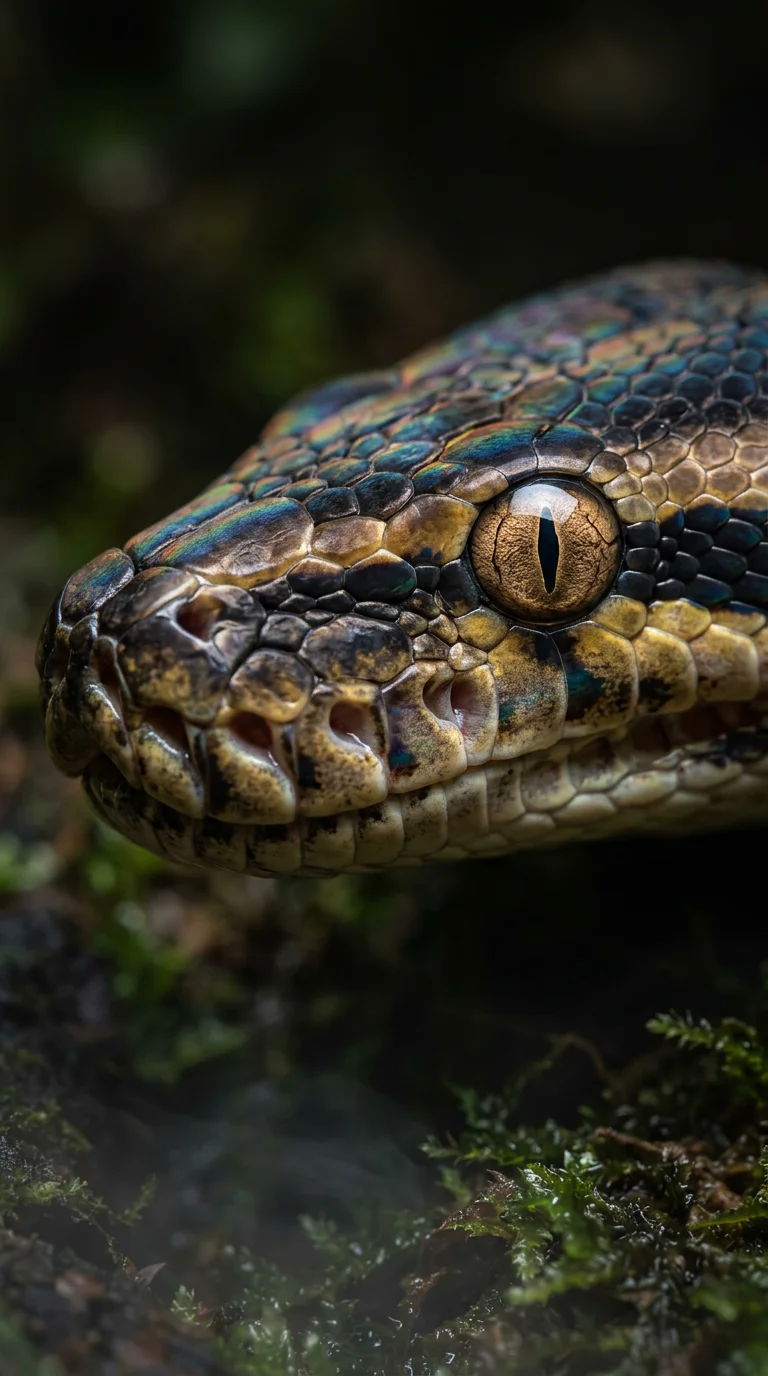
In Bangkok alone, municipal emergency responders capture more than 30,000 snakes each year, with constrictors retrieved from storm drains, roofs, and gardens accounting for roughly 70 per cent of callouts. Across Thailand, these non-venomous apex predators are represented by three native species of the family Pythonidae: the reticulated python (Malayopython reticulatus), the Burmese python (Python bivittatus), and Brongersma's blood python (Python brongersmai).
Pythons belong to an archaic lineage retaining primitive anatomical structures lost in more recently evolved snakes. External cloacal spurs beside the vent represent vestigial remnants of ancestral hind limbs and pelvic girdles; these are larger in males, who use them to stimulate females during courtship. Internally, pythons retain two functional lungs, unlike more derived species that have a reduced or absent left lung.
Their sensory apparatus is exceptionally adapted for nocturnal ambush. Deep labial pits along the upper and lower jaws contain membrane receptors innervated by the trigeminal nerve, capable of detecting infrared radiation from warm-blooded prey at minute temperature thresholds. By pairing this thermal imagery with chemo-sensory information gathered by the forked tongue and processed in the vomeronasal organ, pythons locate prey accurately in complete darkness.
Contrary to myth, pythons do not dislocate their jaws to swallow large meals. Instead, their kinetic skull features lower mandibles joined at the chin by an elastic ligament rather than rigid bone, allowing each side to spread widely. Elongated, pivoting quadrate bones provide vertical and lateral expansion. Aglyphous, backward-curved teeth grip the quarry, while the jaw bones articulate alternately in a rhythmic pterygoid walk that ratchets prey into the oesophagus.
Cardiovascular research has overturned the long-held assumption that pythons kill by suffocation or bone fracturing. By wrapping coils around prey, the snake generates compressive pressures typically between 20 and 30 kilopascals, collapsing the low-pressure venous vessels returning blood to the heart. Arterial perfusion plunges instantly, cutting off oxygen to the brain and inducing rapid circulatory arrest within seconds.

Reticulated Python: Giant of the Lowlands and Waterways
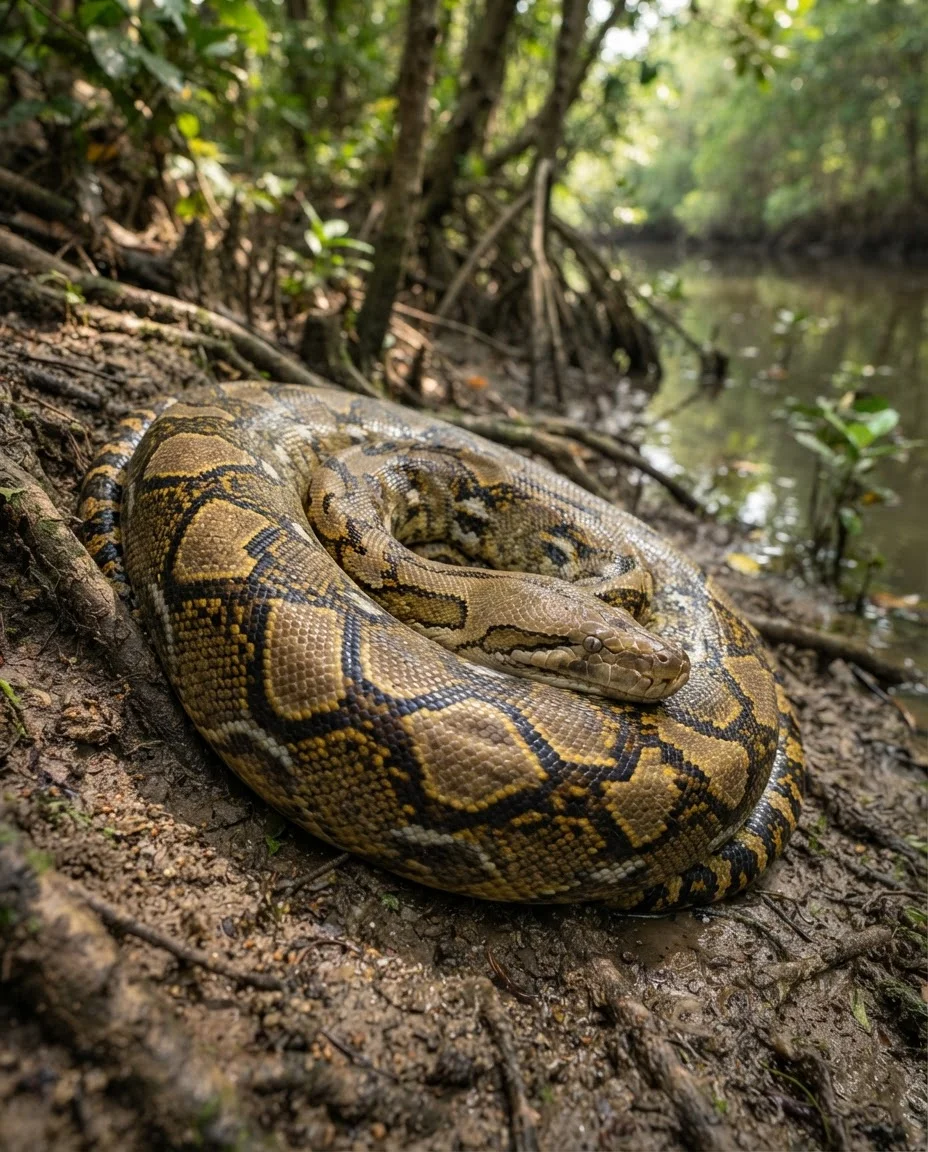
The reticulated python (Malayopython reticulatus, formerly Python reticulatus) holds the official record as the longest snake species on Earth. Across mainland Thailand, the native population belongs to the nominate subspecies (Malayopython reticulatus reticulatus). Mature adults typically measure between 3.5 and 5.5 metres in total length, though exceptional wild females occasionally exceed 6.5 to 7 metres. Despite their remarkable length, reticulated pythons maintain a slender, muscular build compared to the heavier Burmese python, with typical adult weights spanning 35 to 75 kilograms.
The species takes its common and scientific names from the complex, net-like lattice covering its back. Smooth dorsal scales shimmer with an iridescent rainbow sheen under direct light, produced by microscopic light-diffracting ridges. The base colour ranges from pale yellow and olive to silvery-grey, overlaid with an interlocking geometric pattern of black, rich chocolate brown, and yellow-ochre markings fringed in bright white. A distinct, unbroken black median stripe runs along the top of the head from the tip of the snout to the nape of the neck. The eyes feature vertical, cat-like pupils set in bright amber or yellow-orange irises, bordered by a dark postocular line extending towards the jaw corner.
Reticulated pythons inhabit diverse landscapes across the country, showing remarkable environmental tolerance. They occupy primary lowland rainforests, freshwater marshes, coastal mangrove belts, agricultural rubber and oil-palm holdings, and settled suburban outskirts. Young and subadult snakes are agile climbers, spending considerable time in riverside trees and low branches to ambush prey from above. Large adults adopt a predominantly ground-dwelling and aquatic lifestyle. Exceptional swimmers capable of crossing wide marine channels, they have established resident populations across numerous offshore islands, including Phuket, Koh Samui, and the Tarutao archipelago.
Their feeding behaviour is opportunistic and varied. Smaller specimens target rodents, geckos, and frogs, graduating to waterbirds, civets, and domestic poultry as their body mass increases. Mature adults consume stray mammals, barking deer (Muntiacus muntjak), wild boar (Sus scrofa), and occasionally large Asian water monitors (Varanus salvator). When startled, reticulated pythons display a defensive temperament, hissing deeply and pulling the anterior body into an S-coil before launching strikes spanning up to one-third of their length.
Burmese Python: Heavyweight Constrictor of the Marshlands
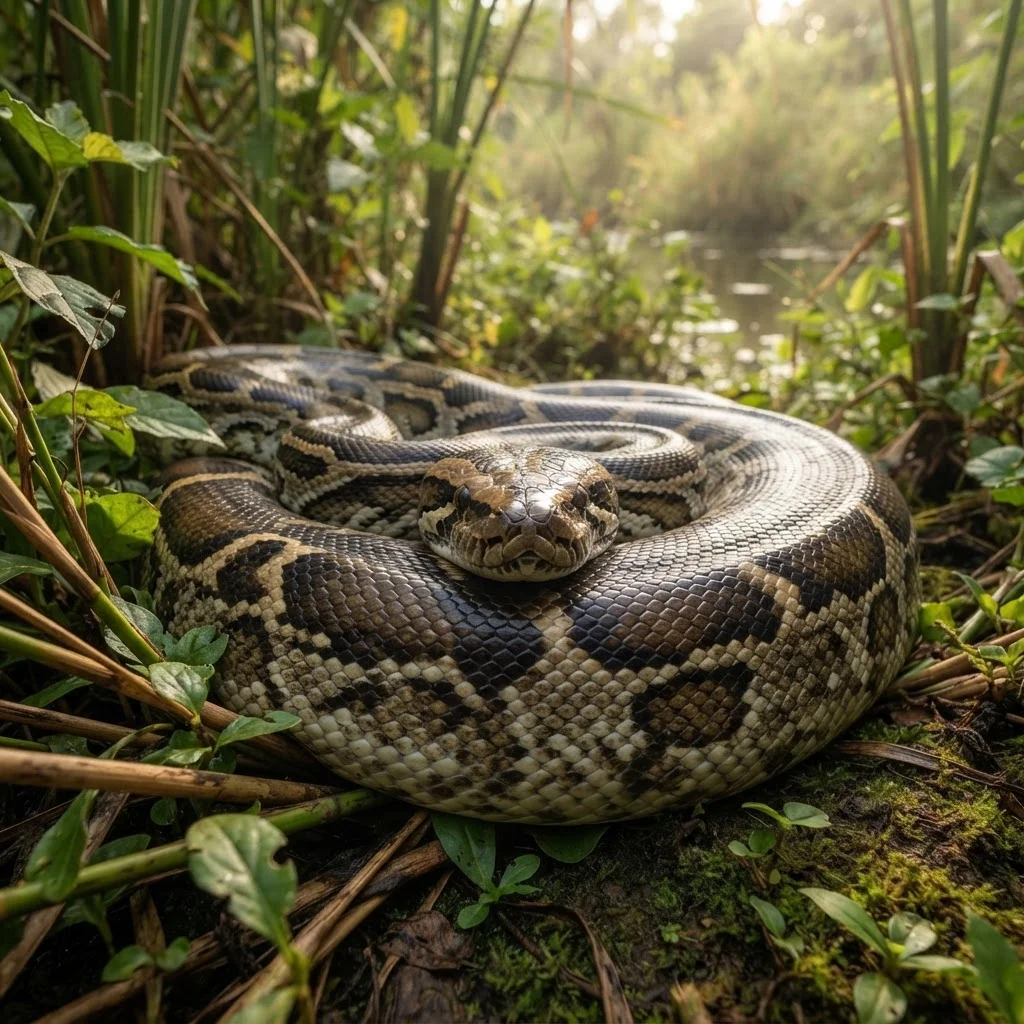
The Burmese python (Python bivittatus) is Thailand's second largest native snake. Historically classified as a subspecies of the Indian rock python (Python molurus), taxonomic revisions elevated it to full species status in 2009. While it does not achieve the extreme linear lengths recorded for the reticulated python, the Burmese python develops a far thicker, heavier build with a dense muscular trunk and a broad triangular head. Adult wild individuals in Thailand typically measure between 3.0 and 4.2 metres, though mature females can exceed 5.0 metres and weigh upwards of 60 to 75 kilograms.
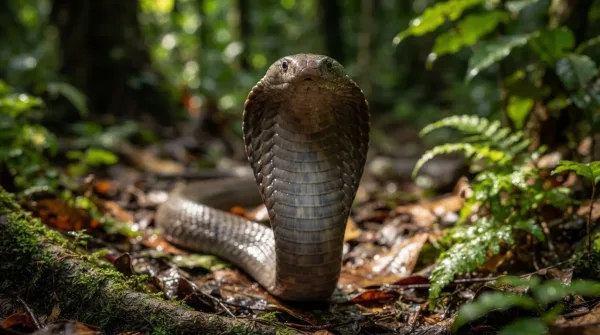
Differentiating the Burmese python from the reticulated python relies on pattern morphology and cranial scalation. Its dorsal surface displays large, irregular, dark brown blotches bordered in black against a pale tan or yellowish ground colour, resembling giraffe markings. A prominent dark spearhead spans the crown of the head, pointing forward towards the snout tip. Under close examination, a row of subocular scales completely separates the eye from the upper labials, whereas the reticulated python has upper labials that contact the eye orbit directly.
This constrictor depends on permanent freshwater systems, favouring marshes, low-gradient river basins, grassy floodplains, swamp margins, and open deciduous woodlands. Unlike juvenile reticulated pythons, adult Burmese pythons rarely climb trees, spending daylight hours concealed in reeds, disused burrows, or submerged in shallows with nostrils and eyes above the water. Its Thai range covers the northern highlands, western border forests, and central plains, thinning out sharply south of the Isthmus of Kra.
The species ambushes terrestrial and semi-aquatic endotherms, preying on waterfowl, wading birds, bandicoot rats, hares, and medium-sized ungulates. Temperamentally more placid than the reactive reticulated python, it relies on camouflage to evade detection. If cornered or stepped upon, however, its dense mass and sharp, recurved teeth can deliver severe lacerations.
Plan a journey along Thailand’s Andaman coast, with practical guidance on island gateways, marine parks, diving, ferries and monsoon travel.
Brongersma's Blood Python: The Ambush Specialist of the South
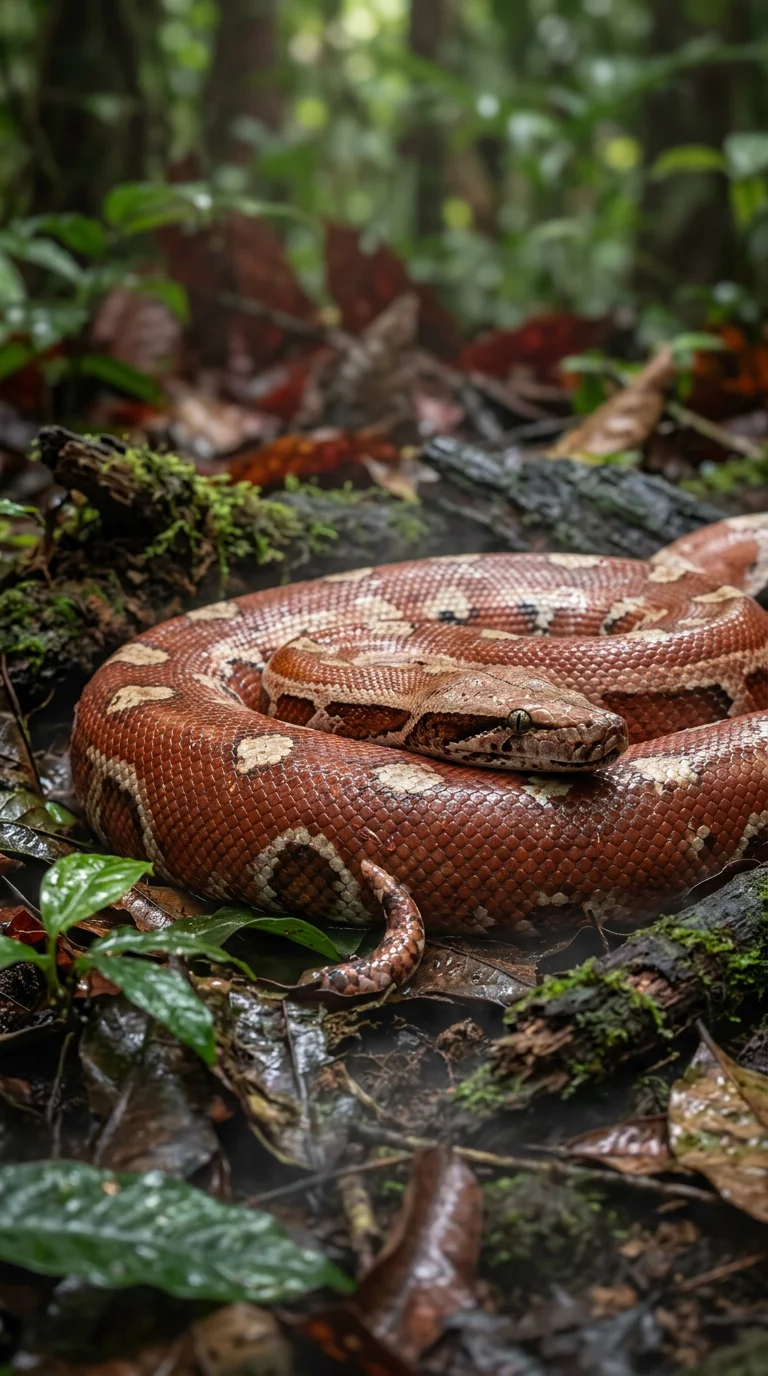
Brongersma's blood python (Python brongersmai) is the least familiar of Thailand's three native pythons. Formerly classified as a subspecies of the short-tailed python (Python curtus), taxonomic revisions established it as a distinct species. In southern Thailand, it is often translated descriptively as the duck-billed python due to its broad, wedge-shaped head. The species differs sharply from other native constrictors: it is stocky and heavily built, with an unusually short, tapering tail. Adults typically measure 1.2 to 1.8 metres in total length, yet their girth produces a body mass rivalling a reticulated python twice as long.
Dorsal colouration is striking, ranging from oxblood red, cherry, and brick to rust or chestnut, overlaid with irregular yellow, tan, or greyish-white blotches and dark flank stippling. The flattened head is pale grey to dark charcoal, marked by a bright white stripe extending from behind the eye to the corner of the mouth. Individuals can alter the tonal shade of their head scales between light and dark depending on temperature, light, and stress.
In Thailand, the species is confined to the southern peninsula from Surat Thani, Krabi, and Trang south to the Malaysian border, with records on Koh Phuket. It inhabits lowland swamp forests and floodplains, but thrives in mature rubber estates and oil palm plantations where rodents are abundant. Concealing itself beneath damp leaf litter or fallen fronds, this ambush predator often remains stationary for weeks before striking. Wild individuals hiss loudly and bite defensively if disturbed.
| Feature | Reticulated Python (*Malayopython reticulatus*) | Burmese Python (*Python bivittatus*) | Brongersma's Blood Python (*Python brongersmai*) |
|---|---|---|---|
| Average Adult Length | 3.5 to 5.5 metres (records >7 m) | 3.0 to 4.2 metres (records >5 m) | 1.2 to 1.8 metres (rarely >2 m) |
| Body Morphology | Long, slender to moderately heavy, athletic | Exceptionally robust, thick-bodied, muscular | Extremely heavy-bodied, short tail, flattened head |
| Diagnostic Head Marking | Thin, dark median line down middle of head | Broad, dark spearhead or arrowhead patch | Pale grey/dark head with white postocular stripe |
| Dorsal Pattern | Complex yellow, brown, black net-like lattice | Brown irregular jigsaw blotches with black borders | Brick-red, oxblood, or orange with pale flank patches |
| Geographic Range in Thailand | Nationwide across all 77 provinces and major islands | North, Central, West, and Isaan; rare in deep South | Confined to Southern peninsula and Phuket |
| Ecological Niche | Versatile: arboreal, terrestrial, aquatic, urban | Terrestrial and semi-aquatic wetland specialist | Terrestrial ambush predator of leaf litter and plantations |
| Primary Diet | Rodents, birds, primates, ungulates, pets | Waterfowl, rodents, small ungulates, mammals | Small mammals, specifically plantation rodents and mice |
| Defensive Temperament | Highly alert, swift to strike defensively | Generally placid; strikes only under severe distress | Secretive; snaps rapidly and hisses when disturbed |
| IUCN Red List Status | Least Concern (Global) | Vulnerable (Global native populations) | Least Concern (Global) |
Urban Colonisation: Why Pythons Thrive in Bangkok
Bangkok presents an extraordinary ecological situation: a metropolis of over ten million people that supports an exceptionally dense population of wild pythons. The species driving this urban abundance is almost exclusively the reticulated python (Malayopython reticulatus). Rather than driving the reptiles out, Bangkok's modern expansion was laid directly over their ancestral habitat: the lower Chao Phraya River basin, once a sprawling delta of tidal mudflats, freshwater swamps, and mangrove wetlands.
Rapid development unintentionally created an extensive subterranean habitat. Thousands of kilometres of concrete drainage culverts, storm drains, and sewers form an underground network that shields the snakes from road traffic, direct sunlight, and daytime heat. At surface level, remaining open canals provide aquatic corridors that allow these strong swimmers to travel undetected across the city.
Food sources are virtually inexhaustible. Organic market refuse and urban food waste support immense populations of black rats (Rattus rattus) and brown sewer rats (Rattus norvegicus), which breed year-round in the tropical climate. Free-roaming stray animals, including unsterilised feral cats and unattended poultry, provide substantial calories for larger snakes. Because an adult python can thrive for weeks on a single substantial meal, the urban ecosystem easily sustains thousands of mature specimens.
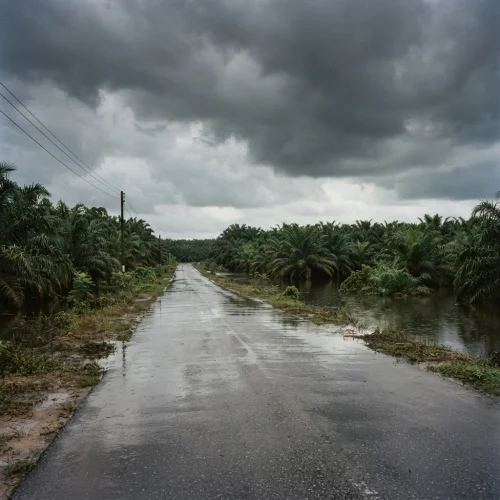
The scale of human-snake interaction is visible in emergency service figures. Bangkok's municipal fire and rescue service, supported by local charitable rescue organisations, logs tens of thousands of snake calls each year, regularly exceeding 30,000 requests. Firefighters in the capital routinely spend far more time capturing reptiles than combating blazes. Sightings surge during the monsoon season between June and October, when torrential rains flood drainage channels and force snakes upwards into ceiling spaces, car engine bays, and residential plumbing traps. While distressing to homeowners, these predators perform a vital ecological service by regulating the capital's rodent numbers.
Encounters, Bite Mechanics, and Emergency Protocols
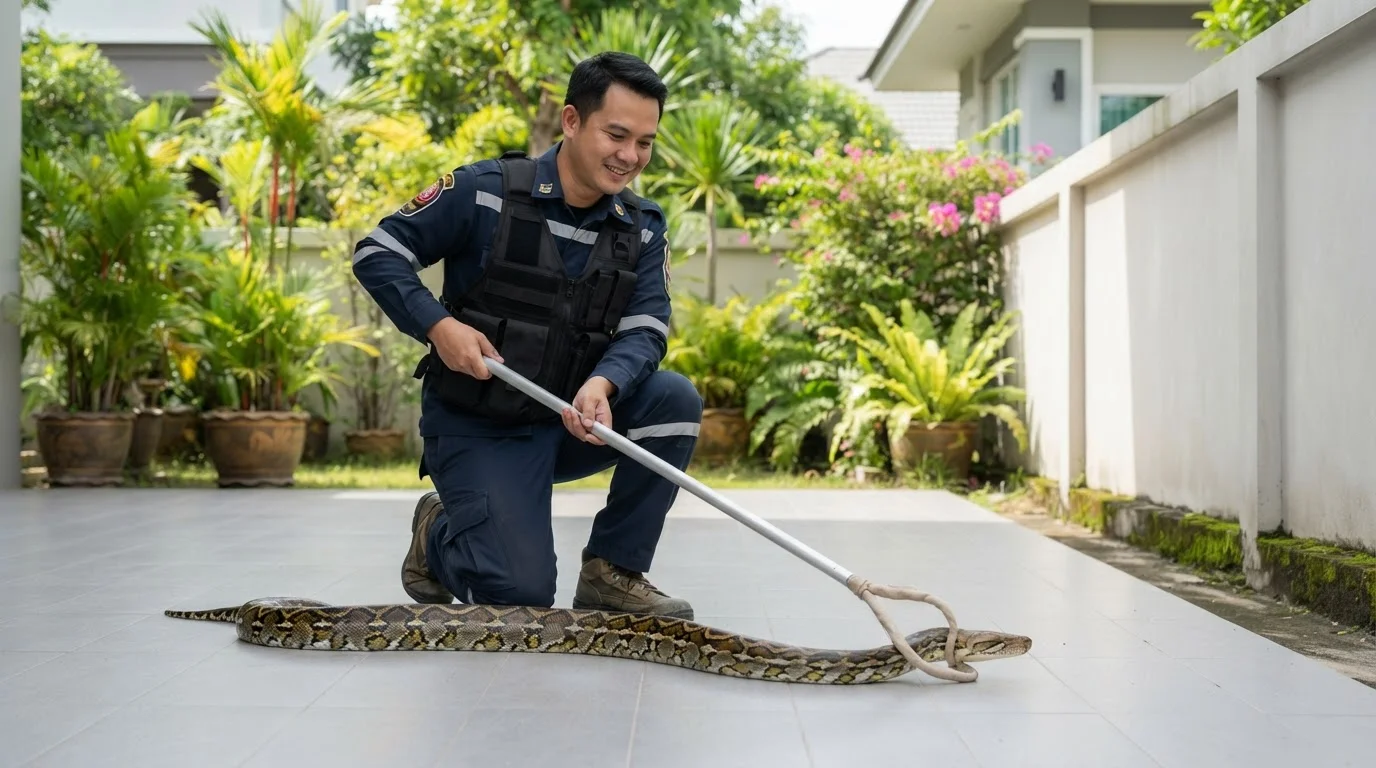
Human-python encounters in Thailand occur predominantly in two settings: residential intrusions in urban centres such as Bangkok, and unexpected meetings along forest trails or rural agricultural land. Pythons are reclusive animals that choose retreat when given an unobstructed escape path. When cornered or handled improperly, their size and physical strength make them hazardous.
The primary physical risk during an encounter is bite trauma. Adult reticulated and Burmese pythons possess dozens of sharp teeth curving backward toward the throat across multiple rows in their jaws. In a defensive strike, the snake lunges forward, embeds its teeth, and clamps shut. Because the dentition is recurved, pulling away tears skin, superficial tendons, and muscle tissue. If a python holds on, relaxing rather than pulling away limits lacerations. The jaws can be disengaged by sliding a flat, blunt implement gently forward along the jawline, or by applying a small amount of alcohol, hand sanitiser, vinegar, or cold water around the snout to prompt release.
Python bites carry a high risk of secondary bacterial infection. The oral cavity of wild pythons harbours opportunistic pathogens, including Aeromonas hydrophila, Pseudomonas, and Salmonella species. Initial first aid requires washing the puncture site thoroughly with clean water and antiseptic soap, applying direct pressure to stem bleeding, and seeking hospital evaluation. Medical care typically involves wound irrigation, a tetanus booster, and a prophylactic course of broad-spectrum antibiotics.
Constriction carries a distinct physical hazard. Predatory attacks on adult humans remain exceptionally rare in Southeast Asia, but a constrictor exceeding three metres has sufficient muscular power to restrict blood circulation or cause suffocation if coiled around the torso or neck. If coiling begins, unwrap the snake starting from the tail, where its grip is weakest. Handlers follow a standard safety parameter of at least one capable adult per 1.5 metres of snake length.
When encountering a python in a home or garden:
- Maintain distance: retreat quietly to an observation distance of at least four metres.
- Secure pets: isolate dogs, cats, and poultry indoors.
- Keep visual contact: monitor the snake from afar to direct responders upon arrival.
- Call emergency services: in Bangkok, dial 199 for the Fire and Rescue Department. Across Thailand, call 191 for police, 1155 for the Tourist Police, or 1669 for an ambulance. Local volunteer rescue foundations also respond nationwide.
- Avoid DIY removal: leave capture to municipal wranglers equipped with specialised hooks, tongs, and transport bags.
Ecological Importance and Legal Conservation Status
Despite their intimidating size and frequent persecution in settled areas, pythons perform an indispensable function across Thailand's mainland and island ecosystems. Operating as large mesopredators and apex carnivores, they provide steady natural regulation of rodent and small-mammal populations. In farming districts, their appetite for field rats helps shield rice paddies, orchards, and grain stores from substantial losses, reducing reliance on chemical rodenticides that poison broader food webs.
All three python species native to Thailand—the reticulated python (Malayopython reticulatus), Burmese python (Python bivittatus), and Brongersma's blood python (Python brongersmai)—are classified as Protected Wildlife. Their legal framework is established by the Wild Animal Conservation and Protection Act, B.E. 2562 (2019), which replaced the older 1992 statute. Thai law strictly forbids hunting, trapping, killing, unauthorised captive breeding, or domestic trade in wild pythons and their bodily derivatives, including skins, meat, and gallbladders.
Statutory penalties under the 2019 Act are severe. Unlawful possession of a protected python or python parts incurs up to five years in prison, a fine of up to 500,000 THB (approx £11,500), or both. Commercial trading, hunting, or unlicensed exporting of protected wildlife carries up to ten years imprisonment, a fine of up to 1,000,000 THB (approx £23,000), or both. Urban rescue teams do not cull snakes caught in homes. Captured pythons are handed over to the Department of National Parks, Wildlife and Plant Conservation, assessed at facilities such as the Bang Phra Wildlife Breeding Station in Chonburi, and released into remote forest sanctuaries.
International conservation assessments differ across the three species. The International Union for Conservation of Nature (IUCN) categorises the Burmese python as Vulnerable on its Red List, reflecting sharp regional declines from historical overharvesting for the exotic leather industry and widespread wetland drainage. In contrast, the reticulated python and Brongersma's blood python are assessed as Least Concern due to broader geographic ranges and adaptability. To regulate commercial exploitation, all three species are listed under Appendix II of the Convention on International Trade in Endangered Species (CITES).
Quick Reference Table
| Item | Detail | Notes |
|---|---|---|
| Native Species | Reticulated python, Burmese python, Brongersma's blood python | All non-venomous constrictors belonging to the family Pythonidae |
| Reticulated Python (*Malayopython reticulatus*) | 3.5 to 5.5 m average length (records >7 m); 35 to 75 kg | Longest snake in the world; found nationwide across all 77 provinces and islands |
| Burmese Python (*Python bivittatus*) | 3.0 to 4.2 m average length (records >5 m); 60 to 75 kg | Heavy-bodied wetland specialist; ranges across North, Central, West, and Isaan |
| Brongersma's Blood Python (*Python brongersmai*) | 1.2 to 1.8 m average length; extremely stocky girth | Confined to the southern peninsula (Surat Thani southwards) and Koh Phuket |
| Bangkok Urban Population | Exclusively reticulated pythons (*Malayopython reticulatus*) | Responders handle 30,000+ calls annually; constrictors make up ~70% of callouts |
| Peak Sighting Period | Monsoon season (June to October) | Heavy rainfall floods storm drains and forces snakes into residences and ceilings |
| Constriction Mechanism | Circulatory arrest via 20 to 30 kPa compressive pressure | Collapses venous blood return, cutting off brain perfusion within seconds |
| Bite Hazards & First Aid | Recurved teeth cause severe lacerations; high infection risk | Clean wound with antiseptic soap, apply pressure, and seek prompt hospital care |
| Bite Release Methods | Relax to prevent skin tearing; slide flat tool along jawline | Cold water, alcohol, vinegar, or hand sanitiser around the snout prompts release |
| Safe Distance Protocol | Keep an observation distance of at least 4 metres | Secure pets indoors, maintain visual contact, and never attempt DIY capture |
| Legal Protection Status | Protected Wildlife under Wild Animal Conservation and Protection Act (2019) | Hunting, trapping, killing, unauthorised breeding, and commercial trade are illegal |
| IUCN Conservation Status | Burmese python: Vulnerable; Reticulated & Blood: Least Concern | All three native species are listed on CITES Appendix II |
| Emergency Contacts | 199 (Fire & Rescue), 191 (Police), 1155 (Tourist Police), 1669 (Medical) | Dial 199 in Bangkok for municipal snake capture and removal teams |
FAQ: Pythons in Thailand
What types of pythons are native to Thailand?
Do pythons dislocate their jaws to eat large prey?
How do pythons kill their prey?
Why are there so many pythons in Bangkok?
What do urban pythons in Bangkok eat?
When are python sightings most common in Bangkok?
What should I do if a python bites me?
How can I make a python release its bite?
What should I do if I find a python in my home or garden in Thailand?
Are pythons protected in Thailand?
Reviewed by the Thailand Guide Editorial Team • Last reviewed: 20 November 2026
This page is provided for general information only. While we aim for accuracy, details can change — please verify anything important independently before relying on it.