Flying Snakes in Thailand
By splaying its ribcage into a concave aerofoil and undulating through the air, a flying snake can launch itself from tall forest canopies and glide horizontally for over thirty metres across open gaps without wings. This feat of non-avian aerodynamics makes the genus Chrysopelea the only known limbless vertebrate group capable of controlled aerial gliding. Rather than parachuting or falling passively, these slender reptiles actively manipulate their body cross-section, launch velocity, and mid-air oscillations to navigate complex tree canopies and populated gardens.
Flying snakes are mildly venomous, rear-fanged arboreal colubrids native to South and Southeast Asia, represented in Thailand by three distinct species: the golden tree snake (Chrysopelea ornata), the paradise tree snake (Chrysopelea paradisi), and the banded flying snake (Chrysopelea pelias). While wild individuals can cover extraordinary distances between emergent forest trees, several populations have adapted successfully to suburban gardens, orchards, and urban parks. This guide examines the taxonomy, morphological specialisations, and evolutionary origins of serpentine gliding, establishing the scientific foundation for identifying these animals, understanding their ecology, and managing encounters responsibly across the country.

Taxonomy and evolutionary origins
The genus Chrysopelea comprises five recognised species of arboreal colubrids that evolved specialised adaptations for canopy life. Established by the German naturalist Heinrich Boie in 1826, the generic name combines the ancient Greek words chrysos, meaning gold, and peleia, denoting a wild dove or pigeon. Historically grouped into broad divisions within the family Colubridae, modern molecular phylogenetics places Chrysopelea within the subfamily Ahaetuliinae. This clade contains Asian vine snakes (Ahaetulla) and bronzeback tree snakes (Dendrelaphis). Genomic sequencing demonstrates that Chrysopelea forms a sister group to Dendrelaphis, an agile genus of diurnal arboreal racers known for leaping across branches using rapid muscular propulsion.
The evolutionary step from energetic leaping to controlled aerodynamic gliding represents a remarkable innovation among squamate reptiles. In Southeast Asian dipterocarp rainforests, the canopy forms a patchy, multi-layered matrix broken by wide vertical and horizontal gaps. Generalist snakes moving through this habitat must descend to the forest floor and climb adjacent trunks, burning substantial metabolic energy and exposing themselves to terrestrial predators. Ancestral ahaetuliine snakes crossed gaps through cantilever reaching and explosive jumps. Over millions of years, natural selection favoured individuals that could control their descent by flattening their bodies, converting gravitational drop into forward momentum and carving out an arboreal niche high above the forest floor.
Morphological specialisations within Chrysopelea span skeletal, muscular, and scale architecture. In contrast to terrestrial colubrids with cylindrical, heavily built bodies suited for burrowing or constricting on the ground, flying snakes possess slender, laterally compressed profiles. Specialised hypaxial trunk muscles pull the ribs upward and outward upon takeoff, spreading the body into a flattened, concave wing that generates aerodynamic lift. On the underside, the ventral scutes feature pronounced lateral keels and notches. These notched ridges act as miniature ledges that grip minute irregularities on tree bark, giving the snakes the climbing capability required to scale sheer tree trunks and vertical masonry.
Fossilised remains of arboreal colubrids in Southeast Asia are exceptionally rare because delicate serpentine bones decompose swiftly in humid, acidic forest soils. Even so, molecular clock analyses based on mitochondrial and nuclear DNA suggest that Chrysopelea diversified during the Miocene epoch, roughly 15 to 20 million years ago. This divergence aligned with the expansion of dense evergreen rainforests across the Sundaland landmass, where expansive canopies rewarded animals capable of aerial travel. Today, flying snakes represent an outstanding example of convergent evolution, sharing aerodynamic solutions to forest gaps with unrelated Southeast Asian gliders, including gliding lizards (Draco), flying squirrels (Hylopetes), and gliding tree frogs (Rhacophorus).
Native Flying Snake Species in Thailand
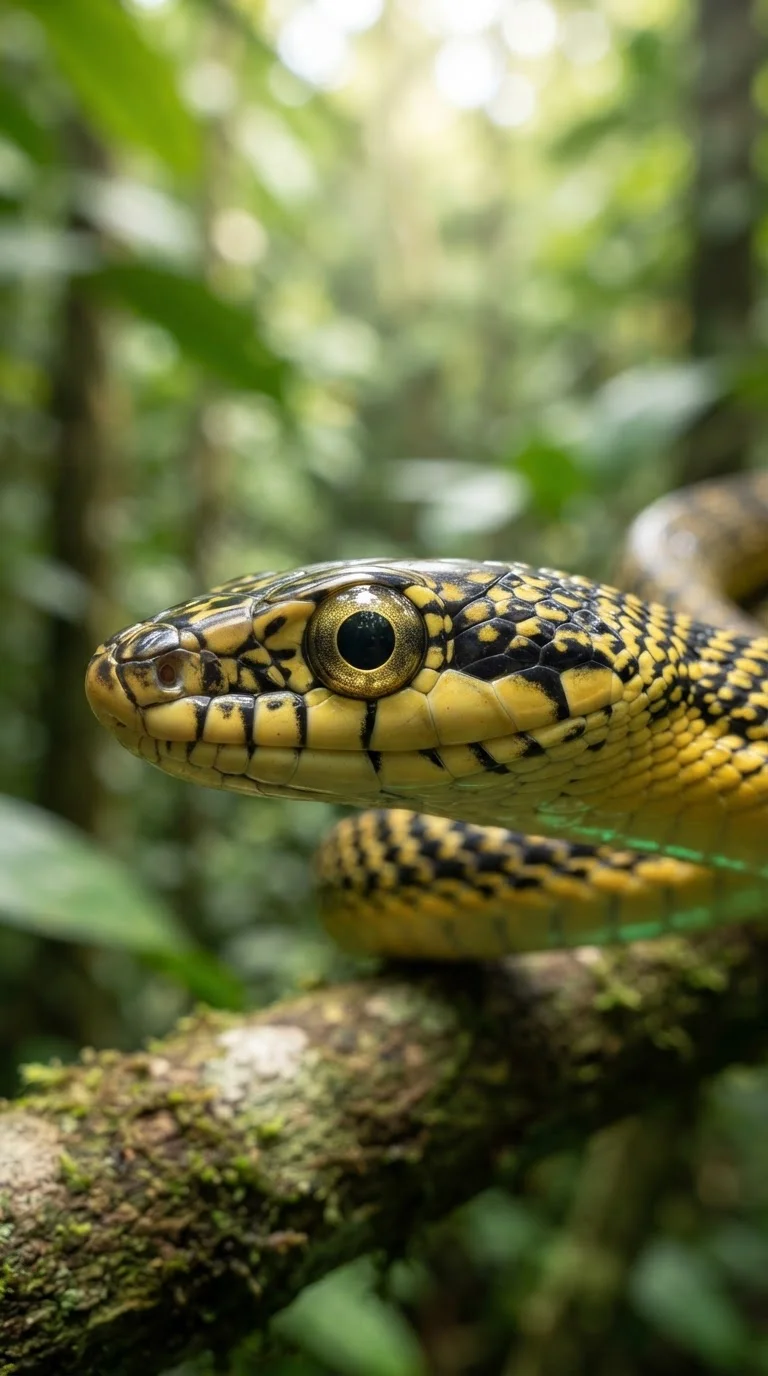
Thailand is home to three of the world's five recognised species in the genus Chrysopelea. These slender, rear-fanged colubrids occupy distinct ecological zones, showing clear differences in body size, colour patterns, and geographical range. While all three share modified ribs and keeled belly scales that enable controlled gliding, wild encounters depend heavily on whether one explores northern orchards, central city parks, or southern rainforests. Careful observation of dorsal scale colouration, belly markings, and body proportions allows reliable field identification.
Golden tree snake
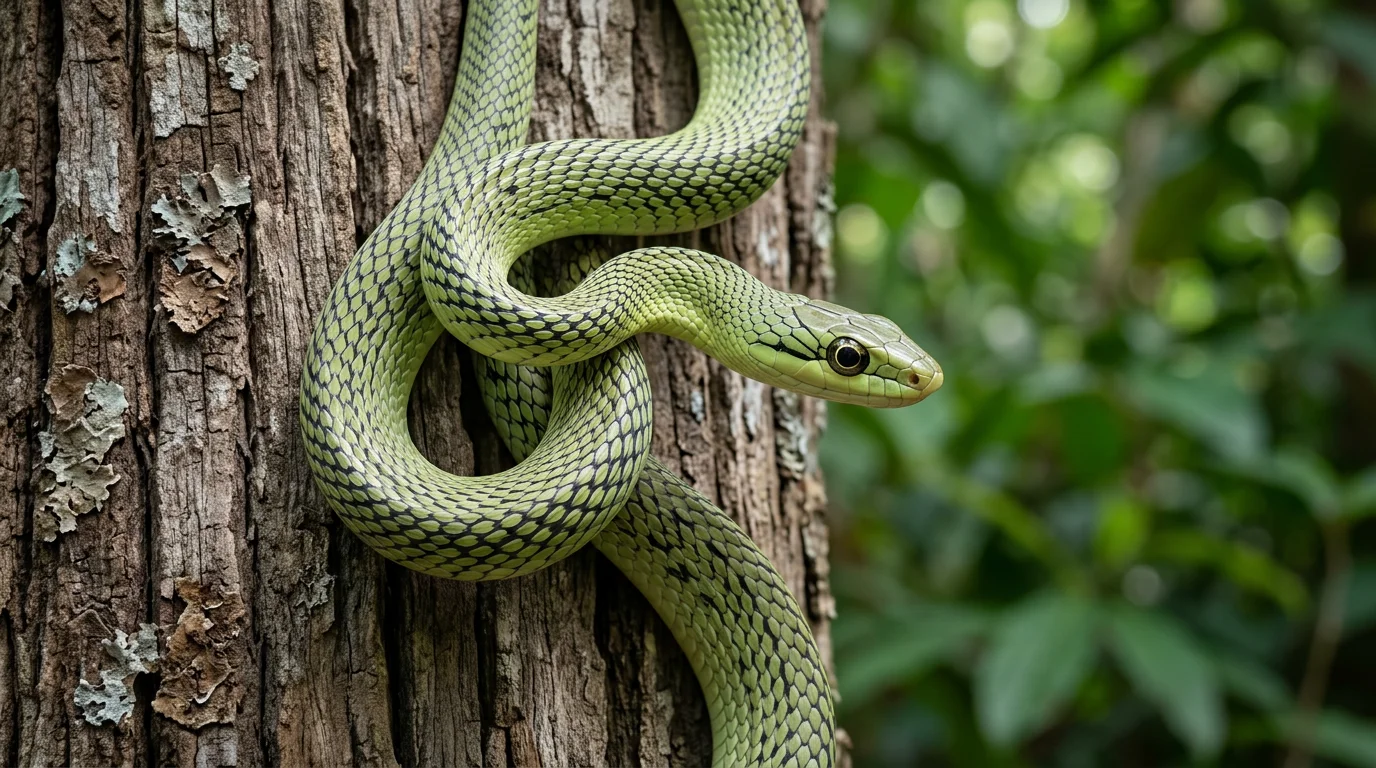
The golden tree snake (Chrysopelea ornata) is the largest and most widespread gliding snake in the kingdom. Adults typically measure between 100 and 130 centimetres in total length, though mature females can reach 140 centimetres. Across Thailand and mainland Southeast Asia, populations belong to the subspecies Chrysopelea ornata ornatissima. This form has a pale lime-green or greenish-yellow ground colour. Each dorsal scale features a black median streak and dark outer margins, creating a dense cross-hatch pattern along the upper body. Broad, dark crossbars run down the back at irregular intervals. The head is noticeably flattened with a rounded snout and large eyes with round pupils, marked above by alternating bars of black and pale yellow. The underside is pale yellow or greenish-yellow, bordered on either flank by black spots on the lateral notches of the ventral scutes.
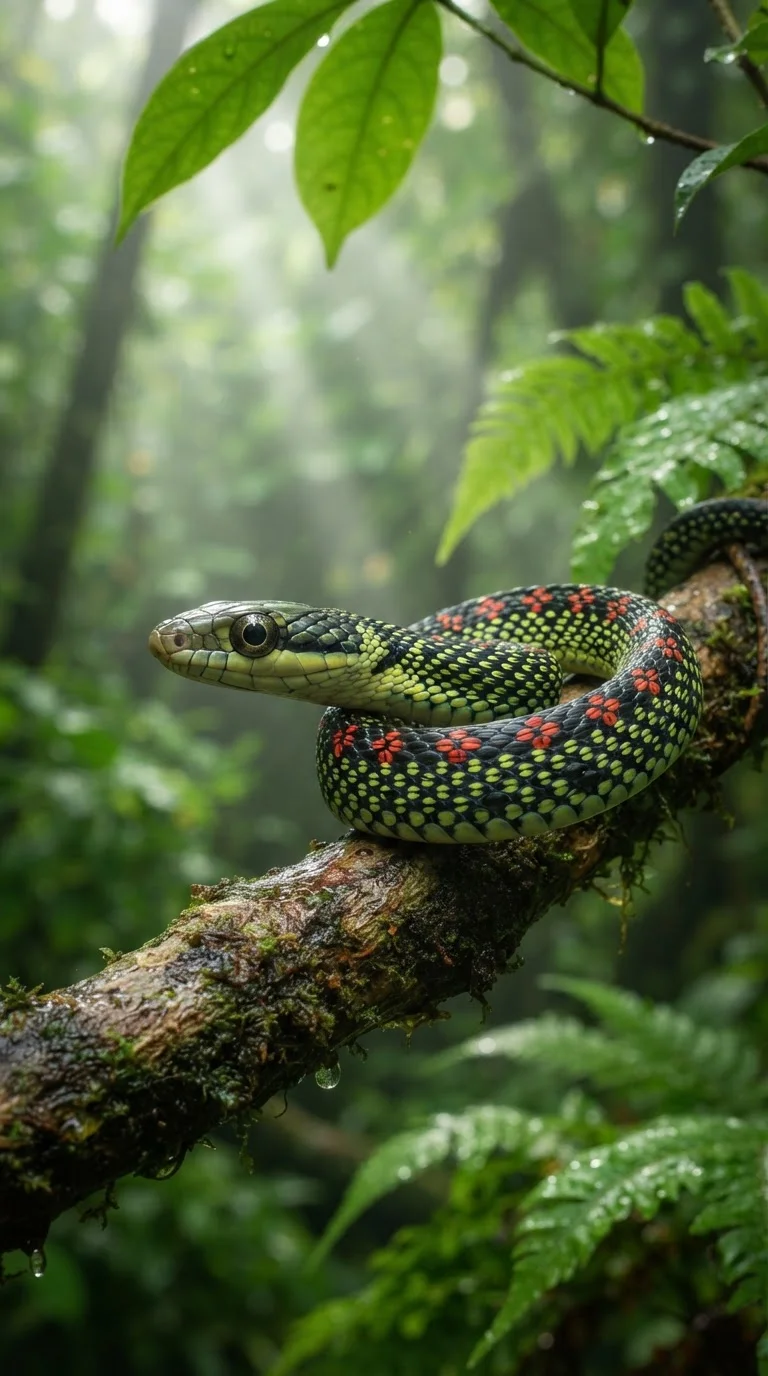
This species exhibits exceptional environmental adaptability. Although native to lowland evergreen and mixed deciduous woodland, the golden tree snake thrives across human-altered landscapes, including agricultural plantations, suburban gardens, and urban parks. In major cities such as Bangkok and Chiang Mai, it regularly climbs into residential roof spaces and wall crevices hunting geckos. Because of its heavier body and higher wing loading, it descends at steeper glide angles than its congeners, typically between 20 and 30 degrees, yet it maintains complete directional steering during flight.
Paradise tree snake
The paradise tree snake (Chrysopelea paradisi) is slightly smaller and noticeably more slender than the golden tree snake, with adults usually measuring between 80 and 100 centimetres and rarely exceeding 120 centimetres. Its dorsal colouration is predominantly jet-black or dark charcoal. Nearly every scale across its back displays a sulphur-yellow or bright chartreuse central spot. Along the vertebral line, Thai specimens frequently exhibit bold red, orange, or pink spots clustered in groups of three or four scales resembling clover petals. The underside is light yellow or pale green, lacking the dark lateral keel spots of the golden tree snake.
In Thailand, the paradise tree snake is confined primarily to the humid forests of the southern peninsula, occurring from Chumphon and Ranong provinces southward to the Malaysian border. It remains strongly associated with moist lowland rainforest, coastal forest, and mangrove edges, though it also ventures into shaded coconut groves and rural plantations. Biomechanical flight trials show that the paradise tree snake is the most proficient glider in the genus. Its low body mass and flexible rib cage enable shallow descent trajectories, reaching minimum glide angles as flat as 13 degrees from the horizontal.
Banded flying snake
The banded flying snake (Chrysopelea pelias), also called the twin-barred tree snake, is the smallest and least common member of the genus in Thailand. Adults rarely exceed 60 to 75 centimetres in total length and possess a delicate, pencil-thin profile. The dorsal pattern is unmistakable: a dark grey or blackish base crossed by thick red or crimson bands alternating with narrow cream or pale yellow crossbars, each bordered in black. A continuous, creamy-white stripe runs along the lower flanks, cleanly separating the banded upper body from a pale green or yellowish belly. The head is dark grey or brown, marked by two broad red bars behind the eyes and pale crossbars across the snout.
This species is an elusive canopy specialist restricted to undisturbed lowland dipterocarp rainforests in the deep south of Thailand, including protected forest tracts in Songkhla, Yala, and Narathiwat provinces. Because it lives high in the canopy and rarely descends, wild sightings in Thailand are exceptionally uncommon. While it flattens its body to glide between branches or evade predators, its shorter length and lighter muscle leverage limit its flights to steeper, shorter horizontal spans than those of the paradise tree snake.
Field identification and similar species
Distinguishing native Chrysopelea species from other arboreal Thai snakes requires only careful observation of head shape and scale patterning. Observers often confuse flying snakes with bronzeback tree snakes of the genus Dendrelaphis, which share an energetic climbing style, slender build, and notched belly scales. Bronzebacks, however, lack the black scale cross-hatching, yellow-speckled black scales, or red dorsal banding of Chrysopelea. Instead, bronzebacks feature a bronze or olive-brown dorsal stripe, distinctly enlarged vertebral scales, and a conspicuous dark eye-stripe running through the temple.
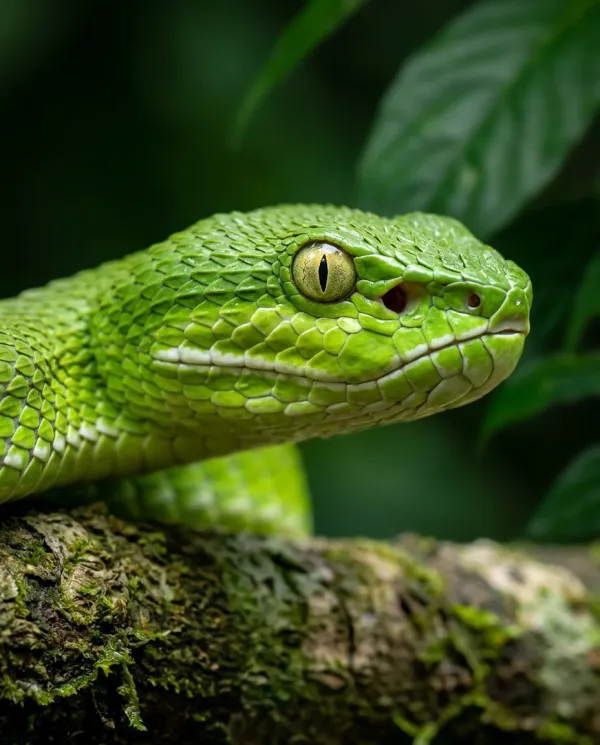
Green pit vipers in the genera Trimeresurus and Craspedocephalus inhabit similar vegetation and share a green base colour with the golden tree snake. Pit vipers, however, have broad, triangular heads, heat-sensing loreal pits between the eyes and nostrils, vertical slit pupils, and relatively stocky bodies. By contrast, flying snakes possess elongated, laterally compressed bodies, smooth head contours, round pupils, and active daytime habits. At the time of research, all three Chrysopelea species found in Thailand are categorised as Least Concern on the IUCN Red List of Threatened Species.
| Feature / Trait | Golden Tree Snake (*Chrysopelea ornata*) | Paradise Tree Snake (*Chrysopelea paradisi*) | Banded Flying Snake (*Chrysopelea pelias*) |
|---|---|---|---|
| Average Adult Length | 100–130 cm (max 140 cm) | 80–100 cm (max 120 cm) | 60–75 cm (rarely to 80 cm) |
| Dorsal Colouration | Pale green or yellow with black scale edges and crossbars | Black with yellow-centred scales; vertebral red or orange spots | Red and yellow bands bordered in black on dark grey base |
| Ventral Surface | Pale greenish-yellow with black lateral keel spots | Light green or yellow, unspotted or faintly marked | Pale green with creamy lateral flank stripes |
| Relative Glide Performance | Moderate; steeper descent angles (approx. 20–30°) | Exceptional; shallowest glide angles (down to 13°) | Capable; rapid descents over shorter horizontal spans |
| Distribution in Thailand | Nationwide (North, Central, Northeast, South) | Southern Peninsula (Chumphon and Ranong southwards) | Deep Southern Peninsula (lowland rainforest) |
| Habitat Preference | Forests, plantations, urban gardens, and houses | Lowland rainforest, coastal woodlands, plantations | Primary lowland dipterocarp canopy and dense forest |
| Conservation Status | Least Concern (IUCN) | Least Concern (IUCN) | Least Concern (IUCN) |
Plan a Gulf of Thailand trip with clear guidance on island groups, ferries, weather, marine parks, accommodation costs and mainland gateways.
The Biomechanics of Serpentine Gliding
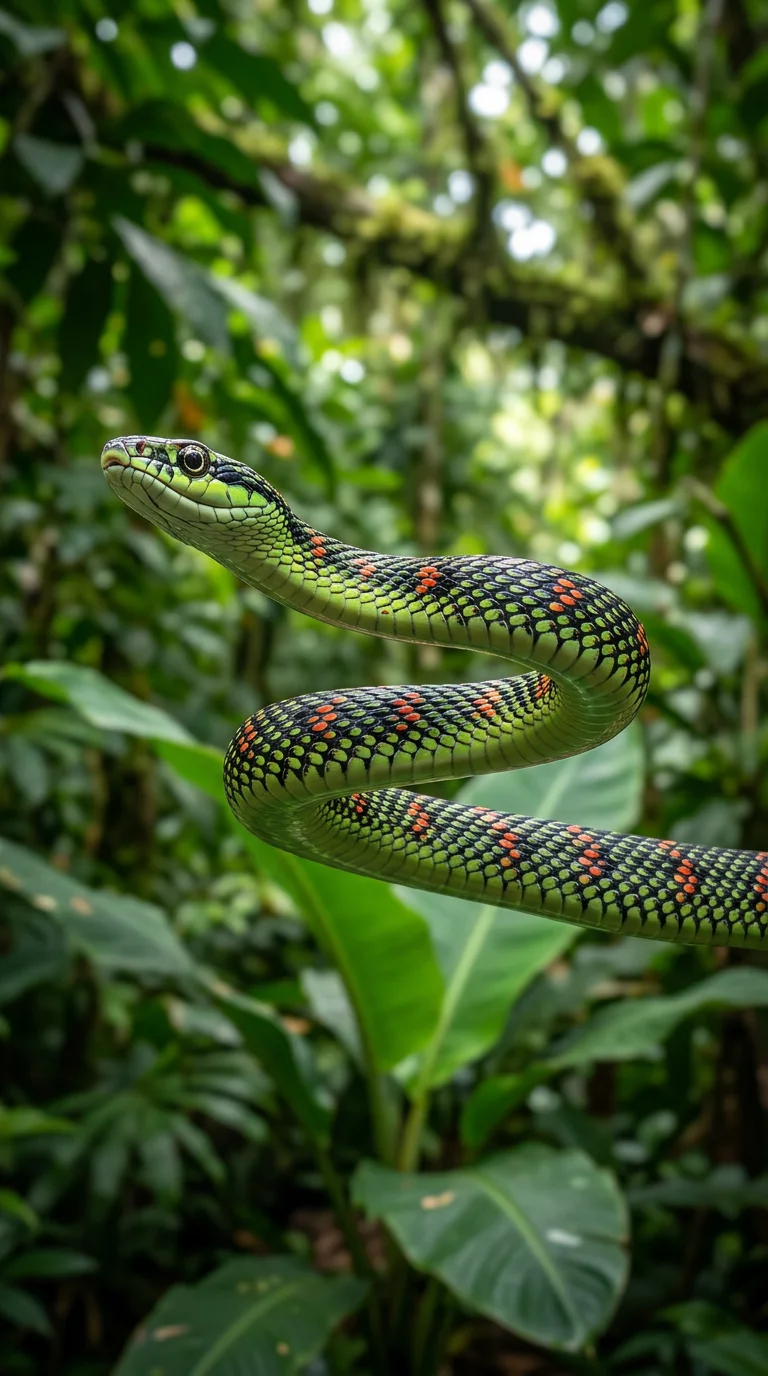
The gliding flight of Chrysopelea is an extraordinary physical phenomenon that challenges traditional aerodynamic assumptions. For generations, reports of flying snakes in Southeast Asian rainforests were treated with scepticism by Western naturalists, who assumed the animals merely made desperate, uncontrolled leaps from the canopy. Laboratory investigations and high-speed motion-capture analyses pioneered by biomechanist Dr John Socha at Virginia Tech have since established that these reptiles generate true aerodynamic lift, dynamic stability, and steerable trajectory control without limbs or fixed wing surfaces. Serpentine flight is a coordinated progression divided into four phases: the launch jump, morphological body reconfiguration, aerial undulation, and landing deceleration.
Take-off kinematics and the J-loop jump
To initiate a glide, an arboreal snake must convert stationary muscular potential into forward momentum, projecting itself away from surrounding branches into open airspace. Tree snakes accomplish this through a specialised jumping manoeuvre known as the anchored J-loop take-off. Creeping to the edge of an elevated perch, the snake lets its anterior section hang over the void, bending its neck and forebody into a deep vertical curve resembling the letter J. The posterior trunk and tail maintain a firm, static grip on the branch, acting as an anchor point.
Once coiled, the snake accelerates by unfurling the loop upward and outward at an angle between 30 and 45 degrees relative to the horizon. This explosive extension takes roughly 100 to 200 milliseconds, producing launch speeds of 1.2 to 2.0 metres per second. Jumping outward rather than dropping passively propels the snake past protruding foliage and provides the initial airflow needed for its body to generate lift. While snakes occasionally use sliding J-loops or diving drops, the anchored J-loop produces the greatest horizontal reach across canopy gaps.
Dorsoventral rib splaying and aerofoil geometry
As soon as the snake leaves the perch, its skeletal and muscular anatomy undergoes an instantaneous transformation. In a resting state, a colubrid snake has a roughly circular cross-section. Within 100 to 350 milliseconds of launch, specialised costocutaneous and intercostal muscles contract along the trunk, rotating the elongated ribs forward and outward toward the head. Simultaneously, the snake draws its belly scales upward along the midline, pulling the ventral surface inward.
This rearrangement doubles the snake's horizontal width near mid-body while halving its vertical thickness. In transverse profile, the body forms a cambered aerofoil with a convex dorsal surface and a concave ventral cavity underneath. Wind-tunnel and water-channel experiments indicate that this profile behaves as an effective lifting body. High-pressure air is trapped beneath the concave belly, while airflow accelerating over the convex dorsal curve creates lower pressure above.
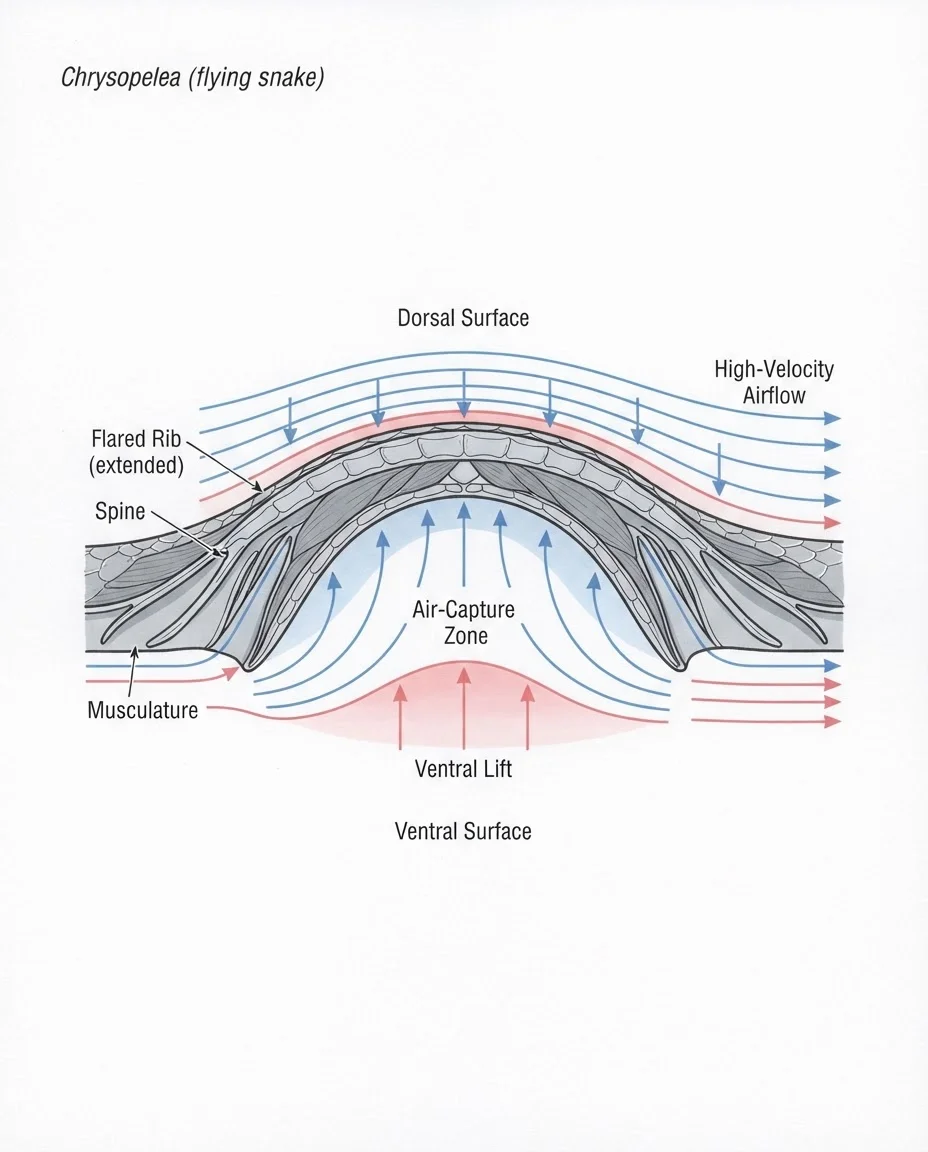
Unlike rigid aircraft wings, which stall when pitched past 15 to 20 degrees, the snake's flattened body exhibits an extraordinarily forgiving stall curve. Fluid dynamic simulations confirm that lift increases progressively up to an angle of attack of 35 degrees, reaching a lift coefficient of approximately 1.9. Even at angles beyond 40 degrees, the flow maintains coherent vortices near the dorsal surface rather than collapsing into abrupt stall, ensuring steady lift across diverse glide postures.
Aerial undulation and dynamic flight stability
Once airborne, the snake does not hold its body rigid like an aeroplane wing. Instead, it enters a state of continuous aerial undulation, sending fluid waves down the length of its trunk. High-resolution motion-capture recordings demonstrate that this movement combines two distinct wave structures moving simultaneously along the spine: a horizontal lateral wave sweeping from side to side at 1 to 2 Hertz, and a vertical wave bending the trunk up and down at twice that frequency.
Biomechanical modelling confirms that this aerial swimming is fundamental to flight stability. A long, slender lifting body in free fall naturally suffers from severe rotational instability around its roll and pitch axes. By passing coordinated lateral and vertical waves along its spine, the snake balances opposing aerodynamic forces across alternating body segments. This rhythmic twisting dampens rotational torque, keeping the flattened belly facing downward and preventing the animal from tumbling out of control. Throughout this undulation, the head remains remarkably stable and level, establishing a steady visual horizon with which the snake tracks target perches and gauges landing distance.
Trajectory control, glide performance, and landing mechanics
Flying snakes exercise precise directional control in mid-air. By modulating undulation wave amplitude, flexing the anterior body, or tilting the head, the animal executes banked turns of up to 90 degrees around canopy obstacles. The tail acts as an aerodynamic rudder, adjusting yaw and fine-tuning heading.
Glides begin with a steep ballistic dive during the first few metres of vertical drop, transitioning into a shallowing phase as airspeed converts into aerodynamic glide. Performance varies by body mass and species. The slender paradise tree snake (Chrysopelea paradisi) is the most efficient aerodynamic glider in the genus, achieving glide angles as shallow as 13 degrees with lift-to-drag ratios up to 4.3 to 1. From a 15-metre canopy perch, it can cover horizontal distances exceeding 20 metres. The heavier golden tree snake (Chrysopelea ornata) glides at steeper trajectories averaging 20 to 30 degrees, yet still bridges canopy gaps that would otherwise require long terrestrial detours.
To land, the snake flares its forebody upward into a high angle of attack. This pitch-up manoeuvre increases drag and decelerates forward speed before contact. The animal then absorbs kinetic force through compliant muscular flexion across target branches or tree trunks, instantly securing an arboreal grip.
Hunting Strategies, Sensory Systems, and Diet

Flying snakes are diurnal predators that rely on keen motion detection, rapid arboreal locomotion, and mild envenomation to capture active canopy prey. While pit vipers remain stationary for days awaiting an ambush, Chrysopelea species actively cruise through forest foliage, undergrowth, and rural structures during daylight. Their energetic hunting style pairs continuous sensory scanning with high-speed pursuit.
Visual acuity and sensory adaptations
The visual apparatus of Chrysopelea is adapted for navigation and targeting in sunlit, leafy canopies. Large, protruding eyes feature golden or copper irises and round pupils that admit ample daylight. Research demonstrates that species such as Chrysopelea paradisi possess an expansive panoramic visual field of roughly 308 degrees horizontally, with an overhead binocular overlap of approximately 33 degrees. Although their spatial resolution is coarse compared to mammalian eyesight, their retinas are tuned for rapid motion detection. Flying snakes frequently display rhythmic, horizontal head oscillations—known as head-wagging—which provides motion parallax cues for depth perception or behavioural camouflage resembling windblown leaves. While vision directs the stalk, chemoreception serves as a reliable secondary sense. The snake repeatedly samples the air with its forked tongue, transferring particles to the vomeronasal organ in the palate to locate roosting bats, sleeping lizards, or hidden nests.
Canopy pursuit and locomotion
Stalking unfolds with slow, deliberate creeping until the snake draws within striking range. If the target bolts, the predator accelerates in rapid pursuit through the branches. Biomechanical studies reveal that when crossing gaps, flying snakes employ a static cantilever reach for distances under roughly 48 percent of their snout-vent length, holding the anterior body rigid into empty space. Across wider chasms up to 120 percent of their body length, they switch to dynamic jumping leaps identical to their glide take-offs. This jumping ability ensures discontinuous canopy pathways do not interrupt the chase.
Prey spectrum across wild and urban habitats
Ectothermic vertebrates form the bulk of the diet across all native flying snake species, with geckos representing the primary quarry. In Thai towns, villages, and suburban gardens, the golden tree snake (Chrysopelea ornata) feeds heavily on common house geckos (Hemidactylus frenatus and Hemidactylus platyurus) and regularly overpowers large tokay geckos (Gekko gecko). In natural woodland and rainforest, the hunting spectrum broadens to include agamid lizards such as garden lizards (Calotes versicolour), flying lizards (Draco maculatus and Draco volans), and forest skinks.
The diet extends well beyond lizards. Flying snakes opportunistically take tree frogs such as the common four-lined tree frog (Polypedates leucomystax), small songbirds, eggs, and small arboreal mammals. In rural settlements, individuals frequently forage across thatched roofs, eaves, and wall crevices to capture roosting bats and nesting birds. While juveniles take smaller lizards, frogs, and soft insects, mature adults tackle disproportionately large quarry, swallowing prey whose girth far exceeds the snake's resting head diameter.
Prey restraint and envenomation mechanics
Subduing agile lizards high in the canopy presents a serious mechanical hazard, as a struggling victim can dislodge both animals from elevated perches. Chrysopelea addresses this with a combination of physical restraint and envenomation. Upon striking, the snake seizes the quarry with its recurved anterior teeth and wraps muscular coils around the body, pinning it against a branch or holding it suspended in mid-air from a prehensile tail anchor.
Once secured, the snake engages its opisthoglyphous dentition. Grooved fangs on the posterior maxilla puncture the prey through rhythmic chewing motions, channelling mild venom from the Duvernoy's glands into the tissue. The venom's neurotoxins rapidly disable ectothermic nervous systems. Within two to five minutes, small lizards stop fighting, allowing the snake to relax its coils and swallow the prey head-first without risking a fall.
Habitats and Geographical Distribution Across Thailand
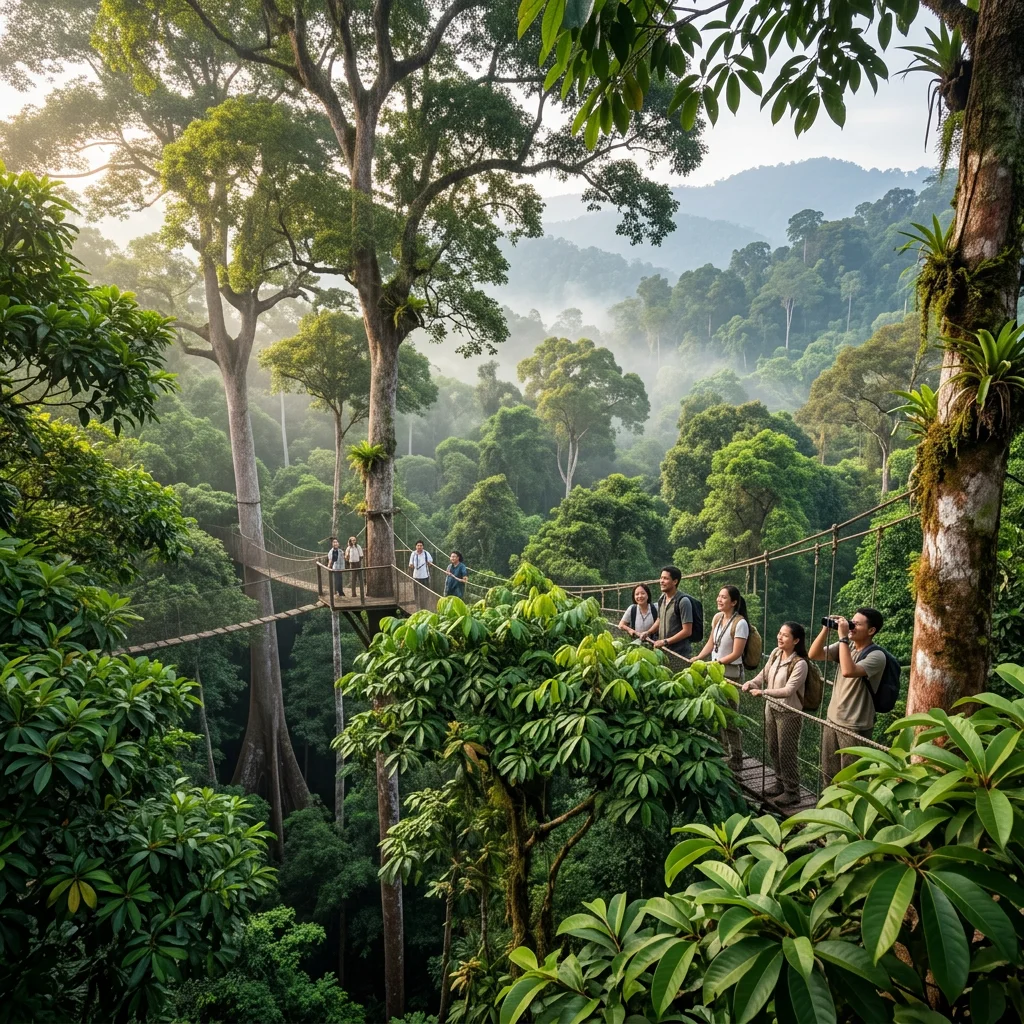
Thailand provides a diverse patchwork of habitats for flying snakes, ranging from northern granite ridges and dry central lowlands to dense equatorial rainforests across the southern peninsula. Within this varied terrain, differences in seasonal precipitation, canopy structure, and human settlement shape where each native member of the genus Chrysopelea can survive and thrive.
Regional forest biomes and geographical ranges
The golden tree snake (Chrysopelea ornata) is the most widespread and ecologically flexible flying snake in the country, occurring throughout every major administrative region. In the northern and western highlands, including the provinces of Chiang Mai, Mae Hong Son, and Tak, the species occupies mixed deciduous forests, dry dipterocarp woodlands, and bamboo thickets up to elevations of roughly 1,000 metres. The pronounced dry season across northern Thailand causes seasonal leaf loss in deciduous canopies, leading snakes to seek moisture within protected ravines, limestone gullies, and vegetated river valleys. Across the plateau of northeastern Thailand, the snake persists across fragmented forest reserves, agricultural hedgerows, and commercial sugarcane plantations.
South of the Isthmus of Kra, the climate transitions into a tropical rainforest zone marked by high year-round rainfall and towering, multi-tiered canopies. Peninsular Thailand represents a critical biogeographical crossroad where the ranges of three flying snake species intersect: Chrysopelea ornata, the paradise tree snake (Chrysopelea paradisi), and the far less common banded flying snake (Chrysopelea pelias). Large contiguous conservation areas, such as Khao Sok National Park in Surat Thani, Khao Luang National Park in Nakhon Si Thammarat, and Hala-Bala Wildlife Sanctuary along the southern border, provide refuge for all three.
In these southern rainforest tracts, the species divide forest resources through vertical stratification. Chrysopelea pelias remains largely confined to the dense, humid canopy of mature, primary rainforest, rarely descending to disturbed ground. Chrysopelea paradisi occupies the sub-canopy, forest boundaries, secondary woodland, and coastal coconut groves. Chrysopelea ornata displays broader ecological tolerance, dominating riverbanks, forest tracks, secondary scrub, and cleared margins.
Urban adaptation in towns and cities
Chrysopelea ornata exhibits exceptional synanthropic adaptability, establishing stable breeding populations across heavily urbanised environments. In Bangkok, an extensive metropolis built across an alluvial delta, the species frequents landscaped public parklands such as Lumphini Park and Benjakitti Park, as well as tree-lined banks along the city's residential canals. The snake's specialised keeled belly scales and slender physique allow it to climb vertical surfaces with ease, scaling rough concrete walls, drainage pipes, and exterior masonry to reach building eaves and attics.
Man-made structures create sheltered microclimates that closely match the snake's physiological needs. Ceramic roof tiles and air-conditioning exterior units generate constant warmth that aids thermoregulation, while external security lighting attracts flying insects, which in turn draw high densities of house geckos. Bangkok municipal fire stations and volunteer emergency rescue foundations handle tens of thousands of wildlife callouts each year across the metropolitan region. Alongside the reticulated python, the golden tree snake regularly ranks as one of the most frequently retrieved reptiles from private dwellings and commercial gardens.
Venom Properties, Human Encounters, and Safety Protocols
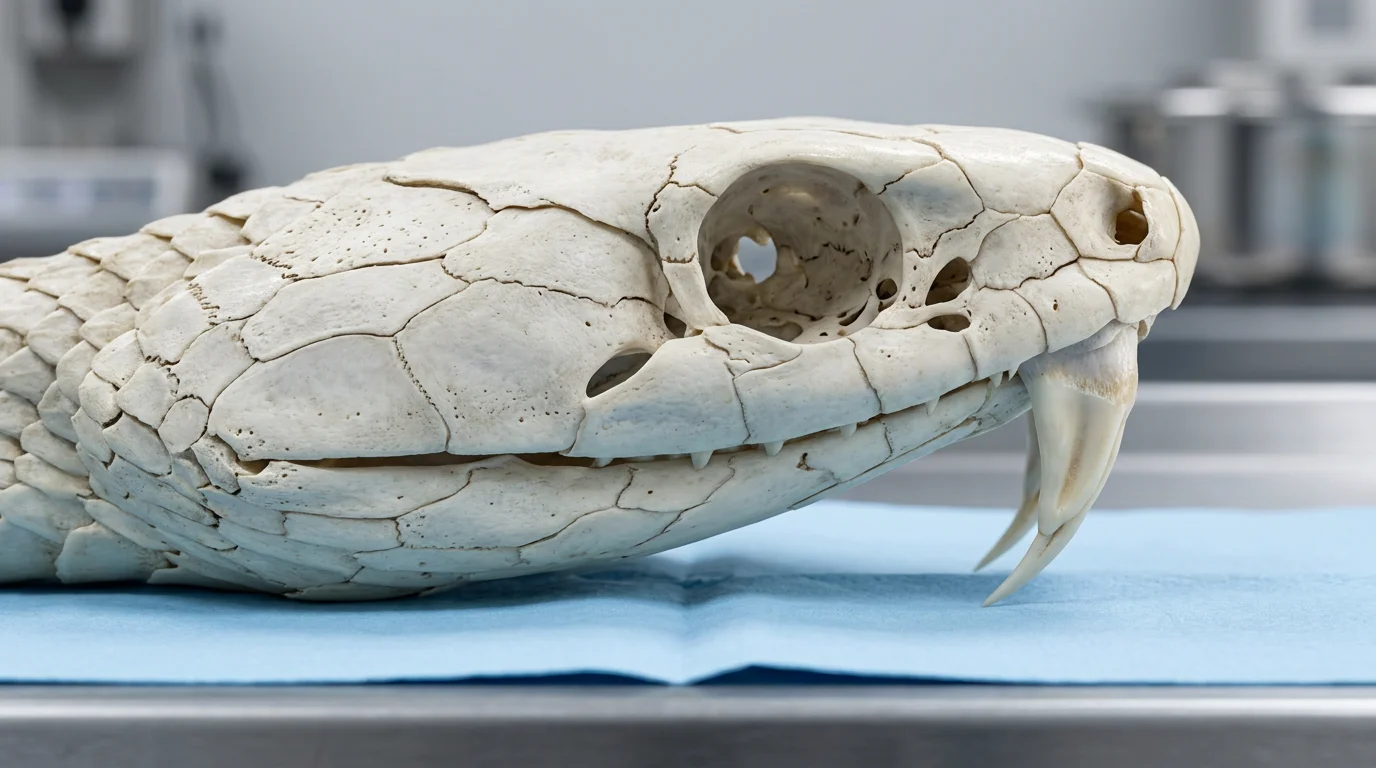
Encountering a slender serpent gliding across an open veranda or resting in garden shrubbery can be unsettling, yet toxicological data confirms that Thailand's flying snakes present no dangerous medical threat to people. Understanding their rear-fanged dental layout, the biochemical role of Duvernoy's gland secretions, and typical defensive behaviours helps residents and travellers respond calmly to unexpected encounters.
Venom Apparatus and Toxicological Profile
Flying snakes belong to the opisthoglyphous group of serpents, distinguished by enlarged, grooved teeth situated at the posterior end of the upper jaw, beneath the rear edge of the eye socket. These fangs connect via slender ducts to the Duvernoy's gland, specialised tissue behind the eyes that synthesises oral secretions. Unlike front-fanged venomous families such as vipers and elapids, which possess hollow hypodermic fangs connected to muscular glands capable of high-pressure injection, Chrysopelea species lack compressor muscles around their secretory tissue.
Because glandular fluid cannot be forcibly pumped into tissue, envenomation requires prolonged chewing, which draws secretions down the shallow dental grooves and into punctures by capillary action. Toxicological evaluations show that this fluid consists primarily of neurotoxic peptides and weak digestive enzymes targeted at immobilising small, cold-blooded prey, particularly house geckos, skinks, and small frogs.
In clinical medicine, Chrysopelea venom is classified as medically insignificant to human beings. These peptides lack affinity for human neuromuscular junctions, meaning the secretions do not cause systemic respiratory depression or muscular paralysis. The venom also lacks the coagulopathic enzymes and destructive cytotoxins found in dangerous pit vipers, meaning bites do not trigger internal bleeding or tissue necrosis. Clinical records across Thailand and wider Southeast Asia document no human fatalities from the bite of any flying snake species.
Encounter Dynamics and Defensive Behaviour
Human encounters with flying snakes across Thailand generally occur in domestic gardens, open-air resort dining areas, balconies, and private residences. The golden tree snake (Chrysopelea ornata) is particularly common in urban environments such as Bangkok, where it scales exterior walls, rainwater downpipes, and electrical cables while hunting geckos. During sudden monsoon downpours or following an awkward leap between overhanging branches, snakes sometimes lose their grip and fall onto patios, awnings, or outdoor seating. These canopy drops are accidental falls rather than targeted descents toward people.
In general temperament, flying snakes are alert, high-strung reptiles that depend on rapid escape rather than confrontation. If an avenue of flight is open, the snake quickly vanishes into nearby foliage or wall cavities. When cornered or physically restricted, it adopts an assertive defensive posture. The snake flattens its neck and anterior body horizontally, elevates its head, opens its mouth in a broad gape to expose the pale lining, and delivers rapid warning strikes towards the perceived threat. This behaviour is an intimidating bluff intended to deter predators.
Bite Assessment and First Aid Protocols
A defensive strike from a wild flying snake is almost universally a rapid tag delivered with the small anterior teeth. Because the rear fangs do not engage the skin during a quick nip, these bites cause nothing more than superficial pinpricks or shallow scratches without introducing glandular fluid. Envenomation occurs chiefly when an individual deliberately handles or restrains a snake, granting the reptile time to work its jaws back and chew into loose skin, such as the webbing between fingers.
Confirmed envenomation produces mild, self-limiting local symptoms. Patients typically report localised throbbing pain, slight reddening, and minor swelling around the puncture wounds. Systemic symptoms do not develop from the snake's venom, though psychological distress and panic can provoke hyperventilation, a racing pulse, or faintness.
Effective first aid focuses on wound cleanliness and preventing secondary infection. The puncture area should be washed thoroughly with clean water and mild soap to eliminate surface bacteria, followed by the application of an antiseptic solution such as povidone-iodine. The bitten limb should be rested in an elevated position to ease minor swelling, and tetanus immunisation status should be checked at a local clinic.
Harmful traditional practices must be avoided. Applying tight tourniquets, restrictive pressure bandages, ice, herbal pastes, or suction devices damages healthy tissue and impedes circulation without clinical benefit. Where species identification is uncertain—since green pit vipers can share similar arboreal habitats—the snake should be photographed from two or three metres away without attempting to capture it. In Thailand, calling the national emergency ambulance number on 1669 or visiting a local district hospital ensures professional medical evaluation and prompt species confirmation.
Ecological Role, Conservation Status, and Public Perceptions

Flying snakes occupy an influential intermediate position within Southeast Asian food webs, acting simultaneously as agile predators of smaller vertebrates and valuable prey for apex canopy hunters. Their ability to navigate both primary rainforest canopies and human-modified settlements allows them to maintain ecological balance across diverse environments, from national parks to suburban gardens.
Natural Pest Control and Food Web Dynamics
In agricultural smallholdings and residential areas, the golden tree snake (Chrysopelea ornata) functions as an effective natural regulator of household and garden pests. The species routinely enters roof spaces, outbuildings, wall crevices, and fruit orchards, where it preys heavily on house geckos, tree-dwelling skinks, and small rodents. By suppressing gecko numbers, these snakes reduce the accumulation of droppings around rafters and domestic food-preparation areas. In mango, durian, and coconut plantations, they help suppress tree-climbing rodents and wood-boring insects, providing biological pest control without reliance on synthetic chemicals.
Higher up the trophic chain, flying snakes sustain a broad range of forest predators. Raptors frequently hunt them along the forest edge, most notably the crested serpent eagle (Spilornis cheela) and the changeable hawk-eagle (Nisaetus cirrhatus). On lower branches and the forest floor, they fall prey to Asian water monitors (Varanus salvator), palm civets, and ophiophagous reptiles, including the king cobra (Ophiophagus hannah).
Cultural Beliefs and Local Attitudes
In Thai folklore and religious tradition, the golden tree snake holds an honoured, benevolent status. Traditional stories refer to the reptile as Indra's green snake, named after the celestial deity who was integrated into Buddhist cosmology as a guardian of virtue and ruler of the higher heavenly realm. Because Indra is linked in religious iconography to the colour green and atmospheric weather, the snake's bright emerald patterning and gliding habits caused early communities to connect it with celestial benevolence.
In rural settlements, an unprompted visit from a golden tree snake inside a family home is widely greeted as an omen of prosperity or incoming fortune, provided the animal is allowed to leave unharmed. Monks at forest monasteries routinely remind visitors to treat the serpents with compassion, reflecting Buddhist precepts against harming living beings. In contemporary cities, however, this traditional tolerance often erodes. Urban residents unfamiliar with native reptiles frequently kill them on sight, driven by misplaced assumptions that every serpent carries lethal venom.
Conservation Status and Environmental Pressures
All three flying snake species recorded in Thailand—Chrysopelea ornata, Chrysopelea paradisi, and Chrysopelea pelias—are currently classified as Least Concern on the International Union for Conservation of Nature (IUCN) Red List. The resilience of Chrysopelea ornata in disturbed environments and the broad continental ranges of all three taxa protect them against severe risk across the country.
Even so, specific environmental pressures affect regional populations. The banded flying snake (Chrysopelea pelias) and paradise tree snake (Chrysopelea paradisi) depend heavily on intact evergreen canopies in southern provinces. When continuous forest is cleared for rubber or oil palm monocultures, their gliding routes disappear. Snakes forced down to ground level suffer heavy mortality from vehicular traffic and domestic predators, particularly free-roaming domestic and feral cats. A secondary drain stems from capture for the domestic and overseas exotic pet trade, despite national suspensions on live snake exports. Preserving interconnected canopy corridors across southern conservation areas remains vital for sustaining these arboreal specialists.
Key Facts at a Glance
| Item | Detail | Notes |
|---|---|---|
| Scientific Classification | Genus *Chrysopelea* (Family Colubridae, Subfamily Ahaetuliinae) | Mildly venomous, rear-fanged arboreal colubrids capable of controlled gliding |
| Native Thai Species | Golden tree snake (*C. ornata*), paradise tree snake (*C. paradisi*), banded flying snake (*C. pelias*) | Three of the five recognised global species occur naturally in Thailand |
| Maximum Glide Span | Exceeds 30 metres across horizontal canopy gaps | Propelled by explosive launch jumps and sustained by aerodynamic lift |
| Largest Native Species | Golden tree snake (*Chrysopelea ornata*), 100–130 cm (up to 140 cm) | Widespread nationwide; common in forests, plantations, and urban gardens |
| Most Proficient Glider | Paradise tree snake (*Chrysopelea paradisi*), 80–100 cm | Found in the southern peninsula; achieves shallow glide angles down to 13° |
| Rarest Native Species | Banded flying snake (*Chrysopelea pelias*), 60–75 cm | Canopy specialist restricted to undisturbed lowland dipterocarp forests in the deep south |
| Aerodynamic Mechanism | Dorsoventral flattening into a concave, cambered aerofoil | Hypaxial muscles rotate ribs outward to double body width upon take-off |
| Flight Stability | Coordinated lateral and vertical spinal undulation | Balances aerodynamic torque in mid-air to prevent rolling or tumbling |
| Activity and Diet | Diurnal active hunter; primarily feeds on geckos and small lizards | Consumes house geckos, tokay geckos, tree frogs, bats, and small birds |
| Venom and Medical Risk | Rear-fanged (opisthoglyphous); medically insignificant to humans | Neurotoxins disable cold-blooded prey; no human fatalities on record |
| Defensive Posture | Horizontally flattened neck, wide mouth gape, and mock strikes | Alert and quick to flee; strikes primarily when cornered or restrained |
| Bite First Aid | Clean with soap and water, apply antiseptic, and elevate limb | Avoid tourniquets, compression bandages, or suction; confirm tetanus cover |
| Conservation Status | Least Concern on the IUCN Red List (all three native species) | Resilient overall, but southern forest taxa face habitat fragmentation |
| Cultural Regard | Known traditionally as Indra's green snake | Revered in rural Thai folklore as an auspicious omen of household fortune |
| Official source | Emergency Ambulance: 1669 | Thailand national emergency medical response service |
| Official source | Ramathibodi Poison Centre: 1367 | Specialist national poison advice hotline in Thailand |
FAQ: Flying Snakes in Thailand
How many species of flying snakes are in Thailand?
How do flying snakes create lift to glide?
Where can I find golden tree snakes in Thailand?
Which flying snake species in Thailand is the best glider?
How can I tell the difference between a flying snake and a pit viper?
How do flying snakes stay stable during flight?
What do flying snakes eat in Thailand?
Are flying snakes in Thailand dangerous to humans?
What should I do if I encounter a flying snake?
What is the first aid for a flying snake bite?
Reviewed by the Thailand Guide Editorial Team • Last reviewed: 20 November 2026
This page is provided for general information only. While we aim for accuracy, details can change — please verify anything important independently before relying on it.