Phrae Town
Phrae Town is the provincial capital of Phrae Province in Northern Thailand, located approximately 550 kilometres north of Bangkok. The settlement lies along the eastern bank of the Yom River, surrounded by the forested peaks of the Phi Pan Nam and Phlueng mountain ranges. Its historic centre occupies the old fortified quarter of Nai Wiang, where traces of centuries-old earthen ramparts and defensive moats enclose a flat, compact street grid that travellers can easily navigate on foot or by bicycle.
Established during the Lanna era and later expanded as a major commercial centre during northern Thailand's nineteenth-century teak-logging boom, Phrae retains a distinctive regional heritage. Intricately carved timber mansions, historic temples, and quiet residential lanes define the townscape, preserving an unhurried pace shaped by local trade, craft traditions, and everyday provincial life.
Historic Heart and Lanna Architecture
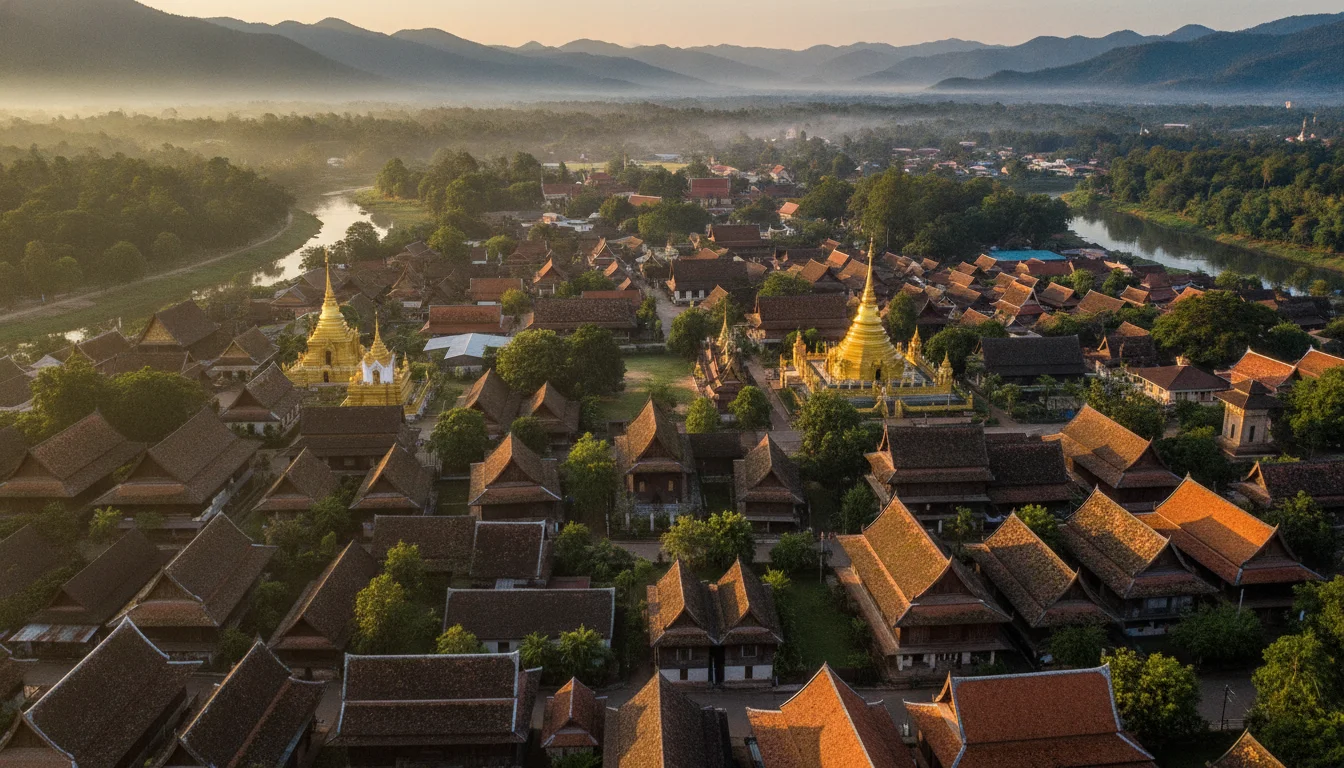
Phrae retains an extensive collection of northern Thai wooden architecture, shaped largely by the late nineteenth-century teak logging boom. The historic core sits within the traces of ancient earthen ramparts and a moat, creating a compact layout distinct from the commercial sprawl of larger regional centres.
Teak mansions built for local nobility and timber magnates define the old quarter. Khum Chao Luang, constructed in 1892 as the official residence of Phrae’s last ruler, blends regional craftsmanship with European colonial design. A short walk away stands Vongburi House, a two-storey teak mansion painted pale pink and finished with elaborate gingerbread fretwork across its eaves, verandas, and gables.
Beyond the prominent estates, quiet residential lanes branch off into neighbourhoods lined with century-old timber homes, shuttered windows, and leafy gardens. Because the old town has largely avoided modern high-rise development and heavy traffic, exploring the central streets on foot reveals a continuous streetscape of historic Lanna building traditions. Arranging an organised walking tour helps uncover the history behind these private estates and timber concessions.
Temples and Spiritual Sites
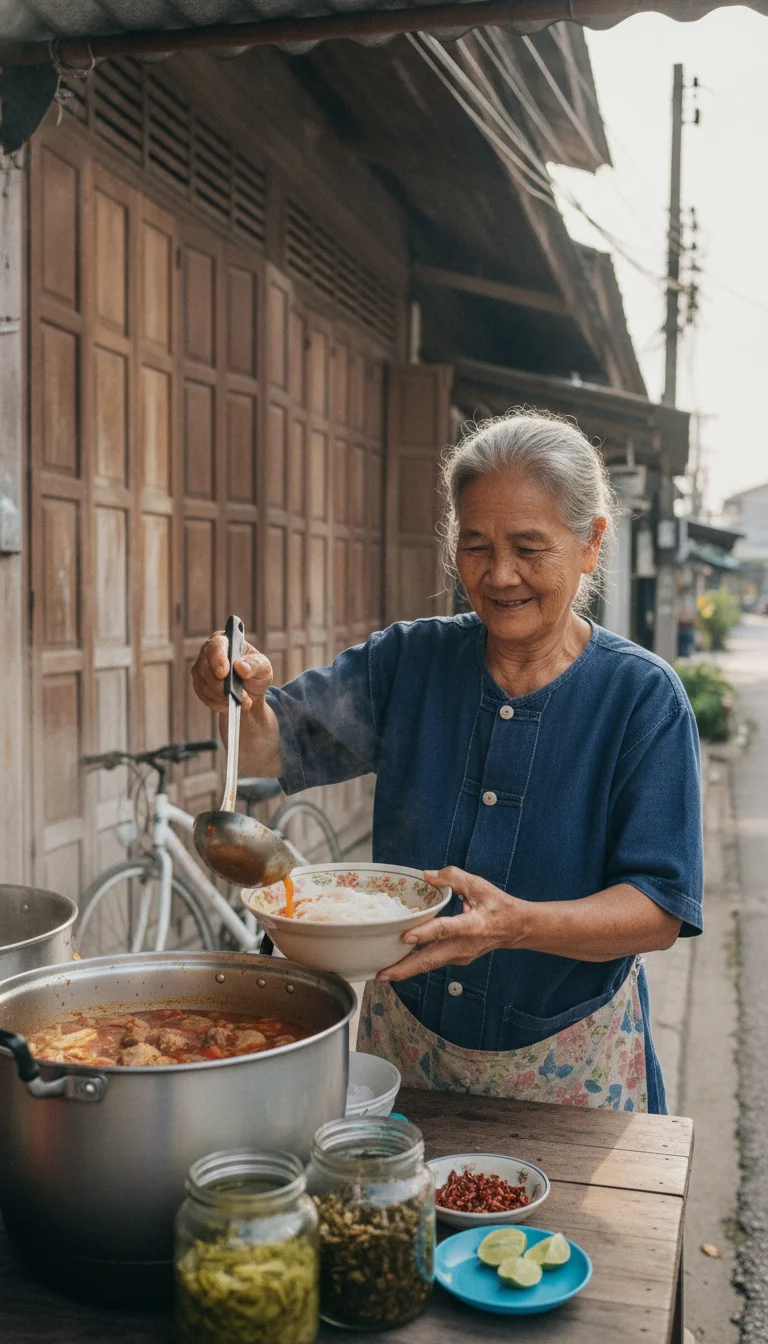
Phrae Town’s religious life centres on a collection of historic temples reflecting northern Thai and regional trade connections. The most revered destination is Wat Phra That Cho Hae, set on a low hill roughly nine kilometres south-east of the town centre. Its 33-metre gilded Chiang Saen-style stupa enshrines sacred relics of the Buddha and draws pilgrims from across northern Thailand, holding particular significance for those born in the Year of the Tiger.
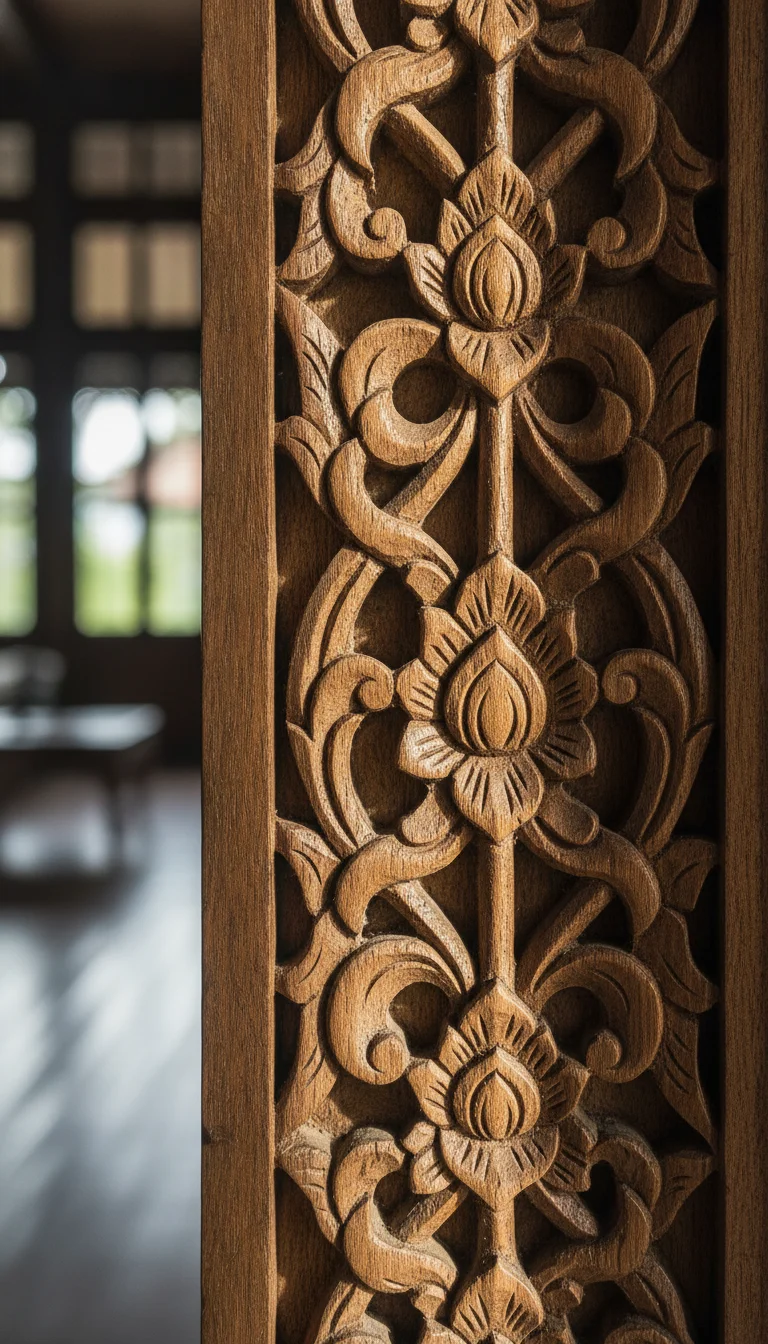
Within the old walled town, Wat Phra Non displays traditional Lanna craftsmanship with low-sweeping gables, intricate wood carvings, and a nine-metre reclining Buddha image. Nearby stands Wat Luang, founded alongside early Phrae, recognisable by its 14th-century octagonal chedi supported by sculpted elephant buttresses. Just beyond the old moat, Wat Chom Sawan illustrates the town's Burmese logging links; built entirely of teak by Tai Yai craftsmen around the turn of the twentieth century, the temple features tiered rooflines and carved fretwork. These active monasteries provide accessible insights into northern Buddhist devotional life.
Plan the perfect Thai cooking class. Compare half-day and full-day courses, farm and urban kitchens, regional menus, dietary options, and costs across Thailand.
Local Crafts and Culture
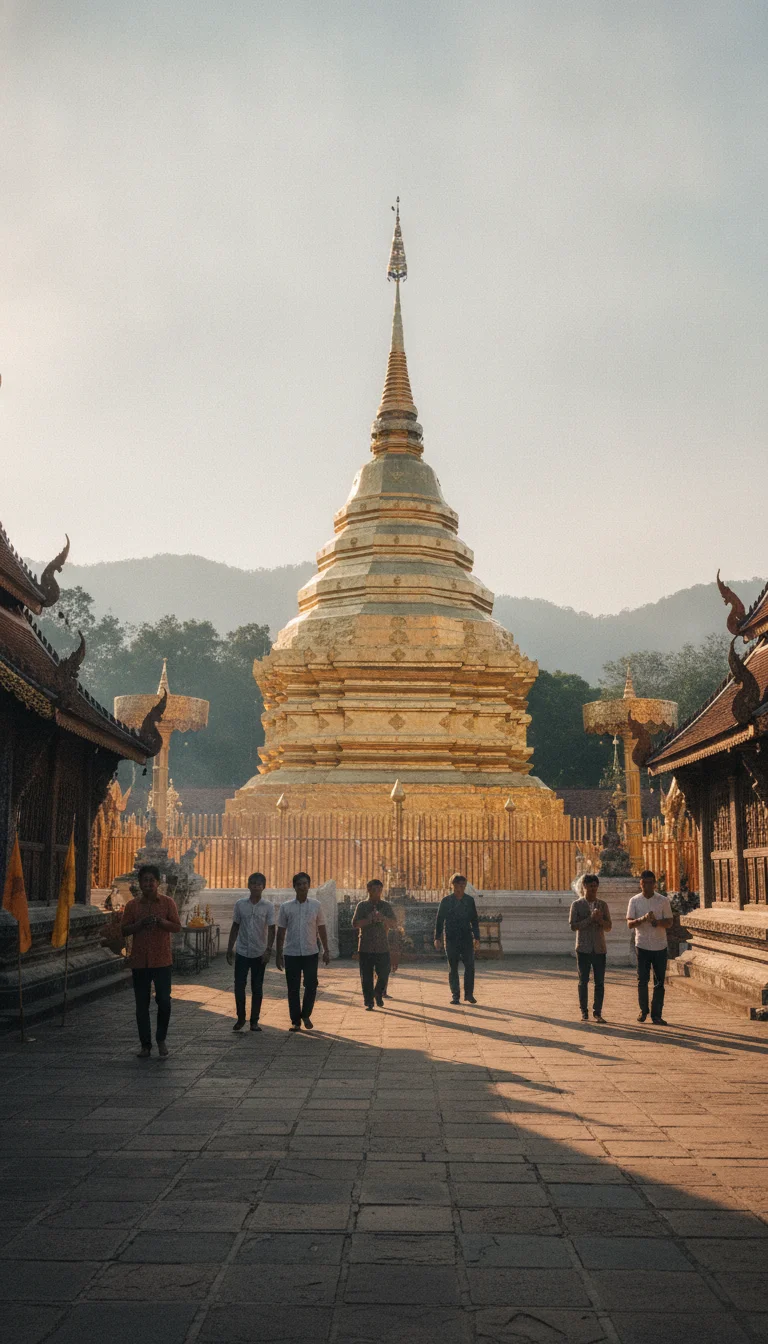
Phrae is Northern Thailand's traditional centre for mo hom, durable cotton garments dyed with natural indigo. The craft takes its name from mo (earthenware vat) and hom (the indigo plant, Strobilanthes cusia). While shops across the town sell these deep-blue collarless shirts and lightweight modern apparel, production centres on the village of Ban Thung Hong, roughly four kilometres north of the town centre. Several workshops there let visitors join hands-on fabric-dyeing sessions.
Teak woodworking forms the province's other hallmark craft, rooted in Phrae's nineteenth-century timber industry. In Sung Men district, around nine kilometres south of town, Ban Hua Dong and Hua Dong Market gather carvers and carpenters producing household furniture, fretwork panels, and small turned items.
In Phrae itself, craft stalls line the Saturday evening Kad Kong Kao walking street on Kham Lue Road, alongside vendors selling regional dishes. Independent tailoring shops throughout the old quarter sell indigo scarves, bags, and tailored shirts, making it easy to browse local wares or arrange visits to surrounding workshops.
Access to Nature and Surrounding Areas
Phrae Town sits in a flat river basin surrounded by forested hills and agricultural plains, making it an easy base for exploring the province's natural landmarks.
Around 14 kilometres north-east of the centre, Phae Mueang Phi Forest Park preserves an eroded landscape where wind and water have sculpted steep earth pillars, mushroom-shaped columns, and shallow gullies. A marked walking circuit leads through the formations and up to shaded viewpoints above the red soil.
Roughly 20 kilometres west along Highway 1023, Doi Pha Klong National Park contains jagged karst ridges, caves, and limestone gardens. Further afield, around 50 kilometres north in Song District, Mae Yom National Park protects dense stands of natural teak forest along the upper Yom River, where rocky rapids emerge during the drier months. These sites are straightforward day trips from town using a hired scooter or private songthaew.
Getting There and Getting Around
Reaching Phrae from the UK involves flying into Bangkok’s Suvarnabhumi Airport or Don Mueang International Airport before heading north. Although Phrae Airport sits just south of the town centre, scheduled commercial passenger flights were discontinued in 2023. Travellers planning to fly can instead take a domestic flight to neighbouring airports such as Lampang, Nan Nakhon, or Chiang Mai, followed by onward road transport.
Overland journeys from Bangkok are straightforward. Direct trains on the State Railway of Thailand's Northern Line run from Krung Thep Aphiwat Central Terminal to Den Chai Railway Station, roughly 25 kilometres south of Phrae Town. Several daily daytime and overnight sleeper services make this run in six to nine hours. From Den Chai station, shared songthaews (converted pick-up trucks) and local taxis meet arriving trains and take about 30 minutes to reach central Phrae. Alternatively, long-distance buses depart daily from Bangkok’s Northern Bus Terminal (Mo Chit 2) to Phrae Bus Terminal, taking between eight and nine hours. Regular direct buses also link Chiang Mai’s Bus Terminal 3 to Phrae in under four hours.
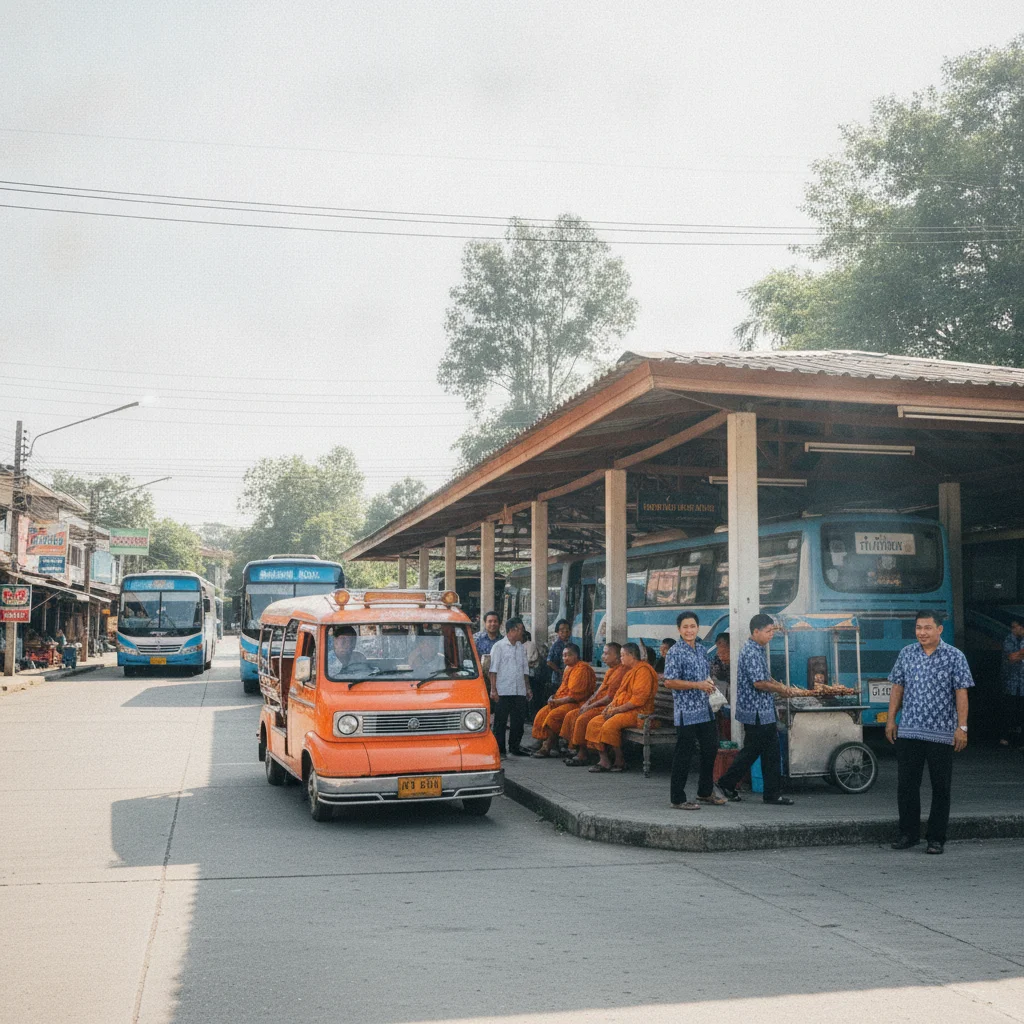
Within Phrae Town, getting around is simple thanks to the town’s compact and level layout. The historic core is easily explored on foot. For trips across town or to the bus station, songthaews provide the main form of public transit along set routes or as private charters. Motorbike taxis and three-wheeled taxis wait near transport hubs and local markets. Motorbike hire is available from local shops for independent travel beyond the town centre, though riders must carry a valid driving licence and an International Driving Permit.
Costs and Budgeting
Accommodation in Phrae Town remains affordable across all tiers. Budget guesthouses and standard entry-level hotels generally cost between 400 and 700 THB (£9 to £16) per night for a double room with air conditioning. Mid-range boutique hotels, including properties with swimming pools or landscaped grounds, typically charge between 800 and 1,600 THB (£18 to £36) per night.
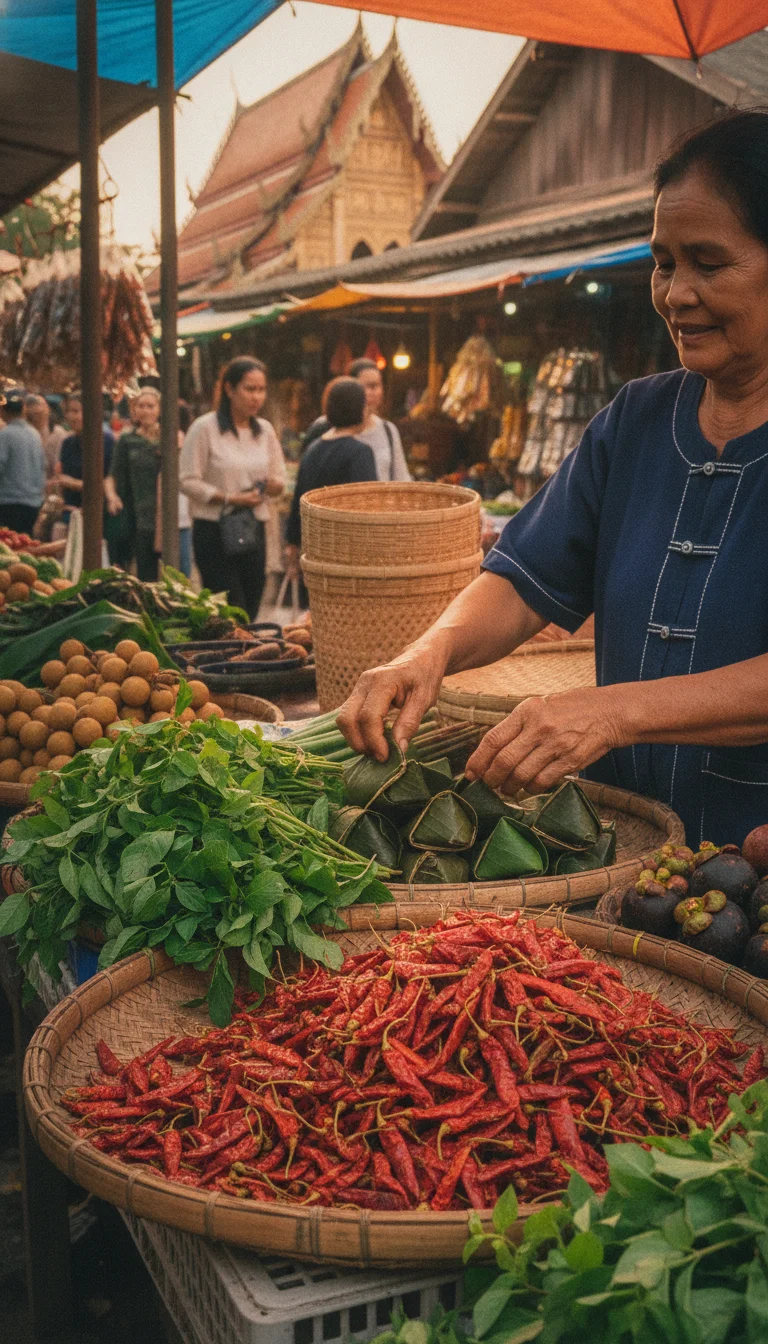
Daily dining costs are modest. Morning and evening market stalls and local shophouse eateries serving noodle soups, rice dishes, or northern specialities such as khao soi charge between 40 and 80 THB (£0.90 to £1.80) per plate. A meal in a mid-range restaurant or air-conditioned cafe usually costs between 150 and 300 THB (£3.40 to £6.80) per person.
Sightseeing expenses add very little to daily outgoings. Buddhist wats in the central town charge no admission, while historic mansions charge little or nothing: Khum Chao Luang is free to enter, and Vongburi House requests an entry fee of 30 THB (£0.70). Fixed-route songthaew rides within the urban area cost around 15 to 30 THB (£0.35 to £0.70). Excluding accommodation and intercity travel, a comfortable daily budget of 1,000 to 1,500 THB (£23 to £35) per person covers three meals, drinks, local transport, and site visits.
Practical Fit and Trade-offs
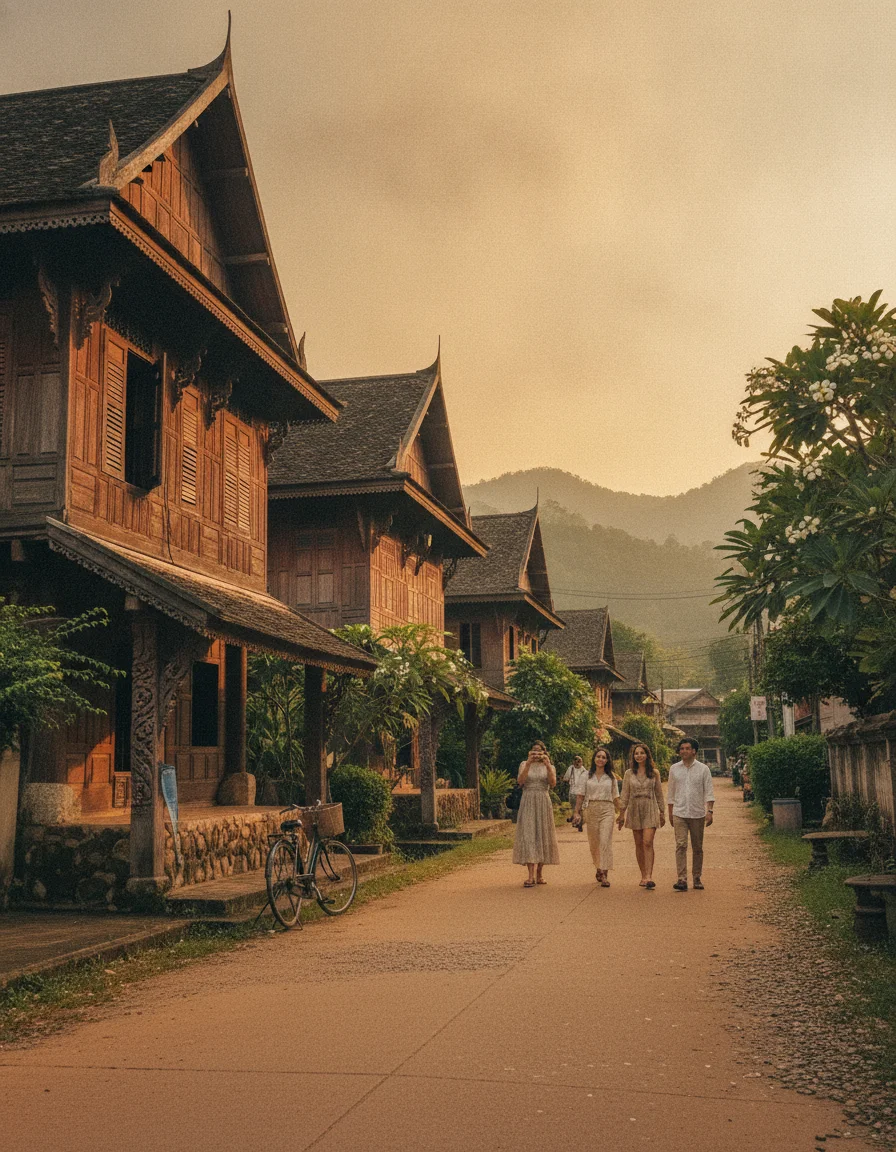
Phrae Town suits travellers who prioritise historic provincial architecture, traditional crafts, and an unhurried regional pace over commercial attractions. Its old quarter inside the ancient ramparts is compact, flat, and straightforward to explore on foot or by bicycle. Visitors interested in northern Thai heritage, wooden carpentry, and quiet residential lanes will find plenty to appreciate across a relaxed two- or three-day stay.
Practical trade-offs become clear for anyone expecting extensive commercial infrastructure. Nightlife is minimal. Evening activity focuses on the Pratu Chai night market, casual open-air beer spots along Kham Lue Road, and local restaurants that wind down early. There are no sprawling shopping malls, cinema complexes, or widespread western menus. Street stalls, noodle counters, and family-run northern Thai eateries provide the vast majority of meals.
Transit and scheduling require realistic planning. Phrae lacks urban rail, ride-hailing coverage can be sparse, and public travel beyond the old town depends on shared songthaews or private vehicle hire. A whistle-stop overnight dash leaves little time to adjust to the town's quiet cadence or venture out to rural artisan villages. Travellers who expect resort-style amenities, organised day excursions, or late-night entertainment may find the provincial capital too quiet for their tastes.
What to Know Before You Go
Respectful dress is standard when visiting temples across Phrae. Modest attire covering shoulders and knees is required, and shoes must be removed before stepping inside shrines and ordination halls. As in wider Lanna culture, pointing feet towards Buddha images or monks is considered discourteous, and a calm, polite demeanour is appreciated by residents.
Central Thai is the primary language used for official business and education, spoken alongside the local Northern Thai dialect, Kam Mueang. English is rarely spoken beyond front-desk staff at hotels and guesthouses. Downloading an offline translation tool and learning a few basic Thai phrases for greetings, numbers, and ordering food will ease everyday communication with local traders.
Daily transactions in town rely heavily on cash in Thai Baht. Morning and evening market stalls, independent eateries, and songthaew drivers operate almost entirely on cash, while credit card terminals remain largely confined to convenience store chains and larger hotels. Multiple bank ATMs accepting international debit cards operate in the town centre, particularly along Charoen Mueang Road.
Reliable Wi-Fi is standard across guesthouses, hotels, and town cafes. Domestic mobile networks, including AIS and True, deliver steady 4G and 5G coverage throughout the urban core. Travellers can purchase prepaid physical SIM cards or top up data packages at local convenience stores by presenting a valid passport.
Practical Tips
Phrae operates at a quieter, slower pace than larger northern Thai cities such as Chiang Mai. Most family-run businesses, cafes, and eateries open early in the morning and begin closing by early evening. Planning daily sightseeing around morning light and late afternoon avoids the intense midday heat while matching the town's natural daily rhythm.
The compact historic core sits within an ancient defensive moat and city wall, creating a flat, low-traffic grid suitable for self-guided exploration. Cycling or walking through the residential lanes provides easy access to preserved teak timber homes, small community shrines, and quiet side streets without needing complex navigation.
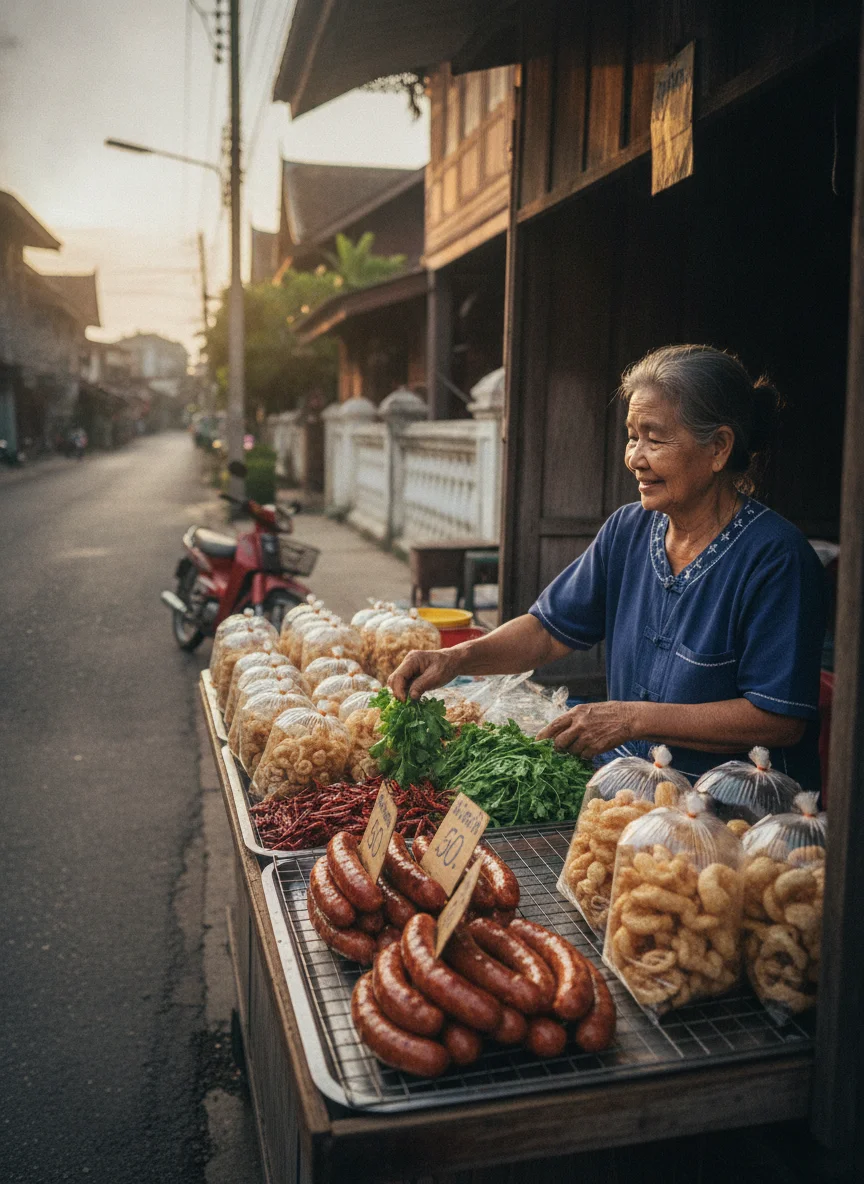
Local markets serve as the main focus of evening activity, particularly along the city wall and weekend street markets. Visiting early in the evening allows travellers to sample regional northern Thai snacks and fresh fruit while stalls are fully stocked, before most vendors close around nine o'clock.
To get the most out of a visit, allow time for unhurried breaks between sights rather than attempting a packed itinerary. Taking time to pause at local cafes or observe daily life along the moat reflects the true character of the provincial capital.
While independent day trips are straightforward to manage on arrival, securing your accommodation and transport options ahead of time ensures a smooth journey, particularly during the cooler winter months.
Quick Reference Table
| Item | Detail | Notes |
|---|---|---|
| Location | Yom River valley, Northern Thailand | Approximately 550 km north of Bangkok |
| Budget accommodation | 400–700 THB (£9–£16) / night | Double room with air conditioning |
| Mid-range accommodation | 800–1,600 THB (£18–£36) / night | Boutique hotels, including properties with pools |
| Local meals | 40–80 THB (£0.90–£1.80) / plate | Market stalls and local shophouse eateries |
| Mid-range dining | 150–300 THB (£3.40–£6.80) / person | Air-conditioned cafes and mid-range restaurants |
| Daily budget | 1,000–1,500 THB (£23–£35) / person | Covers meals, drinks, local transport, and site visits (excl. lodging) |
| Local transport | 15–30 THB (£0.35–£0.70) | Fixed-route songthaew rides within urban area |
| Bus access | Phrae Bus Terminal | Yantrakit Kosol Road, Nai Wiang; 8–9 hrs from Bangkok, under 4 hrs from Chiang Mai |
| Flight access | Commercial passenger flights discontinued | Phrae Airport inactive since 2023; fly to Lampang, Nan, or Chiang Mai |
| Sightseeing fees | Free to 30 THB (£0.70) | Town wats and Khum Chao Luang free; Vongburi House 30 THB |
| Official source | Website | https://www.phraecity.go.th |
FAQ: Phrae Town
Where is Phrae Town located?
How can I get around Phrae Town's historic center?
What is Wat Phra That Cho Hae known for?
What is *mo hom* and where can I experience it?
Can I fly directly to Phrae Town?
How much does accommodation cost in Phrae Town?
What is a comfortable daily budget for Phrae Town?
Who is Phrae Town suitable for?
What cultural etiquette should I observe when visiting temples in Phrae?
Should I use cash or credit cards for daily transactions in Phrae Town?
Reviewed by the Thailand Guide Editorial Team • Last reviewed: 12 September 2026
This page is provided for general information only. While we aim for accuracy, details can change — please verify anything important independently before relying on it.