Phuket Culture
RELIGION & DAILY LIFE
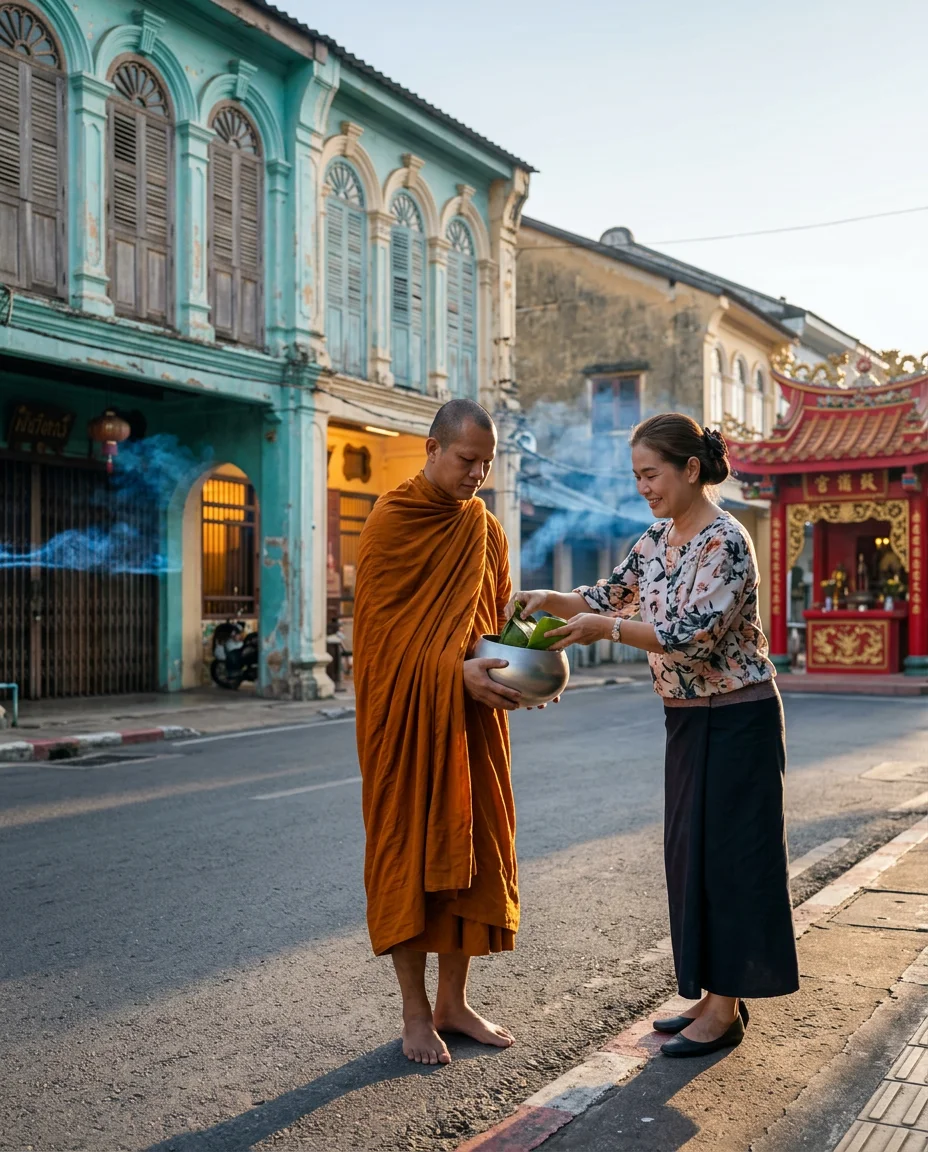
Behind Phuket's resort facade lies an old maritime crossroads shaped by nineteenth-century Hokkien tin miners, Malay coastal seafarers, and southern Siamese administrators living within earshot of each other.
While holiday promotions often depict the island as an uninterrupted Buddhist retreat, walking through the older quarters reveals a living Peranakan community where red Taoist ancestral shrines stand alongside Theravada monasteries. It remains an industrious southern province that has kept its domestic customs intact by quietly preserving them away from the resort strips.
Theravada Buddhism provides the overarching spiritual framework for the Thai majority, yet daily religious practice across the province is deeply syncretic. Step outside onto the streets of Phuket Town before daybreak to see barefoot monks walking silently along residential pavements collecting morning alms. Across the tarmac, shop owners light sandalwood joss sticks at red wooden altars dedicated to Guan Yu or Tudigong, the Earth God. This unforced marriage of Theravada merit-making and Taoist ancestral devotion defines island routines.
Theravada Monasteries And Hilltop Shrines
Wat Chalong, officially named Wat Chaiyathararam, stands as the spiritual heart of the province's Buddhist population. Established in the early nineteenth century, the complex honours Luang Pho Chaem and Luang Pho Chuang, two revered abbots who provided refuge and traditional herbal medicine to local villagers during the violent Angyee tin-miner rebellions of 1876. There is no entrance fee to walk the grounds, though small cash donations placed into merit boxes support maintenance. The compound's focal point is a grand three-tiered pagoda, Phra Mahathat Chedi, which enshrines a bone relic of the Buddha gifted from Sri Lanka. Thai families regularly visit to present lotus blossoms, light yellow tapers, and detonate long strings of loud firecrackers inside a purpose-built brick kiln to give thanks when a prayer is answered.
Further south, atop the summit of Nakkerd Hill, the Big Buddha—officially titled Phra Phutta Ming Mongkol Eknakiri, though commonly called Phra Yai by taxi drivers—overlooks Chalong Bay from an elevation of roughly 400 metres. The seated 45-metre statue, built from reinforced concrete faced with white Burmese marble tiles, is free to enter and funded by donations. Both Wat Chalong and the Big Buddha enforce modest attire: shoulders and knees must remain covered, and visitors must shed their footwear before crossing the threshold of any prayer hall or indoor terrace.
Taoist Shrines As Living Civic Spaces
Phuket's Chinese shrines do not operate as quiet museum pieces. They function as active neighbourhood halls, mutual-aid charities, and divinatory nerve centres for the Hokkien community. Jui Tui Shrine, located off Ranong Road near the central fresh market, opens daily from early morning until dusk with free entry. Local residents step inside during their morning commute, pick up incense by leaving a small voluntary donation in the merit chest, and consult the gods regarding personal health or commercial fortunes.
To receive guidance, worshippers cast two crescent-shaped red wooden blocks, known as jiaobei, onto the tiled floor. If the blocks land with one flat side facing up and one curved side facing up, the deities have granted an affirmative answer. Two flat sides turned upwards signal divine amusement or uncertainty, prompting the petitioner to ask again, while two rounded backs turned upwards communicate an outright refusal. Across Phuket, sacred spaces remain energetic, communal, and woven directly into the fabric of everyday commerce.
FESTIVALS & EVENTS
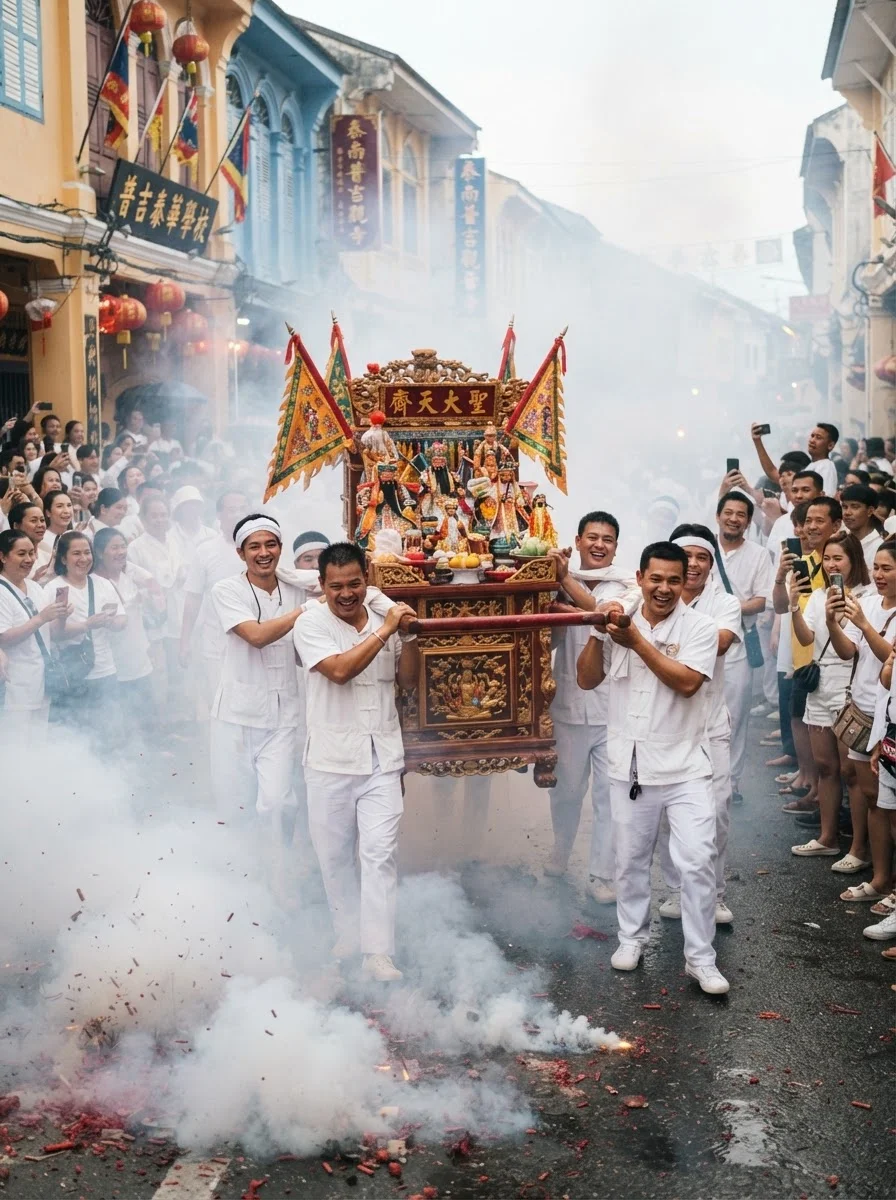
Phuket's annual festival calendar reflects the island's maritime trade roots and nineteenth-century migration patterns. National holidays follow Theravada Buddhist rhythms, while the province's most distinctive gatherings stem from Hokkien Chinese traditions established during the tin-mining boom. These Chinese ceremonies remain largely specific to Phuket and neighbouring southern provinces.
The Nine Emperor Gods And The Vegetarian Festival
The primary cultural fixture on Phuket's calendar is the Vegetarian Festival, known in Thai as Tesagan Gin Je and locally in Hokkien as Jia Chai. Running for nine days during the ninth Chinese lunar month, usually falling between late September and mid-October, the festival honours the Nine Emperor Gods of Taoist belief. Tradition traces the practice to 1825 in the tin-mining valley of Kathu. A visiting Chinese opera troupe fell seriously ill during a fever epidemic, widely recorded as malaria. The performers observed a strict vegan diet and conducted penance rituals to invoke the Nine Emperor Gods, recovering fully. Kathu's mining community repeated the rites the following year, and Phuket has marked the festival every autumn since.
During the nine days, devotees follow ten sacred precepts. They wear clean white clothing, eat strictly vegan food, abstain from alcohol and sexual relations, and use dedicated cooking utensils. Street stalls display bright yellow triangular flags with red Chinese lettering to indicate vegan food, known as je. Morning street processions, or yio keng, route from individual shrines across Phuket Town toward Saphan Hin on the coast to invite and release divine spirits.
These processions centre on spirit mediums known as mah song, or horses of the gods. Mediums enter trance states, allowing Taoist warrior spirits to possess their bodies and absorb misfortune for the community. During the marches, mediums undergo severe mortification, piercing their cheeks, tongues, and skin with swords, iron rods, and brass skewers before walking barefoot along tarmac streets. Shopkeepers set out tables with tea and fruit, throwing strings of exploding red firecrackers beneath the deity palanquins. White smoke blankets the town centre, and the noise is deafening.
For visitors, attending a morning procession requires arriving in Phuket Town by 06:30, wearing white long trousers and shirts with covered shoulders, and carrying foam earplugs. Town roads along parade routes close to traffic from dawn until midday, and municipal hotels book out months ahead.
Por Tor And The Feast Of Hungry Ghosts
During the seventh Chinese lunar month, which typically falls in August or early September, Phuket's Hokkien descendants observe Por Tor, the Hungry Ghost Festival. Taoist belief holds that the gates of the underworld open for the lunar month, allowing deceased ancestors and roaming, untended spirits to visit the earthly realm in search of food and merit.
Celebrations concentrate in Phuket Town around Seng Tek Bel Shrine (also called Por Tor Kong Shrine) on Phuket Road, Bang Niew Shrine, and the Ranong Road fresh market. Families arrange communal altars stacked with boiled pork, steamed buns, fresh fruit, and dried noodles, while burning paper money to provide for spirits in the afterlife.
The central symbol of Por Tor is ang ku, a sweet steamed cake made from glutinous rice flour, dyed red, and moulded into the shape of a tortoise. The tortoise represents longevity and endurance, while red denotes good fortune. Small cakes are bought for household altars, while large ceremonial versions weighing up to twenty kilograms, bearing names of local businesses piped across their shells, are carried to shrine altars with musicians playing. Watching Por Tor celebrations in the early evening provides a calm look at local filial piety, causing far less transport disruption than the autumn processions.
Songkran And Southern Water Cleansing
Songkran marks the traditional Thai New Year from 13 to 15 April, combining Buddhist merit-making with province-wide water celebrations. In Phuket Town and quieter residential neighbourhoods, the morning of 13 April starts respectfully with song nam phra, pouring scented water over temple Buddha images, followed by rod nam dam hua, where younger family members pour water over the palms of parents and elders to ask for blessings.
By early afternoon, coastal hubs including Patong, Kata, and Rawai turn into full-scale water battles. Pickup trucks carrying barrels of iced water cruise beach roads as crowds throw water using buckets and water guns. While coastal resort strips see boisterous water fights, inland streets in Phuket Town preserve a calmer community gathering where residents mark each other's cheeks with scented talcum powder. If you travel across Phuket during Songkran, expect heavy traffic near beaches, avoid riding scooters on wet roads, and seal valuables inside waterproof dry bags.
The table below outlines the primary seasonal celebrations across the province and what each one means for your stay.
| Festival | When | What happens | What it means for your visit |
|---|---|---|---|
| Songkran | 13 to 15 April | Morning water pourings on temple Buddha statues followed by island-wide water fights | Heavy traffic jams near beaches, widespread shop closures, and drenched public roads |
| Por Tor (Hungry Ghost) | August or September (7th lunar month) | Street altars, burning of paper money, and temple offerings of sweet red turtle cakes | Evening incense smoke and moderate road diversions around Bang Niew and market streets |
| Vegetarian Festival | Late September or October (9th lunar month) | Nine days of vegan eating, spirit medium street processions, and nightly shrine rituals | Severe morning road closures in town, heavy firecracker noise, and high hotel occupancy |
TRADITIONS & CUSTOMS
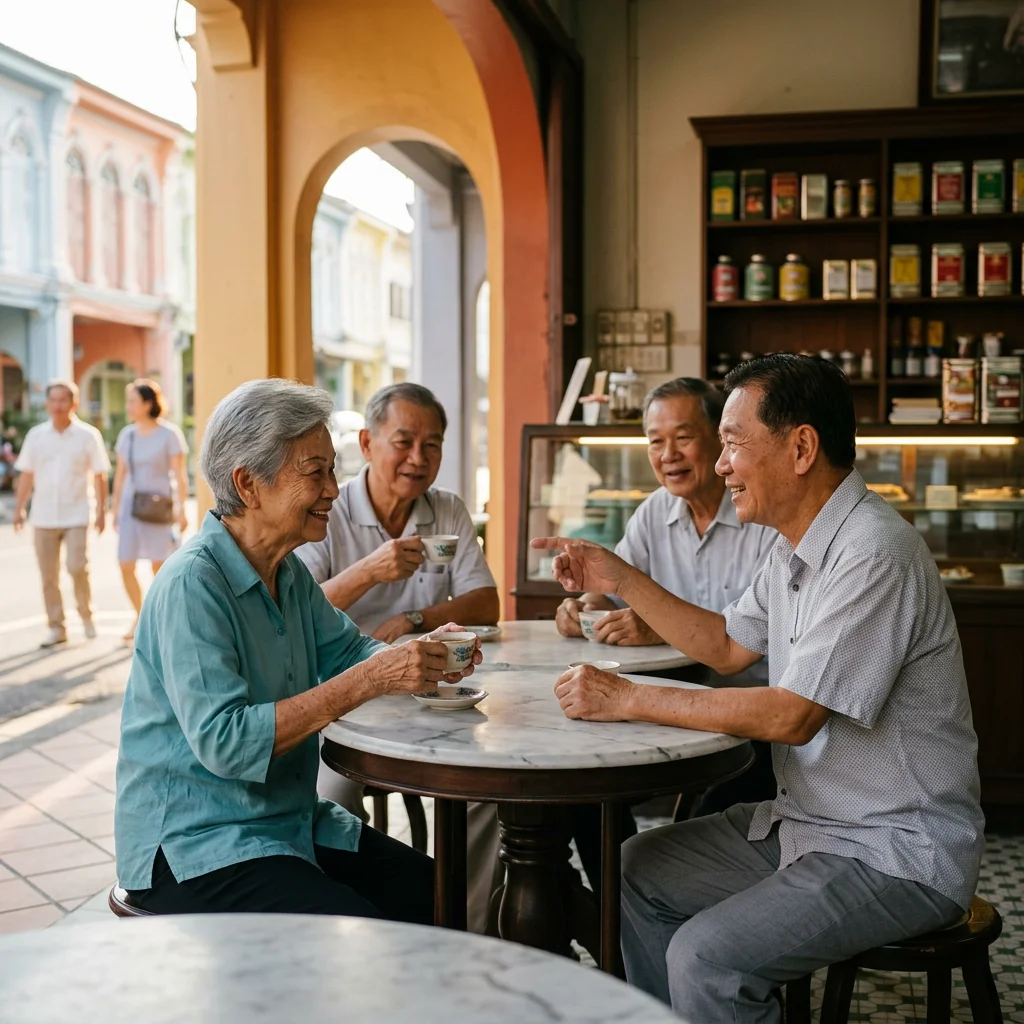
Social interaction across southern Thailand carries a distinct self-assurance paired with traditional manners. Island residents are hospitable and direct in speech, yet they expect outsiders to navigate daily encounters with spatial awareness and personal composure.
Domestic Decorum And Face
The concept of saving face remains fundamental to social interactions. Losing one's temper, raising your voice, or aggressively demanding service will cause a conversation to stall or end abruptly. A public confrontation rarely resolves a grievance; instead, it generates mutual embarrassment and quiet resistance. If an administrative hitch or transport delay arises, address it with a calm smile, a measured tone, and patience.
Physical thresholds carry clear spiritual boundaries in southern Thai and Chinese heritage homes. Footwear should be removed at the entrance of private residences, traditional clinics, and many independent shophouses, usually signalled by pairs of sandals left outside the door. When stepping through the heavy wooden doorway of a historic residence or ancestral shrine, step over the raised wooden sill rather than placing a foot on top of it. In local folk belief, the door sill houses protective guardian spirits, and stepping on the woodwork is considered disrespectful to the household.
Peranakan Etiquette In Shophouse Communities
The domestic code of the Baba-Nyonya community places significant emphasis on family seniority and quiet dialogue. Multi-generational households still live above heritage shophouses along streets such as Thalang, Dibuk, and Krabi roads. Commercial understandings, property arrangements, and neighbourhood matters are frequently discussed in the mornings over pots of hot Chinese tea rather than through formal correspondence. Younger family members defer to senior matriarchs, including grandmothers and older aunts, who hold decisive authority over domestic expenditure and household ritual obligations.
A common cultural misstep committed by visitors is treating residential streets and local markets as an extension of the beach. While swimwear is standard along the sand at Nai Harn or Bang Tao, walking bare-chested, in a bikini top, or in damp swimming shorts through Phuket Town, fresh food stalls, or residential alleys causes genuine offence. Residents view this as poor personal hygiene and a mark of disrespect towards community elders. Putting on a lightweight cotton shirt and linen trousers takes little effort and noticeably improves how shopkeepers and market traders receive you.
ARTS & CRAFTS
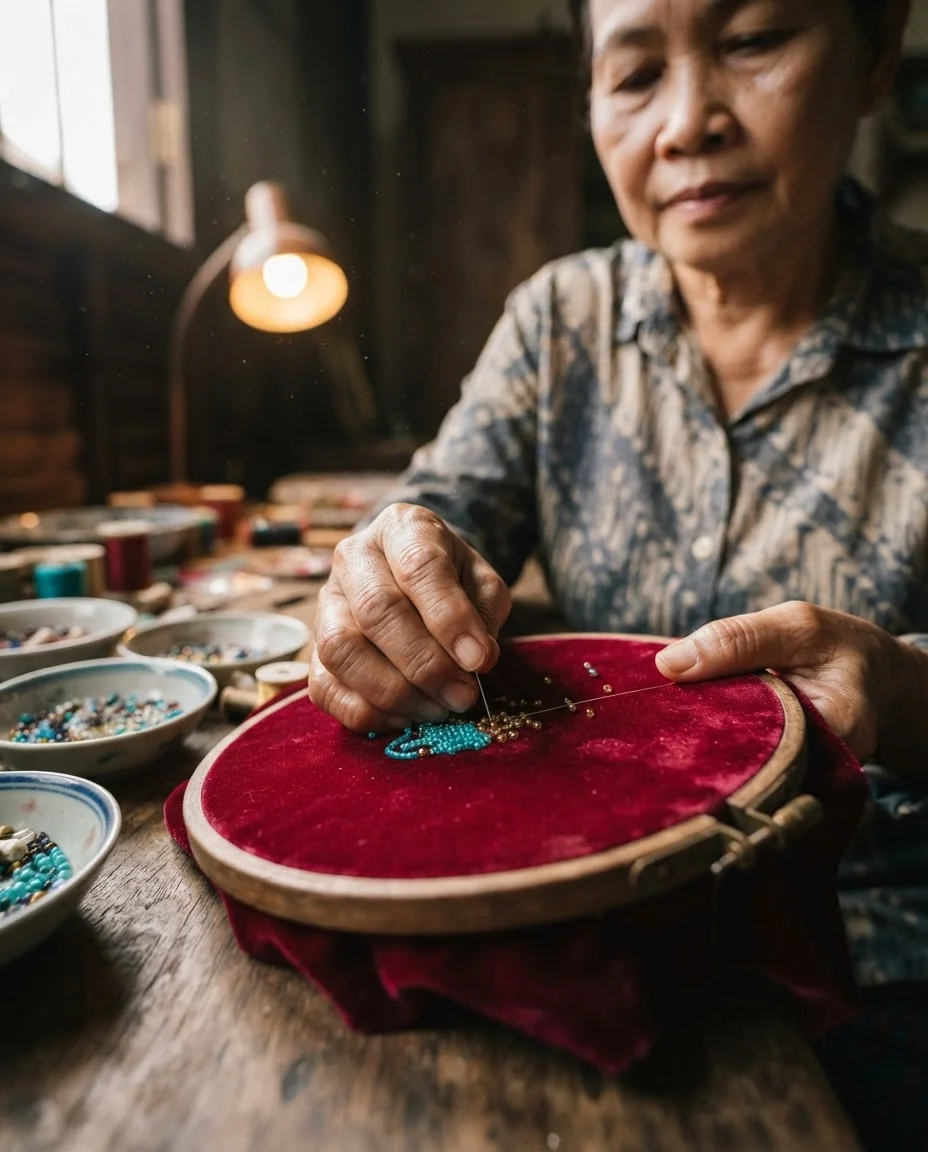
Rather than northern woodcarving or central celadon pottery, Phuket's traditional material culture centres on intricate textiles and personal ornaments developed for the nineteenth-century merchant class.
Glass Seed Beads And Peranakan Embroidery
The island's signature traditional craft is kasut manek, or Peranakan beaded slippers, worn alongside tailored kebaya lace blouses during weddings and festive celebrations. Using tiny faceted glass cut beads known as manek potong, artisans stitch elaborate floral, bird, and butterfly patterns onto fabric stretched across a wooden embroidery frame. Creating an authentic pair requires several weeks of meticulous hand labour, setting each bead individually in diagonal cross-stitch alignment.
Genuine hand-crafted pairs can be found in heritage boutiques along Thalang Road in Phuket Old Town. Because of the intensive labour involved, authentic studio pairs represent a substantial investment running into several thousand baht, with prices rising steeply for dense micro-beading and bespoke cobbling. In contrast, mass-produced machine-sewn slippers sold in resort markets cost very little, but they lack the weight, glass lustre, and durability of genuine craft pieces.
Hand-Drawn Southern Wax-Resist Batik
Batik production has flourished across southern Thailand for generations, influenced by historic maritime trade links with northern Malaysia and Sumatra. Family-run workshops and studios in communities such as Rawai, Chalong, and Thalang produce wax-resist textiles using natural cotton and silk. Artisans apply molten wax using a canting—a small brass reservoir pen—to outline motifs such as marine life, orchids, or coastal scenery, before hand-painting the enclosed sections with liquid dyes and setting the cloth in fixing baths.
A genuine hand-drawn sarong costs considerably more than commercial alternatives, reflecting the hours required to trace wax outlines and paint each shade individually, while presentation-grade silk wall hangings command higher sums. In contrast, inexpensive sarongs sold along beach promenades are typically roller-printed synthetic fabrics imported from industrial mills. Travellers can identify authentic local batik by inspecting the reverse side: hand-applied wax resist allows dye penetration that looks nearly identical on both faces of the weave, often accompanied by fine hairline cracks where dye has seeped through fractured wax.
FOOD AS CULTURE
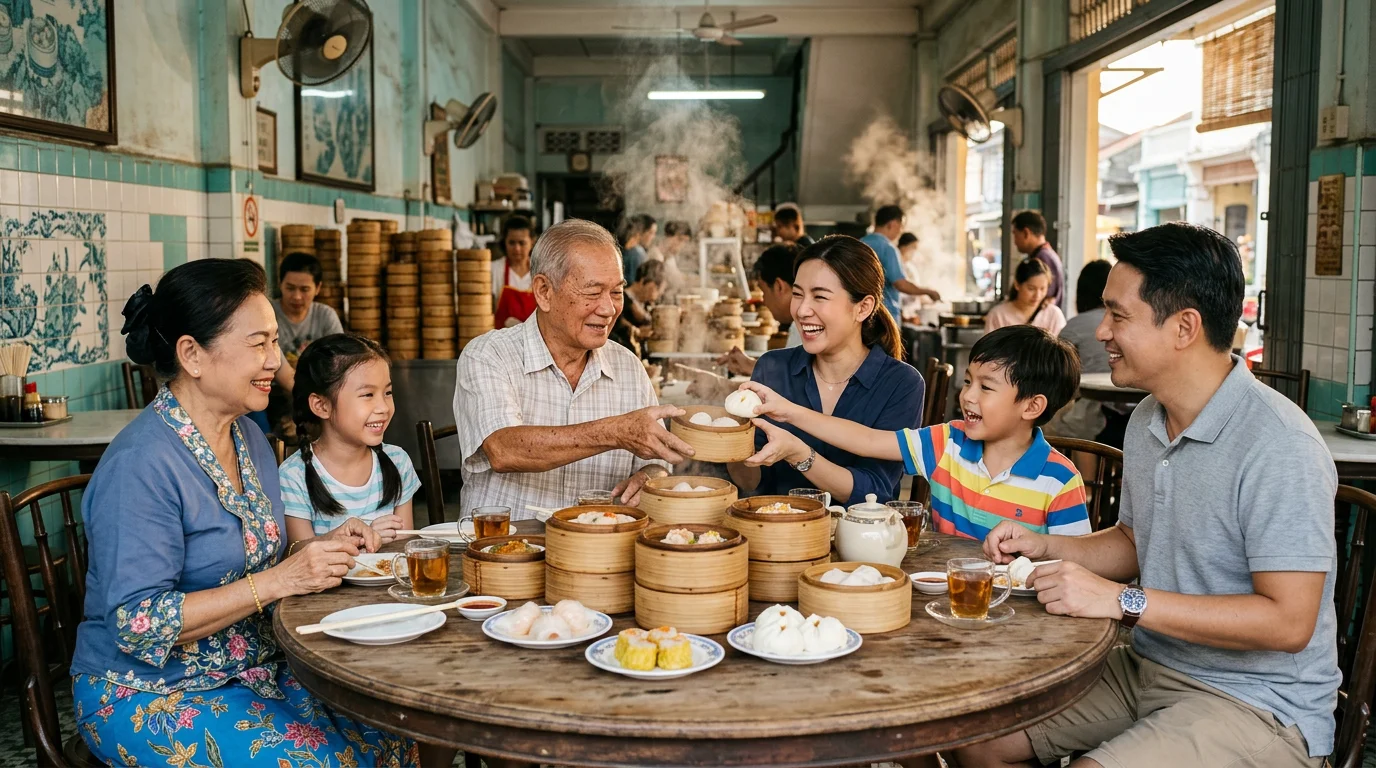
Dining across Phuket is an expression of kinship, community history, and southern regional identity. Recognised in 2015 as Thailand’s first UNESCO Creative City of Gastronomy, the province maintains a culinary heritage shaped by Hokkien Chinese settlers, southern Thai farmers, and Peranakan families. Mealtimes are rarely solitary; they serve as daily gatherings where extended households confirm ties and reinforce filial respect.
Morning Kopi Tiam And Dim Sum Tables
The morning breakfast ritual in Phuket Town is anchored in historic kopi tiam, traditional Hokkien-style coffee shops that open around sunrise. Before daytime heat builds, multigenerational families gather around round, marble-topped wooden tables to order dozens of small aluminium steamers stacked with pork dumplings, prawn har gow, and steamed bao buns. The accompanying beverage is kopi, a dark, heavy robusta blend roasted with butter and sugar, strained through a fabric sock filter, and poured over a thick layer of sweetened condensed milk.
Locals order collectively rather than choosing separate individual plates. Dishes arrive at the centre of the table, and diners use communal ceramic soup spoons or chopsticks to share. A clear hierarchy of care is observed: younger family members spoon dumplings onto the plates of their grandparents and parents first. It is customary for younger diners to wait until senior relatives take the initial mouthful before eating.
Kanom Jeen And The Art Of Southern Communal Dining
Breakfast and lunch across the island also centre heavily on kanom jeen, fresh fermented rice noodles served at room temperature beneath ladles of fiery southern curry. Diners approach the counter to select their preferred stew from large heated pots, pairing noodles with curries such as creamy minced crab with wild betel leaf or kaeng tai pla, a pungent, intensely savoury preparation made from fermented fish entrails, dried chillies, and green bamboo shoots.
The cultural core of the meal is the complimentary table display of fresh vegetation, known locally as phak noh. Diners help themselves freely to baskets of fresh winged beans, sliced green aubergines, pickled mustard greens, shredded morning glory, and bitter stink beans (sataw). Sharing from these communal vegetable trays breaks down social reserve; strangers sharing bench tables routinely pass condiments, compare heat tolerances, and exchange curry recommendations.
LANGUAGE & COMMUNICATION
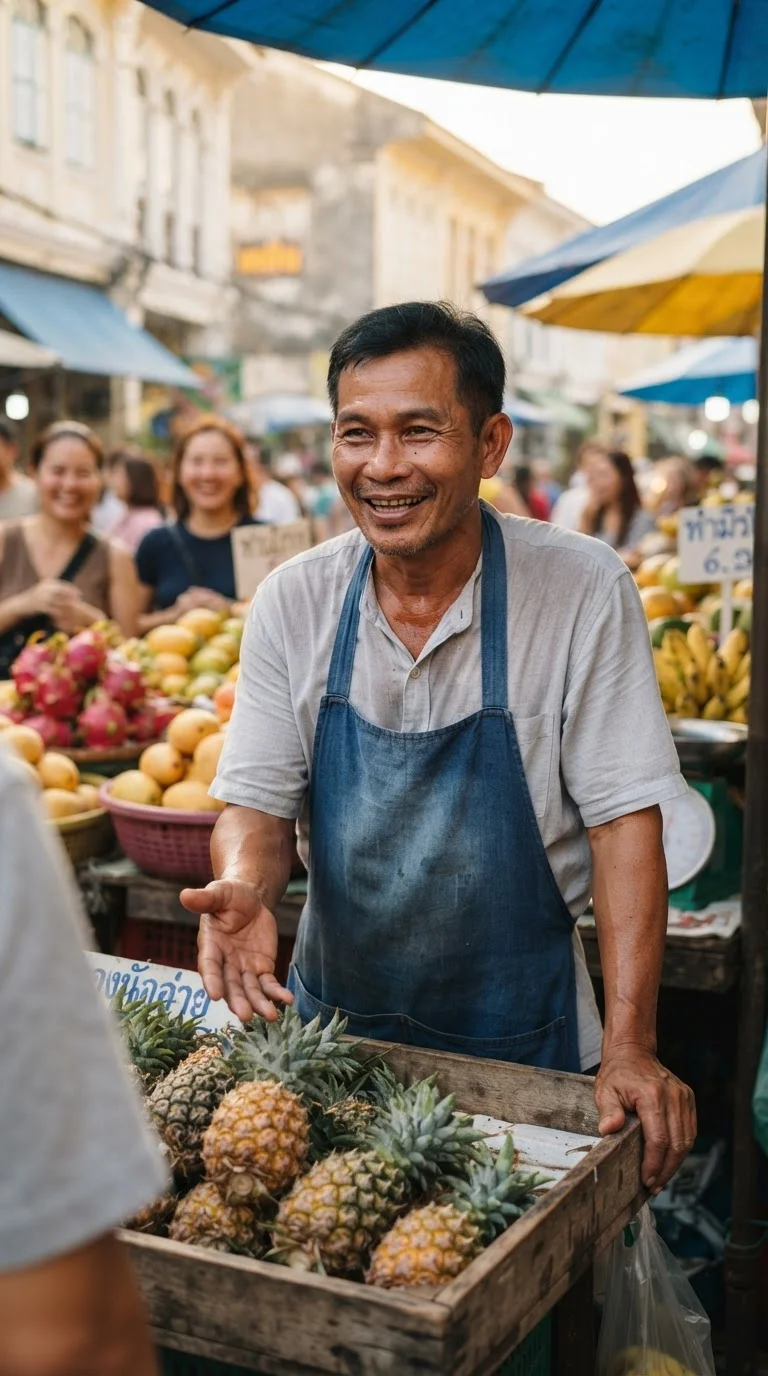
Standard Central Thai is used across Phuket's civic administration, banks, schools, and corporate hospitality businesses. In day-to-day community life, however, islanders converse in the southern regional dialect. Southern speech is fast-paced, staccato, and rhythmic, clipping multi-syllable phrases into sharp, energetic bursts of sound.
The Cadence Of Southern Pasa Tai
Everyday conversation undergoes noticeable compression in the south. Where a central speaker uses drawn-out formal pleasantries, southern residents shorten standard inquiries about wellbeing into clipped, direct phrases. Similarly, dining appreciation often bypasses standard central phrases in favour of distinct southern expressions denoting deep, punchy flavour. Southern speech also retains distinct regional vocabulary, including verbs for looking or observing that differ entirely from standard textbooks, alongside loanwords inherited from nineteenth-century Hokkien Chinese settlers and coastal Malay traders.
Communication across the island is animated, vocal, and unapologetically direct. Visitors should not mistake this rapid delivery and firm vocal weight for irritation or anger; it simply represents the natural cadence of southern coastal communities. In major resort enclaves, English is widely spoken by hospitality staff, but venturing into fresh markets or residential neighbourhoods requires a more adaptable approach.
Learning The Tongue Locally
For expatriates and long-term visitors staying on the island for several months, acquiring conversational Thai delivers immediate practical benefits. Across Phuket Town, Kathu, and Patong, accredited language schools run structured beginner group modules typically starting between 5,000 and 8,000 THB (£115 to £185) at the time of writing. One-to-one tutoring with a qualified native instructor generally costs between 450 and 750 THB (£10 to £17) per hour. Developing basic confidence with numbers, directions, and everyday pleasantries indicates genuine respect for the local community and makes daily interactions far more rewarding.
PRACTICAL CULTURAL TIPS
Observing local etiquette in Phuket centres on spatial awareness and social consideration. When visiting Buddhist temples, Taoist shrines, or government offices, dress modestly by covering your shoulders, chest, and knees. Sleeveless tops, short skirts, and swimwear belong strictly on the beach. Stowing a lightweight sarong, shawl, or linen shirt in a day bag ensures quick compliance at monastery gates where entry might otherwise be refused.
Remove footwear before stepping into temple prayer halls containing Buddha images, as well as private residences and traditional shops or clinics where shoes are lined up at the entrance. In Thai culture, physical hierarchy is meaningful: the head is considered the most spiritually elevated part of the body, so avoid touching anyone on the head, including children. Conversely, the feet are regarded as the lowest and least clean. Keep the soles of your feet flat on the floor or tucked beneath you when seated, and avoid pointing feet directly towards monks, Buddha statues, altars, or older people. Women must also avoid touching a monk or handing anything to him directly.
At Taoist shrines, especially during festival periods, stay along the perimeter walls and keep central aisles clear for devotees carrying burning incense or spirit palanquins. Walk around rather than stepping between an altar and someone in prayer. During the ninth lunar month Vegetarian Festival, anyone entering shrine grounds is expected to wear clean, plain white clothing, and visitors must not enter inner prayer rooms or ritual preparation areas without direct permission from shrine attendants.
THE BABA-NYONYA LEGACY
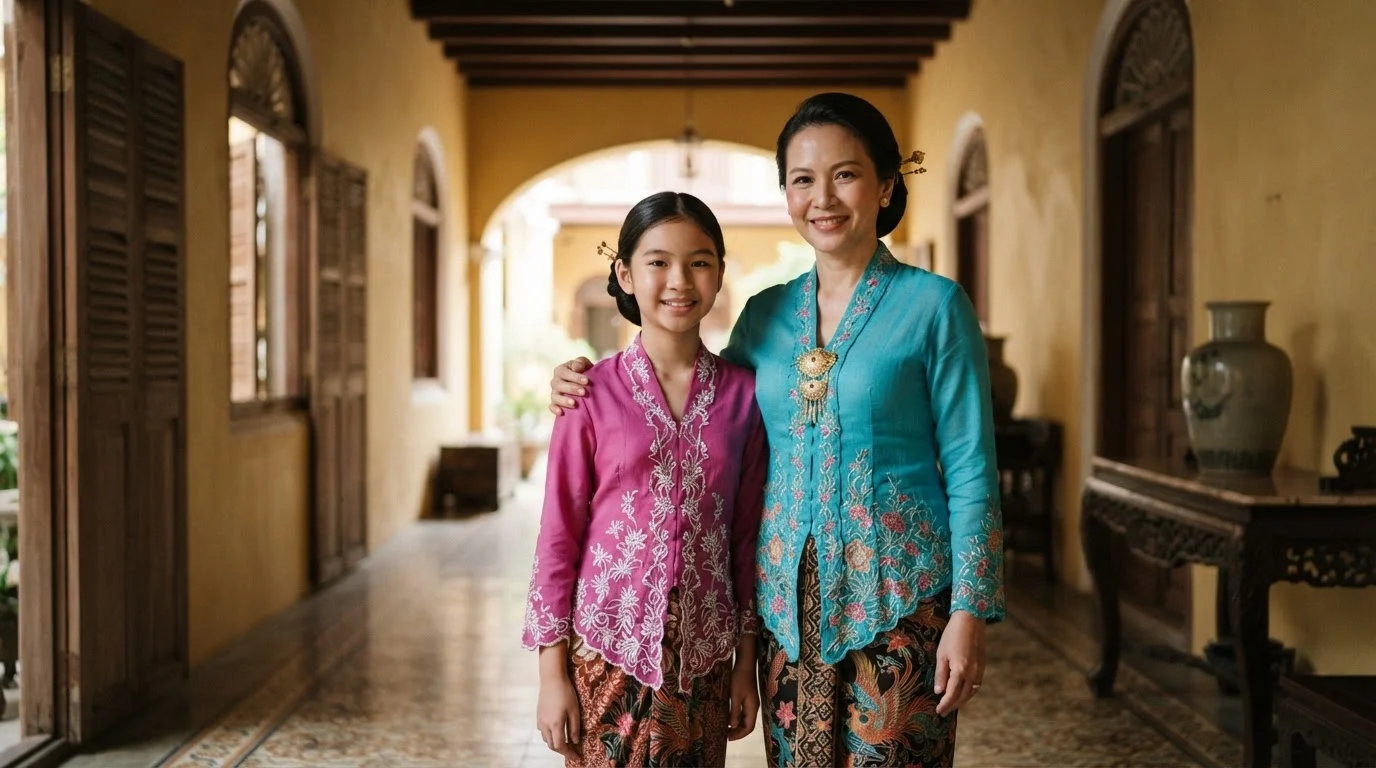
Peranakan heritage forms the cultural bedrock of Phuket, defining the island's urban character long before beach resorts emerged. During the nineteenth-century tin-mining boom, thousands of Hokkien Chinese migrants crossed the Andaman Sea from Penang, Malacca, and southern China to labour in and manage the island's lucrative concessions. Many of these men settled permanently and married local Siamese and southern Malay women. Their descendants forged a distinctive hybrid culture known across the region as Peranakan, with men referred to as Baba and women as Nyonya or Yaya. This blend of traditions shaped the island's domestic customs, dialect, and commercial networks.
Tin Boom Architecture And Five-Foot Ways
The architectural legacy of that era remains preserved throughout Phuket Old Town, particularly along Thalang, Dibuk, and Krabi roads. Prosperous mine owners and merchants constructed Sino-Portuguese shophouses featuring covered ground-floor colonnades known in Hokkien as ngo-ka-ki, or five-foot ways. These continuous sheltered arcades protected pedestrians from torrential monsoonal downpours and blazing tropical sun, functioning as communal verandas that connected neighbouring shopfronts along the street.
Wealthier merchant dynasties went further, building grand residential compounds known locally as ang mo lao, or Western-style mansions. Baan Chinpracha on Krabi Road, erected in 1903 by tin merchant Tan Ma Siang, remains a prominent surviving private mansion open to visitors. Its preserved ground floor features imported Italian patterned floor tiles, Chinese rosewood furniture inlaid with mother-of-pearl, vintage shuttered windows, and a central open-air courtyard designed to collect rainwater and channel cooling breezes into the house. While still inhabited by descendants of the original family, parts of the ground floor are accessible to the public, with an entry fee charged at the door.
Preserving Peranakan Identity
Peranakan customs remain an active civic tradition rather than museum artifacts. Each year around May or June, the Peranakan Association of Thailand collaborates with local civic groups to host a traditional Baba mass wedding festival in Phuket Old Town. During this public celebration, marrying couples process through the historic streets dressed in ancestral wedding attire. Brides wear tailored silk or velvet kebaya tops fastened with kerosang—sets of three ornate gold brooches linked by delicate chains and studded with gemstones—crowned by a high headdress adorned with intricate gold filigree and seed pearls.
Visitors wishing to explore this heritage further can inspect the exhibitions at Museum Phuket, housed inside the 1907 former Chartered Bank building on Phang Nga Road, or visit the nearby Thai Hua Museum on Krabi Road. These civic spaces document how early mining families balanced Chinese clan customs with Malay aesthetics and Western trade, establishing a resilient cultural identity that still defines the island's provincial core.
Plan your Phuket trip with our comprehensive UK guide. Discover the best areas to stay, realistic daily travel costs, transport advice, and local food highlights.
FAQ: Phuket Travel Guide
Is there an entrance fee for Wat Chalong in Phuket?
What is the dress code for visiting Wat Chalong or the Big Buddha in Phuket?
How do worshippers seek guidance at Taoist shrines in Phuket?
What is the origin of Phuket's Vegetarian Festival?
What should visitors know when attending a morning procession during Phuket's Vegetarian Festival?
What is the significance of the tortoise cake during Phuket's Por Tor (Hungry Ghost) Festival?
What practical advice is there for travelling in Phuket during Songkran?
How should visitors handle grievances or delays in Phuket to avoid social missteps?
What is the etiquette for entering homes or traditional buildings in Phuket?
Is it acceptable to wear swimwear on residential streets or in markets in Phuket?
Reviewed by the Thailand Guide Editorial Team • Last reviewed: 25 November 2026
This page is provided for general information only. While we aim for accuracy, details can change — please verify anything important independently before relying on it.