Cycling in Chiang Mai



Within five kilometres of Chiang Mai's brick-and-moat Old City, urban streets give way to the forested slopes of Doi Suthep-Pui National Park, where smooth tarmac quickly kicks up into double-digit gradients. The northern capital is a major hub for road cycling in Thailand, combining flat valley floors through agricultural plains with sustained mountain climbs and technical switchbacks.
This guide provides practical planning advice for cycling in Chiang Mai, whether you are planning a relaxed morning spin through temple lanes or tackling multi-day mountain ascents. We examine the area's main riding routes—from quiet residential sois and the Mae Rim valley to the classic climb up Doi Suthep and the punishing 90-kilometre Samoeng Loop. You will also find details on road bike and hybrid hire, guided and supported tours, realistic trip budgeting, descent protocols, and crucial seasonal considerations, including how to steer clear of the northern burning season.

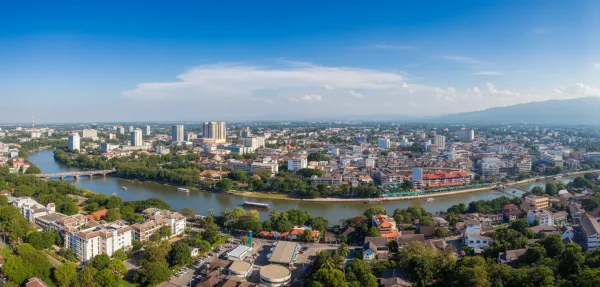
The Old City Moat and Heritage Backstreets
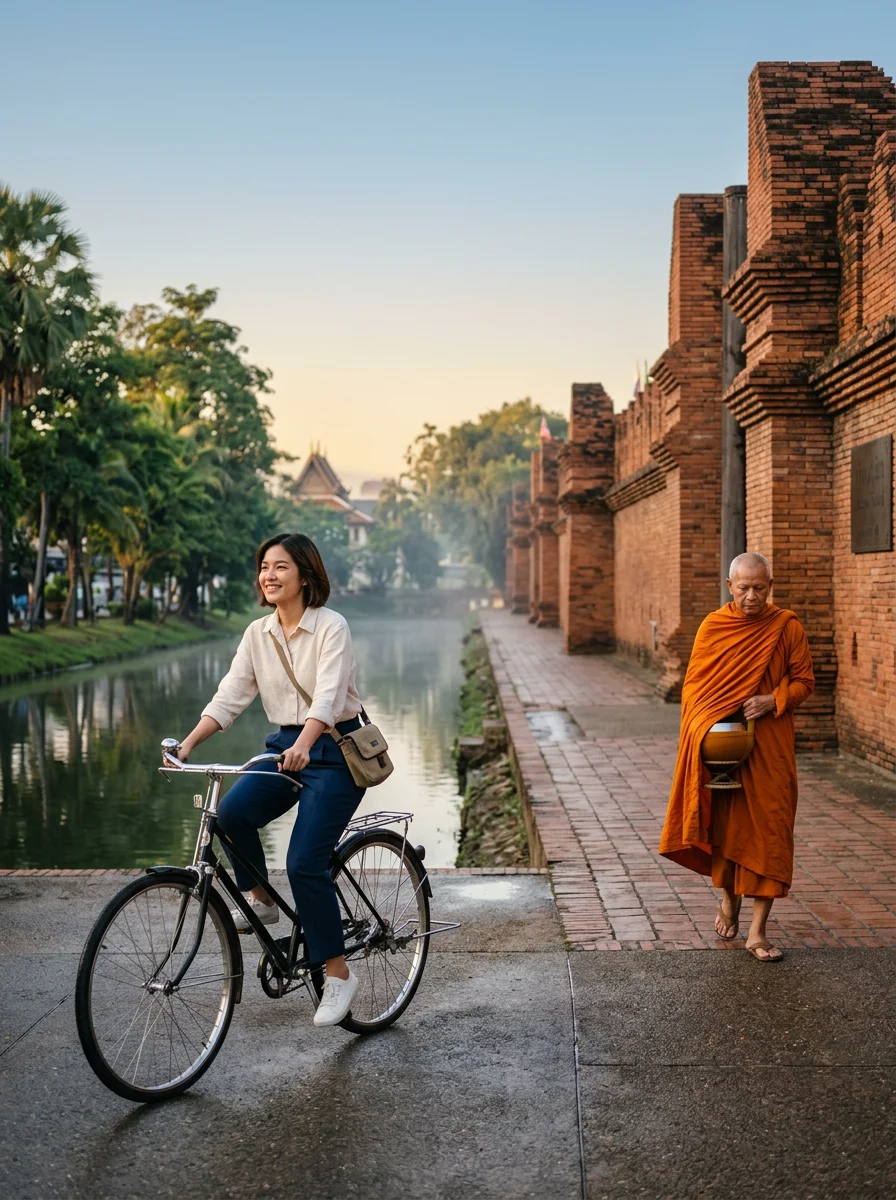
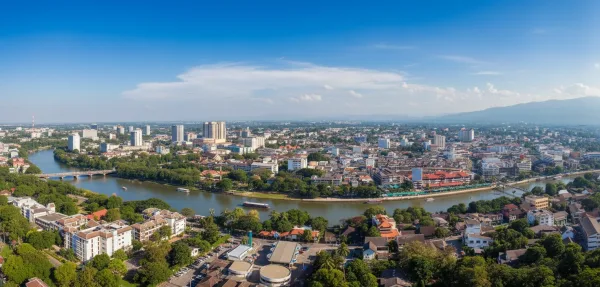
Navigating the historic interior of Chiang Mai offers a gentle, flat introduction to northern riding before tackling the surrounding peaks. Founded in 1296 as the capital of the Lanna Kingdom, the Old City forms a near-perfect square roughly 1.6 kilometres on each side. While the dual-lane road flanking the ancient brick ramparts and water-filled moat measures roughly 6.5 kilometres around, the perimeter operates as a pair of busy, one-way thoroughfares. The outer ring flows clockwise and the inner ring anti-clockwise, both carrying brisk songthaew and scooter traffic that can feel frantic on a bicycle.
The most rewarding cycling sits well inside this perimeter grid. Threading through the network of residential sois (alleyways) between major landmarks like Wat Phra Singh, Wat Chedi Luang, and Wat Chiang Man reveals quiet neighbourhoods that visitors in vehicles bypass entirely. Here, you share narrow paved lanes with slow-moving mopeds and vendors pushing morning produce carts. Motor vehicle speeds inside the side streets rarely exceed 30 km/h, creating a calm urban environment. Surfaces are flat with negligible elevation change, though you must stay alert for sunken drain covers, road joints, and metal drainage grates set parallel to traffic that can trap narrow tyres.
Setting out between 06:00 and 08:00 ensures you experience the backstreets at their most atmospheric, catching cool morning air and Buddhist monks walking their daily alms rounds before daytime heat and delivery vans arrive. When stopping to explore temple compounds, dismount at the gates and push your bicycle; riding across sacred temple courtyards is considered disrespectful. A simple town runabout or hybrid bicycle with wider tyres handles the mixed surfaces and occasional kerb drops far better than a stiff road bike.
If you prefer to find your bearings alongside a local ride leader who knows the quietest passageways, several guided heritage circuits run daily through the historic quarter.
The Mae Rim Valley and Northern Agricultural Plains
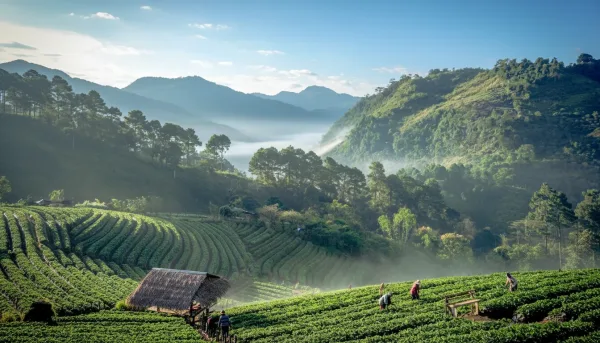
Escaping the urban fringe northward leads into sweeping valley floors, riverside orchards, and undulating agrarian lanes. Rather than tackling Highway 107, which carries heavy commercial and commuter traffic north towards Chiang Dao, cyclists routinely take the quieter canal corridor along Route 121 and the network of paved irrigation service roads west of the city centre. These flat, low-stress rural lanes follow the Mae Ping canal system past suburban nurseries and open fields before feeding into the Mae Rim district. From the southern edge of Mae Rim town, Route 1096 branches westward into the Mae Sa Valley, opening into rolling agricultural topography flanked by tiered strawberry farms, nursery gardens, and roadside fruit stands.
Gradients across the lower valley undulate gently between 3% and 7%, providing manageable intermediate terrain without the severe physical toll of alpine climbs. The road surface consists of modern, high-grade asphalt, although seasonal roadworks, agricultural machinery, and irrigation runoff can leave patches of fine gravel on tighter bends. Dozens of independent roadside coffee stations line Route 1096 and adjacent village lanes. Most cater well to cyclists, providing shaded benches, fresh northern Thai espresso, and chilled bottled water, with an iced coffee typically priced between 45 THB and 65 THB (approx £1.05 to £1.50).
Riders can link these valley stretches into relaxed 40-to-60-kilometre outings or use them as a gradual warm-up before entering the steeper foothill spurs towards Samoeng. Tucked between low ridgelines, the valley floor remains sheltered from stiff crosswinds, though ambient humidity rises sharply once the sun clears the eastern hills. Setting off around 06:30 ensures cooler temperatures and light traffic through the outward canal roads, allowing a return spin into Chiang Mai before the midday heat sets in.
| Route Name | Distance (km) | Elevation Gain (m) | Typical Gradient | Road Surface | Physical Difficulty |
|---|---|---|---|---|---|
| Old City Moat & Alleyways | 10–15 | <30 | 0–2% | Asphalt & paving stone | Leisure / Beginner |
| Mae Rim Valley Farmlands | 45–60 | 450–650 | 3–6% | Smooth modern asphalt | Intermediate |
| Doi Suthep Temple Climb | 22 (return) | 620 | 6–8% (max 14%) | Multi-lane asphalt | Hard |
| Doi Pui Ridge Extension | 36 (return) | 1,200 | 7–10% (max 16%) | Variable asphalt & concrete | Very Demanding |
| Classic Samoeng Loop | 88–100 | 1,650–1,800 | 5–9% (max 16%) | High-quality mountain tarmac | Advanced / Expert |
Discover the real cultural rules of Chiang Mai, from ancient Lanna spirit worship to sharing a communal khantoke meal and navigating local temple etiquette.
The Doi Suthep and Doi Pui Mountain Ascents
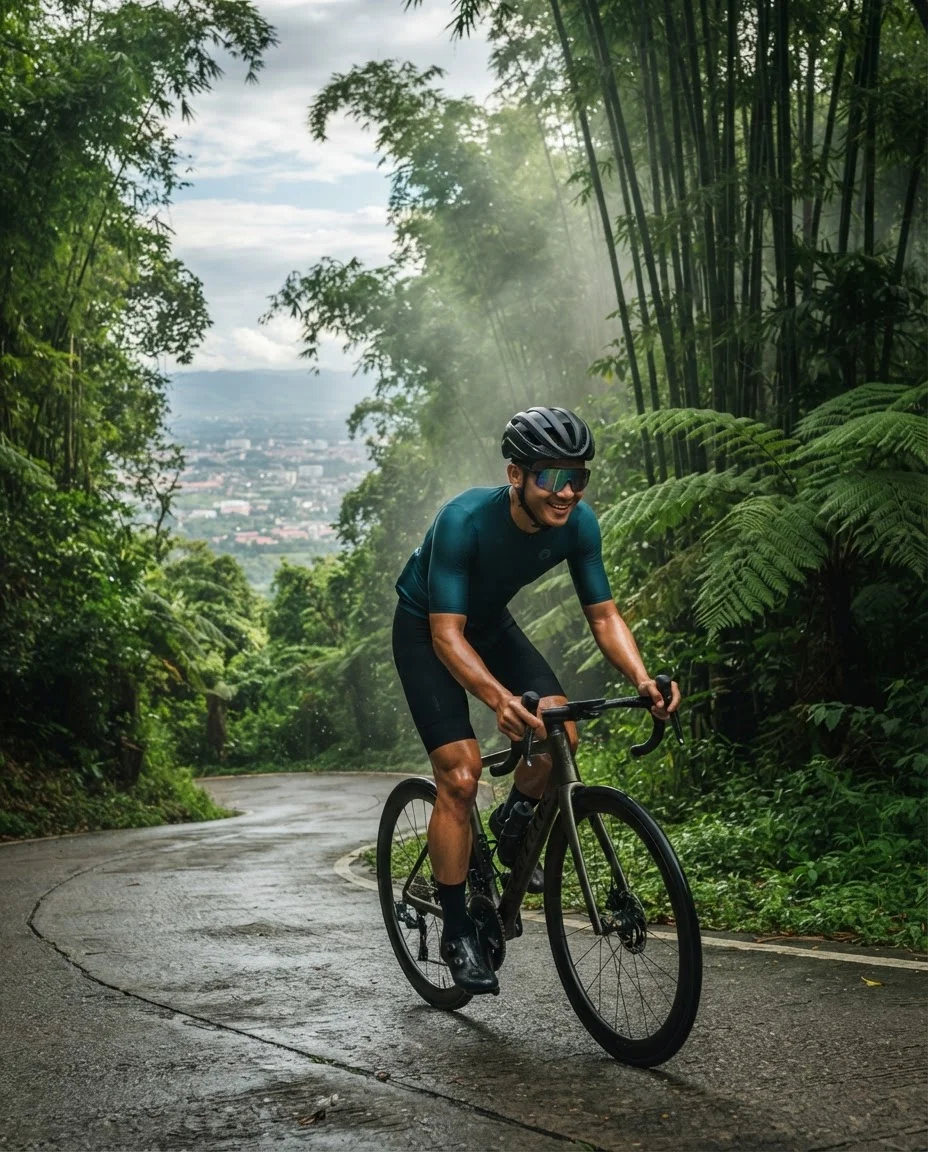
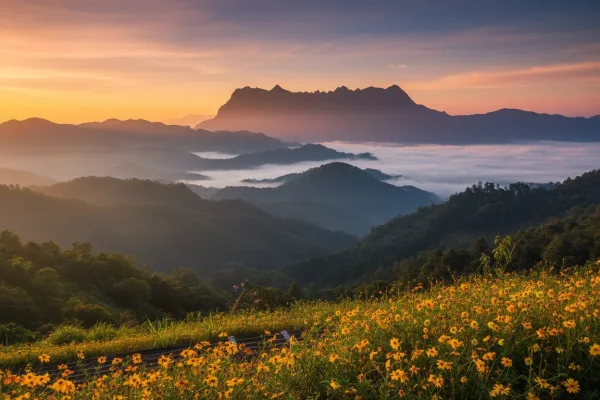
Chiang Mai’s definitive mountain benchmark begins right at the city's western fringe, climbing through dense national-park jungle towards ancient temple terraces. Starting on Huay Kaew Road just past Chiang Mai Zoo, the road ascent to the temple of Wat Phra That Doi Suthep covers 10.8 kilometres with an average gradient of 6%, rising roughly 620 metres. The lower highway is broad, providing two dedicated uphill lanes that give cyclists a comfortable buffer from motor traffic. Even so, riders need to stay alert for descending red shared pick-up taxis cornering briskly around blind bends.
The gradient remains steady and rhythm-friendly for the first eight kilometres, winding through shady tropical forest with occasional viewpoints across the valley. The approach to the temple delivers a sting in the tail, kicking up into a punishing 14% switchback directly beneath the temple’s serpent-lined staircase.
Many visiting riders turn around at the temple, but the tarmac continues upward past the grounds of Bhubing Palace towards the Doi Pui ridge, taking the route well above 1,400 metres. This seven-kilometre upper extension changes character completely. The road narrows into a single, heavily canopied lane where steep ramps frequently hit 11% to 12%. Tackling this higher stretch demands disciplined pacing and low gearing; a compact chainset (50/34) paired with a cassette carrying at least a 32-tooth sprocket makes the gradients manageable.
Descending Doi Suthep and Doi Pui demands sustained concentration. Heavy forest shade keeps north-facing corners damp well into the morning, and fallen leaves, wet moss, and bamboo debris can cause sudden front-wheel skids. Keep speeds moderate on the upper single-lane tarmac road, and watch for oncoming tourist vehicles taking wide lines through narrow hairpins.
The Samoeng Loop: Northern Thailand's Classic Circuit
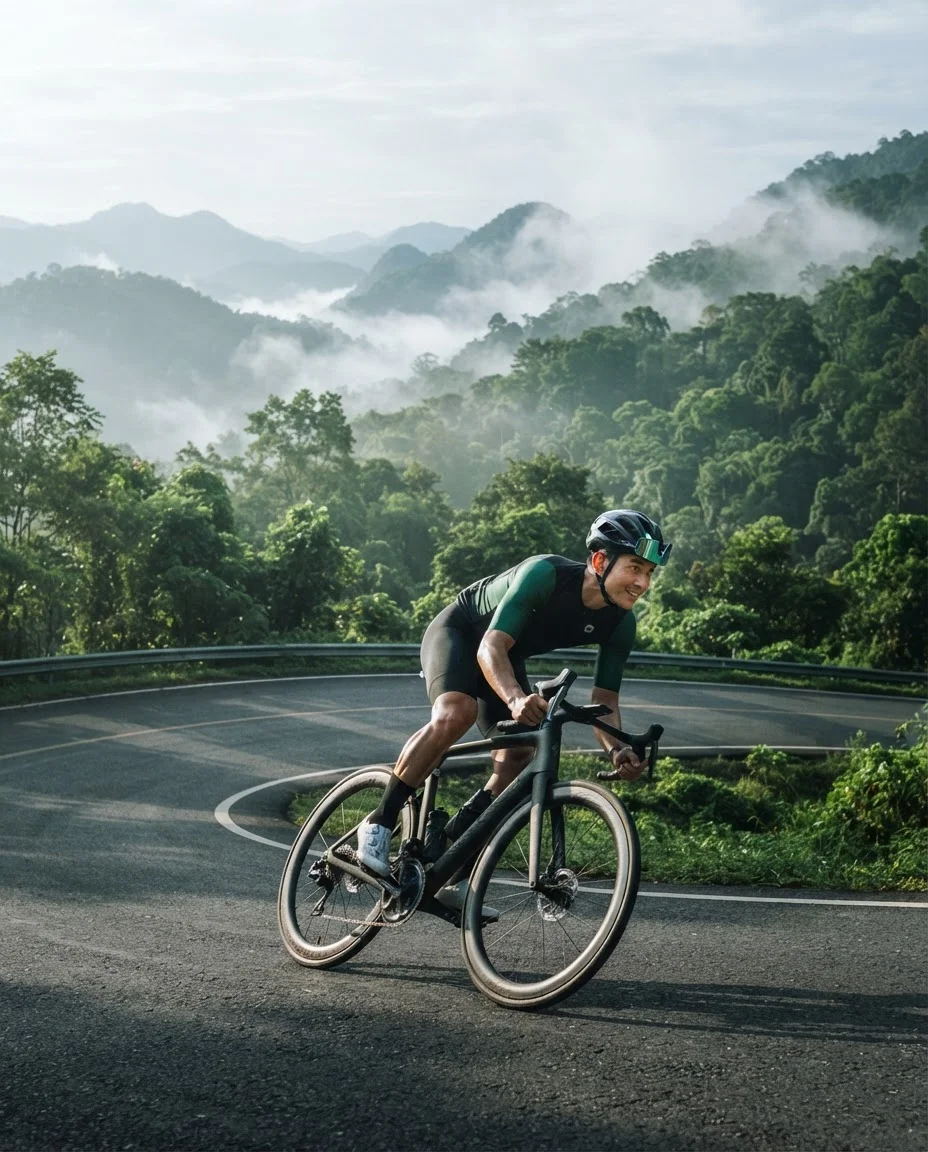
Circling the rugged forested massif of Doi Suthep-Pui, the Samoeng Loop delivers a demanding physical workout across 90 to 100 kilometres of smooth mountain tarmac. The circuit packs roughly 1,700 metres of cumulative elevation gain into an unrelenting series of steep climbs and dips rather than one continuous pass. Ridden counter-clockwise, the route rolls north from Chiang Mai towards Mae Rim, turning west onto Route 1096 to climb steadily through the Mae Sa valley before crossing high ridges and dropping down towards the agricultural basin of Samoeng.
The hardest physical test waits on the southern return leg along Route 1269. After bypassing Samoeng village, riders encounter two distinct climbs separated by a steep valley descent. The second ascent, often called the Ban Pong switchbacks, presents a punishing sequence of tight hairpins averaging 10% to 12%, with brief ramps touching 16%. Ridden on tired legs, this sector demands disciplined pacing and low gearing, ideally a compact chainset paired with a 32T or 34T rear cassette.
Choosing your direction shapes the ride. Tackling the loop counter-clockwise is the standard recommendation: rolling out early clears the resort traffic and tour minibuses along Route 1096 before mid-morning, while taking on the 1269 switchbacks as a controlled climb rather than a brake-overheating descent. Riding clockwise tackles the severe gradients early on fresh legs, but pushes your return through Mae Rim into heavy late-afternoon traffic. Shaded valleys can mask high heat and humidity, so carry two large bidons and stop at roadside fruit stalls and village grocery shacks every 15 to 20 kilometres to replenish fluids [1.2.5]. For cyclists who prefer vehicle support and mechanical backup on remote mountain sectors, organised guided rides and supported packages handle the day's logistics.
Seasonality, Burning Season Haze, and Road Safety Dynamics
Planning a cycling trip to Chiang Mai requires synchronising with northern Thailand's distinct climate patterns. The prime window for road cycling runs from November through mid-February, when dry weather brings morning valley temperatures around 15°C and single digits on higher mountain ridges. Cyclists setting out early need packable wind vests and arm warmers for chilly dawn roll-outs and long descents before midday heat takes over.
From mid-February through April, avoid planning dedicated cycling trips. During this late dry spell, agricultural burning and forest fires combine with atmospheric inversions to trap fine particulate matter across the valley basin. Fine particulate (PM2.5) concentrations routinely climb into hazardous territory, making intense aerobic exercise inadvisable. Check daily readings on official platforms such as the Air4Thai monitoring service before any outdoor ride, scaling back or postponing hard climbs when readings enter orange or red health bands (exceeding 37.5 to 75 micrograms per cubic metre). The green season, running from June to October, brings lush scenery, quieter roads, and clean mountain air. However, road surfaces become slick, and cyclists must plan to finish before heavy afternoon monsoon downpours arrive.
Road riding around Chiang Mai demands alert defensive habits. Traffic drives on the left under Thai road regulations, but mountain descents require caution because oncoming pick-up trucks and scooters frequently cut across blind apexes on winding single-carriageway roads. In farming villages and rural lanes, free-roaming dogs often react defensively to passing bicycles; holding a predictable line, easing off your pace, shouting firmly, and avoiding sudden swerves into oncoming traffic helps prevent a collision.
Where to Hire Bikes and Book Guided Cycling in Chiang Mai
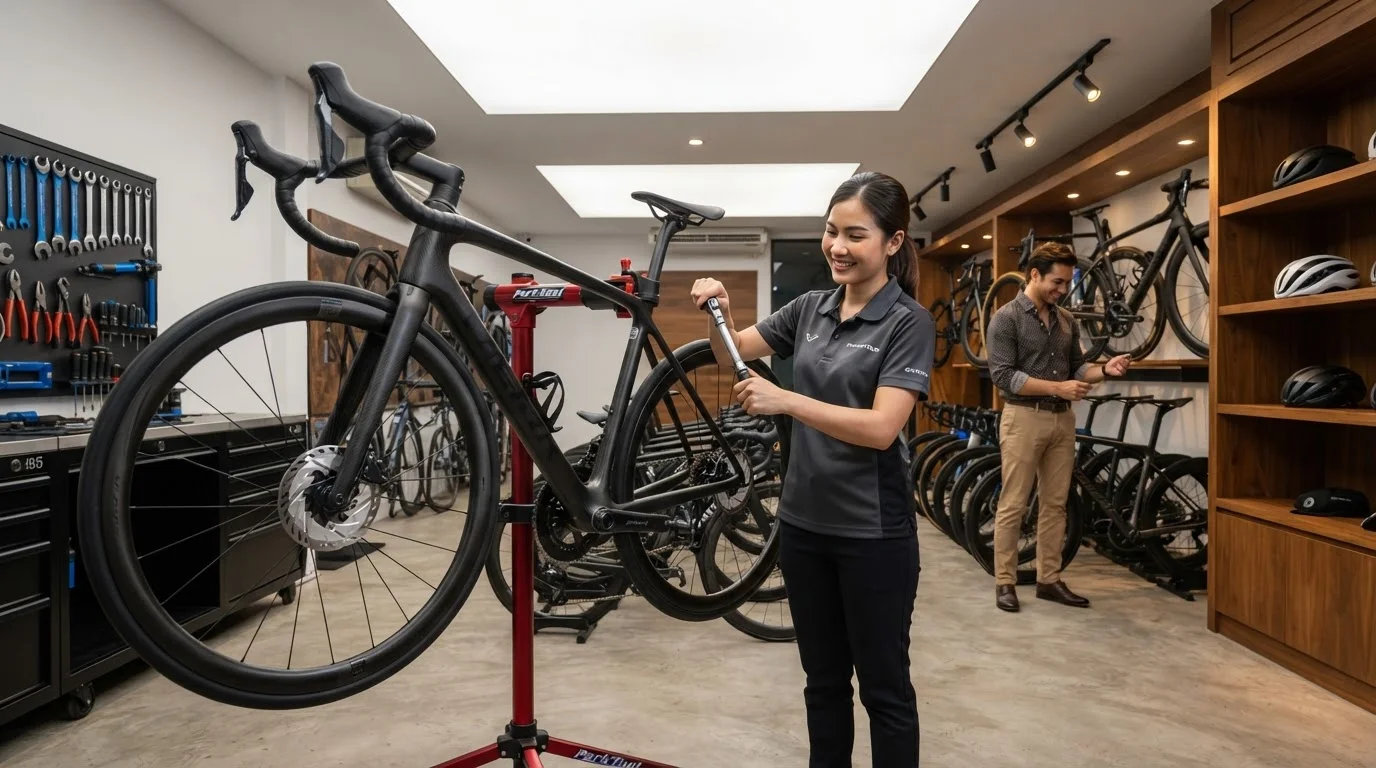
Chiang Mai has an established cycling infrastructure, with specialist operations catering to road cyclists tackling mountain gradients as well as casual visitors pedalling around the historic centre.
For performance road riding, 55 Cycling Club, located south of the city along the Canal Road corridor in Mae Hia, hires carbon road bikes such as the Giant TCR Advanced. These machines are fitted with hydraulic disc brakes and Shimano groupsets in either mechanical or electronic Di2 specifications. At the time of research, standard rental rates stand at 1,000 THB (approx £23) per day, 6,000 THB (approx £136) per week, or 21,000 THB (approx £477) monthly, with gravel-tyre setups available on request. Multiple frame sizes, pedal systems, and computer mounts can be reserved in advance.
On the northern side of town, Chiangmai Cycling Buddy operates out of Vanilla Residence, maintaining a fleet of full-carbon disc-brake bikes from the Thai performance brand Kaze. Beside equipment hire, the team organises guided rides and multi-day northern expeditions. Supported single-day mountain ascents start at 4,500 THB (approx £102) per rider, which include support vehicles, roadside mechanical help, ride nutrition, and experienced ride leaders.
For relaxed sightseeing around the moats and temples, independent hire shops across the Old City stock basic step-throughs, alloy hybrids, and utility bikes, with typical citywide hire rates running between 100 and 250 THB (approx £2.30 to £5.70) per day. Established Old City outlets such as Sahamitr on Ratchadamnoen Road and Chiang Mai Bicycle cater for local exploration; riders should check directly with shop staff for current daily rates and bike availability.
Riders planning mountain routes often base themselves around Nimmanhaemin or the western perimeter of the Old City. This positioning allows quick morning rollouts onto the base of Doi Suthep and direct connections to western valley loops without crossing heavy central city traffic.
Costs and Budgeting
Budgeting for a cycling trip in Chiang Mai depends on your choice of equipment and whether you ride self-supported. Leisure cyclists exploring quiet back streets and canal roads on basic town runarounds spend remarkably little, with single-speed and hybrid bikes hiring for 100 to 250 THB (approx £2.30 to £5.70) a day. Road cyclists who rent modern carbon-fibre frames equipped with disc brakes and electronic or mechanical Shimano gearing generally pay 1,000 to 1,500 THB (approx £23 to £34) per day, with weekly rates dropping to between 6,000 and 8,000 THB (approx £136 to £182).
Daily on-the-road refuelling costs very little compared to European cycling hubs. A filling roadside lunch—such as chicken noodle soup or stir-fried chicken with holy basil over rice—paired with fresh fruit and an iced electrolyte drink from a village stall or small shop rarely exceeds 80 to 140 THB (approx £1.80 to £3.20). Roadside espresso stops along rural valley routes typically add 60 to 90 THB (approx £1.35 to £2.00) per drink.
Minor mechanical assistance is widely available and fairly priced, with local workshops charging about 150 to 350 THB (approx £3.40 to £8.00) in labour for cable adjustments, wheel truing, or brake pad installation. Post-ride muscle recovery is another affordable habit; an hour of traditional Thai massage at neighbourhood parlours throughout the city usually costs between 250 and 400 THB (approx £5.60 to £9.00).
| Option | Cost (THB) | Cost (GBP approx) | Notes |
|---|---|---|---|
| Basic City / Hybrid Bike Hire | 100–250 per day | £2.30–£5.70 | Flat pedals, basket or rack, steel or alloy frame |
| Premium Carbon Road Bike Hire | 1,000–1,500 per day | £23–£34 | Giant TCR or Kaze, Shimano 105 or Di2, disc brakes |
| Weekly Road Bike Rental | 6,000–8,000 | £136–£182 | Discounted multi-day rate, includes basic spare kit |
| Half-Day Guided Countryside Tour | 1,200–1,800 | £27–£41 | Group ride, hybrid or e-bike, guide, temple entries |
| Full-Day Supported Mountain Tour | 2,400–4,500 | £54–£101 | Guide, air-conditioned support van, lunch, spares |
| Roadside Meal & Hydration Refill | 80–140 | £1.80–£3.20 | Noodle soup, banana bunch, electrolyte beverage |
| Workshop Labour (Minor Service) | 150–350 | £3.40–£8.00 | Cable tensioning, wheel truing, brake pad install |
What to Know Before You Go
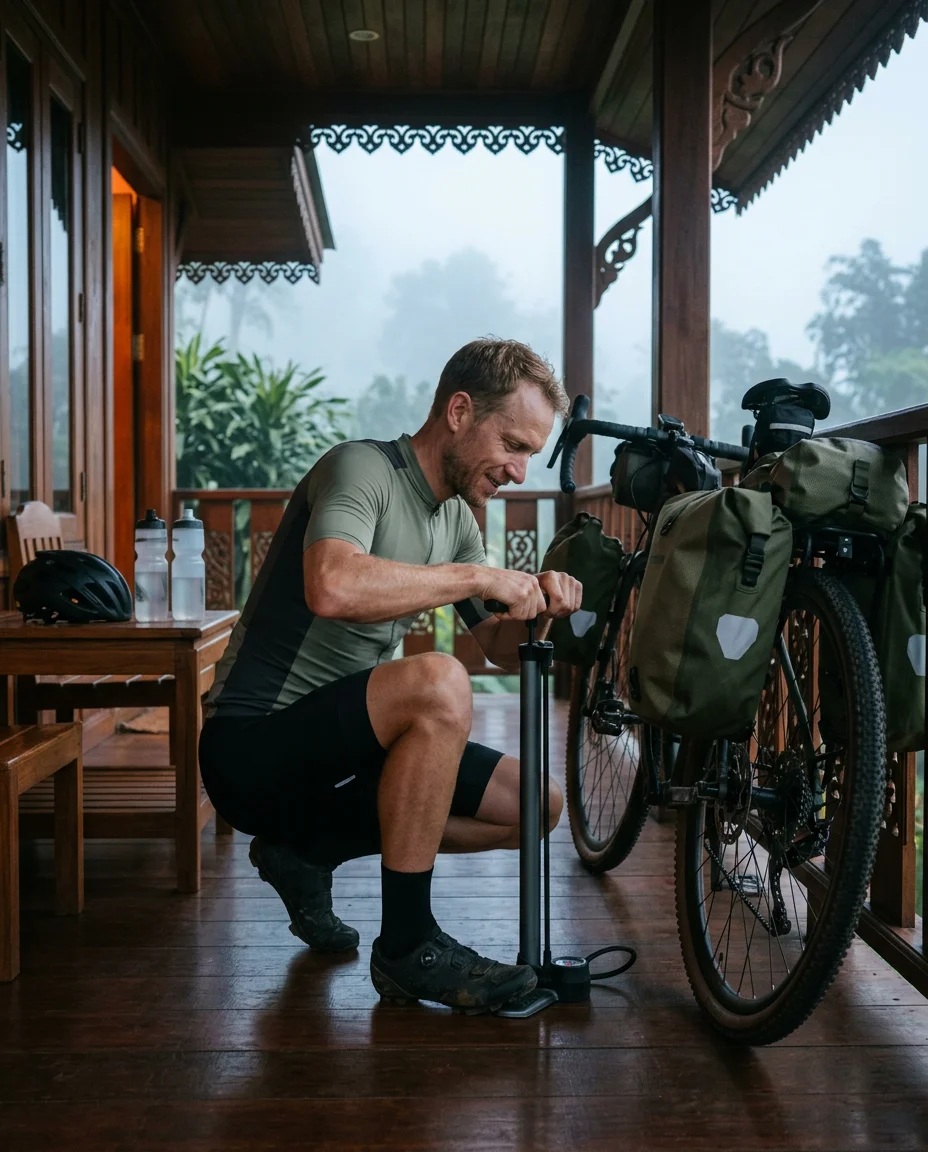
Bring your own pedals, cleats, and cycling shoes from the UK. Local hire shops typically provide basic flat pedals and carry limited clip-in inventory. Riding long, demanding mountain ascents with mismatched footwear risks discomfort and repetitive strain. Cyclists particular about contact points should also pack their own saddle, which local bike mechanics can readily fit to a rental frame.
Pack a daylight-visible, high-output rear flashing light. Winding mountain highways cut through dense jungle canopy, where rapid transitions between bright tropical sunlight and heavy forest shade make cyclists difficult for overtaking songthaews and trucks to spot.
Avoid scheduling an outdoor riding trip between late February and mid-April. Seasonal agricultural burning across the surrounding hills traps severe smoke haze in the valley basin, pushing particulate pollution to levels hazardous for sustained aerobic exertion.
Confirm that your travel insurance explicitly covers road cycling holidays, cycle touring, and emergency medical evacuation. Standard UK policies often cover only casual leisure riding, excluding dedicated cycling trips or routes above set altitude thresholds. Private hospitals in Thailand require immediate proof of insurance or payment before treatment, making comprehensive medical and repatriation cover vital.
Practical Tips
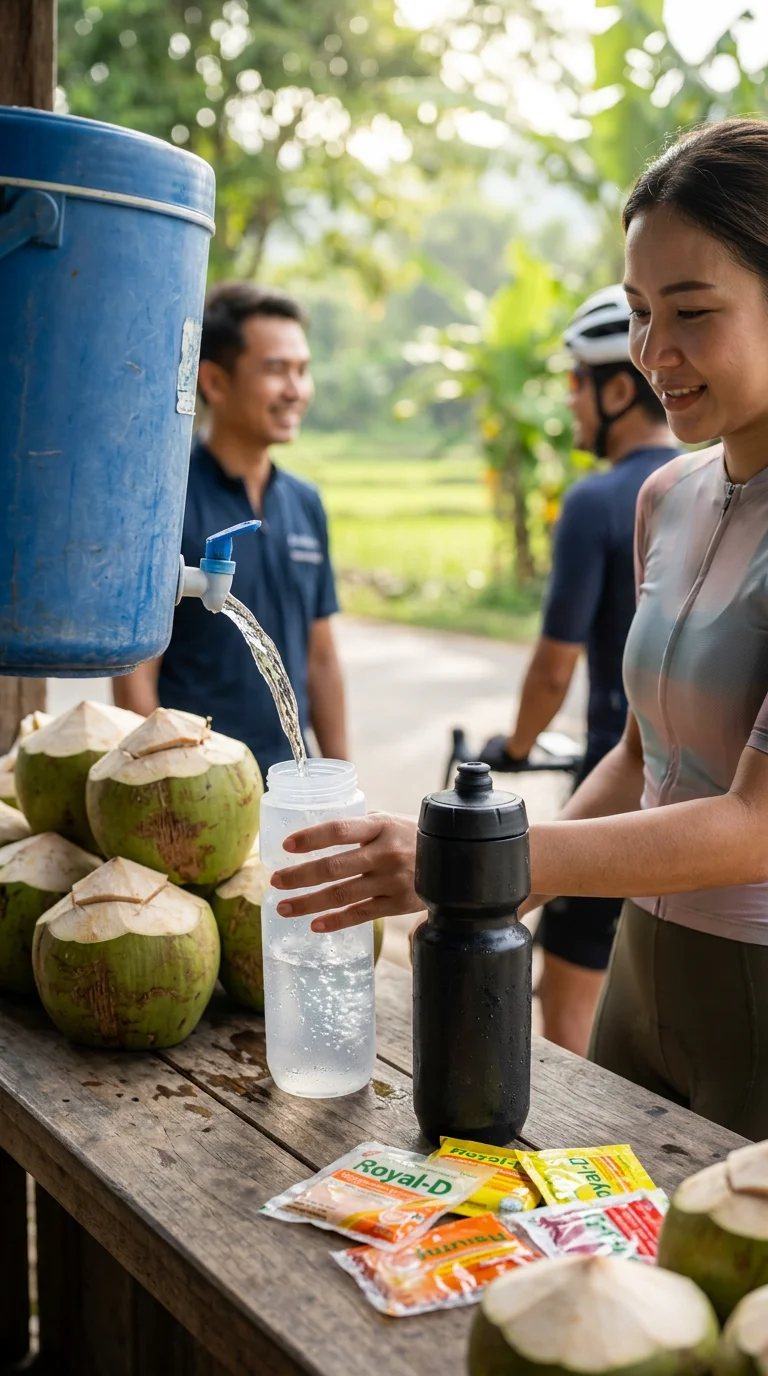
Fit two 750ml bidons to your frame and carry electrolyte replacement powder on every ride. Tropical heat and high humidity quickly drain mineral reserves, making muscle cramps a genuine hazard on sustained climbs. While convenience stores and village stalls stock bottled drinking water, they rarely carry specialist endurance supplements, so pack enough electrolyte sachets from home or purchase them from city bike shops before heading out.
Download offline GPX tracks to a dedicated handlebar computer rather than relying on live smartphone mapping. Mobile reception drops out repeatedly through the enclosed ravines of the Samoeng and Mae Sa valleys, and offline routing prevents navigation errors when remote junctions split without signposts.
Roll out early, particularly during the hot and wet seasons. Mountain departures before 07:00 secure clear roads out of town, significantly lower road temperatures on steep gradients, and complete routes well before afternoon convective rainstorms develop.
Manage your brakes methodically on steep descents. The sustained gradient down Doi Suthep places high thermal stress on braking systems. Dragging pads continuously causes brake fade, boils hydraulic fluid, and risks blowing inner tubes on rim-brake setups. Feather your speed with firm, pulsed braking well ahead of switchbacks, then release the levers along straight segments to let rotors and wheel rims cool.
Carry physical cash in small 20, 50, and 100 THB notes (approximately 45p to £2.30). Rural fruit stands, roadside beverage vendors, and mountain noodle huts do not accept foreign credit cards or UK digital wallets.
Wear bright jerseys rather than muted green, grey, or black clothing. Dappled sunlight filtering through dense jungle canopy creates deep visual contrast, concealing dark silhouettes from oncoming utility pick-ups and local trucks rounding narrow hairpin turns.
For peace of mind on technical climbs and remote loop circuits, booking an organised ride or arranging experienced local cycling assistance provides route guidance, mechanical backup, and support-vehicle security across northern routes.
Quick Reference Table
| Item | Detail | Notes |
|---|---|---|
| Best Time to Cycle | November to mid-February | Dry weather with morning valley temperatures around 15°C; arm warmers and wind vests advised for dawn starts |
| Season to Avoid | Mid-February to April | Annual burning season traps hazardous PM2.5 haze in the valley; strenuous outdoor cycling not recommended |
| Green Season Riding | June to October | Clean mountain air and quiet roads, but tarmac becomes slick; finish rides before heavy afternoon downpours |
| Recommended Roll-out Times | 06:00–07:00 | Beats heavy urban traffic, avoids peak heat, and ensures clear roads on mountain ascents |
| Classic Mountain Routes | Doi Suthep (620 m climb) & Samoeng Loop (90–100 km, ~1,700 m elevation) | High-gradient climbs requiring compact chainsets (50/34) and wide rear cassettes (32T or 34T) |
| Basic Bike Hire | 100–250 THB (approx £2.30–£5.70) per day | City step-throughs and alloy hybrids suitable for Old City backstreets and canal paths |
| Carbon Road Bike Hire | 1,000–1,500 THB (approx £23–£34) per day | Disc-brake road bikes (Giant TCR, Kaze); weekly rates run 6,000–8,000 THB (approx £136–£182) |
| Guided Tour Pricing | 1,200–1,800 THB (half day) / 2,400–4,500 THB (full day) | Countryside tours include guide and bike; full-day mountain tours provide support vehicle and nutrition |
| Daily Refuelling Costs | 80–140 THB (approx £1.80–£3.20) | Covers roadside noodle soups, bananas, and electrolyte drinks; roadside espresso costs 45–90 THB |
| Essential Gear to Pack | Pedals, cycling shoes, daylight rear light, electrolyte powder | Rental shops carry limited clip-in pedals; flashing rear lights essential in dense jungle shadows |
| Navigation & Money | Offline GPX files and cash (20, 50, 100 THB notes) | Mobile signal drops in mountain ravines; roadside stalls and rural fruit huts do not accept cards |
| Travel Insurance Requirement | Specialist medical cover for cycle touring | Ensure explicit policy inclusion for road cycling and emergency evacuation; standard travel policies often exclude sport |
| Book direct (55 Cycling Club) | https://55cyclingclub.com | Performance road bike hire and gravel setups along the Canal Road in Mae Hia |
| Book direct (Chiangmai Cycling Buddy) | https://chiangmaicyclingbuddy.com | Carbon road bike rental, guided excursions, and supported mountain tours based at Vanilla Residence |
FAQ: Cycling in Chiang Mai
What is the best time to cycle in Chiang Mai's Old City backstreets?
What type of bicycle is recommended for exploring Chiang Mai's Old City?
Is it acceptable to cycle through temple courtyards in Chiang Mai?
What are the safety considerations when descending Doi Suthep and Doi Pui?
What is the recommended direction for cycling the Samoeng Loop and why?
What is the best time of year for road cycling in Chiang Mai?
When should cyclists avoid planning dedicated cycling trips to Chiang Mai?
How should cyclists deal with free-roaming dogs in rural Chiang Mai?
What kind of travel insurance is needed for a cycling trip in Chiang Mai?
What essential cycling gear should travellers bring to Chiang Mai?
Reviewed by the Thailand Guide Editorial Team • Last reviewed: 17 November 2026
This page is provided for general information only. While we aim for accuracy, details can change — please verify anything important independently before relying on it.