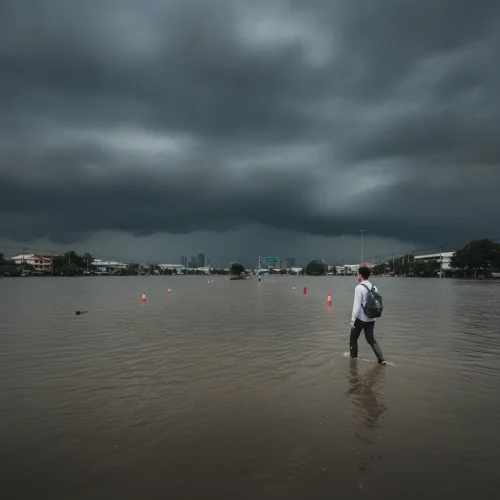
The Thai Meteorological Department has issued a severe weather warning predicting heavy to torrential rainfall across Thailand between 25 and 27 September 2026.
Weather System and Affected Areas
The advisory follows the development of a strong low-pressure system moving across eastern, lower north-eastern, and central provinces. Driven by an intensifying south-west monsoon over the Andaman Sea and the Gulf of Thailand, the system is affecting the North, lower Northeast, East, Central plains—including greater Bangkok—and the South. Sea waves in the upper Andaman Sea and upper Gulf are expected to reach two to three metres, with higher swells likely during localised squalls.
Urban Disruption and Transport
Urban centres face immediate transit complications. Bangkok and adjacent provinces regularly experience standing water during sustained downpours due to municipal drainage limits. Low-lying roads often become impassable within an hour of continuous rain.
British nationals resident in the capital should rely on the elevated BTS Skytrain and underground MRT lines instead of road transport. Commuters using road networks or motorcycle taxis will likely face prolonged delays. Those with private vehicles should avoid street-level parking in areas prone to canal overflow and refrain from using underground basement car parks. Water ingress during flash flooding regularly causes severe mechanical and electrical damage to stationary cars.
Coastal and Island Communities
Expats living in coastal destinations including Phuket, Krabi, Pattaya, and Koh Samui must prepare for disruptions to sea travel. Small boats have been advised to remain ashore while wave heights fluctuate between two and three metres.
Scheduled ferry services linking the mainland to islands such as Koh Pha Ngan, Koh Tao, and Koh Chang face delays and short-notice cancellations. Marine excursions and water sports should be deferred until sea conditions stabilise. In hilly coastal and northern provinces, sustained rain increases the likelihood of mudslides, soil erosion, and flash run-off along foothill slopes near natural waterways.
Property Protection and Household Management
Prolonged downpours frequently highlight maintenance issues in residential buildings. Ground-floor properties, townhouses, and detached villas located near waterways or in low-lying districts carry the highest risk of water ingress.
Residents are advised to clear private drainage grates and confirm that non-return valves are operational. Expatriates with local or international home insurance policies should verify their terms regarding flood damage, as claims can be contested if basic property maintenance has been neglected. Keeping basic supplies, potable water, and fully charged mobile battery packs is sensible, as regional power authorities occasionally disconnect local electrical substations during severe street flooding to prevent electrocution hazards.
Administrative and Travel Planning
Interprovincial road travel requires caution, especially on routes traversing flood basins or hilly terrain. Anyone with upcoming appointments, such as mandatory 90-day reporting or visa renewal submissions at provincial immigration offices, should allow substantial extra travel time. While government offices remain open during regular working hours, local access roads can flood without advance notice. Non-critical medical appointments or routine domestic flights may also be subject to disruption, and travellers should check airline operations before departing for regional airports.
Source: nationthailand.com
Reviewed by the Thailand Guide Editorial Team • Last reviewed: 25 September 2026
This page is provided for general information only. While we aim for accuracy, details can change — please verify anything important independently before relying on it.