Kayaking in Krabi



Unlike the exposed crossings typical of the open Andaman Sea, kayaking in Krabi centres on sheltered coastal estuaries, dense mangrove networks, and towering limestone canyons. Because these waterways sit inland or behind protective karst formations, they remain paddleable in moderate weather conditions that often disrupt open-water boat trips, although daily tidal cycles still govern which channels are passable. Within 30 to 50 minutes of major resort hubs such as Ao Nang and Krabi Town, paddlers exchange motorboat traffic for quiet tidal passages where sheer rock faces enclose winding corridors and prehistoric pictographs line ancient cavern ceilings.
The activity is the mainland province’s primary eco-adventure pursuit, concentrated around two distinct hubs: Ao Thalane on the central coast and Ban Bor Thor in the northern district of Ao Luek. Local outfitters and community-based operators run excursions catering to beginners, families, and experienced paddlers alike, with calm, protected currents requiring sensible stamina rather than technical seafaring skills. By trading busy sandbars for riverine forests and cave systems, kayaking provides a direct look at Krabi’s geological formations, estuarine ecology, and archaeological heritage.

Ao Thalane Mangrove Canyons and Karst Corridors
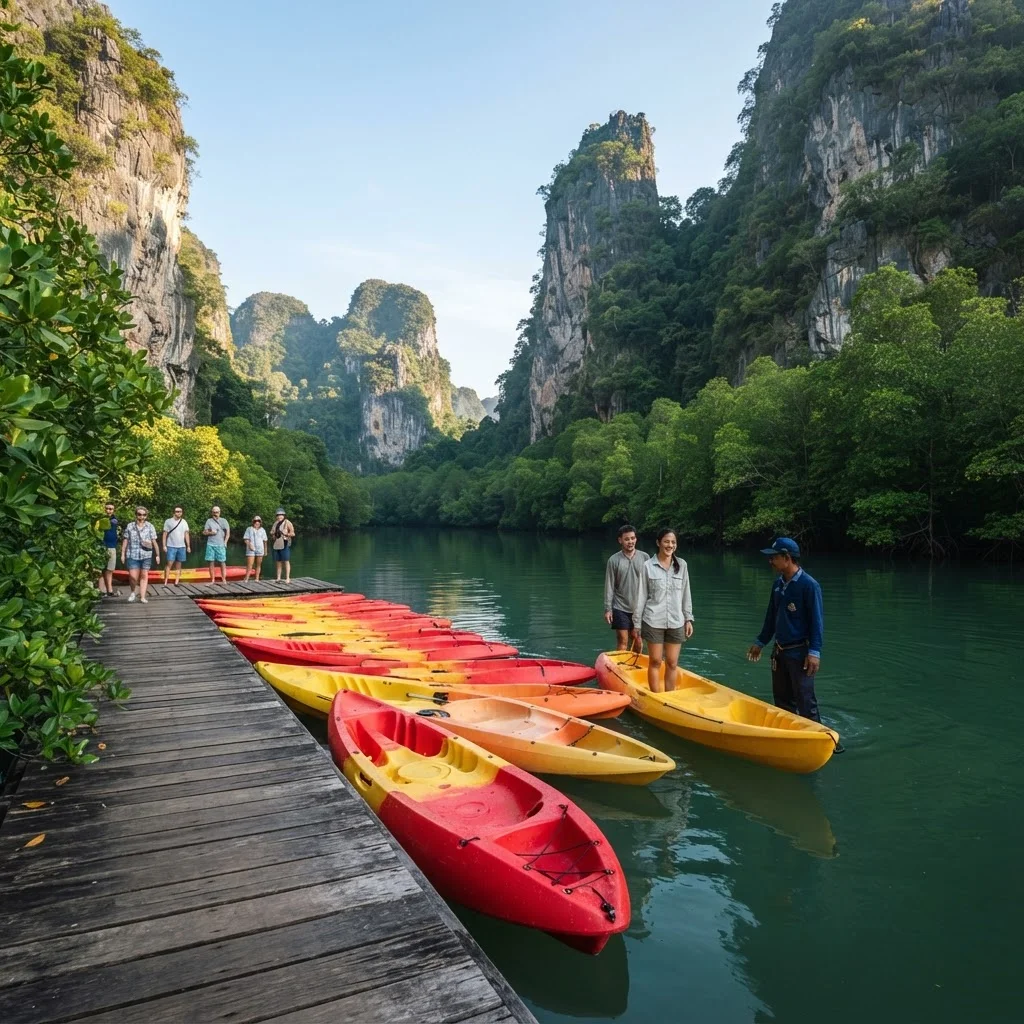
Ao Thalane forms an intricate estuarine paddling network, funnelling kayakers between vertical limestone cliffs and through a labyrinth of tidal channels. Situated roughly 28 kilometres north-west of Krabi Town along the Khao Thong coastline, this inlet faces the eastern waters of Phang Nga Bay. Unlike open coastal kayaking routes, the waterways here remain sheltered from Andaman swells by offshore landforms, creating flat, calm conditions year-round. The paddling route starts from the coastal pier and quickly transitions from open water into dense mangrove forest, where the arching stilt roots of red mangrove trees (Rhizophora) line the banks.
The focal point of the route is the Canyon, an 800-metre passage where sheer karst sea walls tower directly above the water. Inside this stone corridor, coastal breezes drop away and ambient sound reduces to the rhythmic drip of paddles against the water. Cycads and hanging ferns cling to crevices in the rock face, while kingfishers and Pacific reef herons feed along the fringe of the mudflats. Branching channels lead into enclosed lagoons—natural karst amphitheatres surrounded by vertical rock faces that are accessible from the water. The circuit also passes Crocodile Cave, a shallow limestone cavern containing stalactites and stalagmites, named after a rock formation that resembles a snout.
Standard half-day paddling circuits cover between four and seven kilometres, typically requiring two to two and a half hours of active paddling to loop through the canyons, lagoons, and mangrove tunnels before returning to the pier. Water depth throughout the network is dictated by the Andaman tidal cycle. Paddling during a mid-rising or high tide ensures sufficient clearance to cross the shallowest mangrove channels and enter the inner lagoons. During low water, the inner passages drain to reveal mudbanks and emergent sandbars, restricting kayaks to the deeper central channels.
Bor Thor River Caverns and Prehistoric Rock Art
The river system at Ban Bor Thor, in the Ao Luek district of northern Krabi, provides an entirely different paddling environment from open-water coastal routes. Sheltered within the northern reaches of Than Bok Khorani National Park, the journey follows the winding channels of Khlong Tha Prang through dense mangrove forests before reaching towering karst cliffs hollowed out by subterranean waterways. Unlike tidal sea caves exposed to ocean swell, these mangrove channels remain calm and enclosed, allowing paddlers to glide smoothly into limestone caverns carved over millennia by river currents and tidal flows.
The central paddling route navigates through Tham Lod, a natural limestone tunnel cutting beneath a karst mountain. Navigable by kayak at mid-to-low water, the passage extends for over one hundred metres beneath a low limestone ceiling crowded with massive stalactites and hanging rock formations. Tidal timing governs access, as rising water restricts overhead clearance until the tunnel mouth submerges at the peak of high tide. Beyond Tham Lod, the waterway threads onwards towards Tham Khao Wong, an enclosed inner lagoon encircled by sheer limestone walls where the surrounding canopy often shelters dusky langurs.
| Paddling Area | Key Geographical Features | Typical Duration | Difficulty Level | Primary Access Point |
|---|---|---|---|---|
| Ao Thalane Central Canyon | Vertical karst corridors, narrow mangrove alleys, tidal lagoon | 2 to 3 hours | Easy to Moderate | Ao Thalane Kayak Pier |
| Ban Bor Thor Caves | Tham Lod limestone tunnel, Tham Pee Hua Toe rock art, inner river lagoon | 2.5 to 3.5 hours | Moderate | Ban Bor Thor Pier |
| Klong Root (Clear Canal) | Submerged freshwater spring, submerged stumps, freshwater forest | 1 to 2 hours | Easy | Nong Thale Launch |
| Railay and Phra Nang Coast | Open coastal sea cliffs, sea caves, offshore island fringes | 2 to 4 hours | Moderate to Challenging | Railay West / Phra Nang Beach |
A short paddle downriver leads to Tham Pee Hua Toe, also known as the Big-Headed Ghost Cave, which stands as one of southern Thailand's most important archaeological sites. Kayaks disembark at a wooden mooring where steps ascend into an expansive, airy cavern elevated roughly 3.5 metres above the water. Inside its high-vaulted chambers, natural daylight illuminates dozens of prehistoric pictographs executed in dark pigment and red ochre across the ceiling. Estimated to be between two and three thousand years old, the rock art depicts human figures, hands, fish, birds, and crustaceans, alongside the iconic anthropomorphic figure with an elongated, horned headdress from which the cave takes its name. Deep layers of prehistoric shell middens and ancient human remains uncovered on site testify to thousands of years of early hunter-gatherer occupation along Krabi's estuarine waterways.
Discover the real Krabi beyond the beaches. Learn how Buddhist and Muslim traditions blend, why you must never step on a boat prow, and local customs.
Coastal Estuaries, Lagoons, and Marine Ecosystems
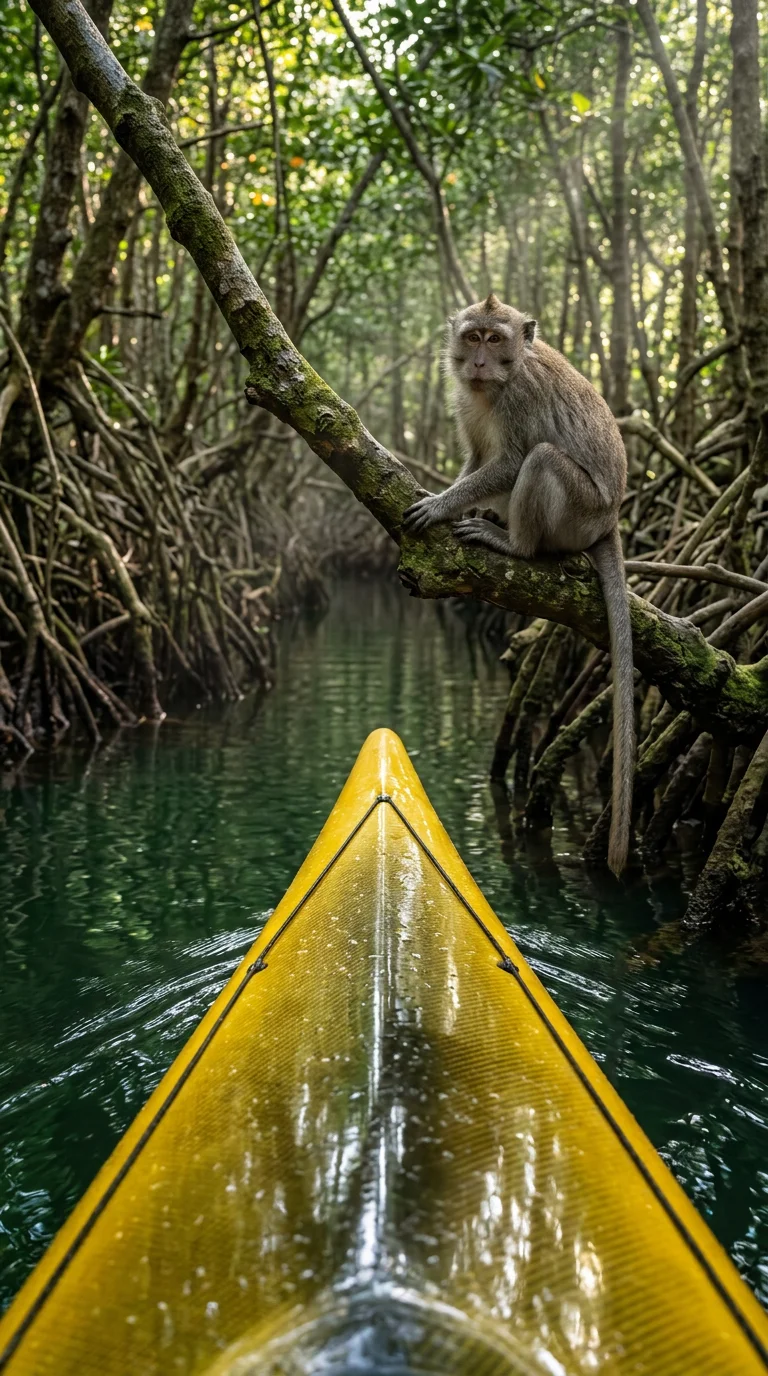
Krabi’s sheltered coastal estuaries and tidal lagoons form one of southern Thailand’s most ecologically significant wetland networks. The Krabi River estuary is recognised under the Ramsar Convention as a wetland of international importance, encompassing expansive mangrove forests, mudflats, and shallow waterways. In these intertidal zones, freshwater runoff from limestone highlands mixes with Andaman Sea tides. Dense stands of red and black mangroves dominate the margins, where stilt roots and breathing pneumatophores trap upland sediment, buffer the coastline against erosion, and create a nutrient-rich nursery that protects juvenile marine species from open-sea predators.
Navigating these shallow waterways by kayak provides access to enclosed backwaters that motorised craft cannot enter. As the tide recedes, retreating water exposes sediment banks where mudskippers skip across the silt and fiddler crabs sift for organic matter. In the shallow channels, schools of juvenile fish shelter beneath the waterline, including archerfish that spray water droplets to dislodge resting insects from overhanging leaves. Asian water monitors frequently sun themselves on horizontal roots or slide quietly into the creeks.
Paddling quietly along the forest edges also allows close encounters with terrestrial and avian wildlife without the disturbance of engine noise. Troops of crab-eating macaques forage along the shoreline at low water, prizing mud crabs, snails, and bivalves from the tangled root structures. Above the canopy, rising thermals generated by sun-warmed karst cliffs attract soaring raptors, notably brahminy kites and white-bellied sea eagles. The branches also provide resting perches for little herons and kingfishers, including the brown-winged kingfisher. These sheltered waterways illustrate how Krabi's limestone geography and coastal mangrove channels combine to support a resilient, biodiverse marine habitat.
Paddling Formats, Guided Expeditions, and Independent Rentals
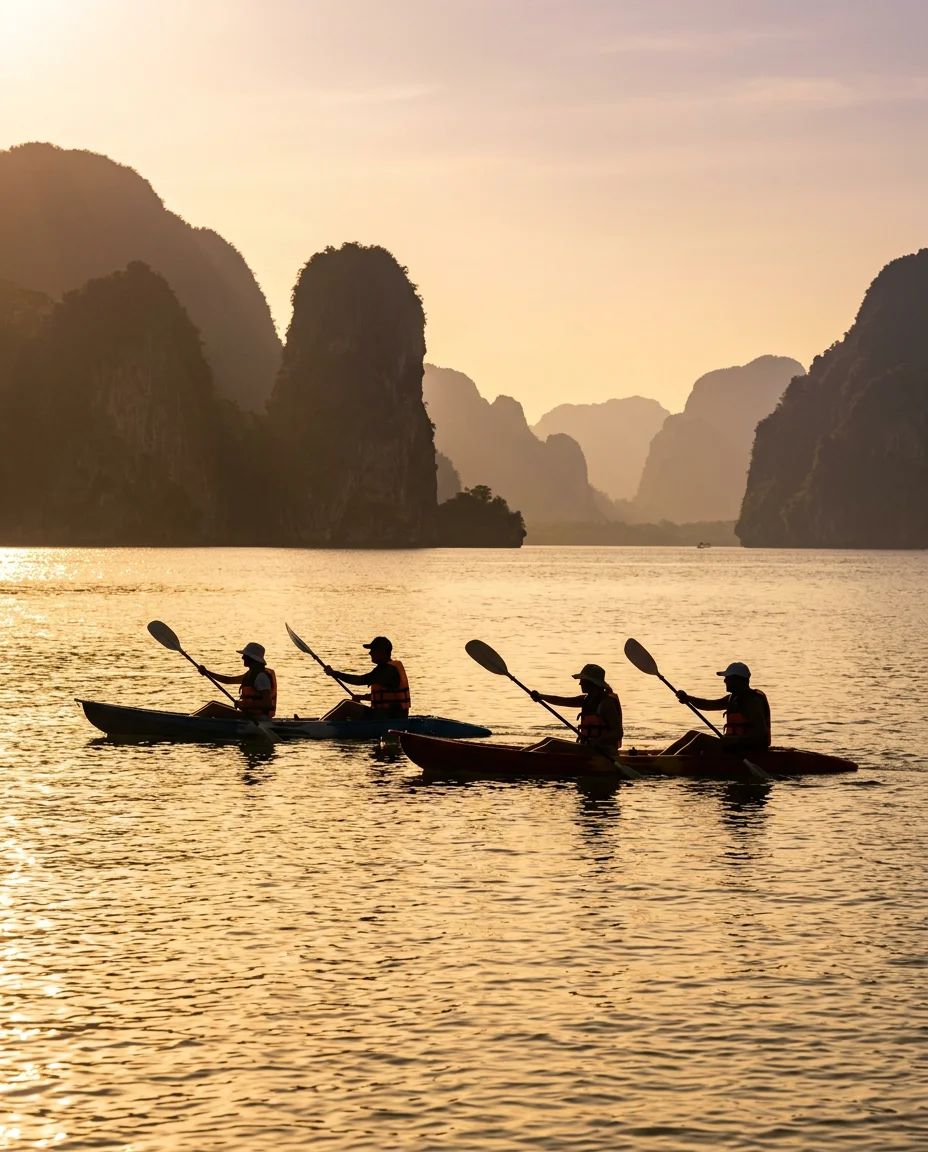
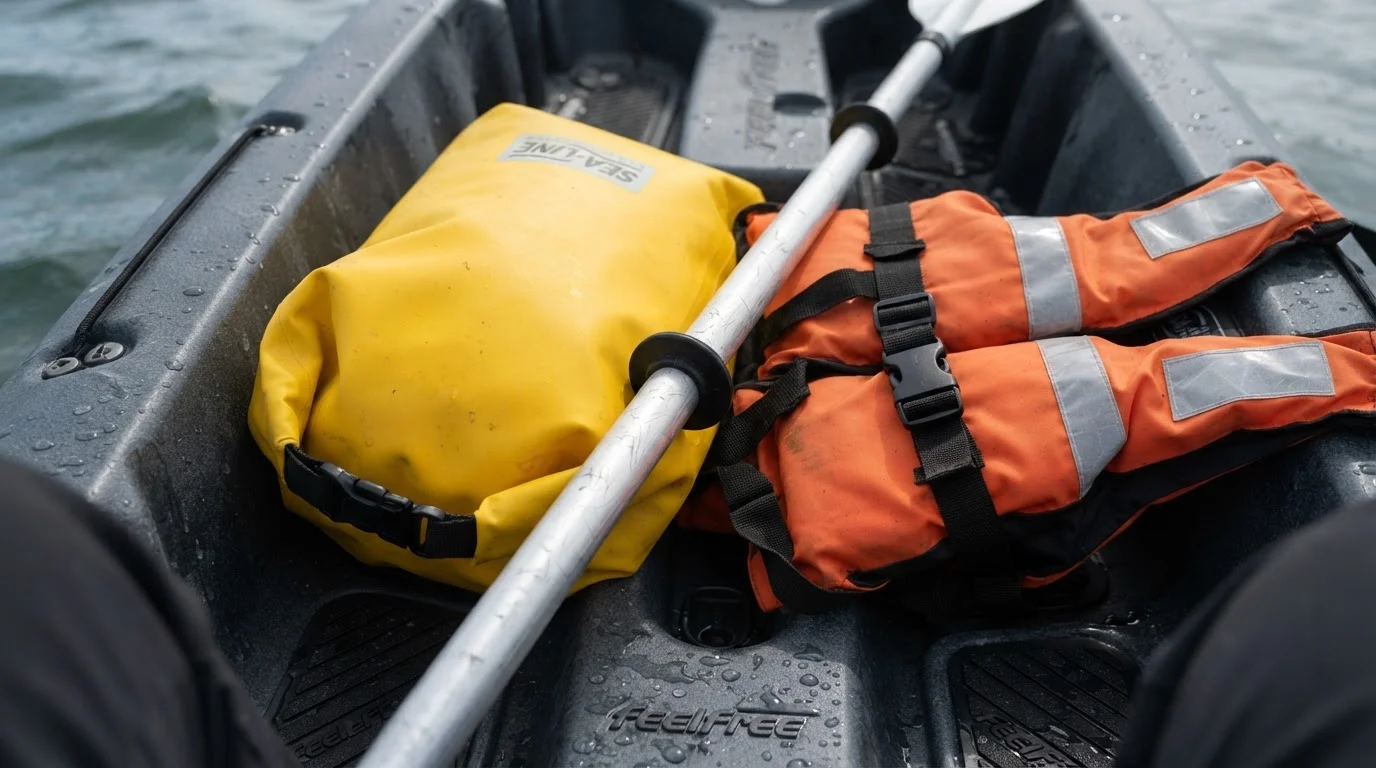
Paddlers in Krabi choose between structured group tours, private guided charters, and self-guided craft rentals depending on their navigational confidence and tidal experience. Commercial group excursions dominate the local waterways. Operators supply rotomoulded single or tandem sit-on-top kayaks made from durable polyethylene, alongside buoyant foam life jackets, double-bladed aluminium paddles, and small dry bags for personal belongings. Standard group tours operate on fixed half-day schedules with morning departures (typically starting around 08:30) and afternoon departures (around 13:30), alongside full-day excursions that include a local lunch. These organised packages include return shared minivan transfers from hotels across Ao Nang, Klong Muang, and Krabi Town.
Local guides manage navigation through the winding mangrove channels, deliver basic technique instruction, and provide towing assistance if paddlers tire against headwinds or outgoing tides. Group sizes generally range between six and twelve craft per guide. Booking a private specialist charter secures a dedicated guide and private vehicle transfer. This allows paddlers to time their water departure to match favourable tidal conditions rather than rigid group timetables, ensuring access to shallow limestone passages while setting an unhurried pace.
Experienced kayakers can arrange independent craft rentals directly at waterfront piers, particularly around Ao Thalane village. This self-guided format provides the freedom to explore outer waterways at an individual pace, with equipment hired on an hourly or daily basis. Independent paddlers must check local tide tables carefully before setting out. Receding water levels can quickly leave craft stranded on impassable mudbanks deep inside the mangrove interior, where branching inlets can prove disorientating. For guided bookings, morning departures remain advisable to avoid midday tropical heat and precede the heavier tour group traffic entering narrow karst canyons.
Location and Getting There
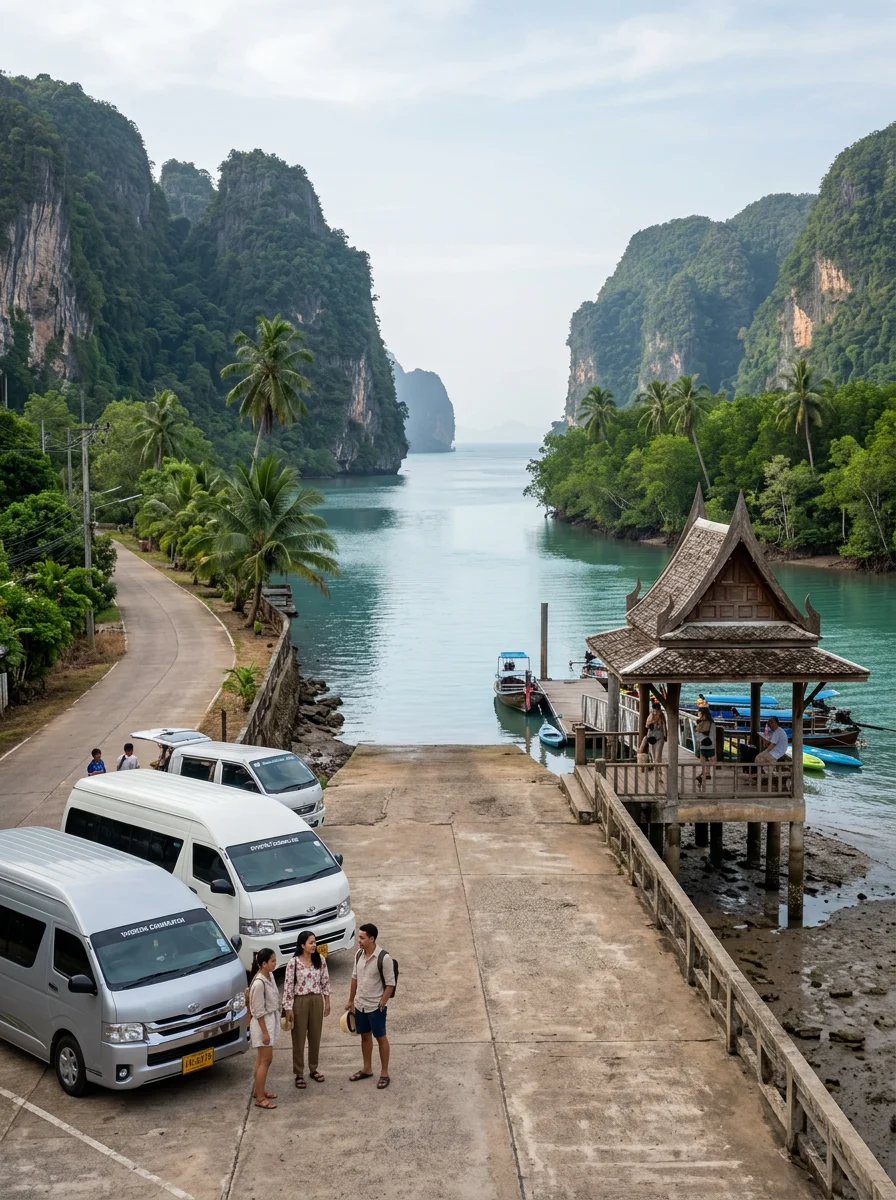
Krabi's primary kayaking hubs lie north of the main resort areas, divided between the coastal districts of Mueang Krabi and Ao Luek. Ao Thalane sits in Khao Thong, roughly 28 to 30 kilometres northwest of Ao Nang and 30 kilometres from Krabi Town. The drive follows Highway 4034 and Route 4033, taking approximately 35 to 45 minutes by road. Ban Bor Thor is located further north in Ao Luek district, roughly 45 to 50 kilometres from Ao Nang and Krabi Town, requiring a 50-to-60-minute journey via Highway 4 through rural rubber plantations and karst valleys.
Most commercial kayaking packages include return minivan transfers from hotel receptions across Ao Nang, Krabi Town, Klong Muang, and Tubkaek. For travellers staying on the roadless Railay peninsula, operators coordinate morning and afternoon collections from Ao Nam Mao pier, leaving paddlers to arrange their own 15-minute longtail boat crossing to the mainland before joining the tour van.
Direct public transport between the beach resorts and the kayak launch piers does not operate. Independent travellers must hire a car or scooter, order a ride through Grab, or charter a private vehicle. A private taxi or chartered songthaew from Ao Nang to Ao Thalane pier typically costs around 800 THB to 1,200 THB (£18 to £27) each way, while longer runs out to Ban Bor Thor command higher fares. Travellers going independently should arrange a collection time with their driver before departure, as return transport is difficult to flag down at rural piers.
Costs and Booking
Commercial kayaking rates in Krabi remain competitive and broadly consistent across operators, though slight discounts of 10 to 15 per cent are often available during the low season between May and October. Half-day guided tours to Ao Thalane or Ban Bor Thor generally range from 800 THB to 1,200 THB (£18.20 to £27.30) per person. These standard packages include return hotel transfers from central accommodation, paddle equipment, life jackets, dry bag loan, drinking water, fresh fruit, and basic accident insurance.
Full-day packages typically cost between 1,400 THB and 1,800 THB (£31.80 to £40.90) per person. These extended excursions include a freshly cooked Thai set lunch at a riverside restaurant and an afternoon swimming stop at a freshwater forest stream, commonly at Phu Thara or Tha Pom Klong Song Nam. Independent travellers with their own transport can hire sit-on-top kayaks directly from the piers at Ao Thalane or Ban Bor Thor for approximately 400 THB to 600 THB (£9.10 to £13.60) per craft for a half day, inclusive of paddles and buoyancy aids.
Shared transfers generally cover central hotels in Ao Nang and Krabi Town. Lodgings situated in outlying areas such as Klong Muang and Tubkaek Beach, or guests travelling from Railay via Ao Nam Mao Pier, frequently incur an additional transfer surcharge of 100 THB to 200 THB (£2.30 to £4.50) per person. Sea caves at Ban Bor Thor sit within Than Bok Khorani National Park, where foreign adult admission costs 300 THB (£6.80) and foreign child admission costs 150 THB (£3.40). While commercial full-day packages often fold this fee into the quoted rate, independent paddlers and select operators require it to be settled in cash at the ranger station.
| Option | Cost (THB) | Cost (GBP) | Details |
|---|---|---|---|
| Ao Thalane Half-Day Guided Tour | 800 – 1,100 | £18.20 – £25.00 | Per person; includes hotel transfers, fruit, and drinking water |
| Ao Thalane Sunset & BBQ Kayak | 1,300 – 1,600 | £29.50 – £36.40 | Per person; includes evening paddle, guide, and beach barbecue |
| Ban Bor Thor Sea Cave Full-Day Tour | 1,400 – 1,800 | £31.80 – £40.90 | Per person; includes Tham Lod, cave art, set lunch, and stream swim |
| Independent Kayak Hire (Ao Thalane Pier) | 400 – 600 | £9.10 – £13.60 | Per kayak (half day); unguided, includes paddle and life jackets |
| Private Longtail & Kayak Combo Charter | 3,500 – 5,000 | £79.50 – £113.60 | Per private boat group; combines island transit with towed kayaks |
Who It Suits Best
Kayaking in Krabi caters well to independent travellers, couples, and nature-focused holidaymakers who enjoy wildlife spotting and tranquil coastal scenery. Because the mangrove estuaries and limestone canyons of Ao Thalane and Ban Bor Thor remain sheltered from open-sea swell, the routes are accessible to beginners with a reasonable level of basic fitness. No previous paddling experience is required for standard guided excursions, making it an approachable water activity for first-time kayakers.
Families travelling with children can participate comfortably. Most local operators accommodate children aged four or five and older, placing them in the centre or front seat of a tandem or triple sit-on-top kayak between two adults.
Conversely, the experience rarely appeals to visitors seeking high-speed motorized water sports or lively social cruises. The outing demands continuous light-to-moderate physical effort, with on-water paddling sessions typically lasting between two and three hours. Travellers with severe lower-back problems or acute joint stiffness should exercise caution, as standard moulded plastic kayaks provide minimal lumbar support.
What to Know Before You Book
Tidal cycles govern route accessibility across Krabi's mangrove estuaries and limestone canyons. Water levels fluctuate significantly throughout the day, and high tide advances by roughly 50 minutes with each daily cycle. At low water, exposed mudflats can close off shallow mangrove alleys, enclosed lagoons, and cave tunnels such as Tham Lod. Selecting a departure slot that coincides with rising or high water gives full access to these inner passages. Reputable tour operators track local tide charts and often adjust pickup schedules accordingly, but verifying tide times before selecting a morning or afternoon tour helps avoid shallow, restricted routes.
Two-person sit-on-top kayaks form the backbone of most commercial fleets. Solo travellers are typically paired with another single participant or an accompanying guide unless they arrange a single craft beforehand. Some companies charge a modest supplement to guarantee an individual kayak, whilst others have limited single craft available on the day. Odd-numbered parties should notify the operator during booking to prevent last-minute seating rearrangements at the pier.
Tours operate year-round because mangrove estuaries and sheltered karst corridors remain protected from open-sea swell. However, advance reservations are advisable between December and April, when peak visitor numbers fill popular departure windows. During the southwest monsoon from May to October, paddling trips generally run as scheduled, though heavy rain can reduce visibility and affect water clarity.
Practical Tips
Secure footwear is necessary for launching and landing along Krabi's tidal estuaries. Strap-on sports sandals or neoprene water shoes protect against sharp barnacles, submerged oyster shells, and jagged limestone shelves around cave landings. Loose flip-flops should be avoided, as thick, adhesive mangrove mud readily pulls them off your feet at the waterline. Lightweight, quick-drying clothing such as a rash vest or synthetic shirt works well, keeping you cool while shielding shoulders and arms from the sun.
Keep phones, wallets, and cameras inside a dedicated roll-top dry bag secured to the deck cords before pushing away from the pier. Sit-on-top kayaks feature self-bailing scupper holes that allow water to drain, but they also let water pool across the cockpit floor. Paddle drip is equally unavoidable, meaning anything placed loosely between your feet will get wet within minutes.
Do not feed the crab-eating macaques that forage along the mangrove margins. Hand-feeding encourages habituated troops to treat kayaks as food sources, prompting monkeys to leap onto decks to snatch loose items, which risks capsizing the craft or causing bites. Pack all food, snacks, and sweet drinks deep inside your dry bag out of sight. A water bottle left on the kayak floor will quickly attract curious primates.
Carry at least one litre of fresh drinking water per person, even on a half-day excursion. High tropical humidity and steady physical exertion cause rapid fluid loss. To avoid fatigue and palm blisters, hold the paddle shaft with a relaxed grip and rotate from your core. Driving each stroke by twisting your torso rather than pulling solely with your wrists and biceps saves considerable energy.
Apply insect repellent to exposed ankles and forearms before paddling into narrower, wind-sheltered mangrove channels, where biting midges and mosquitoes gather in the damp shade. Independent paddlers should also check local tide tables before launching; setting off on a rising tide ensures enough water depth in the inner channels and prevents getting grounded on exposed mudflats.
Quick Reference Table
| Item | Detail | Notes |
|---|---|---|
| Primary Locations | Ao Thalane (Khao Thong) & Ban Bor Thor (Ao Luek) | 35–45 mins drive to Ao Thalane; 50–60 mins to Ban Bor Thor from Ao Nang or Krabi Town |
| Half-Day Guided Tours | 800 – 1,200 THB (£18.20 – £27.30) per person | Includes shared hotel transfers, equipment, dry bag loan, drinking water, and fruit |
| Full-Day Guided Tours | 1,400 – 1,800 THB (£31.80 – £40.90) per person | Includes Thai set lunch and an afternoon freshwater stream swimming stop |
| Independent Kayak Hire | 400 – 600 THB (£9.10 – £13.60) per kayak | Half-day rental rate directly at Ao Thalane and Ban Bor Thor piers; unguided |
| National Park Entrance Fee | 300 THB (£6.80) adult / 150 THB (£3.40) child | Foreign rates for Ban Bor Thor caves (Than Bok Khorani NP); often paid in cash |
| Area Transfer Surcharges | 100 – 200 THB (£2.30 – £4.50) per person | Applies to outlying hotels in Klong Muang and Tubkaek, or Railay pickups via Ao Nam Mao |
| Private Taxi / Songthaew | 800 – 1,200 THB (£18 – £27) each way | Typical fare from Ao Nang to Ao Thalane pier; arrange return pickup in advance |
| Standard Departure Times | Morning (approx. 08:30) and Afternoon (approx. 13:30) | Morning departures beat peak heat and heavier tour group congestion in canyons |
| Typical Paddle Duration | 2 to 3 hours active paddling | Standard circuits range from 4 to 7 km; accessible to beginners with basic fitness |
| Suitable Age Range | Children aged 4 to 5 and older | Accommodated between two adults in the centre or front seat of tandem/triple kayaks |
FAQ: Kayaking in Krabi
What kind of kayaking is available in Krabi?
What can you see at Tham Pee Hua Toe?
When is the best time to kayak in Ao Thalane regarding tides?
Should I feed the crab-eating macaques while kayaking in Krabi?
What should independent kayakers know about tides in Krabi?
What is the best time of day for a guided kayaking tour in Krabi?
Is public transport available to Krabi's kayaking launch piers?
What is included in a typical half-day guided kayaking tour in Krabi?
Do I need prior kayaking experience for tours in Krabi?
What kind of footwear should I wear for kayaking in Krabi?
Reviewed by the Thailand Guide Editorial Team • Last reviewed: 17 November 2026
This page is provided for general information only. While we aim for accuracy, details can change — please verify anything important independently before relying on it.