Cycling in Phuket



Phuket's asphalt holds heat long into the day, radiating warmth through your cycling shoes while dawn humidity clings to the coastal slopes between Nai Harn and Cape Promthep. Dropping into a steep descent towards Ya Nui Beach with sea spray misting your sunglasses requires sharp brakes, attentive line choice, and solid confidence on the tarmac.
This guide details road cycling and recreational riding across Phuket, helping you plan independent routes, hire capable bikes, and negotiate the island's demanding coastal topography. We examine testing southern climbs around Rawai and Chalong, flat endurance routes stretching north towards the Sarasin Bridge, varied road surfaces, local traffic patterns, hire costs, and seasonal monsoon conditions. Whether you are after an early-morning coastal spin or demanding hill intervals, this breakdown provides the practical logistics you need before rolling out.

Southern Headlands: Rawai, Nai Harn, and Cape Promthep
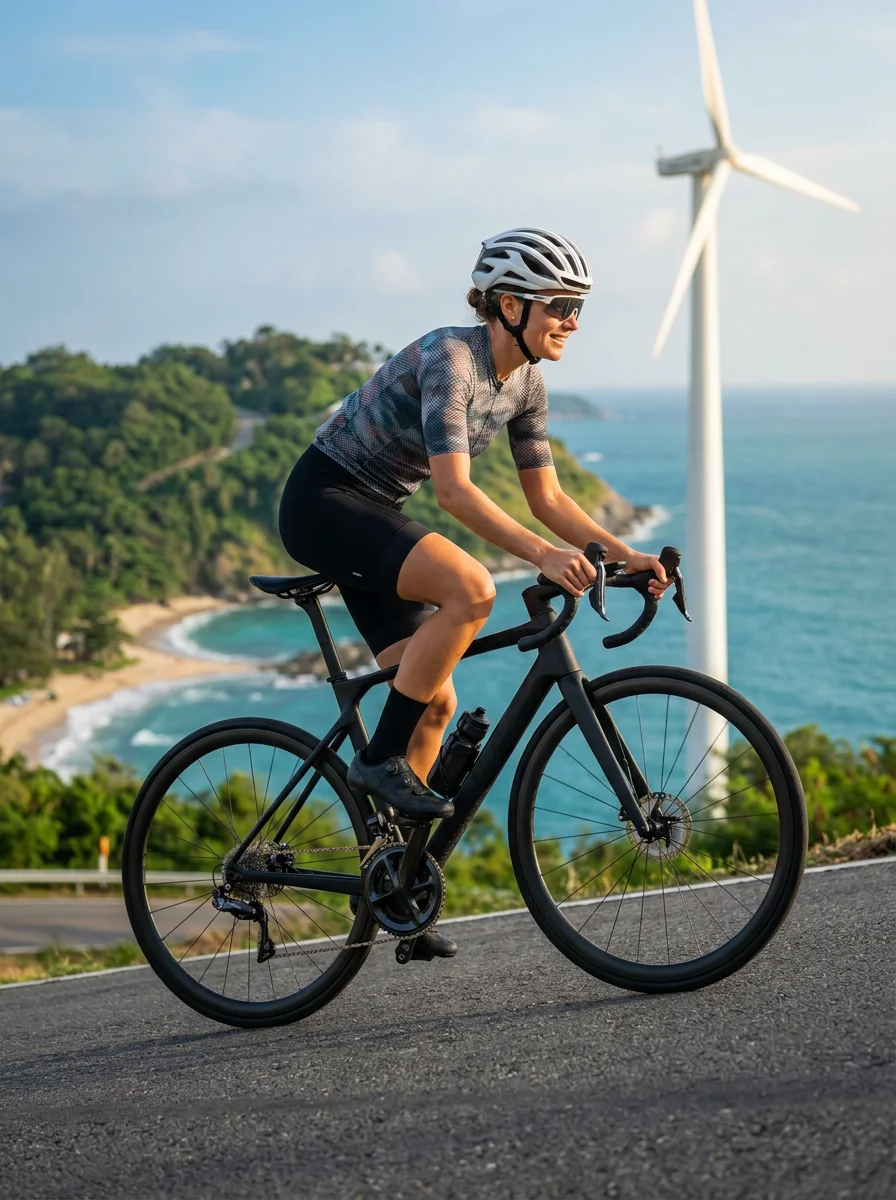
Phuket's southern peninsula provides some of the island's most demanding short-distance road riding, packing sharp elevation changes and coastal panoramas into a compact geographic area. The route begins along the flat perimeter road circling Nai Harn Lake, where a 2.2-kilometre asphalt loop offers an ideal warm-up beside the freshwater lagoon. Leaving the water behind, the road kicks upward immediately onto the ridge leading to Windmill Viewpoint. Gradients swing rapidly from gentle false flats to 14-percent ramps that require disciplined cadence and out-of-the-saddle efforts. At the crest, the route opens to panoramic views over Nai Harn Bay and offshore islands before dropping steeply through a technical descent into the sheltered cove of Ya Nui Beach.
From the sands of Ya Nui, Route 4233 ascends again toward Cape Promthep, the southernmost headland on the island. This section climbs roughly 80 metres over 2.8 kilometres, with sustained pitches hovering around 12 percent. A compact crankset paired with a 30-tooth or 32-tooth rear cassette helps road cyclists spin smoothly rather than grinding through the steepest pitches. While Cape Promthep attracts heavy tour coach traffic and crowds during late afternoon sunsets, tackling this headland between 06:00 and 08:00 reveals clear lanes, cooler coastal air, and soft morning light over the Andaman Sea.
Rounding the cape leads into a flowing descent toward Rawai Beach. Here, the road flattens along the waterfront, running past traditional longtail boat moorings and local open-air cafes that make convenient refuelling stops for espresso or fresh coconut water. Riders then complete the circuit by turning inland along Soi Sai Yuan, a gently rolling residential corridor that links Rawai back to Nai Harn Lake. Combined, this technical 15-kilometre loop delivers roughly 240 metres of cumulative climbing. Descending cyclists should keep hands firmly covering the brake hoods, as loose road aggregate and fallen foliage frequently drift across coastal apexes. Organising quality road bike hire or securing local route support lets you tackle these demanding headland gradients with full mechanical confidence.
| Route Segment | Nai Harn Lake Loop | Windmill Hill to Ya Nui | Ya Nui to Cape Promthep | Rawai Seafront to Sai Yuan |
|---|---|---|---|---|
| Distance | 2.2 km | 3.5 km | 2.8 km | 5.5 km |
| Elevation Gain | 15 m | 95 m | 80 m | 45 m |
| Max Gradient | 3% | 14% | 12% | 6% |
| Traffic Level | Very Low | Low (Early AM) | Moderate | Moderate to High |
| Rider Suitability | Beginners & Families | Intermediate / Advanced | Intermediate / Advanced | All Abilities |
The Big Buddha Ascent and Nakkerd Ridge
Nakkerd Hill presents one of the stiffest vertical challenges for road cyclists on Phuket, climbing towards the 45-metre white marble Big Buddha statue at the summit. Branching off Chao Fa West Road in Chalong, the route follows the Yot Sane 1 spur, gaining roughly 350 metres of elevation across a 5.6-kilometre ascent.
The lower two kilometres bite without delay, confronting riders with sustained ramps between 10 and 17 per cent before settling into more rolling gradients higher up. Tarmac along the route is largely in decent order, though concrete water-runoff channels and raised speed humps cross the road on several corners. Thick forest canopy envelopes the middle section, shielding riders from the morning sun while trapping tropical humidity.
Traffic builds steadily through the morning as passenger trucks, touring minivans, and safari jeeps shuttle sightseers up the ridge. Rolling out shortly after dawn avoids heavy exhaust fumes and vehicle queues, though running a bright daytime rear flasher remains sensible on blind corners. At the crest, the ridge delivers sweeping views over Chalong Bay to the east and Kata Beach to the west. If you intend to walk onto the temple platform, bear in mind that the complex enforces a dress code covering shoulders and knees; loan wraps are provided at the entrance for visitors arriving in cycling kit.
Descending requires caution. Vehicles coming down frequently cut across the central line on blind hairpins, and sudden drainage dips can unsettle a lightweight road bike at speed. Fitting a compact chainset paired with a 32-tooth or 34-tooth rear sprocket keeps pedalling cadence manageable on the steepest pitches.
Master Phuket humidity and 32°C heat with our expert guide. Learn when to avoid the monsoon, how to pack for 90% humidity, and why May is the secret month.
West Coast Headlands: Kata, Karon, and the Coastal Rollers
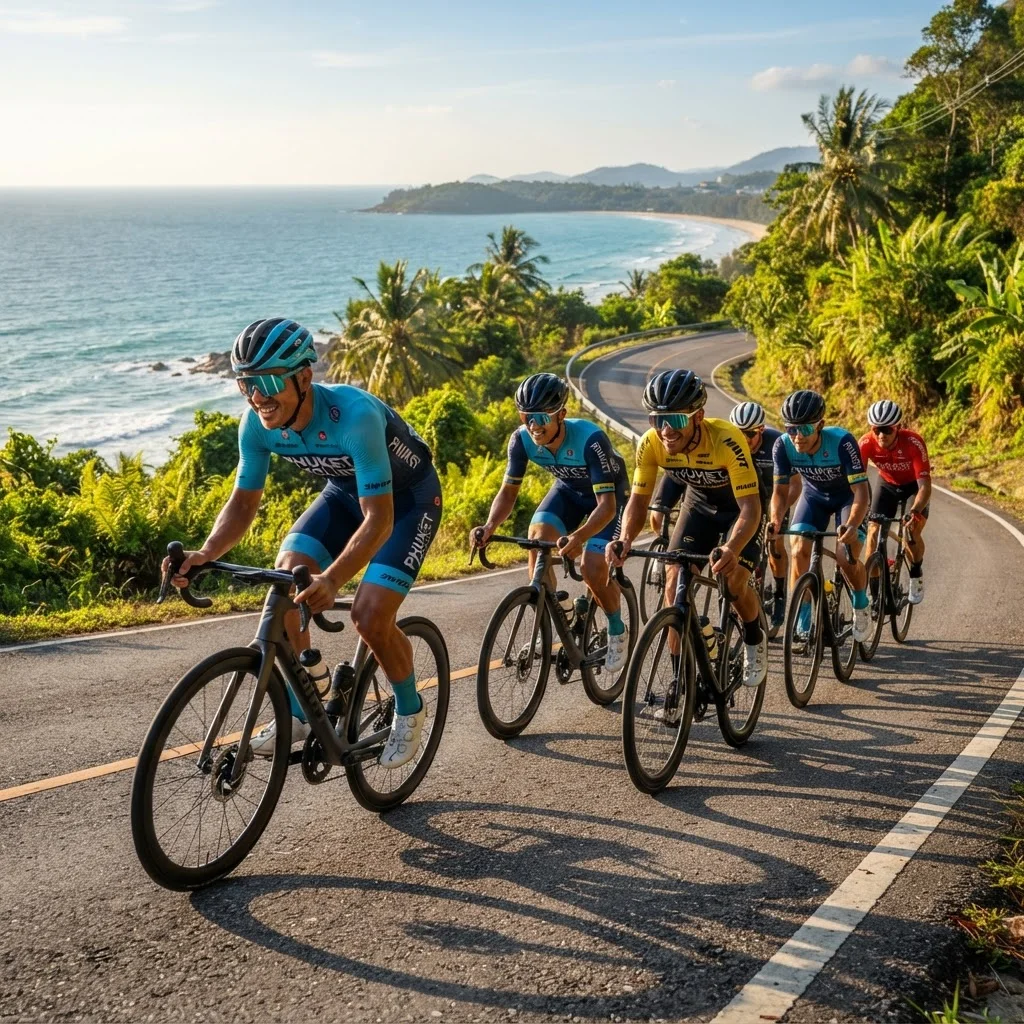
The southwest coastal corridor along Route 4233 delivers a punishing succession of short, punchy climbs and fast drops between Nai Harn, Kata, and Karon. Riding northbound from Nai Harn, the road snakes upward through forested switchbacks towards Karon Viewpoint, ascending to approximately 190 metres above sea level. This elevated ridge looks out across the three sweeping arcs of Kata Noi, Kata, and Karon bays. The subsequent drop into Kata Noi requires careful line choice, as narrow lanes and sudden tight corners descend sharply towards sea level.
Between Kata Noi and Kata Beach, riders face another short, double-digit ramp over the rocky promontory before the terrain levels out across the Kata and Karon beach flats. While the coastal strip itself is relatively flat, traffic density builds rapidly by mid-morning as tourist minibuses, songthaews, and delivery vans crowd the roads. Pushing north beyond the Karon roundabout leads towards the formidable coastal ridge heading into Patong. This ascent climbs to 181 metres with blind corners and heavy commercial traffic, prompting most road cyclists to turn inland or loop back south towards Rawai.
Timing is critical on these west-coast rollers. Setting off at first light, between 06:00 and 07:00, avoids the heavy exhaust fumes and crowded lanes that develop once beach transfers begin. Road surfaces along Route 4233 consist predominantly of coarse asphalt, which grips reliably in dry conditions but becomes hazardous during sudden tropical downpours when residual engine oils float to the surface. Controlling descent speeds and modulating both brakes smoothly preserves tyre traction on the steeper hairpins.
Northern Flatlands: Sirinat to Sarasin Bridge
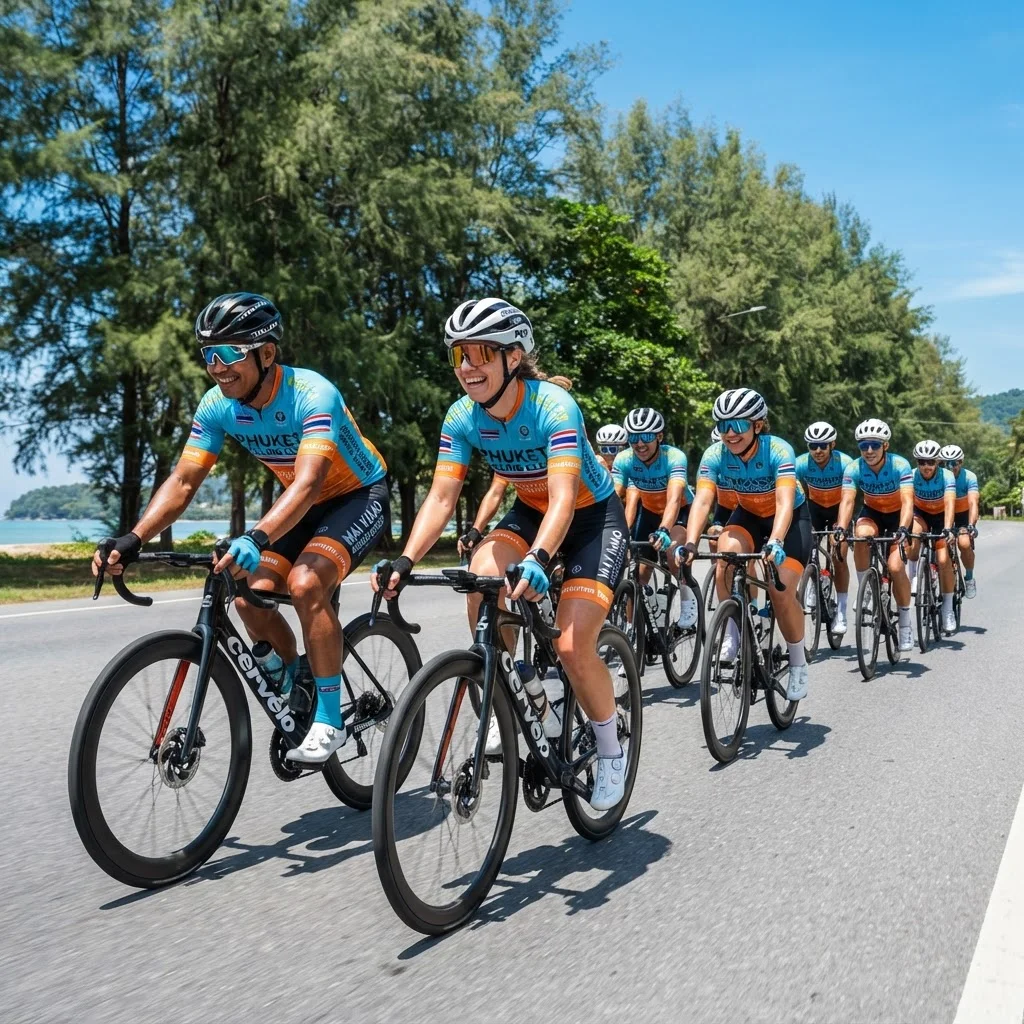
Northern Phuket provides a stark terrain contrast to the mountainous southern peninsula, swapping punishing coastal climbs for long, level stretches of asphalt heading towards the mainland. Setting off from the fringes of Sirinat National Park and Nai Yang Beach, you can ride northward through Mai Khao along quiet rural access roads that run parallel to Route 402 (Thepkrasattri Road). The profile across this northern tip is remarkably flat, giving road cyclists, time-triallists, and triathletes uninterrupted room to drop onto aero bars, spin in high gears, and hold sustained tempo without negotiating steep switchbacks or tourist traffic.
The route leads directly to Sarasin Bridge, the historic crossing spanning the Pak Phra Strait to link Phuket with Phang Nga Province. Bypassed for motorised vehicles by the newer Thepkasattri Bridge, the original Sarasin structure is pedestrianised, allowing cyclists and walkers to cross between provinces without competing with heavy highway lorries or coaches. Endurance cyclists frequently pedal across into Khok Kloi and the rural Natai coastline on the mainland, piecing together 80- to 100-kilometre flat training circuits on calm, well-paved lanes.
Riding in this northern corridor requires attention to local conditions. After midday, onshore sea breezes gather strength, generating sharp crosswinds across open farm plots, coconut groves, and shrimp ponds. While Route 402 provides a broad paved hard shoulder, it carries fast-moving multi-lane traffic and collects scattered tyre wire and metallic road debris that cause frequent punctures. Sticking to the rural backroads through Mai Khao village allows you to bypass the arterial highway almost entirely, trading heavy transport corridors for quiet asphalt, village coffee stops, and views across the northern Andaman shoreline.
East Coast Outskirts: Koh Sirey and Cape Panwa
Riding along Phuket's eastern fringe reveals a markedly quieter side of the island, dominated by coastal mangrove channels, working rubber smallholdings, and small fishing communities. Heading east out of Phuket Town along Sri Suthat Road, cyclists cross the narrow sea channel onto Koh Sirey. An undulating perimeter circuit of roughly 15 kilometres loops around the island, passing quiet coastal lanes, rubber trees, and the stilt houses of Laem Tuk Kae fishing village. Gradients here remain gentle, making it an accessible route for steady endurance miles, though riders should watch for delivery vans and tourist minivans heading towards Rassada Pier during early ferry departure windows.
To the south, Sakdidet Road leads towards the Cape Panwa peninsula, rolling across low coastal hills lined with sea views and roadside greenery. Taking the inland spur towards Khao Khad Views Tower introduces the route's primary physical test: a short, punishing ramp where gradients spike sharply, demanding low gearing and steady cadence. At the summit car park, stone stairs lead up to an octagonal observation tower providing panoramic views across Chalong Bay towards the Big Buddha on the Nakkerd ridge. The descent sweeps down towards the coast, requiring controlled braking on narrower bends where road grit can gather.
Unlike the sustained, steep passes of the west coast, eastern routes combine manageable rollers on mixed asphalt and concrete, providing scenic distance without extreme climbing. Early morning departures between 06:00 and 07:30 are sensible, letting you finish before tropical heat builds and traffic thickens along the approaches into Phuket Town.
Road Surfaces, Technical Descents, and Tropical Heat Dynamics
Phuket's combination of coastal headlands, steep spurs, and tropical maritime weather creates distinct handling demands for road cyclists. Island tarmac varies from smooth, open asphalt on primary corridors to worn, coarse chip-seal and polished concrete on steep village lanes and coastal approaches. These concrete sections offer poor traction when damp, making 28mm tyres inflated to moderate pressures a sensible baseline for grip, comfort, and rim protection over irregular expansion joints.
Technical descents require measured discipline. Coastal spurs, such as the steep ramps dropping away from Windmill Viewpoint, feature tight switchbacks with gradients frequently exceeding 10 percent. Between May and October, sudden monsoon downpours wash fine gravel, red silt, and fallen palm fronds directly into braking zones and cornering lines. The initial fifteen minutes of rain also lift built-up motor oil from the asphalt, creating treacherous slick spots. Scrub speed in a straight line well before tipping into a turn, as braking hard across concrete joins or wet surface debris invites front-wheel washouts.
Heat dynamics add physical strain. While ambient temperatures often hover between 31 and 34 degrees Celsius, relative humidity frequently pushes the apparent heat index past 38 degrees Celsius before midday. On steep, unshaded climbs where airflow drops, radiant heat off the dark asphalt rapidly accelerates cardiovascular fatigue and heat exhaustion.
Mechanical support on the road reflects local transport habits. Roadside motorcycle workshops sit along almost every rural lane, and their mechanics can vulcanise patches onto bicycle inner tubes. However, they stock no lightweight 11-speed or 12-speed chains, Presta valves, or road disc pads. Carrying dedicated tubes, a compact pump, and a reliable multi-tool ensures self-sufficiency on remote stretches.
Where to Hire Quality Road Bikes and Connect with Local Hubs
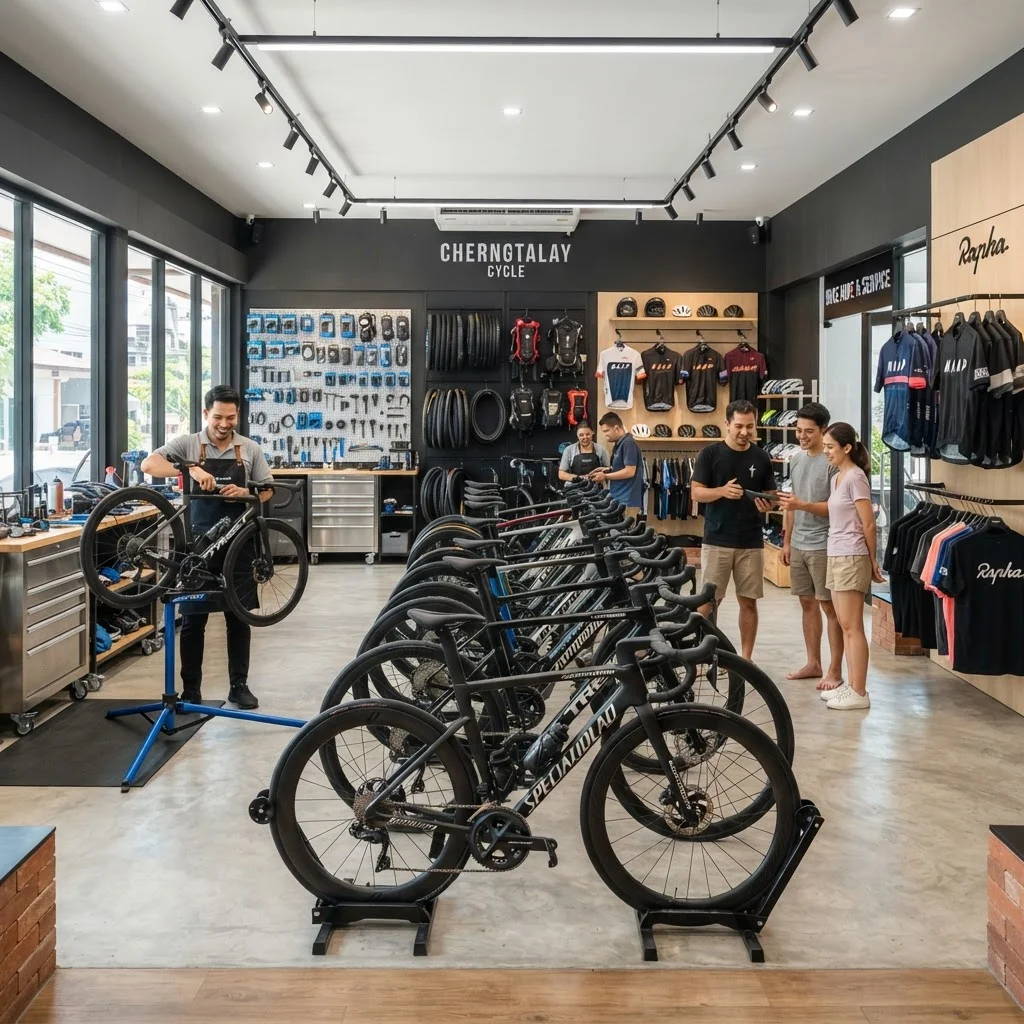
Phuket has a compact selection of dedicated cycle shops catering to road riders, triathletes, and touring cyclists. Siam Bike Tours, based on Lagoon Road near Boat Avenue in Cherngtalay, operates as an established hub for performance road cycling. Their rental fleet features carbon machines such as the Giant TCR Advanced 2 KOM with Shimano 105 groupsets from 1,200 THB (approx £28) daily, and 105 Di2 electronic-shifting models from 1,600 THB (approx £37) daily. For assisted riding, pedal-assist Giant e-bikes start from 1,500 THB (approx £35), alongside ultralight carbon e-road bikes from 2,000 THB (approx £46) per day. Rentals incur a mandatory 200 THB (approx £4.60) cleaning fee, and the shop is closed on Sundays for collections and returns.
Siam Bike Tours also organises guided rides, including their popular 50-kilometre Phuket Coast to Coast half-day tour, priced at 1,900 THB (approx £44) if bringing your own bicycle or 2,400 THB (approx £55) including a carbon road bike package.
Further south, cycling infrastructure branches out into different disciplines. In Chalong, independent bike shops near the roundabout service the local road scene and provide aluminium road frames and fitness hybrids from around 400 THB to 800 THB (approx £9 to £18) per day. For leisurely exploration across the southern headlands, Chalong-based specialist Sawadeebike rents Thai-crafted fat-tyre pedal-assist electric bikes from 379 THB (approx £9) daily, restricted to a defined southern riding zone between Rawai, Chalong, and Karon.
Basic single-speed city runabouts with front baskets can be hired from local guesthouses in Old Phuket Town and Rawai for roughly 150 THB to 250 THB (approx £3.50 to £5.80) daily, though these are strictly suited to short, flat errands. Serious riders wanting premium carbon machinery and structured coastal group routes should base themselves near Cherngtalay and reserve their bikes well in advance.
Costs and Budgeting
Budgeting for cycling in Phuket depends on whether you require a performance road setup or basic transport. At the time of writing, quality carbon road bike rental runs from 1,200 THB to 1,600 THB (approx £28 to £37) per day for disc-brake models with Shimano 105 or Ultegra gearing, with weekly bookings reducing daily rates by roughly ten to twenty percent. Specialist shops generally require a refundable deposit between 5,000 THB and 15,000 THB (approx £116 to £349) via credit card pre-authorisation. Optional bike damage waivers typically cost 100 THB to 250 THB (approx £2.30 to £5.80) per day.
Guided half-day road tours covering 50 kilometres, including a support vehicle, ride leader, and hydration, average 1,900 THB to 2,400 THB (approx £44 to £56), the higher price including road bike hire. For independent groups and training camps, chartering a private air-conditioned support van with driver costs roughly 3,000 THB to 4,500 THB (approx £70 to £105) per day. Mid-range accommodation catering to cyclists around Chalong or Thalang costs between 1,200 THB and 2,500 THB (approx £28 to £58) per night, typically providing secure ground-floor storage. On the road, water refills, electrolyte drinks, and iced coffee at convenience stores rarely exceed 150 THB (approx £3.50) per morning.
| Option | Cost (THB) | Cost (GBP approx) | Notes |
|---|---|---|---|
| Utility City Bike Hire | 150 - 250 / day | £3.50 - £5.80 | Single speed or basic gears for short local errands |
| Aluminium Road / Hybrid Hire | 700 - 900 / day | £16.30 - £20.90 | Shimano Sora or Tiagra, flat pedals or basic SPD |
| Carbon Road Bike Hire | 1,200 - 1,600 / day | £28.00 - £37.20 | Shimano 105 or Ultegra, disc brakes, bring pedals |
| Guided Half-Day Coastal Tour | 1,900 - 2,400 | £44.20 - £55.80 | Includes bike, helmet, guide, hydration, and support vehicle |
| Private Support Van Hire | 3,000 - 4,500 / day | £69.80 - £104.70 | Suited for custom multi-rider group training camps |
| Roadside Spares (Tube / CO2) | 250 - 400 | £5.80 - £9.30 | Premium lightweight tubes found at specialist bike shops |
What To Know Before You Go
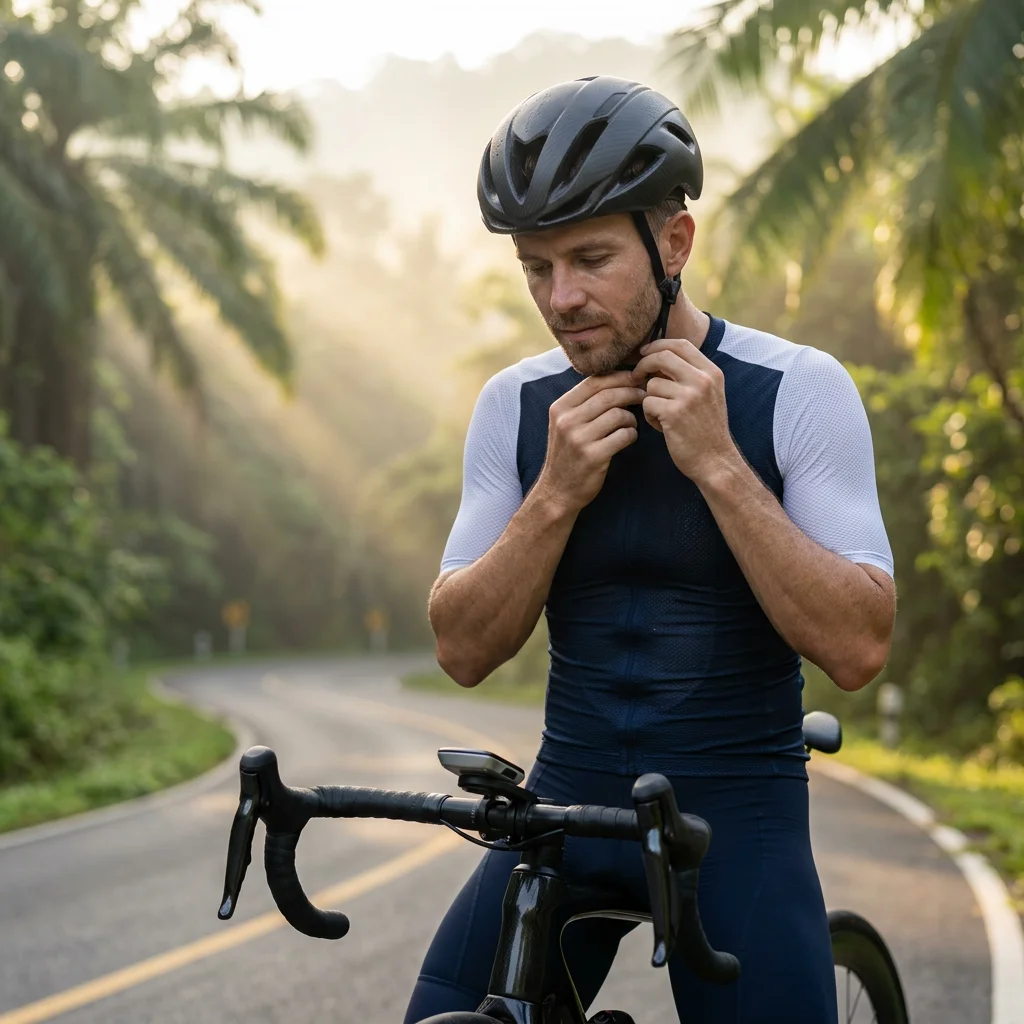
Roll out at first light, ideally between 06:00 and 06:30. Setting off at dawn allows you to tackle the island's steeper gradients before midday heat peaks and tourist traffic clogs key coastal arteries.
Pack your own helmet, cycling shoes, and matching pedals from the UK. While local bicycle hire outlets generally supply flat pedals or standard mountain bike SPD cleats, sourcing specific road systems like Look Keo or Shimano SPD-SL on short notice is difficult, as is finding larger UK shoe sizes.
Ride defensively. Thailand drives on the left, but traffic etiquette is fluid. Motorbikes and scooters frequently travel against the flow of traffic along road shoulders to bypass distant U-turns, and vehicles routinely edge out from blind junctions and service slipways without looking.
Review your travel insurance policy wording before leaving home. Standard holiday policies often restrict or exclude road cycling, categorising rides across hilly terrain as high-risk sporting pursuits. Ensure your cover explicitly includes amateur road cycling, third-party liability, and emergency medical repatriation. The Foreign, Commonwealth & Development Office (FCDO) highlights high road accident rates across Thailand and advises that local private hospital treatment requires upfront payment guarantees.
Practical Tips
Download offline GPX navigation files to your bike computer or smartphone before heading out. Mobile reception often drops along interior jungle ridges and through rubber plantations in central and northern Phuket, where minor rural junctions rarely feature English-language signposts. Looking out for four-digit rural roads (such as Route 4027 or 4005) or paved unnumbered backroads keeps you off the arterial highways.
Avoid riding along Route 402 (Thepkasattri Road), particularly during peak morning and evening commuter hours. This multi-lane central corridor carries fast coaches, delivery lorries, and aggressive passenger minivans, leaving little room on the hard shoulder where debris accumulates. When linking quiet rural loops, cross Route 402 at controlled junctions rather than riding along it for extended distances.
Fit high-output daytime running lights to both your handlebars and seatpost. Dappled shadows cast by dense roadside trees, bright morning glare, and sudden tropical downpours reduce cyclist visibility to oncoming traffic. On descents and tight bends, watch for patches of loose gravel, wet leaves, and sand washed onto the asphalt by overnight rain, and slow down around blind corners in rural villages where free-roaming dogs often lounge near the road.
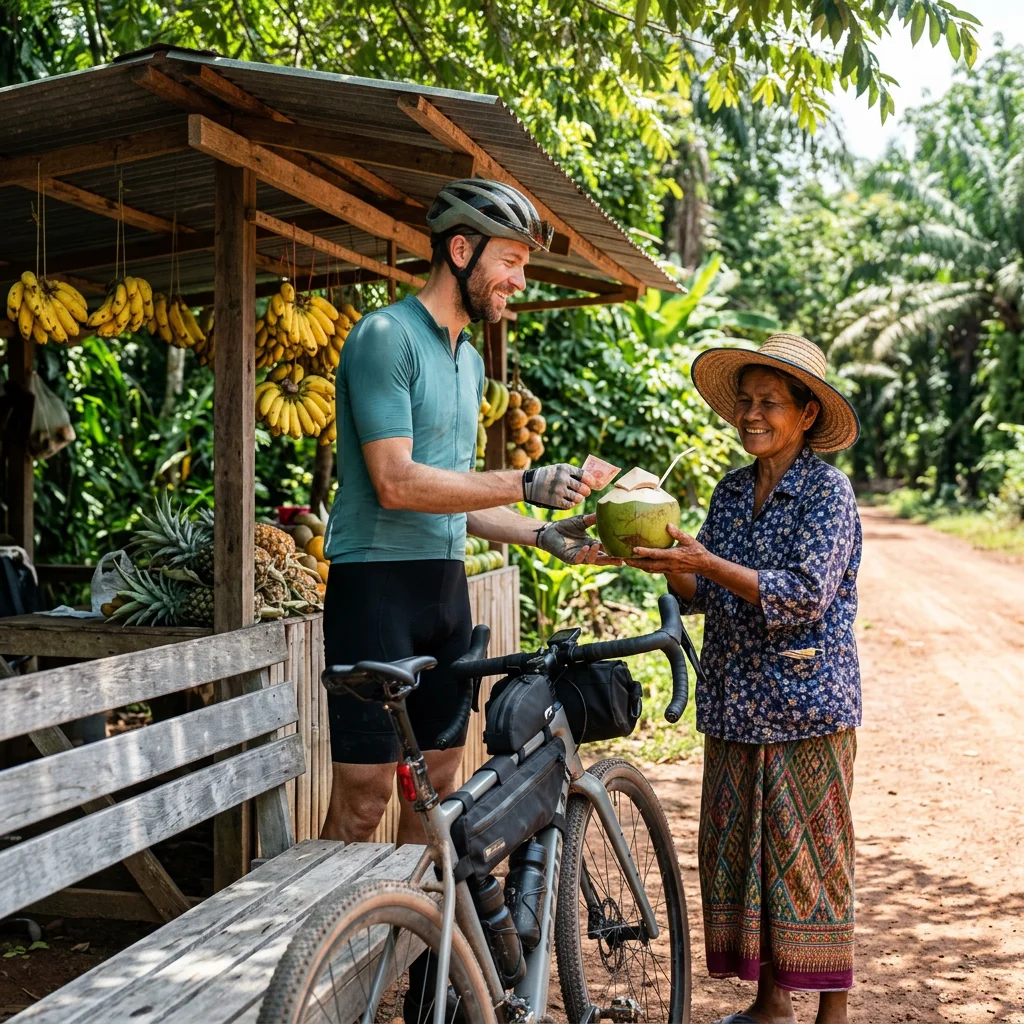
Keep physical cash readily accessible in small denominations, including 20 THB (approx 45p), 50 THB (approx £1.15), and 100 THB (approx £2.30) banknotes. Independent fruit stands, family-run roadside drink stalls, and rural refreshment huts throughout Thalang and the northeast coast do not take foreign payment cards or contactless digital transfers. Having small change allows quick stops for cold bottled water, electrolyte sachets, and fresh cut fruit without delay.
Carry out a thorough pre-ride inspection of any hire bicycle before departing the rental premises. Check disc brake pad thickness, lever travel, tyre tread, and chain wear carefully, especially if planning steep descents around Nai Harn or Nakkerd Hill that rapidly wear down braking surfaces. During the peak dry season from December to February, reserve your preferred frame size several weeks in advance to avoid missing out on well-maintained road bikes.
Quick Reference Table
| Item | Detail | Notes |
|---|---|---|
| Best Time to Ride | 06:00 – 08:00 (depart at first light) | Avoids intense midday heat index (>38°C) and heavy tourist minibus traffic |
| Southern Headlands Loop | Nai Harn, Ya Nui, Cape Promthep & Rawai | Technical 15 km circuit delivering 240 m of climbing with ramps up to 14% |
| Big Buddha Ascent | Yot Sane 1 spur, Chalong (Nakkerd Hill) | 5.6 km climb gaining 350 m with pitches reaching 17%; 32T or 34T cassette advised |
| Northern Flatlands | Sirinat National Park to Sarasin Bridge | Level endurance corridor ideal for aero efforts and 80–100 km rides into Phang Nga |
| East Coast Circuits | Koh Sirey and Cape Panwa | Quieter rural terrain with a short, punishing ramp to Khao Khad Views Tower |
| Carbon Road Bike Hire | 1,200 – 1,600 THB (approx £28 – £37) / day | Shimano 105 or Ultegra disc models; refundable deposit of 5,000–15,000 THB required |
| Guided Half-Day Tours | 1,900 – 2,400 THB (approx £44 – £56) | 50 km guided coastal rides with support vehicle, hydration, and optional bike hire |
| Essential Kit to Bring | Pedals, cycling shoes, and helmet from the UK | Road systems (Look Keo, SPD-SL) and larger UK shoe sizes are scarce locally |
| Road Safety Essentials | Daytime running lights and defensive riding | Beware of counter-flow scooters on shoulders, gravel in corners, and oil on wet tarmac |
| Insurance Requirements | Specialist amateur sports/cycling policy | Verify cover includes hilly road cycling, liability, and emergency medical repatriation |
| Website | Siam Bike Tours: siambiketours.com | Cherngtalay performance road bike rental, Di2 models, and guided coastal tours |
| Website | Sawadeebike: sawadeebike.com | Chalong-based pedal-assist electric fat-bike hire for southern coastal zones |
| Website | Phuket Cycling Thailand: phuketcyclingthailand.com | Island route support, local cycling contacts, and ride logistics |
FAQ: Cycling in Phuket
What is the best time of day to start cycling in Phuket?
What gear setup is recommended for steep climbs in Phuket?
What precautions should cyclists take when descending in Phuket?
Is there a dress code for visiting the Big Buddha temple after cycling?
What are the hazards of cycling during monsoon downpours in Phuket?
What kind of mechanical support is available for cyclists in Phuket, and what should riders carry?
What is the typical cost and deposit for renting a quality carbon road bike in Phuket?
What cycling gear should visitors bring from home when cycling in Phuket?
What should cyclists check regarding their travel insurance before cycling in Phuket?
Why should cyclists carry small denominations of Thai Baht cash in Phuket?
Reviewed by the Thailand Guide Editorial Team • Last reviewed: 17 November 2026
This page is provided for general information only. While we aim for accuracy, details can change — please verify anything important independently before relying on it.