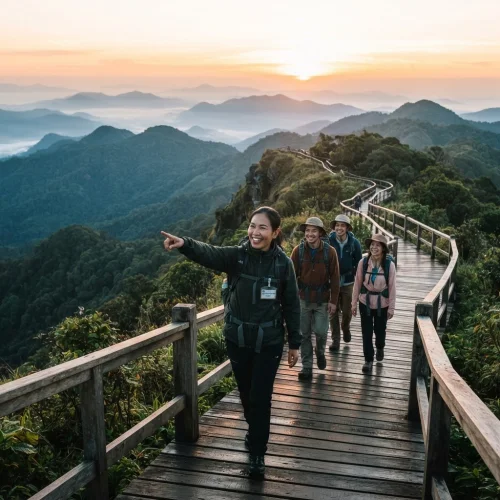
Kayaking in Phang Nga Bay
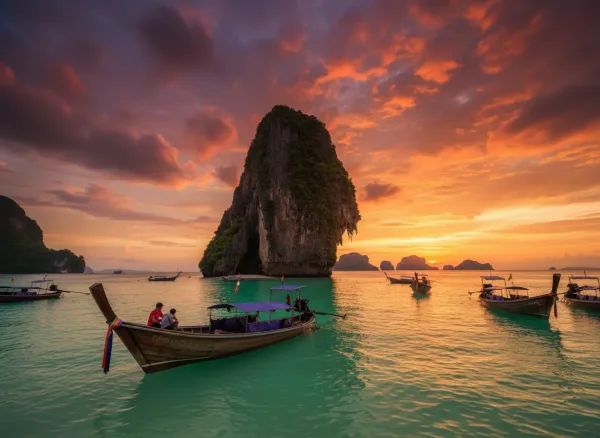
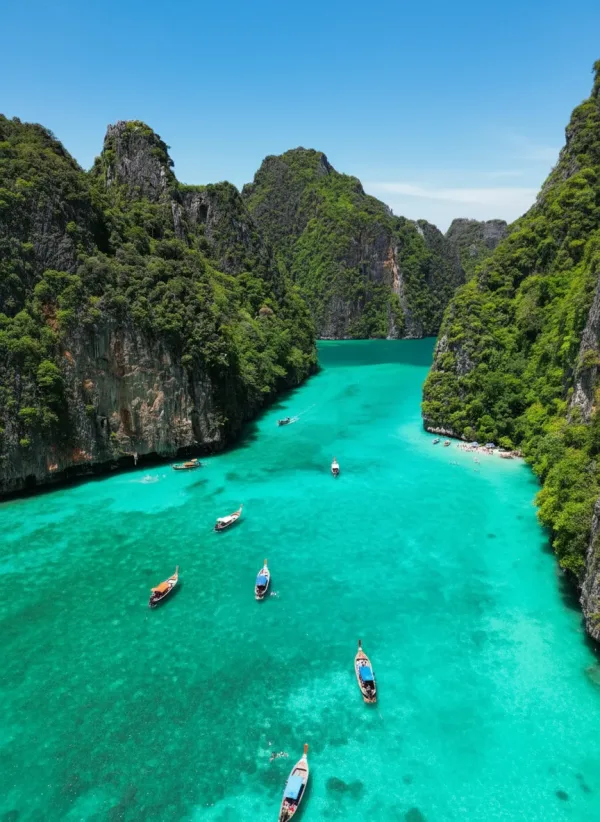
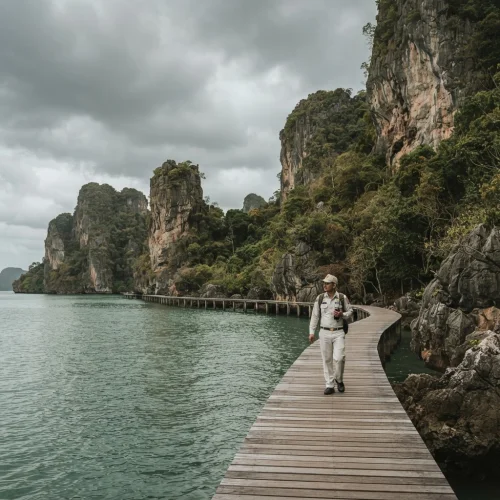
Ao Phang Nga National Park covers 400 square kilometres of sheltered marine waters between Phuket and mainland Phang Nga Province. Steep limestone karst islands dominate the seascape, riddled with sea caves and tunnels carved out by wave action and water dissolution. At lower tides, these subterranean passages allow kayaks to enter enclosed interior lagoons, known in Thai as hongs (rooms). Inside these open-air chambers, vertical rock walls rise around saltwater pools bordered by mangroves, stalactites, and hanging foliage.
Because high cliffs shield the bay from open ocean swells, the calm waters provide an accessible environment for exploratory paddling. The experience relies heavily on tidal timing; access tunnels submerge at high water and drain during extreme low tides, dictating when vessels can pass through. Outfits throughout the region, including established operators such as John Gray’s Sea Canoe, organise guided day itineraries, twilight excursions, and multi-day camping journeys. The unhurried pace suits travellers seeking wildlife observation and geology rather than motorised watersports, providing a slow-moving vantage point across southern Thailand’s dramatic coastal karst topography.

Tidal Hongs and Limestone Karst Navigation
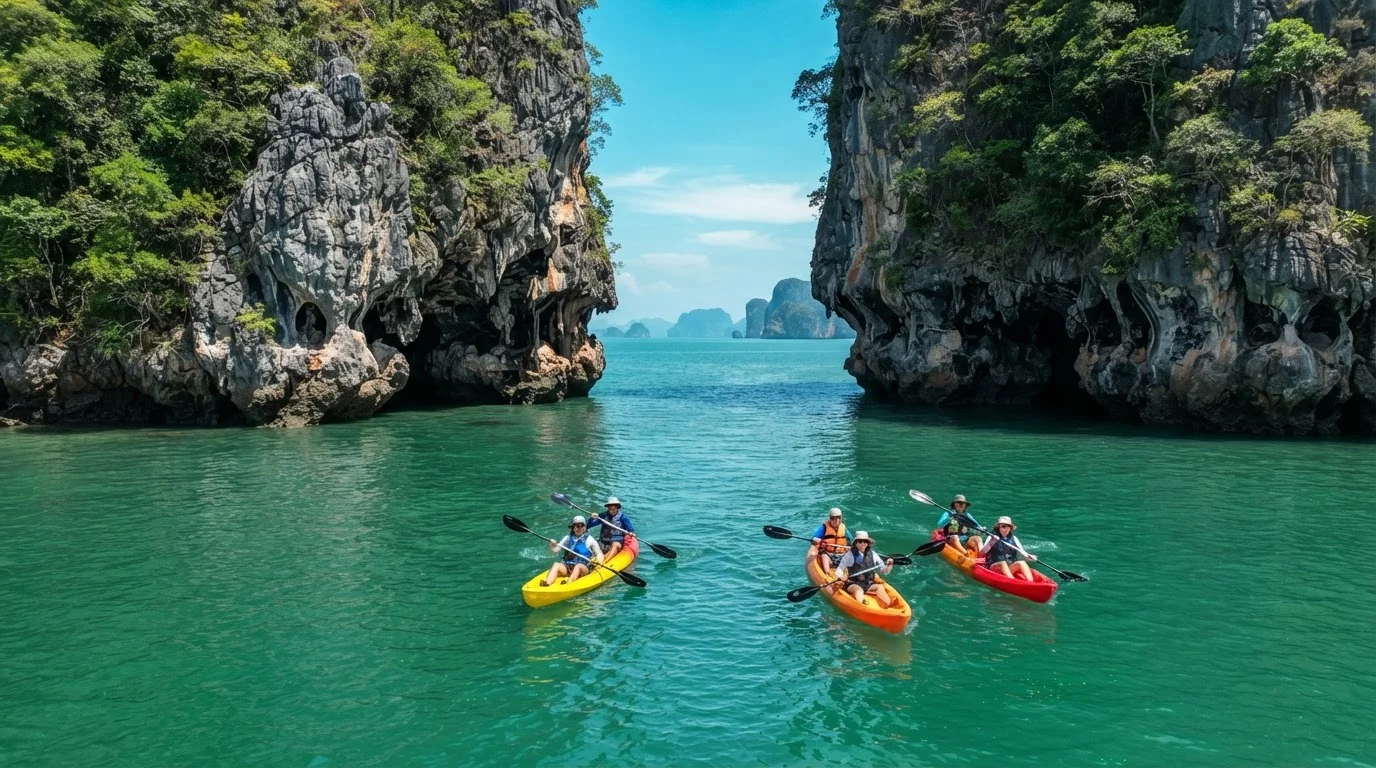
Phang Nga Bay's karst topography features an extensive network of tidal hongs—collapsed limestone cave systems that form enclosed open-air lagoons ringed by sheer cliffs reaching up to one hundred metres high. In Thai, the word hong translates to "room", describing these sea-level chambers accessed by water. Reaching the interior requires navigating low, sea-level cave tunnels hollowed out by millions of years of marine and chemical erosion. Because these tunnels connect directly to the open sea, entry depends on tidal fluctuations. During high spring tides, seawater rises to the tunnel ceilings, sealing the entrances completely. Conversely, during extreme low tides, the water drains out to reveal impassable mudflats and exposed limestone boulders.
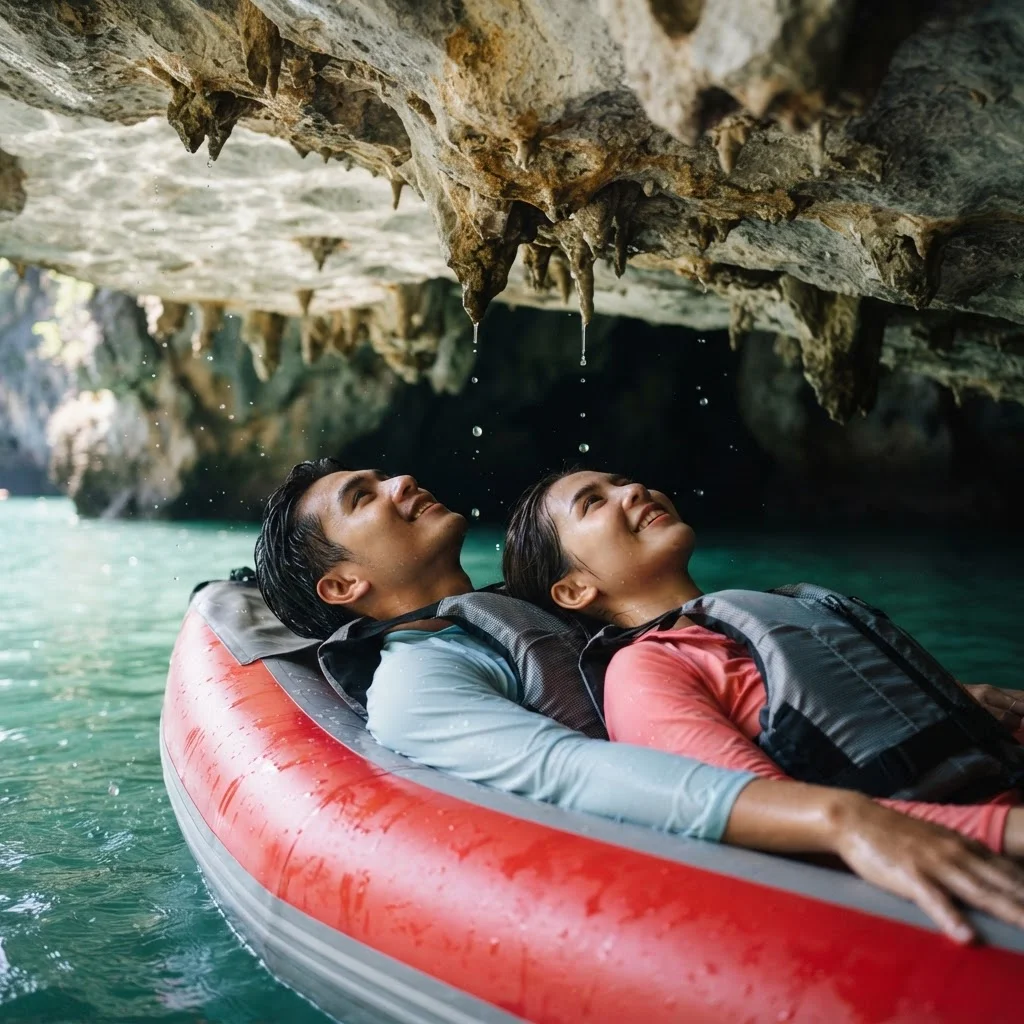
The primary locations for hong exploration sit within Ao Phang Nga National Park at Koh Panak and Koh Hong. Koh Panak contains multiple distinct cave systems, including Bat Cave (Tham Khang Khao), Mangrove Cave, and Diamond Cave. Paddling into these interior chambers requires mid-tide windows, which open roughly twice each lunar day as the tide ebbs or flows. In narrow passages where the cavern roof drops to within centimetres of the water, paddlers must lie completely flat on their backs while the guide manoeuvres the craft beneath jagged stalactites. Emerging from the dark tunnel into the hong reveals a stark shift in atmosphere: outboard engine sounds disappear, replaced by the calls of kingfishers and the rustle of crab-eating macaques moving through the vegetation above. Sunlight streams down onto shallow saltwater pools where mudskippers, fiddler crabs, and mangrove saplings thrive on exposed tidal banks.
Mangrove river systems and coastal channels
Beyond the offshore islands, the northern and western shores of Phang Nga Bay encompass Thailand's largest native mangrove forest, spanning thousands of hectares across an intricate network of estuarine waterways. Paddling from mainland launch points such as Tha Dan Pier near Phang Nga town or the coastal fishing village of Ban Sam Chong Tai takes kayakers directly into these sheltered river channels. Towering stands of red and black mangroves dominate the brackish banks, their arching stilt roots trapping silt and creating vital nursery grounds for juvenile fish and crustaceans. Narrow tidal creeks branch off the main channels, allowing shallow-draught kayaks to reach quiet backwaters inaccessible to motorised longtail boats. Overhead, Brahminy kites and white-bellied sea eagles circle above limestone pinnacles that rise abruptly out of the green forest canopy, while Asian water monitors patrol the muddy shorelines. Because barrier islands and shallow sandbanks shield these inner waterways from offshore swell, water conditions remain calm throughout the year. When venturing into the dense mangrove creeks, pack insect repellent and wear lightweight, quick-drying long-sleeved layers to guard against biting midges around stagnant water.
Expedition Formats: Sunset Paddles, Bioluminescence, and Starlight Hongs
Afternoon-to-evening excursions offer an effective way to experience Phang Nga Bay without the noise and wash of heavy daytime boat traffic. Rather than competing with morning tour fleets, twilight programmes typically depart coastal piers around midday. They reach the limestone islands as standard day-trippers return south, leaving the tidal sea caves and inner chambers uncrowded.
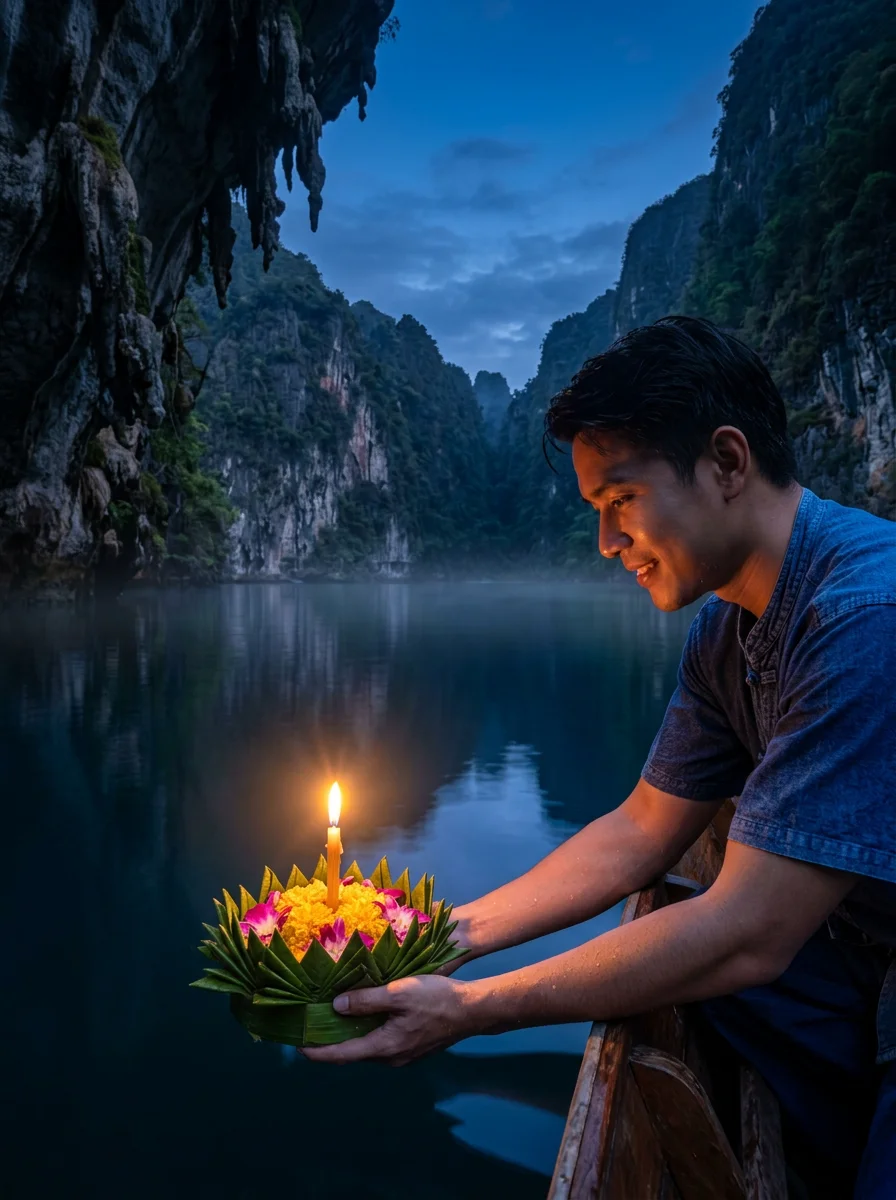
Pioneered by John Gray’s Sea Canoe under the Hong by Starlight programme, these itineraries combine daytime exploration with night paddling. Guides steer inflatable canoes through the tidal tunnels of Koh Panak and Koh Hong in the afternoon, returning to the escort vessel before dusk. While dinner is served, guests craft traditional floating baskets known as krathongs, shaping banana leaves, fresh flowers, and incense into buoyant floral displays.
As night falls, paddlers slip back into the water to float their krathongs inside the darkened hongs. Guides use dim headlamps along the limestone tunnels to prevent disturbing roosting fruit bats overhead, then extinguish all lights once deep within the enclosed lagoon. In the pitch black, bioluminescent dinoflagellates illuminate the water: trailing fingers or stirring a paddle blade through the sea triggers flashes of blue-green light across the surface.
For travellers wanting deeper immersion, multi-day sea kayak expeditions venture beyond the central day-trip radius. These two- or three-day itineraries paddle remote karsts around Koh Kudu, Koh Roi, and Koh Nok, with support crews pitching tents on secluded sand spits and preparing hot meals at mobile shore camps. For wider coastal routes beyond the bay, our overview of Kayaking in Thailand compares these multi-day island journeys with southern marine parks.
Explore Khao Khad Beach on Phuket's Cape Panwa with practical advice on tidal conditions, the 360-degree Views Tower, beachfront dining, transport, and costs.
Paddling Dynamics: Self-Paddled Sea Kayaks Versus Inflatable Canoes
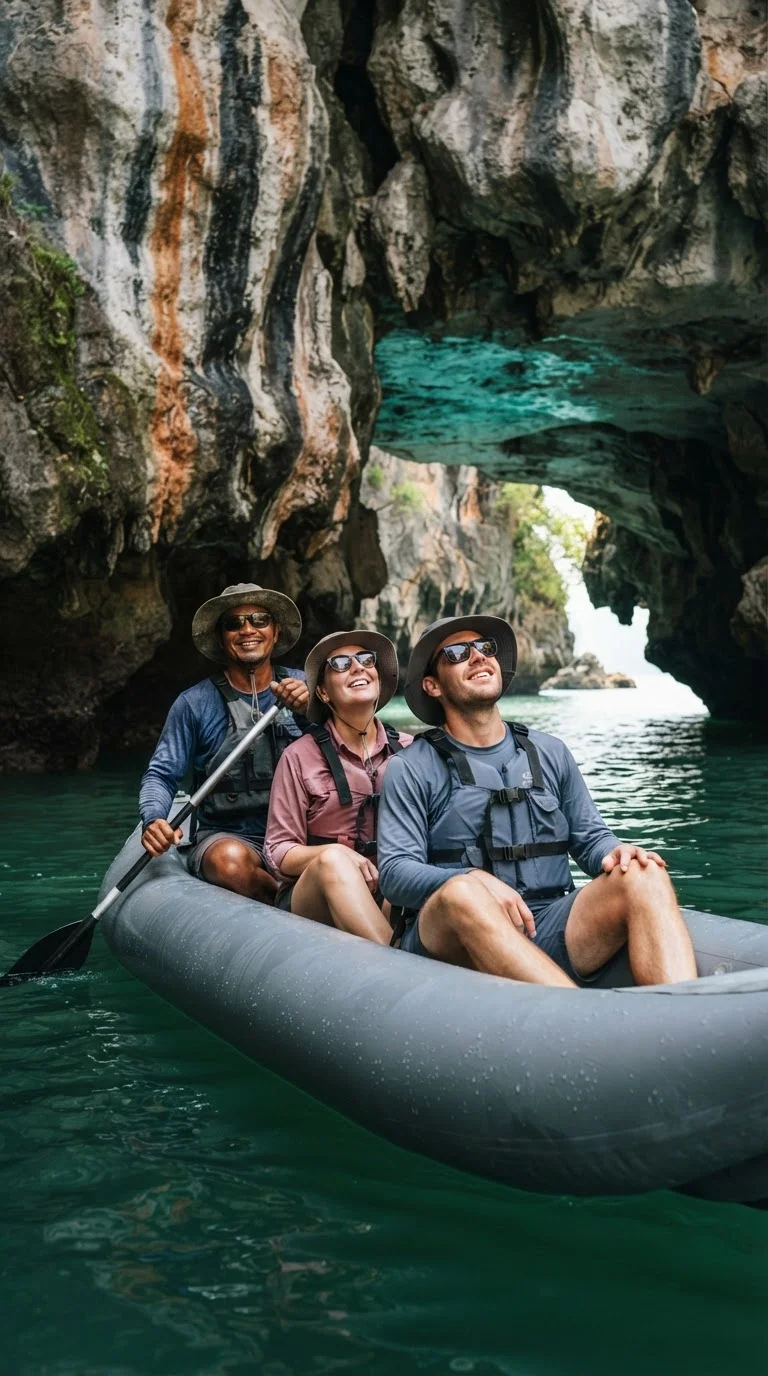
Two distinct craft styles dictate the physical exertion and technical control of any journey through Phang Nga Bay. Commercial day excursions almost universally deploy heavy-duty two-person inflatable sea canoes or kayaks, propelled by local Thai guides seated at the stern. Originally pioneered in the bay using custom multi-chamber inflatables built to withstand contact with jagged karst, these craft provide broad-beamed primary stability. Because the guide handles all propulsion and precision steering, visitors expend no physical effort. This frees both hands for cameras and binoculars while the boatman guides the craft through narrow sea-cave squeezes, shallow tidal tunnels, and tidal rips that require exact timing.
In contrast, independent and small-group expedition programmes supply rigid sit-inside touring kayaks built from polyethylene or composite fibreglass. These hulls feature narrow beams, sealed fore and aft storage bulkheads, adjustable foot pedals, and integrated rudders or skegs, paddled with dual-blade touring paddles and spraydecks. Self-paddling demands dependable cardiovascular stamina, upper-body endurance, and core boat-handling competence. While Phang Nga Bay's interior waterways remain sheltered by towering limestone formations, open-water crossings between islands expose paddlers to tidal currents, crosswinds, and rolling surface chop. Inflatable canoes bounce harmlessly off sharp limestone without puncturing, but rigid touring sea kayaks deliver far superior glide and tracking speed, allowing active paddlers to cover 10 to 20 kilometres daily between remote northern channels.
Selecting between the two formats comes down to physical ambition and comfort. Guide-paddled inflatable canoes suit families with young children, casual sightseers, and photographers who want a steady platform without blistered hands. Self-paddled touring kayaks suit active travellers who prefer navigational independence, physical exercise, and access to remote northern stretches where motorised tour boats rarely travel.
| Expedition Route | Duration | Primary Sights | Suitable Experience Level |
|---|---|---|---|
| Koh Panak and Koh Hong Day Tour | 8 to 9 hours | Bat Cave, Ice Cream Cave, interior tidal hongs | Novice / all fitness levels (guide-paddled inflatable) |
| Hong by Starlight Sunset Excursion | 9 to 10 hours | Twilight hongs, krathong release, bioluminescent plankton | Novice / families (guide-paddled inflatable) |
| Ban Sam Chong Mangrove Circuit | 4 to 5 hours | Estuarine mangrove channels, stilt villages, birdlife | Moderate (self-paddled or community-guided) |
| Northern Karst Multi-Day Expedition | 2 to 3 days | Koh Roi, Koh Kudu, remote cave passages, beach camps | Intermediate / active paddlers (self-paddled sea kayak) |
Location and Getting There
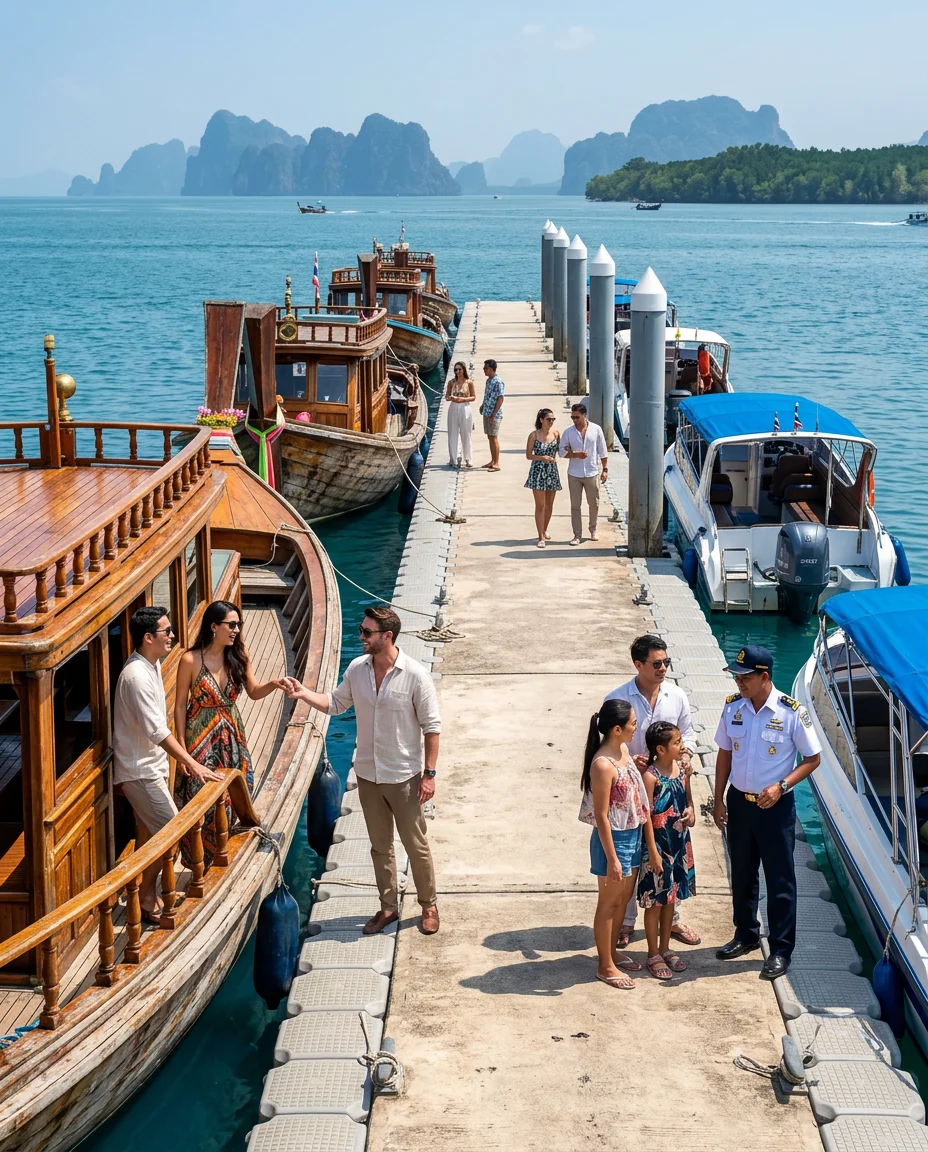
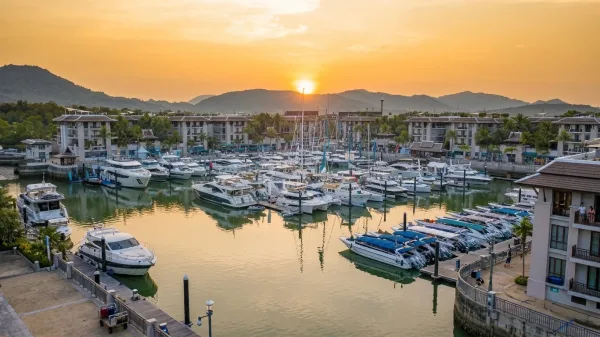
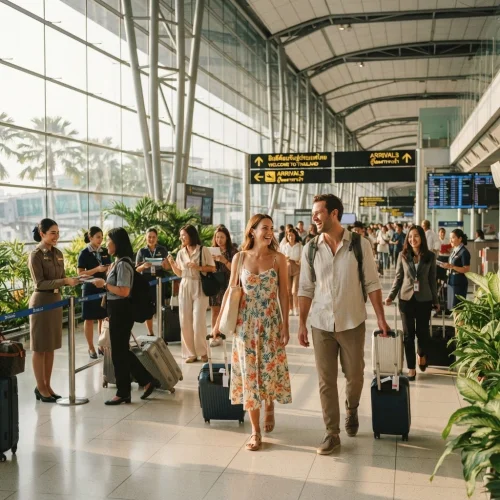
Phang Nga Bay lies in the Andaman Sea, enclosed by Phuket to the southwest, Phang Nga Province to the north, and Krabi to the east. The majority of commercial sea kayaking excursions depart from piers along northeastern Phuket, predominantly Ao Po Pier and the adjoining Ao Po Grand Marina. Travellers arriving at Phuket International Airport (HKT) can reach Ao Po Pier by private taxi in 25 to 35 minutes across roughly 23 kilometres, with fares typically around 800 THB (£18). From resort hubs such as Patong, Karon, and Kata on Phuket's west coast, a private transfer requires 50 to 75 minutes and costs roughly 1,000 to 1,200 THB (£22 to £27). Most pre-booked day tours include shared minivan hotel collection.
Visitors based in mainland Phang Nga town can arrange local longtail boats at Tha Dan Pier, located roughly six kilometres south of the provincial centre beside the national park headquarters. For travellers staying along the beaches of Khao Lak, reaching northern launch points such as Khlong Khien Pier entails a 75- to 90-minute road journey of around 70 kilometres, with private transfers costing approximately 1,800 THB (£40). Excursions also operate from the Krabi coastline, where speedboats leave from Nopparat Thara Pier near Ao Nang, crossing into the bay in roughly 45 minutes.
Costs and Booking
Commercial sea canoeing in Phang Nga Bay divides between shared day cruises, premium sunset tours, and private charters. Standard full-day guided sea canoeing packages generally cost between 2,200 THB (£49) and 2,800 THB (£62) per adult on large shared escort vessels. These fares typically include return hotel transfers from Phuket or Krabi, a buffet lunch, canoeing gear, and a local guide who paddles the craft.
Specialised late-departure trips carry a premium. The Hong by Starlight programme run by John Gray’s Sea Canoe costs 3,950 THB (£88) per adult and 1,975 THB (£44) for children aged six to twelve (under-sixes travel free), including transfers, dinner, park fees, and evening cave paddles. Private longtail charters from mainland piers like Surakul cost roughly 4,000 THB to 5,500 THB (£89 to £122) per boat for up to four passengers, with local canoe hire adding about 300 THB (£7) per seat. Multi-day wilderness camping expeditions run from 8,500 THB to 22,000 THB (£189 to £489) per person.
Rates remain firm throughout the dry high season from November to April. During the May to October low season, prices soften slightly, though squalls occasionally force itinerary adjustments. Foreign visitors must also account for the mandatory Ao Phang Nga National Park fee of 300 THB (£7) for adults and 150 THB (£3) for children. Premium operators bundle this fee into the headline ticket price; budget vendors and private boatmen collect it in cash at the pier.
| Option | Cost (THB per person) | Cost (GBP approx per person) | Notes |
|---|---|---|---|
| Standard Day Canoe Tour | 2,500 THB | £56 | Includes Phuket transfers, buffet lunch, equipment, guide |
| Hong by Starlight Excursion | 3,950 THB | £88 | Includes transfers, meals, guide, park fees, krathong materials |
| Private Longtail & Kayak Charter | 5,500 THB | £122 | Cost per boat (up to 4 people); kayak rental extra |
| 2D/1N Island Camping Expedition | 15,500 THB | £344 | Includes camping gear, all meals, safety boat, park permits |
| National Park Entrance Fee | 300 THB | £7 | Government fee; cash required if excluded from tour rate |
Who the Excursion Suits
Phang Nga Bay kayaking caters well to couples, wildlife photographers, and multi-generational families drawn to slow-paced exploration and dramatic karst geology. Because standard commercial excursions use wide inflatable canoes paddled by trained boatmen, non-swimmers, younger children, and older travellers can navigate through sea caves without needing upper-body stamina or technical paddling skills.
The environment does not suit travellers looking for party boats, motorised water sports, or lively beach clubs. Visitors with acute claustrophobia may also struggle in the tidal cave tunnels, as several passages require passengers to lie flat on the floor of the canoe to clear hanging stalactites and low limestone ceilings. Anyone expecting clear-water coral snorkelling will be disappointed. Fresh water and sediment flowing from surrounding coastal mangrove systems leave the bay turbid and emerald in colour, creating rich feeding grounds for mudskippers, kingfishers, and crab-eating macaques rather than coral reefs.
What to know before booking
Tidal movements govern cave and lagoon access throughout the bay. High spring tides submerge cave entrances, while extreme low tides drain shallow waterways into mudflats. Reputable operators track lunar cycles and adjust daily schedules accordingly, meaning departure times, route sequences, and cave selections often shift to match water levels on the day.
Most day trips operate with an allocated paddler for each pair of passengers. Travellers wanting a vigorous self-paddled workout should specifically book a self-guided kayak hire or an expedition-style tour that supplies rigid sea kayaks.
Ao Phang Nga National Park entry fees are not universally bundled into tour rates. Upmarket operators generally include them, whereas lower-priced operators require payment on the day. Foreign adult entry currently costs 300 THB (around £7), collected in cash by national park rangers at floating inspection checkpoints. Keeping small Thai baht notes ready in a dry bag prevents delays when boarding or entering the marine park.
Practical Tips
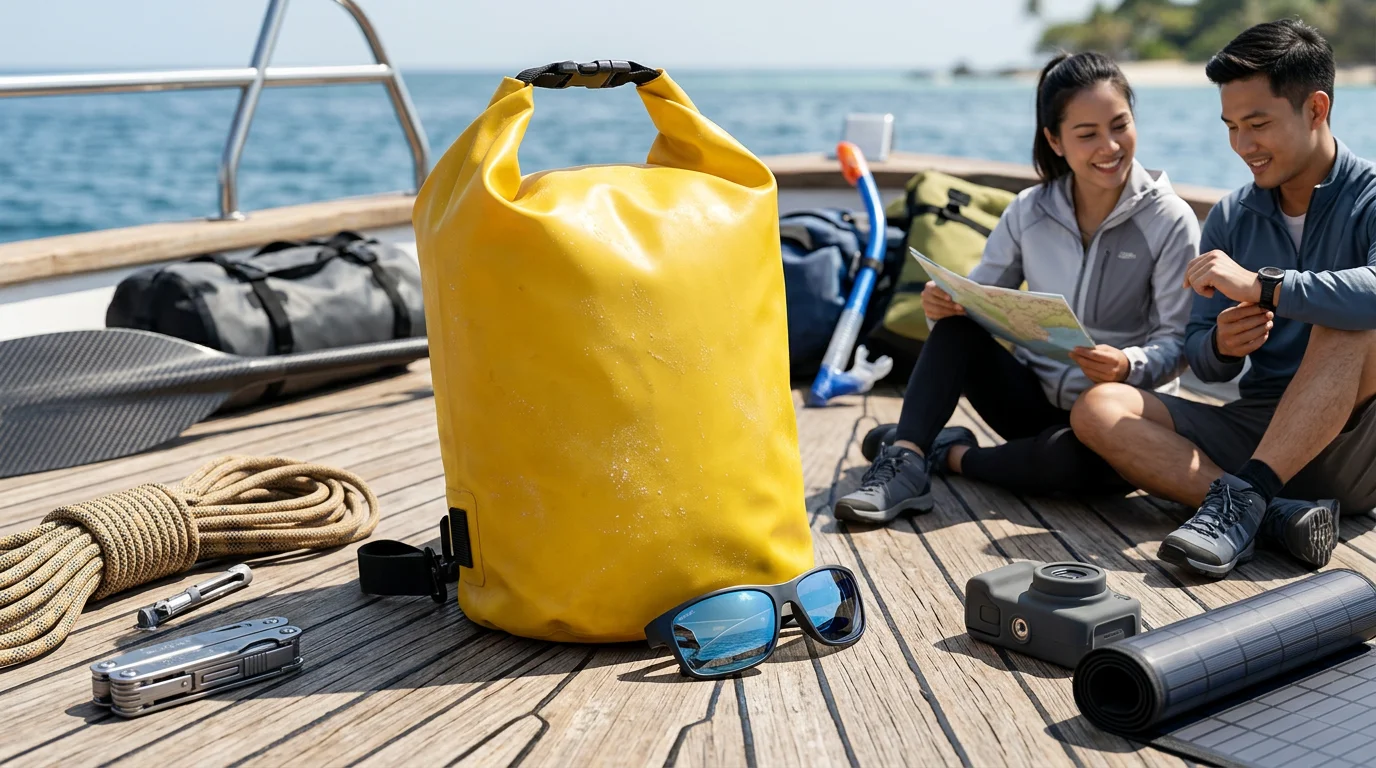
Pack a dependable roll-top dry bag to protect electronics, spare clothing, and documentation. While tour operators routinely provide basic waterproof sacks, carrying a personal 10-to-20-litre bag ensures sensitive equipment stays dry amid constant overhead drips inside cave passages and paddle spray across open water.
Wear dedicated water shoes or strapped amphibious sandals with thick rubber outsoles rather than flip-flops. Entering shallow tidal zones, mangrove mud, and collapsed cavern floors exposes feet to jagged limestone outcroppings and sharp barnacles or oyster shells that easily inflict severe cuts.
Bring reef-safe mineral sunscreen, wide-brimmed hats, and lightweight UV rash vests. Karst cliff faces reflect intense tropical heat across open water with minimal natural shade. Thai national park regulations prohibit chemical sunscreens containing oxybenzone, octinoxate, 4-methylbenzylidene camphor, or butylparaben to protect marine ecosystems.
Keep mobile phones inside sealed waterproof pouches worn around the neck on a secure lanyard. The bay's estuarine waters carry heavy silt loads, reducing underwater visibility to less than half a metre, meaning any phone dropped over the side is virtually impossible to retrieve.
Bring a compact, hands-free headlamp. Guided tours supply handheld torches, but a personal headlamp leaves your hands free to duck under low rock ceilings and manage personal belongings in dark tunnel sections.
Keep small Thai baht banknotes accessible for guide gratuities. The local boatmen provide sustained physical labour paddling visitors through tight caves, and a tip of 200 to 300 THB (roughly £4.50 to £7) per canoe is customary.
Quick Reference Table
| Item | Detail | Notes |
|---|---|---|
| Location | Ao Phang Nga National Park | 400 sq km sheltered bay between Phuket, Phang Nga, and Krabi |
| Primary Departure Pier | Ao Po Pier / Ao Po Grand Marina, Phuket | 25–35 mins from Phuket Airport (HKT); shared transfers usually included |
| Mainland Launch Points | Tha Dan Pier (Phang Nga) & Khlong Khien Pier (Khao Lak) | Access to inner mangrove river channels and northern limestone karsts |
| Key Cave & Hong Sites | Koh Panak & Koh Hong | Features Bat Cave, Mangrove Cave, Diamond Cave, and enclosed lagoons |
| Excursion Duration | 8 to 10 hours (day and sunset tours) | Half-day mangrove circuits take 4–5 hours; multi-day trips run 2–3 days |
| Standard Day Canoe Tour | 2,200 to 2,800 THB (£49 to £62) | Includes transfers, buffet lunch, equipment, and a guide who paddles |
| Hong by Starlight Tour | 3,950 THB (£88) adults / 1,975 THB (£44) children | Afternoon-to-evening trip with krathong floating and bioluminescence |
| National Park Entrance Fee | 300 THB (£7) adults / 150 THB (£3) children | Cash required at inspection points if excluded from tour rate |
| Private Longtail Charter | 4,000 to 5,500 THB (£89 to £122) per boat | Covers up to 4 passengers; local canoe hire adds ~300 THB (£7) per seat |
| Multi-Day Camping Expeditions | 8,500 to 22,000 THB (£189 to £489) per person | Explores remote northern karsts around Koh Kudu, Koh Roi, and Koh Nok |
| Craft Styles | Inflatable canoe (guide-paddled) or rigid sea kayak (self-paddled) | Inflatables offer stability for novices; touring kayaks require stamina |
| Guide Gratuity | 200 to 300 THB (£4.50 to £7) per canoe | Customary cash tip for boatmen paddling through tidal sea caves |
| Website | https://johngray-seacanoe.com | Official site for Hong by Starlight and expedition programmes |
| Phone | +66 63 124 3404 | Direct enquiries and reservations (John Gray's Sea Canoe) |
| Address | 80/25-28 Moo 6, Ao Por, Pa Klok, Thalang, Phuket 83110 | Operational base near Ao Po Pier |
FAQ: Kayaking in Phang Nga Bay
How do tides impact kayaking tours in Phang Nga Bay?
What should kayakers do in narrow cave passages in Phang Nga Bay?
What should visitors wear or bring when kayaking in Phang Nga Bay's mangrove creeks?
What is bioluminescence in Phang Nga Bay?
What are the differences between guide-paddled and self-paddled kayaks in Phang Nga Bay?
Where do most kayaking tours for Phang Nga Bay depart from?
What is included in a standard full-day kayaking tour in Phang Nga Bay?
Is there a national park fee for kayaking in Phang Nga Bay?
Who is kayaking in Phang Nga Bay suitable for?
What should visitors know about water clarity in Phang Nga Bay?
Reviewed by the Thailand Guide Editorial Team • Last reviewed: 17 November 2026
This page is provided for general information only. While we aim for accuracy, details can change — please verify anything important independently before relying on it.