Kayaking in Koh Tao


Paddling Koh Tao's coastline opens access to over twenty granite coves, marine nurseries, and shallow coral gardens that are difficult or impossible to reach by road. Rather than joining guided commercial flotillas, visitors hire craft independently, allowing them to explore steep headlands, quiet pocket beaches, and offshore reefs at their own pace. A morning out might mean watching juvenile blacktip reef sharks in south-coast shallows or making an open-water channel crossing from the west coast to the offshore islets of Koh Nang Yuan, with half-day kayak rentals typically costing between 250 THB and 400 THB (around £6 to £9.50).
Most independent sea kayaking on the island is based around rotomoulded plastic sit-on-top kayaks, hired directly from dive resorts, beachfront shacks, and water sports centres clustered along Sairee Beach, Mae Haad Bay, and Chalok Baan Kao. Stable and straightforward to handle, these craft bridge coastal paddling with reef snorkelling, letting paddlers tether to mooring buoys and slip straight into the water. The activity suits solo travellers and active couples who have competent swimming ability and basic open-water confidence, providing a flexible way to explore Koh Tao's shoreline away from road traffic and crowded tour boats.

Western Coastline and the Offshore Crossing to Koh Nang Yuan
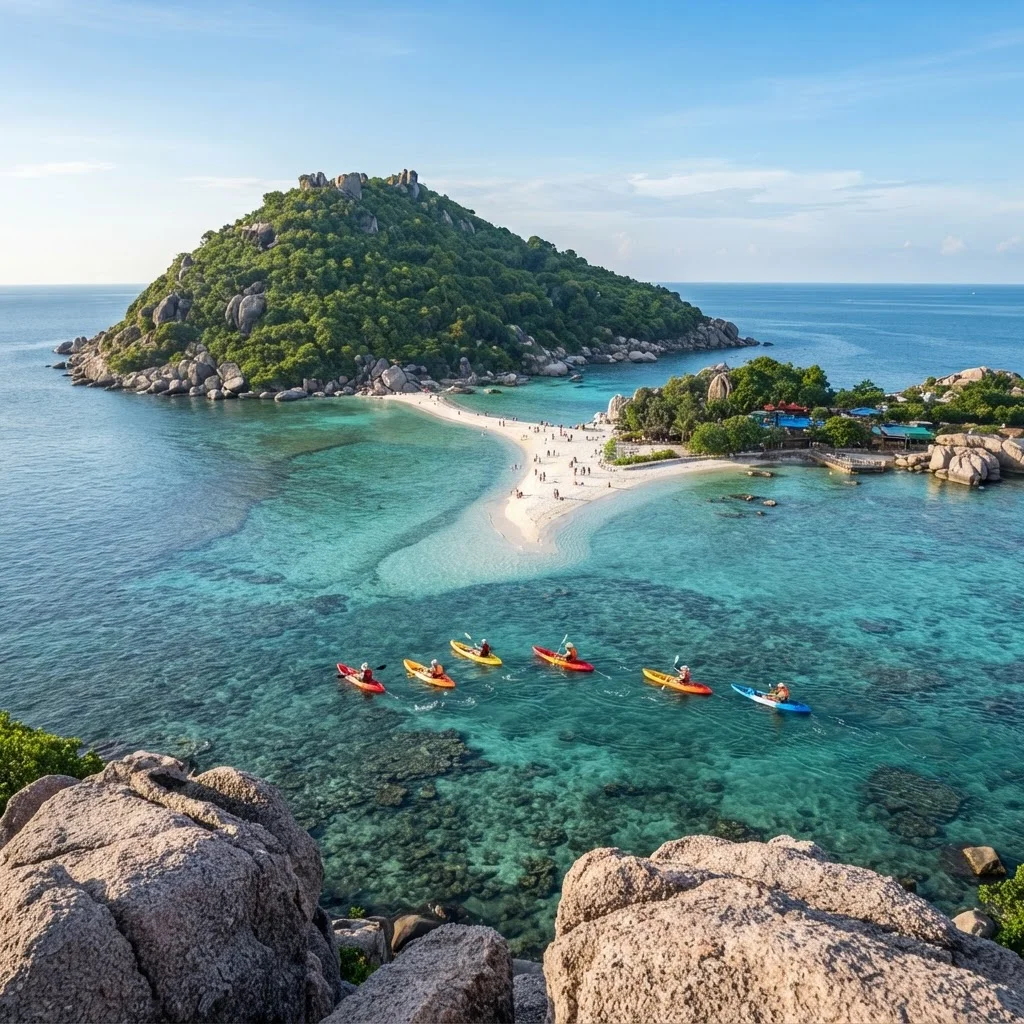
The open-water crossing from northwest Koh Tao to Koh Nang Yuan is the island's premier sea kayaking route, requiring steady navigation across an exposed channel. Launching from the northern stretch of Sairee Beach involves a crossing of roughly 1.8 kilometres, which takes forty to fifty minutes in calm morning conditions. Starting instead from the rocky shore below Dusit Buncha Resort cuts the passage to around 800 metres, reducing paddle time to fifteen or twenty minutes. Lateral currents flow through this deep channel, so paddlers need consistent forward momentum. Day visitors are permitted onto Koh Nang Yuan between 10:00 and 15:00, with a landing fee of 250 THB (around £5.80) collected at the pier checkpoint. Plastic bottles, disposable cans, and snorkelling fins are banned on the island to protect the surrounding coral, including the Japanese Gardens reef flanking the connecting sandbar. Kayakers should tie off to designated mooring lines or haul their craft well clear of the water without scraping shallow brain corals. Timing your departure to reach the pier as gates open at 10:00 avoids boat wake, while returning before mid-afternoon avoids rising westerly chop and heavy longtail water taxi traffic.
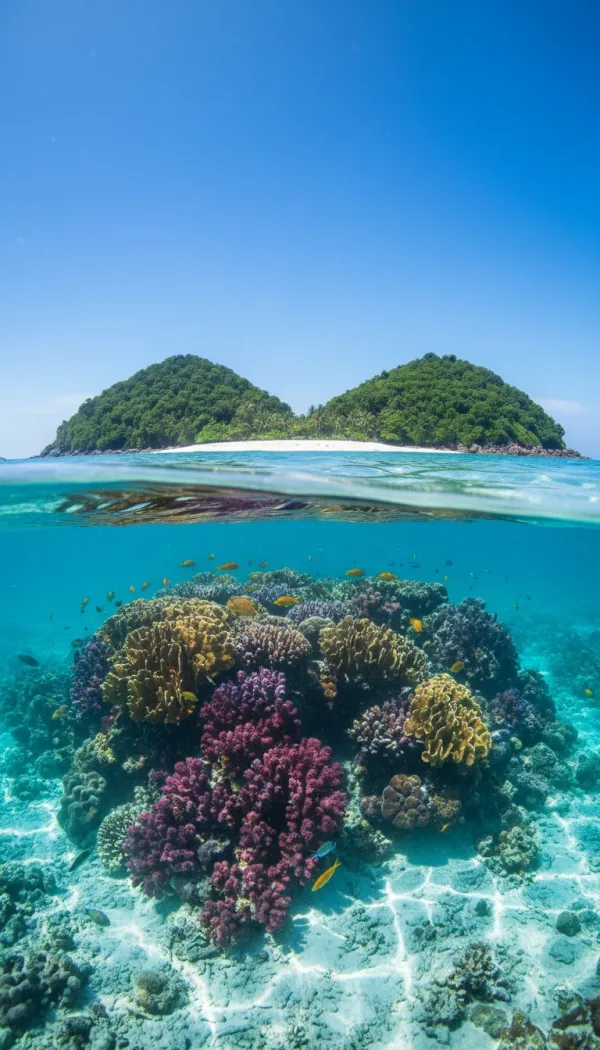
The southern coast provides sheltered touring among granite headlands, shallow coves, and marine habitats where sea turtles feed and juvenile blacktip reef sharks congregate. Setting out from Chalok Baan Kao, paddlers can follow the shoreline eastward past the rocky finger of Freedom Beach and Cape Taa Toh before rounding into Thian Og, widely known as Shark Bay. Approaching Shark Bay from the sea bypasses the overland resort access fees of around 200 THB (approximately £4.65) levied on road visitors. In the inner bay, water depths of two to four metres over sand and reef patches provide opportunities for snorkelling directly from your kayak. Resident green sea turtles graze on patches of seagrass here, while juvenile blacktip reef sharks frequent the shallows during morning high tides. To avoid damaging fragile coral formations, kayakers should clip their craft to surface mooring buoys with a carabiner or drift over sandy ground rather than dropping metal anchors onto living reefs.
Continuing further east towards Sai Daeng Beach brings Shark Island into clear view across the sound. This isolated granite rock is encircled by rich coral formations, but crossing the open channel is recommended strictly for experienced paddlers during calm weather, as powerful tidal currents and choppy rip tides sweep through the passage. For an easier outing, paddling southward from Mae Haad harbour leads along the southwestern shore towards Jansom Bay and Sai Nuan Beach. This sheltered stretch is dotted with rounded granite boulders and quiet coves, continuing past Cape Je Ta Kang to June Juea Bay. These calm coastal shallows provide relaxed paddling conditions well suited to beginners who wish to explore secluded beaches away from heavy motorboat traffic.
Eastern Granite Cliffs, Tanote Bay, and Sheltered Inlets
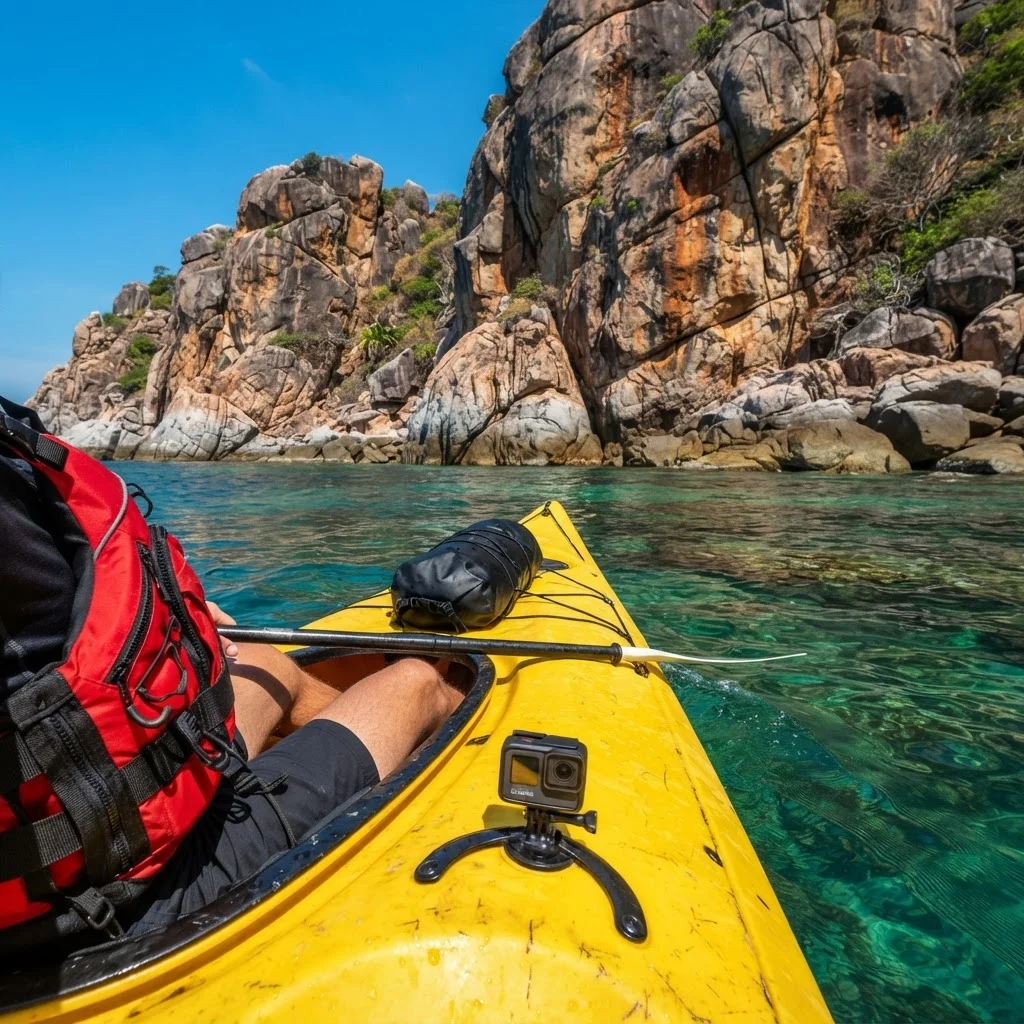
Koh Tao’s eastern perimeter features a rugged landscape of vertical granite cliffs, deep water close to shore, and rocky indentations that provide shelter when westerly winds pick up during the southwest monsoon. Tanote Bay functions as the primary base for exploring this coast, featuring a broad sand beach punctuated by massive granite boulders, including a prominent outcrop rising up to ten metres above the sea. Kayak hire is available directly on the sand, allowing paddlers to launch straight into deep, clear water without negotiating shallow barrier reefs.
Heading northward from Tanote, paddlers follow an uninhabited shoreline towards Laem Thian, a remote rocky cape roughly twenty to thirty minutes away. The headland has remained quiet since its small resort closed in 2011, and the surrounding water holds submerged boulder swim-throughs and clear conditions for snorkelling from the deck. Blacktip reef sharks, green turtles, and schools of batfish and butterflyfish frequent the crevices around the point. Continuing north past small coves leads into Hin Wong Bay, a deep inlet enclosed by steep jungle hillsides where dense schools of yellowtail barracuda and fusiliers congregate around underwater pinnacles.
Exploring these eastern bays by sea bypasses the hazardous, steeply graded concrete roads that cross the island's central spine. Safety on this coast depends heavily on prevailing weather patterns. Between October and January, the northeast monsoon drives easterly swells straight against the sheer granite walls, generating turbulent backwash and tricky handling. Because the cliffs offer few accessible landing spots between bays, paddlers should consult Tanote dive operators about local sea conditions before rounding Laem Thian cape.
Discover the practical guide to Koh Tao. Find honest advice on the best beaches, top dive spots, real costs, and transport tips for your island trip.
Independent Kayak Rental, Equipment, and Snorkelling Logistics
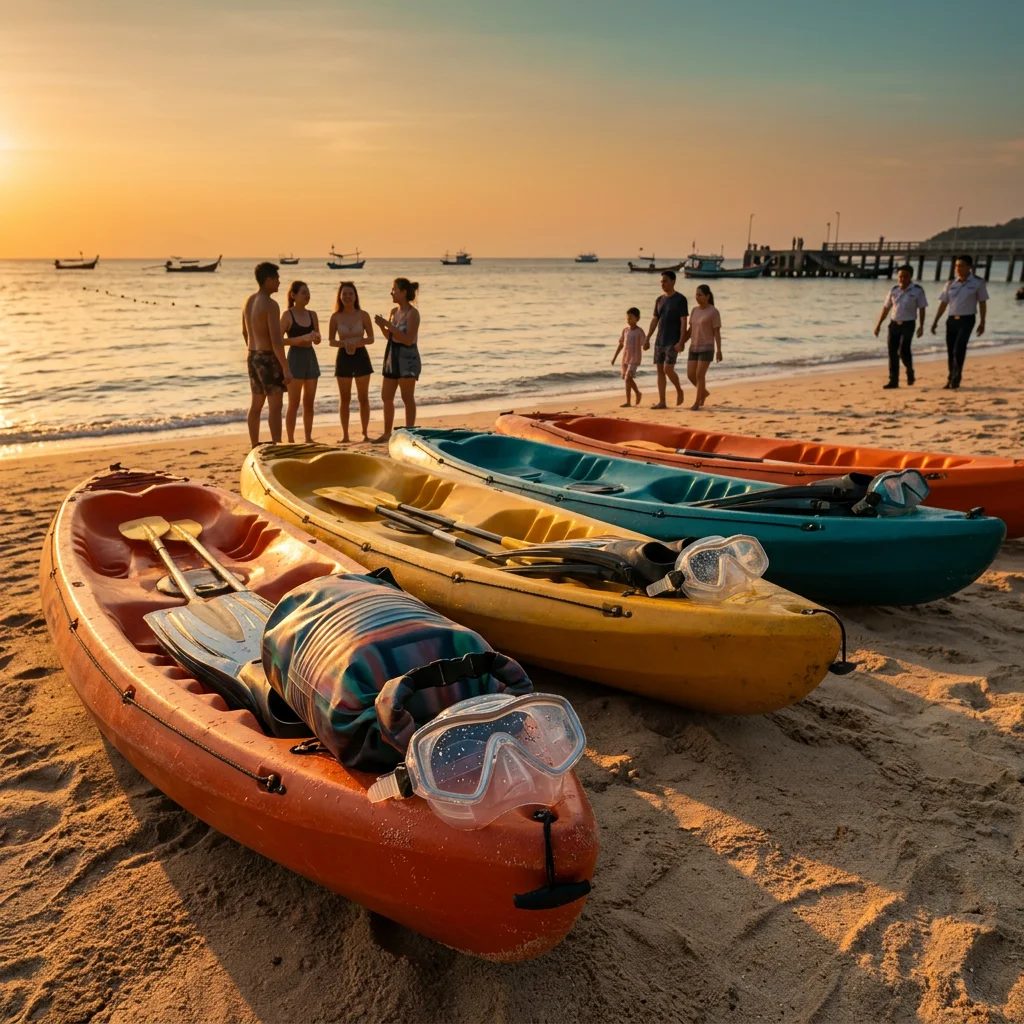
Selecting the right equipment and planning for transitions between paddling and snorkelling determines how comfortably you navigate Koh Tao's coastal waters. Beachfront dive centres and water sports operators along the main bays supply heavy-duty, polyethylene sit-on-top ocean kayaks in single and double configurations. While transparent acrylic craft have become popular for photography along Sairee Beach, standard rotomoulded polyethylene hulls provide superior tracking, greater stability in coastal chop, and far higher resilience against the island's abrasive granite boulders. Standard hires typically include two-piece aluminium paddles and basic buoyancy aids. Before pushing off, inspect all lifejacket straps and buckles, test seat backrest attachments, and verify that scupper plugs and drain bungs fit tightly to ensure the hull remains watertight.
Bringing a reliable dry bag is necessary for protecting phones, dry clothes, sun cream, and drinking water, as rental outfits seldom include waterproof containers as standard. Integrating snorkelling stops into a coastal paddle requires disciplined deck management. Secure your mask, snorkel, and short travel fins beneath the deck bungee cords rather than leaving them loose in the cockpit wells where swell can wash them overboard. Short fins fit easily under bow rigging, whereas long free-diving fins create clutter and risk slipping loose. Carrying a short length of rope with a carabiner allows you to tether the kayak to designated floating buoys during snorkel stops. Paddlers should also familiarise themselves with deep-water re-entry from the stern before venturing out into exposed bays.
When pausing to snorkel, rarely drop an anchor onto coral formations; instead, tie off to designated surface mooring buoys or paddle ashore onto sandy stretches where permitted. Koh Tao's compact size allows self-sufficient paddlers to combine coastal transit with marine exploration across multiple distinct routes.
| Route | Distance & Duration | Difficulty | Highlights & Marine Life |
|---|---|---|---|
| Sairee Beach to Koh Nang Yuan | 1.8 km crossing (30–45 mins each way) | Intermediate (open-water channel) | Sandbar reserve, Japanese Gardens reef, granite viewpoints |
| Chalok Baan Kao to Shark Bay | 2.5 km return (1.5–2 hours total) | Beginner to Intermediate | Green sea turtles, juvenile blacktip reef sharks, shallow coral |
| Mae Haad to Sai Nuan Beach | 3.0 km return (2 hours total) | Beginner | Jansom Bay rock formations, shallow coral nurseries, quiet sand coves |
| Tanote Bay to Laem Thian Cape | 2.0 km return (1–1.5 hours total) | Intermediate to Advanced | Sheer granite cliffs, boulder swim-throughs, diverse reef fish |
| Hin Wong Bay Coastal Circuit | 2.0 km loop (1 hour total) | Beginner to Intermediate | Deep-water pinnacles, schooling fish, eastern coral gardens |
Location and Getting There
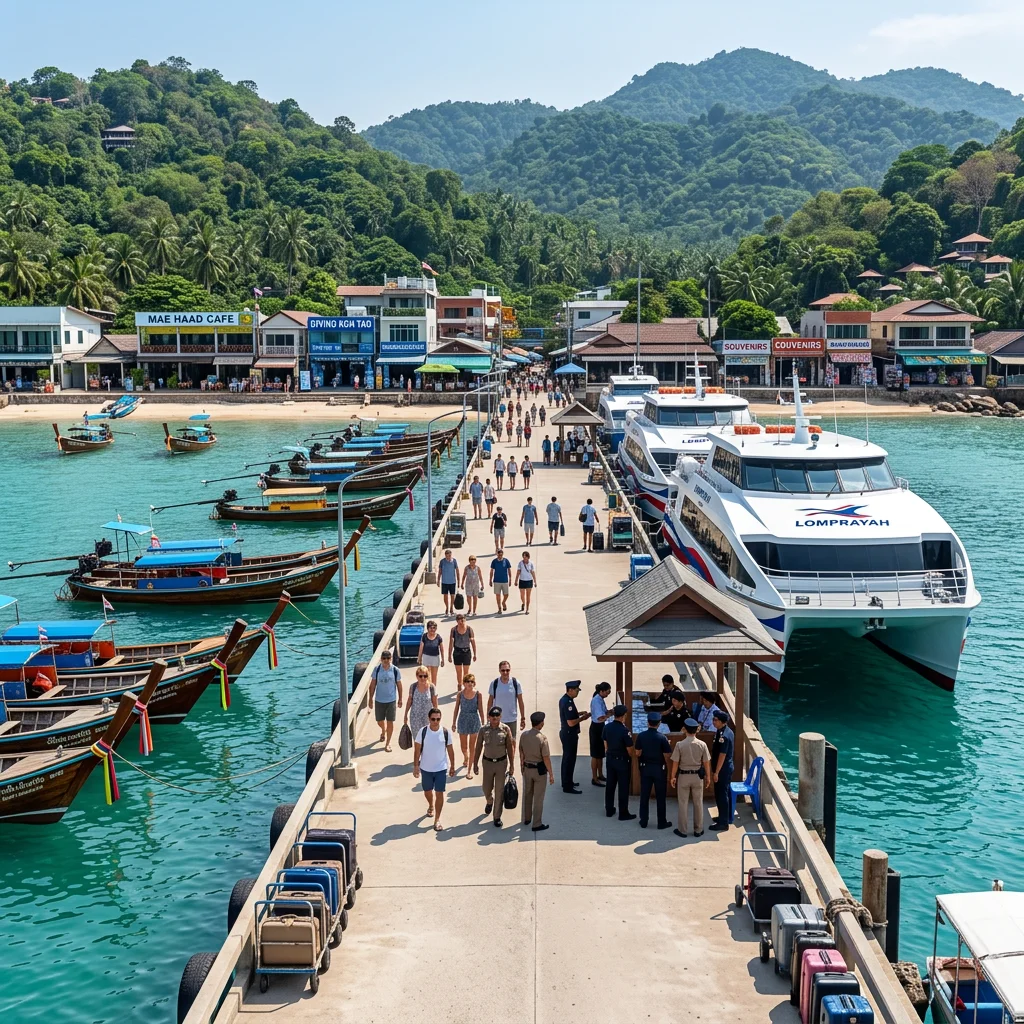
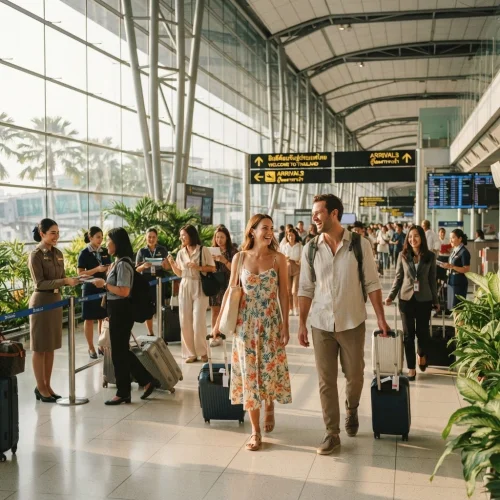
Kayak rental operators are distributed across Koh Tao's main coastal settlements, with the heaviest concentration along Sairee Beach on the west coast, Mae Haad Bay flanking the ferry harbour, and Chalok Baan Kao in the south. Paddlers seeking direct access to eastern cliff routes also find craft available at Tanote Bay. Ferries and catamarans from the mainland ports of Chumphon and Surat Thani, as well as neighbouring Koh Samui and Koh Phangan, dock at Mae Haad Pier. On arrival, visitors aged 12 and over pay a 20 THB (around £0.45) municipal pier and environmental fee in cash at the exit.
From Mae Haad Pier, reaching rental bases is straightforward. Sairee Beach begins roughly 1.5 kilometres north, taking 20 minutes to reach on foot via the coastal walking path or five minutes in a local shared taxi (songthaew), which typically costs 100 THB to 150 THB (£2.30 to £3.50) per passenger. Chalok Baan Kao sits approximately three kilometres south, reachable in ten minutes by road for around 150 THB (£3.50) in a shared ride or up to 400 THB (£9.20) for a private cab. Those heading directly across the island to Tanote Bay should expect a 15-minute taxi journey over the central ridge costing 400 THB to 550 THB (£9.20 to £12.70).
Costs and Booking
Sea kayak hire rates across Koh Tao are largely standard between the main beach hubs, though minor reductions sometimes apply when renting directly through your accommodation or arranging multi-day use. Hourly rentals typically range from 100 THB to 150 THB (£2.30 to £3.50), which provides adequate time for a short paddle around an adjacent headland. Half-day hires of four hours usually cost between 300 THB and 500 THB (£7.00 to £11.60), making them a practical choice for coastal snorkelling trips. Full-day rentals span 400 THB to 800 THB (£9.30 to £18.60), allowing unhurried exploration of multiple southern or eastern bays. Quoted rates cover the kayak, paddles, and buoyancy vests. Snorkel set rentals are available as an add-on at most hire points for roughly 100 THB to 150 THB (£2.30 to £3.50) per day.
Arranging a kayak requires no advance booking; rentals operate on an on-the-day walk-up basis from beachfront vendors, dive shops, and coastal resorts. Cash in Thai baht is needed for almost all beach rentals; card payments are generally limited to established resorts, where transactions often incur a three-percent surcharge. Operators routinely ask for security against equipment damage or loss. While some beach vendors request a passport, leaving an original passport as collateral is strongly discouraged; operators accept a 1,000 THB (£23.25) cash deposit or an alternative photo identification card instead. Paddlers planning to land at neighbouring Koh Nang Yuan must pay a separate private conservation fee of 250 THB (£5.80) per adult in cash at the jetty checkpoint. Day visitors may enter between 10:00 and 15:00, and single-use plastic bottles are prohibited on the island.
| Rental Option | Cost (THB) | Cost (GBP approx) | Notes |
|---|---|---|---|
| Single Ocean Kayak (1 Hour) | 100 – 150 THB per hour | £2.30 – £3.50 | Suited to brief coastal paddles around local headlands |
| Single Ocean Kayak (Half Day / 4 Hours) | 300 – 400 THB per session | £7.00 – £9.30 | Practical for Shark Bay or Sai Nuan snorkelling trips |
| Double / Tandem Kayak (Half Day) | 400 – 500 THB per session | £9.30 – £11.60 | Shared cost for couples or paddling pairs |
| Full-Day Kayak Rental | 500 – 800 THB per day | £11.60 – £18.60 | Allows multi-bay coastal exploration and extended beach stops |
| Snorkel & Mask Add-On Hire | 100 – 150 THB per day | £2.30 – £3.50 | Standard silicone mask and dry-top snorkel |
| Koh Nang Yuan Conservation Landing Fee | 250 THB per person | £5.80 | Payable in cash upon arrival at private jetty checkpoint |
Who It Suits Best
Sea kayaking around Koh Tao suits active, self-reliant travellers, couples, and confident swimmers who prefer to explore coastal bays and marine life away from crowded tour boats. Having your own craft allows self-paced observation of green turtles and blacktip reef sharks in bays like Shark Bay or Sai Nuan. Conversely, coastal paddling is poorly suited to non-swimmers, families with toddlers or very young children, and individuals with chronic shoulder or lower-back ailments. Choppy open water, tidal channels, and maritime traffic require sustained physical exertion and constant defensive manoeuvring.
Tidal variations significantly alter reef clearance and coastal accessibility. During spring low tides, water levels drop over shallow fringing reefs, creating a serious risk of grounding the kayak hull or breaking fragile coral heads. Paddlers must track local tides and steer clear of exposed reef flats. Currents can also build rapidly around exposed granite headlands and through the open channel separating Koh Tao from Koh Nang Yuan. Less experienced paddlers risk drifting off course or becoming exhausted when returning against a stiff head-current.
Fast-moving longtail water taxis and commercial dive boats operate regularly around Koh Tao's headlands and near beach approaches. Stay alert, give motorized craft right of way, and maintain a wide berth around blind rocky corners where visibility is restricted. If you plan to land at Koh Nang Yuan, be prepared for strict environmental checks at the pier: single-use plastic bottles and cans are prohibited and will be confiscated by staff on arrival. Pack a reusable metal bottle or hydration bladder instead. Note that personal snorkelling fins are also banned on Koh Nang Yuan to prevent visitors from kicking and damaging the shallow coral.
Practical Tips
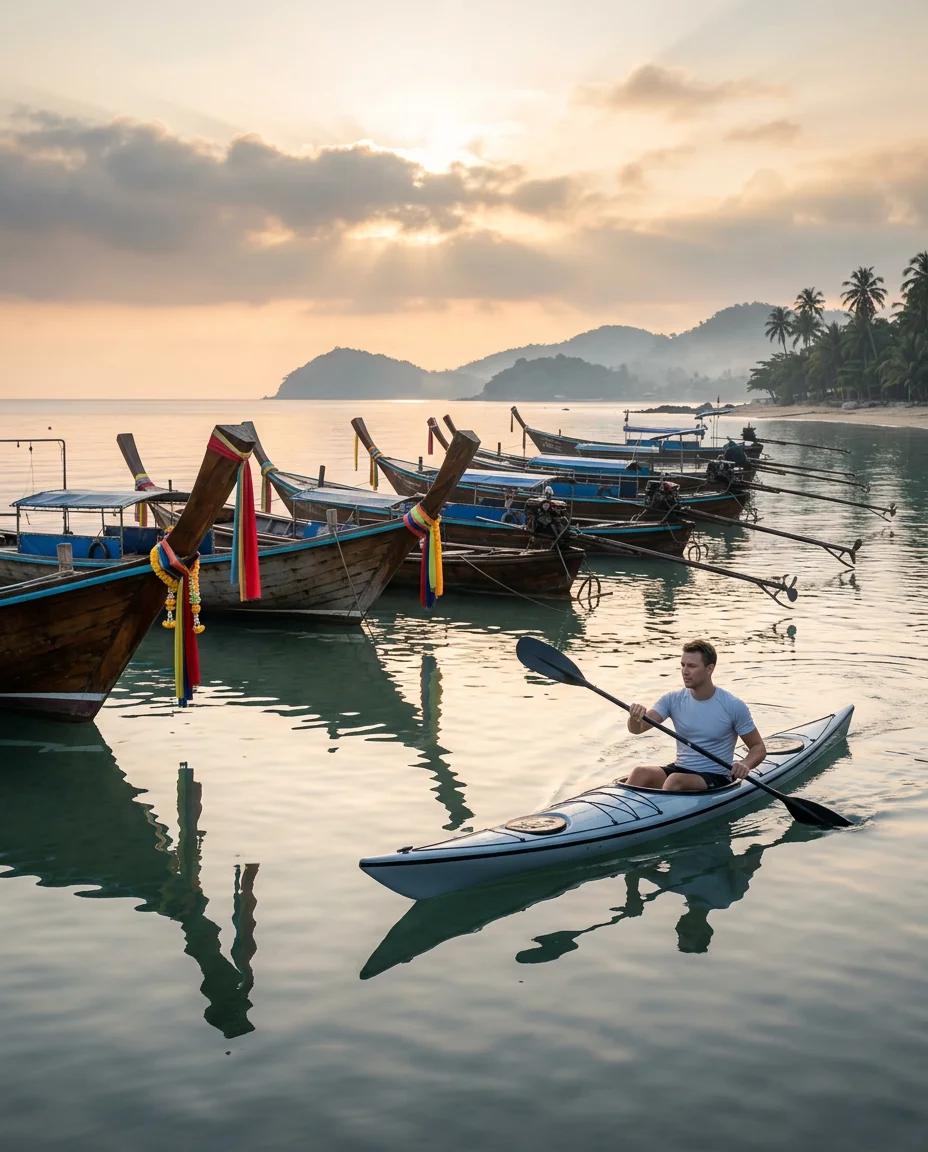
Under Department of Marine and Coastal Resources (DMCR) Order No. 755/2561, anchoring on coral reefs carries statutory penalties of up to a 100,000 THB fine, one year of imprisonment, or both. When pausing to snorkel, tie your craft to designated white surface mooring buoys or pull completely ashore on sandy ground. Avoid dropping makeshift weights, dragging lines across live coral, or driving stakes into shallow reef beds.
Carry at least two litres of fresh drinking water per paddler, along with high-protection mineral sunscreen free of oxybenzone and octinoxate. Tropical solar radiation reflects heavily off the Gulf surface, accelerating dehydration and sunburn. Long-sleeved rash vests and wide-brimmed hats provide reliable physical cover during multi-hour outings across open bays.
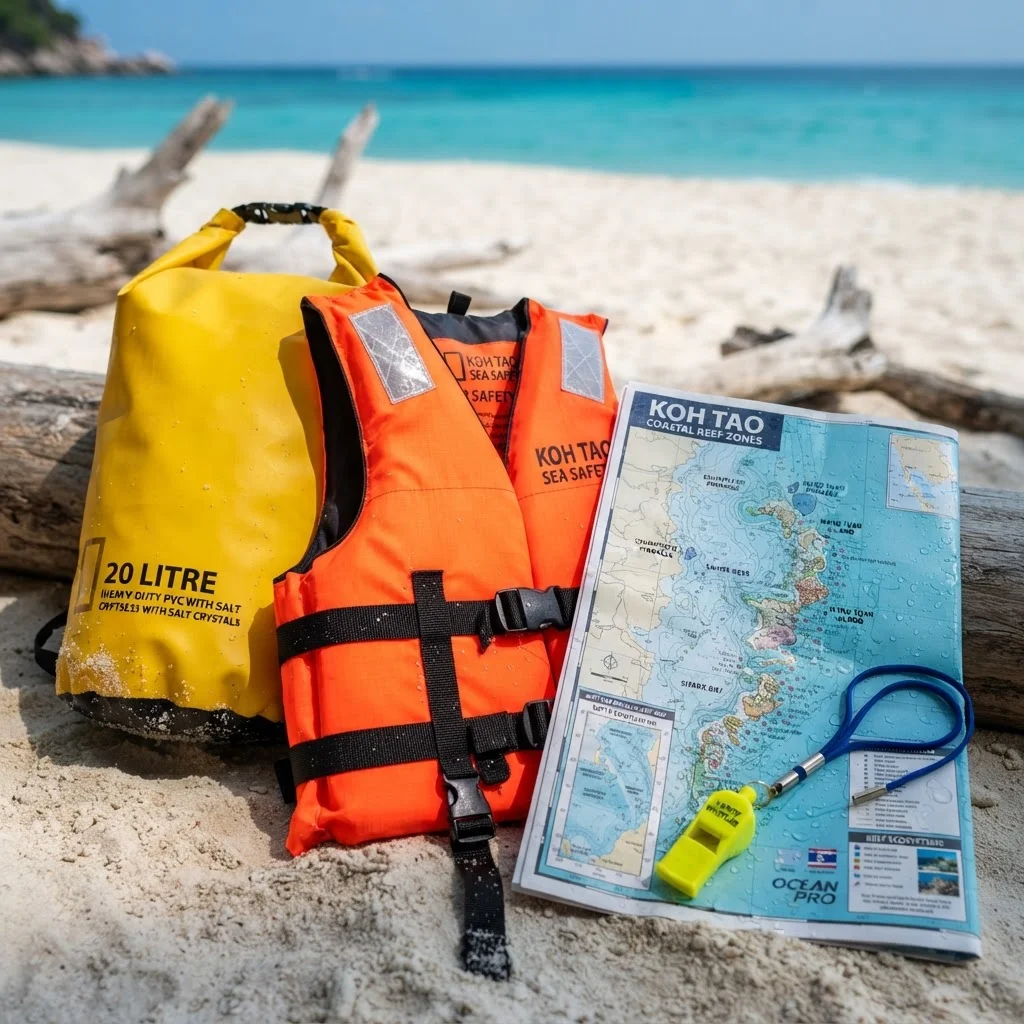
Polarised sunglasses secured with a buoyant lanyard eliminate sea glare, helping you spot submerged granite boulders, shallow coral heads, and marine life such as green sea turtles from the cockpit. Attach a pea-less whistle to your buoyancy vest; outboard engine noise from longtail boats and dive vessels easily drowns out shouts across open water if you drift or need assistance.
Pack sensitive gear, phones, and vehicle keys inside a commercial roll-top dry bag rather than water-resistant pouches. Sit-on-top kayak cockpits inevitably hold standing water from paddle drips and choppy sea swell. Check the mandatory return time with your beach rental provider before launching. Most operators require craft returned by 18:00 to prevent paddlers from lingering offshore after sunset without navigational lighting.
Sea conditions around Koh Tao remain calmest between February and September, with the flattest water typically occurring from March through May. The regional northeast monsoon brings strong winds and substantial ocean swell from late October through December, when small-craft paddling is hazardous. Arranging well-maintained equipment and confirming local sea conditions in advance ensures a smooth day on the water.
Quick Reference Table
| Item | Detail | Notes |
|---|---|---|
| Hourly Kayak Rental | 100 – 150 THB (£2.30 – £3.50) | Standard rate for short paddles around adjacent headlands |
| Half-Day Kayak Rental | 300 – 500 THB (£7.00 – £11.60) | 4-hour rental; 300–400 THB for singles, 400–500 THB for tandems |
| Full-Day Kayak Rental | 500 – 800 THB (£11.60 – £18.60) | Full day hire for multi-bay coastal exploration |
| Snorkel & Mask Hire | 100 – 150 THB (£2.30 – £3.50) per day | Optional add-on hire available at most beachfront rental points |
| Rental Deposit | 1,000 THB (£23.25) cash or photo ID | Alternative to leaving an original passport as collateral |
| Koh Nang Yuan Landing Fee | 250 THB (£5.80) per person | Payable in cash on arrival; open 10:00–15:00; plastic bottles and fins banned |
| Mae Haad Pier Fee | 20 THB (£0.45) per person | Municipal environmental fee paid in cash on arrival (ages 12 and over) |
| Standard Craft | Polyethylene sit-on-top ocean kayaks | Supplied with two-piece aluminium paddles and buoyancy aids |
| Key Coastal Routes | Sairee to Koh Nang Yuan (1.8 km crossing) | Other routes include Chalok to Shark Bay and Tanote to Laem Thian |
| Best Paddling Season | February to September | Calmest seas March to May; rough monsoon swells late October to December |
| Standard Return Cut-Off | 18:00 | Craft must be returned before sunset due to lack of navigation lights |
| Coral Protection Rules | DMCR Order No. 755/2561 | Anchoring on coral carries statutory fines up to 100,000 THB or 1 year imprisonment |
| Website | https://www.dusitbunchakohtaoresort.com | Dusit Buncha Koh Tao Resort (northern channel launch base) |
| Website | nangyuan.com | Koh Nang Yuan official information |
| Phone | +66 81 590 1998 | Dusit Buncha Resort direct line |
FAQ: Kayaking in Koh Tao
Who is sea kayaking in Koh Tao best suited for, and who should avoid it?
What type of kayaks are typically available for rent in Koh Tao and where can they be found?
What are the rules for visiting Koh Nang Yuan by kayak?
What is the best time to kayak to Koh Nang Yuan?
How can kayakers avoid resort access fees when visiting Shark Bay?
How should kayakers protect coral when stopping to snorkel?
What safety precautions should kayakers take when exploring Koh Tao's eastern coast?
What type of kayak is recommended for exploring Koh Tao's coast?
What essential gear should kayakers bring for a trip in Koh Tao?
How much does it cost to rent a kayak in Koh Tao?
Reviewed by the Thailand Guide Editorial Team • Last reviewed: 17 November 2026
This page is provided for general information only. While we aim for accuracy, details can change — please verify anything important independently before relying on it.