Dropzone Thailand
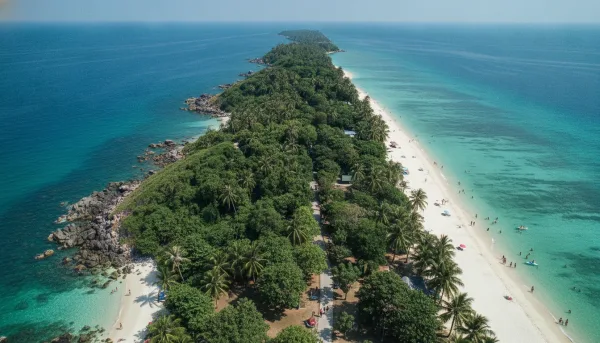
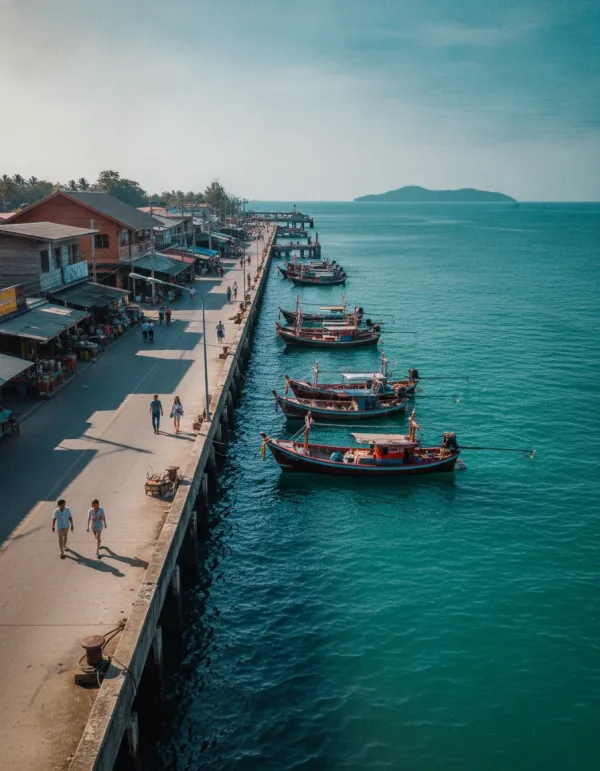
Dropzone Thailand is a specialist skydiving centre and extreme aviation sports facility operating dedicated turbine Quest Kodiak 100 aircraft over the eastern Gulf of Thailand coastline. Flying from a private airfield in Rayong Province, the dropzone lifts parachutists to an exit altitude of up to 13,000 feet directly beside the open water. From jump altitude, canopies open above a wide coastal panorama that spans the sandy crescent of Laem Mae Phim, local fishing communities, and the offshore hills of Koh Samet.
Located in the Chakphong sub-district of Klaeng District, the centre operates under United States Parachute Association (USPA) safety standards. Flight operations cater to first-time tandem jumpers, international sport skydivers, and students enrolled in Accelerated Freefall (AFF) solo licence courses. Operating daily between 09:00 and 18:00, weather permitting, the airfield handles high-altitude maritime ascents that provide coastal visual reference points rather than the agricultural flatlands typical of inland skydiving centres.

Airfield Infrastructure and Jump Aircraft Fleet
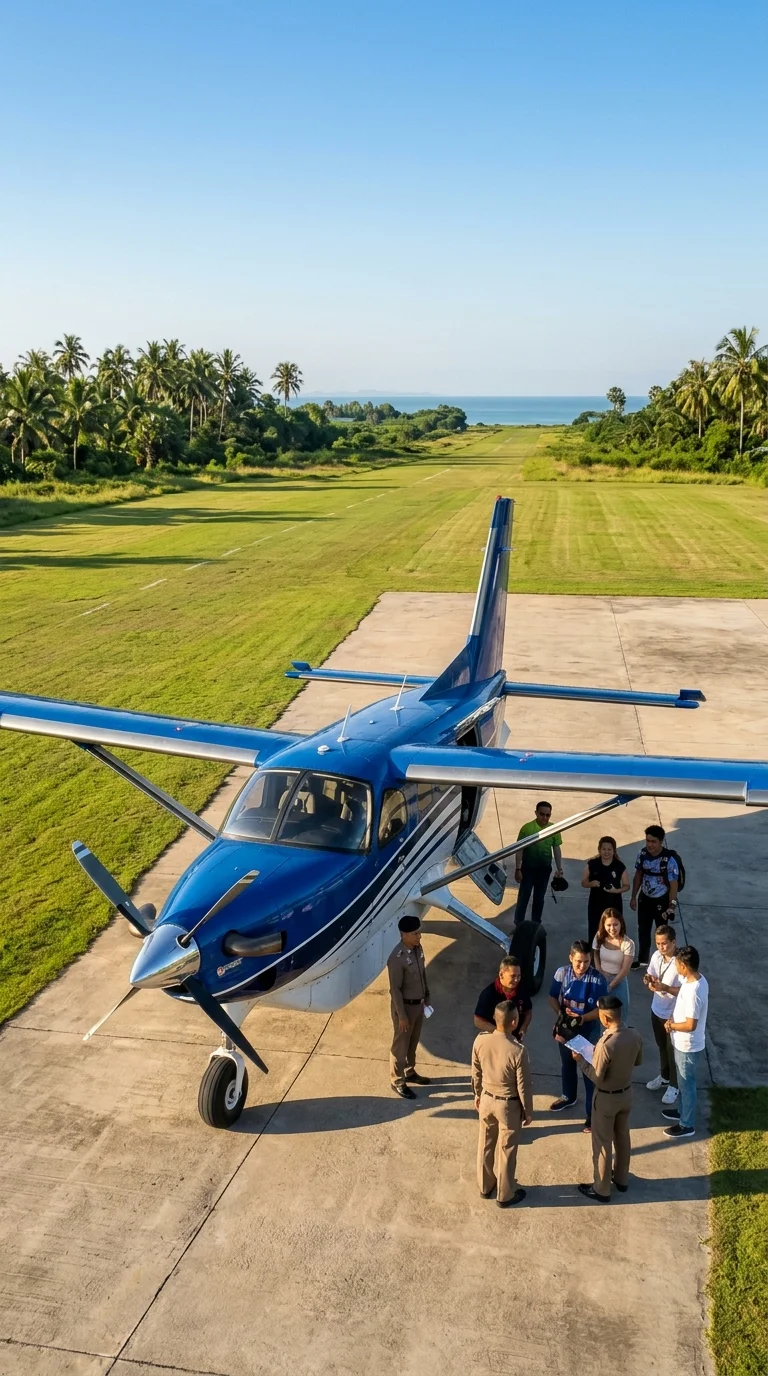
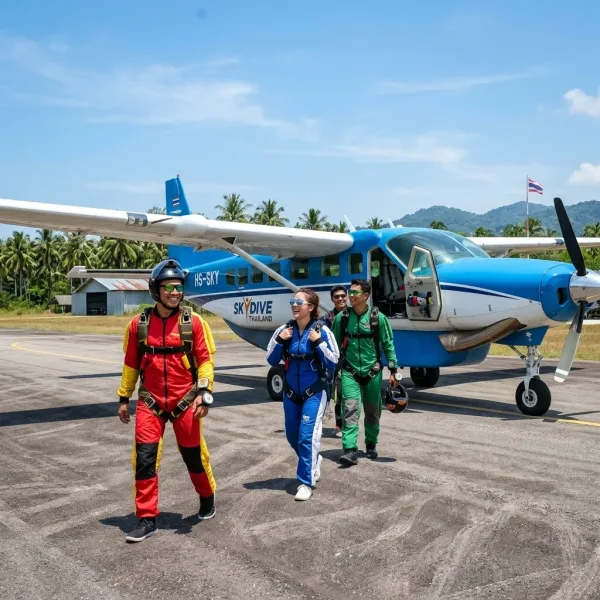
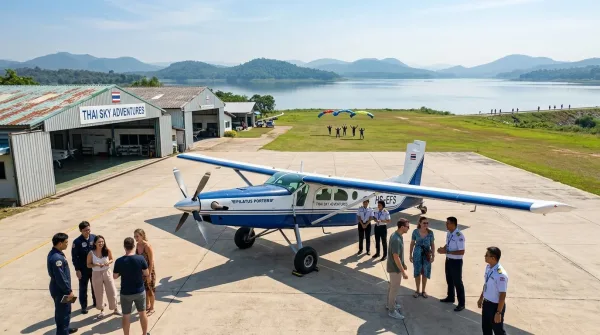
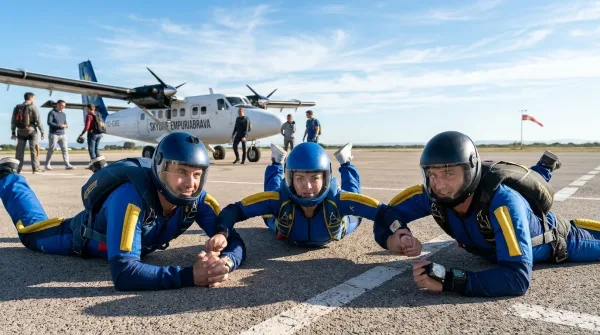
Flight operations are anchored by a private, dedicated airstrip engineered specifically for rapid-ascent sport parachuting. The facility operates Quest Kodiak 100 single-engine turboprop aircraft, including airframes registered as HS-DZT and HS-GDZ. Powered by a Pratt & Whitney Canada PT6A turbine engine, the Kodiak climbs to a full jump altitude of 13,000 feet in approximately 15 minutes. This rapid rate of climb allows pilots to cycle flight rotations efficiently during early morning periods when coastal winds and atmospheric thermals remain most stable.
The Kodiak cabin accommodates up to 12 parachutists per lift. A wide sliding door on the port side allows unhindered group exits for formation skydivers and balanced, stable departures for tandem pairs. Because the dropzone operates its own private runway aligned on a north-to-south axis, flight controllers manage departure and drop intervals independently without delays from commercial airline holding patterns.
The landing perimeter covers a flat, manicured grass area measuring approximately 200 metres by 200 metres. This field is divided into two operational sectors: a western segment adjoining the runway designated for tandem approaches and high-performance swoop landings, and an eastern sector reserved for student and general sport jumper canopy traffic. The grounds also incorporate an on-site swoop pond engineered for advanced canopy pilots executing high-speed carving approaches. Every jump run parallels the runway and coastal orientation, giving jumpmasters clear visual navigation relative to the sea breeze.
Confirm flight manifests and secure your jump slot at Dropzone Thailand through authorised regional activity desks to ensure access to early morning aircraft rotations.
Tandem Skydiving Operations and Coastal Flight Profiles
Tandem skydiving serves as the primary entry point for beginners, placing each jumper under the direct control of an experienced, USPA-certified tandem instructor. Preparation begins with a 15-minute ground briefing covering harness adjustment, exit posture, arched freefall body position, and landing flare mechanics. Jumpers then kit up and board the turboprop for the climb to altitude.
At 13,000 feet, the tandem pair exits the aircraft securely coupled by four forged-steel harness attachment points. The instructor deploys a drogue chute to stabilise the descent, bringing the pair to terminal velocity within roughly 10 seconds. Freefall lasts between 50 and 60 seconds at speeds of approximately 120 miles per hour. During freefall, the panorama takes in the coastline of Rayong, surrounding aquaculture lagoons, and the forested headlands of the Gulf of Thailand.
At approximately 5,000 feet above ground level, the instructor deploys the large tandem main canopy. All tandem rigs feature dual parachutes and are equipped with a modern Automatic Activation Device (AAD) designed to cut the reserve container open automatically if pre-set speed and altitude thresholds are breached. The canopy descent provides a peaceful five-to-seven-minute glide above the maritime landscape. Instructors often allow students to steer the dual control toggles through gentle practice turns before taking full command to flare the canopy for a controlled slide or stand-up landing on the grass field.
Recording packages capture the jump through either wrist-mounted instructor cameras or dedicated freefall camera flyers. Selecting an outside camera flyer places an independent videographer directly opposite you in freefall, tracking your descent face-to-face from a distance of two to three metres to record wide-angle perspectives of your exit, freefall, and canopy deployment.
Plan a Koh Samet stay with clear guidance on beaches, accommodation areas, park fees, boats from Ban Phe and transport around the island.
Accelerated Freefall School and Solo Licence Training
Dropzone Thailand operates a training academy for students working towards independent, internationally recognised skydiving qualifications. The Accelerated Freefall (AFF) programme follows the United States Parachute Association Integrated Student Program (ISP), dividing progression across eight structured ground and airborne training levels.
Training begins with an intensive full-day ground school. Ground instruction covers aerodynamic theory, stable body flight mechanics, altitude awareness, canopy flight control, and emergency malfunction drills. On initial jumps, two certified AFF instructors maintain physical grip on the student's harness from aircraft exit through freefall. Instructors use visual hand signals to correct body arch, leg extension, and arm symmetry before the student initiates their own canopy deployment at 4,500 feet.
As students demonstrate stable heading control, forward tracking, and intentional 360-degree turns, instruction transitions to a single in-air coach. During the canopy phase of student jumps, ground instructors communicate through a radio receiver fitted inside the student's helmet, guiding them through circuit patterns and final flare timing into the airfield landing zone. Following completion of the eight AFF levels, students conduct solo consolidation jumps, canopy piloting exercises, and parachute packing training to qualify for the USPA A-Licence, which sanctions independent skydiving at dropzones worldwide.
Candidates undertaking the full AFF syllabus should plan to spend between seven and ten consecutive days in the Klaeng area, allowing sufficient margin for weather holds and changing coastal winds.
Ground Amenities, Rigging Loft, and Visitor Facilities
Infrastructure at the Klaeng airfield is designed to provide comfortable shelter from tropical heat for both jumping participants and visiting spectators. The primary operations building houses a climate-controlled reception desk, digital manifesting offices, and a dedicated briefing room fitted with widescreen monitors for post-jump video debriefs.
An air-conditioned cafe on site serves hot Thai noodle and rice dishes, light meals, brewed espresso, and cold beverages throughout operating hours. Non-jumping companions can relax on shaded outdoor patio seating directly beside the flight line, giving an unobstructed view of incoming parachutes flaring onto the landing lawn.
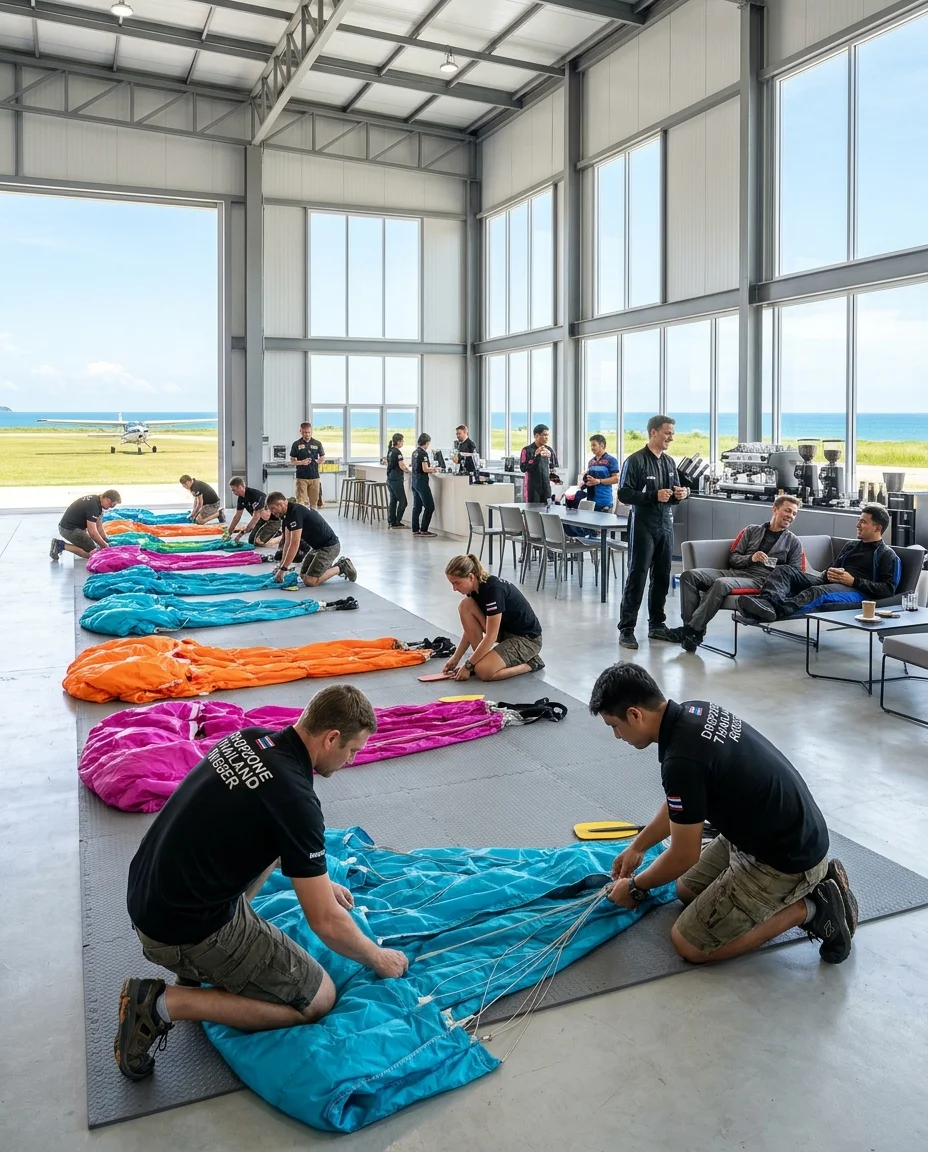
Sport skydivers have access to an air-conditioned packing hall and jumper lounge featuring carpeted packing mats, gear racks, power outlets, and complimentary Wi-Fi. A fully equipped on-site rigging loft staffed by qualified USPA riggers provides reserve repack services, harness inspections, and minor canopy repairs. Skydivers travelling without their own equipment can hire from a fleet of sport rigs fitted with modern canopies ranging in surface area from 119 to 260 square feet.
The facility includes clean toilet cubicles and freshwater showers, allowing participants to freshen up after jumping. The complex also maintains a dedicated shooting range facility, providing firearms target packages that can be arranged as an add-on activity alongside skydiving bookings.
Arrange travel insurance covering extreme aviation sports and book reliable regional road transport before leaving Bangkok or Pattaya for your jump day in Rayong.
Location and Getting There
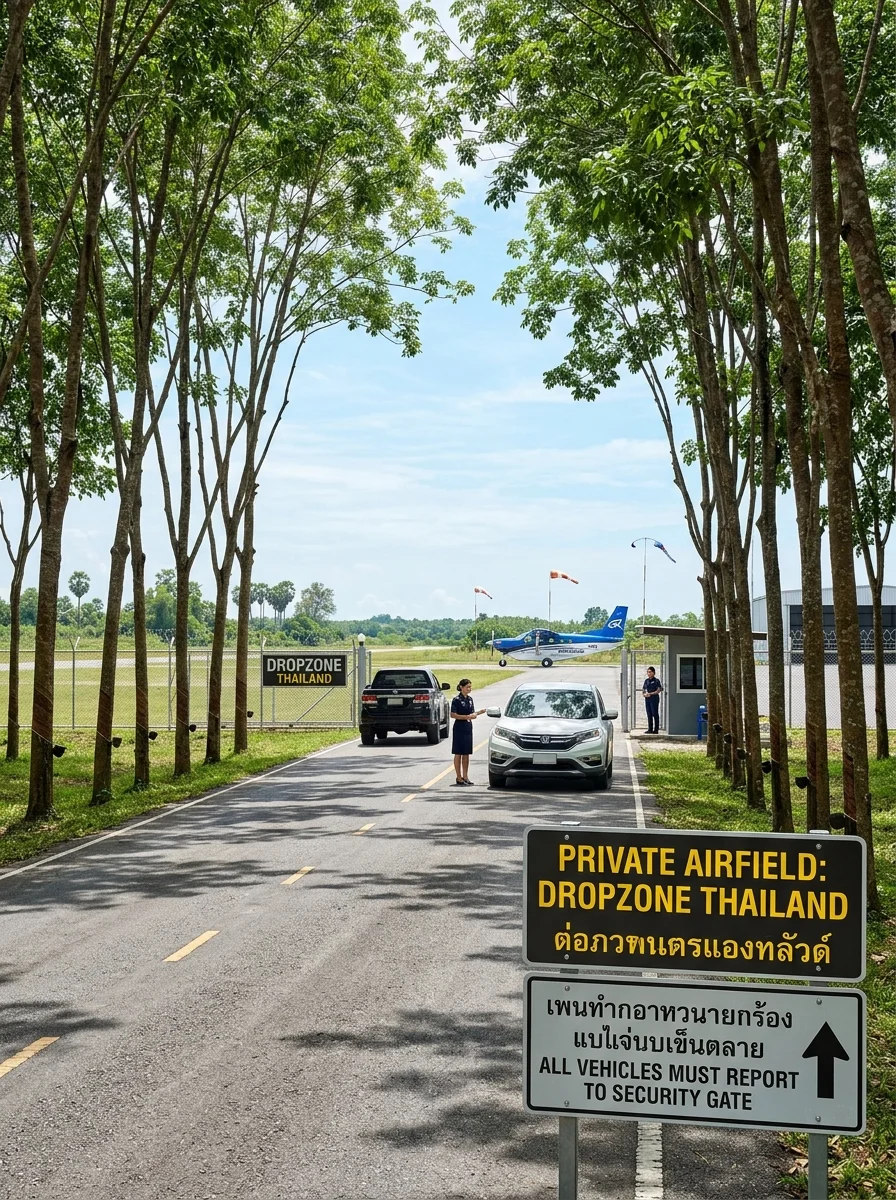
Dropzone Thailand is situated at 95 Moo 4, Chakphong, in the Klaeng District of Rayong Province, approximately four kilometres inland from the beaches of Laem Mae Phim. Bangkok Suvarnabhumi Airport sits roughly 180 kilometres to the northwest. The drive takes between two and two-and-a-half hours via Motorway Route 7 and Route 344, with one-way highway tolls costing around THB 100. From central Pattaya, travelling east along Highway 36 and Sukhumvit Road takes approximately one hour to an hour and a half, covering around 75 to 90 kilometres depending on traffic.
Because the dropzone occupies a private airfield surrounded by plantations and farmland off minor rural lanes, no scheduled public buses, songthaews, or on-demand ride-hailing services operate outside the gates. Visitors travelling independently have two practical transport options: hiring a car or booking private door-to-door transport. Car hire from Suvarnabhumi Airport typically costs from around THB 1,000 (approximately £23) per day for a compact vehicle. Alternatively, pre-arranged private taxis from central Bangkok run between THB 2,200 and THB 2,800 (£50 to £64) each way, while transfers from Pattaya generally cost around THB 1,200 to THB 1,500. Self-driving visitors will find complimentary on-site parking directly beside the reception hangar.
Costs and Booking
At the time of writing, tandem skydiving packages at Dropzone Thailand range from THB 11,450 to THB 17,050 (£260 to £388), with pricing structured around the level of camera coverage chosen rather than drop altitude. All standard tandem flights drop from 13,000 feet and cover full gear hire, the instructor fee, and a jump certificate. The baseline Eco package costs THB 11,450 without media. Jumpers seeking recorded footage can step up to the Deluxe package at THB 14,450 (£328) for wrist-mounted handycam video and photos, or choose the top-tier VIP package at THB 17,050 (£388), which assigns a dedicated outside camera flyer to track freefall alongside handycam footage.
Licensed sport skydivers holding recognised credentials, such as a USPA licence, pay THB 1,400 (£32) per lift ticket to 13,000 feet. Equipment hire for sport jumpers costs THB 800 (£18) per jump, which covers rig rental and parachute packing, while standalone canopy pack jobs cost THB 200 (£4.50). For aspiring solo jumpers, complete student progression through the eight-level Accelerated Freefall (AFF) programme costs around THB 70,000 (£1,590). Extending this training to complete a full 25-jump USPA A-Licence certification package generally totals approximately THB 133,000 (£3,022).
Peak jumping season runs from November to February, when dry offshore breezes and settled conditions bring clear coastal skies. Securing jump slots at least two weeks in advance is advisable during these busy winter months. The airfield grounds do not include overnight guest chalets, but accommodation sits roughly 10 minutes away (about nine kilometres) along Mae Phim Beach. Options in the area range from self-catering apartments to coastal resort rooms priced between THB 1,800 and THB 3,500 (£41 to £80) per night.
| Option | Cost (THB) | Cost (GBP approx) | Notes |
|---|---|---|---|
| Basic Tandem Jump (Eco) | THB 11,450 | £260 | Single jump package to 13,000 ft without media |
| Tandem with Handcam (Deluxe) | THB 14,450 | £328 | Includes instructor wrist-mounted camera video |
| Tandem with Outside Camera (VIP) | THB 17,050 | £388 | Includes dedicated camera flyer and handcam video plus photos |
| Sport Jumper Single Ticket | THB 1,400 | £32 | Lift ticket to 13,000 ft for licensed USPA jumpers |
| Local Partner Beach Resort Room | THB 1,800–3,500 | £41–£80 | Nearby accommodation at Mae Phim Beach (9 km away) |
Who It Suits Best
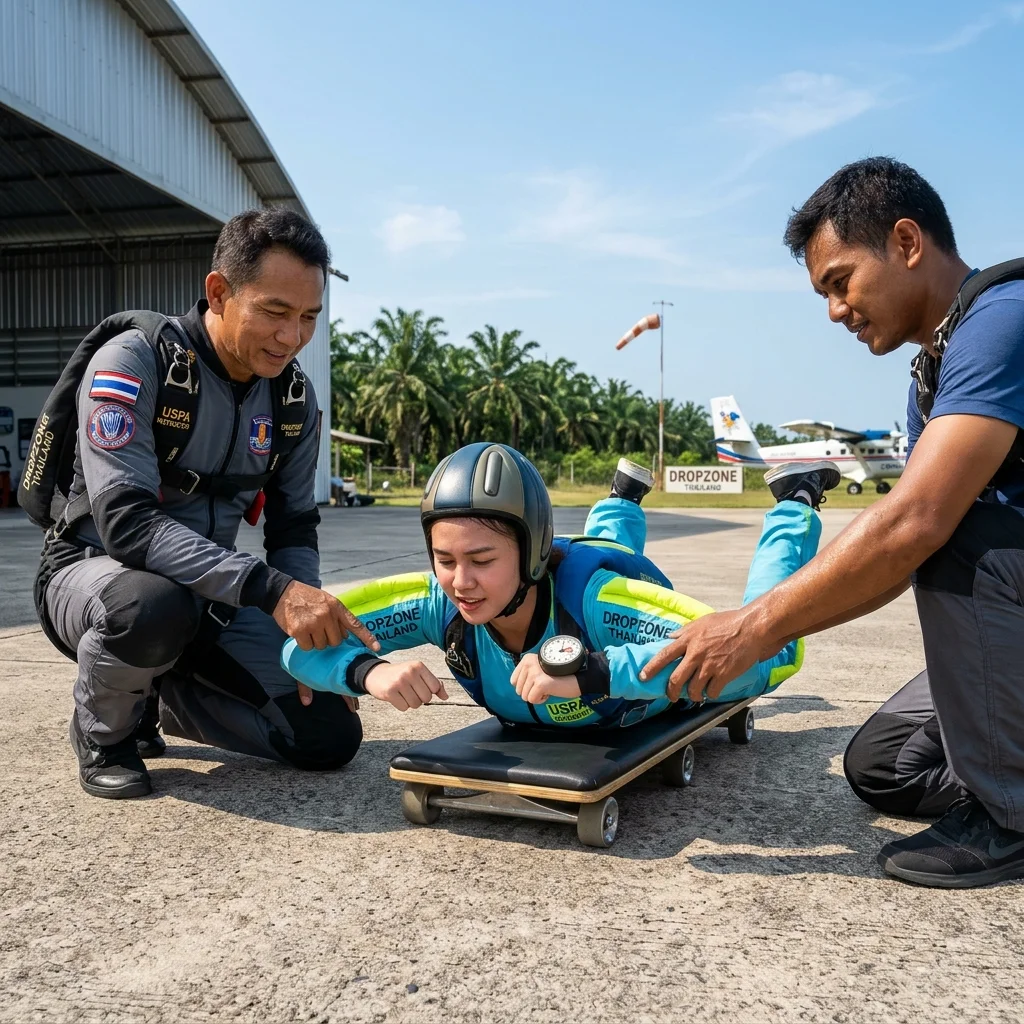
Dropzone Thailand caters primarily to adventure travellers, first-time tandem jumpers drawn by coastal views over the Gulf of Thailand, and licensed sport jumpers seeking turbine-aircraft lift capacity. Solo travellers and couples holidaying along Rayong’s coastline or around Pattaya will find it manageable as an active day trip, particularly when combined with downtime on nearby beaches.
Conversely, the facility rarely suits families with young children or non-participating companions expecting resort-style amenities, shaded play areas, or all-day entertainment. It is equally ill-suited to travellers without private transport, given its secluded rural setting well beyond public transport networks. Anyone who struggles with prolonged tropical heat, or who lacks the patience to sit out unforeseen weather holds, will find a working airfield environment taxing.
What to Know Before You Book
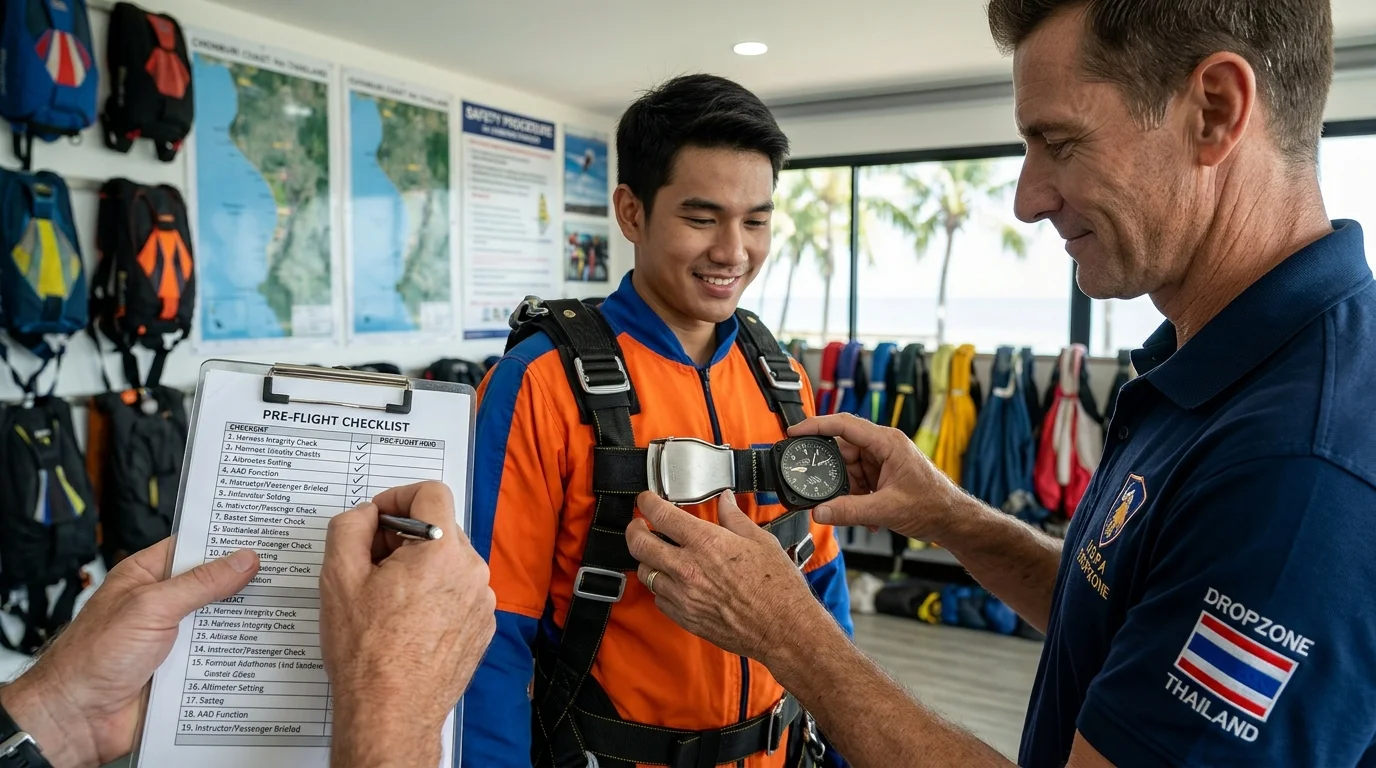
Tandem skydiving at Dropzone Thailand requires adherence to strict physical and operational thresholds. Every participant is weighed on arrival; jumpers weighing 90 kilograms or more incur a tiered surcharge to account for harness stress and canopy wing loading, with absolute upper limits capped at roughly 113 to 115 kilograms. For Accelerated Freefall solo training, students face an 85-kilogram limit. Tandem passengers must also meet age requirements: participants under 18 require signed parental or guardian consent, whilst solo students must be at least 18 years old.
You must bring your physical passport on the day of your jump. Thai aviation regulations mandate valid government identification to complete flight manifests and activate statutory aviation insurance. Digital photos or photocopies are not accepted at the check-in desk.
Medical precautions are equally non-negotiable. Anyone who has been scuba diving must allow at least 24 hours before making a skydive. Ascending to 13,000 feet within that window risks severe decompression sickness due to residual nitrogen in the bloodstream.
Finally, coastal skydiving operations depend entirely on weather. Cloud ceilings and maritime winds determine when loads can fly. Morning slots generally offer the most stable conditions, whereas afternoon sea breezes can trigger temporary safety holds. Build flexibility into your itinerary rather than planning tight onward travel immediately after your scheduled jump.
Practical Tips
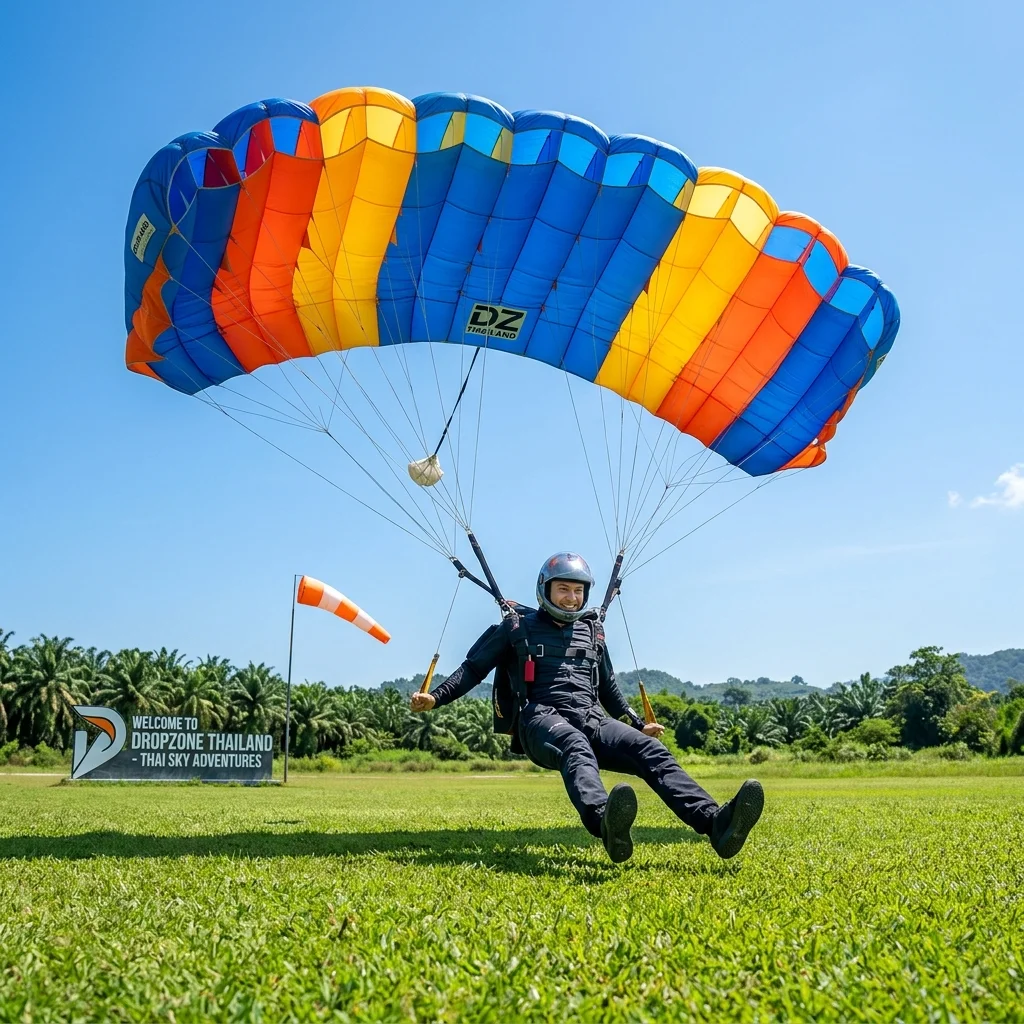
Aim for the earliest available morning jump slot. Coastal operations typically launch around 09:00, when winds and thermal turbulence off the Gulf of Thailand are at their lowest. Cloud cover and sea breezes frequently build as the day warms up, which can trigger safety holds, and the dropzone often winds down once the day's scheduled tandem manifests are completed.
Secure, lace-up trainers are required. Slip-on shoes, sandals, and boots with open lace hooks are barred due to freefall wind resistance and landing safety rules. Pair them with fitted athletic trousers or leggings rather than loose shorts. The tandem harness straps cinch firmly around your thighs and groin, and bare skin can chafe uncomfortably during canopy flight. Avoid tops with flapping collars, and leave watches and loose jewellery on the ground.
Plan for a visit lasting several hours. Although the airfield has a covered spectator area and a cafe, sudden weather holds can extend waiting times, making it sensible to bring personal snacks and water for anyone accompanying you. Because the airfield sits several kilometres down rural lanes in Chakphong, ride-hailing apps and on-demand taxis cannot be summoned for the return journey; hire a car or retain your driver for the day.
Verify that your travel insurance policy explicitly covers amateur skydiving up to 13,000 feet, as standard UK policies exclude aviation sports without a dedicated hazardous activities endorsement. Arrive completely sober, as instructors turn away anyone smelling of alcohol or showing signs of intoxication, forfeiting the fee, and soiling aircraft equipment incurs heavy cleaning charges. Reserve your tandem jump early to lock in the calmer morning loads.
Quick Reference Table
| Item | Detail | Notes |
|---|---|---|
| Operating hours | 09:00–18:00 daily | Weather permitting; early morning slots offer the calmest coastal winds |
| Jump altitude | 13,000 ft | Maritime ascent providing views over Rayong coastline and Koh Samet |
| Aircraft | Quest Kodiak 100 turboprop | Climbs to 13,000 ft in ~15 minutes; holds up to 12 jumpers |
| Tandem jump packages | THB 11,450–17,050 (£260–£388) | Eco THB 11,450; Deluxe (handycam) THB 14,450; VIP (outside camera) THB 17,050 |
| Sport jumper lift ticket | THB 1,400 (£32) | To 13,000 ft for licensed USPA skydivers |
| Sport gear hire | THB 800 (£18) per jump | Includes rig rental and canopy packing; pack jobs alone THB 200 (£4.50) |
| Solo training (AFF) | ~THB 70,000 (£1,590) | 8-level USPA Integrated Student Program; full A-Licence ~THB 133,000 (£3,022) |
| Weight restrictions | 90 kg threshold for surcharges | Absolute limit 113–115 kg for tandem; 85 kg limit for AFF solo students |
| Scuba diving interval | Minimum 24-hour wait | Mandatory safety gap before jumping to prevent decompression sickness |
| Mandatory documentation | Original physical passport | Required for aviation manifests and statutory insurance; no copies accepted |
| Best season | November to February | Dry offshore breezes and settled weather provide clearest skies |
| On-site amenities | Airfield facilities | Cafe, spectator seating, rigging loft, packing hall, showers, and shooting range |
| Website | https://dropzonethai.com/ | Official operational website and flight information |
| Book direct | https://dropzonethai.com/booking | Direct online booking portal for tandem jumps and courses |
FAQ: Dropzone Thailand
What safety standards does Dropzone Thailand follow?
What kind of views can skydivers expect at Dropzone Thailand?
How long is the freefall and canopy ride during a tandem skydive?
What amenities are available for visitors and skydivers at Dropzone Thailand?
How can visitors get to Dropzone Thailand, given its location?
When is the best time of year to skydive at Dropzone Thailand?
What are the weight and age restrictions for skydiving at Dropzone Thailand?
What identification is required for skydiving at Dropzone Thailand?
How long must one wait to skydive after scuba diving?
What kind of footwear and clothing are required for skydiving at Dropzone Thailand?
Reviewed by the Thailand Guide Editorial Team • Last reviewed: 4 November 2026
This page is provided for general information only. While we aim for accuracy, details can change — please verify anything important independently before relying on it.