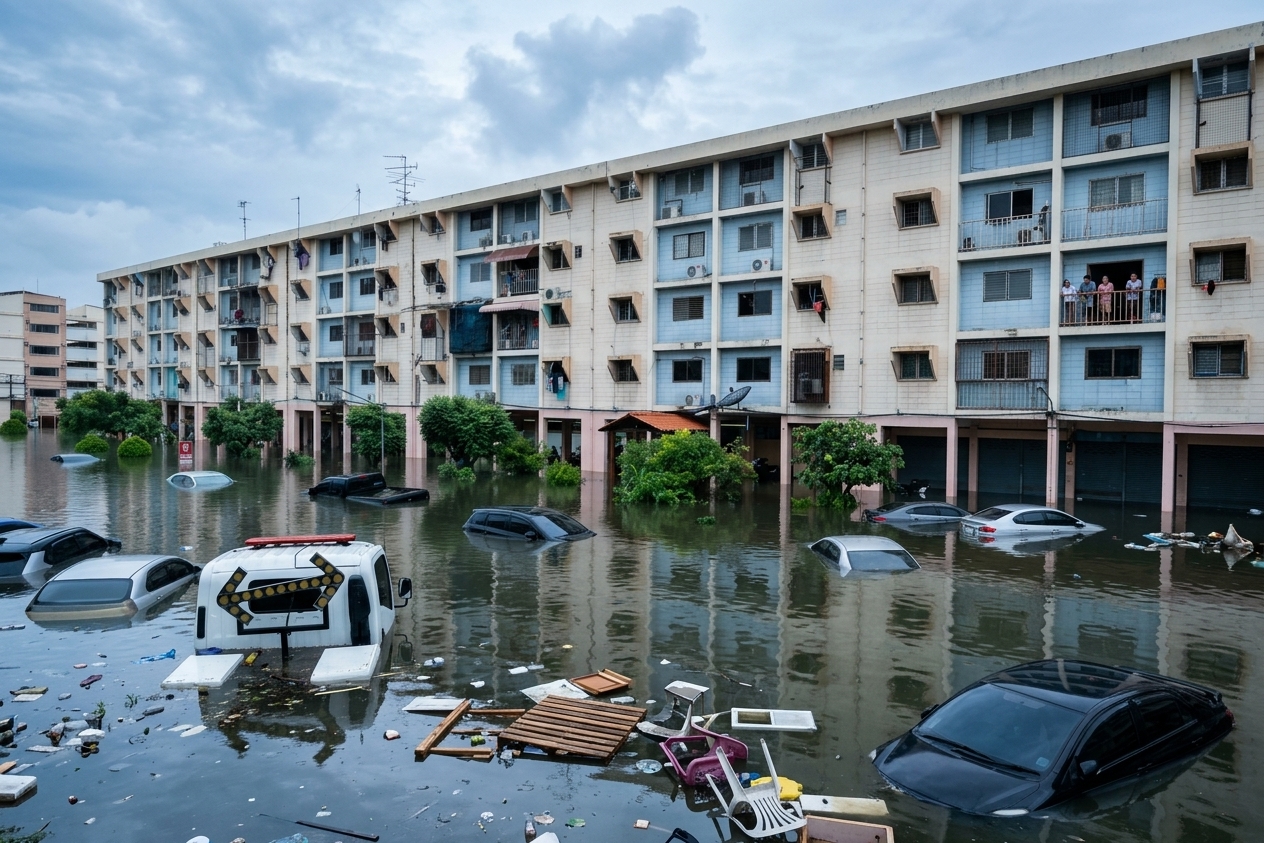
All 50 districts of Bangkok have been declared official disaster zones following days of relentless monsoon rainfall that submerged roads and overwhelmed the municipal drainage network. The designation took effect retrospectively from 25 September. Bangkok Governor Chadchart Sittipunt signed the decree in his role as director of the capital's disaster prevention command, widening an earlier order that applied to only three outer-eastern suburbs. The emergency status releases contingency funding immediately. It also permits the Bangkok Metropolitan Administration to deploy heavy industrial equipment, bypass protracted municipal procurement rules, and coordinate directly with national military engineering corps.
Retail Supplies and Delivery Disruption
Supermarket shelves cleared within hours of the announcement. Panic buying stripped neighbourhood convenience stores of bottled drinking water, eggs, long-life milk, and dried goods across central residential districts. The surge followed a civil alert transmitted directly to mobile devices at 9.22am by the Department of Disaster Prevention and Mitigation, which warned that secondary canals had breached safe operating thresholds. Food delivery networks failed. Application-based courier platforms, including Grab and Lineman, suspended services across large swathes of the city as motorcycle couriers refused to navigate flooded side streets. Numerous independent restaurants closed their doors due to a lack of raw ingredients and the complete absence of walk-in footfall.
The supply shock is logistical, not structural. Major wholesale and retail operators, including Lotus’s and Makro, issued statements confirming that their regional distribution hubs remain fully stocked and continue to dispatch lorries around the clock. Somchai Pornratanacharoen, the former president of the Thai Retailers Association, stated that national manufacturing is operating normally and that panic purchasing is unwarranted. He estimated that localised shortages would subside within two days as road surfaces clear. British expatriates are advised to keep three days of non-perishable food and potable water at home, while resisting unnecessary bulk purchases that deplete local stocks.
Transport, Motoring and Insurance Liabilities
Road transit across the capital is severely impaired. Commuter routes including Sukhumvit Road, Srinakarin, and sections of the northern arterial network have seen severe surface water accumulation, reducing multi-lane roads to single, slow-moving columns of traffic. This creates distinct legal and mechanical pitfalls for foreign drivers. Most comprehensive motor insurance policies in Thailand—frequently sold as Class 1 cover—specifically exclude hydrostatic engine damage caused by driving into deep floodwaters. When a combustion engine draws in surface water through the air intake, the resulting hydraulic lock instantly destroys internal engine components, leaving the policyholder liable for repairs that often exceed several thousand pounds.
Vehicles should remain parked. Underground car parks in older apartment blocks present an additional hazard when municipal drains reverse during peak rainfall. Expatriates should arrange to move their vehicles to higher storeys of multi-storey car parks until the drainage system recovers. Rail networks remain unaffected. The elevated BTS Skytrain and underground MRT lines are operating to their standard timetables, providing the safest method to bypass gridlocked roads. Reaching these stations still requires navigating flooded pedestrian pavements. Motorcycle taxis have stopped running in heavily inundated sub-districts, and metered taxis are regularly refusing fares toward flooded destinations.
Property and Drainage Risks
Property risks vary by location. The impact of the municipal declaration depends heavily on local drainage topography, the age of surrounding development, and the physical design of individual residences. Apartments offer superior structural resilience. Their primary vulnerability lies in basement infrastructure, where flooded electrical switchgear can disable lifts, water pumps, and air conditioning. Landed townhouses and villas in low-lying side streets, known locally as sois, face direct surface water ingress when municipal gravity-fed canals reach capacity.
Several expat enclaves flood repeatedly. Residential corridors along lower Sukhumvit, particularly sois 22, 39, and 71, consistently accumulate standing water during sustained rainfall due to outmoded pipe infrastructure. Outer suburban zones near international schools in Prawet and Nonthaburi face deeper submersion caused by canal breaches. British tenants renting detached houses should verify that internal sump pumps are operational and request sandbags from their local district office. Sewage backflow is a hazard. When primary street drains reach saturation, sewer water can back up through ground-floor floor traps, toilets, and external laundry connections inside private homes. Fitting temporary expanding rubber drain plugs prevents contaminated water from entering ground-level rooms.
Health Hazards and Weather Outlook
Floodwater in Bangkok carries severe contamination. Urban run-off mixes immediately with raw sewage, motor vehicle lubricants, and heavy industrial waste from open roadside drains. Wading through this water creates exposure to leptospirosis, a severe bacterial disease that enters the human bloodstream through tiny abrasions, cuts, or the eyes. Footwear does not offer guaranteed protection. Anyone forced to walk through stagnant water should clean their skin with clean tap water and disinfectant soap immediately afterwards.
Heavy rainfall will continue. The Thai Meteorological Department forecasts sustained monsoon downpours across the central plains and the greater Bangkok region through the end of the week. Tidal patterns compound the problem. High sea tides in the Gulf of Thailand are preventing the Chao Phraya River from discharging water efficiently, slowing the clearing of secondary and tertiary urban canals. Governor Chadchart's declaration is primarily an administrative mechanism to accelerate pump operations, rather than a cause for foreign residents to evacuate their homes. Expatriates should check municipal updates, maintain emergency water reserves, and avoid non-essential road journeys until surface levels drop.
Source: thethaiger.com
Reviewed by the Thailand Guide Editorial Team • Last reviewed: 28 September 2026
This page is provided for general information only. While we aim for accuracy, details can change — please verify anything important independently before relying on it.