Sakun C Innovation
Sakun C Innovation manufactures Thailand's first mass-engineered aluminium commercial vessels, using automotive stamping dies and robotic assembly lines adapted from the car manufacturing sector. Based at a 200-rai industrial complex in Bang Pla Ma, Suphan Buri, the shipyard cuts hull assembly times to around thirty days—a fraction of the eight months typical of traditional artisanal boatbuilding—while producing commercial craft certified by international classification societies.
Established under Thailand's Choknamchai Group, an automotive tier-one tooling and die supplier, the facility bridges maritime construction and automated vehicle manufacturing. Production centres on marine-grade aluminium passenger catamarans, river ferries, electric commuter craft, and high-speed patrol vessels for water-transit authorities, resort groups, and charter operators across Southeast Asia. Alongside its marine output, the factory also manufactures pressed-aluminium buses and municipal utility vehicles. For commercial operators and overseas investors seeking durable, corrosion-resistant hulls without Western import tariffs, Sakun C offers a scalable industrial alternative in central Thailand.

Commercial Vessel Range and Manufacturing Facilities
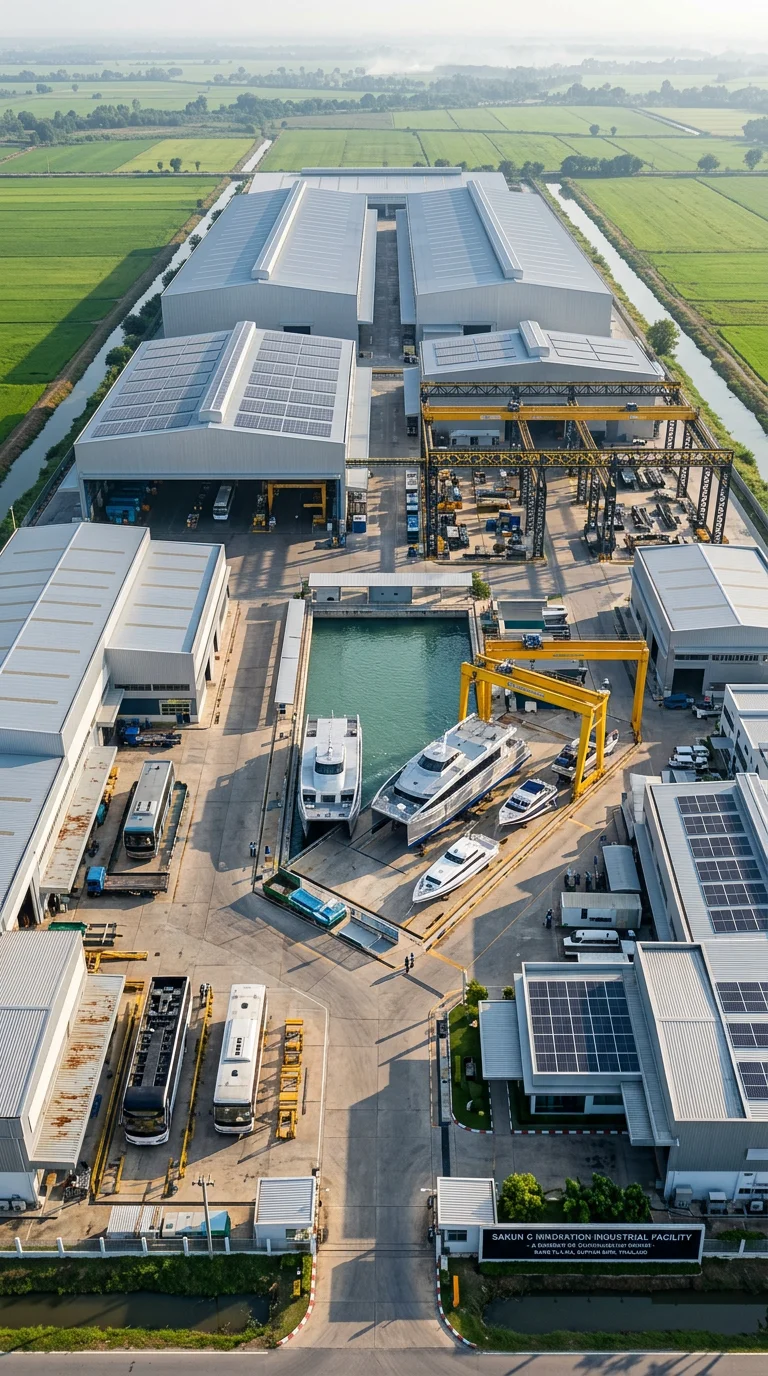
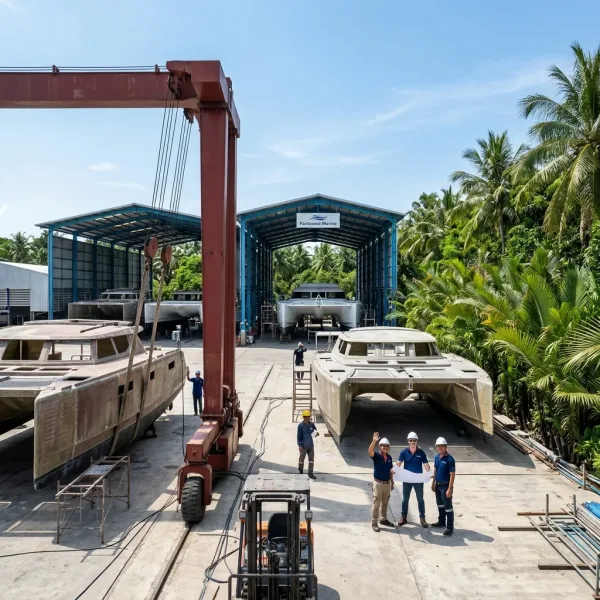
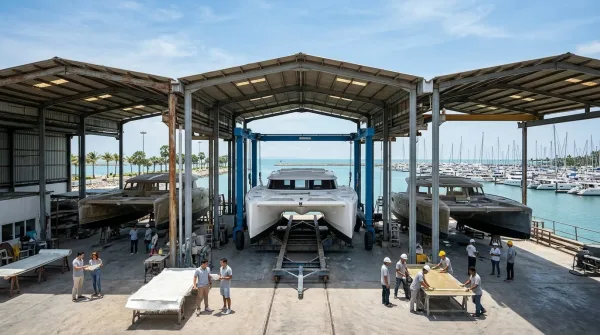
Sakun C Innovation operates an industrial boatbuilding facility in Bang Pla Ma, Suphan Buri, adapting high-volume automotive production methods to marine vessel construction. The shipyard focuses primarily on commercial aluminium catamarans and high-speed monohull craft engineered for passenger transit, tourism excursions, and public sector maritime operations.
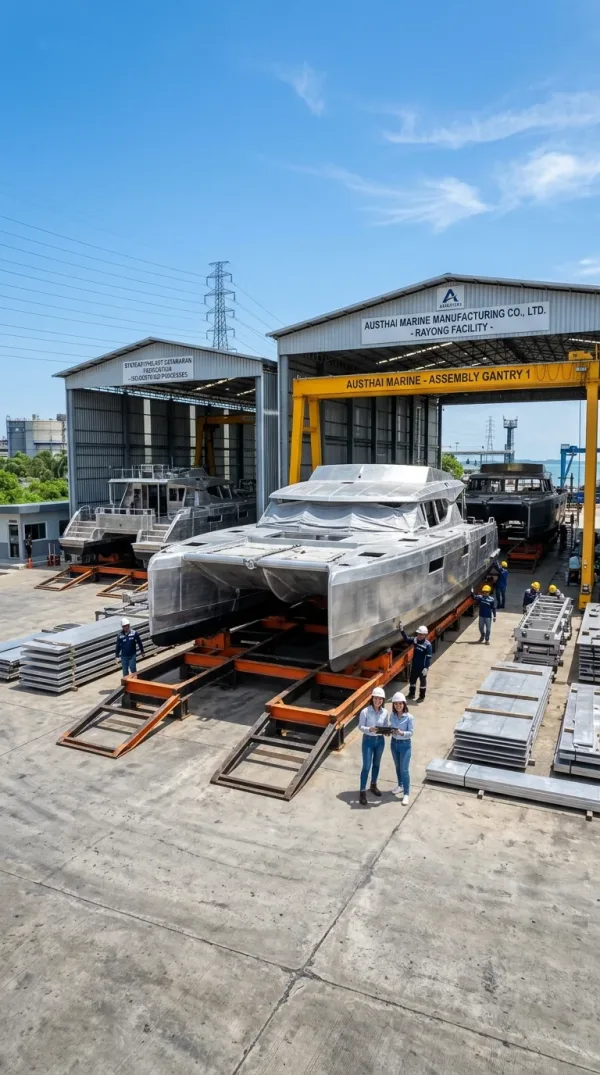
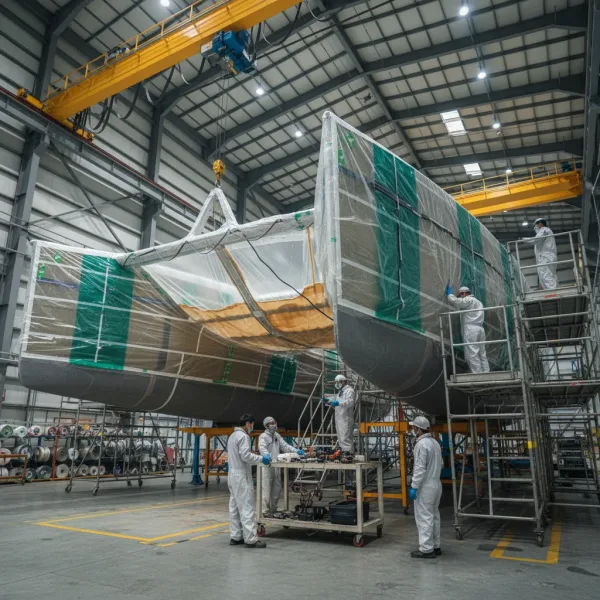
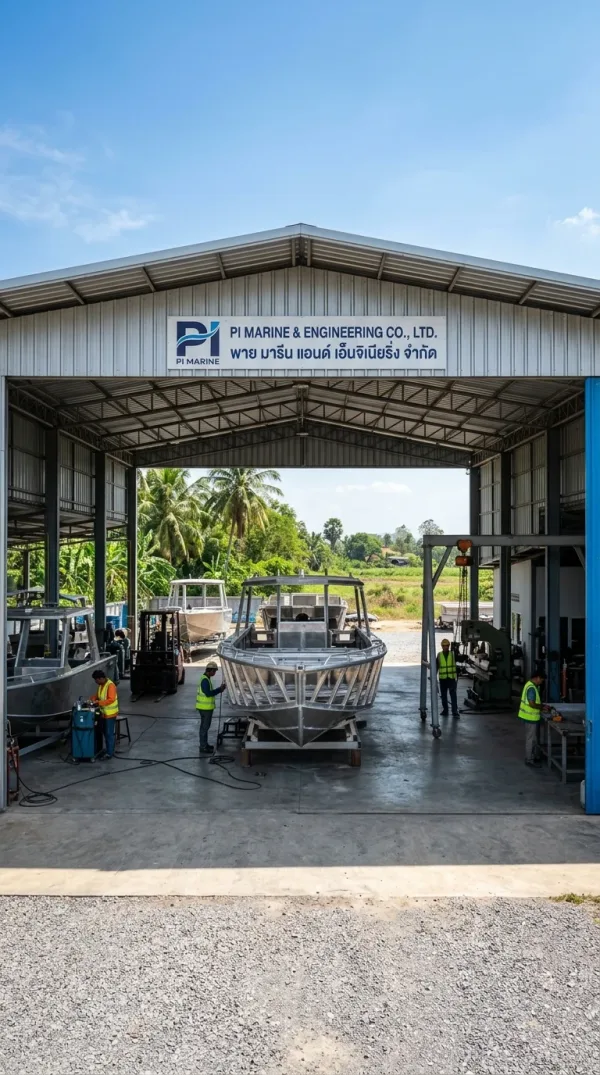
Automotive mass-production tooling forms the technological foundation of every marine vessel built at the Bang Pla Ma shipyard. Rather than bending and hand-welding individual aluminium plates over wooden jigs across six to eight months, Sakun C deploys computer-aided design and engineering systems, finite element analysis, computational fluid dynamics, and heavy computer-controlled hydraulic stamping presses. The factory presses large, unbroken panels from marine-grade 5083 H116 aluminium alloy, a hardened material delivering up to four times the tensile resistance of ordinary commercial plate whilst cutting hull structure weight to roughly one-third of an equivalent steel build. Weld lines are substantially reduced through stamped hull sections, eliminating traditional stress fracture points along the keel and chines. Automated MIG and TIG robotic welding fixtures assemble the structural framework under the supervision of technicians certified by Lloyd's Register Class. To minimise maritime sinking hazards, workers inject closed-cell polyurethane and EVA safety foam into sub-deck cavities, providing permanent reserve buoyancy even if the hull experiences a direct puncture. This automotive-derived methodology condenses complete vessel assembly cycles to approximately four to six weeks, maintaining rigid dimensional tolerances across high-volume fleet orders.
Fleet purchasers, tour operators, and marine surveyors planning technical visits to the Bang Pla Ma shipyard can reserve reliable private transport and regional charter connections across Suphan Buri through commercial booking platforms.
Commercial Passenger Catamarans and the F-Series Fleet
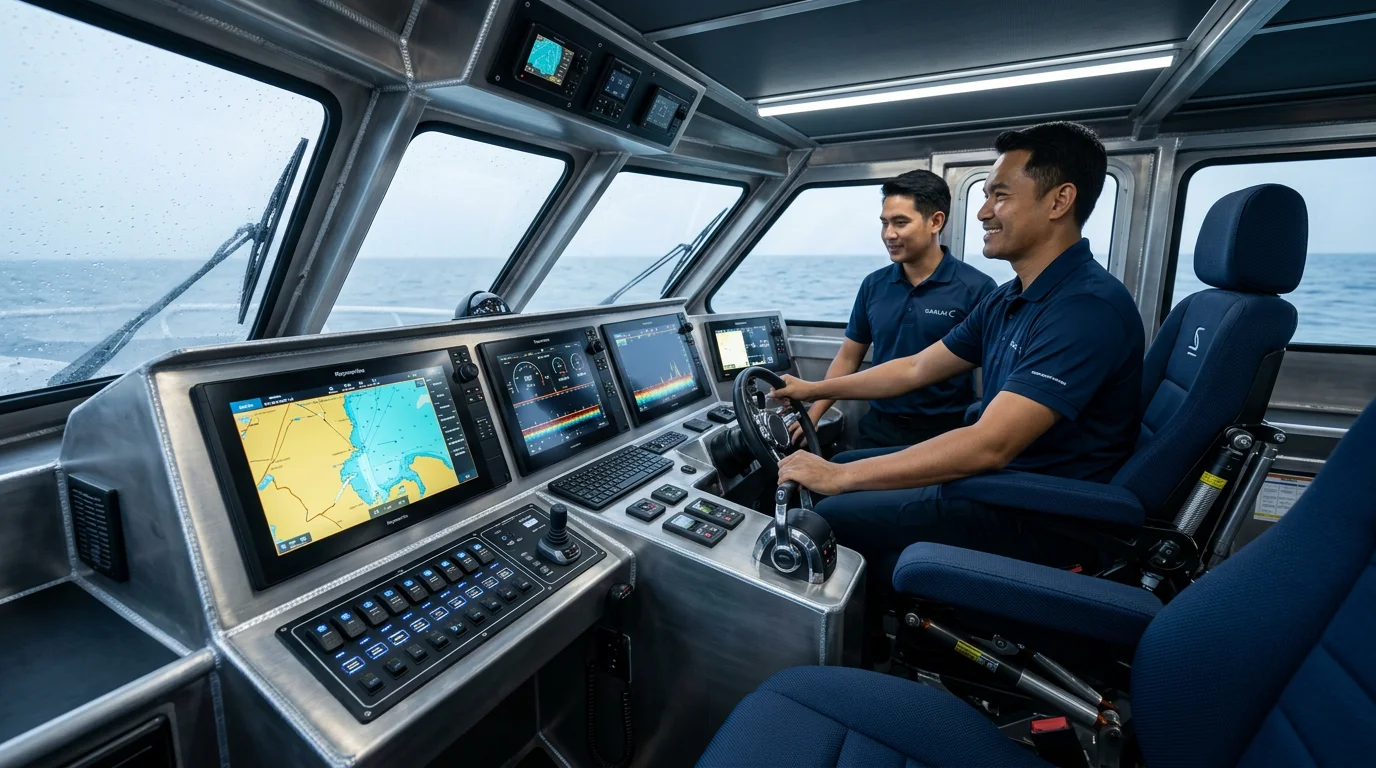
Twin-hull commercial catamarans represent Sakun C Innovation's primary vessel category, engineered specifically for high-capacity passenger transport across open bays, coastal waters, and choppy island channels. The catamaran catalogue spans lengths from 10 to 24 metres, categorised under the F-Series line to serve island transfer providers, luxury dive operators, and urban river transit networks. The F180EC passenger catamaran, recognised by the Royal Institution of Naval Architects in the United Kingdom within its Significant Small Ships publication, demonstrates the efficiency of the yard's low-drag aluminium hull profile. Designed in partnership with naval architecture studio Albatross Marine Design, the vessel measures 18.15 metres in length with a 6.38-metre beam and a shallow draft of 1.3 metres. Twin sponsons slice through tidal chop to suppress roll motion, protecting passengers from sea sickness on coastal crossings between the mainland and offshore islands. Onboard layouts accommodate between 90 and 120 forward-facing passengers inside air-conditioned enclosed salons or open-sided sightseeing decks fitted with extruded aluminium seating, perimeter safety rails, and luggage racks. Commercial operators can configure propulsion packages using twin outboard petrol motors or inboard marine diesel engines linked to straight shafts or surface drives. On Bangkok's Chao Phraya River, commercial commuter operators have deployed F180EC catamarans powered by twin 400-horsepower Cummins NT855 marine diesels, achieving cruising speeds of 11 to 13 knots and top speeds up to 21 knots. The reduced displacement of the 5083 alloy structure lowers fuel consumption considerably compared to equivalent fibreglass passenger ferries.
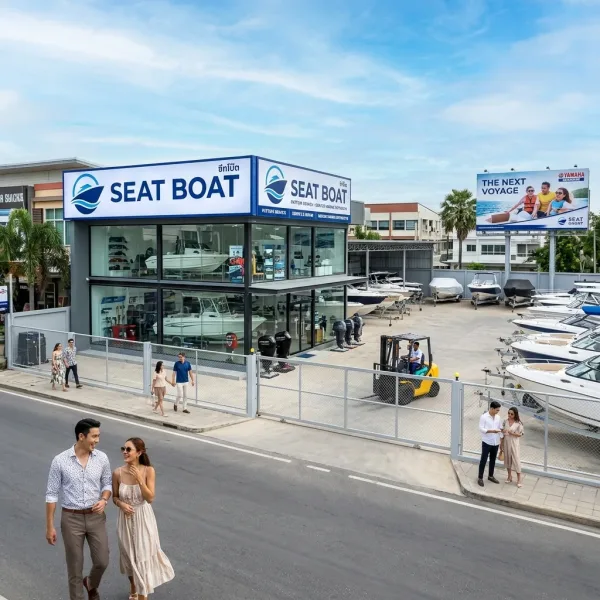
Guide to Seat Boat on South Pattaya Road, Thailand's official Mercury Marine distributor offering custom boatbuilding, engine servicing, chandlery, and repairs.
High-Speed Monohulls, Coastal Patrol, and Multipurpose Craft
Monohull vessels built by Sakun C Innovation provide high-speed agility, shallow draft performance, and heavy-duty utility for coastal patrols, emergency medical teams, and island resort transfers. The monohull lineup ranges from the 4.95-metre S50 fast runabout to the 15-metre M150AM multipurpose maritime security platform. The S50 speedboat incorporates a beam of 2.0 metres, carries up to 15 passengers, and operates with a single 40 to 90-horsepower outboard engine to reach speeds between 25 and 35 knots, making it a functional craft for inland waterways, hotel transfers, and sheltered coastal hops. For larger commercial and governmental assignments, the M-Series multipurpose fleet includes models such as the M085EM, M120AM, and M150AM. Each deep-V hull incorporates hydrodynamically calculated lifting strakes that propel the craft onto the plane with minimal bow rise, ensuring clear forward visibility in heavy swells. The M120AM multipurpose craft, measuring 12.22 metres in length with a 3.76-metre beam, reaches top speeds of 40 knots when driven by twin 437-horsepower inboard diesels, serving maritime rescue squadrons, firefighting units, and border enforcement agencies. Reinforced rub rails, high-impact bow crash boxes, and integrated towing posts withstand rough pontoon moorings and harbour workboat duties. Cockpit decks feature non-skid marine coatings, self-draining scuppers, and perimeter tie-downs capable of securing diving gear, medical stretchers, or cargo pallets. Operators seeking bespoke interior outfitting can specify weather-sealed cabins, climate control, shock-absorbing suspension seats, and forward boarding ramps for beach landings. Complementing the speedboats and patrol craft, the yard produces T-Series shallow-draft utility craft between 4.6 and 6.5 metres for flood rescue, environmental monitoring, and canal transport. These aluminium monohulls deliver the durability needed for relentless daily service in tropical maritime environments where fibreglass craft suffer sun degradation and osmosis.
Electric Marine Propulsion and Green Tourism Craft
Green marine propulsion represents Sakun C Innovation's premier technical initiative, developing zero-emission passenger vessels that future-proof Thailand's marine transport sector. Developed in partnership with clean-energy providers, the F200AC-EV catamaran, branded commercially as the Banpu NEXT e-Ferry, was registered by the Marine Department in 2020 as Thailand's first commercial electric passenger marine vessel for operations off Phuket. Measuring 20.0 metres in length with a 6.38-metre beam, the catamaran accommodates up to 90 passengers, with 74 enclosed salon seats. Powered by a 625 kilowatt-hour high-density marine lithium-ion battery bank developed in conjunction with Durapower, the vessel operates at cruising speeds of 10 to 15 knots without vibration, engine noise, or exhaust fumes. Pier-side charging infrastructure replenishes the battery pack during passenger turnaround at municipal piers such as Ao Por Pier, providing continuous operational endurance for scheduled island hops across Phang Nga Bay. The low-drag aluminium catamaran hull minimises hydrodynamic friction, stretching battery efficiency and extending run cycles between charges. Rooftop solar photovoltaic arrays provide auxiliary electricity to power interior LED lighting, navigation radar, and salon climate control systems. Operating an electric commercial catamaran lowers daily maintenance overhead by eliminating fuel filters, oil changes, impeller replacements, and gearbox overhauls. This clean propulsion platform allows luxury island resorts, marine national parks, and urban canal networks to offer responsible tourism excursions that protect sensitive coral reef ecosystems and reduce carbon emissions.
Commercial operators and technical inspection teams travelling across Thailand to review marine craft or inspect shipyard facilities should maintain comprehensive travel insurance and reserve reliable regional transport connections in advance.
Terrestrial Transport and Non-Marine Aluminium Engineering
Automotive stamping expertise extends beyond ship hulls into lightweight terrestrial passenger transport and municipal vehicles. Sakun C manufactures the C-Bus, a commercial 20-seat minibus constructed with a high-strength aluminium body mounted on a Hino XZU720R commercial chassis. Powered by a 4.0-litre Hino common-rail turbo-diesel engine paired with a six-speed automatic transmission, the vehicle meets Euro 3 emissions standards. Replacing conventional steel body panels with marine-grade aluminium cuts kerb weight by more than thirty per cent, preventing roadside chassis corrosion and reducing diesel consumption across regional feeder routes and coastal resort shuttle networks. The company has extended this platform into urban electric mobility with the C-Bus EV, delivering electric passenger minibuses to fleet operators including PTT's Arun Plus division. Specialised industrial contracts include collaboration with state research bodies and the State Railway of Thailand to design and supply lightweight aluminium railway carriage components. Every land transport product shares the same structural philosophy as the marine division: computer-modelled crash structures, automated robotic jig assembly, and non-corroding materials that lower maintenance costs. While marine fabrication remains the primary industrial discipline at Bang Pla Ma, these automotive products allow the company to maintain supply-chain buying power and continuous tooling innovation. Commercial ferry operators purchasing vessel fleets can source matching shoreside transfer minibuses from the same manufacturer.
Location and Getting There
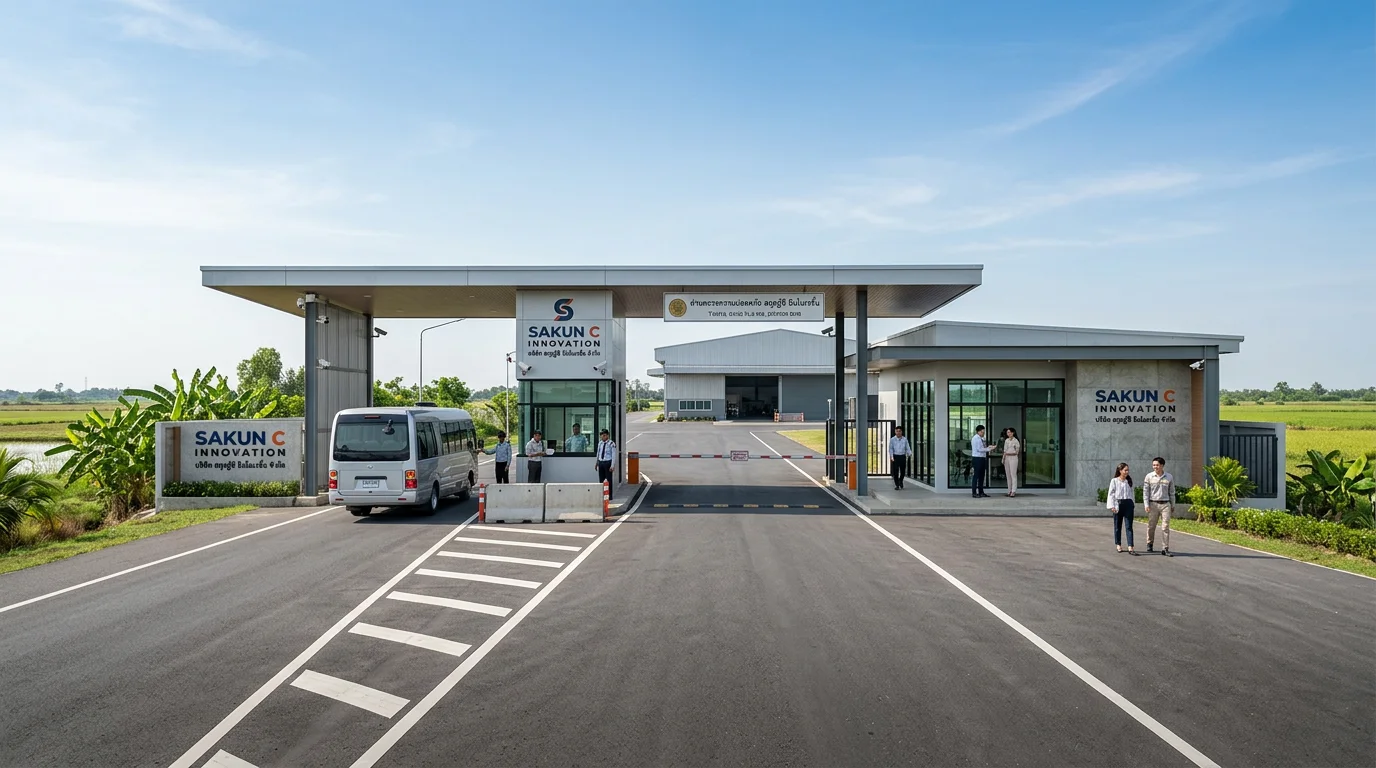
Sakun C Innovation operates from an extensive manufacturing compound in Takha Sub-district, situated in the Bang Pla Ma District of Suphan Buri Province. The site lies roughly 95 kilometres northwest of central Bangkok, positioned off Highway 340, the primary multi-lane trunk road linking the capital's northwestern perimeter to Suphan Buri and the Central Plains.
For overseas marine buyers, technical surveyors, and fleet managers arriving by air, road transfers from Don Mueang International Airport (DMK) cover roughly 85 kilometres and typically take between 75 and 90 minutes in normal traffic. From Bangkok Suvarnabhumi Airport (BKK), the journey spans around 125 kilometres via the Kanchanaphisek Outer Ring Road (Motorway 9) and Highway 340, taking approximately two hours.
No direct rail passenger service serves the shipyard gate. Most visiting delegations hire a private car or chauffeur-driven van for the full day from central Bangkok or the airport, which currently costs around 2,500 THB to 3,500 THB (£56 to £78) return and ensures transport remains on hand for the return leg. Public passenger minivans also run from Bangkok's Mochit New Van Terminal (opposite Mo Chit 2) and Southern Bus Terminal (Sai Tai Mai) towards Suphan Buri, with fares between 120 THB and 160 THB (£2.70 to £3.60). These vehicles travel along Highway 340, but reaching the Takha manufacturing facility from regional bus stops requires arranging a local taxi or motorbike transfer.
Costs and Procurement
Commissioning a commercial vessel or fleet order from Sakun C Innovation operates through an industrial contracting framework rather than retail booking. Hull prices depend on overall length, hull architecture—monohull or catamaran—mechanical propulsion packages, interior passenger layouts, and navigation electronics. Entry-level recreational hulls and compact workboats represent accessible initial investments, whereas 18- to 20-metre passenger catamarans and custom battery-electric ferries require major commercial capital outlays. Beyond maritime craft, the Bang Pla Ma facility applies the same aluminium stamping processes to land transport, manufacturing lightweight commercial minibuses and electric municipal bus bodies.
Fabrication schedules at the Suphan Buri yard average between 30 and 60 days per hull. This rapid delivery timeline stems from automotive stamping dies and robotic welding jigs, cutting the standard six-to-eight-month timeframe typical of traditional shipyards. Production agreements follow formal technical specification reviews, accompanied by milestone payments linked to hull framing, powertrain installation, interior fit-out, and sea trials. Commercial contracts incorporate structural hull warranties and regulatory compliance documentation approved by the Marine Department. Prospective fleet operators, transport agencies, and marine surveyors can arrange an on-site technical inspection and production line review by pre-registering directly with the engineering office.
| Vessel or Service | Cost (THB) | Cost (GBP) | Details |
|---|---|---|---|
| S50 Fast Aluminium Runabout | From 650,000 THB | From £14,450 | 5-metre hull; excludes outboard motor; basic utility hulls start lower |
| M120AM Multipurpose Monohull | 4,500,000 to 7,200,000 THB | £100,000 to £160,000 | 12-metre commercial patrol craft; twin diesel package; bare hulls lower |
| F180EC Commercial Catamaran Ferry | 12,000,000 to 18,500,000 THB | £266,670 to £411,110 | 18-metre, 120-passenger layout; twin inboard diesels |
| F200AC-EV Electric Passenger Catamaran | From 40,000,000 THB | From £888,890 | 20-metre catamaran with twin electric motors and battery system |
| Factory Tour & Technical Consultation | Complimentary | Complimentary | Commercial buyers and marine surveyors only; advance arrangement required |
Who the Shipyard Suits
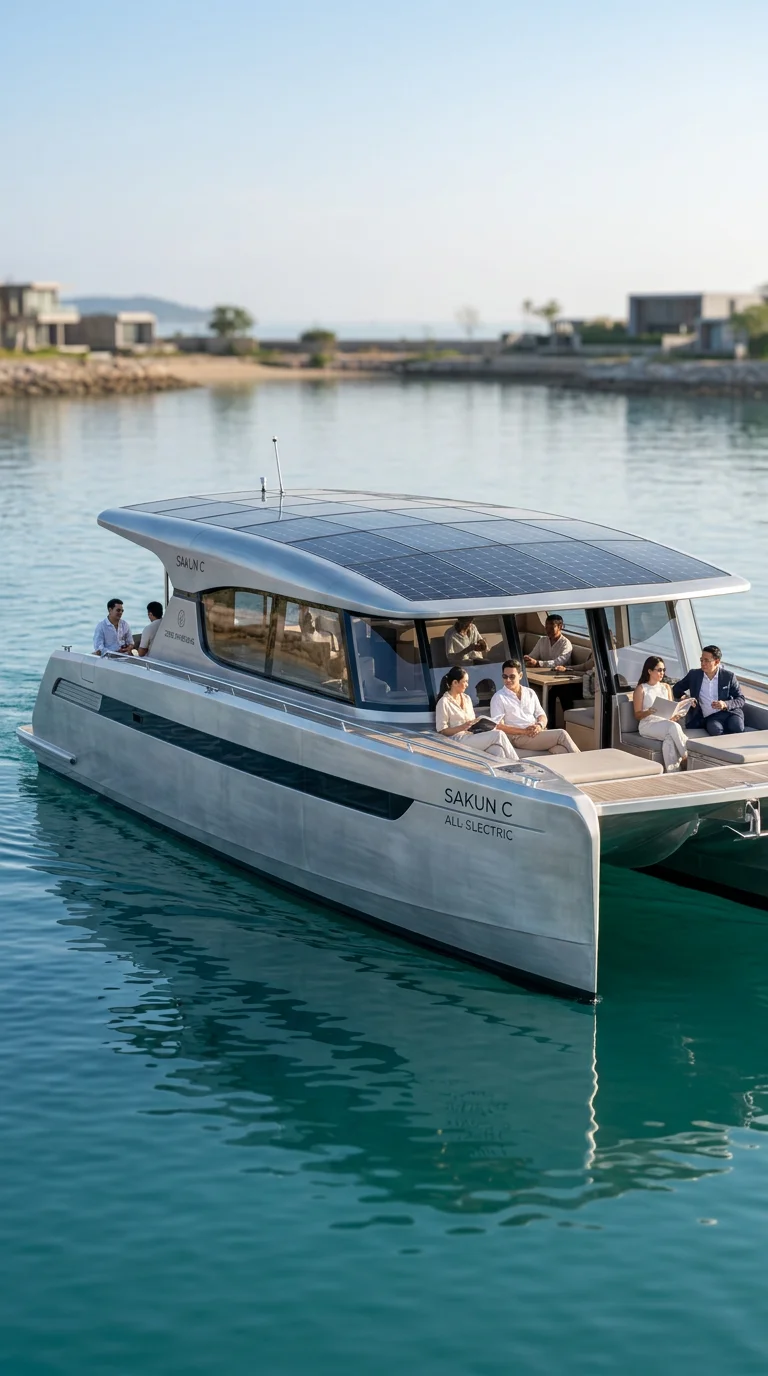
Sakun C Innovation caters to commercial maritime operators, municipal ferry services, island resort transfer fleets, and dive excursion companies seeking lightweight aluminium vessels. The Bang Pla Ma facility is geared towards commercial buyers requiring durable 5083-grade aluminium catamarans, high-speed patrol craft, or battery-electric passenger ferries built by Lloyd's Register-certified welders. Marine transport entrepreneurs looking for lower fuel consumption and corrosion-resistant hulls will find the shipyard's automotive-grade stamping methods practical for standardised fleet production.
The site is an industrial manufacturing plant rather than a marina or waterfront attraction. Casual tourists, day-trippers, and recreational boaters should not visit, as the premises contain active production lines without visitor centres, showrooms, or leisure amenities.
What to Know Before You Book
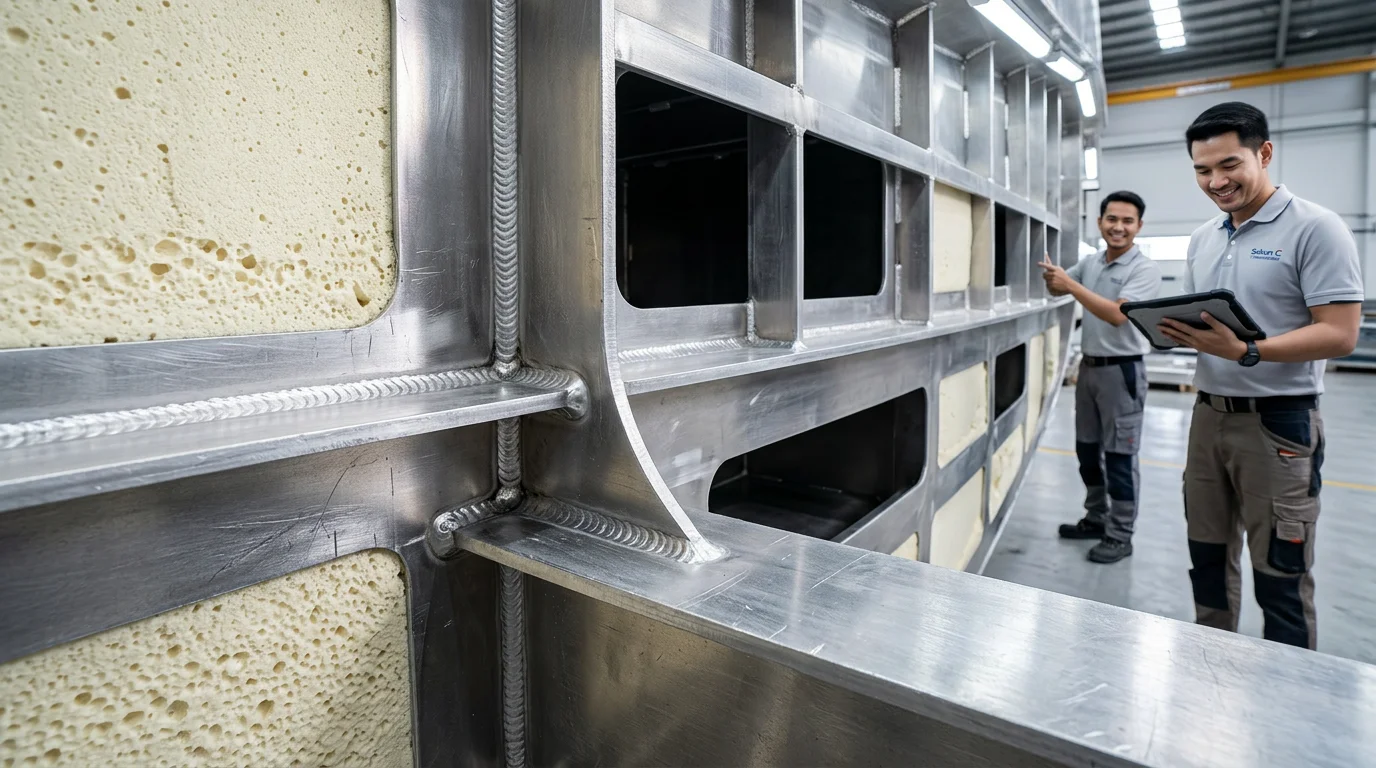
Arranging a visit to Sakun C Innovation requires prior coordination, as the Bang Pla Ma facility operates as an active industrial plant rather than an open showroom. Commercial buyers must contact the sales department in advance to obtain entry clearance and register with on-site security. Walk-in visitors cannot be admitted. When touring the fabrication hangars, personal protective equipment is required. The company supplies high-visibility vests and hard hats for site tours, but you must wear sturdy closed-toe shoes or protective work boots to access the welding bays and assembly floors.
Every commercial vessel is engineered around specific operational demands, so buyers should define their performance requirements before requesting formal quotes. Build schedules and production costs fluctuate significantly depending on hull configuration, passenger capacity, sea state ratings, and propulsion choices, which range from multi-outboard petrol motors and inboard marine diesels to lithium-battery electric powertrains.
As the 200-rai Bang Pla Ma complex sits inland in Suphan Buri, physical boat production takes place entirely off-water. Stamped aluminium panels, robotic welding, and module assemblies are completed at the factory, but final sea trials, Marine Department compliance testing, and client handovers occur at deep-water slipways along the Chao Phraya River or on coastal waters in the Gulf of Thailand.
Practical Tips
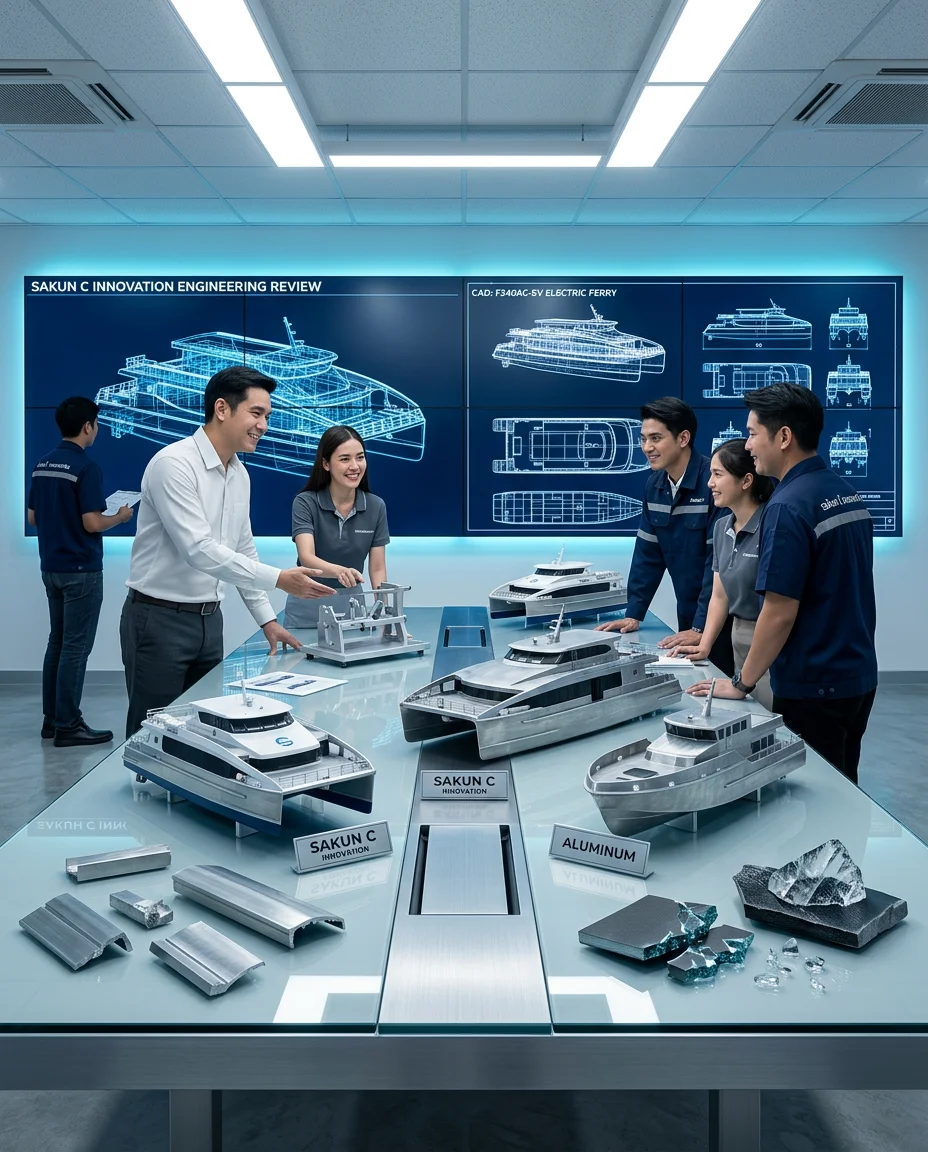
Commercial buyers and fleet operators organising a technical visit to Sakun C Innovation in Bang Pla Ma should arrange appointments well in advance. Because this is an active manufacturing plant rather than a public showroom, commercial sales teams and naval architects require notice to prepare project-specific CAD schematics, hull cross-sections, and production schedules tailored to your operational requirements.
Retain a private car and driver from Bangkok for the entire day. Bang Pla Ma is a rural district in Suphan Buri province with negligible roadside taxi availability, and on-demand ride-hailing services rarely accept return trips back to the capital. Having your vehicle and driver wait on site avoids being stranded once your technical meetings conclude.
Aim for a morning factory walkthrough. Central Thailand experiences high ambient temperatures and humidity by midday, and the open-sided industrial fabrication hangars heat up considerably in the afternoon. An early start allows you to inspect the large hydraulic stamping die presses and assembly bays in relative comfort before sitting down for boardroom discussions.
Request technical specification sheets in English during your briefing. Engineering staff can provide material mill test certificates for the 5083-grade marine aluminium, hydrostatics data, and buoyancy calculations. Taking time to inspect the closed-cell foam injection stations gives practical insight into the flotation methods used across their catamaran lines.
Establish transport logistics and export requirements early in procurement discussions. The Bang Pla Ma yard is inland, requiring completed vessels to travel by heavy-haulage road transport to deepwater ports such as Laem Chabang or riverfront launch sites along the Chao Phraya River. If you plan to export craft overseas, clarify whether flat-rack containerisation or roll-on/roll-off shipping fits your delivery timeline and budget.
For buyers evaluating electric passenger catamarans, examine charging protocol compatibility and flag-state electrical certification alongside the hull design to confirm the onboard battery systems match your local maritime authority's operating rules.
Planning a commercial delegation to inspect the shipyard in Suphan Buri?
Quick Reference Table
| Item | Detail | Notes |
|---|---|---|
| Facility Scale & Type | 200-rai industrial manufacturing complex | Inland automotive-grade aluminium boatbuilding and vehicle plant |
| Parent Organisation | Choknamchai Group | Automotive tier-one tooling, stamping die, and assembly supplier |
| Core Hull Material | Marine-grade 5083 H116 aluminium alloy | Stamped panels with closed-cell polyurethane and EVA safety foam injection |
| Hull Fabrication Timeline | 30 to 60 days per vessel | Automated stamping and robotic welding reduce typical 6-to-8-month build times |
| S50 Fast Aluminium Runabout | From 650,000 THB (£14,450) | 5-metre hull; excludes outboard motor; basic utility hulls start lower |
| M120AM Multipurpose Monohull | 4,500,000 to 7,200,000 THB (£100,000 to £160,000) | 12-metre patrol craft with twin inboard diesels; bare hulls start lower |
| F180EC Catamaran Ferry | 12,000,000 to 18,500,000 THB (£266,670 to £411,110) | 18.15-metre hull; 90 to 120 passengers; twin inboard marine diesels |
| F200AC-EV Electric Catamaran | From 40,000,000 THB (£888,890) | 20-metre zero-emission ferry; 625 kWh lithium-ion battery system |
| Factory Tour & Consultation | Complimentary | Advance booking mandatory; commercial purchasers and marine surveyors only |
| Travel Time from Bangkok | 75 to 90 minutes from DMK (85 km); ~2 hours from BKK (125 km) | Situated off Highway 340 in Takha, Bang Pla Ma, Suphan Buri |
| Bangkok Day Return Transfer | 2,500 to 3,500 THB (£56 to £78) | Recommended private car or chauffeur-driven van hire for the day |
| Public Minivan Fare | 120 to 160 THB (£2.70 to £3.60) one way | Departs Mochit New Van Terminal or Southern Bus Terminal to Highway 340 |
| Site Safety & Dress Code | Sturdy closed-toe shoes or protective boots mandatory | Active industrial site; hard hats and high-visibility vests supplied |
| Website | https://www.sakunc.com | Official corporate and technical overview |
FAQ: Sakun C Innovation
What does Sakun C Innovation produce?
Where is Sakun C Innovation located?
How does Sakun C Innovation build its vessels?
How long does it take Sakun C Innovation to build a vessel?
Does Sakun C Innovation build electric vessels?
Does Sakun C Innovation produce anything other than marine vessels?
How can visitors travel to Sakun C Innovation from Bangkok?
Who is Sakun C Innovation's shipyard suitable for?
What should visitors know before visiting Sakun C Innovation?
Is it recommended to hire a private car for a visit to Sakun C Innovation?
Reviewed by the Thailand Guide Editorial Team • Last reviewed: 7 November 2026
This page is provided for general information only. While we aim for accuracy, details can change — please verify anything important independently before relying on it.