Chalong Pier & Yacht Anchorage



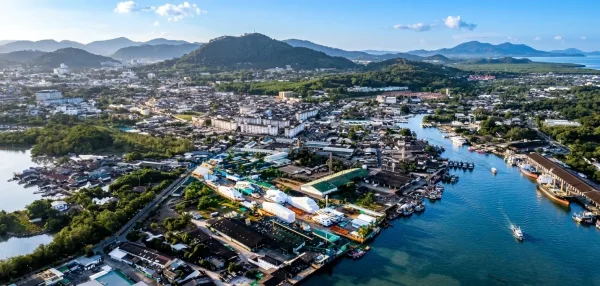
Extending 720 metres out into the shallow tidal waters of Chalong Bay, Chalong Pier is southern Phuket's primary maritime gateway. Managed by the Phuket Provincial Administration Organisation (PPAO) in Chalong Subdistrict, this extensive municipal concrete jetty links landbound travellers directly with the Andaman Sea while providing international visiting mariners with Phuket's integrated port clearance hub. The harbour hosts scores of private sailing yachts, multi-day scuba diving liveaboards, and commercial island-hopping craft at any time.
The facility is an operational transport terminal and staging area rather than a seaside leisure attraction. Its purpose is to handle high-volume passenger boarding for daily boat excursions alongside formal customs and immigration clearance for ocean-going yachts entering Thai territorial waters. Holidaymakers boarding speedboats for offshore islands share the shorehead with certified divers loading gear and yacht skippers completing maritime paperwork.

Concrete jetty and passenger transport
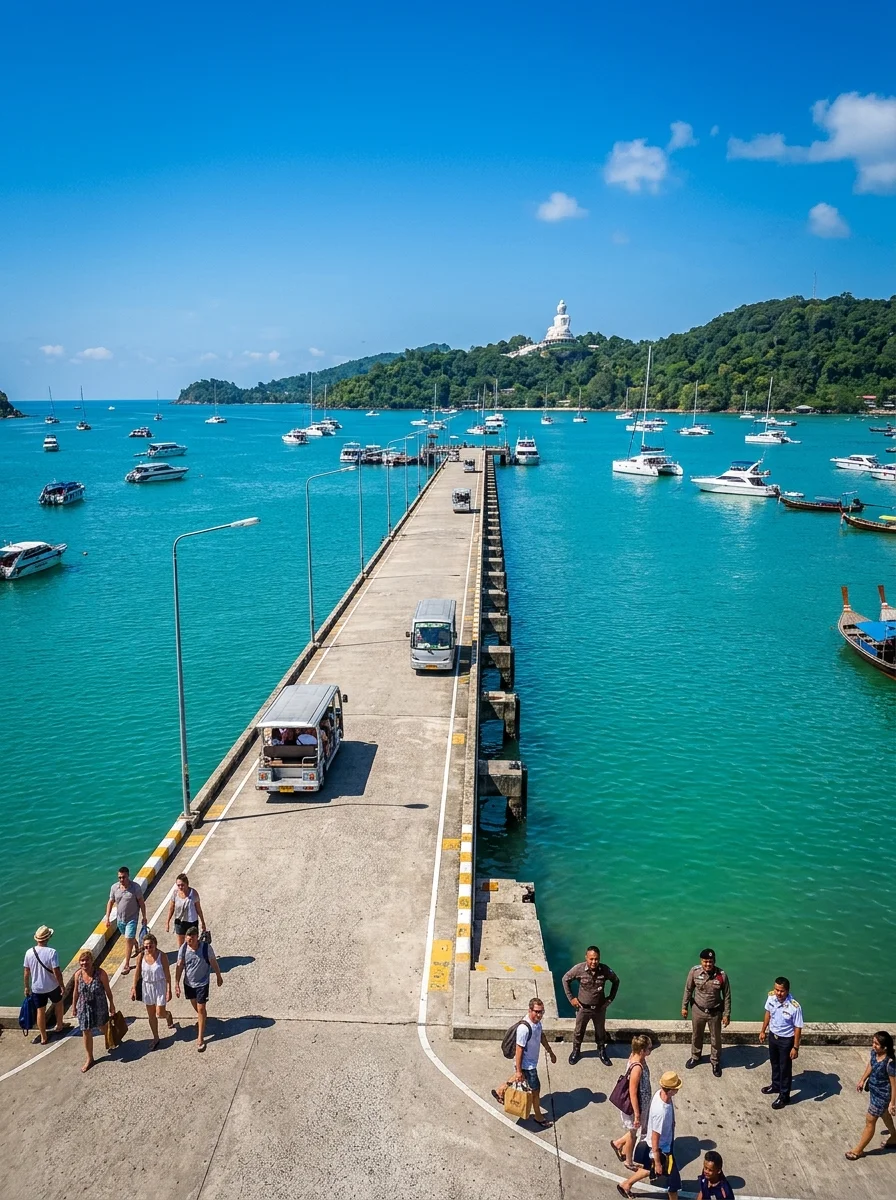
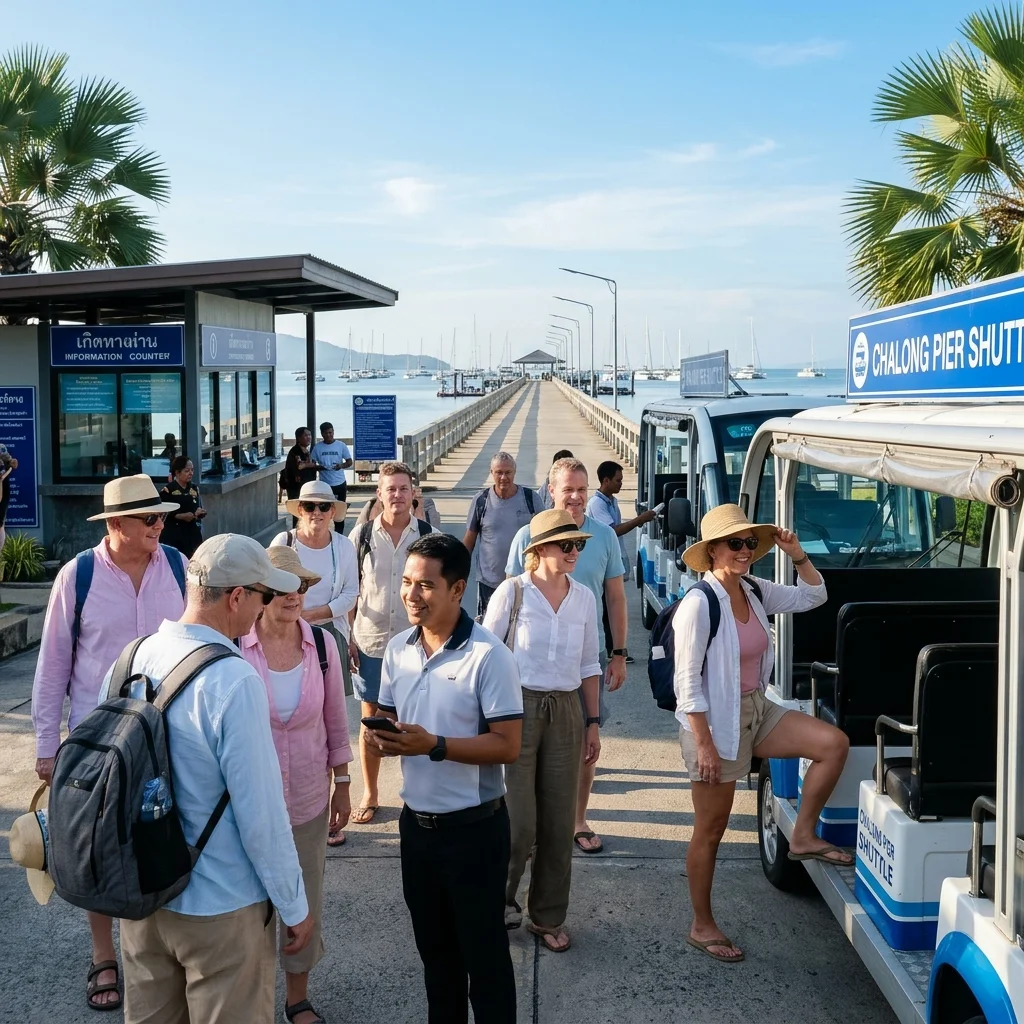
The defining engineering feature of Chalong Pier is its 720-metre reinforced concrete spine, constructed across the bay's shallow mudflats to ensure all-tide vessel access. Completed around 2001 to replace an older timber walkway that barely allowed two pedestrians to pass, the modern structure permits commercial tour boats, dive catamarans, and tender craft to embark passengers without stranding on intertidal banks. Walking the full length of the jetty in the tropical heat with heavy dive bags or family luggage can be demanding. To assist transit, the municipal administration runs open-air electric shuttle vehicles that carry passengers continuously between the shoreward entrance plaza and the outer berths.
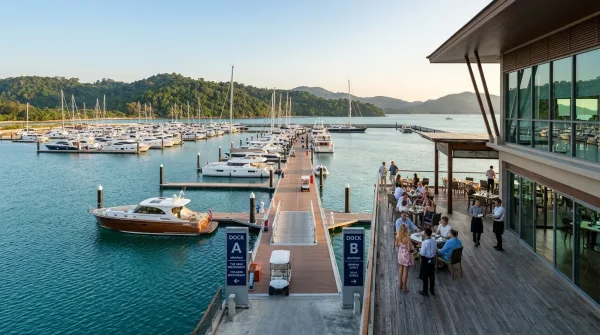
The shorehead facilities include security barrier gates, tour operator assembly points, luggage handling areas, and covered waiting pavilions. Balustrade lighting lines both edges of the concrete deck, providing visibility for early morning departures and dusk returns. At the outer seaward terminus, multi-tiered floating pontoons and stepped concrete landings allow speedboats and catamarans to tie up securely without sustaining hull impact from passing wake. Boarding queues move briskly under the supervision of harbour staff, though travellers should always confirm with their tour company whether their excursion ticket includes the pier shuttle or requires small cash payment for the ride.
Sheltered bay and yacht anchorage
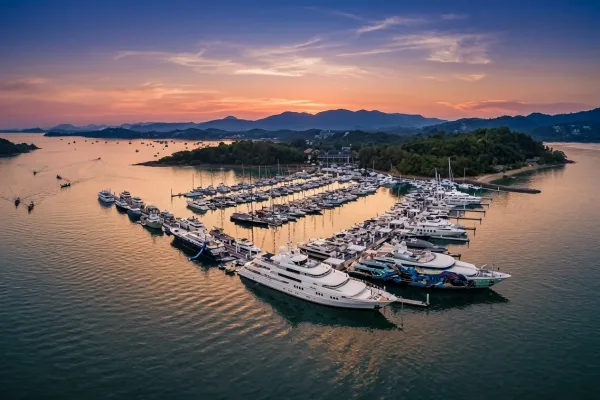
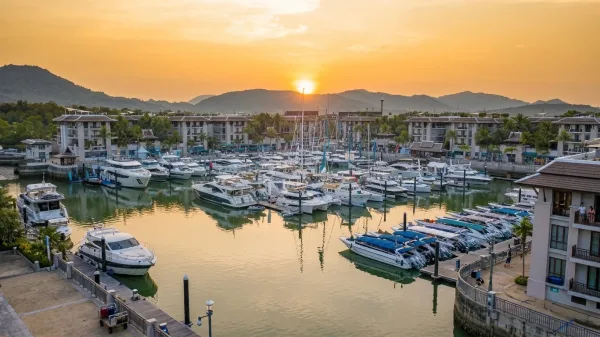
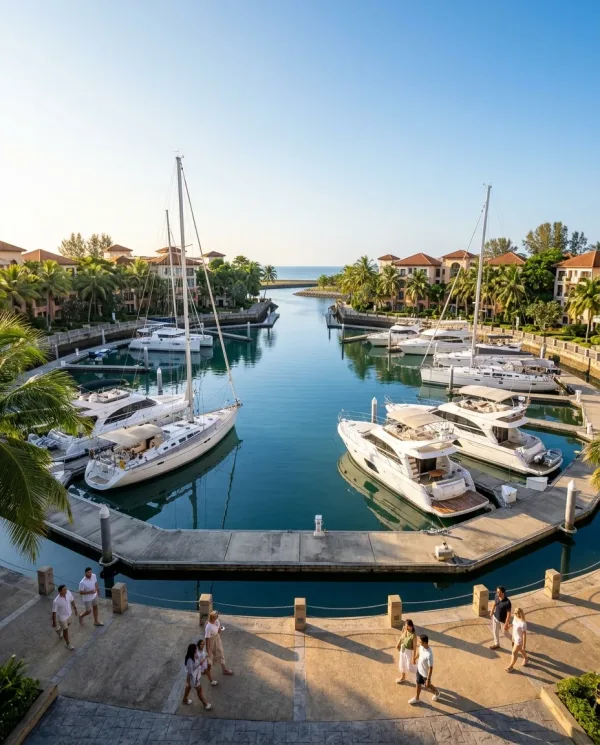
Chalong Bay forms the primary year-round natural anchorage on the southern coast of Phuket. The bay is shielded from prevailing southwest monsoon swells by surrounding headlands and the large barrier island of Koh Lon, which sits squarely across the bay's southern entrance. This broad, sheltered basin covers several square kilometres of navigable water, with depths typically ranging between 3 and 7 metres over a seabed composed of heavy sand and sticky mud. The holding ground is dependable, making it the preferred holding basin for dozens of sailing monohulls, multihulls, and ocean cruisers resting at anchor or secured to private mooring buoys.
Tidal variations in Chalong Bay can exceed two metres between springs and neaps. At low water, vast expanses of silty mud dry out along the inner shoreline, making it impossible for dinghies to reach the sand. Cruising skippers must land their tenders at the low-profile floating dinghy pontoons situated at the outer pierhead or along the designated landing jetty near the yacht club. Marine diesel bunkering and fresh water deliveries can be arranged via dedicated service barges operating in the bay, while shorehead agents assist with waste management and refuelling. Weather conditions remain calm from November to April during the northeast monsoon, while the summer months bring occasional surface chop without dislodging properly set ground tackle.
Discover Phuket beyond the clichés. Find your perfect area, from cultural towns to quiet beaches, and enjoy authentic food and experiences. Plan your trip now!
One Stop Service Centre and port clearance
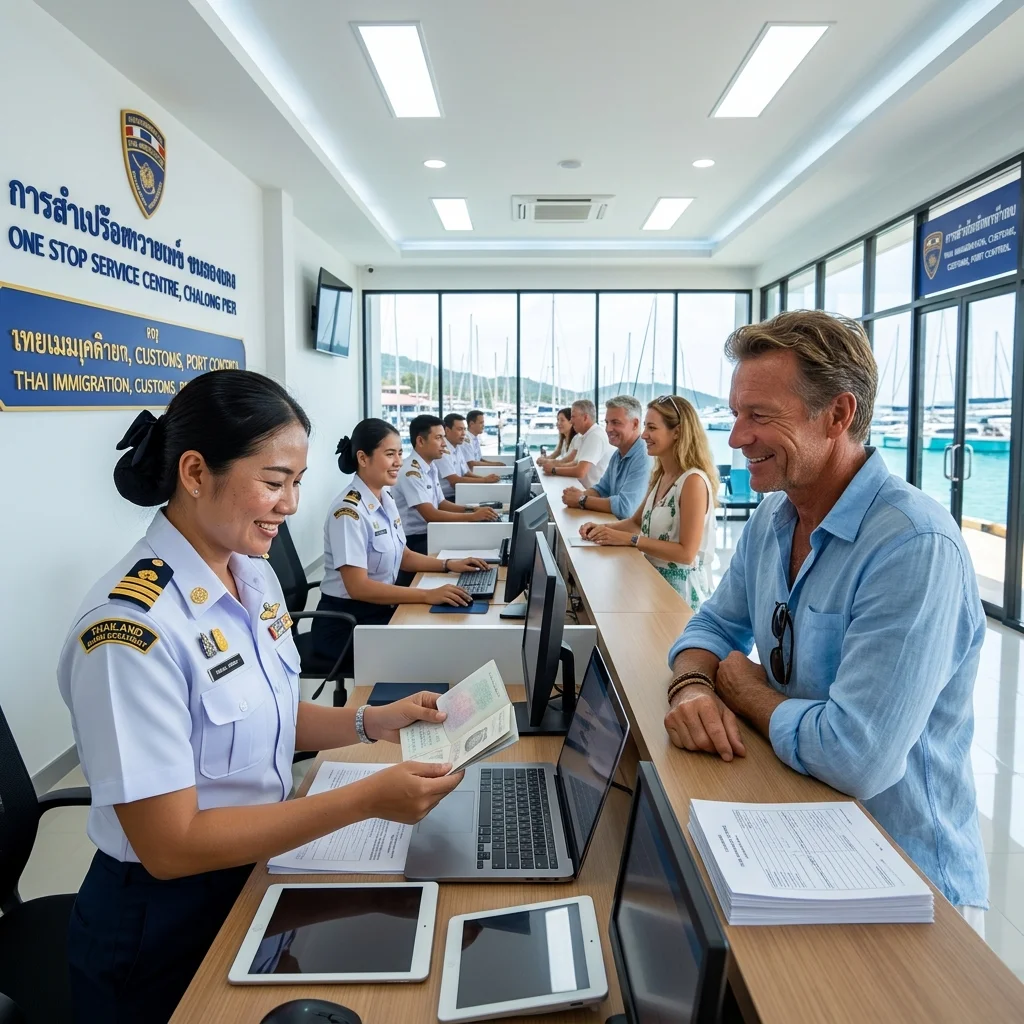
At the outer seaward head of the concrete pier stands a circular rotunda building housing the Phuket Yacht Control Centre (PYCC) and the island's One Stop Service Centre. Established by maritime authorities to streamline border control, this integrated agency houses the Marine Department Harbour Master, the Immigration Bureau, the Customs Department, and Agricultural Quarantine under one roof. International yachts arriving in Phuket waters must anchor in Chalong Bay and report to this building within 24 hours of entering Thai territory.
The interior clearance workflow is organised into sequential administrative desks. Officials process crew manifests, inward vessel declarations, digital tracking registrations, and temporary customs entry bonds. Visiting British passport holders receive standard entry stamp exemptions when clearing in as passengers, while visiting pleasure craft obtain temporary admission permits. Standard processing fees apply during regular weekday working hours, with mandatory overtime charges levied for weekend and public holiday clearances. Cruisers landing tenders at the outer pier pontoon can walk straight into the rotunda to clear entry formalities before relocating their vessels to private marinas elsewhere on the island.
Island excursions and marine charters
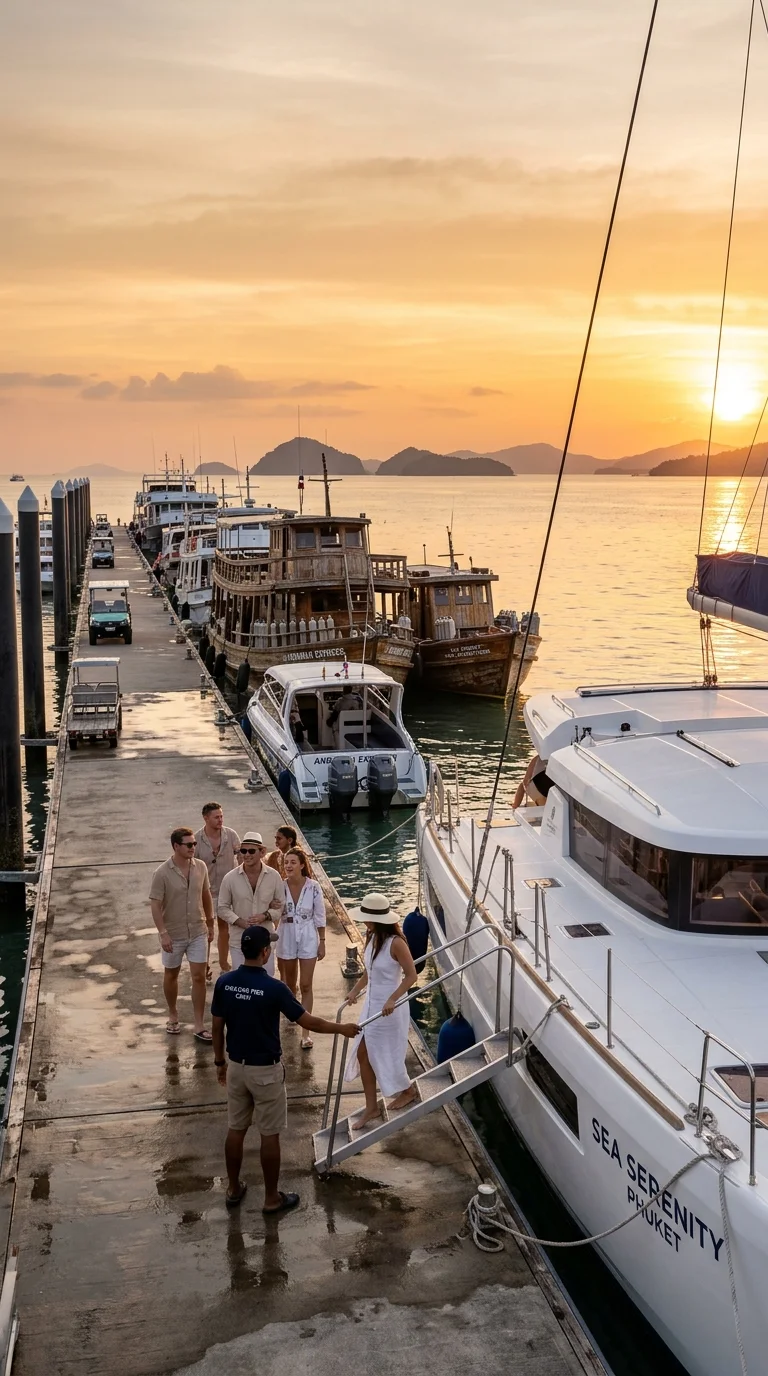
Chalong Pier is the launching ground for day-trip excursions, sport fishing trips, and offshore scuba diving throughout southern Phuket. Between 07:30 and 09:30 each morning, the pier pontoons hum with activity as speedboats depart for Coral Island (Koh Hae), a fifteen-minute run southeast across the channel. Twin-deck motor catamarans and fast cruisers set course for Koh Racha Yai and Koh Racha Noi, favoured for their granite drop-offs and clear water.
Specialised scuba liveaboard vessels use the outer berths as their embarkation base for multi-day expeditions sailing to the Phi Phi Islands, Koh Haa, Hin Daeng, and Hin Muang. Before sunrise, offshore sport fishing boats slip their lines to troll the deep trenches south of Racha Noi for sailfish and pelagic species. Independent travellers can also arrange direct private transfers across the bay to Koh Lon by speaking with licensed longtail boatmen stationed near the entrance plaza. The entire boarding operation is supervised by Marine Department inspectors who monitor passenger manifests, boat operator credentials, and mandatory lifejacket compliance before every departure.
Waterfront amenities and sailing community
The immediate coastal village along Sunrise Road and the shoreward approaches to the pier forms an established maritime quarter. North of the pierhead sits the Phuket Yacht Club (formerly Ao Chalong Yacht Club), established in the early 1990s as a community hub for cruising mariners. The club provides visiting sailors with a beachside bar, dinghy landing facilities, youth sailing tuition, and regular weekend keelboat regattas.
Dive equipment retail shops, PADI training academies, and cylinder testing stations line the neighbouring lanes within easy walking distance of the main security gate. Open-air waterfront seafood restaurants border the bay, including Kan Eang @pier, where diners eat barbecued Andaman seafood beneath old tamarind trees while watching commercial boat traffic navigate the channel. Convenience stores, automated teller machines, currency exchange counters, and scooter rental operators are available nearby to support crew provisioning before voyages. Because the shoreline consists of working tidal mudflats, it is unsuitable for swimming, ensuring all coastal activity remains focused on boating, provisioning, and marine transport.
Location and Getting There
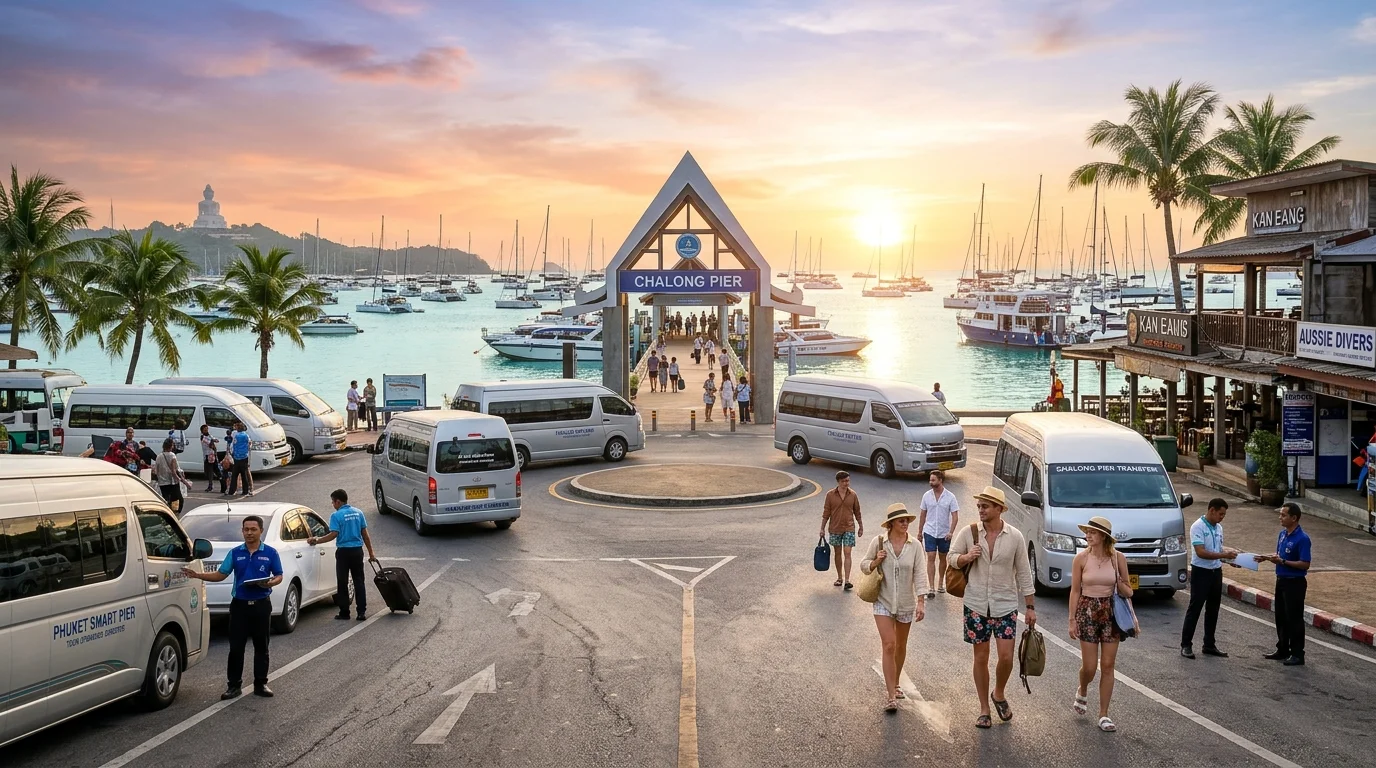
Chalong Pier sits at 12 Sunrise Road in Chalong subdistrict, along the sheltered inner curve of Chalong Bay on Phuket's south-eastern coast. The pier lies approximately 10 kilometres south of historic Phuket Old Town and just under one kilometre east of Chalong Circle, the island's primary southern roundabout linking the arterial routes from Kata, Rawai, and Phuket Town.
Travellers arriving at Phuket International Airport (HKT) face a 42-kilometre journey southward down the central spine of the island. A pre-booked private transfer or metered taxi typically takes 60 to 75 minutes, depending on central traffic bottlenecks around Koh Kaew, costing between 1,000 THB and 1,200 THB (approximately £23 to £28). App-based ride-hailing through Grab and Bolt operates reliably from the west coast resorts. Holidaymakers travelling from Kata or Karon Beach can reach the waterfront in 15 to 20 minutes across the Kata Hill pass, with one-way fares averaging 350 THB to 450 THB (£8 to £10).
Public transport provides a straightforward option from Phuket Old Town. The air-conditioned municipal electric bus (PPAO Red Line) runs directly between Samkong, Phuket Old Town, and the pier terminus, charging between 15 THB and 40 THB (£0.35 to £0.95). Traditional blue songthaews—open-air wooden passenger trucks—also depart regularly from the Downtown Market on Ranong Road, running through Chalong to the pier gates for around 30 THB to 50 THB (£0.70 to £1.15).
Costs and Booking
Visiting the public pier walkway is free of charge, with access open daily. Excursions departing from the pier cover a wide variety of vessel types and itineraries. Speedboat trips to Coral Island (Koh Hae) start around 900 THB (£21) for half-day runs, reaching 1,400 THB (£33) for full-day visits. Full-day speedboat tours to the Phi Phi Islands generally cost between 1,900 THB and 2,800 THB (£44 to £65) per passenger, typically covering lunch and snorkelling gear, with national park fees occasionally charged separately. Guided scuba diving day trips out to the Racha Islands or Shark Point range from 3,500 THB to 4,800 THB (£81 to £112), covering two to three boat dives, equipment hire, and catering. Private charter options across the bay include longtail boats to Coral Island from 1,200 THB to 2,000 THB (£28 to £47) per boat, while sailing catamarans and motor yachts begin from roughly 24,000 THB (£560) for half-day outings.
For visiting cruising yachts, anchoring in the natural mud bottom of Chalong Bay is free of charge, though vessels arriving from foreign ports must clear inward formalities at the One Stop Service Centre. Standard government fees include Harbour Master inward and outward permits at 500 THB (£12) each, alongside Immigration processing at 200 THB (£4.65) per passenger. Customs check-in is free of charge during weekday working hours, but arrivals on weekends or official Thai public holidays incur a mandatory 800 THB (£19) overtime surcharge.
| Option | Cost (THB per night) | Cost (GBP approx) | Notes |
|---|---|---|---|
| Natural Bay Anchorage | Free | Free | Mandatory port clearance fees apply upon arrival |
| Managed Mooring Buoy | 500 THB–1,000 THB | £12–£23 | Billed per night; reserved via local marine agents |
| Pier Entrance Parking (Car) | 40 THB–100 THB | £0.95–£2.30 | Flat daily parking fee in municipal secure lot |
| Pier Transit Shuttle Bus | 10 THB–20 THB | £0.23–£0.46 | Per single journey down the 720m jetty |
| Coral Island Day Trip | 900 THB–1,400 THB | £21–£33 | Half-day speedboat tour including snorkel gear |
| Phi Phi Speedboat Excursion | 1,900 THB–2,800 THB | £44–£65 | Full-day tour with lunch and national park fees |
| Certified 3-Dive Day Trip | 3,800 THB–4,800 THB | £88–£112 | Day boat to Racha or Shark Point with food and gear |
Who Chalong Pier Suits
Chalong Pier works well for sailors, scuba divers, and day-trippers boarding speedboats or sailing catamarans bound for southern offshore islands such as Coral Island, Koh Racha, and the Phi Phi archipelago. Cruising yacht crews also benefit from the consolidated One Stop Service Centre on the waterfront, where customs, immigration, and marine department formalities can be completed in a single building.
The area is poorly suited to travellers wanting a peaceful resort setting or a white-sand swimming beach. Chalong Bay consists of shallow, silty mudflats filled with hundreds of moored boats and commercial vessel traffic. The water is unsuitable for bathing, so holidaymakers seeking sunbathing and clean sea swimming should travel over the headland to nearby Kata Beach or Nai Harn Beach instead.
Key Considerations Before You Arrive
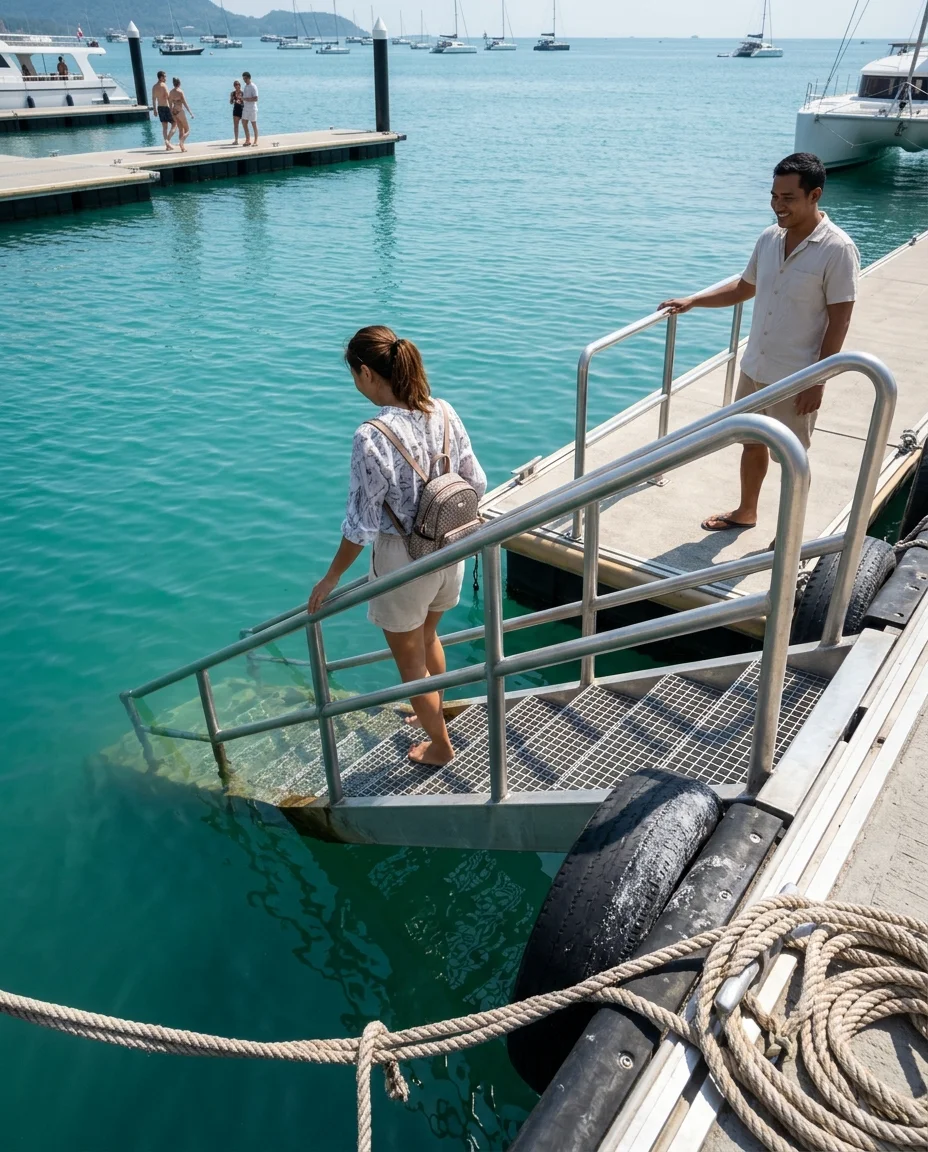
Treat Chalong Pier purely as a transit and departure hub. The concrete jetty stretches 720 metres from the entrance car park to the floating boarding pontoons at the far end. An electric shuttle bus runs back and forth along the pier for a nominal cash fare, which is worth using if you are carrying dive equipment, handling bulky luggage, or travelling with young children; walking the full length takes around ten to fifteen minutes in the heat.
Tidal movements across Chalong Bay are substantial. At low tide, the inner bay drains into extensive shallows, meaning larger catamarans and deeper-draft speedboats must anchor further out in deeper water. Operators regularly use small longtail tenders to ferry passengers between the pier pontoons and their main vessel.
Cruising skippers arriving from overseas must clear inward port formalities within 24 hours of dropping anchor. Standard administration operates during normal weekday office hours, whereas completing customs and port clearance on weekends or official Thai public holidays incurs overtime surcharges of up to 1,000 THB.
Practical Tips
Arriving 30 to 45 minutes before scheduled departure avoids the worst of the morning congestion. Check-in counters and tour desks near the pier entrance experience heavy queues between 08:00 and 09:30, when dozens of island excursions register passengers simultaneously. Arriving early leaves ample time to collect boarding stickers, check equipment manifests, and reach the boat without rushing.
Keep small Thai Baht notes accessible. While some tour packages include pier transport, passengers using the pier's open-air electric shuttle carts typically pay around 10 THB in cash per journey to avoid the 720-metre walk under direct sun. Small denominations are also useful for convenience store purchases and drinking water before boarding.
Footwear designed for wet surfaces is strongly recommended. Stepping across floating pontoons and boarding wet boat ladders requires sturdy water shoes or sandals with secure heel straps rather than loose flip-flops. Protect mobile phones, electronics, and documents in a sealed dry bag against boat spray and sudden squalls. Mariners tendering ashore by dinghy should keep boat registration papers and passports in waterproof pouches.
Take motion sickness tablets approximately 30 minutes before setting off. Chalong Bay provides sheltered waters, but vessels encounter noticeable ocean swell almost immediately after clearing the headlands on routes toward Coral Island, Koh Racha, or the Phi Phi islands. Preventive tablets work far more effectively when taken before the vessel gets underway.
Pre-arrange return transport or book through ride-hailing apps like Grab or Bolt rather than relying on taxis waiting at the pier exit, which commonly quote inflated flat rates to disembarking crowds. Alternatively, lingering for dinner at the waterfront seafood restaurants directly beside the pier entrance offers a pleasant way to let the afternoon congestion around the Chalong roundabout subside.
Quick Reference Table
| Item | Detail | Notes |
|---|---|---|
| Primary Role | Island excursion departure hub and yacht port of entry | Managed by Phuket Provincial Administration Organisation (PPAO) |
| Pier Infrastructure | 720-metre reinforced concrete jetty | Equipped with floating berths, stepped landings, and lighting |
| Bay Anchorage Depth | 3 to 7 metres | Heavy sand and sticky mud seabed; sheltered by Koh Lon |
| Tidal Range | Exceeds 2 metres between springs and neaps | Extensive mudflats dry out along inner shoreline at low tide |
| Pier Walkway Admission | Free | Open daily to pedestrians and boarding passengers |
| Electric Pier Shuttle | 10 THB–20 THB (£0.23–£0.46) | Single cash fare per journey along the 720-metre jetty |
| Port Clearance Facility | One Stop Service Centre (rotunda at outer pierhead) | Houses Harbour Master, Immigration, Customs, and Quarantine |
| International Yacht Clearance | Within 24 hours of dropping anchor | Mandatory for foreign vessels entering Thai waters |
| Harbour Master Fees | 500 THB (£12) inward / 500 THB (£12) outward | Standard official permit charges |
| Immigration Clearance Fee | 200 THB (£4.65) | Charged per arriving passenger |
| Customs Overtime Surcharge | 800 THB (£19) | Levied on weekends and official Thai public holidays |
| Natural Bay Anchorage | Free | Standard government port clearance fees apply |
| Managed Mooring Buoy | 500 THB–1,000 THB (£12–£23) | Billed per night; arranged via local marine agents |
| Pier Entrance Parking (Car) | 40 THB–100 THB (£0.95–£2.30) | Flat daily rate in municipal secure car park |
| Morning Departure Peak | 07:30–09:30 | Travellers advised to arrive 30–45 minutes before departure |
| Airport Transfer (HKT) | 42 km; 60–75 minutes | Metered taxi or private transfer costs 1,000 THB–1,200 THB (£23–£28) |
| Local Bus from Phuket Town | 15 THB–40 THB (£0.35–£0.95) | Air-conditioned municipal PPAO Red Line electric bus |
| Songthaew from Phuket Town | 30 THB–50 THB (£0.70–£1.15) | Traditional wooden bus from Ranong Road Downtown Market |
| Website | https://chalongpier.com/ | Official website |
FAQ: Chalong Pier & Yacht Anchorage
What is the main purpose of Chalong Pier?
How can I get around Chalong Pier if I have heavy luggage?
Is the shuttle service at Chalong Pier included in tour tickets?
What are the requirements for international yachts arriving in Phuket?
Are there extra charges for yacht clearance at Chalong Pier on weekends?
Can visitors swim in Chalong Bay near the pier?
How long does it take to get to Chalong Pier from Phuket International Airport?
How early should I arrive at Chalong Pier for my boat excursion?
What kind of currency should I carry for small purchases at Chalong Pier?
How should I arrange return transport from Chalong Pier?
Reviewed by the Thailand Guide Editorial Team • Last reviewed: 4 November 2026
This page is provided for general information only. While we aim for accuracy, details can change — please verify anything important independently before relying on it.