The Thap Chang area of eastern Bangkok provides direct motorway access to suburban cultural sites and horticultural retail hubs, offering practical weekend alternatives for British expatriates residing in the capital.
Located within the Saphan Sung district, the neighbourhood sits along the Bang Pa-in–Bang Phli section of Motorway 9, known locally as Kanchanaphisek Road. For UK nationals living in central residential districts such as Sukhumvit or suburban enclaves in Bang Na and Srinakarin, navigating Bangkok during weekends often entails congested journeys to well-known central spots. In contrast, the corridor around Thap Chang allows residents to access domestic community infrastructure within a thirty-minute drive from eastern residential developments. The area contains historical religious architecture, independent horticultural supplies, and key highway service centres that are relevant to long-term expatriate vehicle owners.
Suburban Context and Regional Transport Links
Motorway 9 functions as Bangkok's eastern outer ring road, carrying heavy daily commercial and commuter traffic between the northern logistics corridors and the industrial zones of Samut Prakan. The route bypasses central urban congestion. It also links directly to the toll network serving Suvarnabhumi Airport.
Expatriates living in Thailand often limit their travel to high-density commercial developments along the mass transit rail lines. However, peripheral areas adjacent to the motorway contain established domestic districts that operate at a lower density. Thap Chang represents one such enclave. Leaving the ring road at the Saphan Sung interchanges leads directly into residential streets and agricultural-origin land. These areas retain historical water management infrastructure, including branches of the primary Khlong Prawet Burirom canal network. The district offers an insight into standard Thai municipal administration outside foreign-dominated retail zones.
Architectural Conservation at Wat Lat Bua Khao
The primary cultural site in the district is Wat Lat Bua Khao, formally known as Wat Ratchayotha. Founded during the late nineteenth-century reign of King Chulalongkorn (Rama V), it remains the sole registered Buddhist temple within Saphan Sung district.
The site was established by two court officials, Phraya Ratchayotha and Phraya Suren Ratchasena. King Chulalongkorn subsequently assigned the formal title Wat Lat Bua Khao, referencing the white lotus ponds that historically characterised the area’s wetlands. The property incorporates an ordination hall that illustrates regional building methods from the mid-Rattanakosin period. Originally, the structure used timber, nipa palm thatch, and composite walling made from mud, agricultural chaff, sawdust, and sugarcane juice.
Later restoration replaced the organic materials with a masonry shell. The building retains a standard seven-bay hall profile without the elaborate ceramic or gilded roof ornaments seen in state-sponsored temples in central Bangkok. Inside, a historic seated Buddha image in the meditation posture remains preserved.
British expatriates visiting Thai temples should observe strict cultural protocols. Shoulders and knees must remain covered, and footwear must be removed before entering the consecrated assembly halls. The temple is bordered by Khlong Thap Chang Lang. Here, visitors routinely purchase feed for local freshwater fish, a traditional merit-making activity linked to Theravada Buddhist custom. The canal paths also show the original riparian housing layouts that predated the construction of Bangkok's modern road grid.
Domestic Horticulture at Suan Thap Chang Market
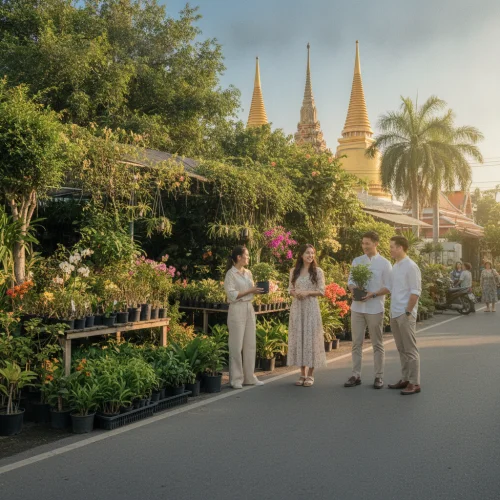
A short distance from the temple grounds lies Suan Thap Chang Plant Market. The market operates daily along local access routes, providing horticultural products for suburban homeowners and apartment tenants.
Horticultural retail in central Bangkok, such as the weekend market at Chatuchak, frequently involves high footfall, marked-up pricing, and restricted parking. Suan Thap Chang serves as a practical alternative for those furnishing outdoor space or interior living areas. The market features dozens of independent vendors selling tropical plants, soil amendments, and terracotta pots.
British expatriates managing gardens in Thailand face distinct climatic conditions. Temperate plants familiar in the UK do not survive the prolonged heat, humidity, and tropical rainfall of Southeast Asia. Suan Thap Chang stocks native foliage and cultivated hybrids suited to this climate, including philodendrons, calatheas, palms, and flowering bougainvillea. Soil mixes sold here incorporate coconut coir and rice husks, which provide the drainage needed during the monsoon season. For apartment residents, vendors provide low-light indoor plants designed to process airborne pollutants, a standard concern during the seasonal air quality drops across the metropolitan region.
Prices at peripheral wholesale and retail markets are generally lower than those found in central city nurseries. Basic spoken Thai or a translation application assists with transactions, as vendor English proficiency is lower than in expatriate-focused centres. Most traders accept payments via domestic mobile banking applications or cash.
Motorway Administration and M-Flow Compliance
Accessing the district requires traversing Motorway 9, where the Department of Highways operates automated toll systems that UK drivers must understand to avoid civil penalties.
The Thap Chang toll collection plaza uses M-Flow. This barrier-free tolling system scans vehicle registration plates using high-speed cameras, eliminating the need for physical cash collection or physical barrier gates. Vehicles do not slow down when passing the monitoring gantries.
For foreign motorists driving private or hired cars, M-Flow requires caution. British expatriates who drive through M-Flow lanes without an active account must settle the toll online within seven days. Failure to complete payment within this statutory period results in a mandatory fine equal to ten times the original toll fee, as specified under the Thai Highway Act. Rental car firms routinely pass these elevated fines directly to foreign customers alongside administrative charges.
Expatriates who own a vehicle can resolve this issue directly within the district. The Thap Chang M-Flow Service Point operates next to the toll plaza rest area. Motorists can register their personal identification, tax registration, and vehicle ownership documentation with on-site staff. The technicians install radio-frequency identification tags on vehicle windscreens, linking toll debits directly to Thai bank accounts or payment cards. The adjacent rest area provides parking, sanitary facilities, and basic concessions for long-distance drivers travelling around Bangkok’s perimeter.
Practical Considerations for Expatriate Residents
Exploring districts like Thap Chang allows British citizens to handle domestic tasks while learning more about local municipal environments. Visiting during weekday mornings or non-peak weekend hours minimises the impact of ring-road industrial traffic. Private vehicles or metered taxis remain the most practical forms of transport to the market and temple, as mass transit lines do not extend directly into the interior residential roads of Saphan Sung.
By combining practical vehicle administrative duties at the highway service centre with visits to the plant market and historical temple, expatriates can navigate urban fringe areas with greater operational confidence.
Source: nationthailand.com
Reviewed by the Thailand Guide Editorial Team • Last reviewed: 14 September 2026
This page is provided for general information only. While we aim for accuracy, details can change — please verify anything important independently before relying on it.