Hua Hin Railway Station
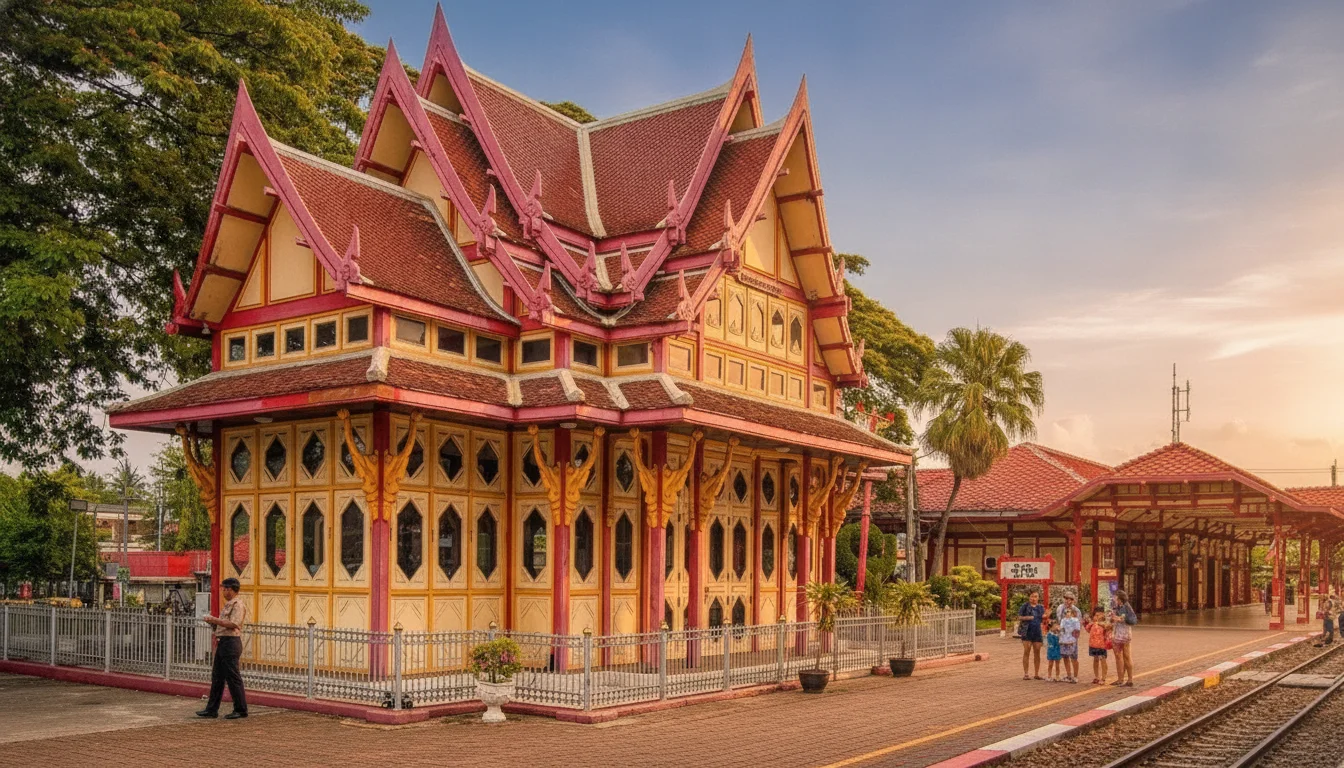
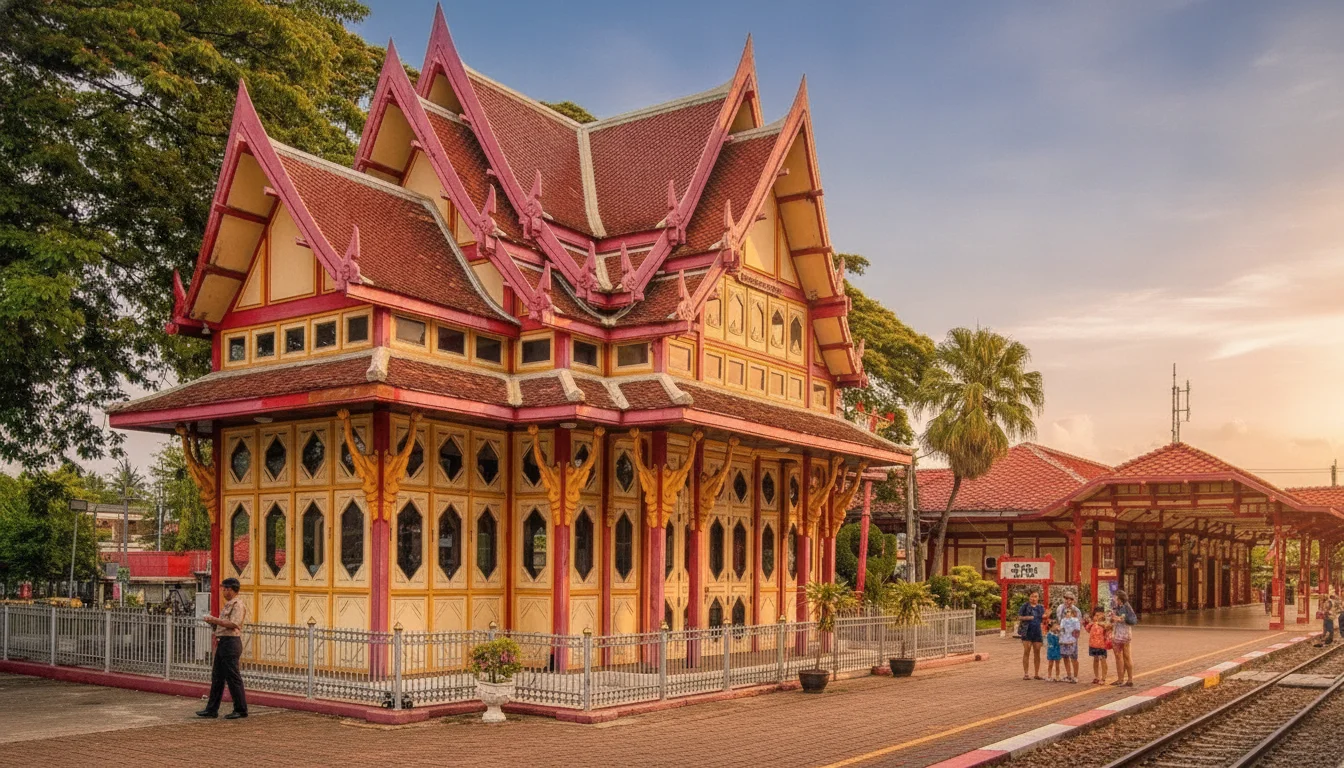
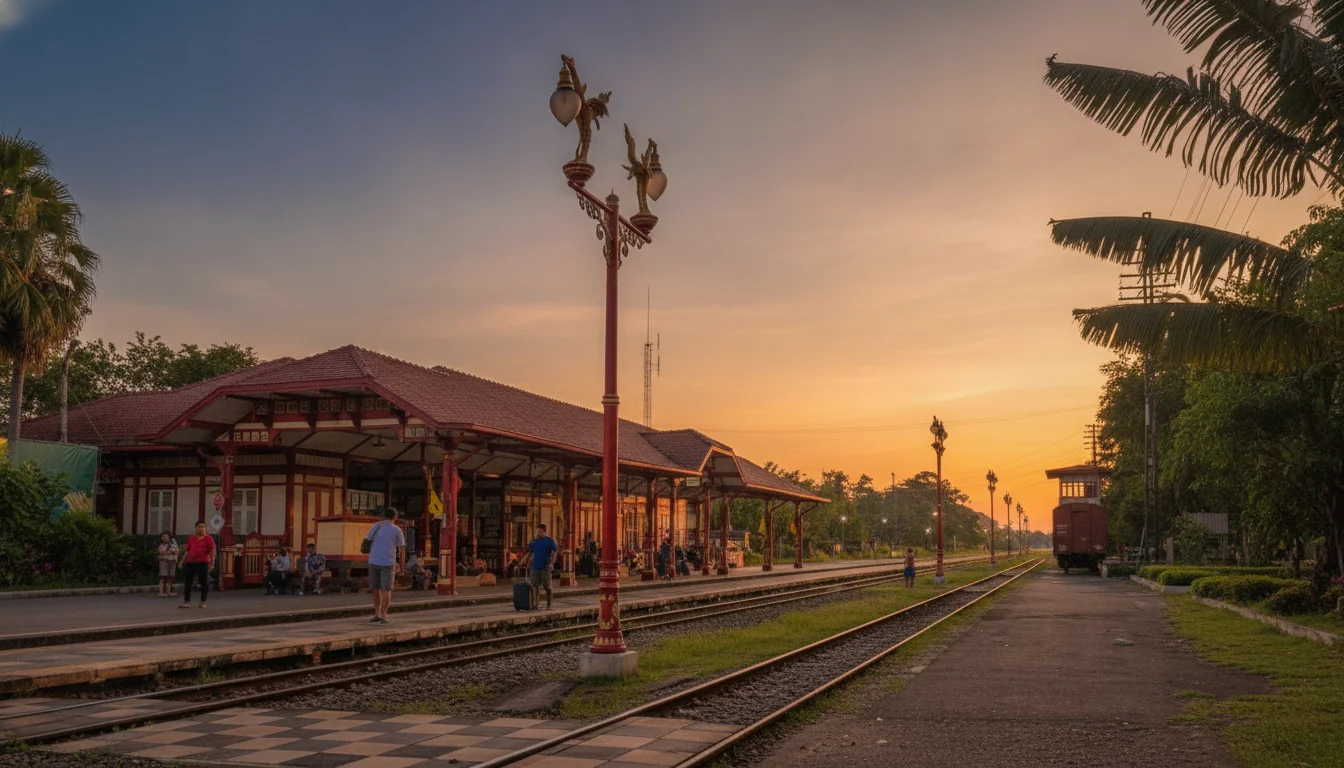
Hua Hin Railway Station is one of Thailand's oldest rail stops and a prominent heritage landmark in the town centre. First established in November 1911 when the Southern Line expanded south from Bangkok, the arrival of the railway transformed Hua Hin from a small coastal fishing village into the country's first major royal seaside resort. The original timber building was later reconstructed in 1926 under Prince Purachatra Jayakara, director-general of the Royal State Railways of Siam. The resulting station structure blends traditional Thai architectural features, such as steeply pitched roofs and decorative wood carving, with European Victorian influences, finished in a classic colour scheme of red and cream.
The main focal point on the station grounds is the Phra Mongkut Klao Pavilion, an ornate four-gabled wooden royal waiting room. Built during the reign of King Rama VI, the structure originally stood at Sanam Chandra Palace in Nakhon Pathom. The State Railway of Thailand subsequently dismantled and relocated the pavilion to Hua Hin in the late 1960s to serve as a designated waiting area for members of the royal family travelling to Klai Kangwon Palace. Adjacent to the tracks, visitors can also see a preserved 1920s Baldwin steam locomotive on static outdoor display.
In December 2023, all scheduled passenger train operations moved to the new elevated Hua Hin Railway Station built right next to the original site as part of Thailand's southern double-track rail upgrade. While passenger departures, ticketing, and modern regional services are now conducted from the elevated terminal, the classic wooden station has been preserved in place as a historical monument and outdoor museum.
Most travellers spend between 30 and 45 minutes wandering around the historic platform, photographing the royal pavilion, and inspecting the vintage locomotive. Its central setting makes it a simple, engaging stop when exploring Hua Hin's town centre.

Getting There and Logistics
Hua Hin's historic railway station sits at the top of Damnoenkasem Road in the centre of town, roughly 800 metres inland from Hua Hin Beach. Thanks to its central position, visitors staying in the downtown area can easily reach the site on foot within 10 to 15 minutes. For those travelling from farther out or avoiding the midday sun, local tuk-tuks and taxis operate across town, with short central rides generally costing between 50 and 150 THB. Songthaews (shared pick-up trucks) also run regular routes through the town centre, providing an economical alternative.
Commercial rail services relocated to the adjacent elevated Hua Hin station in December 2023, leaving the original wooden complex preserved as a dedicated heritage site and public landmark. Access to the grounds and platforms remains free of charge, with the site open daily to pedestrians. Visiting in daylight hours is best for viewing the woodwork, station signs, and preserved steam locomotive. Late afternoon is particularly comfortable for exploring, as temperatures cool down and low sunlight catches the building's distinctive red-and-cream exterior.
Quick Reference Table
| Item | Detail | Notes |
|---|---|---|
| Established | November 1911 | Reconstructed in 1926 in Victorian-Thai style |
| Passenger Operations Relocated | December 2023 | Commercial services moved to new elevated station next door |
| Admission Fee | Free of charge | Original station preserved as an outdoor museum and open daily |
| Recommended Visit Duration | 30 to 45 minutes | Suitable for inspecting the platforms, pavilion, and locomotive |
| Distance from Beach | Roughly 800 metres | Situated inland at the top of Damnoenkasem Road |
| Walk Time from Downtown | 10 to 15 minutes | Easily reached on foot from central Hua Hin |
| Local Transport Fare | 50 to 150 THB | Typical price for short tuk-tuk or taxi journeys across town |
Plan for 30C heat and 70% humidity in Hua Hin. Bring your own sunscreen to save 12 GBP and visit in June for the best value dry-weather escape.
FAQ: Hua Hin Railway Station
What is the architectural style of Hua Hin Railway Station?
What is the main focal point at Hua Hin Railway Station?
What is the history of the Phra Mongkut Klao Pavilion?
What can visitors see at Hua Hin Railway Station besides the main building?
Are passenger trains still operating from the original Hua Hin Railway Station?
What is the purpose of the original Hua Hin Railway Station now?
How long should I plan to visit Hua Hin Railway Station?
Where is Hua Hin Railway Station located?
Is there an admission fee for Hua Hin Railway Station?
What is the best time to visit Hua Hin Railway Station?
Reviewed by the Thailand Guide Editorial Team • Last reviewed: 26 September 2026
This page is provided for general information only. While we aim for accuracy, details can change — please verify anything important independently before relying on it.