About Koh Pha-ngan
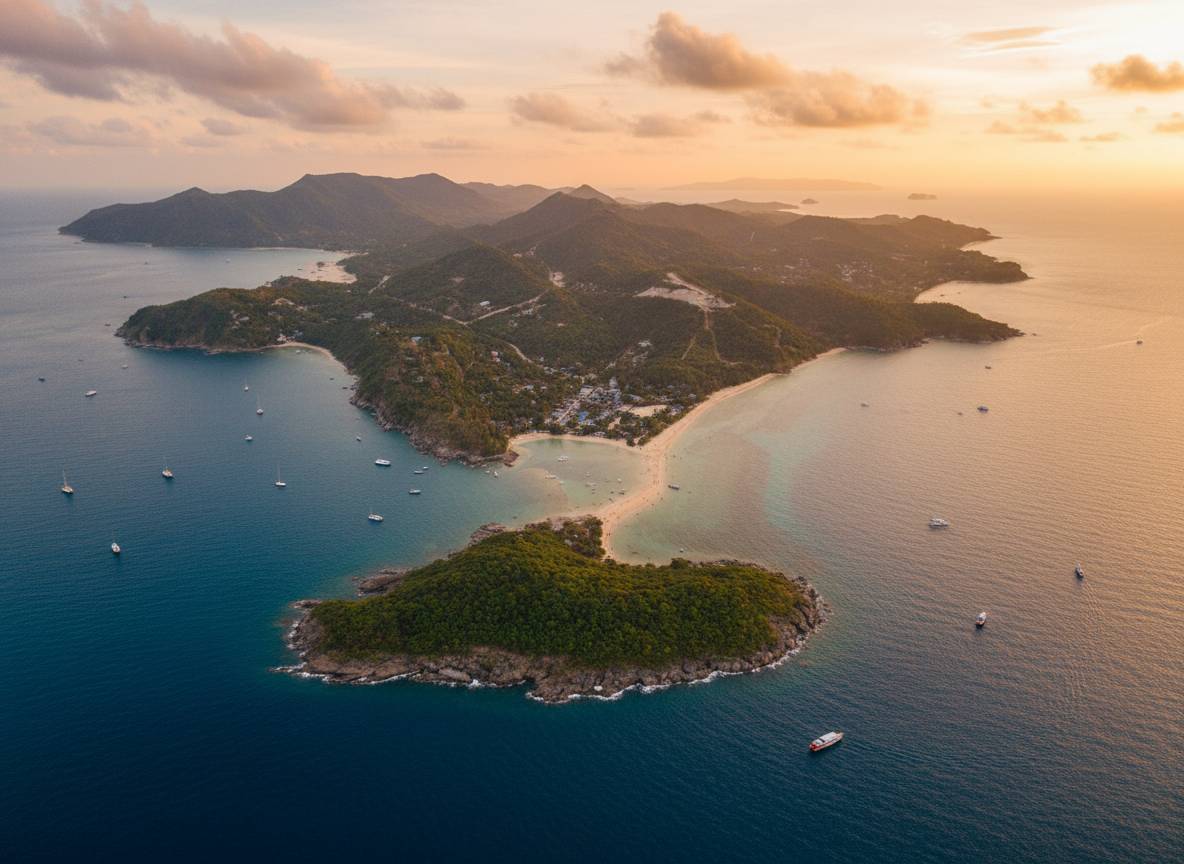
The island that taught the world how to throw a beach party has quietly grown up while everyone was looking the other way.
Sitting between Samui and Tao in the Gulf of Thailand, Koh Pha-Ngan draws a fractured demographic of backpackers, wellness devotees, and remote workers. It is heavily forested, mountainous in the interior, and ringed by shallow bays rather than endless stretches of deep-water swimming beaches.
The full moon legacy is both a blessing and a curse, meaning you will either endure thumping bass lines in the southeast or find absolute silence in the north, but rarely anything in between. The secret is that the party scene is entirely avoidable, leaving the remaining ninety percent of the island feeling remarkably untouched by mass tourism.
This guide breaks down exactly how to navigate the shifting atmosphere, covering the most practical neighbourhoods, transport realities, and realistic daily costs. Whether you are arriving for a brief holiday or settling in for a season of yoga and remote work, you will find everything needed to plan your stay.
AREAS & NEIGHBOURHOODS
Koh Pha-Ngan splits neatly into distinct micro-climates of culture. The south-eastern tip of Haad Rin remains the undisputed capital of neon paint and buckets of cheap rum, drawing a young, transient crowd primarily around the lunar calendar. Move up the west coast to Sri Thanu and the atmosphere flips entirely to vegan cafes, tantra workshops, and long-term digital nomads hunched over laptops. It is the spiritual heart of the island, though it can occasionally feel entirely detached from Thailand. The rugged north-east, particularly around Thong Nai Pan, caters to a more traditional holidaymaker with paved roads leading to high-end resorts and excellent swimming bays. Up in the north-west, Chaloklum retains the gritty, authentic charm of an active fishing village, perfect for those wanting cheap seafood and a quieter pace. Dive into the complete areas guide to find out which coastline matches your exact rhythm.
TOP EXPERIENCES
Hiking the dense jungle trail to Khao Ra rewards you with the highest vantage point on the island, provided you start early enough to beat the punishing midday humidity. Down at sea level, kayaking around the west coast at sunset offers a far better view of the horizon than the crowded beach bars. The weekend walking street market in Thong Sala is essential for grazing on cheap local snacks, particularly the grilled squid and heavy southern curries. Scuba diving trips out to Sail Rock deliver some of the best pelagic encounters in the gulf, including frequent whale shark sightings. Check the full things to do guide for more detailed itineraries.
GETTING AROUND
Transport on Koh Pha-Ngan requires patience and a healthy budget compared to the mainland. Songthaews, the converted pickup trucks acting as shared taxis, charge anywhere from 100 to 300 THB (£2.20 to £6.60) per person depending on distance and the driver's mood. Renting a scooter costs around 250 THB (£5.50) a day and offers ultimate freedom, but the steep, winding roads cutting through the jungle interior are notoriously unforgiving for novice riders. If you lack experience on two wheels, simply pay the premium for taxis to avoid ruining your trip. Relying on a bicycle is only viable if you strictly remain within the flat coastal pockets of the west.
WHERE TO STAY
Accommodation swings wildly from basic fan-cooled beach huts to expansive private villas. Budget travellers can still secure a simple wooden bungalow near the beach in the northwest for under £20 a night, though hot water is rarely guaranteed. The mid-range market, averaging £60 to £90 a night, dominates the west coast with boutique wellness resorts offering morning yoga and decent espresso. If you want luxury, look to the secluded bays of the northeast where £250 a night buys you infinity pools, flawless service, and private beach access. Head over to the full hotels guide for specific recommendations across all price brackets.
FOOD & DRINK
The culinary landscape on Koh Pha-Ngan is heavily polarised between traditional southern Thai fire and imported wellness diets. You will find some of the country's most authentic massaman curries simmering in massive pots at the Thong Sala night market, usually costing less than £2 a bowl. Contrast this with Sri Thanu, where raw vegan bowls and kombucha dominate the menus at London prices. The island is particularly famous for its fresh blue swimmer crab, best eaten simply steamed at the rustic seafood shacks lining the pier in Chaloklum. Do not leave without trying coconut milk ice cream served inside a freshly cracked shell.
ESSENTIAL TIPS
Always carry plenty of cash when exploring the northern and eastern coasts, as card machines are rare and ATMs frequently run dry during peak holiday weeks. Be acutely aware of the lunar calendar even if you have no intention of partying, because accommodation prices double and ferry tickets sell out days before the full moon. If you do rent a scooter, photograph every existing scratch before handing over your passport as a deposit to easily deflect any inevitable repair scams. Tap water is entirely unsafe to drink, but reverse-osmosis refill stations dot the main roads and cost mere pennies to use.