Orchid Hospitality Co., Ltd. has tabled a 5.3 billion baht offer to acquire the Royal Orchid Sheraton Hotel and Towers, triggering a formal unitholder vote to sell the riverside property and wind up the investment trust that owns it.
The transaction affects British investors holding units in the property fund, as well as expatriates resident along Bangkok’s central riverfront who use the hotel’s long-term residential, business, and transport amenities. Trust manager One Asset Management Limited has scheduled an extraordinary general meeting for 28 October 2026. Unitholders will cast electronic ballots on three separate disposal routes before voting on the final dissolution and liquidation of the trust.
The move follows a default by Royal Orchid Hotel (Thailand) Public Company Limited, known as ROH. ROH failed to execute its contractual buy-back agreement when its lease expired on 14 July 2026.
The Bidding Options and Liquidation Process
Unitholders face three clear options on the ballot.
The first proposal asks investors to accept a lower offer of 4.873 billion baht from ROH. ROH maintains that it holds a valid right to reacquire the hotel. It claims to have secured external financial backing. However, that funding remains subject to formal due diligence, internal backer approvals, and final loan documentation. If unitholders approve this option, ROH must complete the transaction within 14 days.
The second proposal puts forward the competing 5.3 billion baht cash offer from Orchid Hospitality. Submitted on 4 September 2026, this bid covers all freehold land, physical structures, and operating equipment. It offers unitholders an immediate premium of 427 million baht over the ROH proposal. Completion must take place within 14 days of investor approval, or within 14 days of ROH failing to meet its financial deadlines if ROH's proposal is approved first.
The third proposal serves as a contingency measure. If voters reject both private bids, or if the chosen buyer fails to deliver funds, ONEAM will receive a mandate to liquidate the assets via open public auction.
Once an asset sale concludes, ONEAM will formally dissolve the Grande Royal Orchid Hospitality Real Estate Investment Trust with Buy-Back Condition, known on the Stock Exchange of Thailand as GROREIT. Liquidators will settle outstanding obligations, pay legal expenses, and return the remaining net capital to registered unitholders.
Financial Consequences for British Investors
The liquidation carries direct financial implications for UK nationals holding Thai securities.
Many British expatriates use Thai brokerage accounts to invest in domestic real estate investment trusts, attracted by local yields and direct baht income. GROREIT unitholders on the share register by 29 September 2026 qualify to vote. Investors must log into the designated electronic platform to register their choices.
Capital returns from trust liquidations require careful tax treatment. Under the double taxation agreement between the United Kingdom and Thailand, capital distributions from liquidated trusts are treated differently from regular income distributions. Withholding taxes will apply at source in Thailand before proceeds reach individual investor accounts. Expatriates who retain UK tax domicile must report these capital gains to HM Revenue and Customs, even if the proceeds remain inside Thai bank accounts.
Liquidation expenses will dilute final payouts. Legal disputes between the trust manager and ROH over the expired repurchase right could extend the timeline for capital distribution. Funds will be reserved to cover potential court actions, asset transfer taxes, and administrative fees before cash is returned to investors.
Riverside Operations and Community Impact
The change of ownership brings operational uncertainty to a long-established riverside anchor.
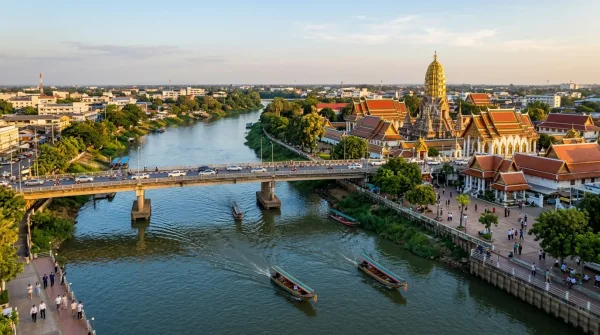
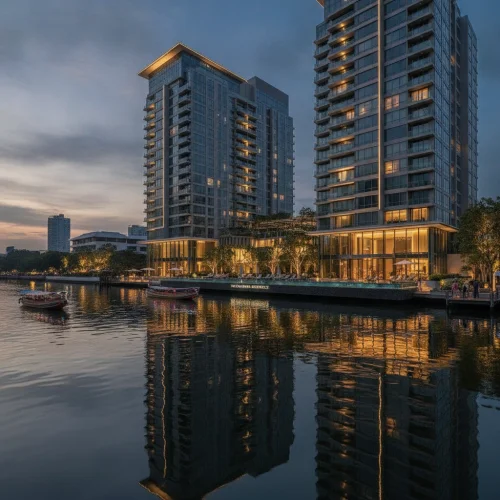
The Royal Orchid Sheraton sits on Charoen Krung Road in the Bang Rak district, directly adjacent to the Si Phraya express boat pier and the River City complex. This neighbourhood houses a significant population of British retirees, working professionals, and consular staff.
For British residents, the hotel provides more than short-stay accommodation. Its function rooms host British Chamber of Commerce network events, alumni society gatherings, and community club meetings. Private memberships for the fitness centre, tennis courts, and swimming pools are common among expatriates living in nearby condominiums that lack extensive recreational space.
Asset sales of this scale often disrupt long-term service agreements. When private hospitality firms acquire institutional hotel properties, they frequently re-evaluate operating models. Orchid Hospitality has not yet stated whether it will retain the Sheraton franchise under Marriott International or transition the site to an independent brand.
Previous hotel acquisitions in Bangkok suggest that routine guest services will continue throughout the legal transfer. Staffing contracts generally transfer to the acquiring entity under Thai labour laws. Nevertheless, club memberships, commercial leases for ground-floor business tenants, and long-term suite rentals face review once the new owners secure the title deeds. British residents with active contracts should monitor corporate disclosures following the October vote.
Commercial Property Governance in Thailand
The dispute between ONEAM and ROH highlights the legal realities of investing in Thai commercial property.
The trust was established with a built-in buy-back mechanism. These structures were designed to give hotel owners emergency liquidity during tourism downturns while providing retail investors with predictable exit valuations.
That system broke down when ROH missed its payment deadline. ONEAM took the position that the contractual right lapsed automatically on 14 July 2026. ROH disputed that conclusion, asserting its continued right to acquire the asset.
This legal friction demonstrates the limits of buy-back guarantees in the Thai market. Contracts depend entirely on the counterparty's solvency and their ability to secure commercial credit. British expatriates considering property-backed investments or long-term leaseholds in Thailand should take note of this case. Contractual guarantees cannot eliminate market risk when debt markets tighten.
The decision by ONEAM’s board to place ROH’s lower bid on the meeting agenda—despite believing the firm's rights had expired—reflects an effort to prevent protracted litigation. A contested sale could tie up assets in the Thai civil courts for years. Such delays freeze investor capital and prevent physical upgrades to aging properties.
Next Steps for British Residents
UK investors who hold GROREIT units should check their registered correspondence. ONEAM must distribute formal meeting notices and proxy documentation at least 14 days before the 28 October session. Expatriates who hold units through nominee accounts or domestic wealth managers should contact their brokers promptly to ensure their voting instructions are recorded.
Local residents and regular patrons of the riverside property should anticipate operational reviews during the final quarter of 2026. While an abrupt closure remains unlikely, structural renovations, vendor changes, and management adjustments often follow transactions of this magnitude. Ownership will formally shift before the end of the year if unitholders approve either private bid.
Source: nationthailand.com
Reviewed by the Thailand Guide Editorial Team • Last reviewed: 19 September 2026
This page is provided for general information only. While we aim for accuracy, details can change — please verify anything important independently before relying on it.